📅 Last Updated On: 22 Sep 2026
⏱ 15 Min Read
Banke Bihari Temple Vrindavan: Darshan Timings, History & Visitor Guide
N
Nand Singh Rathore
Travel & Tourism Expert specializing in India
Banke Bihari Temple Vrindavan: Complete Darshan & Travel Guide
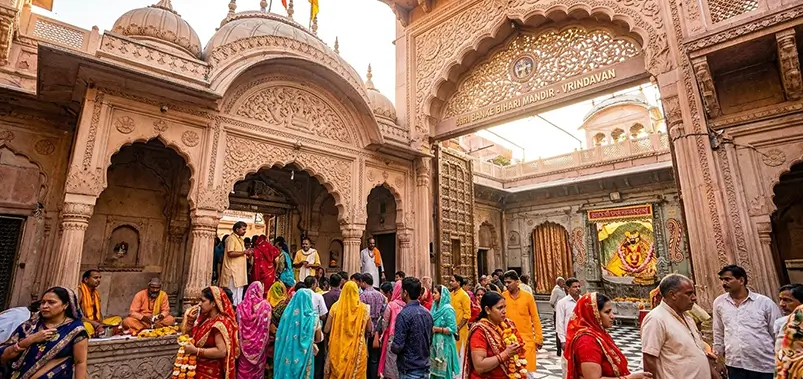
Banke Bihari Temple in Vrindavan is one of India's most important Krishna temples and one of the busiest sacred places in the Braj region. Hidden within the narrow lanes of old Vrindavan, the temple does not rely on monumental scale to create its impact. Its importance comes from the form of Krishna worshipped here as Banke Bihari, the devotional traditions associated with Swami Haridas, the unusual curtain-based darshan system and the enormous emotional connection devotees have with the shrine.
A first visit can be very different from what photographs suggest. The streets leading towards the temple may be packed with pilgrims, electric rickshaws, flower sellers, sweet shops, monkeys and temple visitors moving in both directions. Once inside, the crowd focuses almost entirely on the central image of Banke Bihari. Darshan happens in repeated glimpses rather than through an uninterrupted view, making the experience distinctive even for travellers who have already visited other major Krishna temples.
The temple's official website currently publishes separate summer and winter darshan schedules. In the summer period, the official listing gives morning opening at 7:45 AM, Shringar Aarti at 7:55 AM, a Bhog break from 11:00 AM to 11:30 AM, and morning closing at 12:00 noon. Evening opening is listed at 5:30 PM, with Bhog from 8:30 PM to 9:00 PM and closing at 9:30 PM. The temple confirms that timings change seasonally and that devotees should check the applicable schedule before arriving.
For most travellers, the key to a rewarding Banke Bihari darshan is not trying to fit the temple between too many other attractions. Vrindavan is physically compact but operationally slow. Crowds, narrow lanes and temple queues can turn a short distance into a substantial part of the morning. A visitor who accepts that rhythm usually enjoys the town far more than someone trying to complete six temples before lunch.
The History of Banke Bihari Temple and the Tradition of Swami Haridas
The religious story of Banke Bihari Temple Vrindavan is closely associated with Swami Haridas, the celebrated saint and devotional musician linked with the sacred grove of Nidhivan. According to the temple's established tradition, the image of Banke Bihari manifested through the devotion of Swami Haridas. The deity was initially worshipped in Nidhivan and was later moved to the present temple building, which became one of the principal centres of Krishna devotion in Vrindavan.
The name itself carries religious meaning. "Banke" is commonly associated with the graceful three-bend posture of Krishna, while "Bihari" refers to one who delights in divine play. The image worshipped in the temple presents Krishna in a form deeply connected with the devotional culture of Braj, where Krishna is not encountered only as a distant divine king but as an intimate beloved presence.
This distinction helps explain the extraordinary emotional atmosphere inside the temple. Devotees may call out to Banke Bihari, sing, raise their hands or simply wait intensely for the curtain to open. The interaction is highly personal, and that sense of intimacy separates the shrine from temples where worship feels more formal or processional.
The temple building itself belongs to the historic fabric of Vrindavan rather than to the enormous palace-like complexes created in recent decades. Its architecture uses the courtyard-and-hall arrangement typical of many north Indian temples, allowing large numbers of devotees to face the central sanctum. The structure is impressive, but visitors should not expect the kind of enormous decorative campus found at Prem Mandir.
The sacred image remains the centre of everything.
One of the most important traditions at Shri Banke Bihari Mandir is that the deity is treated with the routines and care of a living beloved child. Worship therefore follows highly specific rhythms involving dressing, food offerings, rest and seasonal changes. These customs also explain why temple hours differ between summer and winter rather than remaining identical throughout the year.
The present temple experience therefore combines historic architecture with a living worship system that continues to regulate when the deity is seen, when food is offered and when the temple closes for rest.Travellers who want to understand Vrindavan should keep this in mind. A temple closure in the middle of the day is not an inconvenience created for tourists. It is part of the religious life of the shrine.
Plan Your Vrindavan Temple Visit with a Private India Tour
Want to experience Banke Bihari Temple, Prem Mandir, ISKCON Temple and other sacred places in Vrindavan without the hassle of planning everything yourself? Let our travel experts create a comfortable, private itinerary around your interests.
Banke Bihari Temple Timings in Summer and Winter
The Banke Bihari Temple timings change according to season, and this is one of the most important practical details for first-time visitors.
The official temple site currently lists the summer period from 5 March to 10 November. During this period, the temple opens at 7:45 AM in the morning. Shringar Aarti is listed at 7:55 AM. A Bhog period takes place from 11:00 AM to 11:30 AM, and the morning session closes at 12:00 noon. The evening temple period begins at 5:30 PM, followed by another Bhog period from 8:30 PM to 9:00 PM, and final closing at 9:30 PM.
The temple's visitor information also states clearly that darshan timings vary between summer and winter. Traditional winter schedules commonly place the morning opening around 8:45 AM, closing around 1:00 PM, evening opening around 4:30 PM and final closing around 8:30 PM.
These timings should still be checked shortly before visiting because major festivals, crowd-control arrangements and management decisions can affect access. Banke Bihari receives such high visitor volumes that entry and exit systems may be altered on extremely busy days.
The best practical choice is to arrive close to opening time on a weekday.
Crowds generally build as the morning progresses, particularly once day visitors arrive from Mathura, Delhi, Agra and nearby districts. Weekend pressure can be much heavier, and festival days can become extremely crowded.
If a traveller reaches Vrindavan in the afternoon during the temple's closure period, there is no reason to wait impatiently outside. That time can be used for lunch, rest, Keshi Ghat, selected historic temples or hotel check-in before returning for the evening opening.
The split schedule actually helps create a better day when used properly.
Why the Curtain Opens and Closes During Banke Bihari Darshan
One of the most distinctive features of Banke Bihari Temple darshan is the repeated opening and closing of the curtain in front of the deity.
Visitors unfamiliar with the tradition are sometimes confused when they enter the hall, gain a brief glimpse of Banke Bihari and suddenly see the curtain close. A short time later it opens again, only to close once more.
This is not a crowd-management trick.
The practice belongs to the devotional tradition of the temple and reflects the belief that the gaze between Banke Bihari and his devotees is intensely powerful and intimate. The repeated curtain movement breaks the darshan into short moments rather than leaving the sacred image continuously exposed.
This creates a very different atmosphere from a temple where worshippers walk past an open sanctum in a continuous line.
Devotees often wait through several curtain cycles before leaving. During busy periods, however, crowd-control personnel may encourage people to keep moving so that those standing behind also receive darshan.
Visitors should not push forward every time the curtain opens. The crowd can surge because everyone wants the clearest possible view, but pushing creates unnecessary risk, particularly for elderly people and children.
Standing calmly slightly farther back can sometimes provide a better overall experience than trying to reach the first line.
The repeated darshan also means that being inside for ten minutes can feel more meaningful than spending half an hour trapped in a difficult crowd. Visitors should focus on the experience rather than trying to remain indefinitely in the hall.
Entry Fee, VIP Darshan and Current Crowd-Control Arrangements
Ordinary Banke Bihari Temple entry is free. Devotees do not need to purchase a standard sightseeing ticket simply to enter the temple for regular darshan.
Visitors should be careful with anyone outside the temple promising a guaranteed private or instant viewing for an unusually large payment.
Recent temple-management reforms have included the discontinuation of VIP passes and stricter regulation of entry and exit through designated gates, together with stronger crowd-control measures. For visitors, the practical meaning is simple: do not build the trip around the expectation that money will automatically remove the queue.
Special religious services are different from ordinary entry. If a devotee wants to arrange a recognised offering or temple service, it should be handled through authorised channels.
The approach lanes themselves can create more congestion than the interior. During peak periods, police may establish one-way pedestrian routes or prevent vehicles from entering sections of old Vrindavan.
Visitors should follow the official pedestrian route even when it appears longer than a side lane shown on a map. Crowd-control systems are designed according to movement conditions on the day.
For international travellers unfamiliar with Vrindavan, this is one destination where a knowledgeable local guide can be valuable - not for "VIP access," but for navigation, temple etiquette, locker arrangements and selecting the right entry lane.
The Best Time of Day for Banke Bihari Darshan
For an ordinary visit, the strongest time is soon after the temple opens in the morning on a weekday.
The lanes are more manageable before the main wave of pilgrims arrives. Temperatures are also cooler, particularly during the hotter part of the year.
If the temple opens at 7:45 AM during the summer schedule, reaching the old Vrindavan area shortly before that time allows visitors to walk the final section before traffic and pedestrians build substantially. During the winter schedule, a later morning opening gives visitors more flexibility, but weekend crowds still accumulate quickly.
Another good period can be the final part of the evening session on an ordinary weekday, although visitors should never arrive so close to closing that a traffic delay causes them to miss entry altogether.
Saturday, Sunday, major festivals and public holidays require substantially more patience. Recent crowd reports have repeatedly shown intense pressure at Banke Bihari during busy periods, which is why temple management continues to strengthen queue and access systems.
Holi deserves special mention. Vrindavan is one of the most famous Holi destinations in India, and Banke Bihari Temple becomes a focal point for festival devotion. Anyone visiting during that period should expect dense crowds rather than ordinary temple sightseeing.
Janmashtami and other major Krishna festivals also produce exceptional visitor numbers.
For families travelling with very young children or elderly relatives, an ordinary weekday outside school holidays is far more comfortable.
Temple Customs and Behaviour Inside Banke Bihari Mandir
Visitors do not need specialist religious knowledge to behave appropriately inside Banke Bihari Mandir, but a few practical habits improve the visit significantly.
Dress conservatively. Lightweight clothes that cover shoulders and knees are appropriate and practical. Expensive ceremonial clothing is unnecessary.
Footwear must be removed before entering the temple. Use recognised shoe-storage facilities or follow the arrangement advised by a reliable guide.
Carry as little as possible. Large backpacks, professional cameras and unnecessary valuables make movement through crowded lanes difficult.
Photography restrictions should be followed strictly. Even if a phone is accessible, that does not automatically mean photography is permitted in every section of the temple.
Do not attempt to photograph worshippers closely without permission.
Visitors should also be cautious around monkeys in Vrindavan. The town is well known for monkeys that can snatch glasses, food and small objects from visitors. Sunglasses should be secured, food should remain inside bags, and no one should try to provoke or feed monkeys around the temple lanes.
Another common problem is distraction caused by vendors. Flowers and temple offerings can be purchased if desired, but no visitor is required to buy a large ceremonial package simply to enter.
Keep small cash available, particularly for modest offerings and local transport, but avoid openly carrying a large wallet through crowded lanes.
How to Reach Banke Bihari Temple from Mathura and Vrindavan Hotels
Mathura Junction is the most practical major railway gateway for Vrindavan. From the station, travellers can continue by taxi, auto-rickshaw or private vehicle towards Vrindavan.
The final approach to Banke Bihari Temple usually requires a change in transportation strategy.
Large private cars cannot move conveniently through the narrow streets surrounding the temple. Even when a road technically permits vehicles, pedestrian crowds often make driving inefficient.
The best arrangement is generally for the private car to stop at a suitable parking or vehicle-access point, after which visitors continue by electric rickshaw and on foot.
This is particularly important for international travellers carrying large luggage. Bags should remain at the hotel or safely with the vehicle rather than being dragged through the old city.
From central Vrindavan hotels, local electric transport may require only a short ride, but travel time depends more on traffic than distance.
From Mathura, the drive to Vrindavan can take around 30 to 45 minutes or longer depending on local congestion. During festivals, journey times can increase substantially.
Travellers coming from Delhi should allow roughly three to four hours for the road journey to Vrindavan under ordinary conditions. The Yamuna Expressway makes the long-distance section straightforward, but congestion begins once the journey reaches the local Braj roads.
From Agra, Vrindavan can usually be reached in around one-and-a-half to two hours depending on the starting location and traffic.
Because the temple's opening schedule contains a long midday closure, long-distance visitors should coordinate departure times carefully. Arriving at the temple just after the morning closing means waiting several hours for the evening session.
Combining Banke Bihari Temple with Keshi Ghat and Old Vrindavan
One of the best ways to experience Banke Bihari Temple Vrindavan is to combine it with the historic riverfront rather than spending the entire day moving between modern temple complexes.
A strong morning begins with Banke Bihari shortly after opening.
After darshan, visitors can walk or take a short electric-rickshaw ride through old Vrindavan towards Keshi Ghat, the town's most famous historic Yamuna ghat. The stone riverfront, boats and old architecture create a completely different atmosphere from the intense temple hall.
If boating conditions are suitable, a short Yamuna ride can be included.
Nearby historic temples such as Radha Madan Mohan Temple, Radha Raman Temple and Radha Damodar Temple can be added according to time and interest.
The important point is not to visit every temple listed on a map.
A better morning might include Banke Bihari, one historic temple and Keshi Ghat rather than six temples with no time to absorb any of them.
Visitors can then return to the hotel during the midday temple closure.
Later in the day, ISKCON Krishna Balaram Mandir and Prem Mandir provide a contrast with old Vrindavan. ISKCON has a more international devotional character, while Prem Mandir is best known for its large modern complex and evening illumination.This combination gives visitors three distinct views of Krishna devotion: historic Banke Bihari, old sacred Vrindavan and modern temple culture.
Ready to Explore Vrindavan & India’s Sacred Temples?
Make your spiritual journey more meaningful with a tailor-made private tour covering Vrindavan, Mathura and other sacred destinations across North India. From temple darshan to local cultural experiences, we take care of the travel arrangements while you focus on the journey.
Where to Stay for Banke Bihari Temple
Vrindavan offers a wide range of accommodation, but location matters more than many first-time visitors expect.
Hotels close to old Vrindavan allow quicker access to Banke Bihari and Keshi Ghat, but the streets can be congested, noisy and difficult for large vehicles.
Hotels along the wider modern Vrindavan roads usually provide better parking, larger rooms and easier transfers. The compromise is that visitors need a local rickshaw or short vehicle transfer to reach the old temple zone.
A comfortable mid-range hotel may cost approximately INR 4,000 to INR 8,000+ per night, while stronger modern properties can range around INR 8,000 to INR 15,000+ depending on demand.
Premium suites and high-demand festival dates can move significantly higher.
For older travellers, room quality should not be judged solely through photographs. Check lift availability, road access, vehicle drop-off, bathroom design and distance from the hotel entrance to the room.
During Holi, Janmashtami and long holiday weekends, hotels can fill quickly and rates can rise sharply.
For a first visit, two nights in Vrindavan or the Mathura-Vrindavan area are much better than a rushed day trip.
Practical Costs for a Comfortable Vrindavan Visit
Ordinary Banke Bihari darshan is free, so temple admission is not the major cost.
A private car from Delhi for a dedicated Vrindavan journey can cost approximately INR 7,000 to INR 15,000+, depending on vehicle category, duration, tolls, parking and whether the trip returns the same day or continues to another destination.
Premium SUVs can cost more.
Local electric rickshaw rides within Vrindavan are much cheaper, but fares should still be agreed before departure. During very crowded days, normal fare expectations may rise because road access becomes more difficult.
A knowledgeable private guide can cost several thousand rupees for a half day, with highly experienced cultural or religious specialists charging more.
Hotels generally make up the largest local expense after intercity transportation.
Food can remain inexpensive in Vrindavan, although premium hotels and higher-end vegetarian restaurants naturally cost more.
Travellers should not judge the quality of the visit according to the amount spent. Banke Bihari is one place where a free ordinary darshan can be far more meaningful than an expensive, rushed attempt at special access.
How Long Should You Stay in Vrindavan?
A same-day Delhi return is possible, but it creates a long day and often forces visitors to experience Vrindavan only during its busiest hours.
One overnight stay is considerably better.
Two nights are ideal for most first-time visitors because they allow an early Banke Bihari darshan, time at Keshi Ghat, selected old temples, ISKCON and Prem Mandir without constantly watching the clock.
A third night becomes worthwhile for travellers adding Mathura, Govardhan, Barsana or a deeper Braj pilgrimage.
Top Indian Holidays can incorporate Banke Bihari Temple, Mathura and Vrindavan naturally into a private Golden Triangle or North India itinerary rather than treating them as a rushed diversion. The location works particularly well between Delhi and Agra when the journey includes an overnight stay instead of a few hours between motorway drives.
The most important scheduling decision is keeping the first temple visit early.
Once Banke Bihari has been seen before peak crowds, the rest of Vrindavan becomes much easier to enjoy.
Related Guides



 info@topindianholidays.net
 +91-8955000999