📅 Last Updated On: 28 Aug 2026
⏱ 10 Min Read
Famous Ghats in Vrindavan: Sacred Places Along the Yamuna River
T
Top Indian Holidays
Ministry of Tourism Approved Tour Operator
Famous Ghats in Vrindavan: Sacred Places Along the Yamuna River
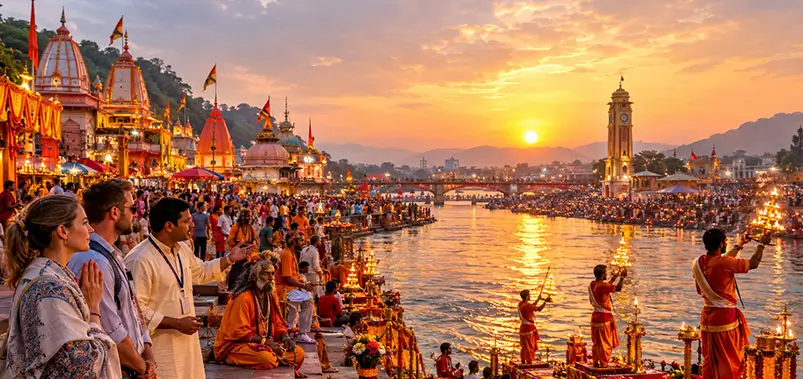
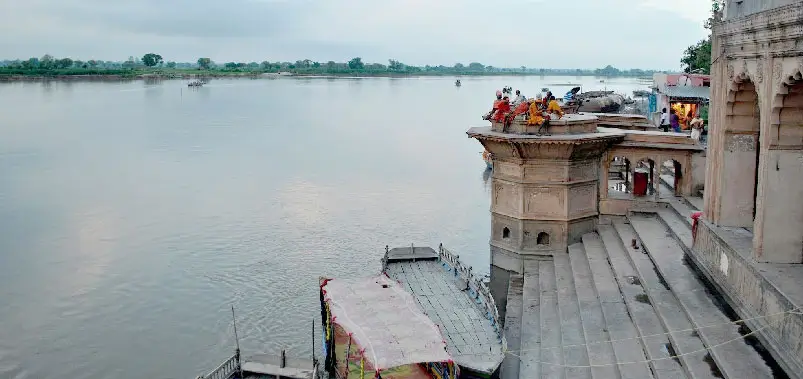
The ghats in Vrindavan are among the most atmospheric parts of this sacred town in Uttar Pradesh. Temples usually receive most of the attention from first-time visitors, yet the riverfront gives Vrindavan an entirely different character. Along the Yamuna River, old stone steps, temple towers, small shrines, priests, pilgrims, boats and centuries of religious tradition come together within a relatively compact area. Early in the morning, worshippers arrive quietly at the water. By evening, lamps, prayers and the changing light over the river create one of the most memorable scenes in the town.
Vrindavan belongs to the larger Braj region, traditionally associated with the childhood and youth of Lord Krishna. Religious traditions connect the Yamuna and many locations along its banks with episodes from Krishna's life. This is the reason a riverfront visit carries far more significance than a conventional walk beside a river. For pilgrims, the ghats are places of worship and memory. For travellers interested in Indian culture, they provide direct contact with the living religious character of Vrindavan.
The modern river channel does not touch every historic ghat in exactly the way visitors might expect from paintings and older descriptions. Changes in the river, sedimentation, urban development and seasonal water levels have altered parts of the waterfront over time. Some historic ghats remain visually prominent, while others are smaller, partly changed or more important for their traditional associations than their architecture.
Among them, Keshi Ghat is unquestionably the most famous and visually impressive. It remains one of the most recognisable riverfront landmarks in Vrindavan and is frequently the first ghat recommended to visitors. However, anyone interested in the sacred geography of the town should look beyond a single location. Chir Ghat, Bihar Ghat, Kaliya Ghat and several smaller riverfront places help tell the wider story of Krishna traditions associated with the Yamuna.
There is no general admission ticket for the river ghats, although private boat rides, religious offerings and certain services involve separate charges. Keshi Ghat itself is commonly listed as free to visit. Visitors should carry small cash, agree on boat prices beforehand and remember that river conditions can affect whether boating operates normally.
Keshi Ghat: The Most Famous Yamuna Ghat in Vrindavan
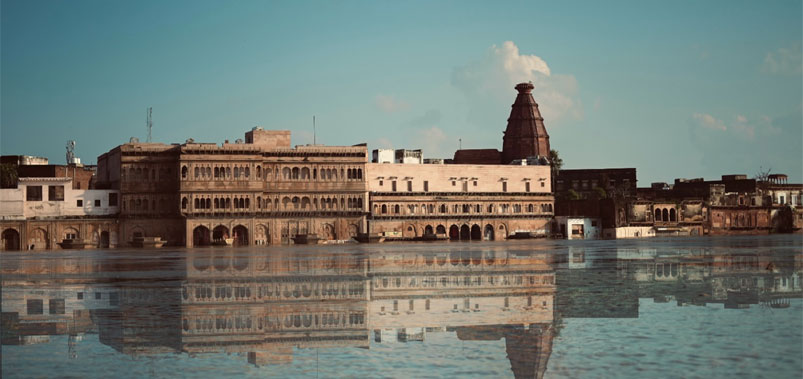
Keshi Ghat Vrindavan is the strongest starting point for anyone wanting to see the historic riverfront. Its broad stone steps descend towards the Yamuna, while old palatial structures and temple-style architecture create a distinctive backdrop. Compared with many smaller ghats, Keshi Ghat has a stronger sense of monumental scale and remains one of the easiest places to understand why the river is so central to Vrindavan's identity.
The religious tradition connected with Keshi Ghat comes from the story of the Keshi demon. According to Krishna tradition, Keshi was sent in the form of a powerful horse and was defeated by Krishna. The riverfront site became associated with that episode, giving the ghat both its name and its religious importance. Visitors do not need detailed knowledge of sacred texts to appreciate the place, but knowing the tradition adds meaning to what might otherwise appear simply to be an attractive old riverfront.
The architecture is another reason to spend time here. Historic structures rise behind the steps, creating one of Vrindavan's most recognisable visual scenes. At sunrise, soft light falls across the buildings and river, while mornings are generally quieter than the middle of the day. Evening brings a different mood as worshippers gather and preparations begin for river worship. Commercial tourism information commonly lists Keshi Ghat as accessible from early morning until evening, though the riverfront itself is an open public religious space rather than a conventional ticketed attraction with a gate that closes at a precise monument-style hour.
Visitors should ideally arrive around sunrise or before the evening worship period. Midday can be hot, particularly outside the cooler months, and the riverfront is much less atmospheric under harsh afternoon light. Early morning also offers a better chance to observe ordinary religious activity without the heavier flow of visitors arriving later from Mathura, Delhi and nearby towns.
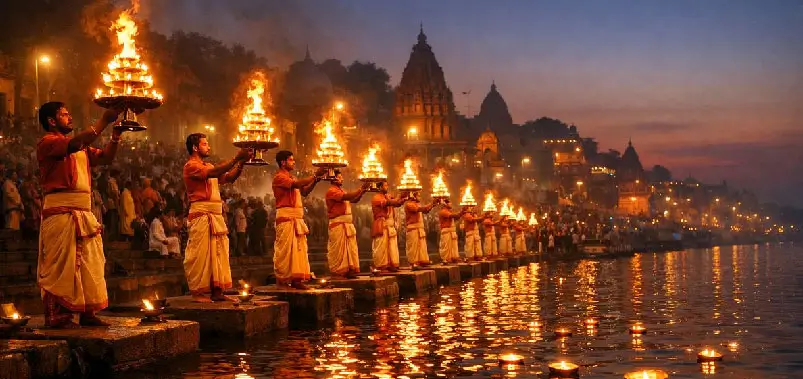
Yamuna worship at Keshi Ghat is one of the principal reasons to return in the evening. Exact ceremony time changes with daylight, religious dates and local practice, so an advertised fixed time should not be treated as permanent. Visitors should reach the ghat before sunset and ask locally for the current worship time. Some recent visitor listings place evening activity broadly between late afternoon and early evening, but seasonal variation is significant.
Boat rides are available when river and weather conditions permit. Small shared boats may charge approximately INR 100 to INR 200 per person for short rides, while a private boat can cost around INR 800 to INR 2,500 or more, depending on duration, boat type, number of passengers, season and negotiation. These are realistic budgeting figures rather than regulated fixed tariffs. A longer private ride around sunrise or sunset will naturally cost more than a brief crossing near the ghat.
The boatman should be asked three things before boarding: total price for the entire boat or per passenger, approximate duration and exact finishing point. This prevents misunderstandings after the ride. Life jackets may not be provided consistently on every small traditional boat, so families with children and travellers who are not confident around water should select operators carefully.Keshi Ghat is also within the historic part of Vrindavan, making it practical to combine with nearby temples and lanes. Radha Madan Mohan Temple, one of the historic temples of Vrindavan, rises relatively close to the riverfront. Seva Kunj and other sacred locations can also fit naturally into the same half-day visit. The result is far more satisfying than driving from one famous modern temple to another without spending time in old Vrindavan.
Plan Your Vrindavan & Mathura Pilgrimage Tour
Explore the sacred ghats, temples and spiritual landmarks of Vrindavan and Mathura with a private pilgrimage tour. Create an itinerary that includes the places most meaningful to you, with comfortable transfers and local sightseeing.
Chir Ghat, Kaliya Ghat and the Sacred Stories Along the Yamuna
Beyond Keshi Ghat, several sacred ghats of Vrindavan are important because of the religious stories attached to them. These locations may not have the monumental riverfront architecture of Keshi Ghat, yet they are deeply woven into the devotional geography of Braj. For visitors interested in more than photographs, this second layer of the riverfront is where Vrindavan begins to make greater sense.
Chir Ghat is associated in Krishna tradition with an episode involving Krishna and the young cowherd women who worshipped near the Yamuna. Traditional accounts describe Krishna taking their garments while they bathed and placing them in a tree, an episode interpreted within devotional traditions through themes of surrender and complete dedication to the divine. Modern visitors should recognise that the religious interpretation belongs to a sacred narrative and should approach the location respectfully rather than reducing the story to a humorous anecdote.
The atmosphere around Chir Ghat is generally much simpler than at Keshi Ghat. Visitors are more likely to encounter a small religious setting than a monumental waterfront. That difference is valuable because it demonstrates that the importance of a Vrindavan Yamuna ghat does not depend on architectural size. Some places survive primarily through memory, ritual and oral tradition.
Kaliya Ghat, also associated with the Yamuna, recalls one of the best-known Krishna narratives. According to tradition, the serpent Kaliya lived in the Yamuna and poisoned its waters. Krishna entered the river, subdued the serpent and danced upon its hoods before ordering it to leave. The episode is represented frequently in paintings, temple sculpture and devotional art throughout India, but seeing a location traditionally connected with the story gives the narrative a geographic setting.
The Kaliya episode also illustrates the extraordinary importance of the Yamuna in Krishna devotion. The river is not merely a backdrop to the stories of Vrindavan. It participates in them. Krishna crosses it, plays near it, defeats danger within it and meets devotees along its banks. This is why the Yamuna ghats in Vrindavan remain spiritually significant even where modern river conditions differ from the landscape described in traditional literature.
Bihar Ghat and other smaller historic ghats form part of this same network. Their exact physical condition can change because riverfront areas are affected by water levels, erosion, restoration work and urban development. Visitors should therefore avoid expecting every named ghat to resemble a large, perfectly maintained staircase. In several cases, the spiritual association is more prominent than the surviving built form.
Walking with a knowledgeable local guide can be useful here. Without context, a traveller may pass a small shrine or stairway without realising its importance. A good guide can connect individual places with the larger Braj tradition while also distinguishing established history from religious belief. The quality of explanation matters: exaggerated stories should not be substituted for responsible interpretation.
The riverfront is also undergoing wider attention as authorities consider significant infrastructure and riverfront improvements across the Mathura-Vrindavan area. Current proposals include a long Yamuna riverfront and future water-based transport between Mathura and Vrindavan, showing how rapidly access and facilities around the sacred corridor may change. Visitors should therefore treat very old maps and travel descriptions cautiously.
Despite future development, the strongest way to experience the smaller ghats remains remarkably simple. Walk slowly, spend time beside the river, observe religious activity without interference and avoid judging every site by the number of restaurants, lights or tourist facilities nearby.
Yamuna Worship, Boat Rides and the Best Time to Visit Vrindavan Ghats
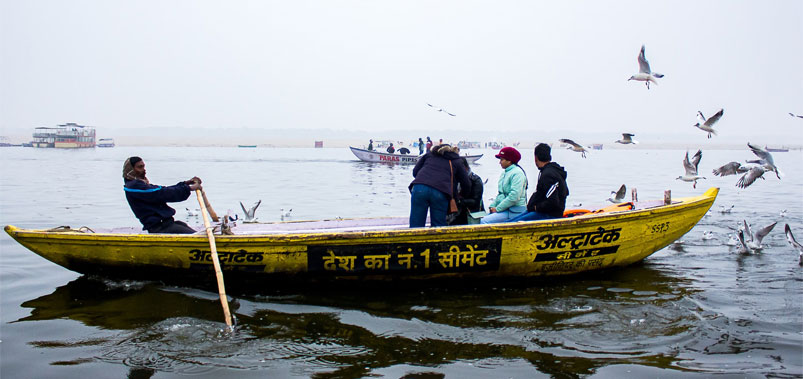
The Yamuna River in Vrindavan changes character throughout the day. Visitors who come only at noon often miss the most rewarding periods. Early morning and evening are considerably better, not only because of temperature and light but because religious life is more visible at those hours.
Around sunrise, the riverfront is generally quieter. Pilgrims may perform prayers, priests begin daily routines and boats move gently along the water. Winter mornings can be misty, giving the river an almost monochrome appearance before the sun becomes stronger. During warmer months, arriving early also avoids the uncomfortable heat that builds by late morning.
A sunrise boat ride in Vrindavan can take approximately 20 to 45 minutes for a short local experience, although longer private rides can be arranged. The exact route depends on water level and local boating conditions. Visitors hoping to photograph historic architecture should ask the boatman whether the proposed route passes the main facade of Keshi Ghat before agreeing to the price.
Evening brings more activity. The changing light around Keshi Ghat, bells from nearby temples and river worship create a more ceremonial atmosphere. Visitors who want to attend Yamuna worship at Keshi Ghat should arrive at least 30 to 45 minutes before the expected ceremony. Exact times vary seasonally, so a hotel, authorised local guide or temple representative should be asked on the same day rather than relying on a fixed internet schedule. Recent visitor sources confirm that evening worship is a regular attraction at Keshi Ghat, although published hour ranges differ.
There is generally no ticket required to attend ordinary river worship. Visitors may purchase flowers or ceremonial lamps from local vendors if they wish to participate, but no one should be pressured into buying an expensive offering. A modest flower-and-lamp offering may cost around INR 50 to INR 200, depending on size and contents. Larger religious services should have prices agreed upon before they begin.
Visitors should also think carefully about what happens to offerings after they enter the river. Plastic packaging, synthetic cloth and non-biodegradable decorative materials should never be placed in the Yamuna. Religious respect and environmental responsibility should reinforce one another rather than conflict.
River safety is another practical issue. The stone steps can become slippery, particularly near the waterline. Children should not be allowed to run close to the edge, and elderly travellers should use hand support where available. Water depth can vary, and the river should not be entered simply because other people are bathing nearby.
During the monsoon, boating conditions may change significantly. Higher water levels and stronger currents can lead to restrictions or temporary suspension of small-boat operations. Visitors should follow local safety directions even if a boatman claims a ride is possible. A religious journey does not become more meaningful by taking an unnecessary physical risk.
The most comfortable months for spending extended time around the Vrindavan riverfront are generally the cooler part of the year, when walking through the old lanes is easier. Winter mornings can be cold, while daytime conditions are usually pleasant. The hottest months can make afternoon walking uncomfortable, and the monsoon brings high humidity and variable river conditions.
Festival dates create another environment entirely. Holi, Janmashtami, Radhashtami and other major religious occasions can bring huge numbers of visitors into the wider Braj region. The atmosphere can be extraordinary, but traffic, crowd movement and hotel rates all become more demanding. Travellers seeking an unhurried first experience of the ghats should choose an ordinary weekday.
How to Visit the Vrindavan Ghats with Banke Bihari, Madan Mohan and Other Temples
The best use of a day in Vrindavan is to connect the famous ghats of Vrindavan with nearby historic temples rather than treating the riverfront as an isolated excursion. Old Vrindavan is compact in straight-line distance but complicated in practice because narrow lanes, pedestrian crowds, electric rickshaws and temple queues slow movement considerably.
A strong morning can begin at Keshi Ghat near sunrise. Spend time on the steps, take a short boat ride if conditions are suitable and walk through the surrounding historic lanes. From the riverfront, Radha Madan Mohan Temple is a natural addition. Its elevated position and historic character provide a different atmosphere from the heavily visited modern temple complexes elsewhere in town.
The old-city route can then continue towards sacred locations such as Seva Kunj and the area surrounding Banke Bihari Temple. Banke Bihari is one of Vrindavan's busiest temples, so crowd conditions must be taken seriously. The wider town is currently subject to major infrastructure proposals intended to improve pilgrim movement and crowd management around the temple zone. This means access arrangements may continue changing, particularly on festival days.
A visitor should not try to drive a large tourist vehicle directly between each location. In old Vrindavan, walking and electric rickshaws are usually more practical. Cars are better left at suitable parking points, especially during busy periods when police introduce traffic restrictions.
After the morning temple period, visitors can return to the hotel for lunch and rest. This break is particularly useful during warmer weather. Later in the afternoon, ISKCON Vrindavan and Prem Mandir can be visited before returning towards Keshi Ghat if the evening river worship is a priority. Trying to remain outdoors continuously from sunrise until late evening creates unnecessary fatigue.
Travellers staying in Mathura can visit Vrindavan as a day trip, but an overnight stay provides a much better experience. Vrindavan becomes quieter at certain hours after day visitors depart, and being nearby allows an early start without first driving from another city.
Mathura itself has an important riverfront tradition centred around Vishram Ghat, which should not be confused with the ghats of Vrindavan. Vishram Ghat is associated with Krishna's return after defeating Kansa and remains one of Mathura's principal Yamuna worship locations. Travellers with two days can therefore dedicate one period to the Mathura riverfront and another to Vrindavan rather than forcing both towns into a few hours.
For international travellers, an informed local guide is particularly useful in old Vrindavan because the physical appearance of a location rarely communicates the full religious story. A good guide should explain traditions clearly, show the relationship between temples and river sites and allow visitors time to observe rather than constantly moving them toward shops.Top Indian Holidays can incorporate Vrindavan and Mathura into a private northern India itinerary from Delhi or Agra. The most comfortable version generally includes an overnight stay when both temples and riverfront experiences are important, rather than treating Vrindavan as a short motorway stop between larger cities.
Experience the Spiritual Side of Braj
Discover the sacred heritage of Vrindavan, Mathura and the Braj region beyond its famous temples. We can arrange a personalised journey covering ancient ghats, temples, spiritual sites and local experiences.
Reaching Vrindavan, Local Transport, Hotels and Realistic Visitor Costs
Vrindavan lies in Mathura district of Uttar Pradesh and is conveniently positioned for travellers coming from Delhi or Agra. Road access has improved substantially through the wider expressway network, although the final kilometres inside the pilgrimage town can still be slow because local traffic and crowds are the real constraint.
From Delhi, travellers should allow roughly three to four hours by private car under reasonable traffic conditions, with additional time possible during weekends, festivals and holiday periods. From Agra, Vrindavan is considerably closer and can often be reached in around one-and-a-half to two hours depending on traffic and the exact hotel location. These times should be treated as practical estimates rather than guarantees.
Mathura Junction is the principal railway gateway for travellers arriving by train. From the station, Vrindavan can be reached by taxi, auto-rickshaw or locally arranged vehicle. The last section to the old ghats may still require walking or an electric rickshaw because narrow historic lanes are unsuitable for large vehicles.
The nearest major international airport for most overseas travellers is Delhi's Indira Gandhi International Airport. Agra also has limited air connectivity, but Delhi provides a much broader flight network and is the more reliable gateway for a wider North India journey.
Hotel choice changes the experience considerably. Vrindavan has simple guesthouses, pilgrimage accommodation, mid-range hotels and an increasing number of comfortable modern properties. A decent mid-range hotel may cost around INR 4,000 to INR 8,000+ per night, while stronger upper-category accommodation can range from INR 8,000 to INR 15,000+. Premium rooms during important religious dates may move substantially higher.
A hotel near the old town gives easier access to the river and historic temples but may involve noise, congestion and limited vehicle access. Modern hotels farther from the core usually provide better parking and more spacious rooms but require local transport to reach the ghats. International travellers carrying large luggage often find the second option more comfortable.
A private Delhi-Vrindavan vehicle for a dedicated visit can commonly cost around INR 7,000 to INR 15,000+, depending on vehicle category, duration, driver allowance, parking and whether the journey returns to Delhi or continues to Agra. Premium SUVs or luxury vehicles cost more. Local electric rickshaws are inexpensive by comparison, but fares should still be agreed before departure.
Most Vrindavan ghats have no standard admission fee. The practical expenses are transport, boats, guide services, religious offerings and accommodation. A private local guide may cost several thousand rupees for a meaningful half-day visit, with highly experienced specialist guides charging more.
Visitors should carry some cash because small vendors, boatmen and local transport providers may not always have reliable digital payment connectivity. At the same time, large sums and passports should remain securely stored where possible.
Crowd conditions deserve special attention. Current regional development programmes include major proposed investments in pilgrim facilities, roads and the Yamuna riverfront, reflecting the enormous number of people visiting the wider Braj region. Travellers should therefore expect that routes, parking arrangements and pedestrian systems can change.
The final practical rule is to leave empty space in the schedule. Vrindavan works poorly when every hour has been assigned to a different attraction. Temple doors may close temporarily, traffic may stop, a queue may become longer than expected or a visitor may simply want to remain at the river for another half hour. That unstructured time often becomes the best part of the day.
Respecting the Yamuna and the Living Religious Character of the Ghats
The Yamuna ghats of Vrindavan are not preserved museum spaces. They remain active religious environments where residents, priests and pilgrims continue ordinary worship. Visitors therefore need to behave differently than they would at a monument created primarily for sightseeing.
Clothing should be modest, particularly when entering shrines close to the river. Shoes may need to be removed around temple areas, although they are not necessarily removed simply to walk on every public ghat. Comfortable footwear that is easy to take off is useful.
Photography should be restrained. Landscape photographs of Keshi Ghat and the river are generally part of the visitor experience, but pointing cameras closely at people performing private rituals can be intrusive. Always seek permission before making an individual worshipper the subject of a photograph.
The same rule is even more important around bathing areas. A person's religious act is not automatically public photographic material simply because it happens beside an open river.
Visitors should avoid feeding monkeys. Vrindavan has a significant monkey population, and animals can snatch glasses, phones and food. Sunglasses should be secured when walking through areas known for monkey activity, and food should not be openly carried.
Waste must be handled responsibly. Plastic bottles, flower packaging and food wrappers should never be left on the steps or placed in the river. The Yamuna carries enormous religious importance, and treating it as a disposal area directly contradicts the respect visitors claim to show by coming there.
Boat rides should also remain respectful. Loud music, shouting and aggressive photography create a poor atmosphere in a sacred river environment. A quiet boat ride around sunrise or sunset allows visitors to see much more.
Vrindavan's ghats are at their strongest when approached slowly. Keshi Ghat provides the grand architecture, smaller ghats provide sacred stories, the Yamuna gives the landscape continuity, and the nearby temples connect the riverfront with the wider religious geography of Braj. Together, they form one of the most meaningful parts of a Vrindavan visit.
Related Guides



 info@topindianholidays.net
 +91-8955000999