📅 Last Updated On: 22 Aug 2026
⏱ 10 Min Read
Parvati Sarovar Adi Kailash: A Complete Travel & Pilgrimage Guide
T
Top Indian Holidays
Ministry of Tourism Approved Tour Operator
Parvati Sarovar Adi Kailash: A Complete Travel Guide
High in the eastern Kumaon Himalayas of Uttarakhand, close to the India-Tibet border, Parvati Sarovar at Adi Kailash lies in one of India's most dramatic high-altitude pilgrimage landscapes. The lake is associated with Lord Shiva and Goddess Parvati and forms an important part of the journey to Adi Kailash, the sacred mountain also known as Chhota Kailash.
This is not a conventional temple journey where travellers can arrive from a nearby city, spend an hour at the shrine and return to a comfortable hotel before evening. The route moves through the remote Darma and Byans region of Pithoragarh district, where altitude rises considerably, weather can change without warning, mobile connectivity becomes unreliable and access is controlled because of the proximity to the international border.
The Government of India's Incredible India portal places Adi Kailash in Pithoragarh district at an altitude of approximately 6,191 metres for the mountain itself, while the pilgrimage route takes visitors through high-altitude locations including Gunji, Nabi, Kuti and Jolingkong.
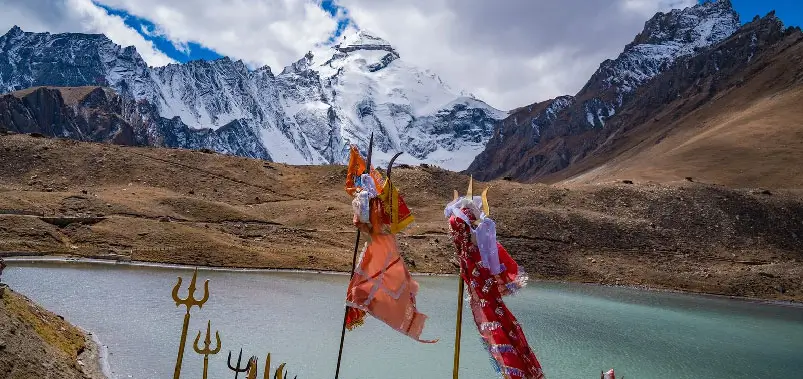
Parvati Sarovar, often referred to as Parvati Kund in travel accounts, is reached in the Jolingkong area below Adi Kailash. The lake and the mountain together form the spiritual centre of the journey. On a clear day, the dark mountain face rising above the high Himalayan terrain gives the location a stark beauty quite different from the greener valleys encountered earlier on the route.
For pilgrims, the religious association is the principal reason for undertaking the difficult journey. For mountain travellers, the attraction also lies in the changing landscapes: river valleys, Himalayan villages, high passes, bare mountain terrain and distant snow-covered summits. Both groups need to remember that Adi Kailash Yatra is governed by altitude and weather rather than by an ordinary sightseeing timetable.
A successful visit depends far more on acclimatisation, permits, a suitable vehicle, realistic driving hours and physical condition than on fitting the maximum number of places into each day.
Parvati Sarovar, Adi Kailash and the Sacred Landscape Around Jolingkong
Parvati Sarovar Adi Kailash cannot be understood separately from the mountain landscape surrounding it. The lake lies in the high-altitude Jolingkong sector, with Adi Kailash forming the dominant sacred presence in the area. The region is remote, sparsely inhabited and close enough to the international border that visitor movement is regulated.
Adi Kailash has long been revered in Hindu tradition because of its association with Lord Shiva. Its distinctive mountain profile is one reason pilgrims connect the landscape with Mount Kailash in Tibet. The name Chhota Kailash is commonly used, although Adi Kailash has its own religious identity and pilgrimage tradition.
The lake associated with Goddess Parvati lies below the mountain. When conditions are calm, the water and surrounding peaks create one of the most memorable scenes of the journey. A small temple associated with Shiva and Parvati stands near the sacred lake area, giving pilgrims a focal point for prayer after reaching Jolingkong.
The location should not be confused with Parvati Tal near Om Parvat, another sacred water body encountered within the wider pilgrimage region. Adi Kailash and Om Parvat are separate destinations, although modern itineraries commonly combine them because both are reached through the same restricted border region and share Gunji as an important base.
This distinction matters when reading itineraries online. A programme advertised as an Adi Kailash and Om Parvat tour generally includes two different high-altitude excursions rather than two viewpoints of the same mountain.
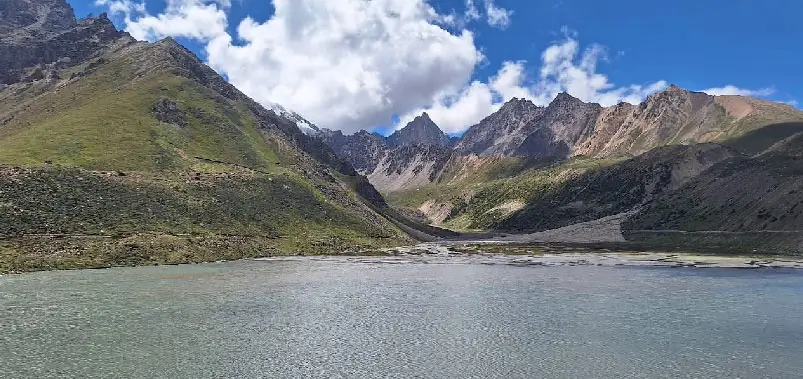
The terrain around Parvati Sarovar is very different from the lower Kumaon hills. Trees become scarce as altitude increases. Vegetation is limited, temperatures fall sharply, and strong sunlight can be followed by cold wind within a short period. Even during the primary travel season, travellers should be prepared for near-freezing conditions at high elevations.
The sacred character of the lake requires appropriate behaviour. Visitors should not enter the water casually, wash clothing, leave religious materials, discard plastic or treat the shoreline as a picnic area. High-altitude ecosystems recover very slowly from human damage. What appears to be a small piece of waste can remain in the landscape for years.
Photography is normally one of the attractions of the journey, but this is also a sensitive border region. Visitors must follow instructions from local authorities and security personnel regarding where photography is permitted. Military installations, checkpoints and sensitive infrastructure should never be photographed.The strongest experience at Parvati Kund Adi Kailash comes from arriving with enough time to stand quietly in the landscape rather than jumping out of a vehicle, taking photographs and immediately beginning the return drive. Unfortunately, altitude and road conditions mean visitors cannot remain indefinitely. The objective should be a calm but controlled visit.
Plan Your Adi Kailash & Parvati Sarovar Yatra
Experience the spiritual beauty of Adi Kailash and Parvati Sarovar with a thoughtfully planned pilgrimage journey. From transportation and accommodation to sightseeing and local assistance, we can help you arrange a comfortable and memorable trip to this sacred Himalayan destination.
How the Adi Kailash Route Works from Dharchula to Parvati Sarovar
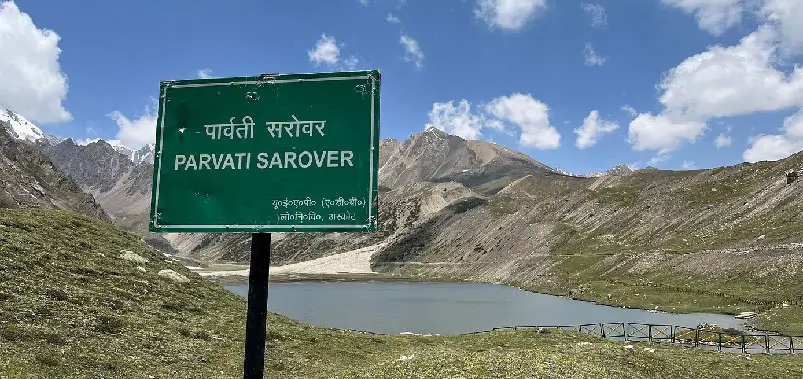
The journey to Parvati Sarovar Uttarakhand begins long before the lake itself appears.
Dharchula is the principal administrative gateway for the pilgrimage. This border town in Pithoragarh district sits along the Kali River, with Nepal directly across the water. Travellers normally complete permit formalities here before moving into the restricted high-altitude sector.
The road then follows the dramatic Himalayan valley towards places such as Tawaghat and further into the border region. Modern road development has transformed the pilgrimage compared with the period when long sections had to be completed entirely on foot. Four-wheel-drive vehicles can now reach much farther into the mountains, although calling the route easy would be misleading.
The road is narrow in places and vulnerable to rockfall, landslides, rain, snow and temporary closures. Road construction and maintenance work can also cause delays. Travellers should never schedule a flight or important train connection immediately after the expected return from the high-altitude sector.
Gunji is one of the most important bases on the journey. It lies at approximately 3,200 metres and serves as a junction for routes towards Adi Kailash and Om Parvat. Spending time around Gunji is valuable because it gives the body an opportunity to adjust before travelling higher.
From Gunji, the Adi Kailash side proceeds towards Kuti village and onward to Jolingkong. Kuti is one of the last inhabited villages in this part of the route and has strong cultural significance within the Byans valley. Local architecture and the surrounding mountain setting make it far more than a fuel stop on the way to the final destination.
Jolingkong lies at approximately 4,500 metres, making the altitude a serious factor. From here, visitors reach the area of Parvati Sarovar and Adi Kailash.
The final approach may involve walking depending on vehicle access, road condition and current management arrangements. Even a short walk at this altitude feels considerably harder than the same distance at sea level. Visitors should move slowly and resist the urge to compete with younger or fitter members of the group.
Modern itineraries commonly use sturdy vehicles such as Bolero, Scorpio or similar high-clearance four-wheel-drive models for the mountain sector. Luxury sedans and low-ground-clearance tourist vehicles are unsuitable for the upper route.
A driver familiar with the area is more important than the prestige of the vehicle. Mountain tracks can change between one journey and the next, and local knowledge becomes especially valuable when rain, construction or temporary diversions affect the route.
The return normally follows the same valley back towards Gunji. Travellers combining Om Parvat with Adi Kailash usually make the Om Parvat excursion separately from the Gunji area towards Nabidhang. Attempting to treat both high-altitude sites as one rushed sightseeing loop is a poor approach.
Permits, Documents and Entry Requirements for Adi Kailash Yatra
Because Adi Kailash lies in a sensitive border region, travellers cannot simply drive from Dharchula towards Jolingkong without the required permissions.
An Inner Line Permit is required for access to the restricted area. Permit processing is associated with Dharchula and involves verification of traveller details and identification documents. Requirements can change, so documentation should be checked shortly before travel rather than relying on a years-old checklist.
Indian citizens should carry original government-issued photographic identification along with photocopies and passport-sized photographs. Aadhaar, voter identification or another accepted government document may be requested according to current procedures.
Medical fitness is equally important. This is not bureaucratic formality for its own sake. The route rises to altitudes where oxygen availability is substantially lower than on the plains, and travellers with certain medical conditions may face genuine risk.
Depending on current arrangements, a medical examination or fitness documentation may be required as part of the Adi Kailash permit process. Travellers should cooperate fully rather than trying to bypass a medical recommendation because they have already paid for hotels or transport.
Foreign nationals face more complex restrictions in sensitive border areas. An international traveller interested in this region should never assume that the same permit available to an Indian citizen automatically applies to a foreign passport holder. Eligibility and current government rules should be confirmed with the relevant district and border authorities before any non-refundable arrangements are made.
Permits also do not guarantee that the road will be open. Permission to enter and the physical ability to reach Jolingkong are two separate issues. Heavy rain, landslides, snowfall or security instructions can prevent movement even when paperwork is complete.
Keep multiple physical copies of identification and permits in waterproof folders. Do not rely solely on photographs stored on a mobile phone because batteries can fail and connectivity can disappear.
Visitors should also keep emergency contacts, blood group details, travel insurance information where applicable and any essential medical information available offline.
A professionally organised Adi Kailash pilgrimage should build time for permit processing rather than presenting Dharchula as a quick overnight halt. Arriving late in the day and expecting immediate clearance for the upper valley can create avoidable delays.
Altitude, Acclimatisation and Medical Safety at Parvati Sarovar
Altitude is the single most important practical issue on a Parvati Sarovar pilgrimage.
The mountain of Adi Kailash rises to more than 6,000 metres, while visitors remain considerably below the summit. Even so, Jolingkong and the lake area are high enough for acute mountain sickness to become a genuine possibility.
Common early symptoms include headache, nausea, unusual tiredness, dizziness, reduced appetite and difficulty sleeping. These symptoms should never be dismissed simply because another person in the group feels fine. Altitude affects individuals differently and does not reliably respect age or general fitness.
The safest approach is gradual ascent.
Travellers arriving from the plains should not rush directly towards the highest point simply because the road allows it. A night in Dharchula followed by progressive movement into the valley and time around Gunji gives the body a better chance to adapt.
Hydration is important, but excessive forced water consumption is not useful. Drink regularly, eat properly and avoid alcohol during the high-altitude sector. Heavy smoking is equally unhelpful.
Walk slowly. At Jolingkong, even experienced travellers can become breathless after climbing a short incline. The correct response is to reduce pace rather than pushing harder.
Anyone experiencing severe headache, repeated vomiting, confusion, inability to walk properly, extreme breathlessness at rest or deterioration in consciousness requires urgent medical attention and descent. High-altitude illness can become life-threatening.
Visitors with heart disease, uncontrolled hypertension, serious respiratory illness or other significant medical conditions should obtain professional medical advice before undertaking the journey.
Temperatures also create risk. Parvati Sarovar weather can be cold even when lower valleys feel warm. Layered clothing is essential: thermal base layers, fleece or insulated mid-layer, waterproof outer shell, warm cap, gloves and suitable footwear should all be available.
UV exposure is stronger at altitude. Sunglasses with good UV protection and sunscreen are practical necessities rather than luxury accessories.
Carry prescribed medication in sufficient quantity for delays. The upper valley does not offer the same pharmacy and hospital access available in major towns.
Portable oxygen may be carried by organised groups as an emergency support measure, but it should never be used as an excuse to ignore serious altitude symptoms or continue ascending against medical advice.
Best Time for Parvati Sarovar and the Weather You Should Expect
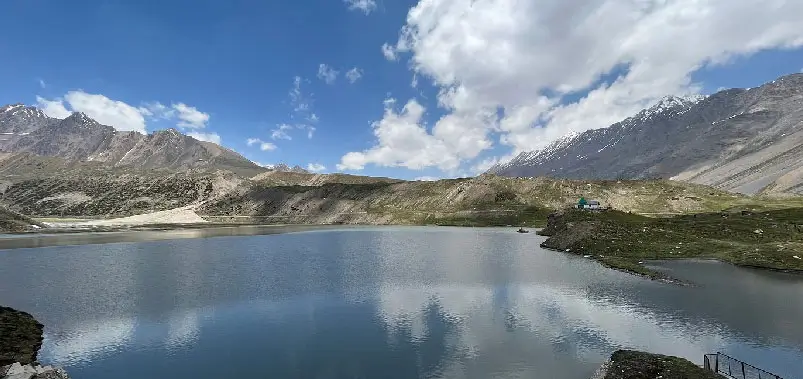
The Adi Kailash travel season is limited by snow and Himalayan weather.
The most practical periods generally fall around May to June and September to October, subject to road opening, permit operations and current weather. These windows avoid the harshest winter conditions while reducing exposure to the heaviest monsoon rainfall.
Late spring and early summer bring increasing accessibility as snow conditions improve. Days can be bright, but high-altitude mornings and evenings remain cold. Snow can still be present around the upper landscape.
The monsoon period is considerably more difficult. Heavy rain affects the lower and middle valleys, increasing the possibility of landslides, falling rocks and road closures. A road that was passable in the morning can be temporarily blocked later the same day.
September and early October can be particularly attractive because post-monsoon skies may provide clearer mountain views. Temperatures, however, begin falling as the season progresses.
Winter access becomes extremely difficult and is not part of the normal pilgrimage season. Heavy snow and severe cold affect the upper region, and many local residents traditionally move to lower elevations.
Even within the normal season, Adi Kailash weather cannot be guaranteed. Clouds can obscure the mountain after a long journey. A visitor who arrives expecting a perfect postcard view at a specific hour may be disappointed.
This is another reason a well-paced itinerary is valuable. Keeping some flexibility gives travellers a better chance of responding to temporary weather or road disruption.Rain protection should remain accessible inside the vehicle rather than buried at the bottom of luggage. A compact waterproof layer, gloves and a warm cap can become necessary with little warning.
Explore Uttarakhand’s Sacred Himalayan Destinations
Combine your Adi Kailash pilgrimage with other spiritual and scenic destinations across Uttarakhand. Let us create a private itinerary tailored to your travel dates, interests and preferred pace.
Accommodation, Food and Facilities on the Adi Kailash Route
Travellers expecting luxury hotels throughout the Adi Kailash Yatra route need to adjust expectations before departure.
Dharchula has conventional hotels and guesthouses where private rooms and basic facilities are available. Once travellers move deeper into the restricted mountain region, accommodation becomes simpler.
Homestays and basic guesthouses form an important part of the upper route around locations such as Gunji, Nabi and Kuti. Rooms may be clean and welcoming but should not be compared with city hotels. Heating, hot water, electricity and private bathrooms can be limited according to the property and local conditions.
This simplicity is part of the reality of travelling in a remote Himalayan border region.
Meals are generally straightforward vegetarian Indian food: rice, lentils, vegetables, bread and simple breakfast dishes. Travellers with allergies or strict dietary requirements should communicate them well in advance and carry appropriate backup snacks.
Do not expect an extensive restaurant menu at Jolingkong.
Carry high-energy food that travels well, but avoid filling the vehicle with excessive packaged snacks that create plastic waste. Nuts, dried fruit and simple energy foods are more practical.
Electricity may be intermittent, so a fully charged power bank is useful. Cold temperatures reduce battery performance, making spare charging capacity particularly important for phones and cameras.
Mobile networks become unreliable as the journey progresses. A particular network may work at one settlement and disappear at the next. Families should be told in advance that periods without contact are normal.
Cash remains valuable because digital payment depends on connectivity. Carry sufficient money in smaller denominations while keeping it securely divided between bags.
The limited facilities also mean travellers should bring basic personal necessities from Dharchula rather than expecting to purchase specialised items in the upper valley.
How Much Does an Adi Kailash and Parvati Sarovar Journey Cost?
The cost of an Adi Kailash tour varies substantially because the journey involves permits, specialised vehicles, remote accommodation and several days of transport.
Budget group departures can sometimes be found at lower prices, but travellers should examine exactly what is included. A cheap advertised amount may exclude transport to Dharchula, permit-related expenses, meals, emergency arrangements, upgraded vehicles or accommodation before and after the restricted sector.
For a properly organised multi-day journey beginning from a major gateway, a practical budget can fall around INR 40,000 to INR 70,000 per person for shared group arrangements, depending on duration and inclusions.
More comfortable small-group programmes may range around INR 70,000 to INR 100,000+ per person.
A customised private Adi Kailash journey with dedicated transport, better available accommodation, experienced support and additional Kumaon sightseeing can move beyond INR 100,000 per person, particularly for two travellers sharing the cost of a private vehicle.
These are budgeting ranges, not fixed tariffs.
Travellers should be suspicious of comparing packages solely by the headline price. Ask whether the rate includes permits, local four-wheel-drive transport, accommodation at every stop, meals, driver charges, taxes, medical support arrangements and the Om Parvat excursion.
Road disruption can also create additional nights. Keeping contingency funds is sensible.
The upper route is not the place to cut costs by using an unsuitable vehicle or removing acclimatisation nights.
Combining Parvati Sarovar with Om Parvat and the Kumaon Region
Most travellers making the effort to reach Adi Kailash and Parvati Sarovar also want to see Om Parvat.
Om Parvat is famous for natural snow patterns on the mountain face that are traditionally associated with the sacred symbol Om. The viewpoint is reached towards Nabidhang from the Gunji side of the route.
The two destinations complement one another but require separate excursions.
Gunji therefore becomes strategically important. One high-altitude day can be dedicated towards Jolingkong, Parvati Sarovar and Adi Kailash, while another can be used for the Om Parvat side when roads and weather permit.
Below the restricted zone, travellers can add Narayan Ashram, Dharchula and other parts of Pithoragarh district. Those entering Kumaon through Kathgodam can also incorporate Almora, Jageshwar, Binsar, Chaukori or Patal Bhuvaneshwar depending on available time.
A journey combining every attraction in too few days is not advisable. Driving distances in Uttarakhand are deceptive, and mountain travel becomes slower as altitude and road complexity increase.
For travellers arranging a private Uttarakhand pilgrimage with Top Indian Holidays, the priority should be adequate acclimatisation and realistic driving rather than the largest possible list of stops.
What to Pack for Parvati Sarovar and Adi Kailash
Packing for Parvati Sarovar Adi Kailash should focus on cold, altitude, rain and limited local facilities.
Carry thermal clothing, a warm insulated jacket, waterproof outerwear, gloves, a woollen cap, comfortable trekking shoes and extra socks. Sunglasses and sunscreen are essential because of strong high-altitude sunlight.
A small daypack is more practical than carrying a large bag during the final visit. Keep identification, permits, medication, water and essential warm layers in it.
Personal medicines should be carried in more than the exact quantity required because road delays can extend the trip. A simple personal first-aid kit is useful, although serious altitude problems require professional medical attention rather than self-treatment.
A power bank, charging cables and spare camera batteries are valuable. Keep electronics protected from rain and cold.
Reusable water bottles reduce plastic waste. Wet wipes and basic hygiene items are useful in places where facilities are simple, but used materials must be carried back for proper disposal.
The objective is not to bring every possible travel accessory. It is to carry the items that become difficult or impossible to obtain once the journey moves beyond Dharchula.
Related Guides


 info@topindianholidays.net
 +91-8955000999