📅 Last Updated On: 23 Oct 2026
⏱ 9 Min Read
11 Famous Food Dishes of Rajasthan You Must Try (and Where to Eat Them)
N
Nand Singh Rathore
Travel & Tourism Expert specializing in India
What to Eat in Rajasthan: Famous Dishes for Food Lovers
The first time most visitors taste real Rajasthani cooking, it is not in a restaurant at all. It is a paper plate of hot onion pastry eaten standing at a sweet shop counter in Jaipur at nine in the morning, or a bowl of fiery mutton curry served on a rooftop in Jaisalmer while the fort walls turn gold. The food of this desert state was shaped by scarcity: little water, few fresh vegetables, long summers and armies that had to march for days. Cooks answered with dried desert beans, millet breads, gram flour, yoghurt, clarified butter and a heavy hand with red chilli. The royal kitchens then added slow-cooked game, saffron and nuts. The result is one of the most distinctive regional cuisines in India.
This guide covers the famous food of Rajasthan across the whole state rather than a single city. You will find eleven dishes worth seeking out, grouped by type, with what each one tastes like, where it came from, and the specific restaurants and sweet shops in Jaipur, Jodhpur, Udaipur, Bikaner and Jaisalmer where locals actually eat them. Prices are quoted on the higher side of what you are likely to pay, so you will not be caught short. There are also honest notes on food safety for foreign visitors and on the cooking classes and food walks that let you learn these recipes yourself.
Signature Main Courses Every Visitor Should Order
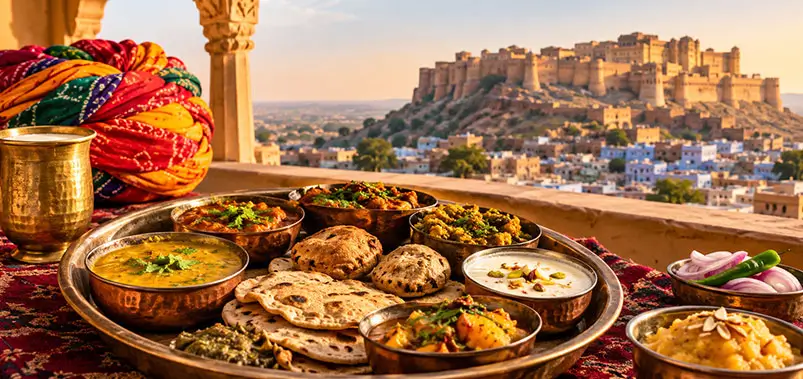
If you eat only one meal in Rajasthan, make it Dal Baati Churma, a three-part dish of spiced lentils, hard baked wheat dumplings and a sweet crumble of wheat, sugar and clarified butter. It is the dish most Rajasthani families serve at weddings, festivals and Sunday lunches, and it tells you a great deal about the state in one sitting. The dumplings, the baati, are made from coarse wheat dough rolled into fist-sized balls and baked over cow-dung embers or in a clay oven until the crust cracks. They are then split open and soaked in melted clarified butter. The lentils are usually a mix of five types, tempered with cumin, asafoetida, dried red chilli and a little garlic. The churma, the third element, is made by crushing fried or baked dough and mixing it with sugar, cardamom and more clarified butter.
The story usually told is that baati was soldiers' food. Warriors of the Mewar region are said to have buried balls of dough in the sand before battle, and the sun-heated earth baked them by the time they returned. Lentils were added later, and the sweet churma is said to have come about by accident when a cook dropped sugarcane juice on the baati. Whether or not every detail is true, the dish suits the desert perfectly: it keeps for days and needs very little water to make.
The taste is rich, nutty and filling. Break the baati into pieces, pour lentils over it, and alternate mouthfuls with the churma. Most first-timers underestimate how heavy it is, so share one portion between two people if you want to eat anything else that day. In Jaipur, LMB (Laxmi Mishthan Bhandar) on Johari Bazar in the walled city has served a reliable version for decades, with a full portion costing around ₹550 to ₹650. Chokhi Dhani, the recreated village resort on Tonk Road about 20 km south of the centre, serves it as part of its fixed dinner, and in Udaipur the low-cost but excellent Natraj Dining Hall includes it in its unlimited set meals on certain days.
The second essential main course is Gatte ki Sabzi, which means gram flour dumplings cooked in a spiced yoghurt gravy. Gram flour is mixed with yoghurt, carom seeds and chilli, rolled into thin logs, boiled, sliced into discs and then simmered in a tangy, orange-tinted sauce. It was invented for the same reason as baati: fresh vegetables were rare in the Thar, so cooks made a "vegetable" from pantry staples. The texture is soft but slightly firm, a little like Italian gnocchi, and the gravy is sour and warming rather than searingly hot.You will find Gatte ki Sabzi on almost every Rajasthani set menu. The Laxmi Niwas Palace dining room in Bikaner and Gypsy restaurant in Jodhpur both do good versions; Gypsy's rotating vegetarian platter of more than thirty dishes costs around ₹650 per person. Order it at lunchtime, when kitchens have made it fresh, rather than late at night when the gravy has been reheated several times. Eat both dishes with millet or wheat breads and a glass of buttermilk, which cools the chilli and helps digestion.
Discover the Authentic Flavours of Rajasthan
From traditional Dal Baati Churma to spicy Laal Maas and delicious Rajasthani sweets, explore Rajasthan's rich culinary heritage with a personalized travel experience featuring local food spots and authentic regional flavours.
Desert Vegetarian Specialities from the Thar
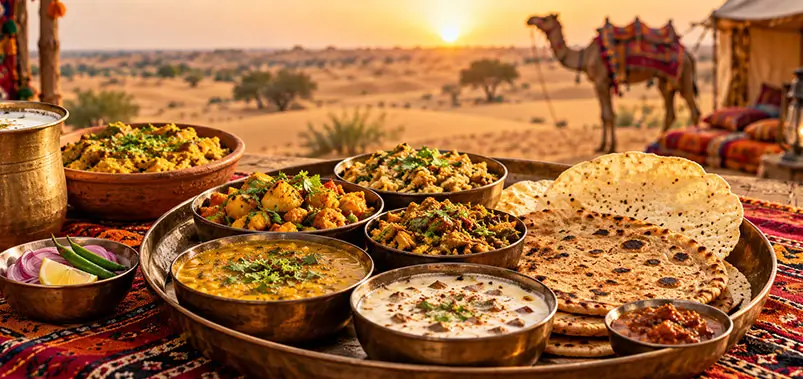
Travel west from Jodhpur towards Jaisalmer and Barmer and the landscape turns to scrub, sand and thorn trees. This is where the most unusual vegetarian dishes of Rajasthan come from, and they are worth seeking out because you will rarely find them anywhere else in India.
Ker Sangri is a dry stir-fry of wild desert berries and long dried beans, cooked with yoghurt, red chilli, dried mango powder and plenty of oil or clarified butter. Ker is a small, round, sour berry from a leafless desert shrub; sangri is the slender bean pod of the khejri tree, the hardy tree that holds the Thar together. Both are gathered in spring, sun-dried and stored for the rest of the year, which made them a lifeline during droughts. Rehydrated and cooked slowly, they become chewy, tangy, slightly bitter and deeply savoury, with a flavour some visitors compare to capers and green beans pickled together. Good Ker Sangri is not cheap even in markets, because the ingredients are foraged rather than farmed; dried sangri can sell for ₹1,200 to ₹1,800 per kilogram.
The dish keeps well, so it is a favourite on long journeys and in heritage hotels. In Jaisalmer, the rooftop restaurant The Trio near Gandhi Chowk serves it alongside desert-style platters, and in Jodhpur, Gypsy in Sardarpura includes it on its vegetarian platter. Upmarket hotel restaurants such as Suvarna Mahal at Rambagh Palace in Jaipur and Risala at Umaid Bhawan Palace in Jodhpur serve refined versions as part of their royal set menus. Expect to pay ₹350 to ₹450 for a portion in a mid-range restaurant and considerably more in a palace hotel.
The other desert classic is Bajre ki Roti with garlic chutney, which means thick flatbread made from pearl millet, served with a coarse, fiery paste of garlic and red chilli. Pearl millet grows where wheat will not, so for centuries it was the everyday grain of rural Rajasthan. The dough has no gluten, so it is patted out by hand rather than rolled, then cooked on an iron griddle and finished directly over the flame. The finished bread is dense, slightly sweet and earthy, with a pleasant grainy texture. It is traditionally eaten in winter, smeared with white butter or clarified butter, with a lump of jaggery (unrefined cane sugar) on the side and the garlic chutney to wake everything up.
The chutney itself is serious business: raw garlic cloves pounded with dried red chilli, salt and a little oil, sometimes cooked briefly to soften the bite. Ask for a small portion first. The best place to try the pairing is a rural-style dinner where the bread is cooked in front of you, such as Chokhi Dhani in Jaipur, where entry with the traditional seated dinner costs about ₹1,500 per adult, or the desert camps around Sam and Khuri near Jaisalmer, where many camp dinners include millet bread straight off the fire. Winter, from November to February, is the right season; in summer many families switch to wheat because millet is considered "heating".
These two dishes are the clearest example of what makes Rajasthani desert cuisine special. Nothing on the plate is there for decoration. Everything was chosen because it survived the heat, travelled well and gave strength for hard work.
Meat Dishes of the Royal Kitchens
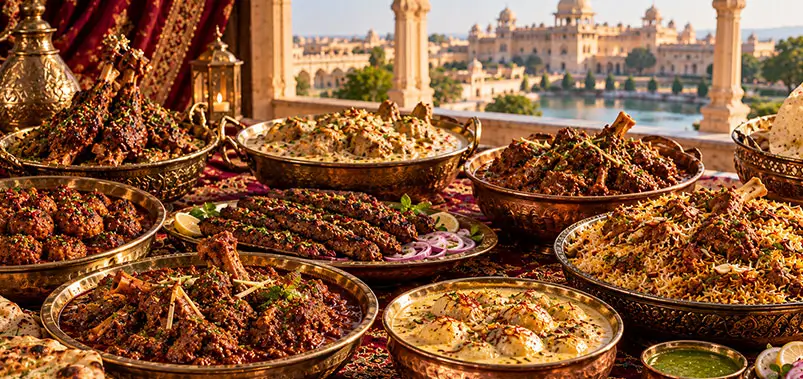
Rajasthan is often thought of as a vegetarian state, and many communities here do not eat meat. The Rajput ruling families were the exception. Hunting was a royal pastime, and the palace kitchens developed a set of meat dishes that are still among the most celebrated in India. Two of them stand out.
Laal Maas means "red meat", and it is a mutton curry cooked in a fierce red gravy of dried Mathania chillies, yoghurt, garlic and whole spices. Originally it was made with wild boar or deer brought back from royal hunts, and the chillies were there partly to mask the strong taste of game. Today it is almost always goat or mutton. The best versions are cooked slowly for three to four hours until the meat falls from the bone and the oil separates and floats on top, glowing red. The colour comes mainly from the Mathania chilli, grown near Jodhpur, which gives deep colour with heat that is strong but not brutal. Some cooks finish the dish with a smoking technique: a piece of glowing charcoal is placed in a small bowl inside the pot, drizzled with clarified butter and covered, so the meat absorbs a smoky aroma.
Laal Maas is the dish to order on a royal Rajasthan food trail, and there is fierce debate about who cooks it best. In Jaipur, Handi on MI Road, open since the 1980s, is known for a Jaisalmer-style version, with a meal for two costing around ₹1,200 to ₹1,500. Spice Court in Civil Lines serves a smoked version that draws locals and visitors alike, at roughly ₹1,700 for two. Niros on MI Road and 1135 AD, the restaurant inside Amber Fort, are other strong choices, the latter at about ₹3,000 to ₹3,500 for two with fort views. In Jodhpur, the palace restaurant Risala at Umaid Bhawan Palace serves an elegant version as part of a much higher-priced menu. Eat it with millet bread or plain rice and keep yoghurt within reach.
The gentler royal dish is Safed Maas, which means "white meat", a mutton curry cooked in a pale, creamy gravy of yoghurt, cashew paste, poppy seeds, cream and milk, scented with cardamom and white pepper. It was the dish served to guests who could not handle chilli, and to royalty on occasions when richness mattered more than heat. A close relation, Mohan Maas, is cooked in milk with dried fruits and nuts until the gravy reduces to a thick, almost sweet coating; you will see the two names used for similar dishes on palace menus. The taste is mild, buttery and aromatic, very different from what most people expect of Indian food.
Safed Maas is harder to find than Laal Maas because it takes time and costly ingredients. Your best chances are palace and heritage hotel restaurants. Suvarna Mahal at Rambagh Palace in Jaipur serves both red and white mutton as part of its royal Rajasthani set menu, which costs around ₹6,000 per person plus taxes, and Ambrai in Udaipur, on the western shore of Lake Pichola facing the City Palace, usually lists both on its menu, with mains around ₹900 to ₹1,200. Book Ambrai for sunset, around 6:30 pm in winter, and ask for a table at the water's edge. If you order both meat dishes together, start with the white one, then move on to the red; your palate will thank you.
Street Snacks Rajasthan Is Famous For
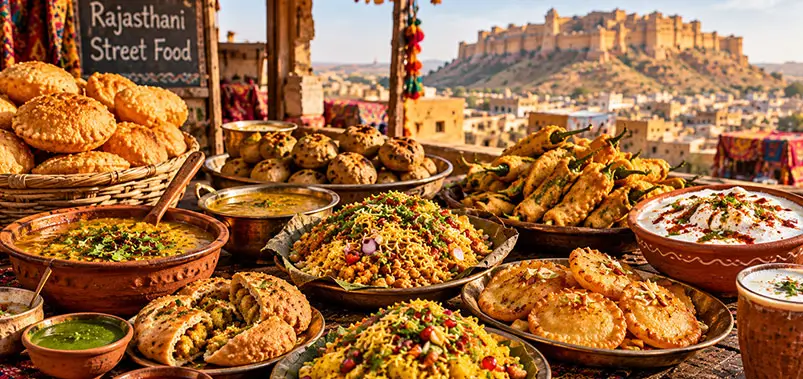
Some of the best eating in Rajasthan happens before lunch, at crowded counters where snacks come out of giant iron woks every few minutes. Two snacks in particular have become symbols of their cities.
Pyaaz Kachori is a deep-fried flaky pastry filled with a spiced onion mixture, and it is Jaipur's breakfast of choice. The pastry is made with flour and a generous amount of fat, so it puffs up and shatters when you bite it. Inside is a filling of onions cooked down with fennel, coriander seeds, chilli, dried mango powder and gram flour, which gives a sweet, sour and gently hot taste all at once. It is served hot with two chutneys: a dark, sweet tamarind sauce and a green coriander-mint sauce. The name Rawat Mishthan Bhandar near Polovictory Cinema in Sindhi Camp is almost synonymous with it; queues form from about 7:30 am, and a single kachori costs around ₹50, with a plate of two and chutneys at roughly ₹100. Go before 10 am on a weekday, when the turnover is highest and every batch is fresh from the oil.
Bikaner has its own fierce kachori culture. Chhotu Motu Joshi Sweet Shop near Station Road and Kote Gate is a local institution serving hot kachoris, fried breads with potato curry and a wide range of sweets from early morning, with most items under ₹80. It makes a perfect breakfast stop before visiting Junagarh Fort, which opens at 10 am.
The second must-try snack is Mirchi Vada, which means a large green chilli stuffed with spiced potato, dipped in gram flour batter and deep-fried. It comes from Jodhpur, where the long, fleshy local chillies are mild enough to eat whole. The chilli is slit, seeded and filled with mashed potato flavoured with coriander, ginger and spices, then coated and fried until crisp and golden. The result is crunchy on the outside, soft inside and only moderately hot, because removing the seeds tames the chilli. It is often eaten with sweet tamarind chutney, sometimes sandwiched in a bread roll as a quick lunch.
The best-known place in Jodhpur is Janta Sweet Home on Nai Sarak, a short walk from the Clock Tower market, where a Mirchi Vada costs about ₹40 to ₹50. Shahi Samosa near the same area is another favourite with locals. Mornings and late afternoons are busiest; between 4 pm and 6 pm you will see office workers and families lining up for a snack with a cup of sweet spiced tea.
Both snacks travel badly, so eat them on the spot. They are rich and oily, which is part of the pleasure, but one per person is usually enough if you want room for lunch later. These Rajasthani street food stops are also some of the safest places for visitors to eat: the turnover is so fast that nothing sits around, and everything is fried at very high temperature. Look for a shop with a crowd of locals, watch the item come out of the oil, and eat it while it is still too hot to hold comfortably.
Sweets of Rajasthan Worth Travelling For
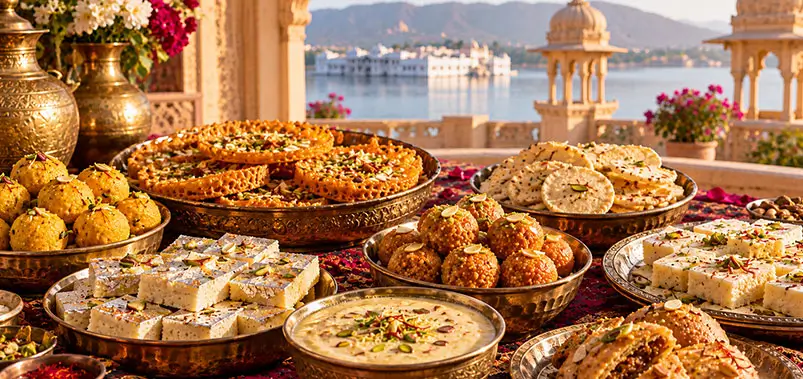
Rajasthan has a serious sweet tooth, and the three desserts below are the ones locals will tell you to try first. All of them are built on milk, sugar and clarified butter, so treat them as an indulgence rather than an everyday habit.
Mawa Kachori is a deep-fried pastry filled with sweetened milk solids, dried fruits and cardamom, then dipped in sugar syrup. It is Jodhpur's signature sweet and the city's proud answer to Jaipur's onion version. The filling of mawa, which is milk slowly reduced until it becomes a soft fudge-like solid, is mixed with chopped almonds, pistachios and sometimes saffron. The pastry is fried slowly so it stays crisp, then soaked briefly in syrup so a sugary glaze forms on the outside. It is dense, very sweet and best shared. Janta Sweet Home on Nai Sarak is again the classic choice, with a piece costing around ₹70 to ₹90, and Rawat Mishthan Bhandar in Jodhpur, near the Clock Tower, has made it for generations. Buy one in the late morning, when the day's first batch has cooled enough to hold but is still crisp.
Ghewar is a disc-shaped, honeycomb-textured sweet made by pouring a thin batter of flour and clarified butter into hot fat, then soaking the lacy result in sugar syrup. It looks like a golden sponge or a bird's nest, and the best versions are topped with thickened sweetened cream, slivered pistachios and silver leaf. Ghewar is closely tied to the monsoon festivals of Teej and Raksha Bandhan in July and August, when sweet shops across Rajasthan stack hundreds of them in their windows. The humid air of the rains is said to help the batter form its signature texture. Plain Ghewar costs around ₹700 to ₹900 per kilogram, while the cream-topped version sells for ₹1,100 to ₹1,400 per kilogram at well-known shops. In Jaipur, LMB and Rawat Mishthan Bhandar both sell excellent Ghewar, and you can buy a single small piece to try rather than a whole disc. Outside the monsoon, availability is patchier, so ask before you set your heart on it.
The third essential is Rabri with Malpua, which means thick, sweetened reduced milk served with small, syrup-soaked fried pancakes. Malpua batter is made from flour, milk and sometimes mashed banana, fried in clarified butter until the edges turn crisp and lacy, then dunked in sugar syrup. Rabri is made by simmering milk for hours in a wide pan and skimming off the layers of cream that form, which are then folded back in with sugar, cardamom and saffron. Together they make one of the most luxurious desserts in north India: crisp, soft, warm and cold, all in one spoonful.
The holy town of Pushkar, around 145 km from Jaipur, is especially famous for Malpua, and the sweet shops around the main market street near the lake fry them all day, with a plate of two plus Rabri costing roughly ₹100 to ₹150. In Jaipur, LMB serves a refined version for about ₹250. Winter evenings are the ideal time for this dessert, when warm Malpua and chilled Rabri make the perfect contrast.
Sweet shops are also where you will find the classic Rajasthani habit of buying sweets by weight as gifts. If you want to take some home, ask for dry, syrup-free items packed in sealed boxes; anything with fresh cream or Rabri needs refrigeration and will not survive a long flight. For Rajasthani sweets to take home, Ghewar without cream and dry milk-based fudges travel best.
Where to Eat in Jaipur, Jodhpur, Udaipur, Bikaner and Jaisalmer
Each city in Rajasthan has its own food personality, so it helps to know where to go before you arrive. The notes below gather the best-known names in one place, with realistic, higher-side prices.
Jaipur has the widest range, from palace dining to roadside stalls. For a grand, once-in-a-trip meal, Suvarna Mahal at Rambagh Palace serves its royal Rajasthani set menu in a gilded former ballroom at about ₹6,000 per person plus taxes; reservations are essential and smart dress is expected. For serious Laal Maas without palace prices, choose Handi, Spice Court or Niros, all in the ₹1,200 to ₹2,200 range for two. LMB is the place for vegetarian classics and sweets, with a full vegetarian platter around ₹650 to ₹750, and Rawat Mishthan Bhandar handles breakfast kachoris. Chokhi Dhani on Tonk Road, open from about 5 pm to 11 pm, combines a seated traditional dinner with folk dance, puppet shows and camel rides, and costs roughly ₹1,500 per adult, with premium packages higher. Allow 40 to 50 minutes by car from the walled city in evening traffic.
Jodhpur is the best city in Rajasthan for snacks. Start the day at Janta Sweet Home on Nai Sarak for Mirchi Vada and Mawa Kachori, eat lunch at Gypsy in Sardarpura for its huge vegetarian platter at about ₹650, and save an evening for Risala at Umaid Bhawan Palace, where dinner for two with drinks can easily exceed ₹15,000. The rooftop restaurants around the Clock Tower offer cheaper meals with superb views of Mehrangarh Fort lit up at night.
Udaipur is the most romantic food city in the state. Ambrai on the western shore of Lake Pichola is the classic sunset dinner, with a meal for two around ₹3,500 to ₹4,500 with soft drinks. Upre by 1559 AD, a rooftop restaurant above Lake Pichola, offers a similar setting. At the other end of the scale, Natraj Dining Hall, near City Station Road, is famous for its unlimited Rajasthani and Gujarati set meals at around ₹350 per person, with waiters refilling your plate until you wave them away. Arrive by 12:30 pm, before the lunch rush.
Bikaner is famous across India for its savoury snacks and sweets. Breakfast at Chhotu Motu Joshi Sweet Shop near Station Road, then lunch in the courtyard dining room at Laxmi Niwas Palace, a heritage hotel where a Rajasthani set meal for two costs around ₹3,000 to ₹4,000.
Jaisalmer is the place for desert flavours. The Trio near Gandhi Chowk, with its rooftop view of the fort, is a long-standing favourite for Laal Maas and Ker Sangri at roughly ₹1,500 to ₹2,000 for two. Desert camps around Sam Sand Dunes, about 42 km west of town, serve open-air dinners with folk music, often included in camp rates. The luxury hotel Suryagarh on the Kahala Phata road offers elaborate private dining in the dunes for guests who want something special.Wherever you eat, note that many traditional vegetarian restaurants serve no meat, no eggs and no alcohol, and some do not use onion or garlic. That is part of their character, not a shortcoming. For a Rajasthan restaurant guide that works on the road, pick one landmark meal per city and fill the rest of the day with local snacks.
Experience Rajasthan Beyond the Famous Landmarks
Make your Rajasthan holiday more memorable with a tailor-made journey combining royal palaces, vibrant markets, cultural attractions, and opportunities to taste authentic local cuisine in Jaipur, Jodhpur, Udaipur, and beyond.
Food Safety Tips for Foreign Visitors
The fear of an upset stomach stops many visitors from trying the most interesting dishes in Rajasthan, and that is a shame. With a few sensible habits, you can eat widely and still enjoy your trip. Most stomach trouble comes not from spicy food itself but from contaminated water, food that has been left standing, and sudden changes in diet.
Water is the first rule. Drink only sealed bottled water or water filtered by your hotel, and check that the cap is sealed when you buy it. A litre bottle costs around ₹20 to ₹30. Avoid ice in roadside places, and be cautious with fresh juices squeezed in the street, where the juice may be diluted with tap water. Brushing your teeth with bottled water is a sensible precaution in budget accommodation, though most good hotels have reliable filtered supplies.
The second rule is heat and turnover. Food that has just come out of a pan of boiling oil or a hot clay oven is almost always safe. This is why busy snack counters selling Pyaaz Kachori or Mirchi Vada are often safer than a quiet restaurant with a long menu, where dishes may be reheated. Look for places full of local families, watch your food being cooked, and eat it hot. Be more careful with raw salads, cut fruit sold on carts, and chutneys that have been sitting in open bowls all day. Fruits you peel yourself, such as bananas and oranges, are fine.
Dairy deserves care, especially in summer. Rabri, cream-topped sweets and yoghurt drinks are delicious, but they spoil fast in heat above 35°C. Buy them from well-known shops with refrigeration, early in the day, and skip them in the hottest months of May and June unless you trust the shop. In winter, from November to February, the risk is much lower.
Spice is the other common worry. Rajasthani cooking can be very hot, especially Laal Maas and garlic chutney. You can ask for "less chilli" or "medium spicy" anywhere; most cooks are used to foreign guests and will happily adjust. Yoghurt, buttermilk and plain rice are the best remedies if you overdo it; water only spreads the burn. Introduce rich, oily dishes gradually over your first few days, rather than eating Dal Baati Churma, Laal Maas and Ghewar at the same meal on your first evening.
Pack a simple travel kit with oral rehydration salts, a probiotic if you use one at home, and any medication your own doctor recommends for travellers' stomach upsets. Hand sanitiser is useful because many traditional places expect you to eat with your right hand. If you do fall ill, rest, drink rehydration solution and eat plain rice, bananas and toast for a day. Good hotels in every Rajasthani city can call a doctor to your room, usually for a consultation fee of ₹1,000 to ₹2,000.
Finally, trust your instincts. If a place looks dirty, the oil is dark and smoking, or the food has clearly been standing, walk on. There will always be another good option a few minutes away. With these food safety tips for India, the only thing most visitors bring home is a list of dishes they want to eat again.
Cooking Classes and Food Tours in Rajasthan
Eating Rajasthani food is one pleasure; learning to cook it is another, and it is one of the most memorable things you can do in Jaipur. A good cooking class in Jaipur usually takes place in a family home rather than a commercial kitchen, which gives you a rare look at everyday domestic life. You start with tea and a short introduction to the spice box, the round steel tin of seven or eight spices found in every Indian kitchen, and learn what each one does: cumin for earthiness, asafoetida for depth, turmeric for colour, carom seeds for digestion, dried mango powder for sourness.
Most classes run for three to four hours and cover four to six dishes. A typical session might include Dal Baati Churma or Gatte ki Sabzi, a seasonal vegetable dish, a flatbread such as wheat or millet bread made by hand, a chutney and a simple sweet. You chop, grind, knead and stir under the guidance of the host, and then sit down to eat everything you have made, often with the family. Many hosts send you home with printed recipes, so you can repeat the dishes in your own kitchen. Private classes in Jaipur typically cost ₹3,500 to ₹5,000 per person, with lower rates for groups, and morning sessions are usually better than evening ones because you can include a walk through the vegetable market beforehand to buy ingredients.
Top Indian Holidays can arrange private cooking classes in Jaipur with a local family as part of a tailor-made itinerary, timed around your sightseeing so you do not lose a day. It works especially well on the afternoon of an arrival day, when you may be too tired for forts and palaces but still keen to do something meaningful.
Food walks are the other excellent option. A guided Jaipur food tour through the walled city typically starts at 8 am or 5 pm and lasts about three hours, covering six to eight tasting stops: onion kachoris, sweet shops, spiced tea, seasonal snacks and a sit-down vegetarian meal. A good guide explains the history behind each dish, steers you towards clean, high-turnover stalls and handles the ordering so you can taste small portions of many things. Private food walks cost around ₹3,000 to ₹4,500 per person, including food. Similar walks run in Jodhpur around the Clock Tower and in Udaipur through the old city lanes near Jagdish Temple.
For something grander, several palace hotels offer chef-led sessions in their own kitchens, showing how dishes such as Laal Maas and Safed Maas were prepared for royal banquets. These are expensive, often ₹8,000 or more per person, but they include a full meal and a fascinating look behind the scenes.
Whichever you choose, the best time for food experiences is from October to March, when temperatures are pleasant, produce is at its best and winter specialities such as millet bread and Malpua are in season. Food tours can be combined easily with a private chauffeur-driven circuit through Jaipur, Jodhpur, Jaisalmer and Udaipur. If you would like help building a Rajasthan trip around these dishes, Top Indian Holidays can arrange a private car with driver, cooking classes and restaurant reservations, so the only thing you need to think about is your appetite.
Related Guides



 info@topindianholidays.net
 +91-8955000999