📅 Last Updated On: 15 Oct 2026
⏱ 11 Min Read
Jaipur to Udaipur Road Trip by Car: Best Route, Stops & Travel Time
N
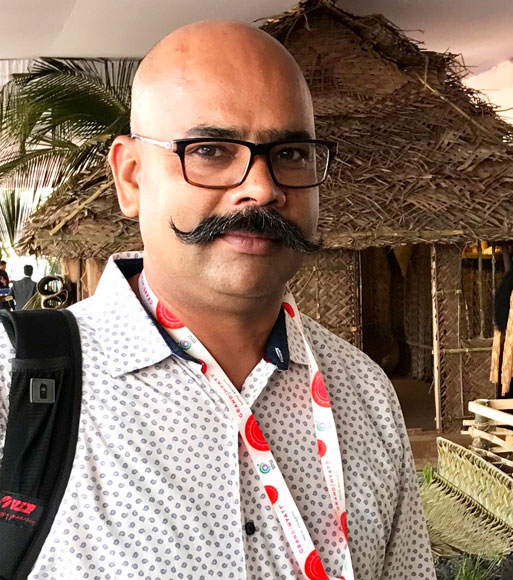
Nand Singh Rathore
Travel & Tourism Expert specializing in India
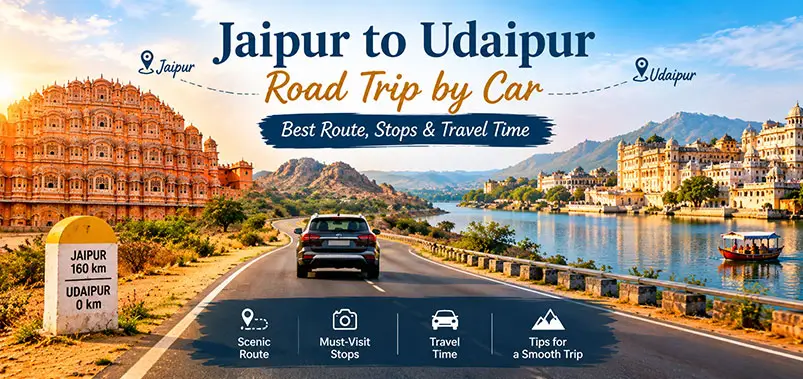
The drive from the Pink City to the City of Lakes is one of the most rewarding stretches of tarmac in Rajasthan. On paper it is a simple transfer between two famous cities, but anyone who has done the Jaipur to Udaipur road trip knows that the road itself becomes part of the holiday. Mustard fields give way to marble towns, the flat plains near Ajmer slowly rise into the Aravalli hills, and by the time the car rolls past the lakes of Udaipur, the landscape has changed completely. Travellers who fly between the two cities save a few hours but miss hilltop forts, roadside tea stalls, marble markets and some of the most important temples in western India. This guide covers the routes, real driving times, the stops worth your time, realistic car hire costs and the practical details that make the difference between a tiring transfer and a memorable day on the road.
Jaipur to Udaipur Distance by Road, Routes and Driving Time
The Jaipur to Udaipur distance by road is roughly 390 to 400 km, depending on the route you take and where exactly you start in Jaipur. Most drivers cover it in 6 to 7 hours of actual driving, but with a lunch break, a fuel stop and one or two sightseeing halts, it is more sensible to set aside 9 to 10 hours for the full day. Starting by 7:00 or 7:30 in the morning lets you reach Udaipur before sunset, which matters because the last stretch into the city is far more pleasant in daylight.
The most popular option is the NH48 route via Ajmer, Bhilwara and Chittorgarh. You leave Jaipur on the Ajmer Road, pass Kishangarh and Ajmer on a wide six-lane highway, then continue south through Bhilwara to Chittorgarh before turning west towards Udaipur. This route is about 395 km and is the fastest in terms of road quality. Large sections are divided highway with smooth surfaces, and fuel stations, clean washrooms and food courts appear every 30 to 40 km. If the goal is to reach Udaipur comfortably with one major sightseeing stop, this is the road most professional chauffeurs prefer, mainly because Chittorgarh Fort sits just a few minutes off the highway.
The second option is the Beawar and Rajsamand route. After Ajmer, the road turns towards Beawar and then runs through Bhim, Deogarh and Rajsamand before reaching Nathdwara and finally Udaipur. The distance is very similar, around 390 to 400 km, but the road is narrower in places and passes through more villages and small towns, so the driving time is often 30 to 60 minutes longer. What it offers in return is scenery. This stretch climbs through the Aravalli range, passes the large Rajsamand Lake and brings you straight into Nathdwara, home of the famous Shrinathji Temple. It also makes it easy to add Kumbhalgarh Fort as a detour, since the fort is around 50 km from the Rajsamand area.
A third variation, often used by travellers who want to see more of rural Rajasthan, combines Pushkar in the morning with the Beawar road in the afternoon. Pushkar is only 15 km from Ajmer, so it adds about an hour of driving plus sightseeing time. This version works best if you are willing to make it a long day or break the journey overnight.
For first-time visitors with limited time, the Chittorgarh route is the safer choice. For travellers who value scenery, temples and hill country, the Rajsamand route is far more interesting. Either way, a Jaipur to Udaipur road trip by car is quicker door to door than most train options and gives far more flexibility than a flight once you add airport transfers, security checks and check-in time.
A Sample Day on the Road, Hour by Hour
It helps to picture the drive as it actually unfolds, because a Jaipur to Udaipur day trip by car has a natural rhythm once you know where the time goes. The version below follows the NH48 route via Chittorgarh, which is the one most chauffeurs recommend for a single-day transfer, and it assumes a comfortable car, two or three passengers and a weekday in the cooler months.
The car collects you from your Jaipur hotel at 7:00 AM, ideally after an early breakfast or with a packed box from the hotel kitchen. Leaving at this hour matters more than it seems. Jaipur's inner roads are still quiet, and by 7:30 you are past the city limits on the Ajmer Road, heading south-west on a wide divided highway with the sun behind you. The first stretch to Kishangarh is roughly 100 km and takes about an hour and a quarter. This is the easiest driving of the day, and many guests use it to doze or simply watch village life wake up along the service roads.
Around 8:30 AM you reach the Kishangarh area. If the marble yard appeals, this is the moment for it, since the white terraces are softer and far easier on the eyes before the sun climbs. Allow 30 to 45 minutes, including a short walk and photographs. Otherwise, a tea and washroom break at a highway food court is enough before pressing on past the Ajmer bypass towards Nasirabad and Bhilwara.
The section from Kishangarh to Bhilwara is about 130 km of steady four-lane highway, and it usually takes a little under two hours. Expect a mid-morning halt around 10:30 AM for coffee, fuel and a stretch. By 11:30 AM you are past Bhilwara, a textile town that most travellers see only from the highway, and the remaining 60 km to Chittorgarh passes quickly.
Aim to drive up to Chittorgarh Fort around 12:15 PM. The car can climb through the series of gates to the top, which saves a great deal of walking. Lunch fits either just before the fort or immediately after it, and the usual order is to eat first so that nobody tours the palaces hungry. The visit itself runs from about 1:00 PM to 3:30 PM, covering Rana Kumbha Palace, the Tower of Victory, Padmini's Palace and the Meera Temple with a guide who brings the stories of sieges and royal courage to life.
Leaving Chittorgarh at around 3:45 PM leaves roughly 110 km to Udaipur, a drive of about two hours on a good road that gradually climbs into greener, hillier country. A final tea stop near Mavli or Debari is optional. With this timing, the car reaches the lakes of Udaipur between 5:45 and 6:15 PM, just as the light turns golden over the water. That is the real reward for an early start: a calm arrival at your hotel with enough energy left for dinner by the lake rather than a tired check-in after dark.
Best Stops on the Jaipur to Udaipur Road Trip
The real value of driving lies in the stops along the way. The first worthwhile halt is Kishangarh, about 100 km from Jaipur. The town is famous for its marble industry, and the white marble dumping yard on the outskirts has become a popular photography spot, with bright white terraces that look almost like a snowfield. Entry to the yard has usually been free or around ₹100 to ₹300 per person depending on current rules, and an early morning visit avoids the glare of the midday sun.
Ajmer and Pushkar come next. Ajmer is home to the revered shrine of Khwaja Moinuddin Chishti, which stays open from early morning until late at night and draws pilgrims of every faith. The lanes around it are crowded, so allow at least an hour and keep valuables secure. A short drive over the Nag Pahar hills brings you to Pushkar, a small lakeside town with the famous Brahma Temple, generally open from about 6:30 AM to 8:30 PM with a short afternoon break. Pushkar is best enjoyed slowly, with tea at a rooftop cafe overlooking the lake and a walk through the market lanes around the lake.
On the NH48 route, Chittorgarh Fort is the highlight of the day and one of the largest forts in India. Spread across a hilltop of about 700 acres, it holds palaces, temples, water reservoirs and the two famous towers, the Tower of Victory and the Tower of Fame. Entry tickets are about ₹40 for Indian visitors and about ₹600 for foreign visitors, and the fort is generally open from around 9:30 AM until sunset, with ticket counters closing earlier. A proper visit takes 2 to 3 hours, and a local guide at the gate usually charges ₹500 to ₹1,000 depending on group size and duration. If you stay overnight, the evening light and sound show is worth attending.
On the Rajsamand route, Nathdwara is the key stop. The Shrinathji Temple follows a strict schedule of viewing sessions through the day, starting early in the morning with a few short windows before noon and again in the late afternoon, and the doors stay closed in between, so check the day's timings before you arrive. Leather items, mobile phones and cameras are not allowed inside, and lockers are available nearby. Just outside town stands the Statue of Belief, one of the tallest statues of Lord Shiva in the world at about 369 feet. Entry and viewing gallery tickets range from roughly ₹200 to ₹700 depending on the level of access, and the complex is open well into the evening.
Travellers with extra time can add Kumbhalgarh Fort, whose massive outer wall stretches for about 36 km and is often described as the second longest continuous wall in the world. Tickets are around ₹40 for Indian visitors and ₹600 for foreign visitors. Haldighati, the historic battlefield associated with Maharana Pratap, sits about 40 km before Udaipur and has a small museum that makes a short and meaningful final stop.
Where to Eat on the Jaipur to Udaipur Highway
Food on a long Rajasthan drive is rarely a problem, but knowing a few dependable places makes the difference between a pleasant lunch and a rushed meal at the nearest roadside stall. Most professional drivers have their favourite highway restaurants between Jaipur and Udaipur, and they choose them for clean washrooms and safe parking as much as for the menu.
The first useful halt sits about an hour out of the city. Hotel Highway Seasons at Dudu on the Jaipur to Ajmer highway is a large vegetarian restaurant and tea stop popular with families and tour cars. It serves stuffed flatbreads, potato curries, cottage cheese dishes and set platters, with clean toilets, ample parking and a small play area for children. A breakfast of stuffed flatbreads with yoghurt and tea for two usually comes to ₹500 to ₹700 on the higher side. Further on, travellers who prefer something familiar will find a McDonald's near Ajmer at Ansal Courtyard on the Jaipur to Jodhpur road at Gegal, which opens from about 10:00 AM to 11:00 PM and is a reliable option for children who are wary of spicy food.
If the route passes through Ajmer town itself, it is worth buying a box of the dense, chewy sweet made from milk, clarified butter, sugar and wheat flour, which the city is famous for. Shops near the shrine sell it by the kilo for roughly ₹600 to ₹900. Pushkar, just over the hill, has a much more relaxed cafe scene. Sunset Café overlooks the lake from its porch and rooftop, Out of the Blue has a broad menu that includes noodles and Tibetan dumplings, and Honey & Spice is a small family-run spot known for South Indian coffee and homemade cakes. A cafe lunch for two in Pushkar costs about ₹1,000 to ₹1,500. Note that Pushkar is a strictly vegetarian town, and eggs and meat are not served.
On the Chittorgarh route, lunch inside or near the fort is the most convenient choice. Shri Barbarik Restaurant inside the fort area serves Rajasthani food such as Dal Baati Churma, which is baked wheat dumplings served with spiced lentils and a sweet crumble of crushed wheat and sugar. Angeethi Restaurant and Cafe, also near the top of the fort, is known for its tandoori platters, while Zero Degree offers a rooftop with fort views and a menu of burgers, pizzas and Chinese dishes. Expect ₹400 to ₹600 per person for a full meal on the higher side.
Travellers on the Rajsamand route have their own options. Pit Stop Rest 'O' Café on the Udaipur to Jaipur highway at Deogarh, opposite the Reliance fuel station, is a well-known halt for cars and motorbike groups, and it makes a comfortable lunch break roughly halfway through the day. For a more refined meal, the dining room at Deogarh Mahal serves lunch to non-resident guests on prior booking, with Rajasthani set menus usually priced at ₹1,500 to ₹2,500 per person.
A few habits keep everyone well on the road. Stick to freshly cooked hot food, avoid cut fruit and salads at small stalls, and drink only sealed bottled water. Tea from busy roadside stalls is generally safe because it is boiled, and a cup costs ₹30 to ₹50. If anyone in the group has allergies or strict dietary needs, tell the driver in the morning so that he can steer you to the right kitchen at lunchtime.
Arriving in Udaipur: First Evening and What to See First
After nine or ten hours on the road, the first evening in Udaipur should be gentle. The approach from Chittorgarh enters the city from the east, and the drive to the old quarter around Lake Pichola takes another 20 to 30 minutes through narrow lanes, so let the driver handle the final stretch and resist the urge to start sightseeing straight away. Many of the best lake hotels sit on islands or at the water's edge, and some of the old-city properties cannot be reached by car right to the door. A porter or hotel buggy usually meets the car at the nearest point, which is worth knowing if you are carrying heavy luggage.
Udaipur has a wide spread of hotels, and the choice shapes the whole stay. Taj Lake Palace, floating in the middle of Lake Pichola and reached only by boat, is the most famous address in the city, with rooms that often run from ₹70,000 to well over ₹1,20,000 per night in season. The Oberoi Udaivilas on the eastern shore is similarly priced and widely rated among the finest hotels in India. The Leela Palace Udaipur offers lake views at ₹45,000 to ₹80,000, while Trident Udaipur, set in quieter gardens, is a good-value luxury option at around ₹15,000 to ₹25,000. Smaller heritage hotels in the old city around Gangaur Road and the lakeside lanes offer rooftop views for ₹6,000 to ₹15,000 a night.
For the first evening, a sunset by the water is the obvious choice. A Lake Pichola boat ride leaves from jetties near the City Palace, and on the higher side costs about ₹800 to ₹1,000 per person for a regular ride and ₹1,200 to ₹1,400 for the sunset departure for foreign visitors, with lower fares for Indian visitors. Rides may be suspended in the monsoon or when water levels are low. Those who prefer to stay on land can watch the lake turn pink from a rooftop restaurant. Ambrai, on the western shore facing the City Palace, is one of the most photographed dining spots in the city, and dinner for two with drinks costs around ₹4,000 to ₹6,000. The rooftop restaurants of the old-city heritage hotels offer similar views at gentler prices.
The next morning is the right time for the City Palace of Udaipur, the largest palace complex in Rajasthan, which stretches along the eastern bank of the lake. Adult museum tickets are roughly ₹300 for Indian visitors and ₹600 for foreign visitors, and arriving close to opening time at around 9:30 AM avoids the tour groups that pour in later. Allow two to three hours for the courtyards, mirror rooms, painted chambers and balconies looking straight over the water. The Jagdish Temple, a fine seventeenth-century temple with carved stone walls, stands just a few minutes' walk from the palace gate and is best seen on the same morning.
Later in the day, the garden of Saheliyon ki Bari, with its fountains and marble pavilions, makes a quiet contrast to the crowds, and the hilltop Sajjangarh Monsoon Palace gives the finest sunset view over the whole valley. In the evening, the Dharohar folk dance show by the lakeside in the old city is a lively hour of traditional Rajasthani music, puppetry and dance, with tickets at a few hundred rupees. Two full days in the city is the minimum after such a long drive, and three is better if you would like time for a cookery class, shopping for miniature paintings or simply sitting by the lake.
Overnight Stays and Two-Day Versions of the Drive
Driving the full distance in one day is entirely possible, but many of our guests find that a two-day Jaipur to Udaipur road trip transforms the journey from a transfer into a highlight of the holiday. Breaking the drive overnight means no early alarm, no rushing at the forts and the chance to stay somewhere memorable that you would never reach by train or flight.
The most popular version follows the NH48 and stops near Chittorgarh. On the first day, leave Jaipur at a relaxed 9:00 AM, visit the Kishangarh marble yard, have lunch in Ajmer or Pushkar, and reach the Chittorgarh area by late afternoon. Castle Bijaipur, a sixteenth-century castle hotel about 40 km from Chittorgarh, is the classic choice, with courtyard rooms, a pool and village walks, and nightly rates of roughly ₹10,000 to ₹16,000 on the higher side. Staying nearby allows a morning tour of Chittorgarh Fort when the stones are cool and the light is soft, followed by a short two-hour drive into Udaipur for a late lunch by the lake. Travellers who want the fort's evening light and sound show can stay closer to town instead.
The second version is the scenic hill route. Day one runs from Jaipur via Ajmer and Beawar to Deogarh Mahal, an eighteenth-century hilltop palace hotel with painted rooms, a rooftop terrace and sweeping views over the Aravalli countryside. Rooms usually cost ₹12,000 to ₹20,000 per night on the higher side, and the hotel arranges jeep drives, village walks and short train journeys on the nearby heritage line through the hills. On day two, the car continues via Rajsamand Lake and Nathdwara, reaching Udaipur by early afternoon. This version suits travellers who enjoy rural Rajasthan and quiet country hotels rather than the busier fort towns.
A third version brings in Kumbhalgarh Fort, which deserves far more time than a rushed detour. Leave Jaipur early, drive via Ajmer, Beawar and Rajsamand, and reach Kumbhalgarh by mid-afternoon. The Aodhi, an HRH Group hotel built of stone just below the fort walls, costs about ₹12,000 to ₹18,000 per night, and Club Mahindra and other resorts in the valley offer alternatives. The fort's evening light and sound show and a walk along part of the 36 km wall at sunset are memorable. The next morning, Ranakpur's famous Jain temples are about 50 km away and make an outstanding addition before the final drive to Udaipur, which takes around two to two and a half hours from Ranakpur.
For travellers who enjoy a slower, more spiritual start, a night in Pushkar is the fourth option. The Westin Pushkar Resort and Spa sits among farmland on the edge of town at ₹15,000 to ₹28,000 per night, and a sunset by the lake followed by dinner at a quiet rooftop is a fine way to end the first day. The following morning, the car takes the Beawar and Rajsamand road via Nathdwara, timing arrival at the Shrinathji Temple for one of the morning viewing windows.
Whichever version you prefer, the extra night usually adds only the hotel cost and a driver's night allowance of ₹400 to ₹600 to the car hire, since the total distance barely changes. For a holiday of ten days or more, it is almost always worth it.
Best Time, Road Conditions and Tips for Families
The best time for a Jaipur to Udaipur road trip is from October to March. Daytime temperatures stay between 20°C and 30°C, skies are clear and fort visits are comfortable even at midday. December and January mornings can be cold and foggy, especially around Ajmer and Bhilwara, so an 8:00 AM start is better than a 6:00 AM one in peak winter. From April to June temperatures cross 40°C, and walking around Chittorgarh or Kumbhalgarh becomes exhausting after 10:00 AM. The monsoon months of July to September turn the Aravalli hills green and fill the lakes of Udaipur and Rajsamand, which makes the scenery beautiful, but heavy showers can slow traffic and make fort paths slippery.
Road conditions on the NH48 are generally excellent, with long stretches of six-lane highway between Jaipur and Ajmer and four-lane highway most of the way to Udaipur. The final approach from Chittorgarh to Udaipur is also good. The Beawar and Rajsamand route has well-maintained sections, but traffic moves slower through towns and around marble trucks near Rajsamand. Night driving is best avoided on either route because of poorly lit village stretches, slow-moving tractors and animals crossing the road.
Food is easy to find along the way. Modern highway food courts near Kishangarh and Bhilwara serve North Indian meals, sandwiches and coffee, with clean washrooms. Ajmer and Pushkar have good cafes, and Chittorgarh has a handful of decent restaurants near the fort road. Carry bottled water, a few snacks and some cash in small notes, since smaller stalls and parking attendants may not accept cards or digital payment from foreign cards.
A few practical habits make the day smoother. Keep passports or ID cards handy, because some monuments ask for them when you buy foreign visitor tickets. Wear comfortable shoes with good grip for the uneven stone paths at Chittorgarh and Kumbhalgarh, and carry a scarf or light shawl for temple visits, where shoulders and knees should be covered. Download offline maps before leaving Jaipur, since mobile signal drops in the hill sections near Kumbhalgarh and Haldighati.
A long road day affects every age group differently, and a family road trip from Jaipur to Udaipur works best when the timetable is shaped around the slowest member of the group rather than the most eager. The good news is that this route is well suited to families. The highways are smooth, fuel stations with washrooms are frequent, and the main sights have car access close to the entrance.
Choosing the right vehicle makes the biggest difference. For a family of four with full suitcases, a Toyota Innova Crysta is the most comfortable option, with captain seats in the middle row, generous legroom and space for luggage at the back. Families of five to seven with large bags are better served by two cars or a Force Urbania or Tempo Traveller, which allows people to stretch out, sleep and move around at breaks. Travellers who prefer a smoother ride and a quieter cabin often choose a Toyota Fortuner or Mercedes-Benz for the full trip, particularly when older parents are travelling.
Child seats are not standard in Indian hire cars, and few operators can guarantee them. Families with toddlers usually bring their own seat from home, and it is worth confirming in advance that the car has suitable seat belts and anchor points. Pack a small bag of snacks, wet wipes, a change of clothes, books and downloaded games or films for the long stretches between Ajmer and Bhilwara. Stopping every 90 minutes to two hours keeps restlessness under control, and highway food courts with play areas, such as the one at Dudu, are welcome breaks for younger children.
For elderly travellers, the main concerns are walking distances, steps and heat. At Chittorgarh Fort, the car can drive up through the gates and stop near most of the main monuments, which reduces walking to a few hundred metres at each point. The Tower of Victory has narrow internal stairs, so older visitors often admire it from the base. Kumbhalgarh is harder, with a steep slope from the car park to the palace at the top, and it is better suited to younger travellers. At Nathdwara, the temple can be very crowded during viewing sessions, so elderly visitors and families with small children should choose a less busy window, usually late morning on a weekday, and avoid festival days.
Wheelchair users will find the highways and modern hotels manageable, but most old forts, temples and city lanes are not designed for wheelchairs. Udaipur's luxury lake hotels generally have ramps, lifts and accessible rooms, and it is sensible to request ground-floor or lift-access rooms when booking. Carry essential medicines in a small bag inside the car rather than in the boot, along with copies of prescriptions.
The two-day versions of the drive are often the right answer for mixed-age groups. Splitting the journey into two days of four to five hours each, with a pool and garden at a heritage hotel in between, keeps grandparents rested and children happy, and everyone arrives in Udaipur ready to enjoy the lakes instead of needing a day to recover.
Jaipur to Udaipur Taxi Fare, Tolls and Fuel Costs
Budgeting for the drive depends mainly on the type of vehicle and whether you hire a car with a driver or drive yourself. For most international visitors, a private car with driver is the sensible choice. Indian highways are well built, but local driving habits, cattle on the road, trucks overtaking on blind corners and changing traffic rules make self-drive tiring for anyone not used to them.
On the higher side, a one-way Jaipur to Udaipur taxi fare in a comfortable sedan such as a Toyota Etios or Honda City usually falls between ₹7,500 and ₹9,500. A Toyota Innova Crysta, which is the most popular choice for families and small groups because of its legroom and luggage space, typically costs ₹11,000 to ₹14,000 one way. A premium SUV such as a Toyota Fortuner ranges from ₹16,000 to ₹22,000, while a luxury car rental in a Mercedes-Benz E-Class or similar can cost ₹35,000 to ₹50,000 for the same trip. Tempo Travellers for groups of 10 to 12 people generally cost ₹18,000 to ₹24,000.
Most operators quote on a per-kilometre basis for multi-day tours. Higher-side rates are around ₹14 to ₹16 per km for a sedan, ₹20 to ₹24 per km for an Innova Crysta and ₹85 to ₹110 per km for a Mercedes, usually with a minimum of 250 to 300 km per day. A driver allowance of about ₹400 to ₹600 per night is added when the driver stays overnight, along with state permit charges where applicable. One-way trips often attract a return charge because the car has to go back empty, which is why some one-way quotes look higher than expected.
Highway tolls on the NH48 route add roughly ₹600 to ₹900 for a car one way, collected electronically through FASTag. The Rajsamand route has slightly fewer toll plazas but similar total costs once state highway tolls are included. Reputable operators include tolls, parking and fuel in an all-inclusive quote, so always ask for a written price that clearly states what is covered.
For self-drive travellers, fuel for a 400 km trip in a mid-size car averages ₹3,000 to ₹4,000, depending on mileage and the current price of petrol or diesel. Self-drive rental cars in Jaipur cost about ₹2,500 to ₹5,000 per day for hatchbacks and sedans, plus a refundable security deposit and a one-way drop fee.
Hiring through an established tour operator also brings softer benefits that matter on a long road day. The driver knows which restaurants have clean washrooms, which fort gates are least crowded and how to time arrival at Nathdwara around the temple schedule. Top Indian Holidays arranges chauffeur-driven cars from Jaipur to Udaipur in sedans, Innova Crysta, Mercedes-Benz and Tempo Travellers, with English-speaking drivers and transparent pricing that includes fuel, tolls and parking. For travellers combining the drive with a wider holiday, it fits naturally into a Golden Triangle tour with Udaipur, where Delhi, Agra and Jaipur are followed by this scenic road journey and a few slow days by Lake Pichola. The same team can build the entire route privately, with your choice of stops, hotels and vehicle.
Related Guides



 info@topindianholidays.net
 +91-8955000999