📅 Last Updated On: 25 Aug 2026
⏱ 10 Min Read
Kashi Vishwanath Temple: Darshan, Timings & Complete Travel Guide
T
Top Indian Holidays
Ministry of Tourism Approved Tour Operator
Kashi Vishwanath Temple: Darshan, Timings & Complete Travel Guide
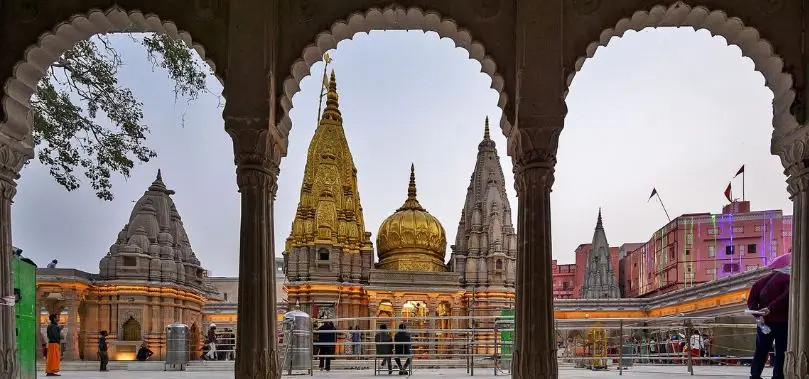
Kashi Vishwanath Temple in Varanasi is one of the most important Shiva temples in India and one of the twelve Jyotirlingas. Located in the ancient sacred city of Kashi, the temple stands close to the Ganges and forms the religious centre of one of the world's oldest continuously inhabited urban landscapes. For many pilgrims, a visit to Kashi Vishwanath Jyotirlinga is not simply another temple stop but one of the most meaningful journeys associated with Lord Shiva.
Varanasi is intense, crowded, spiritual and deeply layered. Narrow lanes, temple bells, river ghats, flower sellers, priests, pilgrims, old buildings and modern infrastructure all meet in the same part of the city. The Kashi Vishwanath Corridor has transformed access to the temple by creating a broad connection between the temple precinct and the riverfront, making movement easier than in earlier years while retaining the sacred setting of old Kashi.
The temple receives large numbers of visitors every day, and crowd levels rise sharply on Mondays, major Shiva festivals and religious holidays. A successful visit therefore depends on choosing the right arrival time, carrying only permitted items and knowing how the entry system works before reaching the security area.
Current temple information should always be checked shortly before travel because darshan timings, special worship schedules and entry procedures can change according to religious events and crowd-management requirements.
Kashi Vishwanath Temple History and Its Importance as a Jyotirlinga
The religious significance of Kashi Vishwanath Temple Varanasi is rooted in the belief that Kashi is the city of Lord Shiva. The temple is dedicated to Vishwanath, meaning "Lord of the Universe," and the Jyotirlinga here is regarded as one of the twelve most sacred manifestations of Shiva.
The history of the temple is complex because the sacred site has been destroyed, rebuilt and transformed several times over centuries. The present temple structure is widely associated with Maharani Ahilyabai Holkar of Indore, who had the shrine rebuilt in the eighteenth century. Later rulers and patrons contributed to the temple complex, including the gilding of important parts of the structure.
The current temple is therefore both a living place of worship and a monument carrying several layers of political, religious and architectural history.
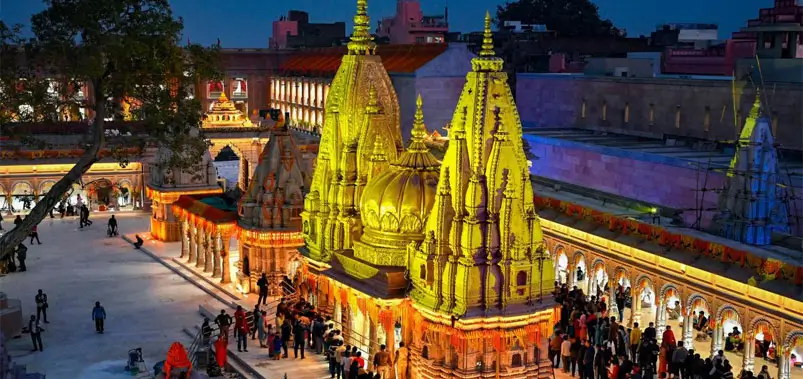
The golden spire is one of its most recognised visual features. Pilgrims approaching through the old city often see only brief glimpses of the temple because of the dense urban fabric around it. The modern corridor has changed that experience substantially by opening a wider processional and pedestrian space between the river and temple precinct.
The sacred identity of Kashi Vishwanath is closely connected with the Ganges. Many pilgrims traditionally bathe or pray at the river before entering the temple. Manikarnika Ghat, Dashashwamedh Ghat and Lalita Ghat are all located within the broader sacred landscape of the old city.
The temple also has strong connections with other important shrines in Varanasi, including Annapurna Devi Temple, Vishalakshi Temple and Kaal Bhairav Temple. For a serious pilgrimage visit, these temples should be treated as part of the wider sacred geography rather than isolated attractions.
Kashi is also closely associated with the idea of liberation from the cycle of rebirth. This belief gives the city a religious intensity unlike most Indian destinations. Cremation ghats, daily worship, temple rituals and sacred bathing all exist beside ordinary urban life.For international visitors, the strength of Varanasi lies precisely in this overlap. The city is not staged for tourism. Rituals continue regardless of whether visitors are present.
Plan Your Varanasi Spiritual Journey
Experience the spiritual heart of India with a private Varanasi tour covering Kashi Vishwanath Temple, the sacred ghats, Ganga Aarti and other important attractions. We can arrange your sightseeing, transfers and accommodation for a smooth pilgrimage experience.
Kashi Vishwanath Temple Timings and Darshan Hours
The Kashi Vishwanath Temple timings generally begin very early in the morning and continue until late at night, with breaks and separate periods for specific rituals.
A commonly followed daily schedule begins around 3:00 AM, when the temple opens for the first major ritual period. The early-morning Mangala Aarti generally takes place before normal public darshan begins. Public darshan then continues through much of the day, subject to temporary closures for worship ceremonies.
For ordinary visitors, the most comfortable periods are usually early morning after the first ritual cycle or later in the day before the evening rush.
The temple generally remains open until around 11:00 PM, although last-entry arrangements and ritual closures can vary.
Because the schedule includes several aartis and ceremonial periods, visitors should not assume uninterrupted entry throughout the day.
Typical ritual periods include:
- Mangala Aarti in the early morning
- Bhog Aarti around midday
- evening worship
- Shringar and night worship before closing
Special worship tickets may be available for certain ceremonies. Charges and availability can change, and pilgrims who specifically want to attend an aarti should book only through authorised temple channels.
The most important practical rule is simple: do not rely on an old screenshot of temple timings. Religious schedules can shift during festival periods, lunar dates and major events.
Mondays are particularly important for Shiva worship and usually bring larger crowds.
The month of Shravan is also one of the busiest pilgrimage periods. On major religious dates, queue times may extend considerably.
Travellers interested mainly in ordinary Kashi Vishwanath darshan should prefer a non-festival weekday and arrive early in the morning.
Entry Fee, Darshan Tickets and Special Access
There is generally no basic entry fee for ordinary darshan at Kashi Vishwanath Temple.
Pilgrims can enter the temple through the designated queue system after security screening without purchasing a conventional sightseeing ticket.
However, the temple also offers certain paid services, including special darshan arrangements and selected ritual bookings. Prices depend on the service and can change.
Visitors should only purchase tickets through authorised counters or official systems.
Avoid accepting unofficial claims from individuals near the lanes who promise guaranteed instant entry, special private access or access to restricted areas.
Paid worship options can include special aarti participation, Rudrabhishek or other religious services according to current temple arrangements.
For visitors with limited time, authorised priority access can sometimes reduce waiting, but availability depends on the day and crowd level.
The temple management also has specific provisions for elderly visitors and people with accessibility needs, although exact procedures should be confirmed on arrival.
What You Can and Cannot Carry Inside Kashi Vishwanath Temple
Security at Kashi Vishwanath Temple is strict because of the importance and sensitivity of the site.
Mobile phones, cameras, large bags and many electronic items are restricted inside the main temple area. Visitors should carry as little as possible.
Lockers and authorised storage facilities are available around the temple precinct and corridor areas. It is more comfortable to leave non-essential belongings at the hotel whenever possible.
A passport or necessary identification can be carried securely if required, but travellers should avoid bringing expensive electronics or unnecessary valuables.
Shoes must be removed before entering the sacred area. Official or authorised footwear storage points should be used.
Photography is prohibited in restricted temple sections.
This rule should be respected without attempting hidden mobile photography.
The old-city environment is busy, so travellers carrying passports, wallets and cash should remain aware of their belongings even before entering the controlled temple zone.
Best Time of Day for Kashi Vishwanath Darshan
For most travellers, early morning is the best time to visit Kashi Vishwanath Temple.
Varanasi wakes early, and the old city has a very different atmosphere before the main daytime crowds build. Roads are quieter, temperatures are more comfortable during warmer months and the temple queue is often more manageable.
A practical approach is to leave the hotel before sunrise, reach the old city and complete darshan before the busiest sightseeing period.
Another good option is to approach from the river side after an early morning boat ride.
Travellers can take a sunrise boat on the Ganges, disembark near the corridor access point and continue towards the temple, subject to current entry arrangements.
Late morning and early afternoon can sometimes be manageable on normal weekdays, but heat becomes a factor during warmer months.
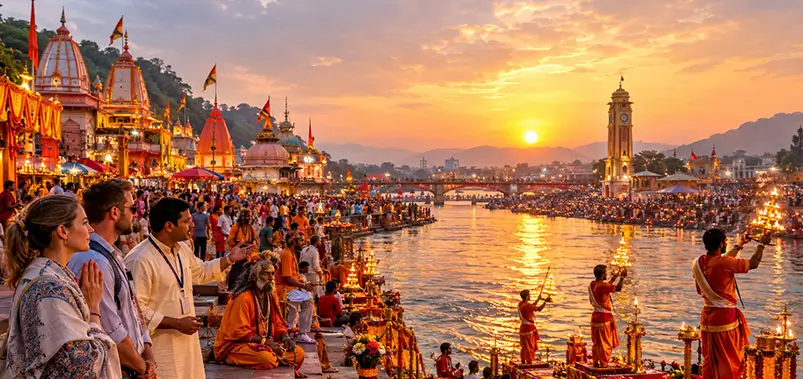
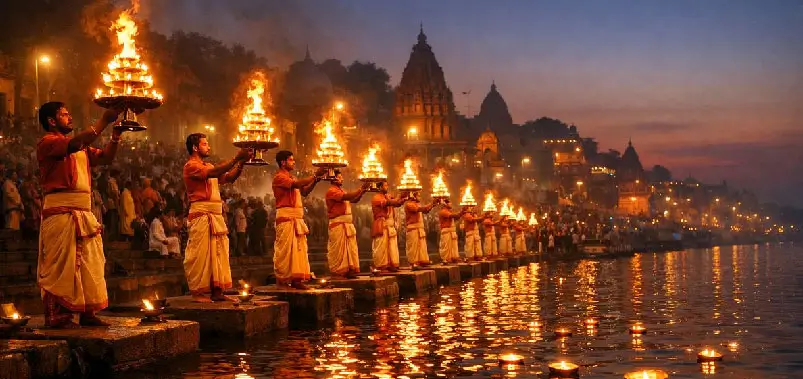
Evening can be highly atmospheric but busier, particularly because many visitors combine temple darshan with the Ganga Aarti at Dashashwamedh Ghat.
Anyone attempting both in one evening should allow substantial buffer time.
Kashi Vishwanath Corridor and River Access
The Kashi Vishwanath Corridor has become one of the most important changes to the visitor experience in Varanasi.
Earlier, access to the temple depended heavily on extremely narrow old-city lanes. Those lanes still remain part of the surrounding urban fabric, but the corridor provides a broader connection between the temple and the Ganges.
The river-facing side around Lalita Ghat gives pilgrims a much more direct relationship between sacred bathing, river worship and temple access.
The corridor includes open spaces, visitor facilities and restored structures within the wider temple precinct.
For first-time visitors, this has made orientation considerably easier.
The best way to appreciate the corridor is not to treat it as a modern attraction separate from the temple. Its importance comes from reconnecting the temple visually and physically with the river.
Visitors should keep enough time to walk through the area calmly rather than entering the temple and immediately leaving.
How to Reach Kashi Vishwanath Temple from Varanasi Airport and Railway Station
Lal Bahadur Shastri International Airport is the main airport serving Varanasi.
The airport is roughly 25 to 30 kilometres from the old city depending on the route. Travel time can range from around 45 minutes to well over an hour because Varanasi traffic is unpredictable.
A prepaid taxi or hotel-arranged private transfer is the easiest option for international travellers.
Vehicles cannot normally drive directly to the temple entrance through every old-city lane.
Visitors are generally dropped at an accessible road point and complete the final section on foot, by electric rickshaw or through controlled local transport.
Varanasi Junction is one of the main railway stations and is much closer to the old city than the airport.
From the station, traffic conditions determine travel time more than distance.
There are also other railway stations in the metropolitan area, so travellers should check the exact station shown on their ticket before arranging pickup.
For premium travellers, a private vehicle with a local driver is useful for transfers, but it does not remove the need to walk in the final temple area.
Comfortable walking shoes are therefore essential.
Coming to Kashi Vishwanath by Boat
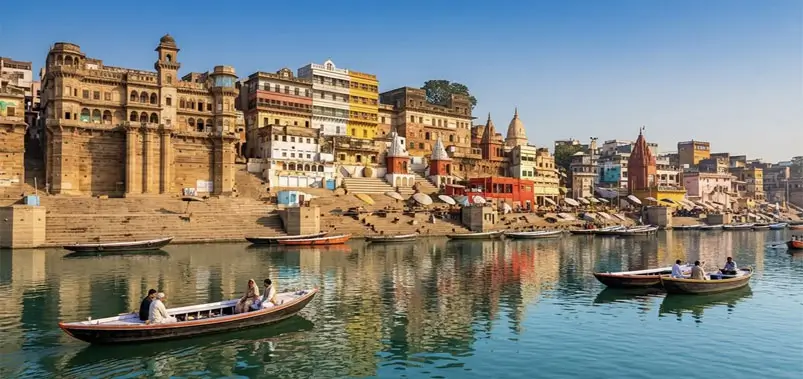
One of the most memorable ways to approach the sacred district is from the Ganges.
A private boat ride at sunrise allows visitors to see the ghats as the city begins its day. Pilgrims bathe, priests perform rituals and cremation fires continue at Manikarnika.
After the boat ride, visitors can disembark near the old-city section and continue towards the temple corridor.
This creates a natural sequence: river, ghats, old city and temple.
Private boat prices vary according to duration, boat type, demand and season.
A simple rowing boat may cost a few thousand rupees depending on the route and negotiation, while larger or motorised private boats can cost significantly more.
Premium private boats with comfortable seating can move into a higher price range.
Travellers should agree on the total fare, duration and route before departure.
What to See Around Kashi Vishwanath Temple
A visit to Kashi Vishwanath Jyotirlinga becomes much stronger when it includes the surrounding sacred sites.
Annapurna Devi Temple is closely associated with Kashi Vishwanath and lies nearby.
Vishalakshi Temple is another important shrine and is traditionally included among the Shakti Peethas.
Kaal Bhairav Temple is considered one of the most important guardian shrines of Kashi.
Dashashwamedh Ghat is the best-known location for the evening Ganga Aarti.
Manikarnika Ghat is one of India's most important cremation ghats and should be approached respectfully.
Visitors should avoid intrusive photography around cremation rituals.
A complete sacred-city day may include early temple darshan, old-city walking, breakfast, rest during the hotter part of the day and evening Ganga Aarti.
Trying to complete every major temple and ghat between breakfast and lunch usually turns the visit into a race.
Where to Stay Near Kashi Vishwanath Temple
Varanasi offers accommodation ranging from simple guesthouses to premium heritage hotels.
Travellers who want to remain close to the ghats can choose properties within the old-city or riverfront zone.
The advantage is atmosphere.
The disadvantage is vehicle access.
Some heritage hotels require guests to complete the final section by boat or on foot because cars cannot reach the entrance directly.
Visitors carrying heavy luggage should confirm the exact arrival procedure before booking.
Premium riverfront hotels can cost around INR 15,000 to INR 40,000+ per night, while luxury heritage properties and suites may cost considerably more.
Comfortable upper-mid-range hotels away from the narrow lanes can fall around INR 6,000 to INR 15,000+ per night depending on demand.
During major festivals and high-demand winter dates, prices can rise sharply.For elderly travellers or visitors with mobility concerns, a hotel with straightforward road access can be more practical than a picturesque property deep inside the old lanes.
Explore Varanasi Beyond Kashi Vishwanath
Make the most of your visit to Varanasi by exploring Kashi Vishwanath Temple, Dashashwamedh Ghat, Sarnath and the Ganges in one carefully planned itinerary. Travel comfortably with a private car and driver.
How Many Days Are Enough for Varanasi?
A rushed one-night visit allows only a small glimpse of the city.
For most first-time visitors, two or three nights in Varanasi are much better.
One morning can be devoted to sunrise on the Ganges and Kashi Vishwanath.
One evening can be reserved for the Ganga Aarti.
Additional time can include Sarnath, the old city, local markets and other temples.
Travellers deeply interested in pilgrimage may prefer three or four nights.
Varanasi should not be treated as an airport stop between Delhi and another destination. The city becomes more rewarding when visitors experience both early morning and evening.
Best Months to Visit Kashi Vishwanath Temple
The cooler months are generally the most comfortable for walking in Varanasi.
From around October through March, daytime conditions are more suitable for exploring temples and ghats.
Early mornings in mid-winter can be cold and occasionally foggy.
The warmer months can become extremely hot, making afternoon walking difficult.
The monsoon period brings humidity and changing river levels.
Religious festivals create another consideration.
Maha Shivaratri and the Shravan period are spiritually important but extremely crowded.
Travellers who want a calmer first visit should avoid the largest Shiva festival dates.
Practical Costing for a Comfortable Varanasi Visit
A private Varanasi visit can be arranged at many different budget levels.
A good private airport transfer may cost roughly INR 1,500 to INR 3,500+ depending on vehicle type and location.
A private guided half-day city visit can range from several thousand rupees upward.
Premium specialist guides can cost more.
Private boats can range from roughly INR 2,000 to INR 8,000+, depending on boat type, route, duration and demand.
Luxury hotel accommodation can easily exceed INR 20,000 per night, while the best heritage suites can move far higher.
Special worship bookings should be budgeted separately.
Top Indian Holidays can combine Kashi Vishwanath Temple Varanasi with Sarnath, Prayagraj, Ayodhya or a wider northern India journey. For travellers seeking a private itinerary, realistic transfer time and the correct hotel location are more important than fitting the maximum number of temples into one day.
Temple Etiquette and Practical Visitor Advice
Dress respectfully.
There is no need for elaborate ceremonial clothing, but shoulders and knees should be appropriately covered.
Carry minimal belongings.
Keep small cash available for authorised donations and local expenses.
Do not hand passports, phones or valuables to unofficial intermediaries.
Use designated lockers.
Follow security instructions.
Do not photograph restricted areas.
Do not argue with queue management during crowded periods.
If travelling with elderly relatives, choose an early weekday visit and allow more time.
If travelling with children, keep them close in the old city and crowded temple passages.
Most importantly, do not approach Kashi Vishwanath as a monument that must be "completed" quickly.
The temple sits at the centre of a much larger religious landscape. The lanes, river, surrounding shrines and daily worship give meaning to the visit.
Related Guides



 info@topindianholidays.net
 +91-8955000999