📅 Last Updated On: 21 Sep 2026
⏱ 8 Min Read
Bagore Ki Haveli Udaipur: History, Timings, Entry Fee & Visitor Guide
N
Nand Singh Rathore
Travel & Tourism Expert specializing in India
Bagore Ki Haveli Udaipur: Timings, Entry Fee & Guide
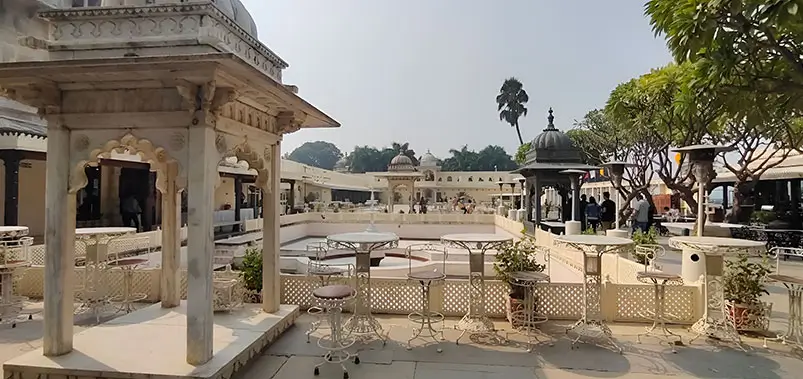
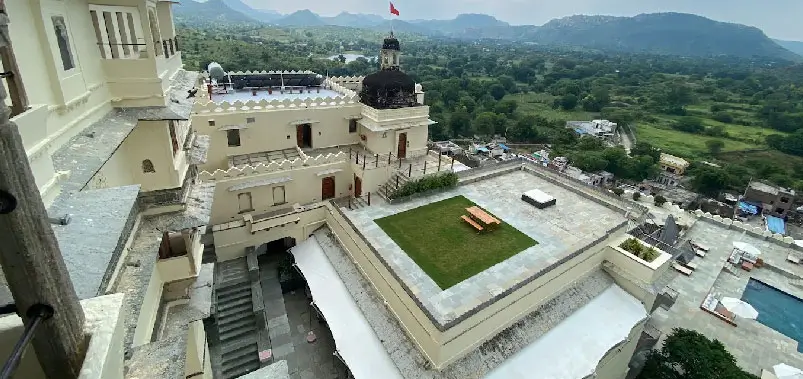
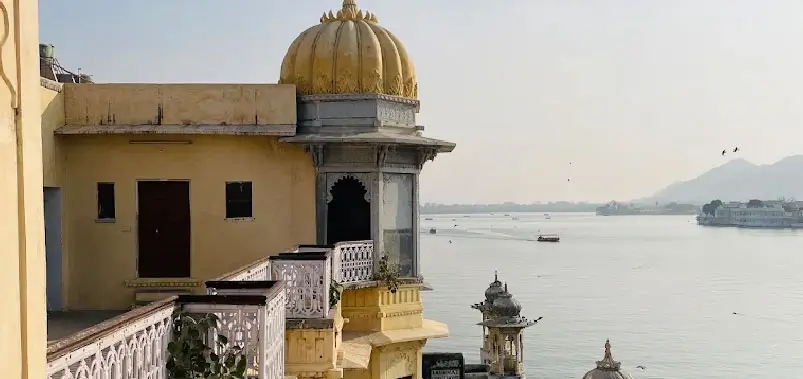
Standing directly beside Gangaur Ghat on Lake Pichola, Bagore Ki Haveli is one of the most rewarding heritage buildings in Udaipur for travellers who want to see how an aristocratic residence functioned beyond the scale and formality of the City Palace. The building contains courtyards, balconies, rooms, decorative glasswork, historic household objects, costumes, paintings and displays connected with the culture of Mewar. Rajasthan Tourism records that the haveli contains more than one hundred rooms and was built in the eighteenth century by Amar Chand Badwa, who served as Prime Minister of Mewar.
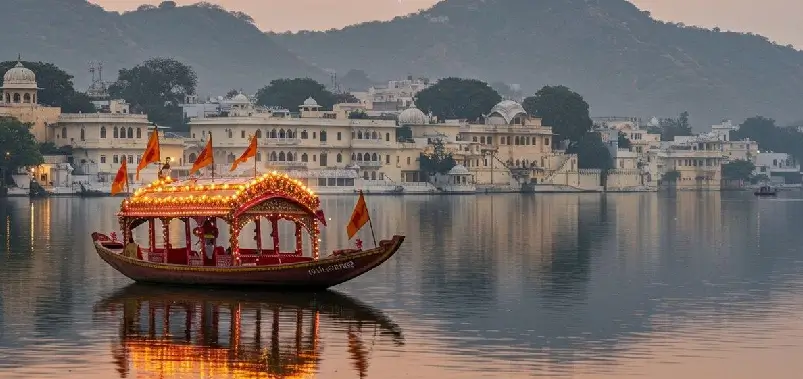
Its location is just as important as the building itself. Bagore Ki Haveli sits at Gangaur Ghat, one of the most atmospheric public waterfronts on Lake Pichola. The old-city lanes around the haveli lead towards Jagdish Temple, City Palace and numerous small shops and restaurants, allowing travellers to see several of Udaipur's strongest historic areas without repeatedly using a car.
The building also becomes the setting for the popular Dharohar Folk Dance Show, held in the evening courtyard. The official West Zone Cultural Centre identifies Bagore Ki Haveli at Gangaur Ghat as the venue for the performance, while the Dharohar booking service currently lists the show at the same location and provides online ticketing.
Current visitor information places the Bagore Ki Haveli Museum timings at 9:30 AM to 5:30 PM, with the Dharohar performance generally running from 7:00 PM to 8:00 PM. These are two separate activities. A museum ticket does not automatically mean a visitor has a seat for the evening performance, and travellers specifically interested in the show should arrange their ticket accordingly.
For a first visit to Udaipur, Bagore Ki Haveli works especially well because it provides three different reasons to come to the same neighbourhood: the historic haveli museum, Lake Pichola at Gangaur Ghat and the evening cultural performance. Rather than treating each as an independent attraction, visitors can build one relaxed afternoon and evening around this part of the old city.
Bagore Ki Haveli History and Its Connection with the Mewar Court
The story of Bagore Ki Haveli Udaipur begins during the period when Mewar's court was centred around the enormous City Palace complex overlooking Lake Pichola. Rajasthan Tourism identifies Amar Chand Badwa, Prime Minister of Mewar, as the builder of the haveli in the eighteenth century. The building was therefore created for an individual occupying one of the most influential political positions in the kingdom rather than as an ordinary merchant residence.
This background helps explain the size of the property. Rajasthan Tourism describes the haveli as having more than one hundred rooms. Its courtyards, narrow passages, balconies and interconnected chambers reflect the complexity of a substantial aristocratic household rather than the arrangement of a modest urban home.
Visitors who have already been through City Palace should not assume Bagore Ki Haveli will feel repetitive. The two properties represent different scales of elite life. City Palace is monumental and dynastic, filled with ceremonial halls, royal apartments, defensive architecture and generations of construction. Bagore Ki Haveli feels more residential. Rooms are smaller, circulation is more intimate, and the building provides a closer view of domestic life within an important Mewar household.
The location at Gangaur Ghat would also have been significant. Lake Pichola was not simply scenery. The lake formed part of Udaipur's social, ceremonial and practical landscape, and a large residence positioned immediately beside it occupied valuable urban space close to the royal centre.
Over time, the haveli passed through different phases of use and ownership before being restored as a cultural property. It is now associated with the West Zone Cultural Centre, whose official address is Bagore Ki Haveli at Gangaur Ghat. The centre also organises the Dharohar performance that has become one of the most widely attended evening cultural programmes in Udaipur.
Restoration is particularly important in a building of this type. Old havelis suffer when courtyards are subdivided, decorative surfaces are neglected or modern construction overwhelms the original spatial layout. Bagore Ki Haveli's present museum function allows visitors to move through numerous interconnected spaces and see decorative details that would otherwise remain inaccessible within a private residence.
The building's appeal does not depend on one grand throne room or one famous object. Its value comes from moving through the residence gradually. Doorways lead into courtyards, staircases change level, balconies frame views towards the lake, and rooms display different parts of Mewar's material culture.
This is why visitors should allow at least one-and-a-half to two hours for the museum rather than arriving shortly before closing. Rushing through one hundred-plus rooms and multiple display areas in 30 minutes reduces the haveli to a sequence of photographs.
What You See Inside Bagore Ki Haveli Museum
The Bagore Ki Haveli Museum contains a broad range of displays rather than following the structure of a conventional chronological history museum. Rajasthan Tourism specifically mentions costumes, modern art, glasswork and mirror decoration within the building. Visitors also encounter rooms furnished or interpreted to suggest aspects of aristocratic life, decorative objects and cultural displays associated with Rajasthan.
One of the strengths of the museum is its architecture. Even when a particular display does not hold a traveller's attention, moving between rooms reveals traditional haveli design. Inner courtyards provide light and ventilation, balconies overlook internal spaces, and smaller chambers connect to larger areas in ways that reflect the original domestic arrangement.
The glass and mirror work deserves more attention than it often receives. Rajasthan Tourism specifically describes the interiors as containing glass and mirror decoration arranged in classical haveli style. Such decoration appears in many royal and aristocratic buildings across Rajasthan, where reflective surfaces were used to intensify lamplight and create elaborate visual effects inside comparatively enclosed rooms.
Costume displays provide another accessible introduction to Rajasthan's regional traditions. Clothing, turbans and decorative textiles immediately communicate differences in social status, ceremonial use and regional identity. Travellers interested in photography should remember that museum camera rules and charges can change, so current ticket-counter instructions should be followed rather than assuming photography is included automatically.
The haveli also contains areas displaying puppets and other objects associated with Rajasthan's performing traditions. These become particularly relevant for visitors attending the Dharohar show later in the evening because the performance includes music, dance and puppetry.
Families with children may find these sections easier to engage with than a museum dominated only by written historical documents. At the same time, parents should keep children close around old staircases and balconies because heritage buildings do not always have the same uniform floor surfaces and wide corridors as modern museums.
The building itself can become confusing because of its numerous rooms and passages. Visitors should follow the established museum route where indicated rather than repeatedly trying to return to an earlier courtyard.
Anyone using a guide should request interpretation of the architecture and Mewar household life rather than merely asking for the names of objects in display cases. The strongest guide turns the rooms into a story of how people lived, entertained guests, dressed, worshipped and moved through a large urban residence.
Bagore Ki Haveli Timings and the Best Time for the Museum
Current visitor information lists Bagore Ki Haveli Museum hours from 9:30 AM to 5:30 PM every day. Special occasions, maintenance requirements or cultural events can affect access, so same-day confirmation is sensible when a traveller is visiting specifically for the museum.
The best period depends on the rest of the Udaipur schedule.
A morning visit is often quieter and provides plenty of time to move through the museum before the old city reaches its busiest part of the day. This works particularly well for travellers who visited City Palace on a previous day and want a slower morning around Gangaur Ghat.
Late afternoon has another advantage. Visitors can tour the haveli from approximately 3:30 PM onward, step outside towards Gangaur Ghat as the light softens, have refreshments nearby and return for the Dharohar Folk Dance Show at 7:00 PM.
The disadvantage of this approach is that arriving too late creates pressure. Someone reaching the museum at 5:00 PM will have very little time before the 5:30 PM closing period.
A better arrival time for a combined museum and evening performance visit is around 3:00 PM to 3:30 PM. This leaves approximately two hours for the museum and enough time outside before the cultural programme.
Travellers particularly interested in photography may prefer morning because courtyards and rooms can be easier to see before the busiest visitor period.
Summer adds another consideration. Udaipur can become very hot during the middle of the day, and although the haveli provides shade, some areas can still feel warm. Early morning or late afternoon becomes much more comfortable than an intensive midday visit.
The cooler months allow far greater flexibility. Travellers can combine the museum with an old-city walk without needing a long hotel break.
Bagore Ki Haveli Entry Fee and Museum Ticket Expectations
Current online sources do not show one fully consistent official museum tariff, which means travellers should avoid relying on an old screenshot or archived travel article for the exact Bagore Ki Haveli entry fee. Recent visitor references commonly report museum charges in the range of approximately INR 60 for an Indian adult, with lower child pricing and higher charges for overseas visitors and photography.
Because tariffs can change, the most responsible approach is to treat these amounts as current budgeting guidance rather than a permanent official price.
The museum remains inexpensive compared with major palace attractions in Udaipur. Even if the fee is revised upward, it is unlikely to become one of the significant costs of a premium Rajasthan trip.
Photography may carry a separate charge. Recent visitor sources have published separate camera fees for the museum and for the evening show. Anyone carrying professional equipment should confirm whether a different category applies.
The museum ticket and Dharohar dance-show ticket are separate. Travellers should not assume that paying for afternoon museum access reserves an evening seat.
This distinction is particularly important during the high season because the cultural performance can sell strongly even when the museum itself is easy to enter.
Dharohar Folk Dance Show at Bagore Ki Haveli
The evening Dharohar Folk Dance Show is one of the main reasons Bagore Ki Haveli remains busy after the museum closes. The performance is staged in a traditional courtyard setting, giving visitors a much more intimate environment than a large auditorium.
The West Zone Cultural Centre officially identifies Bagore Ki Haveli as the venue for the Dharohar Folk Dance Show and provides an online booking link. The dedicated Dharohar website also lists the location at Bagore Ki Haveli, Gangaur Ghat and states that the offline ticket counter opens at approximately 6:00 PM.
Current visitor information generally places the performance from 7:00 PM to 8:00 PM. The one-hour format works particularly well for travellers because it provides a concentrated introduction to Rajasthan's folk performance traditions without consuming the entire evening.
The show commonly includes different forms of Rajasthani folk dance, traditional music and puppetry. Performances may feature dances associated with different communities and regional traditions, with costumes, movement and live music creating a far more vivid impression than simply seeing costumes in a museum display.
The courtyard setting is important. Audience members sit relatively close to the performers, so facial expressions, costume details and the physical skill of individual dances are clearly visible.
One of the performances that often attracts the greatest attention involves balancing multiple pots while dancing. The physical control required is impressive, particularly because the performer continues moving and responding to music while maintaining the stack.
Puppet performance introduces another important Rajasthan tradition. Traditional puppetry has long been associated with storytelling and itinerant performers, and seeing it alongside dance makes the show more varied.
Visitors should not expect a Broadway-style production with large electronic sets. The appeal lies in the closeness between audience and performers and the use of traditional courtyard space.
Current Dharohar Dance Show Ticket Price
The dedicated Dharohar booking website currently lists an adult ticket at INR 125 and a child ticket at INR 75 for children aged five to ten, with an additional booking service charge shown during the online process.
These prices are particularly useful because they come directly from the current booking platform rather than from an old travel blog.
Camera charges can be additional, and the booking system specifically asks whether the visitor will bring a camera. Travellers should therefore verify the complete amount at checkout before payment.
The show is excellent value relative to many tourist performances.
For two adults, the basic current ticket total is only INR 250 before applicable booking charges and any camera fee. That makes it one of the most affordable organised evening activities in central Udaipur.
The greater challenge is obtaining the preferred seat and arriving without stress.
Offline tickets become available before the show, with the Dharohar site stating that the ticket counter opens around 6:00 PM. During busy travel dates, online advance booking is worth considering rather than relying on a last-minute walk-up purchase.
Where to Sit for the Dharohar Show and How Early to Arrive
The courtyard is comparatively intimate, but seating position still affects the performance.
Arriving early allows visitors to settle before the programme starts instead of entering while musicians and dancers are already performing.
If using an offline ticket, reach the area close to 6:00 PM, especially during winter weekends and busy holiday periods when many visitors are already in the old city. The official Dharohar site confirms this as the approximate ticket-counter opening time.
Visitors with an online ticket should still avoid arriving at 6:58 PM for a 7:00 PM performance.
The final approach to Gangaur Ghat involves narrow streets, pedestrians and local traffic. A private car may need to stop some distance away, and walking time should be included.
Families with children may prefer seats that allow an easy exit if necessary.
Visitors carrying photography equipment should follow the specific ticket and camera rules. Flash photography can interfere with performers and other audience members, so current show instructions should be respected.
The courtyard is open to the weather. During winter, evening temperatures can become cool, making a light jacket useful. During warmer months, lightweight clothing is more comfortable.
Bagore Ki Haveli and Gangaur Ghat
One of the biggest advantages of visiting Bagore Ki Haveli is that travellers step directly into Gangaur Ghat when they leave the building.
This waterfront location provides classic Lake Pichola views without requiring a ticket.
Historic architecture rises around the ghat, local residents and visitors gather beside the water, and the opposite lake views change noticeably as evening approaches.
Gangaur Ghat is also culturally important during the Gangaur festival, when processional and religious activity around the waterfront becomes particularly significant.
For an ordinary visitor, the ghat works extremely well between the museum closing period and the start of the evening performance.
Leave the museum around 5:15 PM, spend time by the water, walk through the nearby old-city streets and return towards the haveli before the show.
Photographers should arrive with time to spare because sunset light can become attractive well before the sun actually reaches the horizon.
Lake Pichola's appearance also depends heavily on water levels and atmospheric conditions. In some seasons, reflections can be strong; on windy evenings, the surface may be more broken.
Visitors should be respectful around people conducting personal religious activity at the water. Public access does not mean every worshipper should become a photographic subject.
Combining Bagore Ki Haveli with City Palace and Jagdish Temple
City Palace, Jagdish Temple and Bagore Ki Haveli lie within the same broader old-city district, which makes them a natural combination when a traveller has sufficient time.
The mistake is trying to rush through all three within two hours.
City Palace deserves at least two to three hours. Its museum contains multiple courtyards, palace rooms, balconies and displays associated with Mewar's rulers.
Jagdish Temple can then be visited before walking through the lanes towards Gangaur Ghat.
Bagore Ki Haveli should receive another one-and-a-half to two hours.
A comfortable full-day structure begins with City Palace in the morning, followed by lunch and a break. Jagdish Temple and the old city can receive the early afternoon, while Bagore Ki Haveli begins around 3:00 PM. Gangaur Ghat follows, then the Dharohar show at 7:00 PM. The current show timing is consistently listed from 7:00 PM to 8:00 PM.
This creates a coherent heritage day centred on walking rather than repeated vehicle transfers.
Travellers who dislike long days can separate City Palace and Bagore Ki Haveli across two afternoons.
Combining Bagore Ki Haveli with a Lake Pichola Boat Ride
A Lake Pichola boat ride can also fit naturally with Bagore Ki Haveli, but timing must be handled carefully.
Boat rides towards Jagmandir are often strongest during the later afternoon because palace architecture looks particularly attractive in softer light. However, returning too late can make a 7:00 PM Dharohar performance difficult.
Travellers should therefore avoid booking the latest possible sunset boat if the dance show is already reserved for the same evening.
A better arrangement is either an earlier afternoon Lake Pichola ride followed by Bagore Ki Haveli, or keeping boating and the cultural performance on different days.
Udaipur usually deserves at least three nights for first-time visitors, so there is little reason to compress every major Lake Pichola attraction into a single evening.
How to Reach Bagore Ki Haveli
Bagore Ki Haveli is located at Gangaur Ghat in Udaipur's old city, a location confirmed both by Rajasthan Tourism and the West Zone Cultural Centre.
The final approach is through narrow streets.
Travellers staying in a Lake Pichola or old-city hotel may be able to walk.
Those staying farther away should use a private car, taxi or local transport towards the old-city edge and complete the final section on foot or by suitable smaller transport.
Large tourist vehicles should not be expected to reach the haveli entrance conveniently during busy periods.
This is particularly important after the dance show. Hundreds of visitors may exit around the same time, and multiple vehicles attempting to approach Gangaur Ghat create congestion.
Arrange a clear pickup point with the driver outside the narrowest section.
Visitors should keep the driver's phone number saved offline and avoid vague instructions such as "meet at the haveli."
Parking and Walking Through the Old City
The old Udaipur district is best treated as a pedestrian environment.
Even where vehicle access exists, walking can be faster during heavy traffic. Bagore Ki Haveli, Gangaur Ghat, Jagdish Temple and numerous restaurants are close enough to connect comfortably on foot for travellers without mobility limitations.
Footwear should be comfortable because stone streets and steps are common.
During monsoon conditions, surfaces can become slippery.
Elderly visitors should use local transport as close as practical but should still expect some walking.
For families with very young children, a lightweight stroller may not always be ideal because of uneven surfaces, crowds and steps.
The old-city walk is part of the attraction. Shops, painted facades, temple activity and glimpses of Lake Pichola give this part of Udaipur far more atmosphere than travelling entirely inside a car.
Best Months to Visit Bagore Ki Haveli
The cooler period is generally the most comfortable for Bagore Ki Haveli and old Udaipur sightseeing.
From approximately October through March, visitors can walk from City Palace to Gangaur Ghat and remain outdoors around Lake Pichola without the intense heat of summer.
Winter evenings can become cool, especially in the courtyard during the Dharohar show, so carrying a light jacket is useful.
Summer visits are still possible, but the museum is best visited earlier in the day or in the later afternoon. The 7:00 PM performance becomes much more comfortable than daytime walking.
The monsoon can make Udaipur visually attractive because the surrounding hills become greener and Lake Pichola can benefit from seasonal rain. Visitors should carry rain protection and allow extra time on slippery streets.
The evening show can be affected by exceptional weather or special events, so anyone travelling primarily for the performance should confirm current operation.
Where to Stay Near Bagore Ki Haveli
The Lake Pichola and old-city area contains some of Udaipur's most atmospheric hotels.
Small heritage properties can place travellers within easy walking distance of Gangaur Ghat, while luxury lakefront hotels provide panoramic views and premium facilities.
A comfortable heritage or boutique hotel can cost roughly INR 6,000 to INR 15,000+ per night, depending on location, room quality and demand.
Better lake-view rooms may cost INR 15,000 to INR 30,000+.
Luxury hotels around Lake Pichola can move from INR 30,000 to INR 100,000+ per night, while internationally renowned palace properties can be considerably more expensive.
The trade-off is vehicle access.
A charming hotel inside the narrow old city may have spectacular views but require guests to walk, use an electric rickshaw or transfer luggage through restricted streets.
Travellers with heavy luggage or mobility concerns should confirm the arrival arrangement before booking.
Someone spending only one night in Udaipur may prefer easy road access. A traveller staying three or four nights may value the atmosphere of the old city more highly.
How Much Time Should You Keep for Bagore Ki Haveli?
The museum itself deserves approximately 90 minutes to two hours.
Visitors interested heavily in photography, decorative arts and Mewar history may remain longer.
The Dharohar show requires another hour, plus time for ticketing and seating.
Adding Gangaur Ghat and the surrounding streets means the complete Bagore Ki Haveli afternoon and evening can easily occupy four to five hours.
That is not excessive.
One of the problems with many Udaipur itineraries is that Bagore Ki Haveli appears as a 30-minute stop between City Palace and Fateh Sagar. Such scheduling ignores both the size of the museum and the value of its Lake Pichola setting.
A better schedule keeps the entire late afternoon around the old city.
Top Indian Holidays owner and Rajasthan specialist Nand Singh Rathore can naturally position this part of Udaipur as an evening where travellers leave the private vehicle behind, walk through the old quarter, spend time at Gangaur Ghat and end with a traditional cultural performance rather than racing between distant viewpoints.
Practical Costs for a Bagore Ki Haveli Visit
Bagore Ki Haveli remains one of Udaipur's better-value historic attractions.
Recent visitor sources place the museum adult entry amount around INR 60 for Indian visitors, although current counter pricing should be confirmed because museum tariffs can change.
The current online Dharohar adult ticket is INR 125, while children aged five to ten are listed at INR 75, before applicable service and payment charges.
Camera fees may be additional.
A couple can therefore attend the evening performance for only a few hundred rupees, making it substantially less expensive than many organised hotel cultural programmes.
Transport is likely to cost more than entry if travellers are staying far from the old city.
A private Udaipur sightseeing vehicle can cost approximately INR 4,000 to INR 7,000+ per day for a sedan and more for premium SUVs, depending on service hours and operator.
For Bagore Ki Haveli itself, however, an expensive vehicle offers little advantage once visitors reach the old-city walking zone.
Related Guides



 info@topindianholidays.net
 +91-8955000999