
Varanasi Tour and Travel guide

A City Where Every Sunrise Has Been Witnessed for Centuries

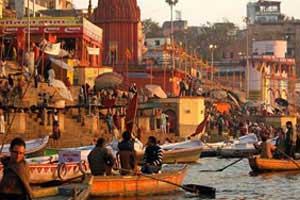
There are cities that impress with monuments, royal palaces or dramatic landscapes. Varanasi leaves a different kind of impression. Here, life unfolds along the banks of the River Ganges much as it has for centuries. Before dawn, pilgrims gather on the ghats for prayer, priests prepare temples for the day's rituals and wooden boats drift quietly across the river as the first rays of sunlight touch the ancient stone steps.

Regarded as one of the world's oldest continuously inhabited cities, Varanasi has remained a centre of spirituality, learning and culture for thousands of years. Every lane, shrine and riverside ghat carries stories that connect mythology, history and everyday life. For millions of Hindus, a visit to Varanasi is an act of devotion. For travellers from around the world, it is an opportunity to experience a city unlike anywhere else.

While its spiritual significance is undeniable, Varanasi is also a city of music, silk weaving, classical arts, traditional cuisine and craftsmanship. Spending time here is not simply about visiting monuments; it is about observing traditions that continue to shape daily life.


A Sacred City on the Banks of the Ganges

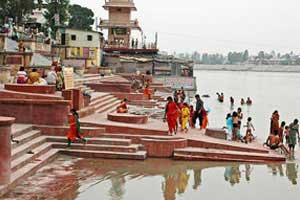
The River Ganges is the heart of Varanasi. Stretching along its western bank are nearly ninety ghats, each with its own history, purpose and religious importance. Some are places of prayer, others are used for ceremonial bathing, while a few are associated with ancient cremation rituals that have continued uninterrupted for generations.

Among the most recognised are Dashashwamedh Ghat, famous for its evening Ganga Aarti, Assi Ghat, known for its peaceful morning atmosphere, and Manikarnika Ghat, one of Hinduism's most sacred cremation grounds. Together they form the spiritual landscape that defines the city.

Watching the river at sunrise offers one of Varanasi's most memorable experiences. The sounds of temple bells, devotional chants and rowing boats create an atmosphere that remains long after the journey has ended.


Faith, Culture and Everyday Life

Varanasi is often described as India's spiritual capital, yet it is equally important as a centre of art, education and traditional craftsmanship.

The city's narrow streets are lined with centuries-old temples, family-run sweet shops, music schools and workshops where skilled artisans continue weaving the world-famous Banarasi silk sarees. Classical musicians, Sanskrit scholars and religious teachers have all contributed to Varanasi's cultural identity, making it one of India's most influential centres of learning.

Food is another essential part of the city's character. Morning begins with freshly prepared Kachori Sabzi and Jalebi, while evenings are often completed with Banarasi Paan, a tradition closely associated with the city.

Every corner of Varanasi reflects a way of life that has been preserved through generations rather than recreated for visitors.


Experiences That Stay With You

Some destinations are remembered for a single attraction. Varanasi is remembered through a series of moments.

Watching the Ganga Aarti as hundreds of lamps illuminate the river, taking an early morning boat ride, walking through centuries-old lanes, listening to temple bells echo across the ghats or simply sitting beside the Ganges as the city goes about its daily rhythm creates experiences that cannot be measured by a sightseeing checklist.

Visitors often leave Varanasi with a deeper appreciation of India's cultural and spiritual traditions, regardless of their own beliefs.


Best Time to Visit Varanasi

The most comfortable time to visit Varanasi is between October and March, when cooler temperatures make walking through the old city and exploring the ghats more enjoyable.

Winter mornings are particularly beautiful, with light mist rising above the Ganges and the first boats appearing as the city slowly awakens. Festivals such as Dev Deepawali, Diwali and Mahashivratri also bring extraordinary energy and colour to Varanasi, attracting pilgrims and travellers from across the world.


A City That Cannot Be Rushed

Varanasi is not a destination to hurry through. It rewards those who pause to observe the small details—a priest offering morning prayers, craftsmen weaving silk by hand, pilgrims gathering at the water's edge or musicians practising ancient ragas in hidden courtyards.

Its monuments are significant, but its greatest attraction is the continuity of life itself. The city has witnessed empires rise and fall, yet its traditions continue much as they always have.

The places featured below introduce the temples, ghats and cultural landmarks that have made Varanasi one of the most extraordinary destinations in India.

Major tourist spots in Varanasi Tour and Travel guide

Dashwmegh Ghat

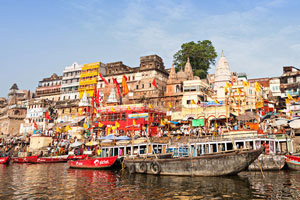
Dashashwamedh Ghat is the most famous and vibrant ghat in Varanasi, located on the western bank of the sacred River Ganga. According to Hindu mythology, Lord Brahma performed the sacrifice of ten horses (Dash-Ashwamedha Yajna) at this site to welcome Lord Shiva, giving the ghat its name. Every evening, thousands of devotees and tourists gather here to witness the spectacular Ganga Aarti, where priests perform synchronized rituals with lamps, chants, and devotional music. Pilgrims visit the ghat to take a holy dip in the Ganges, believing it washes away sins. Dashashwamedh Ghat is the spiritual heart of Varanasi.

Scindhia Ghat

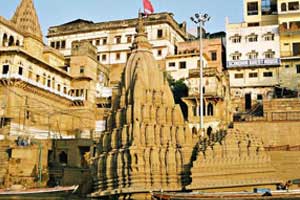
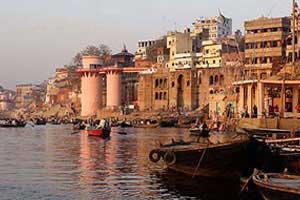
Scindhia Ghat is one of the most peaceful and historically significant ghats in Varanasi. Built by the Scindia royal family of Gwalior during the 19th century, the ghat is famous for its partially submerged Shiva temple, which tilts into the River Ganga due to the soft riverbed. The serene surroundings make it an ideal place for meditation, photography, and peaceful boat rides. Devotees visit the nearby temples to offer prayers to Lord Shiva and seek blessings. The unique architecture and calm atmosphere make Scindhia Ghat a hidden gem among Varanasi's many sacred ghats.

Assi Ghat to Kedarnath

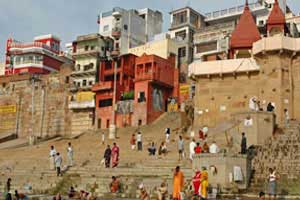
The stretch from Assi Ghat to Kedarnath Ghat represents one of the most sacred pilgrimage routes along the ghats of Varanasi. Assi Ghat, located at the confluence of the Assi River and the Ganges, is believed to be the place where Goddess Durga threw her sword after defeating demons. Pilgrims begin their spiritual journey here before visiting the ancient Kedarnath Ghat, which is dedicated to Lord Shiva and resembles the famous Kedarnath Temple in Uttarakhand. Morning yoga sessions, Ganga Aarti, devotional ceremonies, and boat rides make this route a popular attraction for visitors.

Kashi Vishwanath Temple

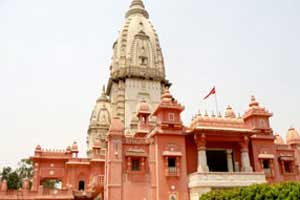
The Kashi Vishwanath Temple is one of the holiest temples dedicated to Lord Shiva and one of the twelve sacred Jyotirlingas in India. Located in the heart of Varanasi, the temple has immense religious significance and attracts millions of pilgrims every year. The present structure was rebuilt by Maharani Ahilyabai Holkar in 1780 and is famous for its magnificent gold-plated spire, earning it the title of the Golden Temple of Varanasi. Devotees believe that visiting Kashi Vishwanath Temple and offering prayers to Lord Shiva brings spiritual liberation (Moksha) and divine blessings.

Chauki Ghat to Chausati Ghat

The area from Chauki Ghat to Chausathi Ghat is known for its religious importance and peaceful surroundings along the banks of the Ganges. Chausathi Ghat derives its name from the temple dedicated to Goddess Chausathi (one of the 64 forms of Goddess Durga), making it an important pilgrimage site for devotees. Nearby, visitors can observe traditional rituals, priests performing religious ceremonies, and local washermen working at the famous Dhobi Ghat. The ancient temples, historic architecture, and spiritual atmosphere make this stretch of ghats an important destination for pilgrims, photographers, and cultural explorers.

Panchganga Ghat to Adi Keshava Ghat

The route from Panchganga Ghat to Adi Keshava Ghat is one of the oldest and most sacred sections of Varanasi. Panchganga Ghat is believed to be the meeting point of five holy rivers—Ganga, Yamuna, Saraswati, Kirana, and Dhutapapa—making it highly significant in Hindu mythology. Nearby stands the historic Alamgir Mosque alongside ancient temples, reflecting the city's diverse heritage. Adi Keshava Ghat, located at the confluence of the Ganga and Varuna rivers, houses the revered Adi Keshava Temple dedicated to Lord Vishnu. The route beautifully combines spirituality, history, and architectural heritage.

Man Mandir Ghar to Lalita Ghat

The stretch from Man Mandir Ghat to Lalita Ghat is famous for its rich cultural heritage, ancient temples, and historical monuments. Man Mandir Ghat was developed by Maharaja Man Singh of Amber and is renowned for the astronomical observatory (Jantar Mantar) built by Maharaja Sawai Jai Singh II during the 18th century. Nearby, Lalita Ghat is known for its beautiful Nepali Temple, dedicated to Lord Shiva, which showcases traditional Nepalese wood-carving architecture. Visitors can also explore the Vishalakshi Temple, an important Shakti Peetha. This sacred riverside stretch offers stunning views, spirituality, and remarkable architectural beauty.

Frequently Asked Questions

Do Not Miss Out On The Best-Discounted Deals For Our Top India Tour Packages.

Fill out this form with all the required information. Within 12 hours, we will provide you with a tailor-made itinerary at the best price.

Free, no-obligation quote — We'll send a personalised itinerary within 12 hours at the best price.

Nand Singh Rathore
Nand Singh
Rathore
Travel Expert
27+ yrs experience
Free Personal Consultation

Confused About Your
India Itinerary?

Whether you're planning your first India trip or returning to explore deeper — get honest, expert advice from someone who knows every corner of this country. No pressure, no cost.

No Obligation
100% Free Advice
Response in 12 hrs
Private & Custom Tours