📅 Last Updated On: 08 Oct 2026
⏱ 8 Min Read
Haridwar Kumbh Mela 2027 Tour Package for International Travellers
N
Nand Singh Rathore
Travel & Tourism Expert specializing in India
Haridwar Kumbh Mela 2027 Travel Guide: Packages, Dates & Experiences
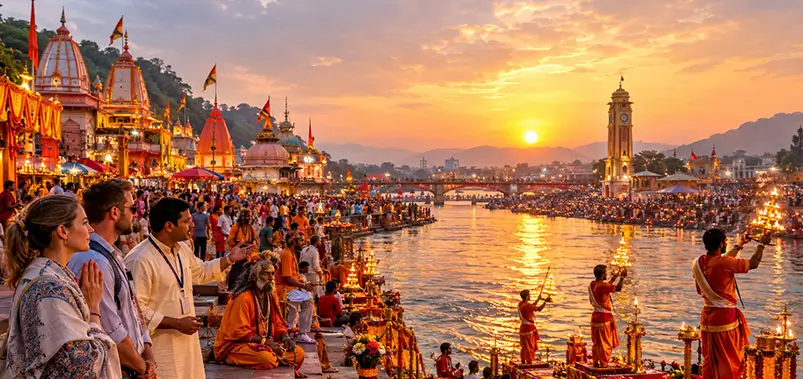
Every six years, the holy town of Haridwar hosts the Ardh Kumbh Mela, and this coming edition is the one international travellers keep asking us about. Millions of pilgrims, monastic orders and wandering ascetics gather on the banks of the Ganges between mid-January and late April, and the town swells to many times its normal size. For a foreign visitor, the difference between a moving visit and an exhausting one comes down to a few things: arriving on the right dates, booking a good camp or hotel early, having a driver who knows the closed roads, and walking with a guide who can read the crowd. This guide covers the confirmed dates, the royal bathing days, what a Haridwar Kumbh Mela tour package should include, realistic costs at the higher end, and the safety habits that matter most at the ghats.
Ardh Kumbh Mela Dates and the Royal Bathing Days in Haridwar
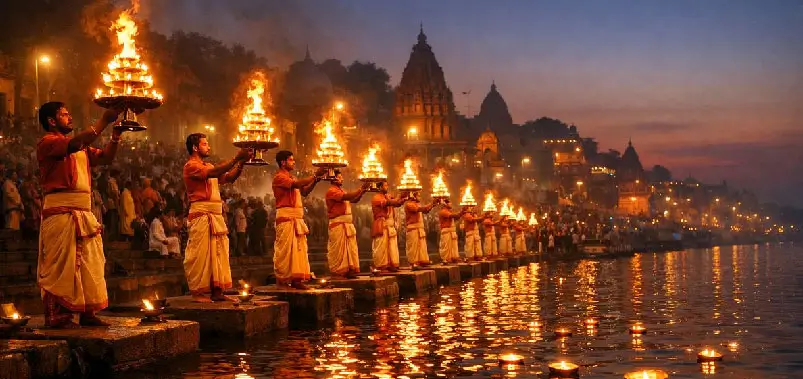
The Uttarakhand government announced the official schedule after meetings between the Chief Minister and the council of monastic orders. The festival opens on 14 January with Makar Sankranti and closes on 20 April with the full-moon bath, a span of roughly 97 days. Within this window, the administration has listed ten major bathing days. Three of them carry the most weight: the royal bathing days on 6 March (Maha Shivratri), 8 March and 14 April (Baisakhi). Officially, these royal baths have been renamed from their older title to a new one, and you may see both names on signboards and in news reports. For your purposes, they are the days of the grand processions.
A royal bathing day runs very differently from an ordinary day at the festival. From before dawn, the monastic orders march in a fixed sequence to Har Ki Pauri, the most sacred ghat in Haridwar. Each order gets a set time slot for its dip. The processions include decorated chariots, drummers, horses, and the famous ash-smeared naked ascetics who lead several of the orders. Police close the main ghat to the general public for many hours. Vehicle movement is restricted from the previous evening, and private cars without festival passes are stopped at the city limits. A traveller who drives in on the morning of a royal bath will usually get stuck far from the action.
The practical rule is simple. Arrive in Haridwar at least one full day before any royal bathing day, and stay in a camp or hotel that sits inside or very close to the festival zone. On the day itself, watch the processions from a booked viewing point, a hotel terrace, or a spot your guide secures at the edge of the route. Taking the dip yourself is best saved for one of the quieter bathing days.
Weather also shapes your choice of dates. January mornings in Haridwar sit around 5 to 8°C, and thick fog often delays trains and flights from Delhi. March is the sweet spot for most foreign visitors, with daytime temperatures between 15 and 28°C and clear skies. The two March royal bathing days fall only two days apart, so a three-night stay can cover both. April turns warm, with afternoons touching 33 to 36°C. The Baisakhi bath on 14 April draws the single largest crowd of the season.The festival follows the Hindu lunar calendar, so procession timings for each royal day are confirmed only a few weeks in advance. A good operator tracks these official notices and adjusts your pickup times. Top Indian Holidays builds every Kumbh Mela itinerary around the final published schedule rather than guesswork, so you are standing in the right place when the first procession reaches the river.
Plan Your Haridwar Kumbh Mela 2027 Journey
Experience the spiritual energy of Haridwar Kumbh Mela 2027 with a private, well-planned tour designed for international travellers. Get help with accommodation, private transfers, local experiences, sightseeing and a personalised itinerary.
What a Haridwar Kumbh Mela Tour Package Should Include
A well-built private Kumbh Mela tour for foreigners starts the moment you land. Most international travellers fly into Delhi, and Haridwar sits about 220 kilometres away. That is a five-to-six-hour drive on a normal day, but often seven or more during the festival because of diversions. The closer option is Dehradun's Jolly Grant Airport, only 35 kilometres from Haridwar and 20 kilometres from Rishikesh, with direct flights from Delhi, Mumbai and Bengaluru. A good package includes an airport meet-and-greet, a private air-conditioned car with a driver who holds the festival vehicle pass, and help with luggage at the camp gate, where vehicles may have to stop.
Accommodation is the single most important part of the package. During the festival, the administration and private companies set up luxury tent cities on the riverbanks and in the surrounding fields. The better camps offer insulated canvas cottages with proper beds, attached bathrooms with hot water, electric heaters for January and February nights, and dining tents serving vegetarian meals. Some camps are inside the restricted festival zone, which means you can walk to the ghats even on royal bathing days when no car can move. Heritage hotels on the river in Haridwar and premium resorts in nearby Rishikesh are the other choice. They suit travellers who want a quieter base and do not mind a slightly longer trip into the crowds.
Guiding is the second pillar. Your guide should speak fluent English, know the layout of the festival zone, and have contacts in the camps of the monastic orders. Visitors are welcome in many of these camps. A respectful introduction lets you sit with ascetics, watch morning rituals, and hear the stories behind the matted hair, ash and fire. Without a guide, most foreigners only see the festival from the outside.
A typical five-day private programme looks like this. On the first day, you drive from Delhi or fly to Dehradun and check into your camp in the afternoon, with an early evening walk to Har Ki Pauri for the river ceremony of lamps and chanting. The second day begins before sunrise at the ghats, followed by visits to the camps of the monastic orders, the cable car up to Mansa Devi temple for views over the festival grounds, and a quiet evening. The third day is set aside for a royal bathing procession, or a calmer bathing day if you prefer to take the dip yourself. On the fourth day, the package moves to Rishikesh, 25 kilometres upstream, for a morning yoga session, a walk across the suspension bridges, and the evening river ceremony at Parmarth Niketan. The fifth day brings you back to Delhi or the airport.
Top Indian Holidays can extend this with Mussoorie, the Rajaji tiger reserve, or a Golden Triangle extension through Delhi, Agra and Jaipur once the festival portion is done.
Kumbh Mela Tour Package Cost, Camps and Hotels
Prices during the festival behave nothing like normal Haridwar rates. Demand peaks sharply around the royal bathing days, and the best properties sell out months ahead. The figures below are realistic at the higher end for comfortable, private travel, so you can budget without surprises.
Luxury camps inside or near the festival zone charge roughly INR 20,000 to 35,000 per night for a double tent on ordinary days, including breakfast and dinner. On royal bathing nights the same tent can climb to INR 45,000 to 80,000, and many camps insist on a minimum stay of two or three nights around those dates. Premium camps with butler service, private sit-out decks and guided ghat walks sit at the top of that range.
Haridwar has only a handful of upmarket hotels. Haveli Hari Ganga, a restored heritage mansion right on the river with its own private ghat, normally costs around INR 15,000 to 25,000 per night, and it is usually booked out for the royal dates very early. In Rishikesh, the Taj Rishikesh Resort and Spa runs at about INR 30,000 to 55,000 per night in the festival season. The famous Ananda in the Himalayas wellness retreat, a short drive above Rishikesh, starts around INR 70,000 per night with its programmes included. These Rishikesh options trade a longer daily drive for far more calm and comfort.
For transport, a private sedan with driver for a four-to-five-day Delhi-Haridwar-Rishikesh-Delhi circuit costs roughly INR 18,000 to 25,000. A spacious Toyota Innova Crysta costs about INR 25,000 to 35,000 for the same circuit. These prices include fuel, tolls, driver allowances and festival permit charges. An experienced English-speaking guide charges about INR 4,000 to 7,000 per day during the festival, which is higher than usual because demand is intense.
Travellers who prefer the train can take the Vande Bharat Express or the Shatabdi Express from Delhi to Haridwar, which takes about four and a half hours. Executive chair car fares run at roughly INR 2,000 to 2,800 per seat. Indian Railways opens bookings 60 days before departure, and seats on royal-bathing weekends disappear within minutes, so your operator should book the moment the window opens.Putting it together, a five-day private Haridwar Kumbh Mela package with a luxury camp, private car, guide and all transfers typically costs USD 1,500 to 2,800 per person on twin sharing. A seven-day version adding Rishikesh, Delhi sightseeing and a premium resort night sits around USD 2,200 to 3,800 per person. Expect a surcharge of 30 to 50 percent if your stay includes a royal bathing night. Camps usually ask for a large non-refundable deposit at booking. Confirming everything by late autumn gives you the widest choice and the best value.
Create Your Luxury Kumbh Mela 2027 Tour
Make your visit to Haridwar Kumbh Mela 2027 comfortable and memorable with a customised India tour featuring premium hotels, private transportation, expert local guides and authentic spiritual experiences.
Safety, Crowds and Etiquette at the Ghats
The scale of the Kumbh is hard to picture until you are standing in it. On a royal bathing day, several million people may move through Haridwar. The administration deploys thousands of police officers, sets up one-way pedestrian routes, and runs lost-and-found centres across the festival zone. Visitors still need their own crowd discipline. Stay close to your guide and agree on a fixed meeting point, such as your camp gate or a numbered police booth, in case you get separated. Mobile networks often jam near the main ghats, so do not rely on calls. Carry a card with your camp name, address and your guide's number written in English and in the local script.
Keep valuables to a minimum. Use a slim cross-body bag or money belt, leave jewellery and expensive watches at the camp, and carry a photocopy of your passport rather than the original. Pickpockets work the densest parts of the crowd, especially near bridges and the entry ramps to Har Ki Pauri.
The river itself demands respect. The Ganges at Haridwar flows fast and cold, even right beside the steps. Iron chains and railings are fixed along the bathing ghats for exactly this reason. Hold the chain while you dip, keep to the marked bathing areas, and never try to swim. Wear rubber sandals that grip, since the stone steps are slippery, and bring a quick-dry towel and a full change of clothes in a waterproof bag. Pilgrims bathe fully clothed. Women usually dip in a long dress or loose clothing, and separate changing enclosures are set up near the main ghats.
Photography needs care. Many ascetics are happy to be photographed, but always ask first. Some will expect a small offering of INR 100 to 500, which is customary and best given quietly. Never photograph people while they bathe or change, and avoid pointing cameras at women at the ghats. Drones are banned without official permission, and police do seize them.
In the camps of the monastic orders, remove your shoes before entering, sit slightly lower than the ascetics if you are invited to sit, and do not touch anyone's ash, beads or ritual objects. If you are handed a blessed sweet or a flower, accept it with your right hand.
For health, drink only sealed bottled water, carry hand sanitiser and basic medicines, and pack a face mask, since dust and smoke from cooking fires hang over the grounds on still days. Elderly travellers and families with small children are better off watching the royal processions from a safe vantage point and taking their own dip on a quieter day. With these habits in place, the Kumbh becomes one of the most extraordinary sights in India rather than an ordeal. The team at Top Indian Holidays builds every itinerary around these precautions.
Related Guides



 info@topindianholidays.net
 +91-8955000999