📅 Last Updated On: 15 Sep 2026
⏱ 10 Min Read
Prem Mandir Vrindavan: Timings, Light Show, History & Visitor Guide
N
Nand Singh Rathore
Travel & Tourism Expert specializing in India
Prem Mandir Vrindavan: Timings, Light Show, History & Visitor Guide
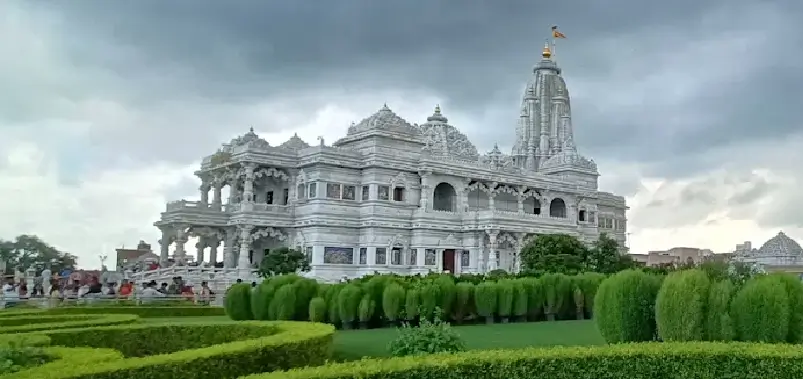
Prem Mandir Vrindavan has become one of the most recognised landmarks in the Mathura-Vrindavan region. Built in white stone and surrounded by landscaped grounds, sculptural displays and illuminated fountains, the temple provides a striking contrast to the narrow lanes and centuries-old shrines of traditional Vrindavan. During daylight, visitors see detailed carvings across the exterior walls and large representations of episodes connected with Lord Krishna. After sunset, architectural lighting changes the appearance of the entire complex, which is why evening hours attract particularly heavy crowds.
The temple was founded by Jagadguru Shri Kripalu Ji Maharaj and is administered by Jagadguru Kripalu Parishat. The official temple website currently lists public opening hours from 8:30 AM to 12:00 noon and 4:30 PM to 8:30 PM every day. The same official source gives the musical and digital fountain show from 7:30 PM to 8:00 PM during the summer period from April through September, and 7:00 PM to 7:30 PM during the winter period from October through March.
These timings make an important difference for first-time visitors. Prem Mandir is not continuously open to public visitors from morning until night. Anyone reaching the gates shortly after noon will need to return when the evening session begins. For most travellers, that is not a disadvantage because Prem Mandir at night is when the architecture, decorative lighting and fountain presentation are at their strongest.
There is generally no admission charge for ordinary entry, making Prem Mandir one of the easiest major sacred sites to include during a Vrindavan stay. The real practical issues are traffic, parking, evening crowds and deciding how to combine the temple with Banke Bihari Temple, ISKCON Vrindavan, Keshi Ghat and the old sacred quarter without spending the entire day moving through congested roads.
Prem Mandir History and the Architecture Behind the White Temple
The creation of Prem Mandir in Vrindavan was connected with the devotional work of Jagadguru Shri Kripalu Ji Maharaj. The temple was conceived as a large sacred complex dedicated primarily to Radha and Krishna, with another important level associated with Rama and Sita. Its architecture differs immediately from older Vrindavan shrines because the complex was constructed on a large modern site with broad pedestrian spaces, gardens and carefully arranged sculptural displays.
The most visually dominant feature is the white temple building itself. Intricate carving covers columns, arches, exterior panels and decorative surfaces. Rather than relying only on a central sacred chamber, the building uses its exterior as part of the religious narrative. Visitors walking around the temple encounter carved scenes and detailed decorative work that encourage them to view the structure from several sides.
The grounds are equally important. Large sculptural displays portray episodes associated with Krishna, including the lifting of Govardhan Hill and other sacred scenes connected with the Braj tradition. These installations make religious stories visible even to visitors who may not be familiar with the full textual background.
During the day, the pale stone gives the complex a relatively calm appearance. Strong sunlight reveals the depth of carved details, and photography around the exterior can be particularly effective during the softer light of late afternoon. After darkness arrives, coloured architectural lighting creates an entirely different visual character. The illuminated temple has become one of the most photographed sights in modern Vrindavan.
Prem Mandir should therefore not be compared directly with Banke Bihari Temple. Banke Bihari is deeply rooted in the old-town devotional culture of Vrindavan and places the sacred image at the centre of an intense darshan tradition. Prem Mandir offers a much larger and more spacious architectural environment where visitors can spend significant time walking through the grounds.
The difference makes both temples valuable in the same journey.
A traveller visiting only Prem Mandir would miss the historic lanes and older devotional character of Vrindavan. A traveller visiting only the old temples would miss the way modern religious architecture has reshaped the town's pilgrimage landscape.
The best Vrindavan visit gives time to both.
Current Prem Mandir Timings and Daily Temple Schedule
According to the official Prem Mandir website, the temple is currently open seven days a week from 8:30 AM to 12:00 noon and again from 4:30 PM to 8:30 PM. These are the most useful public visiting periods for ordinary travellers.
The official daily schedule states that the morning period begins with worship and public viewing at 8:30 AM. A food-offering ceremony takes place at approximately 11:30 AM, followed by the final morning ceremony and closure at 12:00 noon.
The evening session begins at 4:30 PM with worship and public viewing. Another offering period is listed around 5:30 PM, while a ceremonial walk around the sacred area is scheduled around 7:00 PM. The final night ceremony begins around 8:10 PM, and the doors close at approximately 8:30 PM.
Visitors should remember that these are religious timings rather than sightseeing slots. Temporary access changes can occur during major festivals, special ceremonies or exceptionally heavy crowd conditions.
The midday closure is substantial enough that it should shape the entire Vrindavan day. Arriving at 12:15 PM and waiting nearby for more than four hours is unnecessary when numerous other sacred sites are available in the town.
Morning visitors can see Prem Mandir in natural light, while evening visitors receive both temple access and the illuminated exterior.
For someone visiting only once, late afternoon through evening is generally the stronger choice.
Prem Mandir Light Show and Musical Fountain Timings
The Prem Mandir light show is one of the main reasons evening visitor numbers are much higher than in the morning. The temple architecture itself is illuminated after sunset, while a separate musical and digital fountain presentation operates according to a seasonal timetable.
The official temple website currently states that the musical and digital fountain runs from 7:30 PM to 8:00 PM during summer, defined as April 1 through September 30. During the winter period from October 1 through March 31, the fountain operates from 7:00 PM to 7:30 PM.
Visitors should distinguish between the broader architectural illumination and the timed fountain presentation. The temple building is lit during the evening, while the musical fountain has a defined half-hour seasonal slot.
During summer, a useful arrival time is around 5:30 PM to 6:00 PM. This allows visitors to enter before the fountain show, see the temple during daylight, spend time inside, walk around the sculptures and remain until the complex becomes fully illuminated.
During winter, arriving by approximately 5:00 PM to 5:30 PM is sensible because sunset comes earlier and the fountain begins at 7:00 PM.
Anyone arriving exactly at the fountain starting time risks spending the first part of the show negotiating traffic, parking, security and pedestrian crowds.
The viewing area can become busy. Families travelling with children should stay together, and elderly visitors should choose a comfortable position rather than trying to move into the densest front section.
There is normally no separate fountain ticket listed by the official temple. Public access forms part of the wider temple visit.
Photography from appropriate public areas is one of the attractions of the evening, but visitors should never block circulation routes with tripods or prolonged group photography. Rules around equipment can change, and current security instructions always take priority.
What Prem Mandir Looks Like After Sunset
The transformation after sunset explains why Prem Mandir evening timings matter so much.
During daylight, the white surface emphasises carving, architectural depth and sculptural workmanship. As natural light begins to fade, the temple is illuminated in changing colours, creating a highly theatrical appearance against the night sky.
This visual effect is particularly popular with families and first-time visitors. The wide grounds make the building visible from multiple angles, unlike many old Vrindavan temples hidden among narrow lanes.
Visitors should keep at least 90 minutes to two hours for the evening complex if they want to see the temple properly, spend time in the grounds and watch the fountain presentation. A 30-minute stop rarely provides enough time once entry, walking and crowd movement are taken into account.
The strongest photographs are often possible during the transition between daylight and darkness rather than after the sky has become completely black. Arriving before sunset therefore gives more variety.
Crowds generally increase as the fountain time approaches. After the presentation finishes, many visitors leave simultaneously, causing congestion outside the gates and on surrounding roads. Travellers with no urgent schedule may benefit from remaining inside for a short period rather than joining the first major exit wave.
A private driver should be given a clear meeting point because mobile communication becomes less convenient when large numbers of visitors leave at the same time.
Entry Fee, Security and Visitor Rules at Prem Mandir
Ordinary Prem Mandir entry is free, and visitors do not need to purchase a conventional monument ticket. Current independent visitor information also consistently records free entry, while the official temple timetable does not list a standard admission charge.
Visitors should still expect a controlled entrance environment.
Large bags are inconvenient and should be avoided. Travellers coming directly from Delhi, Agra or another city should leave suitcases securely in the vehicle or hotel rather than bringing luggage towards the temple gates.
Shoes must be removed where instructed before entering sacred interior sections. Use recognised footwear storage areas and avoid carrying expensive footwear simply for an evening temple visit.
Clothing should be modest and comfortable. Vrindavan can remain warm even after sunset during hotter months, so lightweight clothing that provides appropriate coverage is preferable.
Photography rules can differ between the exterior grounds and sacred interior areas. A visitor should never assume that permission to photograph the illuminated facade also means photography is allowed directly before the sacred image.
Food, loud music and intrusive behaviour are inappropriate inside the religious sections.
Families should keep children close during evening congestion, particularly near entrance and exit points.
The Best Time to Visit Prem Mandir
The answer depends on what the visitor wants most.
Those interested primarily in architecture and carving should consider morning or late afternoon, when daylight reveals the stonework much more clearly.
Visitors interested in the famous illuminated appearance should arrive during late afternoon and remain through the fountain period.
For most first-time travellers, approximately 5:00 PM to 8:00 PM during winter or 5:30 PM to 8:15 PM during summer provides a strong overall visit. These are recommended visitor windows rather than official opening hours; the official public evening session remains 4:30 PM to 8:30 PM.
Weekdays are far more comfortable than weekends.
Saturday, Sunday, public holidays and major Krishna festival dates can bring very heavy crowds into Vrindavan. Prem Mandir's large grounds handle visitors better than the narrow lanes around Banke Bihari, but vehicle congestion outside can still be substantial.
The cooler months are the most comfortable for spending several hours outdoors. Winter evenings can become chilly, so a light jacket is useful.
During the hottest part of the year, the evening session is far more comfortable than midday sightseeing elsewhere in Vrindavan.
Rain can affect the outdoor fountain experience and pedestrian comfort. During wet conditions, visitors should follow staff instructions around outdoor areas.
Combining Prem Mandir with ISKCON Vrindavan
ISKCON Krishna Balaram Mandir lies relatively close to Prem Mandir and forms one of the easiest temple combinations in modern Vrindavan.
ISKCON provides a very different devotional environment. The complex has strong international connections, devotional singing is central to the atmosphere and overseas visitors often find it especially accessible.
A comfortable late-afternoon sequence can begin at ISKCON and continue to Prem Mandir before sunset.
The two should not be rushed into 30 minutes each.
Spend enough time at ISKCON to see the temple during an active worship period, then continue towards Prem Mandir with enough margin for traffic.
Because both temples attract large evening crowds, using an electric rickshaw or walking selected sections can sometimes be faster than asking a private car to move between entrances.
A private driver can remain at a predetermined parking location and collect travellers later.
This arrangement avoids repeatedly entering Vrindavan's busiest roads.
Combining Prem Mandir with Banke Bihari Temple and Keshi Ghat
A complete Vrindavan visit should also include the older part of town.
Banke Bihari Temple provides the strongest contrast with Prem Mandir. Its narrow approach streets, historic devotional tradition and curtain-based viewing system belong to a very different sacred environment.
The two temples should ideally be visited at different parts of the day.
Banke Bihari works best early in the morning before peak crowds. Prem Mandir works particularly well in the evening.
Between them, visitors can return to the hotel for lunch and rest.
Keshi Ghat can be included during morning or late afternoon depending on the season. Its stone steps and Yamuna setting provide something that neither Banke Bihari nor Prem Mandir offers: a direct connection with Vrindavan's historic riverfront.
A well-paced day might therefore include early Banke Bihari access, old Vrindavan and Keshi Ghat in the morning, a midday hotel break, followed by ISKCON and Prem Mandir in the evening.
This structure works considerably better than moving continuously from temple to temple from sunrise until night.
How to Reach Prem Mandir from Delhi, Mathura and Agra
Prem Mandir is located along Bhaktivedanta Swami Marg in the Raman Reti area of Vrindavan, making it considerably easier to approach by road than Banke Bihari Temple deep inside the old lanes. The official temple site identifies the complex in Vrindavan and provides current visitor information for the site.
From Mathura Junction, travellers should allow approximately 30 to 45 minutes depending on traffic. On weekends and religious dates, the drive can take significantly longer.
From Delhi, a private road journey normally requires around three to four hours under reasonable conditions. The faster expressway section is not usually the problem; local traffic around Mathura and Vrindavan determines the final arrival time.
From Agra, the journey commonly requires around one-and-a-half to two hours, making Vrindavan a convenient extension to a Golden Triangle itinerary.
Travellers should not schedule a flight from Delhi immediately after the evening fountain presentation. Road traffic after leaving Vrindavan can be unpredictable, and the journey to Delhi airport requires a substantial buffer.
For international visitors, an overnight stay is much more comfortable than returning to Delhi after 8:00 PM.
Parking and Local Transport Around Prem Mandir
Because Prem Mandir sits in a newer and more accessible area than old Vrindavan's core, vehicle access is easier, but evening traffic remains significant.
Parking facilities and temporary traffic controls can change according to crowd conditions.
A private driver should follow police instructions rather than attempting to reach the closest possible gate. During major holidays, a slightly longer walk from an authorised parking area can be faster than remaining stuck in traffic near the entrance.
Electric rickshaws are widely used in Vrindavan and can be very practical for short local journeys.
Agree on the fare before departure if a clear meter system is not being used.
Travellers should save the driver's phone number and a precise pickup point. Saying only "outside Prem Mandir" can create confusion when hundreds of vehicles and visitors are leaving simultaneously.
Where to Stay Near Prem Mandir and Realistic Hotel Costs
The modern side of Vrindavan has a growing selection of hotels, guesthouses and larger accommodation properties.
A comfortable mid-range room can cost approximately INR 4,000 to INR 8,000+ per night, depending on demand and location.
Better modern hotels and larger rooms may cost around INR 8,000 to INR 15,000+.
Premium accommodation can move beyond INR 15,000 to INR 25,000+ per night, particularly during weekends, long holidays, Holi and Janmashtami periods.
Travellers focused heavily on Banke Bihari may prefer accommodation closer to old Vrindavan, but vehicle access there can be difficult.
Visitors whose priorities include Prem Mandir, ISKCON and comfortable road transfers often benefit from staying in the newer hotel zones.
For overseas guests with large luggage, lift access, reliable vehicle pickup, good bathrooms and an in-house restaurant can matter more than saving ten minutes on an electric-rickshaw ride.
Two nights in Vrindavan provide enough time to see both old and modern sacred areas comfortably.
Realistic Costs for a Prem Mandir and Vrindavan Visit
Prem Mandir itself has free ordinary entry, so the main expenses come from transport, accommodation, food and guide services.
A private Delhi-Vrindavan car can commonly cost around INR 7,000 to INR 15,000+, depending on vehicle class, duration, tolls, waiting time and whether the journey returns to Delhi.
A premium SUV or luxury vehicle can cost substantially more.
A good hotel can range around INR 5,000 to INR 15,000+ per night, while higher-category properties can exceed this level.
Local electric-rickshaw transport is inexpensive compared with intercity private cars, although fares rise during very busy periods.
A knowledgeable private guide for Mathura and Vrindavan may cost several thousand rupees for a half day. Specialist religious or cultural guides can charge more.
For two international travellers spending two nights with a private vehicle and comfortable accommodation, a realistic upper-mid-range ground budget can reach INR 30,000 to INR 60,000+, excluding long-distance flights or premium luxury hotels.
The temple fountain and evening illumination do not require an expensive separate entertainment budget.
Visitor Etiquette and Small Details That Make the Evening Easier
Visitors should remember that despite its popularity as a photography location, Prem Mandir remains an active religious site.
Dress appropriately, keep voices controlled inside sacred spaces and do not block worshippers while taking photographs.
Avoid carrying large camera equipment unless current temple rules clearly permit it.
Children should remain close to adults during the fountain show and exit period.
Elderly visitors should avoid standing for long periods in the densest viewing sections when less crowded positions offer almost the same view.
Carry drinking water for travel, but follow temple instructions regarding where food and drinks may be consumed.
Vrindavan has monkeys in several areas, although the problem can vary according to the exact location. Sunglasses, loose food and mobile phones should be handled carefully when walking outside.
After the fountain finishes, there is no need to rush immediately towards the exit unless transportation requires it. Allowing the first wave of visitors to leave can result in a much calmer walk back to the vehicle.
Prem Mandir is most rewarding when treated as a complete evening rather than a five-minute photograph. Daylight carving, sunset, devotional activity, illuminated architecture and the musical fountain together create the full character of the complex.
Related Guides
- Shrinathji Temple Nathdwara: Darshan Timings, History & Travel Guide
- Banke Bihari Temple Vrindavan: Darshan Timings, History & Visitor Guide
- Desert Camping in Rajasthan vs Camping in Europe: An Honest Comparison
- Dwarkadhish Temple Dwarka: Darshan, Timings, History & Travel Guide
- 30 Famous Krishna Temples in India Every Devotee Should Visit
- Mehandipur Balaji Temple: Timings, Rules, Darshan & Travel Guide
- Bullet Baba Temple Rajasthan: Story, History & Complete Travel Guide
- Famous Ghats in Vrindavan: Sacred Places Along the Yamuna River
- Kashi Vishwanath Temple: Darshan, Timings & Complete Travel Guide
- 51 Shakti Peethas in India: Complete List, Locations & Temple Guide
- Parvati Sarovar Adi Kailash: A Complete Travel & Pilgrimage Guide
- Patal Bhuvaneshwar Cave Temple: History, Timings, Darshan & Travel Guide
- Kainchi Dham Neem Karoli Baba Ashram: Complete Travel & Darshan Guide
- Maharaja Palace Hotels in India: Best Royal Palaces to Stay In
- 20 Hidden Places in India That Most Tourists Still Don't Know About
- Top 10 Travel Agencies in India
- Hidden Costs of Traveling in India That Most Foreign Tourists Never Expect
- Best Travel Agency in India



 info@topindianholidays.net
 +91-8955000999