


 info@topindianholidays.net
 +91-8955000999

Hot Air Balloon Ride in Jaipur
Lift off as the sky turns orange and drift over villages, mustard fields and the Aravalli hills while Jaipur is still waking up.
View Experience ›Swap your hotel for one night in a village home, cook on a clay stove, sit up with the elders after dinner and wake to the sound of the fields.
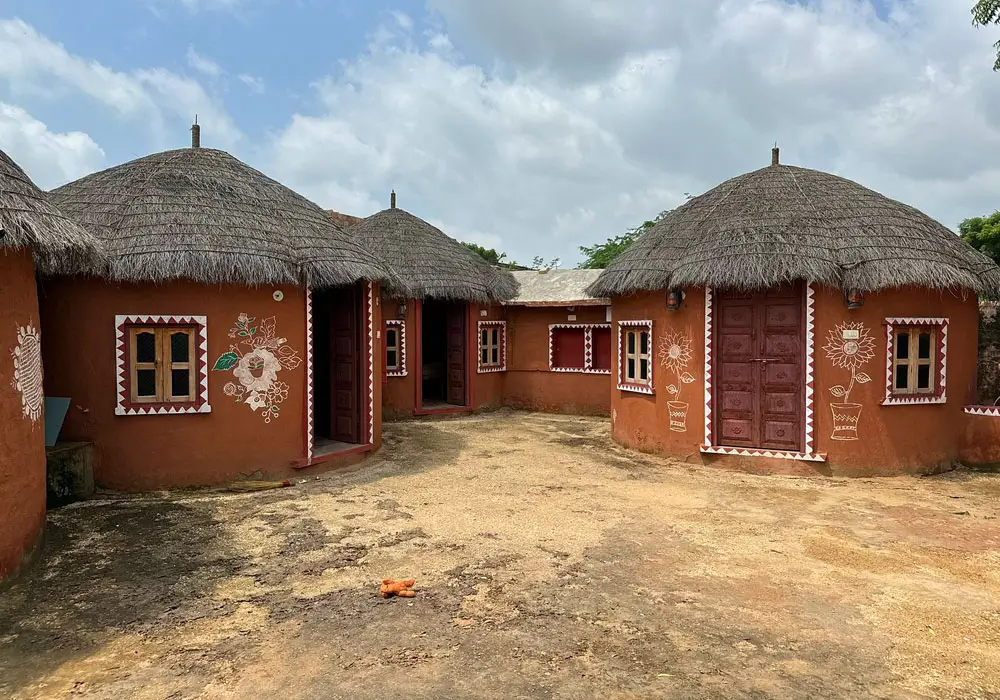
Every village in Rajasthan has someone people go to when a dispute needs settling, a wedding needs planning or a government form needs explaining. Often it is the sarpanch, the elected head of the village council. Sometimes it is an older man or woman whose family has been respected in the village for generations, who no longer holds any office but whose word still carries weight. A night in one of these households is one of the most personal ways to understand rural India, because you see the village through the eyes of someone at its centre.
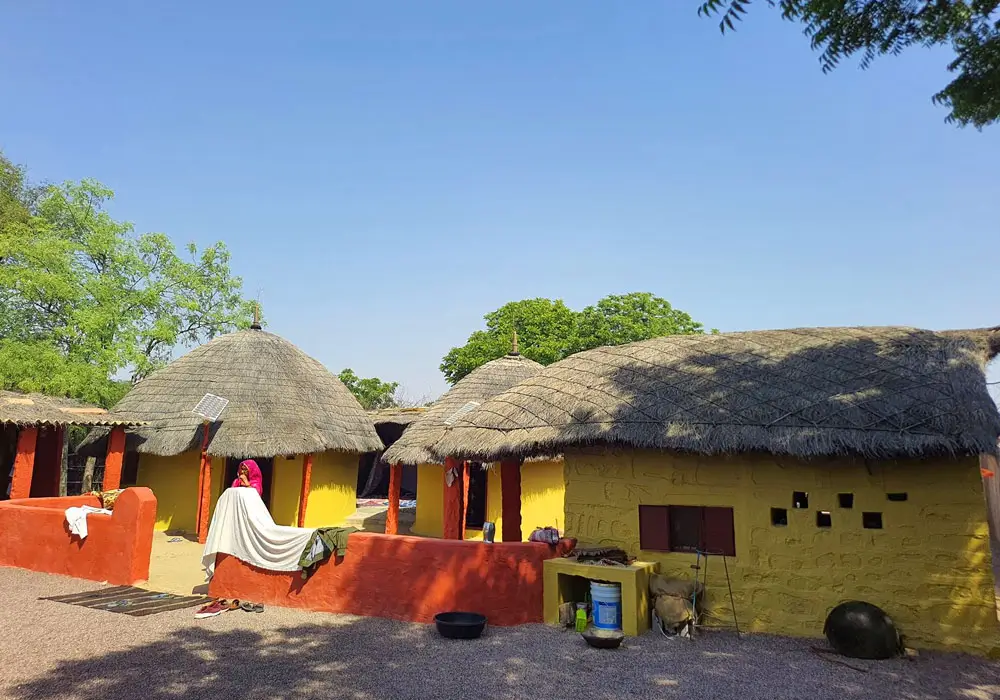
A village homestay in Rajasthan is not a hotel stay with a rural theme. You sleep in a simple, clean room in a family home, eat what the family eats, help in the kitchen if you want to, and spend the evening sitting with the household and their neighbours. In the morning you walk to the fields, watch the animals being milked and see children set off for school. Nobody is performing for you. You are a guest, and the family’s ordinary life carries on around you.
We arrange these stays with families we know, in villages within reach of Jaipur and in the Shekhawati region to the north, famous for its painted havelis. We choose homes where the family is genuinely happy to host, where the room and bathroom meet a reasonable standard for foreign guests, and where the money you pay makes a real difference to the household.
This page explains how the stay works, what facilities to expect, honestly, and how to make the most of it.
1. Choosing the right village
Before your tour, we talk through what you would like from the stay. A village near Jaipur means a shorter drive and easy access to the city’s sights. A village in Shekhawati means a longer journey but the chance to explore its painted havelis as part of the visit. We also check your needs on bathrooms, diet, mobility and children, so we can choose a family that suits you.
2. Arrival in the afternoon
Your private driver picks you up from your hotel and drives you out to the village, usually arriving in the afternoon. The family greets you at the door, often with a namaste and a glass of water or chai. Our guide or driver introduces you, helps with translation and makes sure you are settled.
3. Settling in and a walk round the village
After you have seen your room, a family member walks you round the village. You might see the well or water tank, the village temple, the school, the small shops, the panchayat building and the fields at the edge of the settlement. Because you are walking with a respected local family, people stop to say hello and the conversation flows more naturally than it would with a stranger.
4. Cooking on the chulha
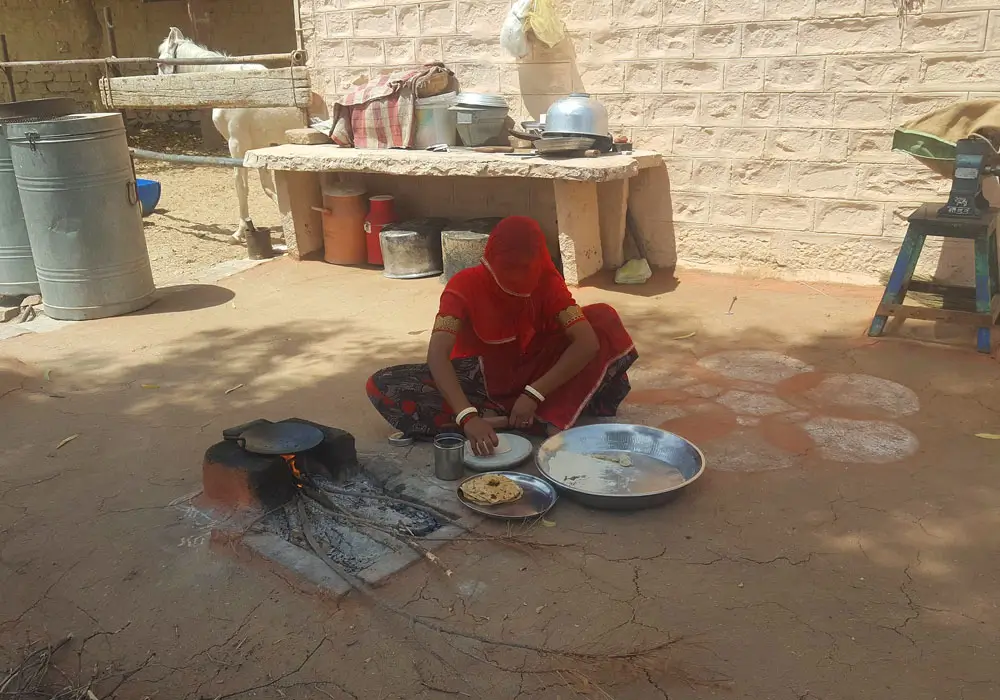
As the light fades, the women of the house usually begin preparing dinner on a chulha, a stove made of clay and fired with wood or dried dung cakes. You are welcome to help: rolling rotis, stirring dal, learning how to judge the heat by the colour of the flames. It is hot, smoky and great fun, and your attempts at a round roti will be gently laughed at.
5. Dinner with the family
Dinner is eaten together, sometimes sitting on the floor of the courtyard or kitchen, sometimes at a table if the family has one. Food is simple and seasonal: dal, a vegetable dish, bajra or wheat rotis, buttermilk, homemade pickle and perhaps a sweet. Rural Rajasthani food is mostly vegetarian, and you eat what the family eats.
6. Evening sitting with the elders
After dinner comes the part many guests remember most. The men often gather on charpoys, the woven rope beds, in the courtyard or outside the house, and neighbours drop by. The headman or elder of the family may talk about how the village has changed, about farming, rains and weddings, or ask you about your own country. With our guide or a family member translating, the conversation can go on for hours under the stars.
7. A night in the village
You sleep in your own room, usually with a proper bed, clean sheets and blankets, and a fan. Village nights are quiet, broken by the odd dog barking or a cow shifting in its shed. In winter, the family will give you extra quilts.
8. Morning in the fields and the cowshed
Village life starts early. You can join the family as they milk the buffalo or cows, walk out to the fields to see the crops and the irrigation, and watch the village wake up. Children in uniform head off to school, women collect water and men set off for the fields or the town.
9. Breakfast and departure
After a home-cooked breakfast, perhaps parathas with curd and chai, you say goodbye to the family. Your driver brings you back to Jaipur, or on to Shekhawati’s painted towns or your next destination.
We want you to arrive with the right expectations, because the best stays happen when guests know what they are signing up for.
Your room. A simple, clean private room, usually with a double bed or two single beds, clean sheets, blankets and pillows, a fan and a light. Some homes have air-conditioning or a heater, many do not. Decoration is plain.
Bathroom and toilet. This is the question most guests ask, and the honest answer is that it varies. Some homes have a Western-style flush toilet, others have an Indian squat toilet, and some have both. Some bathrooms are attached to your room, others are shared with the family or across a courtyard. Hot water may come from a geyser or be heated in a bucket. We check the arrangements at each home before we suggest it, and we tell you exactly what your chosen home has. If a Western toilet is essential for you, tell us and we will only suggest homes that have one.
Electricity and water. Most villages near Jaipur have electricity, though power cuts happen. Water is usually available from a tank or tap. Drink only bottled or filtered water, which we make sure is available.
Mobile signal. Phone coverage in villages near Jaipur is generally reasonable, though it can be patchy. Wi-Fi is unlikely. Many guests find the break welcome.
Privacy. Village homes are busy places, and the line between private and shared space is looser than you may be used to. Children may peep in, neighbours may drop by. Your room is yours, and you can close the door when you need quiet.
Not a hotel. There is no reception, room service or menu. You are a guest in a working household. If something is missing, ask your guide or the family and they will do their best.
Food in a village home is plain, fresh and cooked from what the family grows or buys locally. It is a world away from restaurant curries.
Bajra and wheat rotis. Breads cooked fresh on the chulha. Bajra roti is thick and nutty, wheat roti or phulka is thinner and puffs up on the flame.
Dal. A lentil dish, often made with moong or masoor, tempered with ghee, cumin and chilli.
Seasonal vegetables. Whatever is in season: potatoes, cauliflower, spinach, okra, gourds, or the desert vegetables ker and sangri.
Kadhi. A yoghurt and gram flour curry, common in Rajasthani homes.
Dairy. Fresh milk, curd, buttermilk and ghee from the family’s own animals. Rajasthani villages run on dairy.
Breakfast. Parathas, poha or leftover rotis with curd and pickle, served with strong chai.
Spice levels. Village cooking can be spicy. Tell us in advance and the family will make yours milder.
Diets. Most rural Rajasthani households are vegetarian, which makes vegetarian guests easy to cater for. Vegan diets are possible with notice, since dairy is used a lot. Tell us about allergies well before you go.
For a more structured cooking lesson, a cooking class in Jaipur makes a good companion to the homestay.
You are entering a family’s home and a close-knit community. A little awareness goes a long way.
Dress modestly. Cover shoulders and knees at all times, including in the evening. Loose trousers or long skirts and tops with sleeves are ideal. Women may like to carry a scarf to cover their head near a temple or with elders.
Greet the elders first. A namaste with joined palms to the oldest people present is polite. You will see younger family members touch elders’ feet. You do not need to do this, but it is a sign of the respect the family expects towards its elders.
Ask before photographing. Always ask before photographing people, especially women and elders. Some families are happy to be photographed, others prefer not, and their wishes come first.
Shoes off. Remove your shoes before entering the house, the kitchen and any prayer space.
Right hand for food. Eat and pass food with your right hand.
Alcohol and smoking. Please do not drink alcohol or smoke in the home or around the village unless your hosts clearly invite you to. In most rural households alcohol is not part of family life.
Gender customs. In some villages, men and women spend much of the day in separate spaces, and women may cover their faces in front of older men. As a guest, you will usually be welcomed into both spaces, but follow the family’s lead.
Gifts and payment. We pay the family directly for your stay, so you do not need to pay anyone on arrival. A small gift from your home country, such as a picture book, a calendar or local sweets, is a kind way to say thank you. Please do not hand out money or sweets to children in the village.
Do not treat the village as a show. The family has invited you to share their life, not to perform. Asking questions, helping with chores and joining in conversation make the visit meaningful for both sides.
Near Jaipur. Villages within reach of Jaipur let you stay without a long drive, and the homestay can fit between two hotel nights in the city. The countryside is a mix of farmland, village ponds and the low Aravalli hills. This option suits travellers on a Golden Triangle tour or with limited time.
Shekhawati. The Shekhawati region lies a few hours’ drive north of Jaipur. In the eighteenth and nineteenth centuries, merchant families from these towns grew wealthy through trade and built large havelis covered with painted murals: gods and legends, hunting scenes, trains, motor cars and even European figures. A village homestay here lets you combine rural life with visits to painted towns such as Mandawa, Nawalgarh or Fatehpur, with your guide explaining the stories on the walls. It needs more time, ideally two nights in the region.
Painted havelis as an add-on. If you choose Shekhawati, we can add a half day or full day of haveli visits before or after your night in the village. Many havelis are privately owned, some are open as small museums, and some are in poor repair, so your guide chooses the best ones for your interests.
October to March. The best time for a homestay. Days are pleasant, evenings in the courtyard are comfortable, and mornings in the fields are fresh. December and January nights can be very cold in village homes, which rarely have heating, so the family will provide heavy quilts.
April to June. Hot, with daytime temperatures that make village life slow. A homestay is possible but less comfortable, and we would only suggest it in homes with good fans or cooling.
July to September. The monsoon greens the countryside and farmers are busy sowing. It is humid, and tracks may be muddy. A good time for those interested in farming, but bring patience for the weather.
Festivals and weddings. Staying during a festival such as Diwali or Holi, or during a village wedding, can be wonderful but busy. Ask us, and we will check with the family whether a guest would be welcome at that time.
Place it between two city stays. A typical plan is two nights in Jaipur, one night in the village, and then on to your next destination. Your luggage can stay at your Jaipur hotel if you are returning, and you take only an overnight bag.
Shekhawati on the way. If you are travelling between Delhi and Jaipur, or from Jaipur towards Bikaner, Shekhawati makes a natural stop, with a village homestay and a day of painted havelis.
Pair it with other village experiences. You might add a farm day near Jaipur, a morning at a village school or a village cricket match with locals the next morning. For a broader look at rural life by jeep, see our open jeep village safari.
Balance it with comfort. After a night in the village, many guests enjoy a comfortable hotel and a relaxing evening, perhaps with a royal dinner hosted by a thakur family to see another side of Rajasthan’s history.
Explore Jaipur in depth. Before or after the homestay, the Jaipur heritage walk and a tuk tuk tour of the Pink City show you urban Rajasthan in contrast.
For families. Children often love village homestays: animals, open space and other children to play with. A village cricket match is an easy way to break the ice.
Bring and wear - Modest, loose clothes covering shoulders and knees - A warm layer and socks for winter nights - Slip-on shoes or sandals - A torch or headlamp - Toilet paper, wet wipes and hand sanitiser - Any medicines you need - A small gift from your home country, if you wish - Earplugs, in case of early roosters
Expect to do without - Room service and menus - Reliable Wi-Fi - Alcohol in the home - Fixed meal times to suit you
Tell us your Jaipur dates and what you would like from the stay, and we will match you with a village family that suits you.
Call & WhatsApp +91-9828085426 or email info@topindianholidays.net.
See more ideas on our Top Experiences in India page.
Tell us your travel dates and we will check availability and fit this experience into the right day of your itinerary. Reply within 12 hours.
Check Availability› Chat on WhatsApp› Send an Enquiry›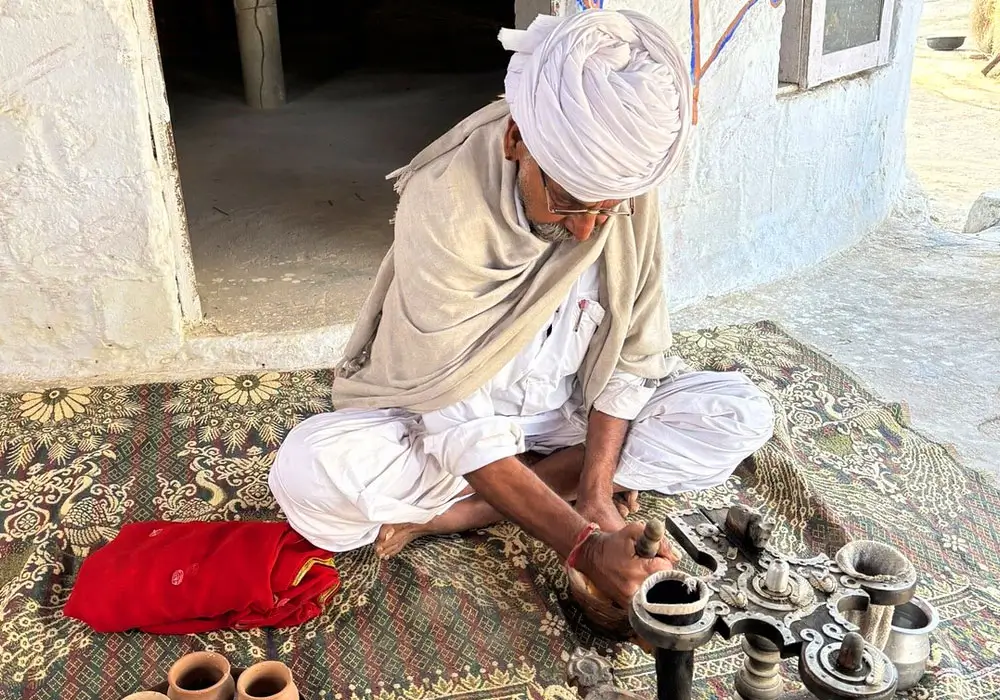
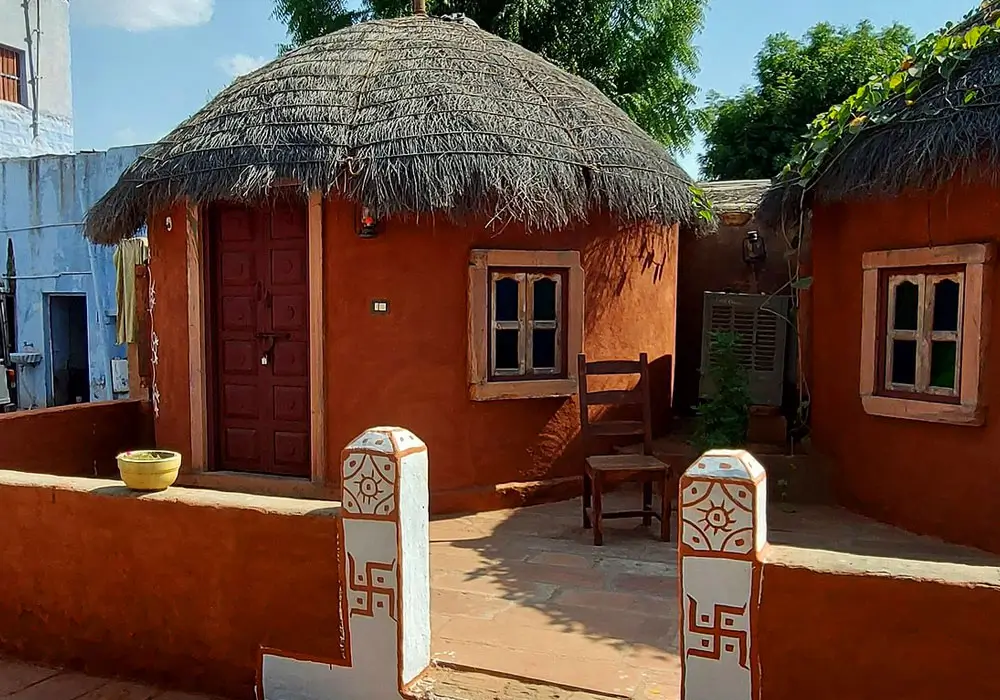



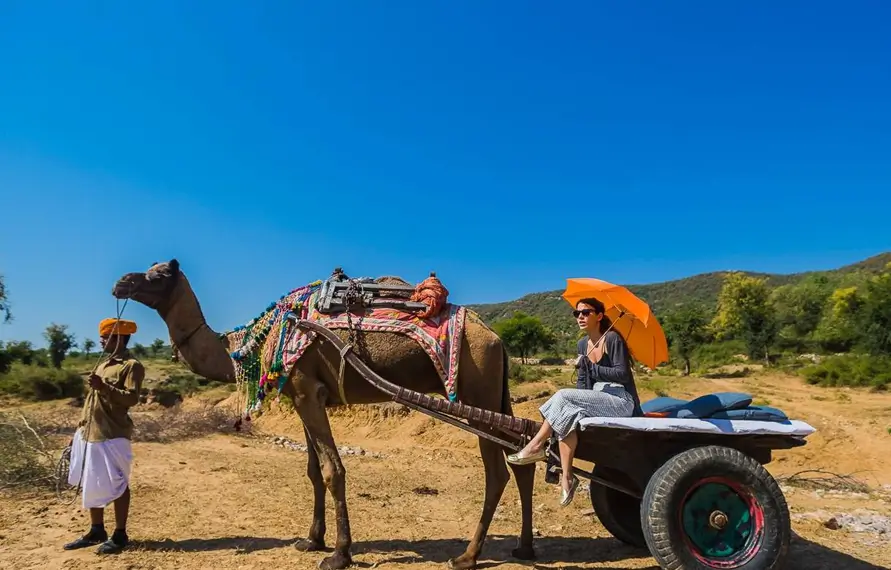 🌙 11 nights / 12 days
Delhi - Jaipur - Nimaj... Delhi - Jaipur - Nimaj - Deogarh - Udaipur Show More
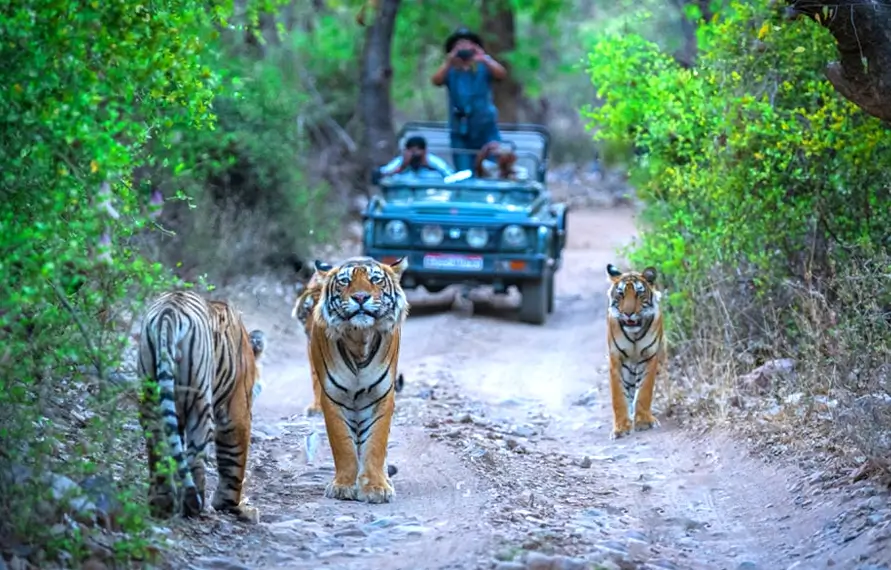 🌙 13 Nights / 14 Days
⭐ Most Popular
Delhi - Agra - Jaipur... Delhi - Agra - Jaipur - Ranthambore - Bhainsrorgarh Fort - Udaipur - Dungarpur - Ahmedabad Show More
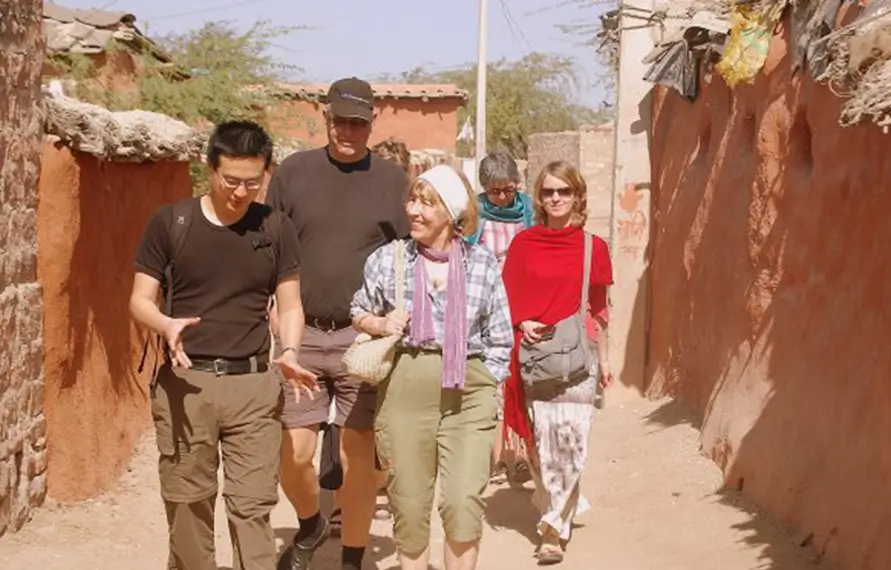 🌙 14 Nights/ 15 Days
Delhi - Agra - Jaipur... Delhi - Agra - Jaipur - Samode - Bikaner - Jaisalmer - Jodhpur - Bishnoi Village - Udaipur Show More
 🌙 06 Nights / 07 Days
Raipur -Jagdalpur - Indravati -... Raipur -Jagdalpur - Indravati - Kanger Valley - Chitrakoot - Nagarnar - Narayanpur - Raipur Show More
Yes. A common plan is two nights in Jaipur and one night in a nearby village, with your main luggage left at your Jaipur hotel. We work it into your route so the drives stay comfortable.
Yes. A second night gives you more time in the fields and with the family, and is a good idea in Shekhawati, where you may also want time for the painted havelis.
Modest, loose clothes covering shoulders and knees, slip-on shoes and a warm layer in winter. Women may like a scarf for temples or for sitting with elders.
Yes. If you stay in a Shekhawati village, we can add a half day or full day exploring painted havelis in towns such as Mandawa, Nawalgarh or Fatehpur, with a guide to explain the murals.
It depends on the village chosen. Some are within an hour or two of Jaipur, while Shekhawati villages are a few hours’ drive north. We tell you the expected drive time for your stay.
Usually only a little, if at all. Our guide or driver helps with translation, and younger family members often speak some English. Smiles and gestures do a lot of the work.
Very often, yes. Children usually love the animals, open spaces and other children to play with. Tell us their ages and needs so we can choose a suitable family.
Yes, and most guests enjoy it. You can help roll rotis and stir pots on the chulha, the traditional clay stove. The family will show you how.
Simple vegetarian village food: dal, seasonal vegetables, kadhi, bajra or wheat rotis, fresh curd and buttermilk, and chai. Breakfast is often parathas with curd. Tell us about spice levels and allergies in advance.
Yes. We work only with families we know and visit regularly, and our guide or driver stays in contact throughout. Villages are close-knit, and as a guest of a respected family you are well looked after.
It varies. Some village homes have a Western-style flush toilet, others have an Indian squat toilet, and some have both. We check each home in advance and tell you exactly what to expect. If a Western toilet is essential, we only suggest homes that have one.
The price depends on the village, the length of stay, your group size and transfers. We quote the current price for your dates, and a fair share goes directly to the family. Send us your dates on WhatsApp.
In this stay, your host is the family of a respected village elder. This may be a current or former sarpanch, the elected head of the village council, or an elder whose family is known and trusted in the village.
You spend a night with a village family in a simple, clean room, eat home-cooked meals with them, help cook on a clay stove and spend the evening talking with the elders. In the morning you see the animals milked and walk to the fields. It is a real family home, not a hotel.

Whether you're planning your first India trip or returning to explore deeper, get honest, expert advice from someone who knows every corner of this country. No pressure, no cost.