


 info@topindianholidays.net
 +91-8955000999

Hot Air Balloon Ride in Jaipur
Lift off as the sky turns orange and drift over villages, mustard fields and the Aravalli hills while Jaipur is still waking up.
View Experience ›Dine by candlelight in the heritage home of a Rajput noble family near Jaipur, Udaipur or Jodhpur. Family stories, old portraits and home-cooked Rajput dishes.
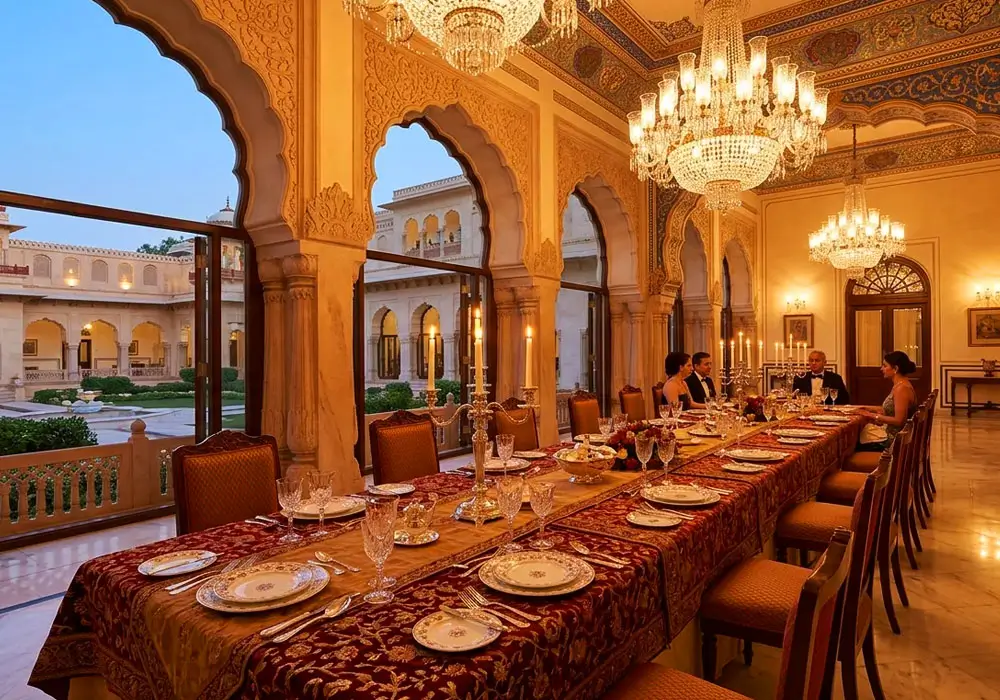
Rajasthan’s palaces are full of portraits of men with curled moustaches, jewelled turbans and swords across their knees. In a museum they are history behind glass. At a thakur’s dinner table, they are somebody’s great-grandfather. The difference is the whole point of this evening. You are not visiting a heritage property with a ticket desk; you are a guest in a private home where the family still lives, still argues about the cricket, and still keeps the old swords hanging on the wall of the drawing room.
A thakur was a member of the landholding Rajput nobility, the families who held villages and estates under the great ruling houses of Jaipur, Jodhpur, Udaipur and the other princely states. Their estates were called thikanas, and their homes ranged from fortified mansions in the old cities to small forts and walled compounds out in the countryside. Since Indian independence the titles carry no official power, and many families have had to work hard to hold on to their houses. Some now open their doors to a small number of guests, which is how a dinner with a royal family in Rajasthan becomes possible for a traveller.
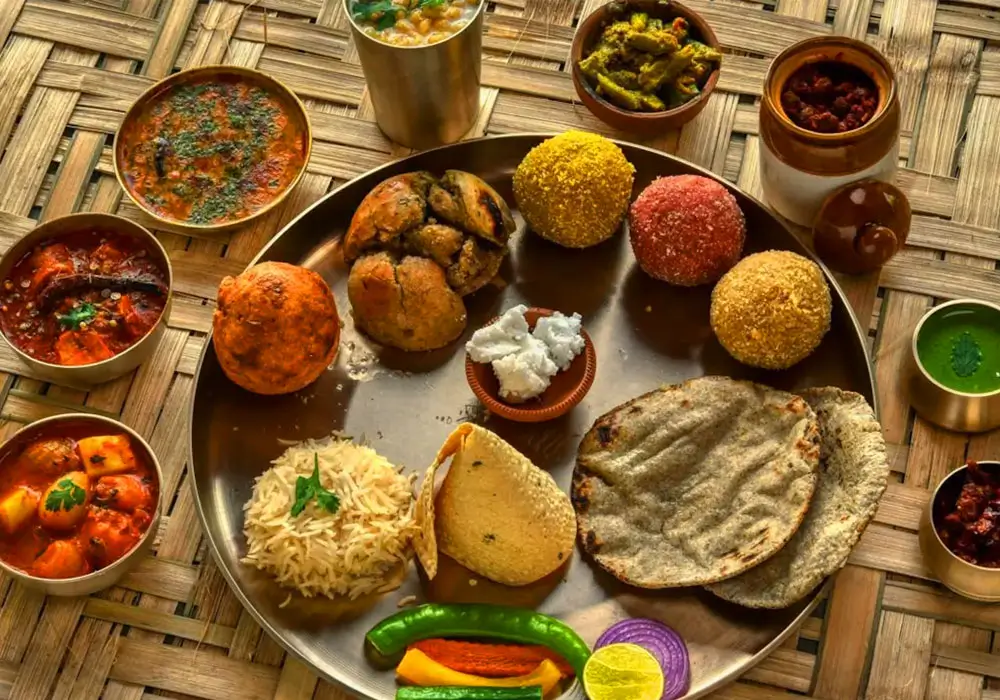
What you get is an evening of conversation as much as a meal. Your hosts talk about their family’s past, show you the portraits, photographs and weapons that survive, and then sit down with you to dinner, often in a courtyard lit by candles and oil lamps. The food is home cooking rather than restaurant food: family recipes for laal maas, ker sangri and gatte, served with breads made from millet and wheat.
We arrange these dinners in and around Jaipur, and also in Udaipur and Jodhpur, with families we know personally. Each home is different, so we match the evening to your interests, your group and your diet.
1. We choose the right home for you
Before your tour, we ask what you would enjoy most. Some families live in a haveli inside the old city, which makes for a short drive and an urban setting. Others live on a rural estate or in a small fort an hour or so outside town, which means a longer drive but a far quieter evening under a big sky. We also ask about diet, mobility and whether you are travelling with children, because those details decide which family is the best fit.
2. Pickup in the late afternoon or early evening
Your private driver collects you from your hotel. For a city haveli this can be close to dinner time. For a countryside estate, we suggest leaving earlier so that you arrive with some daylight left and can see the house, the gardens and the village around it before dark.
3. A welcome at the gate
In many Rajput homes guests are greeted with the Rajasthani “Khamma Ghani”, a respectful hello, and sometimes with a tilak on the forehead or a garland. It is a gesture of hospitality, not a performance. You will usually be offered something to drink, perhaps a cool sherbet, masala chai or a soft drink, while you settle in.
4. A walk through the house
One of your hosts takes you round the parts of the home that are shown to guests. This is where the history comes alive: the ancestral portraits, the old black and white photographs of polo teams and family weddings, the documents and seals, and very often a small collection of arms. Swords, shields, daggers and old matchlock guns were part of a noble household’s identity, and families tend to know which ancestor carried which piece.
5. Conversation before dinner
Drinks and snacks are often served in a drawing room, on a terrace or in the courtyard. This is the unhurried heart of the evening. Your hosts might talk about how the estate came to the family, what changed after 1947, how they keep the house standing today, or simply about their children and their travels. Ask questions. Most families enjoy talking to curious guests, and the conversation is usually as much about modern India as about the past.
6. Dinner by candlelight
Dinner is often laid out in a courtyard or on a rooftop, lit by candles and lamps, though in cooler weather or rain it moves indoors. Dishes may come to the table in brass or silver serving bowls, and you eat together with the family. The pace is relaxed. There is no set menu card to work through, just a spread of home-cooked dishes and plenty of second helpings.
7. Music, if you choose it
If you would like, we can arrange a small group of folk musicians to play during or after dinner. Rajasthan’s hereditary musician communities have performed for noble families for centuries, so music in a courtyard after dinner belongs naturally to this setting.
8. Goodbyes and the drive back
After dessert and a last cup of tea or coffee, you say goodbye to your hosts and your driver brings you back to your hotel. From a city haveli you are home in minutes. From a rural estate, the drive back through dark fields and sleeping villages is part of the memory.
It helps to understand a little about the Rajput nobility before you go, because it makes the conversation richer.
Thakurs and their estates. Under the princely states of Rajasthan, the ruler at the top granted land to noble families in return for loyalty and military service. The head of such a family was usually called Thakur, though Rao, Rawat, Rawal and other titles were used in different states. Their estate, the thikana, might be a single village or a large group of villages, and the family’s house was the centre of local life.
After independence. When the princely states joined India, and when land reforms followed in the 1950s, most noble families lost their estates and their income from them. Many kept only their houses, and maintaining a centuries-old fort on a modern income is not easy. Some turned their homes into heritage hotels. Others, like the families who host these dinners, keep their homes private and invite a limited number of guests.
Families today. Your hosts are likely to be educated, well travelled and very much part of contemporary India. You might meet a host who runs a business, farms, breeds horses, works in conservation or plays polo. The titles survive mainly as a matter of family pride and local respect. They are not actors in costume, and the evening is best enjoyed as a conversation between equals.
Every home is different. We do not name the families on this page, because these are private homes and the arrangement depends on their availability and wishes. When we plan your evening, we tell you about the family you will meet, their house and what makes their history interesting.
Ancestral portraits. Painted portraits and early photographs line the walls of many Rajput homes. Look at the turbans, which changed style by region and period, and the jewellery worn by the men as well as the women. Your hosts can usually tell you who each person was and what they did.
The armoury. Swords, curved and straight, shields of hide with brass bosses, daggers, spears and old guns tell you how central warfare once was to Rajput life. Families often have stories attached to particular pieces. Please look rather than handle, unless your host invites you to.
Photographs of a vanished world. Polo matches, hunting camps from the early twentieth century, weddings with elephants and horses, visits from British officials. These pictures record a way of life that ended within living memory. Some homes also have old hunting trophies from that era, which are now part of the house’s history rather than its present.
Architecture. A haveli is built around one or more courtyards, with rooms opening onto them and carved jharokha balconies overlooking the street. A rural fort has thick walls, a gateway built high enough for an elephant, bastions at the corners and a view over the surrounding fields. Look up at painted ceilings and down at old stone floors polished by generations of feet.
Family shrines and courtyards. Many homes have a small family temple or shrine. If you are shown it, follow your host’s lead, and remove your shoes if asked.
The food at a thakur’s table is Rajput home cooking, which differs from the vegetarian thali of a merchant household or the rich Mughlai dishes of Delhi. Rajput families have a long tradition of meat dishes, often linked to hunting, alongside desert vegetables and millet breads that suit Rajasthan’s dry climate. What appears on your table depends on the family, the season and your preferences.
Laal maas. The best known Rajput dish: mutton slow-cooked in a deep red gravy of dried red chillies, garlic and yoghurt. It looks fiercer than it often tastes, though family versions vary in heat. If you prefer milder food, tell us and the kitchen will adjust.
Safed maas. The pale counterpart, mutton cooked in a creamy gravy of yoghurt, cashew, almonds and cardamom. It is gentle and fragrant, and a good choice if you do not eat chillies.
Ker sangri. A desert classic made from dried ker berries and sangri beans from the khejri tree, cooked with spices and oil. It is tangy, slightly sour and unlike anything you will have eaten at home.
Gatte ki sabzi. Dumplings of gram flour, steamed and then simmered in a spiced yoghurt gravy. Gatte were a clever answer to a land where fresh vegetables were often scarce.
Bajra roti. Thick, slightly rough flatbread made from pearl millet, often served with a spoonful of ghee or white butter. Your table will usually have wheat breads such as phulka or paratha too.
Dal, rice and pickles. A lentil dish, rice, homemade pickles, chutneys, papad and fresh salad usually round out the meal.
Something sweet. Desserts may include churma, a crumbly sweet of wheat, ghee and sugar, or a seasonal sweet made in the family kitchen.
Family recipes. Many of these dishes are cooked to recipes handed down within the family, and your hosts may tell you who first made a dish a certain way. If you enjoy cooking, ask about the spices and techniques. For hands-on learning, a cooking class with a local family in Jaipur makes a good companion to this evening.
Vegetarian and other diets. Not every Rajput family eats meat, and every family we work with can prepare a fully vegetarian dinner. We can ask about vegan, gluten-free and allergy needs in advance. Please tell us early, because the kitchen plans the meal days ahead.
Drinks. Some families offer drinks before dinner, others do not serve alcohol at all. We tell you what to expect for your particular evening, and you should never assume or ask to bring your own.
This is a private home, and the evening runs on the same courtesies you would show anywhere you were a dinner guest. A few local customs help it go smoothly.
Greetings. “Khamma Ghani” is the traditional Rajasthani greeting, and a namaste with joined palms is always polite. Older family members are often addressed respectfully, and you will notice younger relatives touching the feet of elders. You are not expected to do this, but a small bow or namaste to the eldest person present is appreciated.
Arrive on time, but not early. Your driver will time the journey. Rural roads can be slow, so we build in a margin.
Ask before photographing. Most families are happy for you to photograph the house, the courtyard and the table. Always ask before photographing family members, and ask whether any rooms are private.
Look, do not touch. Antiques, portraits and weapons are irreplaceable and often fragile. Admire them freely, and handle them only if your host offers.
Shoes. Some homes ask guests to remove shoes in certain rooms or near a shrine. Watch what your hosts do.
Eat with your right hand if eating by hand. Cutlery is normally provided, but if you try eating with your fingers, use your right hand. Accepting a second helping is a compliment to the kitchen; if you have had enough, a polite refusal is fine.
Conversation. Your hosts are usually open about their history, including the difficult parts. Questions about the end of the princely states, land reforms or the family’s present situation are fine if asked with genuine interest. Avoid treating the family as relics of the past; they live very much in the present.
Women in the household. Customs vary between families. In some homes the women of the family join the whole evening, in others they appear for part of it or stay in the private side of the house. Follow the family’s lead without comment.
Gifts and payment. We arrange and settle the cost of the evening with the family in advance, so you do not need to pay anyone on the night. A small, thoughtful gift from your home country, such as a book, local sweets or a handmade item, is a kind gesture but entirely optional.
Smart-casual is the right level. Think of the clothes you would wear to dinner at a friend’s home in a nice part of town.
For men. Trousers or chinos with a collared shirt or a smart kurta. Closed shoes or smart sandals. No shorts or vests.
For women. A dress or skirt below the knee, smart trousers with a blouse, or a kurta or salwar suit. A light shawl or stole is useful both for modesty and for cool evenings. Shoulders covered is a good rule.
Winter evenings. From December to February, nights in Rajasthan can be cold, especially in a rural courtyard. Bring a warm jacket or a pashmina.
Indian dress. If you would like to wear a saree or tie a turban for the evening, most hosts are delighted. We can arrange a turban tying and saree draping session earlier in the day so you arrive dressed for the occasion.
Shoes you can slip off. Useful if you are asked to remove them indoors.
Jaipur. The widest choice of homes, from havelis inside the walled Pink City to rural forts and estates in the countryside outside town. Jaipur’s noble families were closely tied to the court of the Kachhwaha rulers, and many homes have strong links to Amber and the City Palace. This is the easiest place to fit the dinner into a Golden Triangle tour.
Udaipur. In Mewar, the noble families were linked to the Sisodia rulers, whose long resistance to the Mughals is central to Rajput pride. A dinner here often comes with stories of Maharana Pratap and the battles of the sixteenth century. Some homes are in the old city near the lake, others in the hills around town.
Jodhpur. In Marwar, the land of the Rathores, many noble estates lie out in the semi-desert countryside, and the drive takes you past villages and khejri trees. This is a good choice if you want the rural fort atmosphere and a big, open night sky. It pairs naturally with an open jeep village safari earlier in the day.
If you are visiting more than one of these cities, we usually suggest the dinner where the setting suits you best, rather than doing it twice.
The dinner can be arranged through much of the year, but the season changes the atmosphere.
October to March. The best time. Evenings are pleasant to cool, and dinner in an open courtyard is comfortable. December and January nights can be genuinely cold in the countryside, so families may light braziers or move part of the evening indoors.
April to June. Hot months. Dinner tends to start later, after the worst of the heat, and may be served on a terrace or indoors with fans or air-conditioning.
July to September. The monsoon brings humidity and occasional heavy rain. The countryside turns green, which is lovely on a rural estate, but dinner may move indoors at short notice.
Festival times. Around Diwali, Holi and family weddings, hosts may not be available, or the house may be busy with celebrations. If your dates fall on a festival, ask us; sometimes it is a wonderful time to visit, sometimes it is better to choose another night.
Make it your last evening in a city. After a few days of sightseeing, you will have more context for the family’s stories, and you will have seen the forts and palaces their ancestors served.
Keep the afternoon light. A rural estate dinner involves a drive, so avoid packing a heavy sightseeing day into the same afternoon.
Combine it with folk music. Ask us to add a small group of musicians for an hour in the courtyard. For a longer musical evening on another night, see our evening with Rajasthani folk musicians or the Rajasthani folk dance show.
Contrast it with village life. If you want to see how most rural Rajasthanis live, a village homestay or a farm day near Jaipur balances an evening with the nobility very well.
On a Golden Triangle tour. The dinner fits easily into a Jaipur stay of two or three nights. We usually place it on the evening after you have visited Amber Fort and the City Palace, so the history you hear at dinner connects with what you have just seen. Explore more Jaipur evenings on our Jaipur heritage walk page.
For special occasions. A candlelit courtyard dinner is a lovely way to mark an anniversary, a honeymoon or a significant birthday. Tell us in advance and we will let the family know.
Bring and wear - Smart-casual clothes with shoulders and knees covered - A shawl, pashmina or warm jacket for winter evenings - Shoes that are easy to slip off - A small gift from home, if you wish - Questions about the family’s history - Phone or camera, used with permission
Leave behind - Shorts, vests and beachwear - Your own alcohol - Assumptions that your hosts are performers - Any plan to touch antiques without asking
Tell us where you are staying and what interests you most, and we will match you with the right family home and evening.
Call & WhatsApp +91-9828085426 or email info@topindianholidays.net.
See more ideas on our Top Experiences in India page.
Tell us your travel dates and we will check availability and fit this experience into the right day of your itinerary. Reply within 12 hours.
Check Availability› Chat on WhatsApp› Send an Enquiry›



 🌙 11 Nights / 12 Days
Delhi - Agra - Jaipur... Delhi - Agra - Jaipur - Bikaner - Jaisalmer - Jodhpur - Udaipur - Ajmer - Pushkar - Delhi Show More
 🌙 08 Nights / 09 Days
Delhi - Jaipur - Bikaner... Delhi - Jaipur - Bikaner - Jaisalmer - Jodhpur - Udaipur Show More
 🌙 09 Nights / 10 Days
Delhi - Mandawa - Bikaner... Delhi - Mandawa - Bikaner - Jaisalmer - Jodhpur - Udaipur - Pushkar - Jaipur - Delhi Show More
 🌙 09 Nights / 10 Days
Jaipur – Bikaner – Jaisalmer... Jaipur – Bikaner – Jaisalmer – Jodhpur – Mount Abu - Udaipur Show More
No. We agree everything with the family in advance and settle it as part of your tour, so you can simply enjoy the evening as a guest. A small gift from home is a kind gesture but entirely optional.
Jaipur has the widest choice and fits a Golden Triangle tour best. Udaipur offers Mewar’s history and lakeside settings, while Jodhpur suits travellers who want a rural fort under a big desert sky. We recommend one based on your route.
Some havelis are inside the old city, a short drive from most hotels. Rural estates and forts are further out, often an hour or more by car. We tell you the expected drive time for your chosen home.
Yes. We can arrange a small group of Rajasthani folk musicians to play in the courtyard during or after dinner. Tell us when you book so we can organise it with the family.
Most families are happy to welcome children, and many have children of their own. Old houses can have steep steps and open terraces, so tell us your children’s ages and we will choose a suitable home.
Usually yes, of the house, courtyard and food. Always ask before photographing family members, and check whether any rooms are private. Do not handle antiques or weapons unless your host invites you to.
Smart-casual clothes, the sort you would wear to dinner at a friend’s home. Cover shoulders and knees, and bring a warm layer in winter. Wearing a saree or turban is welcome but never expected.
It can be, as it is made with plenty of dried red chillies, though family versions vary. If you prefer milder food, tell us and the kitchen can tone it down, or you can enjoy safed maas, which is creamy and mild.
Yes. Every family we work with can prepare a vegetarian dinner, and many Rajasthani dishes are vegetarian by nature. Vegan, gluten-free and allergy requests should be shared well in advance.
Typically home-cooked Rajput dishes such as laal maas, safed maas, ker sangri, gatte ki sabzi, dal and bajra roti, with rice, pickles and a dessert. The exact menu depends on the family and your preferences.
Usually not. The homes are havelis, small forts or rural estates rather than the great palaces of the ruling families. That is part of the appeal: you are in a family home that is still lived in, not a museum or a hotel.
The cost depends on the home, the menu, the size of your group, the drive involved and whether you add folk musicians. We quote the current price for your date and group. Send us your dates on WhatsApp and we will suggest a family and give you the details.
A thakur was the head of a Rajput noble family who held land and villages under one of Rajasthan’s princely rulers. The title no longer carries any official power, but it is still used with pride and respect, especially in the family’s home area.
Yes. A number of Rajput noble families open their private homes to a small number of guests for dinner. They are usually thakur families, the landholding nobility, rather than the former ruling maharajas. We arrange the evening directly with families we know.

Whether you're planning your first India trip or returning to explore deeper, get honest, expert advice from someone who knows every corner of this country. No pressure, no cost.