


 info@topindianholidays.net
 +91-8955000999
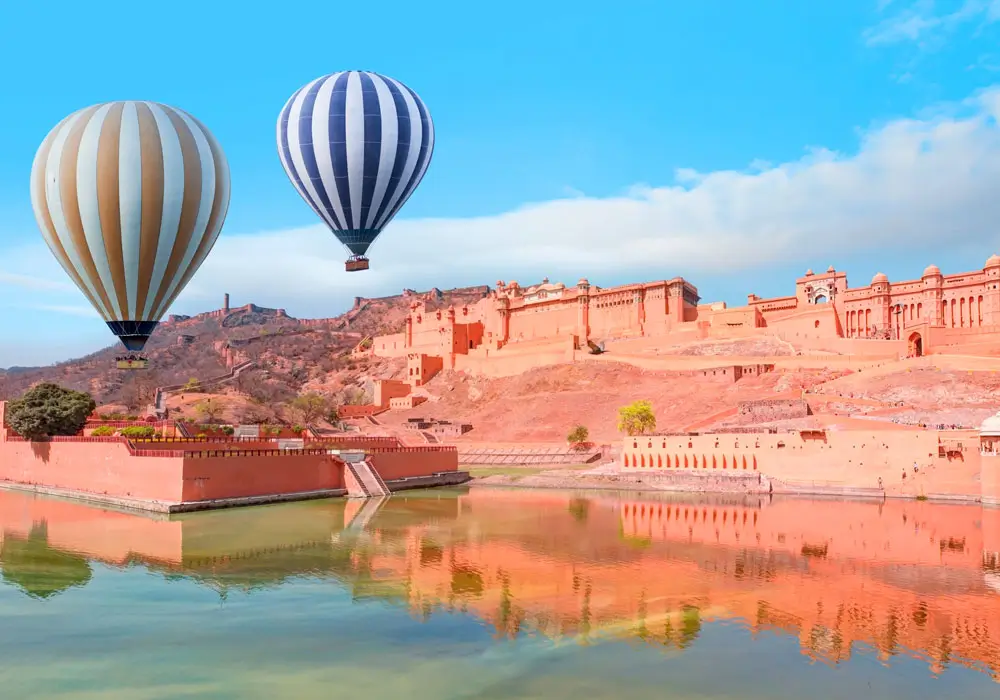
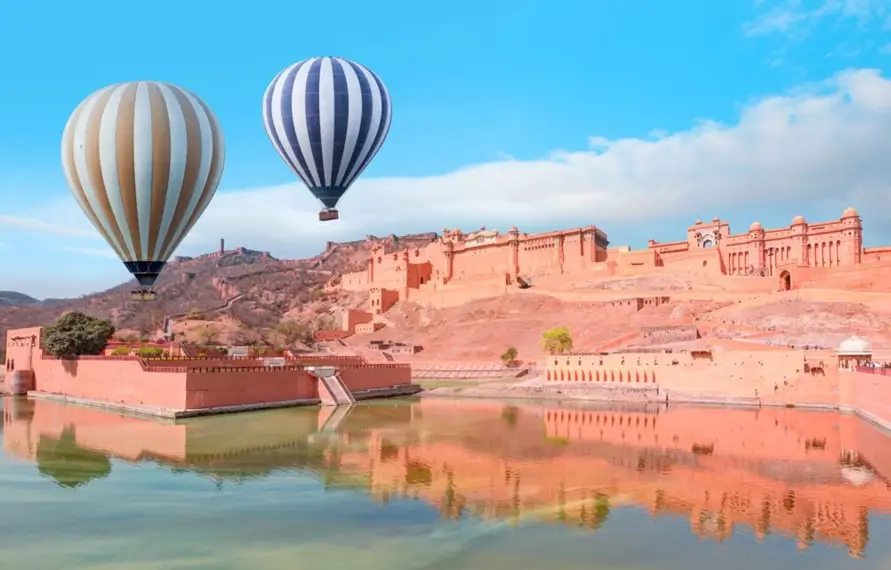
Hot Air Balloon Ride in Jaipur
Lift off as the sky turns orange and drift over villages, mustard fields and the Aravalli hills while Jaipur is still waking up.
View Experience ›Follow the straight streets of an eighteenth-century planned city on foot, past bangle makers, temple doorways and chai stalls, while the bazaars are still opening their shutters.
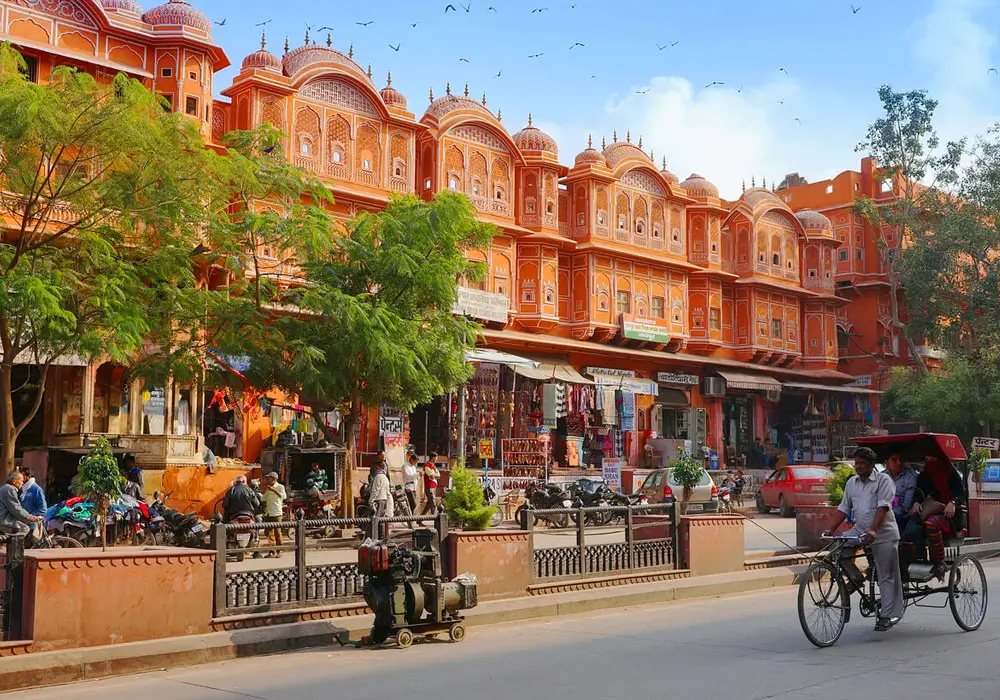
Most visitors see the old city of Jaipur through a car window. They are driven to the City Palace, dropped at Hawa Mahal for a photograph, and taken to a shop in a side street. It is a pity, because the walled city was designed to be walked. Its streets are straight and wide, its markets are laid out by trade, and every crossing opens onto a square with a temple or a well. On foot, with someone who knows it, the plan suddenly makes sense.
This Jaipur heritage walk starts early, before the traffic, the heat and the shopping crowds. In the first hours the bazaars are only half open. Shopkeepers wash the pavement outside their shutters and light incense at small shrines. Milk arrives by bicycle, flower sellers sort marigolds on the steps of temples, and the first glasses of chai are poured at the corners. Your guide leads you through the main bazaars and into the lanes behind them, where artisans still work in the same streets their families have used for generations.
Along the way you will learn how the city was planned, why it is pink, what the different bazaars sold and still sell, and how people live in the old havelis today. You will look up at Hawa Mahal from the street and then see it at eye level from a rooftop café over a cup of tea. It is a walk about everyday life as much as monuments, and it gives you a sense of Jaipur that no drive-past can.
The walk works well on your first morning in the city, because everything you see afterwards fits into the picture it gives you.
1. Pickup and drop at the walls
Your private driver brings you from your hotel to one of the gates of the old city, usually early enough that the roads are still quiet. The car waits or meets you at the end, so you do not need to retrace your steps.
2. An introduction at the gate
Your guide begins at one of the old city gates, often Chandpole or Sanganeri Gate, and explains the plan of the walled city before you go in. Standing outside the walls helps you understand how the city was closed at night and how the gates controlled who came and went.
3. Into the main bazaar
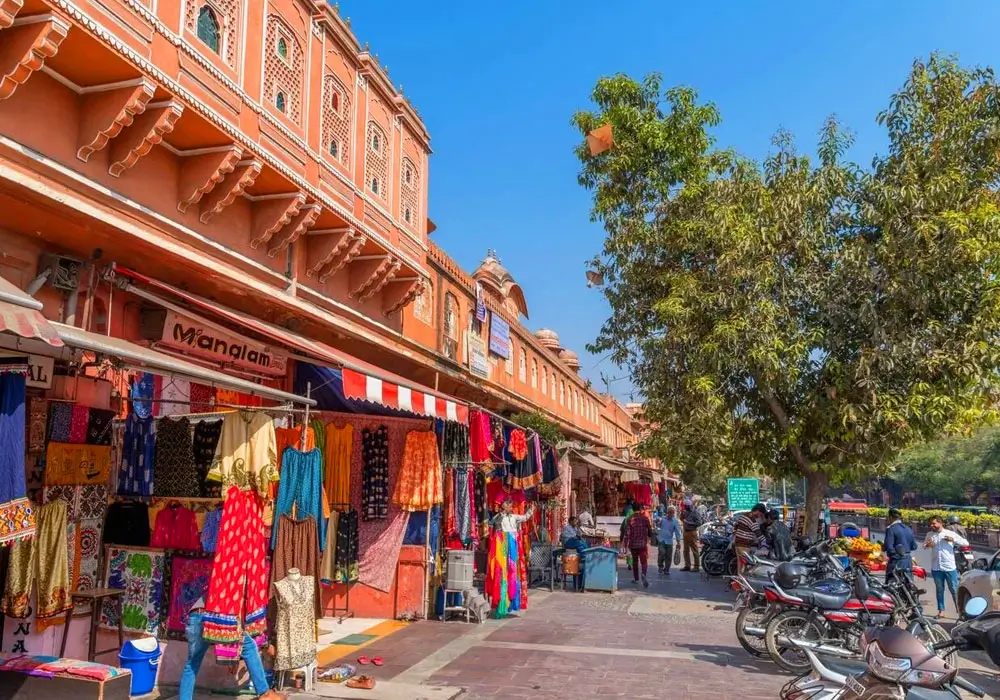
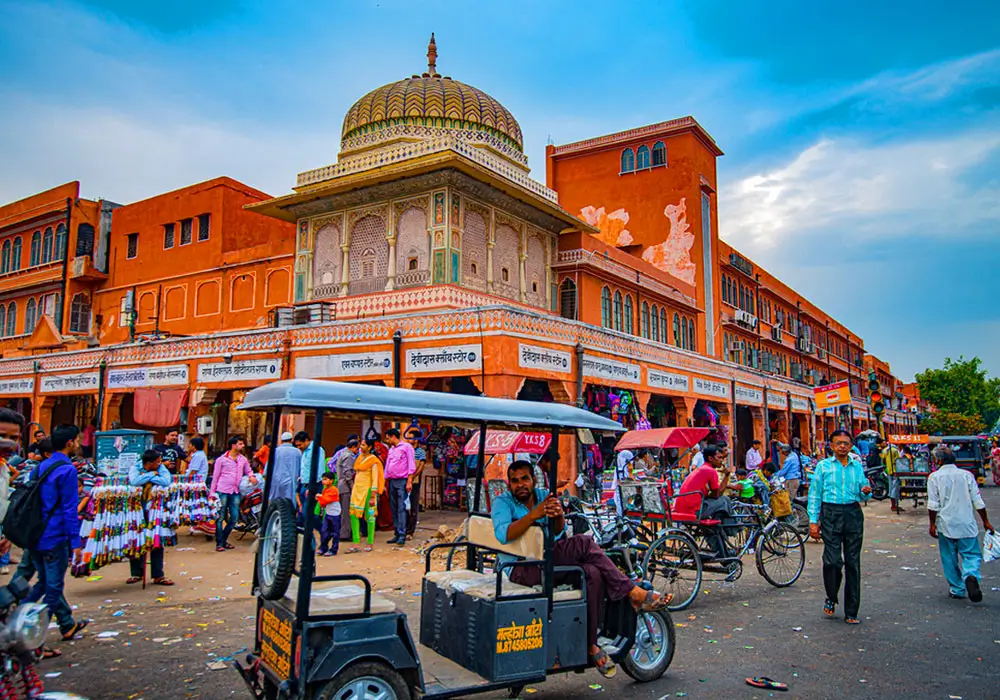
You walk along one of the broad market streets, with its arcades of shops under a continuous pink facade. At this hour many shutters are still down, which gives you a chance to see the architecture rather than just the goods.
4. Into the lanes
From the main road your guide turns into the side lanes, the residential and craft quarters behind the bazaars. This is where you will find small temples, old havelis with carved balconies, and workshops making bangles, kites, silver and brass.
5. Chai and a snack
Somewhere along the way you stop for tea at a street stall, and if you are hungry, try a fresh kachori or a plate of poha. Your guide will choose a stall they trust.
6. A temple or two
You visit one or two of the old city’s temples, either at a crossroad square or tucked into a lane. If worship is going on, you can watch quietly from the side.
7. Hawa Mahal from the street and above
Towards the end you reach Hawa Mahal on Badi Chaupar. You see its famous front from the street, then climb to a rooftop café across the road to look at it from the level of its windows, with a drink in hand.
8. Back to your car
The walk ends near Hawa Mahal or the City Palace, where your driver is waiting. You can head back to the hotel for breakfast or carry straight on to the City Palace and Jantar Mantar.
Jaipur was founded in 1727 by Sawai Jai Singh II, the Kachhwaha ruler who moved his capital down from the hills at Amer to the plain below. Amer had become too small and too short of water for a growing court and trading population, and a new city on open ground could be laid out from scratch.
What makes Jaipur unusual in India is that it was planned. The city was set out on a grid of broad straight streets, divided into rectangular blocks, each of which was given to particular trades and communities. The plan is often linked to traditional Hindu texts on architecture and town planning, and Jai Singh, who was also a keen astronomer, worked with the architect Vidyadhar Bhattacharya to bring it to life. The ruler’s interest in the sky is still visible in the Jantar Mantar, his observatory beside the City Palace.
The main streets cross at large squares called chaupars. The Badi Chaupar, where Hawa Mahal stands, and the Choti Chaupar to the west are the two you are most likely to cross on foot. The squares were originally designed with water tanks, and they remain the busy junctions of the old city.
The whole city was surrounded by a wall with fortified gates. Many of them still stand, painted in the city’s colour, and some of their names tell you which way they faced or which town they led to. Walking from gate to square to bazaar, you can trace the plan as it was drawn almost three centuries ago.
The pink colour is the first thing people ask about. The story most often told is that in 1876 Maharaja Sawai Ram Singh II had the old city painted in a terracotta pink to welcome Albert Edward, Prince of Wales, on his visit to India. Pink was seen as a colour of hospitality, and the shade stuck.
Whatever the exact origins, the colour is now protected. Buildings in the old city are expected to keep the pink facade, and you will see shops painting their fronts in the same tone. In reality the colour is closer to a dusty salmon or terracotta than a bright pink, and it changes through the day. In the early morning light it looks soft and warm. At midday it turns almost orange.
On your walk, look out for the white patterns painted around doorways and arches. These simple borders are part of the traditional style and make the facades look carved even when they are flat.
The bazaars of the old city were set out by trade, and to a surprising extent they still are. Your exact route depends on the day and on what interests you, but these are the main ones.
Johari Bazaar. The jewellers’ market. Johari means jeweller, and this is where Jaipur’s gem and jewellery trade has long been centred. You will see shops selling silver, gold, lac bangles and gemstones, and in the morning the traders are just opening up. Many family firms here have been working for generations. It is also known for textiles, including bandhani tie-dye and lehariya saris.
Bapu Bazaar. A busy market for textiles, block-printed fabrics, Jaipur quilts and leather slippers called mojaris. It is popular with local shoppers and good for small, colourful souvenirs.
Tripolia Bazaar. Named after the Tripolia Gate, the old ceremonial entrance to the City Palace, this market is known for brass and iron utensils, lac bangles and household goods. It feels less touristic than Johari or Bapu Bazaar.
Chandpole Bazaar. Running from the Chandpole Gate in the west, this is a working market for local people, with marble and stone carvers, utensil shops and everyday goods. It shows you the old city as it is lived in, not just visited.
Kishanpole Bazaar. Known for textiles and for some of the craft workshops in its side lanes.
Maniharon ka Rasta. A narrow lane off Tripolia known for lac bangles. You can often watch a bangle maker heating sticks of coloured lac over a small flame, rolling and shaping them by hand, then pressing in glass beads or stones. It is one of the most absorbing stops on the walk.
What makes this walk more than a market stroll is the craft quarters behind the bazaars. Depending on the morning, your guide may take you to see some of these.
Bangle makers. Lac bangles are a speciality of Jaipur. In small workshops, artisans melt the resin, colour it and shape it on a metal rod over a charcoal flame. You can watch, ask questions and buy directly if you wish.
Kite makers. Jaipur goes kite-mad on Makar Sankranti in mid-January, when the rooftops fill with people flying kites from dawn to dusk. In the weeks before, the kite shops in the old city lanes are stacked with paper kites and spools of string. Even outside the season you can usually find a kite maker at work.
Silver and brass workers. Small workshops make and repair silverware, jewellery and brass pots. The work is noisy, intricate and fascinating to watch.
Marble and stone carvers. In some lanes, particularly near Chandpole, carvers shape statues of gods and goddesses from white marble. You may see half-finished figures lined up outside a workshop.
Spice and dry fruit shops. The smell of cardamom, cumin and chilli drifts out of small shops stacked with sacks. Your guide can explain what goes into a Rajasthani kitchen.
Flower sellers. Near the temples, sellers thread marigolds and roses into garlands for offerings.
A word on shopping: there is no obligation to buy. Your guide is there to show you the city, not to steer you to shops. If you would like to buy something, your guide can help you understand what is fair and what is genuine.
Havelis. The old merchant and noble families of Jaipur lived in havelis, mansions built around an inner courtyard. From the street you see only a carved gateway or a balcony with stone lattice screens. Some havelis are still family homes, some are divided among several households, and a few have become shops or guesthouses. Your guide may be able to show you an inner courtyard where the owners allow it. Please remember that these are private homes, and only go where you are invited.
Temples. The old city is full of temples, from big shrines at the chaupars to small ones fitted into the corner of a street. Many are dedicated to Krishna, who has a special place in Jaipur’s devotional life, and to Shiva and Hanuman. In the morning you may hear the bells and see people stopping for a quick prayer on their way to work. If you go inside, remove your shoes, dress modestly and ask before taking photos.
Govind Dev Ji. The famous Krishna temple inside the City Palace grounds is one of the most visited in Jaipur. Morning worship draws large crowds of devotees, and if your walk passes nearby at the right time, your guide can take you to watch.
Hawa Mahal, the Palace of the Winds, was built in 1799 by Maharaja Sawai Pratap Singh. Its famous five-storey front, with hundreds of small latticed windows, was designed so that the royal women could watch street processions and daily life without being seen. The building is really a screen, only one room deep in places, which surprises many visitors who expect a large palace behind the facade.
From the pavement on Badi Chaupar you see the full honeycomb front glowing in the morning sun. This is when it looks best, as the facade faces east and catches the early light.
Then comes one of the nicest moments of the walk. Across the road, several cafés sit on rooftops facing Hawa Mahal. Climb the narrow stairs, order a coffee or a masala chai, and you are looking straight across at the upper windows of the palace. It is the most relaxing way to see it, and the view over the bazaar below is a good place to finish.
You can also go inside Hawa Mahal, which has its own ticket and opening hours. The inside is a series of small courtyards and narrow ramps leading up to the windows. Your guide can include this if you wish, though many people find the rooftop view more striking.
Early morning is best. The walk is designed for the first hours of the day, when the streets are quieter, the air is cooler and the light is soft. It also means you see the bazaars opening, which is often more interesting than seeing them at full bustle.
October to March. The most comfortable months for walking. In December and January mornings can be cold, so a warm layer helps for the first hour.
April to June. Hot. We start as early as possible and keep the walk shorter, with more tea stops in the shade.
July to September. The monsoon brings heavy showers. The walk can still go ahead, but bring a light rain jacket and expect wet lanes.
Makar Sankranti. If you are in Jaipur around mid-January, the kite festival fills the old city with colour. The walk is especially lively in the days before, when kite shops are at their busiest.
Late afternoon option. If you prefer, the walk can also be done in the late afternoon, ending near dusk. The bazaars are busier and more crowded, but the evening light is lovely and it can flow straight into a food walk.
Do it on your first morning. Walking the old city early gives you an understanding of Jaipur that makes the City Palace and Jantar Mantar much richer when you visit them afterwards.
Combine with the City Palace and Jantar Mantar. Both are close to Hawa Mahal and fit naturally after the walk. Many guests do them in the same morning.
Add a tuk tuk ride. If you want to see more of the city on another day without walking, a tuk tuk tour of Jaipur covers a wider area at a lively pace.
Save Amber Fort for another morning. Amber is best seen early too. Our Amber Fort sunrise by jeep can be done on a different day, so you see the old capital and then the new one.
Keep the evening for food. Our Jaipur after dark food walk is the natural partner to this morning walk, showing you the old city again at night.
Two nights or more. With two full days you can do the heritage walk, the main sights, Amber and a food walk without rushing.
Bring and wear - Comfortable walking shoes - Clothing that covers shoulders and knees - A light scarf or shawl, useful for temples and cold mornings - Sunglasses and a hat - A bottle of water - Small notes for tea, snacks and small purchases
Leave behind - Expensive jewellery - A heavy bag - Heels or flimsy sandals - Plans to see everything in one morning
Tell us your Jaipur dates and we will set the walk on the best morning and link it with the sights you want to see.
Call & WhatsApp +91-9828085426 or email info@topindianholidays.net.
See more ideas on our Top Experiences in India page.
Tell us your travel dates and we will check availability and fit this experience into the right day of your itinerary. Reply within 12 hours.
Check Availability› Chat on WhatsApp› Send an Enquiry›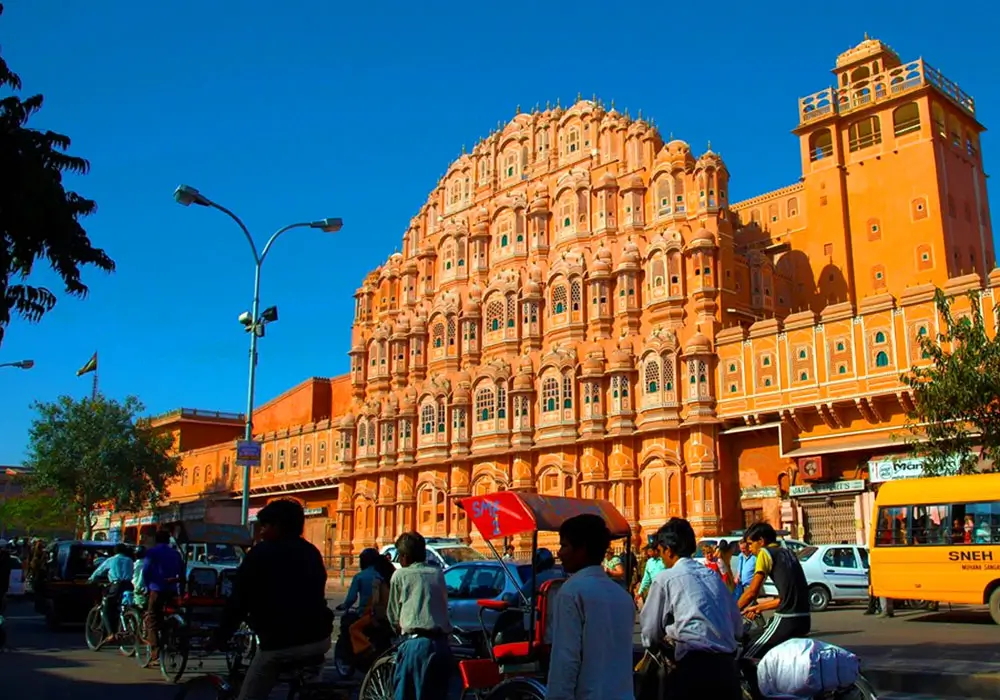
 🌙 07 Nights/08 Days
Delhi - Agra - Jaipur... Delhi - Agra - Jaipur - Delhi Show More
 🌙 06 Nights/07 Days
Delhi - Agra - Jaipur Delhi - Agra - Jaipur Show More
 🌙 02 Nights / 03 Days
 🌙 02 Nights / 03 Days
⭐ Most Popular
Yes. It fits well on your first morning in Jaipur, before the City Palace and Jantar Mantar. Spend at least two nights in Jaipur so you also have time for Amber Fort.
Usually, yes. The lanes behind the bazaars still have bangle makers, kite makers, silversmiths and stone carvers. What you see depends on the day and the season.
Yes, you stop for chai and a light snack at a stall your guide trusts. For a full evening of eating, add our Jaipur after dark food walk.
Yes, a late-afternoon walk is possible. The bazaars are busier and more crowded at that time, but the light is lovely and it can lead straight into a night food walk.
Comfortable shoes, light clothing that covers shoulders and knees, and a scarf for temples. In winter mornings, bring a warm layer.
Yes. Children usually enjoy the bangle makers, the kite shops and the street food. Let us know their ages and we will adjust the pace and route.
No. The walk is about the old city and its people, not shopping. If you want to buy something, your guide can help you, but there is no obligation.
That is optional. Many guests prefer to see the facade from the street and then from a rooftop café opposite, which gives the best view. If you would like to go inside, your guide can include it.
Yes. You walk with a private local guide who knows the old city well. Like any busy market area, keep an eye on your belongings and take care crossing the main roads.
Usually some of Johari Bazaar, Bapu Bazaar, Tripolia Bazaar and Chandpole Bazaar, plus side lanes such as Maniharon ka Rasta for bangle makers. The route depends on the day and on what interests you.
Jaipur was founded in 1727 by Maharaja Sawai Jai Singh II, who moved his capital from Amer. The city was laid out on a planned grid of broad streets and squares, which is still clearly visible today.
The commonly told story is that the old city was painted pink in 1876 to welcome Albert Edward, Prince of Wales, on his visit to India. The colour has been kept ever since, and the facades in the old city are still painted in the same shade.
It depends on your pace and the stops you choose. Plan for a relaxed morning. We can make it shorter or longer and add the City Palace or Hawa Mahal at the end.
Early morning is best, when the streets are quiet, the air is cool and the shops are only just opening. October to March are the most comfortable months.
Whether you're planning your first India trip or returning to explore deeper, get honest, expert advice from someone who knows every corner of this country. No pressure, no cost.