


 info@topindianholidays.net
 +91-8955000999

Hot Air Balloon Ride in Jaipur
Lift off as the sky turns orange and drift over villages, mustard fields and the Aravalli hills while Jaipur is still waking up.
View Experience ›Walk through the gate as the sky lightens and watch the marble change colour, with a private guide and the gardens still quiet.

There are two ways to see the Taj Mahal. One is in the middle of the day, shoulder to shoulder in the heat, waiting for a gap in the crowd to take a photograph. The other is at dawn, when the gates have just opened, the air is cool, and the first people through walk quickly and quietly down the garden paths as if they cannot quite believe it is real.
The sunrise visit is worth the early alarm for one reason above all: the light. Marble picks up the colour of the sky, so in the space of half an hour the tomb goes from soft grey to pale pink, then to cream, and finally to a bright white that is almost hard to look at once the sun is fully up. The long water channel in front holds the reflection on still mornings, and the gardens have not yet filled with tour groups.
We plan the whole morning around that window: which gate to use, when to leave your hotel, where to stand for the best light, and how to get inside the main tomb before the queues build. Your private guide tells the story of Shah Jahan and Mumtaz Mahal along the way, but also points out the details most visitors walk straight past.
1. An early start from your hotel
The Taj Mahal opens around 30 minutes before sunrise, and the best light comes in the first hour. Your driver collects you in the dark so you are in the queue before the gates open. In winter this means a later alarm than in summer, because the sun rises later. We give you the exact time the evening before.
2. The last stretch by electric vehicle
Petrol and diesel cars are not allowed close to the monument, to protect the marble from pollution. Your driver drops you at the parking area, and you continue on a short ride in a battery-powered vehicle or on foot to the gate.
3. Security and the gate
There are separate queues for men and women at security, and for foreign and Indian visitors. Your guide holds the tickets, booked in advance, so you do not wait at a counter. We usually choose the East Gate for sunrise, as the queue there is typically shorter at opening time.
4. The first view through the great gateway
You walk through the red sandstone main gate, and the Taj appears framed in its arch. This is the moment people remember. Your guide will hold you back a few seconds for it.
5. The gardens and the reflection
Walk down along the water channel as the colour changes. Your guide knows the spots where the reflection lines up and where to stand away from the busiest photo points.
6. Inside the mausoleum
Before the bigger groups arrive, you go up onto the marble platform and inside the main tomb, where the cenotaphs of Mumtaz Mahal and Shah Jahan lie behind a carved marble screen. Shoe covers are worn here, and photography inside the tomb is not permitted.
7. The mosque, the river and the guest house
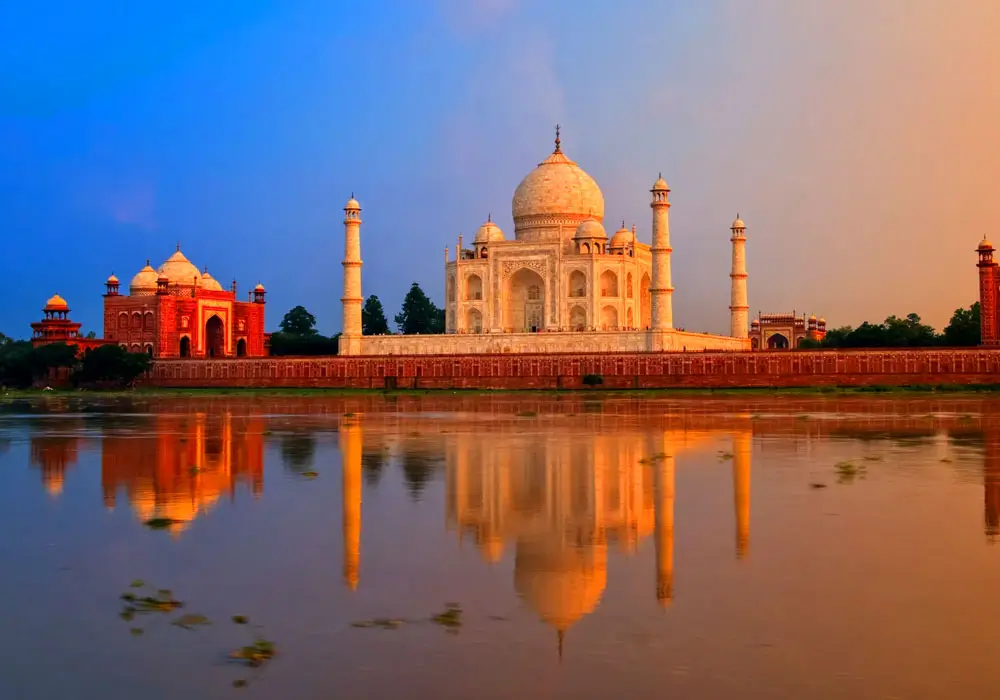
Afterwards you walk around the platform to the river side, where the Yamuna runs behind the Taj, and visit the red sandstone mosque on one side and its matching twin building on the other.
8. Breakfast and the rest of Agra
By mid-morning, the crowds are coming in and you are heading out. Breakfast at your hotel, then the day is free for Agra Fort and the other sights.
The Taj Mahal is a tomb, and knowing whose tomb it is changes the way you look at it. Your guide tells the full story at the monument, but here is the outline.
An emperor and his wife. Shah Jahan, the fifth Mughal emperor, married Arjumand Banu Begum, better known by her title Mumtaz Mahal. She travelled with him on campaigns and was a close adviser at court. In 1631 she died giving birth to their fourteenth child at Burhanpur in the Deccan, where she had accompanied the emperor on a military campaign. The grief at court was deep, and within months work began on a tomb in Agra, then one of the great Mughal capitals, on the bank of the Yamuna.
Building it. Construction started in 1632. The main mausoleum was finished in the late 1640s, and the whole complex, with its gateway, gardens, mosque and guest house, took around two decades in all. More than 20,000 workers are said to have been involved: masons, stone cutters, inlay specialists, calligraphers and labourers drawn from across the empire and beyond. The design is usually credited to the court architect Ustad Ahmad Lahori, working with a team.
The materials. The white marble came from Makrana in Rajasthan, several hundred kilometres away, and the red sandstone from the quarries around Fatehpur Sikri. The coloured stones used in the inlay, such as jade, lapis lazuli, carnelian and turquoise, were brought from many parts of Asia. Your guide can point out which is which once you are close to the walls.
The final chapter. In 1658 Shah Jahan’s son Aurangzeb took the throne and confined his father in Agra Fort. Shah Jahan spent his last years there, and tradition says he looked out across the river at the tomb he had built. When he died in 1666, he was laid to rest beside Mumtaz Mahal, which is why his cenotaph is the one thing in the complex that breaks the symmetry.
Today. The Taj Mahal was listed as a UNESCO World Heritage Site in 1983 and is cared for by the Archaeological Survey of India. Many of the rules you meet at the gate, from the vehicle ban to the shoe covers, exist to protect the marble.
The ticketing system at the Taj is simple once you know it, but confusing on the spot. This is how it works for foreign visitors.
Two parts to the ticket. The main entry ticket covers the gate, the gardens, the mosque and the platform. A separate add-on is needed to go inside the main mausoleum where the cenotaphs are. We book both for you, as the inside of the tomb is part of the sunrise visit.
Foreign and Indian prices. Foreign nationals pay a higher ticket price than Indian citizens, as at most major monuments in India. Visitors from SAARC and BIMSTEC countries have their own rate. Children under 15 currently enter free, though we still register them with your booking.
What comes with it. Foreign visitors’ tickets usually include shoe covers and a small bottle of water, handed out at entry.
Booked ahead online. Tickets can be bought online through the official portal, and we do this in advance for every sunrise visit. It avoids the counter queue in the dark and means your guide simply leads you to security when the gates open. Keep your passport with you, as it may be checked.
A time limit. Entry tickets are valid for a limited visit, currently three hours, with a charge for staying longer. A sunrise visit fits comfortably inside this. There is no re-entry once you leave, so visit the toilets and collect anything from the car before you go in.
The queues at the gate. Security lines are split for men and women, and foreign ticket holders often have a separate, shorter line. The East Gate is usually the calmest choice at opening time, while the West Gate gets busier later in the morning with day-trippers.
Prices change. Ticket prices are set by the authorities and do change, so we always quote the current rates for your dates.
The calligraphy on the gate. The Quranic verses around the main arch look the same size from top to bottom. In fact the letters get larger as they go higher, so they appear even when you look up from the ground.
The leaning minarets. The four minarets tilt very slightly outwards. One explanation is that if one ever fell, it would fall away from the tomb rather than onto it.
The inlay work. Up close, the flowers on the marble are not painted. They are made from thin pieces of semi-precious stone, cut and set into the marble so finely that the joins are hard to see. Your guide can show you where light passes through some of the stones.
Perfect symmetry, with one exception. Everything in the complex is mirrored, from the gardens to the buildings either side. The only element that breaks it is Shah Jahan’s own cenotaph, placed beside his wife’s after his death.
The twin buildings. The mosque to the west is still used for prayers. The building to the east looks identical but was built mainly to keep the balance of the design.
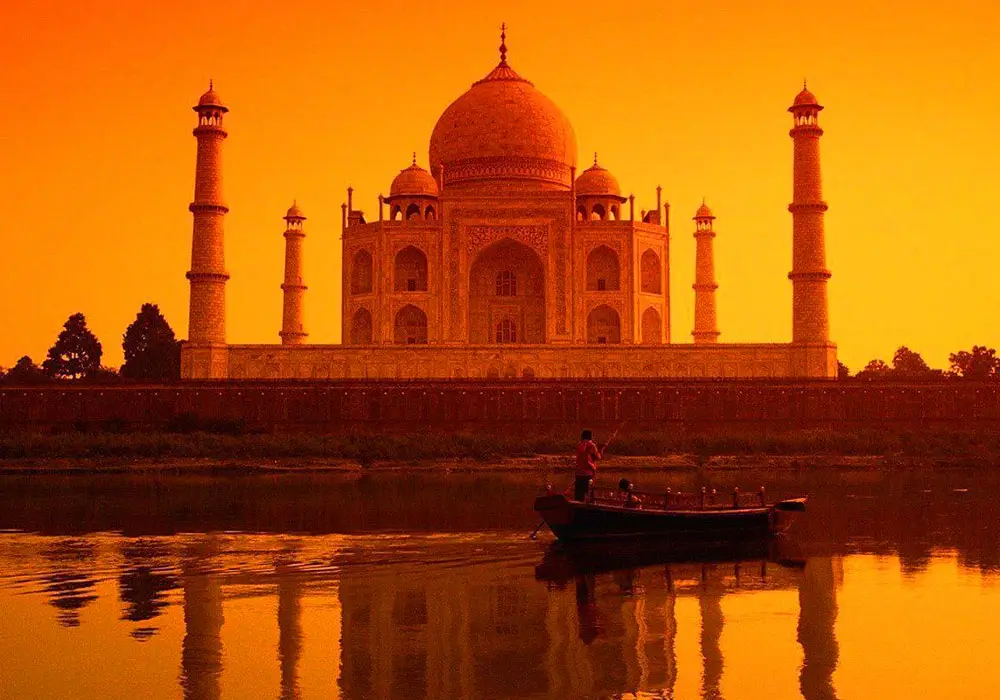
The river view. Most visitors never walk round to the back of the platform. From here you see the Yamuna, the flat land beyond it, and Agra Fort in the distance, where Shah Jahan spent his last years.
Sunrise: cooler, quieter, softer light and the best chance of a reflection. The trade-off is an early start, and in winter the possibility of fog.
Late morning and midday: the busiest and hottest time, with harsh light that flattens the marble in photographs. We avoid it where we can.
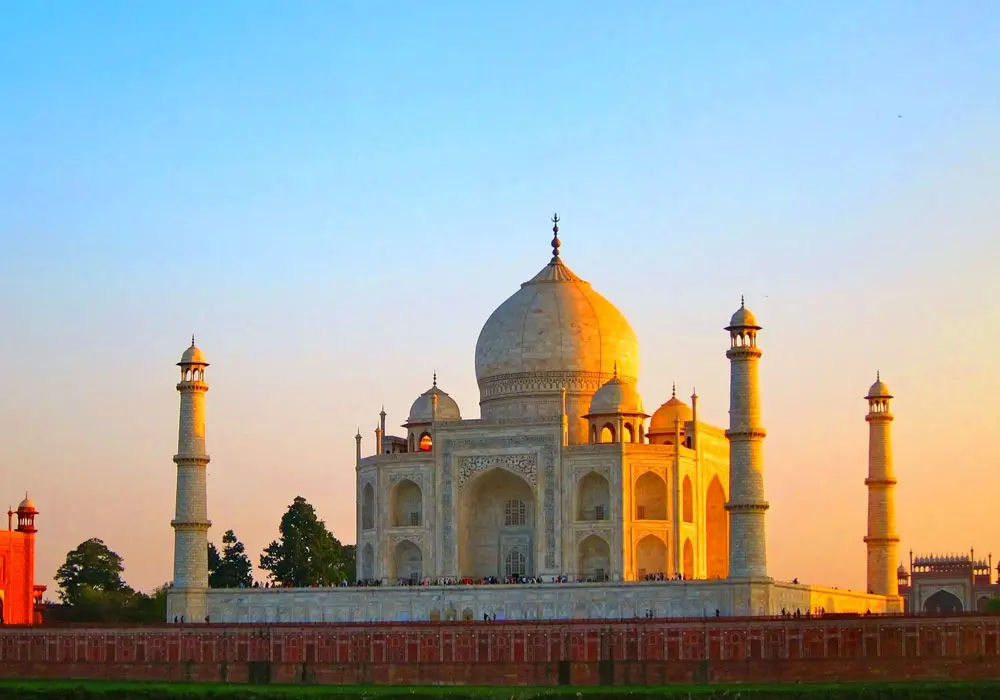
Late afternoon: warmer, golden light and a good alternative if a sunrise visit does not fit your plans. Crowds are heavier than at dawn.
Sunset from across the river: you cannot be inside the Taj at sunset, as it closes before the sun goes down, but the Mehtab Bagh gardens on the opposite bank of the Yamuna give a calm view of the Taj from behind. This pairs well with a sunrise visit on the same trip.
Night viewing: on a few nights around each full moon the Taj opens for short evening viewing slots, with limited tickets. This is a separate experience; see our Taj Mahal under the full moon page.
With children. The sunrise visit suits families well, as the gardens are open and cool early in the day. Bring a snack for the car, since breakfast comes after the visit, and a warm layer from November to February. The story of the emperor and his wife, the leaning minarets and the hidden calligraphy trick all go down well with older children. Inside the tomb it can get crowded once groups arrive, which is another reason to go in early. Pushchairs can be used on the garden paths, but you will need to carry younger children up the steps to the platform.
With older parents. The walk from the gate to the tomb is a few hundred metres on level, paved paths, with benches along the way. The steps to the marble platform are the main effort, and your guide sets the pace. Electric vehicles run between the parking area and the gate. If a wheelchair would help, let us know and we will arrange the best option for your visit. Tell us about any needs in advance and we will plan the gate, the pace and the rest of the day so that nobody is rushed.
Keep the rest of the day gentle. After an early start, most families and older travellers prefer a long breakfast and a rest before Agra Fort, rather than a full day of sightseeing straight away.
October to March is the most popular season, with pleasant mornings and comfortable temperatures for walking.
December and January bring the coolest weather but also the most fog. On some mornings the dome is hidden in mist at sunrise and appears slowly as the air clears. Some travellers love this; others are disappointed. If clear views matter most to you, February, March, October and November are safer choices.
April to June is very hot by mid-morning, which makes sunrise the only sensible time to visit.
July to September is the monsoon. Mornings can be grey, but after a shower the gardens are green and the marble is washed clean.
Fridays: the Taj Mahal is closed to visitors every Friday, when it is open only for prayers at the mosque. We always plan around this, so check your Agra dates before you finalise flights.
Staying overnight in Agra (our recommendation). You sleep in Agra, wake a short drive from the gate, and see the Taj at its best without a night-time road journey. It also gives you the afternoon for Agra Fort, the tomb of Itimad-ud-Daulah (often called the Baby Taj) and sunset at Mehtab Bagh.
A same-day trip from Delhi. Possible, but it means leaving Delhi in the middle of the night. The drive along the Yamuna Expressway takes around three to four hours depending on traffic, and trains do not arrive early enough for sunrise. If your time is short, our Taj Mahal Sunrise Tour from Delhi by Car covers the full day with private car and guide.
On a Golden Triangle tour. Most travellers reach Agra from Delhi in the afternoon, stay one or two nights, and see the Taj at sunrise the next morning before driving on to Jaipur. This is the simplest way to fit it in.
Bring and wear - Your passport, as ID may be checked with your ticket - A light layer for cool mornings, especially from November to February - Comfortable shoes that slip off easily - Clothing that covers shoulders and knees, out of respect for the site and its mosque - Phone or camera with fully charged batteries - A small bottle of water
Leave in the car - Food and snacks - Large bags and backpacks - Tripods, selfie sticks and drones - Lighters, tobacco and anything sharp
Tell us your Agra dates and we will plan the sunrise visit, the right gate and the rest of your day around it.
Call & WhatsApp +91-9828085426 or email info@topindianholidays.net.
See more ideas on our Top Experiences in India page.
Tell us your travel dates and we will check availability and fit this experience into the right day of your itinerary. Reply within 12 hours.
Check Availability› Chat on WhatsApp› Send an Enquiry›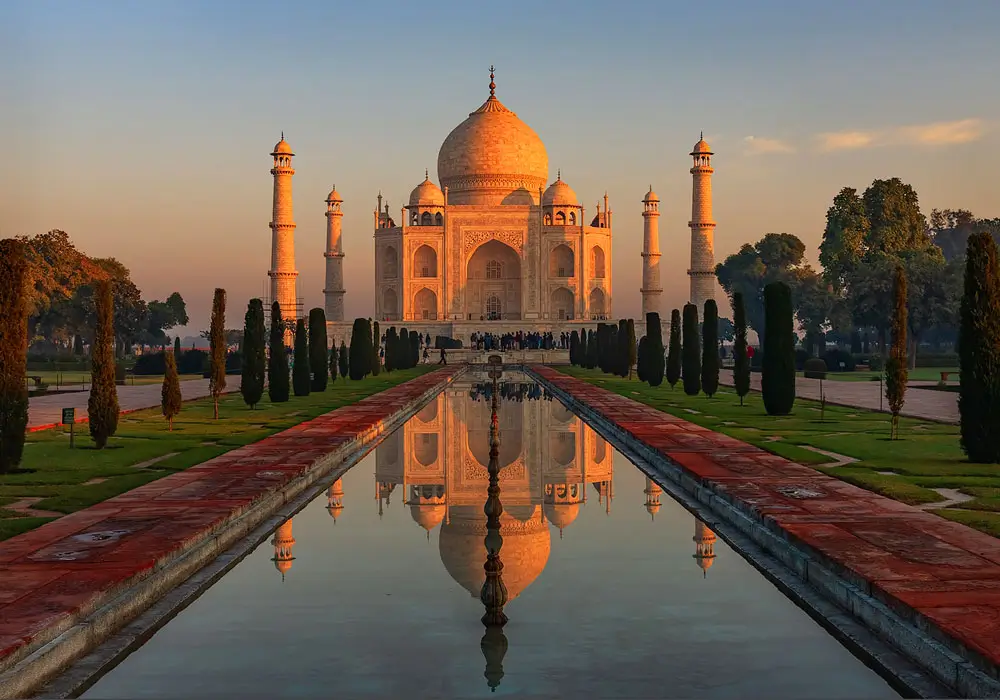


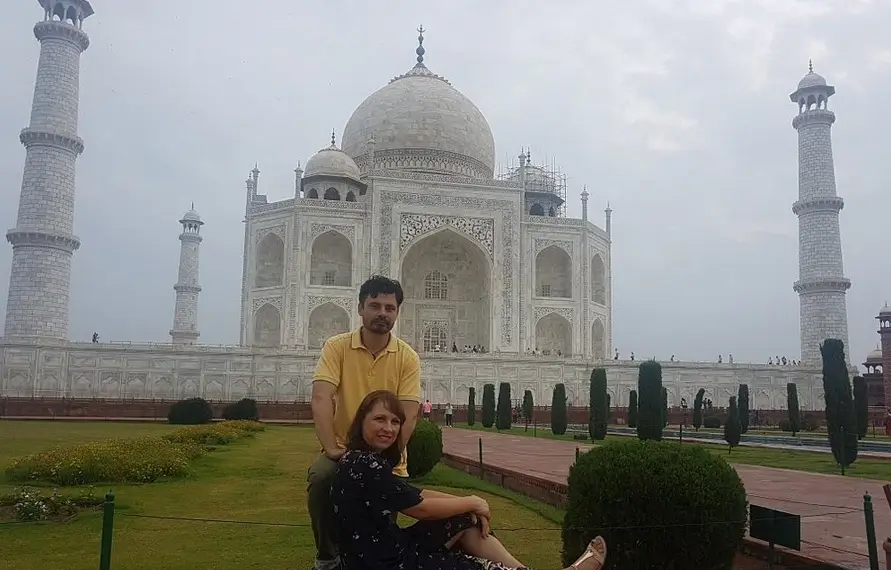 🌙 06 Nights / 07 Days
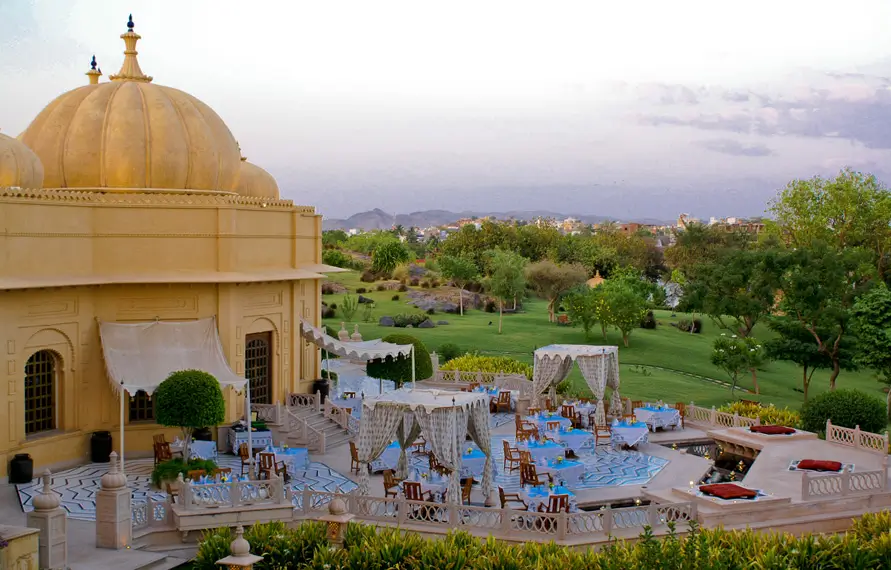 🌙 06 Nights / 07 Days
Luxury
Delhi - Jaipur - Ranthambhore... Delhi - Jaipur - Ranthambhore - Agra - Delhi Show More
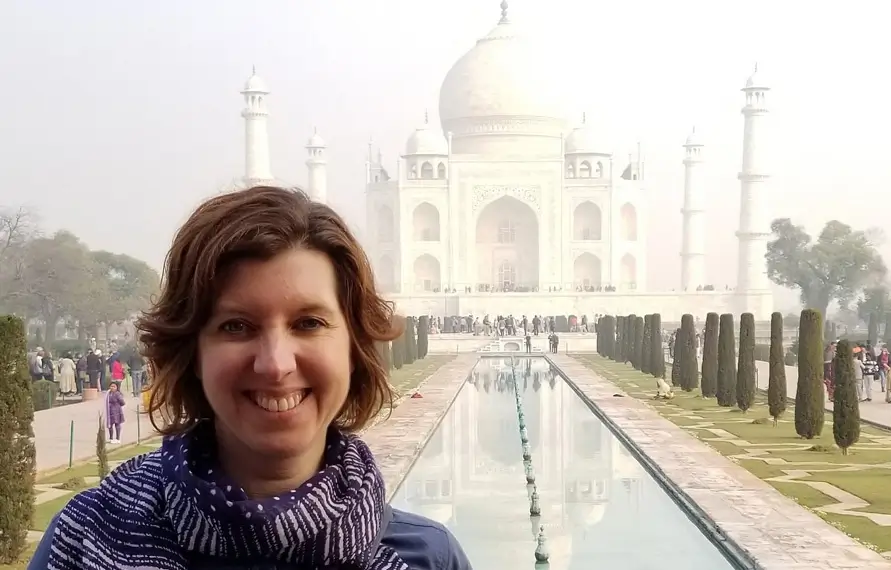 🌙 13 Nights / 14 Days
Luxury
Mumbai - Udaipur - Ajabgarh... Mumbai - Udaipur - Ajabgarh - Jaipur - Agra - Delhi Show More
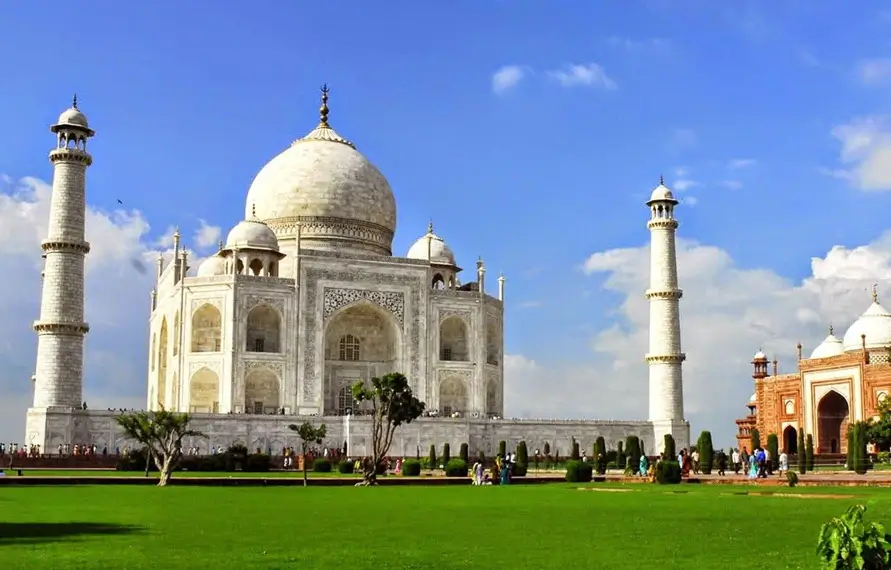 🌙 12 Nights / 13 Days
Delhi - Agra - Delhi... Delhi - Agra - Delhi - Leh - Nubra Valley - Pangong Lake - Leh - Delhi Show More
Yes. Most Golden Triangle tours stay in Agra overnight, so the sunrise visit fits naturally into the next morning before you drive on to Jaipur. We avoid Fridays when planning your route.
The garden paths are paved and mostly level, and electric vehicles run from the parking area. The main platform is reached by steps. Tell us about any needs and we will plan the route and pace accordingly.
You can visit without one, but a good guide makes a real difference. They handle tickets and gates, choose the timing for the best light, and explain the history and craftsmanship that make the building so remarkable.
You can photograph freely in the gardens and on the platform, but photography is not allowed inside the main tomb where the cenotaphs are.
There is no strict dress code, but clothing that covers shoulders and knees is respectful, as the complex includes a working mosque. Wear shoes you can slip off or cover easily.
Food, tobacco, lighters, large bags, tripods and drones are not allowed. Phones, small cameras, a small water bottle and your passport are fine. Anything else can stay in your car with your driver.
It is best to. We book your tickets ahead, including entry to the main mausoleum, so you go straight to security instead of queuing at a counter.
In December and January it sometimes can. The dome may be hidden at first and appear as the fog lifts. If clear views are important, choose a visit outside these months or allow two mornings in Agra.
October, November, February and March usually give clear, pleasant mornings. December and January are cooler but often foggy at dawn. April to June is very hot later in the day, which makes sunrise the best option.
Yes, but you need to leave Delhi in the middle of the night, as the road journey takes around three to four hours. If you can, stay one night in Agra instead for a far more relaxed morning.
We usually use the East Gate at sunrise, as its queue tends to be shorter at opening time. Your guide confirms the best gate on the day depending on the crowds.
No. It is closed to visitors every Friday and opens only for prayers at its mosque. Make sure your Agra stay includes at least one morning that is not a Friday.
Yes, for most travellers. The light is softer, the marble changes colour, the gardens are quieter and the morning is cooler. Photographs taken in the first hour usually look far better than midday ones.
The gates open around 30 minutes before sunrise, so the opening time shifts through the year. In winter it is later, in summer earlier. We give you the exact pickup time the evening before your visit.

Whether you're planning your first India trip or returning to explore deeper, get honest, expert advice from someone who knows every corner of this country. No pressure, no cost.