


 info@topindianholidays.net
 +91-8955000999

Hot Air Balloon Ride in Jaipur
Lift off as the sky turns orange and drift over villages, mustard fields and the Aravalli hills while Jaipur is still waking up.
View Experience ›Leave the city behind in an open jeep and spend an afternoon among the farms, wells, workshops and courtyards of rural Rajasthan, ending with sunset over the fields.
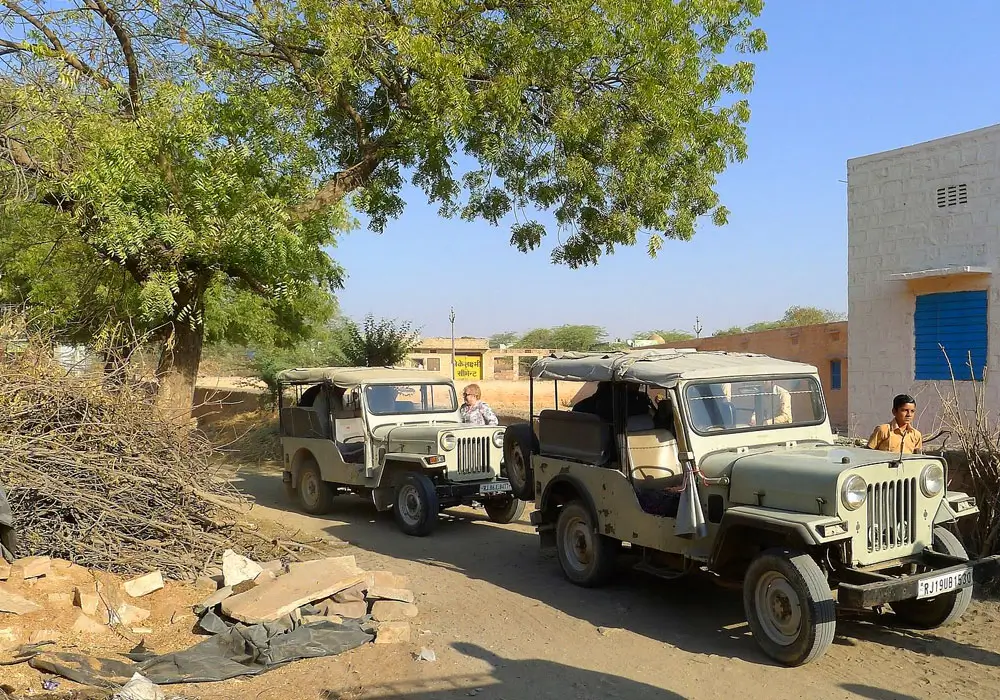
From the walls of Mehrangarh, the land around Jodhpur looks flat, brown and empty. It is none of those things. Within half an hour of the city, the tarmac gives way to sandy tracks between fields of millet and mustard, and the scrub fills with life: goats under the khejri trees, a camel pulling a cart of fodder, a woman in a bright odhni walking back from the well with three brass pots balanced on her head. Most travellers see this world only through a car window on the way to the next city. A village jeep safari in Rajasthan lets you stop, step down and meet it.
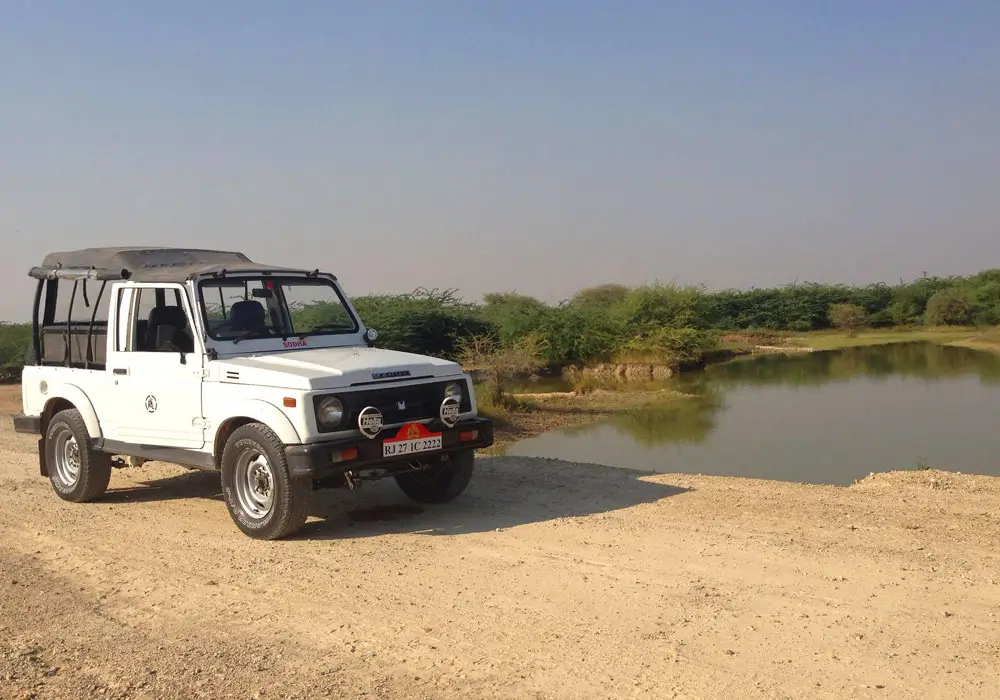
The open jeep matters. Without windows or a roof, you hear the tractors and the cowbells, smell the woodsmoke from cooking fires, feel the evening cool as the sun drops, and wave back at children who run alongside. It also gets you down tracks that a normal car cannot manage, to hamlets and farmhouses well away from the main road.
This is a broad countryside drive rather than a visit to one specific community. Along the way you may meet a potter at his wheel, a family weaving durries, a herder bringing animals home, farmers at a well, and a household who invites you in for chai. The route changes with the season and with who is at home, which keeps it honest. If your main interest is the Bishnoi community and their famous conservation tradition, our dedicated Bishnoi village safari is the better choice, and we are happy to explain the difference.
The safari starts from Jodhpur, and we also run a version from Jaipur through the villages beyond the city’s outskirts.
1. Pickup from your hotel
Your guide and jeep driver meet you at your hotel, usually in the early or middle part of the afternoon, depending on the season and the time of sunset. In the old city of Jodhpur, where lanes are narrow, your private car may take you to the jeep at a meeting point on the edge of town.
2. Out of the city
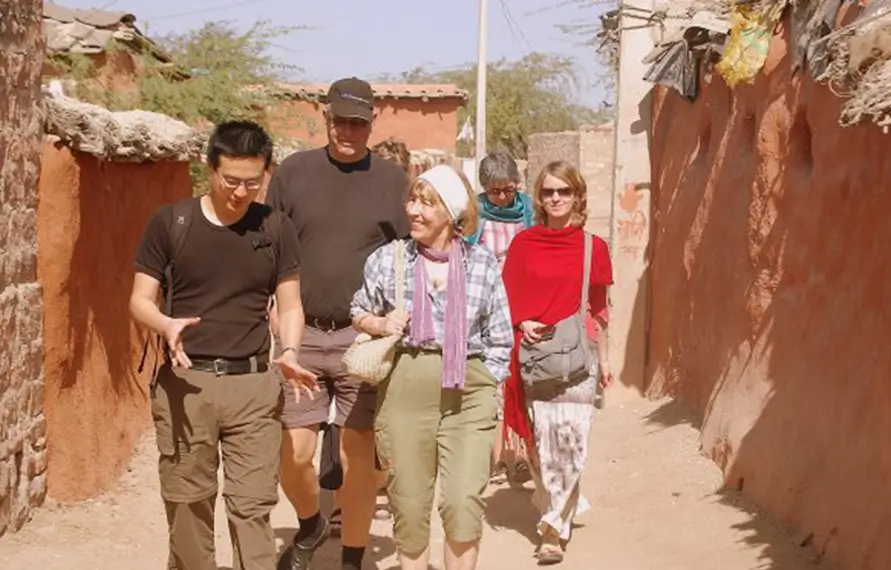
The first part of the drive takes you through the outskirts, past stone yards, roadside temples and small markets, before the landscape opens up. Your guide explains where you are heading and what the region grows, and points out the khejri, babool and ber trees that hold this dry landscape together.
3. Farms and wells
The first stops are usually among farms. Depending on the season you may see ploughing, sowing, irrigation or harvest. Your guide shows you how water is drawn and shared, from traditional wells and tankas, the round covered tanks that store rainwater, to modern tube wells with electric pumps. Water shapes every decision in rural Rajasthan, and seeing it up close explains a lot.
4. A potter’s courtyard
In many villages a family of potters works from their home, shaping water pots, lamps and cooking vessels on a wheel in the courtyard and firing them in a simple kiln. If they are working when you arrive, you can watch, and they may invite you to try the wheel. It looks easy until you try.
5. Weavers and craft families
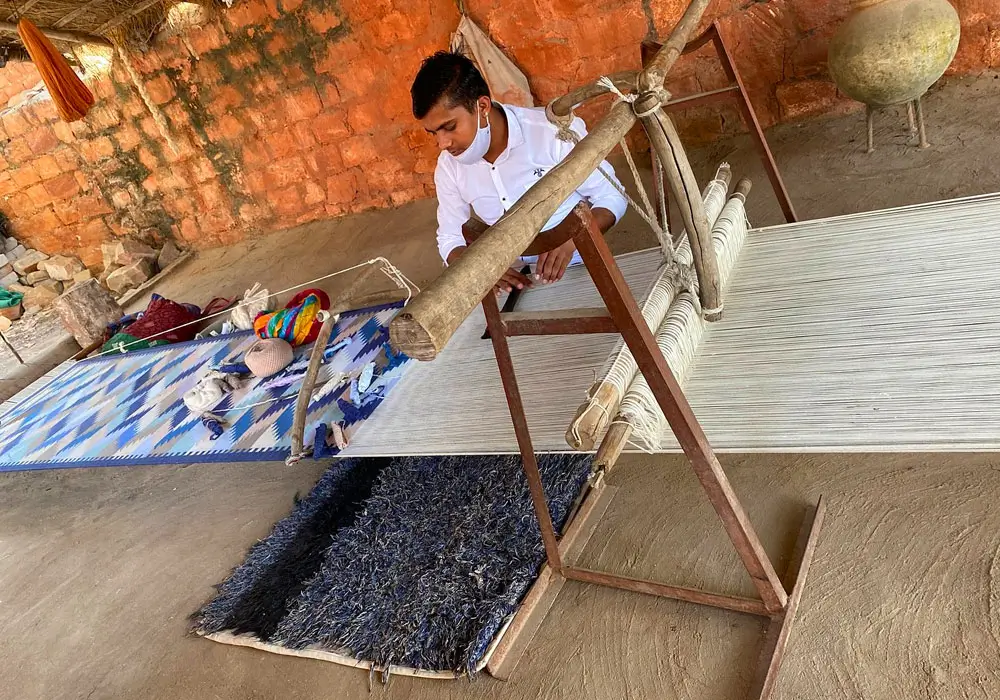
Depending on the route, you may visit a family weaving durries, the flat cotton or wool rugs found in homes across Rajasthan, on a pit loom or frame loom. You might also meet a family doing embroidery, leatherwork or rope making. If you want to buy something, you buy directly from the maker, which keeps the money in the village.
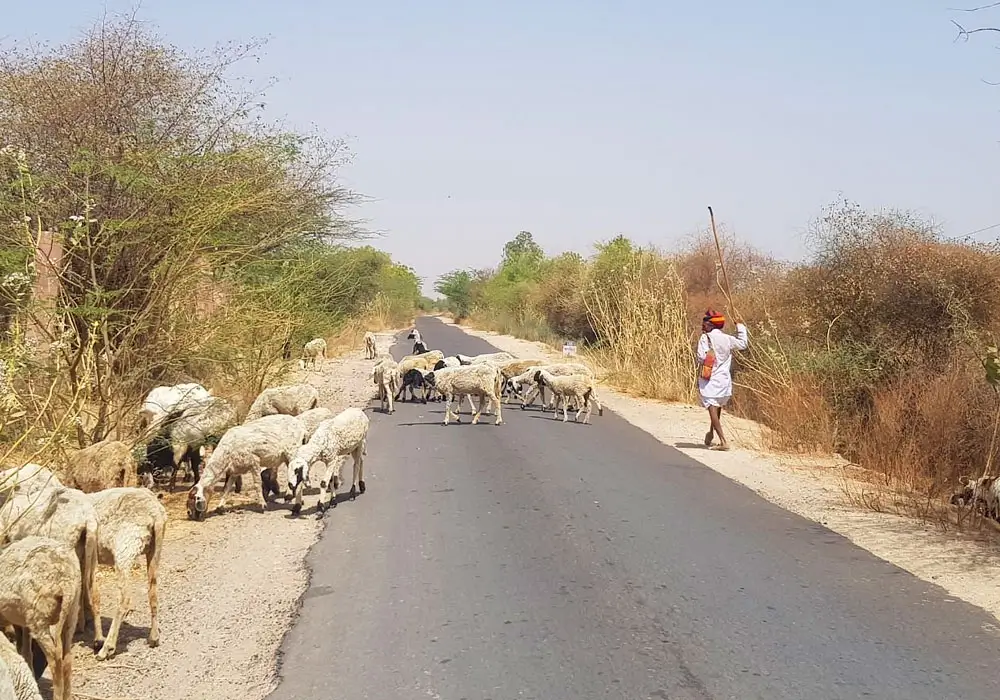
6. Herders and animals
As the afternoon goes on, herders begin to bring goats, sheep, cows and sometimes camels back to the village. Your guide can explain who owns which animals, how grazing land is shared, and how the herding families move with the seasons. Watching a herd come home through the dust at golden hour is one of the most photographed moments of the safari, so ask before you point your camera at the herder.
7. Chai in a village home
At some point you are invited into a family home for tea, usually brewed strong with milk and sugar on a chulha, the traditional clay stove. This is a chance to sit in a courtyard, see how a rural household is arranged, and ask questions through your guide about farming, schooling, weddings and the changes the family has seen.
8. Sunset over the fields
The safari ends somewhere with a good western view: open fields, a low ridge, a small village lake or a pond where cattle come to drink. You watch the sun go down from the jeep or from a rug laid on the ground.
9. Back to Jodhpur
After sunset the jeep brings you back to the edge of the city or to your hotel, usually in time for dinner.
Because the route depends on the season and on who is at home that day, nothing on this list is guaranteed. That is the nature of real village life, and we would rather tell you plainly.
Women at the water source. In many villages, fetching water is still part of the day, though piped water is spreading. You may see women gathered at a well, a hand pump or a tank, filling pots and talking. It is a social moment as much as a chore. Watch from a respectful distance and never photograph without permission.
Millet, mustard and cumin. Bajra and jowar grow in the monsoon, while winter brings wheat, mustard and cumin where water allows. Your guide can show you the crops and explain how they are used.
Village architecture. Round huts with thatched roofs, mud-plastered walls painted with simple patterns, flat-roofed houses of local stone, and newer concrete homes side by side. Look for the cow dung cakes stacked to dry as fuel and the grain stores made of clay.
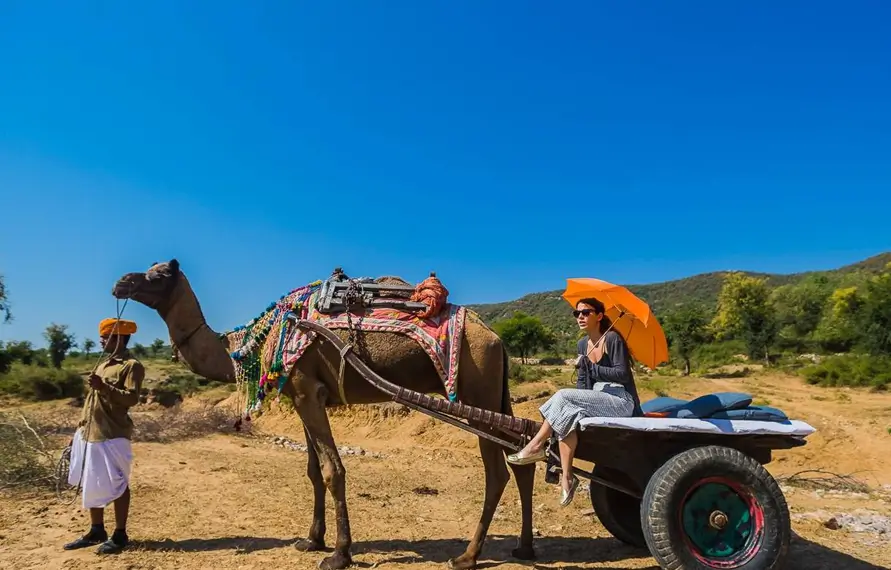
Camel carts and tractors. In the Jodhpur countryside, camels still pull carts of fodder and firewood, though tractors are now everywhere. Seeing both on the same track tells you a lot about change in rural India.
Birds and wildlife. The countryside around Jodhpur is good for birds, including peacocks, partridges, larks and birds of prey. Blackbuck and chinkara may appear in some areas, especially near Bishnoi land. Your guide will stop if you spot something, and the jeep will keep a respectful distance.
Village shrines. Small shrines to local deities and folk heroes sit under trees and at crossroads. Your guide can tell you the stories behind them.
School children. On weekday afternoons you may pass children walking home from school. A wave and a smile go a long way. Please do not hand out sweets, pens or money, as this encourages begging; if you would like to help a school, ask us how to do so properly.
The two experiences cover overlapping countryside near Jodhpur, so it is worth being clear.
This open jeep village safari is a broad look at rural Rajasthan. It visits a mix of communities and households: potters, weavers, herders, farmers and ordinary families. The focus is on everyday village life, farming, water and crafts, and it finishes with a sunset over the fields. It also runs from Jaipur.
The Bishnoi village safari focuses on the Bishnoi community, whose religious principles protect trees and wild animals, and who are known for their role in conserving blackbuck and chinkara. It includes Bishnoi homes and the story of their conservation tradition, and is the better choice if that is what interests you most. See the Bishnoi village safari page for details.
If you are unsure, tell us what interests you and we will recommend one, or combine elements of both on a longer day.
The families you meet are not part of a show. They welcome you into their working day and their homes, and we want every visit to leave them better off and you better informed.
Ask before photographing people. This is the most important rule. Your guide can ask for you. Many people are happy to be photographed, some are not, and women in particular may prefer not to be. Respect a no without argument, and show people the photo on your screen afterwards if they agree.
Visits benefit the families. We pay the households who host you for chai and for their time, and arrange visits so that they fit around their work rather than interrupt it. Buying a pot or a rug directly from the maker is welcome but never expected.
No handouts. Please do not give sweets, money or small gifts to children. It encourages begging and causes problems for families. If you want to support the community, ask us about practical ways to help.
Dress modestly. Cover shoulders and knees. Loose cotton clothes are comfortable and respectful.
Shoes off indoors. Remove your shoes before entering a home or a kitchen area, and before stepping onto a rug where people sit.
Accept what you are offered. If someone offers you chai or a snack, accept at least a little. Use your right hand to give and receive.
Keep your voice down near homes and shrines. Village life is quiet compared with the city. Follow your guide’s lead.
Animals. Do not touch or feed livestock or wild animals unless the owner invites you to, and stay back from camels, which can kick.
Jaipur’s countryside is different from Jodhpur’s and makes a good alternative if Jodhpur is not on your route.
The landscape. Outside Jaipur the land is greener and hillier, with the Aravalli ridges in the background, more mustard and wheat in winter, and more village ponds. You may pass small forts and old stepwells along the way.
The people. Villages around Jaipur include farming families, herders, potters and craft communities. Some areas are known for block printing and textiles, which you can explore in more depth on our block printing workshop.
The timing. As in Jodhpur, an afternoon run ending at sunset is usually best. It fits well on a day when you have visited Amber Fort in the morning, or after a gentle morning at your hotel.
Pairing it in Jaipur. You could follow the safari with a cooking class with a local family, or combine it with a ride on our Jaipur horse riding adventure on another day for a different view of the same countryside.
The jeep safari runs through much of the year, but the season changes what you see and how comfortable you are.
October and November. The monsoon crops are being harvested and the countryside is still fairly green. Afternoons are warm and evenings pleasant. A very good time.
December to February. The peak season. Days are sunny and mild, mornings and evenings can be cold in an open jeep, and mustard flowers yellow in the fields where there is water. Sunsets are often clear.
March. Wheat and mustard harvest time, with plenty of activity in the fields. Afternoons start to get hot by the end of the month.
April to June. Hot. We move the safari to the early morning or the last hours before sunset, and keep the open-air time short. The light is hazy and the land dry, but village life carries on.
July to September. The monsoon brings green fields and dramatic skies, but some tracks become muddy and rain can interrupt plans. Ploughing and sowing make it an interesting time if you do not mind the humidity.
Morning option. An early morning safari is also possible, when villagers milk animals, fetch water and head out to the fields. It suits travellers who want to avoid the afternoon heat or who have their evenings booked.
Give Jodhpur two nights. With one night, you will spend most of your time at Mehrangarh and in the old city. With two, the afternoon of your second day is ideal for the jeep safari.
Book Mehrangarh in the morning. The fort is best in the morning, before the heat builds. Follow it with lunch and a rest, then the safari in the afternoon.
Combine it with adventure. If you like a bit of excitement, the zipline over Mehrangarh Fort makes a lively morning before a slower countryside afternoon.
Add a dinner. After the safari, a royal dinner hosted by a thakur family on a rural estate near Jodhpur gives you the other side of Rajasthan’s rural story.
Continue the theme. If you enjoy the countryside, you might also like a village homestay, a morning at a village school or Rajasthan’s stepwells and water heritage.
Heading west. Many travellers go on from Jodhpur to Jaisalmer and the Thar Desert. A desert camping tour makes a natural next step after a village afternoon.
Bring and wear - Loose cotton clothes covering shoulders and knees - Comfortable closed shoes or sturdy sandals you can slip off - A hat or cap and sunglasses - Sunscreen and water - A scarf or buff against the dust - A warm layer for winter evenings - Camera or phone with a strap
Leave behind - Sweets, pens and money for handouts - Revealing clothes - Drones - Expensive jewellery
Tell us your dates in Jodhpur or Jaipur and what interests you, and we will plan a village route that suits your pace.
Call & WhatsApp +91-9828085426 or email info@topindianholidays.net.
See more ideas on our Top Experiences in India page.
Tell us your travel dates and we will check availability and fit this experience into the right day of your itinerary. Reply within 12 hours.
Check Availability› Chat on WhatsApp› Send an Enquiry›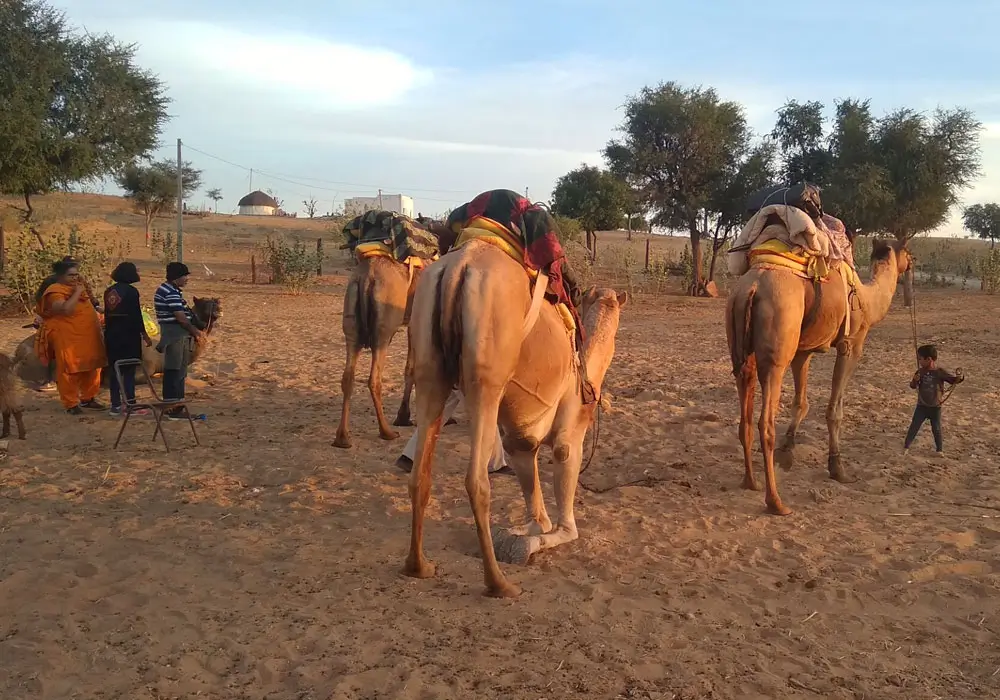



 🌙 13 Nights / 14 Days
Bangalore - Coorg - Chikmagalur... Bangalore - Coorg - Chikmagalur - Wayanad - Thekkady - Kumarakom - Madurai Show More
 🌙 11 nights / 12 days
Delhi - Jaipur - Nimaj... Delhi - Jaipur - Nimaj - Deogarh - Udaipur Show More
 🌙 14 Nights/ 15 Days
Delhi - Agra - Jaipur... Delhi - Agra - Jaipur - Samode - Bikaner - Jaisalmer - Jodhpur - Bishnoi Village - Udaipur Show More
 🌙 06 Nights / 07 Days
Raipur -Jagdalpur - Indravati -... Raipur -Jagdalpur - Indravati - Kanger Valley - Chitrakoot - Nagarnar - Narayanpur - Raipur Show More
Yes. Spend two nights in Jodhpur and we will place the safari on your second afternoon, after a morning at Mehrangarh. In Jaipur it fits well on any afternoon of a two or three night stay.
Yes, if you wish. You buy directly from the potters, weavers or craft families, so the money goes to them. There is no pressure to buy.
Loose cotton clothes covering shoulders and knees, comfortable shoes you can slip off, a hat, sunglasses and a scarf for the dust. Bring a warm layer in winter, as evenings in an open jeep can be cold.
Yes, in places. Village tracks are sandy and uneven, so the ride can be bouncy and dusty. It is not ideal for anyone with serious back problems or in late pregnancy.
Children usually love it, especially the animals and the potter’s wheel. Tell us their ages so we can check seating and safety for your jeep.
Please do not hand out sweets, money or pens, as it encourages begging. If you would like to support a village school or community, ask us how to help in a useful way.
It can be, if it is done respectfully. We work with families who choose to host visitors, pay them for their time and keep group sizes small. We ask guests to dress modestly, ask before photographs and avoid handouts.
Yes, but always ask first. Your guide can help. Many people are happy to be photographed, but some are not, and their wishes come first.
Yes. We run a version through the villages outside Jaipur, with greener, hillier countryside and the Aravalli hills in the background. It fits easily into a Golden Triangle tour.
The afternoon into sunset is the most popular, with the best light and herds returning home. In hot months, or if you prefer, an early morning safari shows a busier side of village life.
It usually takes up most of an afternoon and finishes after sunset. The exact time varies with the route, the season and how long you spend at each stop.
The price depends on your group size, the season and the route. We quote the current price for your dates. Send us a WhatsApp message with your dates and group size.
This safari is a broad look at rural life across several communities. The Bishnoi village safari focuses on the Bishnoi people and their conservation tradition. If the Bishnoi are your main interest, choose the Bishnoi village safari instead.
It is a guided drive by open jeep through the farms and villages outside a city such as Jodhpur or Jaipur. You stop to meet potters, weavers, herders and farmers, share chai in a family home and watch the sunset over the fields.

Whether you're planning your first India trip or returning to explore deeper, get honest, expert advice from someone who knows every corner of this country. No pressure, no cost.