


 info@topindianholidays.net
 +91-8955000999

Hot Air Balloon Ride in Jaipur
Lift off as the sky turns orange and drift over villages, mustard fields and the Aravalli hills while Jaipur is still waking up.
View Experience ›Follow the narrow paths between clipped tea bushes on a misty Kerala hillside, see fresh leaf withered, rolled and dried, then sit down to slurp and score the finished tea.
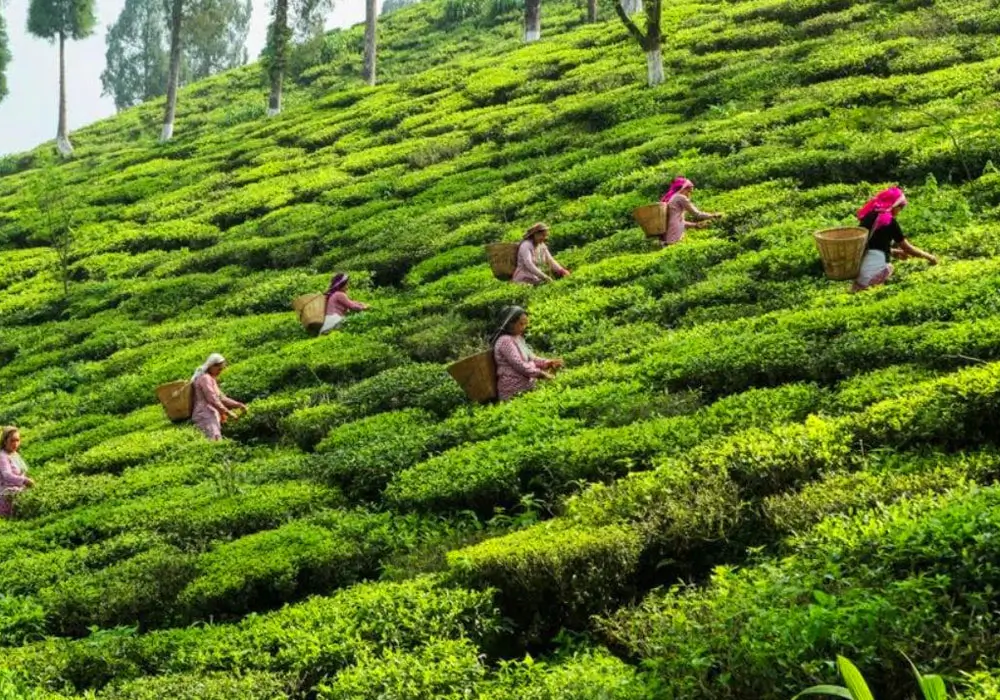
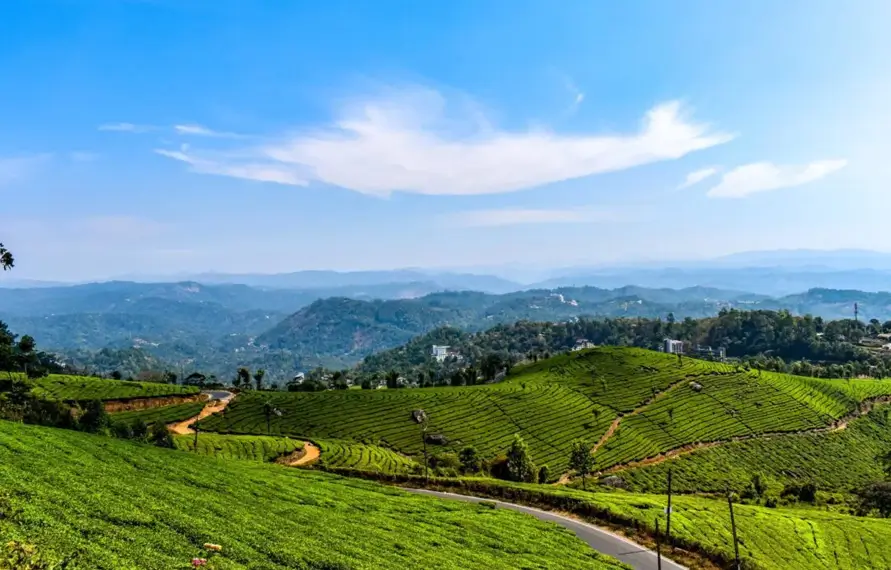
Drive up into the Western Ghats from Kochi and somewhere above the cardamom forests the landscape changes completely. The hills turn into one continuous carpet of dark green, combed into curving rows that follow every contour of the slope. Silver oak trees stand among the bushes to give them shade, narrow footpaths zigzag up to the ridgelines, and here and there you see a line of bright saris and headscarves moving slowly along a row. This is Munnar, the largest tea-growing area in Kerala, and the bushes you are looking at have been planted, pruned and plucked by hand for more than a century.
Most visitors to Munnar see the tea from a car window or a roadside viewpoint, buy a packet in town and move on. A Munnar tea plantation tour done properly is a different thing. You walk into the garden itself, learn why the bushes are kept at waist height, see how a skilled plucker takes only the youngest shoots, and then follow the leaf into a factory where it is withered, rolled, fermented and fired within a single day. The morning ends at a tasting table, where you learn to taste tea the way the trade does: rows of white cups, a spoon, a loud slurp and a set of words for what you find.
It is a quiet, unhurried half-day. There is nothing extreme about it and no special fitness is needed beyond walking on uneven paths. What it gives you is an understanding of the drink most of us have every day without thinking about it, and a far better appreciation of the tea you will be served in every hotel, railway station and roadside stall across India.
If your tour goes to Darjeeling in the eastern Himalaya instead, the same experience works there too, with its own character and its famous seasonal harvests. We cover both on this page, but the heart of it is Munnar.
1. Leaving Munnar town
Your driver collects you from your hotel after breakfast. Most Munnar hotels sit on the hillsides around town, and the estates begin almost at the edge of the bazaar, so the drive to the starting point is short. On many mornings the valleys are still full of cloud at this hour, with only the tops of the hills showing, and the road climbs through the tea with views opening up at every bend.
2. Meeting your guide on the estate
Your guide knows the plantations well and walks you into a working section of the garden, not a show plot by the roadside. Before you start, they explain how the estate is laid out: the sections of bushes divided by footpaths and drains, the shade trees, the small temples and line houses where estate families have lived for generations, and the factory that every garden feeds.
3. Walking between the rows
The paths between the bushes are narrow and can be steep, but you go at your own pace and stop often. Your guide points out the details that make the landscape work: why the bushes are pruned into a flat table at waist height, how old some of the plants are, why the drains are cut across the slope, and how the shade trees protect the leaf from strong sun. In damp weather you will notice the red earth, the moss on the trunks and the smell of wet leaves.
4. Watching the plucking
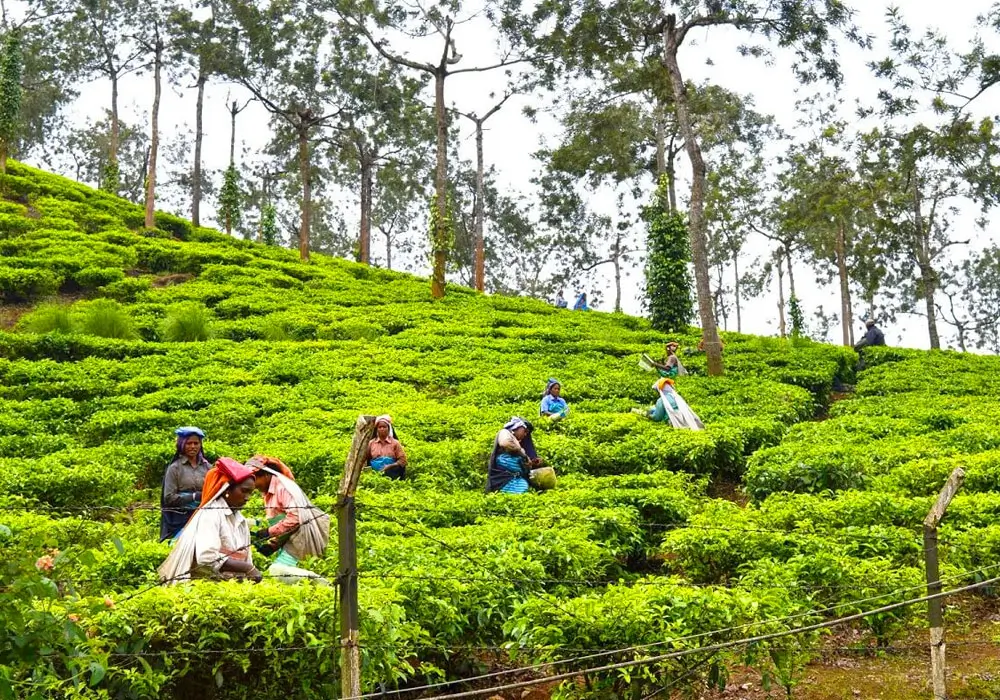
If plucking is under way in the section you visit, you can watch from a respectful distance. The rule in good gardens is “two leaves and a bud”: the plucker takes the unopened bud at the tip of each shoot with the two youngest leaves beneath it, and leaves the rest of the bush alone. Your guide explains why this matters for quality, how pluckers move along the rows, and how the fresh leaf is weighed at collection points during the day. Always ask before photographing anyone, and accept a shake of the head with a smile.
5. Into the factory
The fresh leaf goes to the estate factory the same day. Inside, the smell hits you first: a warm, sweet, slightly grassy scent that grows deeper as you move from one machine to the next. You follow the leaf through withering troughs, rolling or cutting machines, fermentation and the dryer, with your guide explaining each stage. Factory access depends on the estate and the season, and some factories ask visitors to keep a set route or not to photograph inside. We arrange the visit in advance and follow their rules.
6. The tasting table
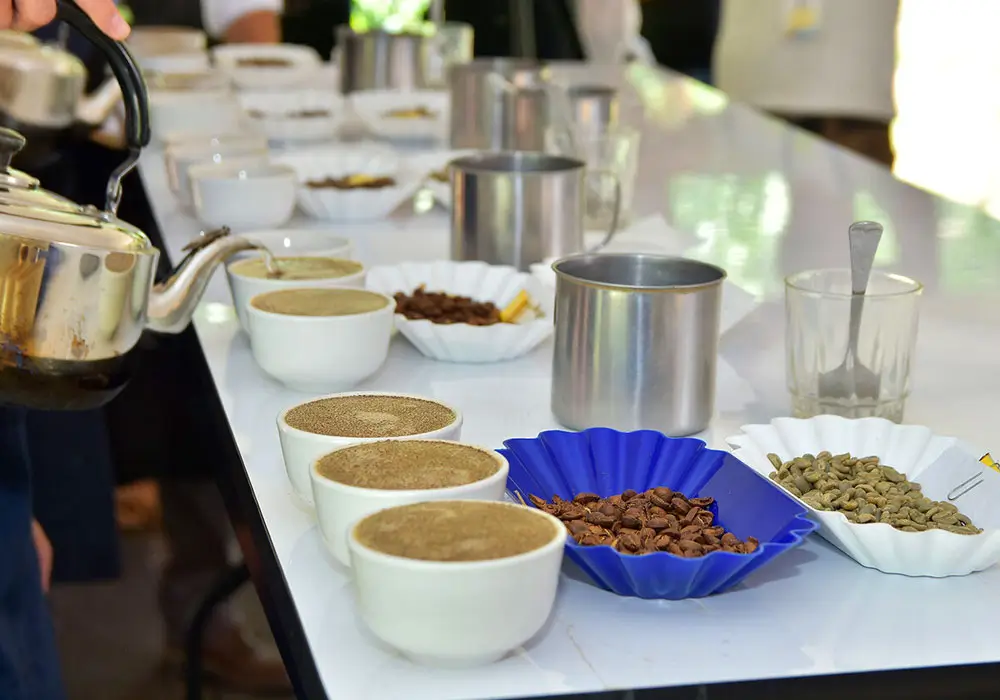
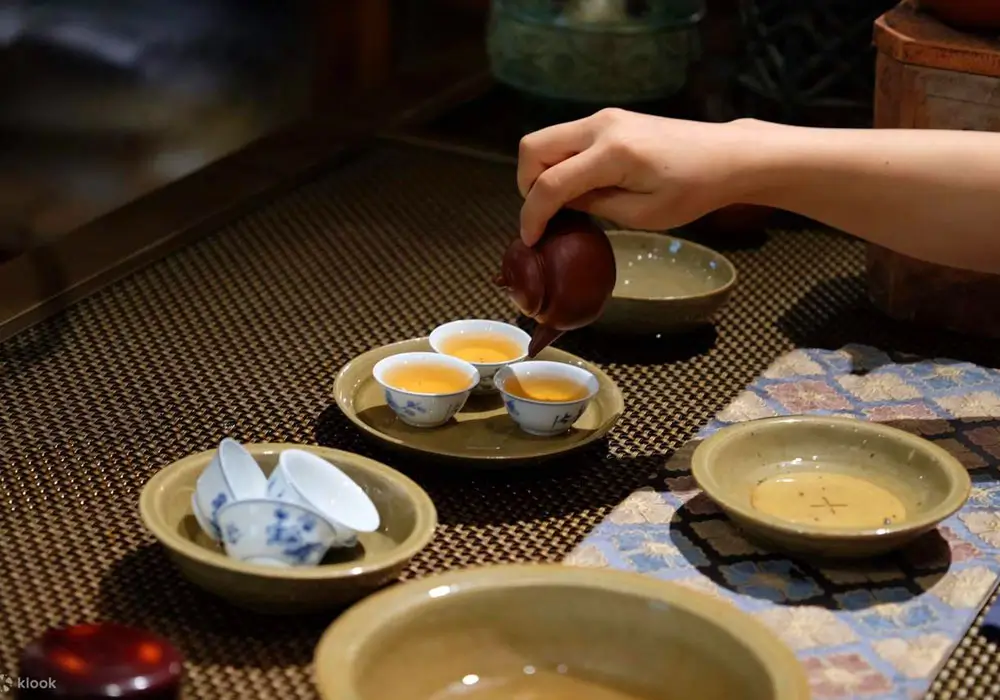
After the factory comes the part most guests enjoy most. Teas are laid out the way a professional taster sees them: dry leaf on white paper, a measured amount brewed in small white cups for a fixed time, the wet leaf turned out on the lid, and the liquor poured into tasting bowls. You learn to look, smell and then slurp from a spoon, judging colour, aroma, strength and finish. You will be surprised how different two teas from neighbouring gardens can be.
7. A cup with a view and the drive back
To finish, you have a proper cup of tea made the way you like it, often with a view over the valley. Your driver then takes you back to your hotel or on to the next stop, which might be the tea museum, a viewpoint or lunch in town.
Understanding the process makes the factory visit far more interesting, and it also explains the vocabulary you will hear at the tasting table. All true tea comes from one plant, Camellia sinensis. The differences between a strong breakfast tea, a light Darjeeling and a green tea come from where it grows, what is plucked, and how the leaf is processed afterwards.
Plucking. Quality starts in the field. “Two leaves and a bud” is the classic standard because the youngest growth holds the most flavour. Coarser plucking, taking older leaves, gives more weight but a flatter cup. Bushes are plucked again and again as new shoots appear, so the same section of garden is visited on a cycle through the growing season.
Withering. Fresh leaf is spread in long troughs while air is blown through it for many hours. The leaf loses a large part of its moisture and goes soft and limp, which makes it ready to be rolled without breaking into dust. A good wither already starts to change the aroma, and you can smell it in the withering room.
Rolling or cutting. This is where the two main styles of black tea part company. In the orthodox method the leaf is twisted and rolled, which breaks the cells gently and keeps the leaf in recognisable pieces. In the CTC method the leaf is passed through rollers that crush, tear and curl it into small, hard granules. You will see one or both at most Munnar estates.
Oxidation, often called fermentation. Once the cells are broken, the juices inside react with the air. The green leaf turns coppery brown and the smell changes from grassy to fruity and malty. The factory staff judge the timing by colour and smell, because a few minutes either way changes the tea in the cup. Green tea skips this step altogether, which is why it stays green.
Drying or firing. Hot air stops the oxidation and dries the leaf until it is crisp and stable, ready to keep for months. The tea leaving the dryer is black and fragrant, and it is still warm.
Sorting and grading. The dried tea is sieved into grades by particle size. Whole leaf, broken leaf, fannings and dust are each sold for different uses, from fine loose leaf to the tea bags in a supermarket box. Grade names such as OP and BOP describe leaf size, not quality alone, which is a point your guide will usually make at the tasting.
Orthodox tea. Rolled rather than crushed, orthodox tea keeps more of the leaf whole. It brews more slowly, gives a clearer, brighter liquor and shows more of the character of the garden and season. Fine Darjeeling is made this way, and many Munnar estates make orthodox teas as well. This is the style tea lovers buy loose and drink without milk.
CTC tea. The letters stand for “crush, tear, curl”. The small granules release colour and strength quickly, which is exactly what you want when tea is boiled with milk, sugar and spices. Most of the tea drunk in India as masala chai is CTC, and much of Kerala’s output is made this way. It is strong, dark and generous, and it stands up to milk in a way a delicate orthodox tea does not.
Which is better? Neither. They are made for different cups. At the tasting table you will compare both side by side, and most guests find they like one for a morning mug with milk and the other for a quiet afternoon cup on its own.
Tea tasters work fast and use a routine that has hardly changed in a hundred years. Learning it is simple, and it makes you notice far more than you would over a normal cup.
Look at the dry leaf. Note the size, colour and how evenly it is made. Tips, the lighter golden or silvery buds, often show careful plucking.
Smell the wet leaf. After brewing, the spent leaves are turned out onto the lid of the cup. This is called the infusion, and its colour and scent tell a trained taster a great deal about how the tea was withered and oxidised. Bright, coppery leaf is usually a good sign; dull, dark leaf less so.
Judge the liquor. Look at the colour and clarity of the brewed tea in the white bowl. Then take a spoonful and slurp it hard, drawing in air so the tea sprays across the whole of your mouth. It feels rude for the first few goes and then becomes fun. The noise is the point: it spreads the aroma to the back of the nose.
Notice the mouthfeel and finish. Tasters talk about briskness, the lively, slightly drying feel on the tongue, and about body, the weight of the tea in the mouth. Then there is what stays after you swallow or spit: sweet, malty, flowery, woody or bitter.
Spit or swallow. Professionals spit into a spittoon because they may taste hundreds of cups a day. At a guest tasting you can do either, but if you are sensitive to caffeine, spitting is a sensible habit after the first few teas.
Find your words. Your host may give you a short list of terms. Use them, but trust your own descriptions too. “Tastes like toast” or “smells like a garden after rain” is exactly the kind of note a taster would write.
KDHP Tea Museum. Run by the Kannan Devan Hills Plantations company, the tea museum sits on the Nallathanni estate a short drive from Munnar town. It tells the story of the plantations from the late nineteenth century onwards through photographs, old machinery and objects from the early estate days, including an early rolling machine, and there is usually a short film and a demonstration of the factory process. It is closed on Mondays and open during the day on other days. Hours can change, so we check them for your date. It makes a good companion to the estate walk if you want the history behind what you saw in the garden.
Viewpoints and drives. The road towards Top Station climbs past Mattupetty dam and Echo Point to the edge of the Ghats, where on a clear day you look down towards Tamil Nadu. Other popular drives include the Pothamedu viewpoint and the road towards the Lockhart Gap. Clouds come and go quickly, so a viewpoint can be fogged in one minute and clear the next.
Eravikulam National Park. Just outside Munnar, this park protects the Nilgiri tahr, a mountain goat found only in the Western Ghats. Visitors are taken up by forest department bus along a set road. It closes for a period each year around the calving season, usually early in the year, so we check whether it is open for your dates.
Neelakurinji. The Munnar hills are known for a shrub that flowers across the slopes only once every twelve years, turning them blue and violet. The last mass flowering was in 2018, so the next is expected around 2030.
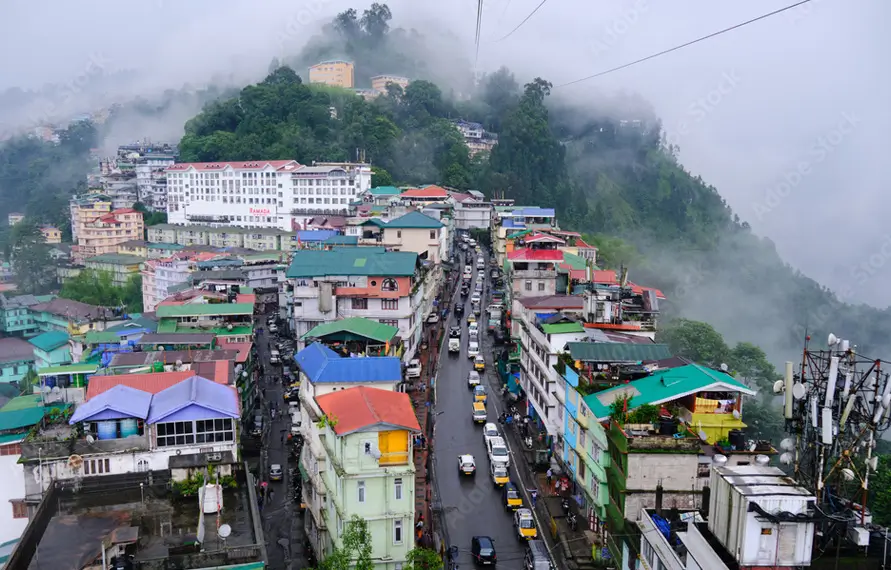
If your India tour heads north-east rather than south, Darjeeling offers its own version of this experience, and for many tea lovers it is the more famous one. The gardens here cling to steep Himalayan slopes, far steeper than most Munnar estates, and on a clear morning the snows of Kanchenjunga sit above the ridges.
First flush. The first harvest of the year comes in spring, roughly March and April, after the bushes have rested through the winter. These teas are light, bright and flowery, with a liquor closer to gold than brown. They are the most prized and often the most expensive.
Second flush. From around May into June, the bushes produce a second harvest with a deeper, fuller character, often described as muscatel, a ripe, grape-like note that is unique to Darjeeling. Many people find second flush the most satisfying cup.
Monsoon and autumn flushes. The rains bring a fast-growing, stronger leaf used more in blends, and the autumn harvest after the monsoon gives a mellow, rounded tea.
Darjeeling makes orthodox tea, so a tasting there focuses on the subtle differences between gardens and harvests rather than the CTC versus orthodox comparison you get in Munnar. The walk itself is similar, but the slopes are steeper, so good shoes matter even more. You can reach Darjeeling by road from Bagdogra airport, and the toy train of the Darjeeling Himalayan Railway makes a pleasant add-on.
Tea grows all year in Munnar, so the walk and tasting can be done in any month. Each season has a different feel.
September to February. After the monsoon the hills are at their greenest and the air is fresh. Mornings can be cool, especially in December and January, when you will want a fleece until the sun burns through the mist. This is the most popular time to visit Munnar and the busiest for hotels.
March to May. Warmer and often clearer in the mornings, with good views from the viewpoints. Plucking is active, and the light on the tea rows is sharp in the early hours. Indian school holidays in April and May bring busier roads.
June to August, the monsoon. The south-west monsoon brings heavy rain to the Western Ghats. Some travellers love Munnar at this time: the hills are washed bright green, waterfalls appear on every slope and the mist rolls through the gardens. Others find the rain and leeches on the paths too much. Walks still go ahead between showers, but paths are slippery, views can disappear for hours, and occasional landslides affect hill roads. If you come in the monsoon, keep the plan flexible and bring proper rain gear.
Time of day. Morning is best. The light is soft, the mist lifts slowly off the valleys, plucking is usually under way and the factory is processing the day’s leaf. In the afternoon cloud often builds and visibility drops.
The tea estates are working farms and also homes. Many plucking and factory staff live on the estate with their families, often in communities that have worked the same gardens for generations. A few simple habits keep the visit respectful.
Give Munnar two nights. The drive up from Kochi takes around four hours, and the road is winding. Two nights give you one full day for the estate walk, factory and tasting, plus time for viewpoints, the tea museum or Eravikulam.
Pair it with the spice country. Thekkady is a few hours’ drive south of Munnar, and the two together make a natural Western Ghats loop. The spice plantation tour in Thekkady shows you cardamom, pepper and cinnamon growing in the forest, which is a lovely contrast with the open tea slopes.
Continue to the backwaters. After the hills, many guests drive down to the plains for a night on an Alleppey houseboat, then finish in Kochi with a Fort Kochi heritage walk and an evening Kathakali performance.
Add wellness. Kerala is the home of Ayurveda. An Ayurvedic massage session after a day of walking, or a longer stay on our Kerala luxury wellness tour, slots in easily before or after Munnar.
In Darjeeling. Plan at least two nights, ideally three, because the drive up from Bagdogra is long and the weather can hide the views for a day or more.
Bring and wear - Closed walking shoes with good grip for wet paths - A light fleece or jacket for cool, misty mornings - A compact umbrella or rain jacket, essential in the monsoon - Long trousers and socks if walking in wet weather, which help with leeches - Sun cream and a hat for clear mornings at altitude - A small notebook for your tasting notes
Leave behind - Sandals and smooth-soled shoes - Strong perfume, which gets in the way of smelling the tea - Drones, which estates and pluckers do not welcome - Any plan to pick leaves as a souvenir
Tell us your Kerala or Darjeeling dates and we will arrange the estate walk, factory visit and tasting on the best morning of your stay.
Call & WhatsApp +91-9828085426 or email info@topindianholidays.net.
See more ideas on our Top Experiences in India page.
Tell us your travel dates and we will check availability and fit this experience into the right day of your itinerary. Reply within 12 hours.
Check Availability› Chat on WhatsApp› Send an Enquiry›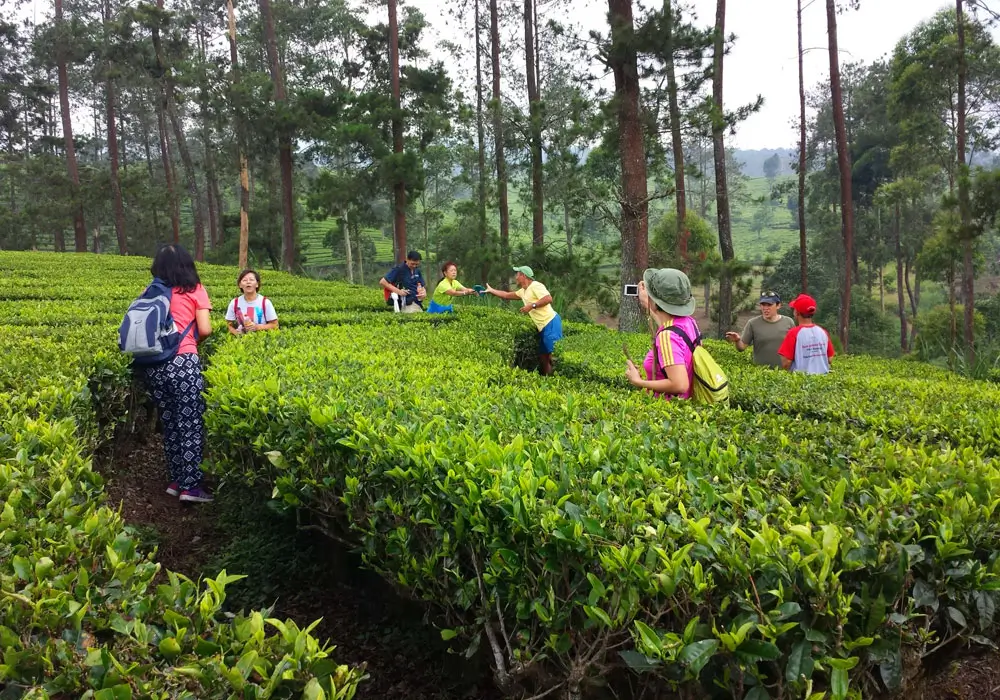



 🌙 09 Nights / 10 Days
⭐ Most Popular
Munnar - Valparai - Coonoor... Munnar - Valparai - Coonoor - Ooty - Wayanad - Calicut Show More
 🌙 06 Nights / 07 Days
⭐ Most Popular
Guwahati - Kaziranga National Park... Guwahati - Kaziranga National Park - Jorhat Tea Gardens -Majuli Island - Guwahati Show More
 🌙 05 Nights / 06 Days
⭐ Most Popular
Guwahati - Kaziranga National Park... Guwahati - Kaziranga National Park - Jorhat - Guwahati Show More
 🌙 13 Nights/14 Days
⭐ Most Popular
Delhi - Agra - Jaipur... Delhi - Agra - Jaipur - Delhi - Bagdogra - Darjeeling - Gangtok - Bagdogra - Delhi Show More
Yes, and it works very well. Thekkady is a few hours’ drive from Munnar, so we often plan the tea estate walk in Munnar and the spice plantation tour in Thekkady on consecutive days of a Kerala itinerary.
The drive takes around four hours on a winding hill road, depending on traffic and weather. We usually suggest at least two nights in Munnar so you have a full, relaxed day for the estate walk and tasting.
First flush is roughly March to April, giving light, flowery teas. Second flush follows from around May into June, with a fuller, muscatel character. Exact timing shifts each year with the weather.
Munnar fits a Kerala tour with spice gardens and backwaters, and lets you compare CTC and orthodox teas. Darjeeling has steeper Himalayan gardens, mountain views and famous first and second flush teas. Choose the one that suits the rest of your route.
Average fitness is enough. The paths are narrow, uneven and can be steep in places, but you walk slowly and stop often. Tell us about any mobility concerns and we will choose a gentler section of garden.
Only with permission. Pluckers are working, so ask with a gesture and a smile before photographing anyone, and accept a no politely. Wide shots of the slopes without identifiable people are always fine.
Many travellers think so. The hills are bright green, waterfalls run everywhere and mist drifts through the gardens. The trade-off is heavy rain, slippery paths, leeches and views that come and go, so pack rain gear and allow extra time.
September to February is the most popular, with green hills and fresh mornings. March to May is warmer with clear early views. The monsoon months are very green and atmospheric but wet, so keep plans flexible if you travel then.
Yes. A tasting is about noticing colour, smell and flavour, not drinking cup after cup. You can spit as professionals do, and many guests who rarely drink tea find it the most interesting part of the morning.
Orthodox tea is rolled and keeps more of the leaf whole, giving a lighter, clearer cup. CTC tea is crushed, torn and curled into small granules that brew strong and dark, ideal for chai with milk. Most Munnar tastings compare the two side by side.
It describes fine plucking: the plucker takes only the unopened bud at the tip of each shoot and the two youngest leaves below it. This young growth gives the best flavour, which is why it is the standard for quality tea.
It is the tea museum run by Kannan Devan Hills Plantations on the Nallathanni estate near Munnar town, covering the history of the plantations and the tea-making process. It is closed on Mondays. We check the current opening hours before your visit.
Yes, many estates allow visitors to see the factory, though access depends on the estate, the day’s production and the season. We arrange the visit in advance so you see the leaf being processed, and we follow each factory’s rules on routes and photography.
The price depends on your group size, the estate and factory you visit, whether a formal tasting is included, and your hotel location. We quote the current price for your exact dates and plan. Send us a WhatsApp message with your dates and how many of you are travelling.

Whether you're planning your first India trip or returning to explore deeper, get honest, expert advice from someone who knows every corner of this country. No pressure, no cost.