


 info@topindianholidays.net
 +91-8955000999

Hot Air Balloon Ride in Jaipur
Lift off as the sky turns orange and drift over villages, mustard fields and the Aravalli hills while Jaipur is still waking up.
View Experience ›Arrive early to watch the actors paint their faces in green, red and white, then see a short Kathakali dance drama bring an episode from the Indian epics to life to the beat of the chenda drum.
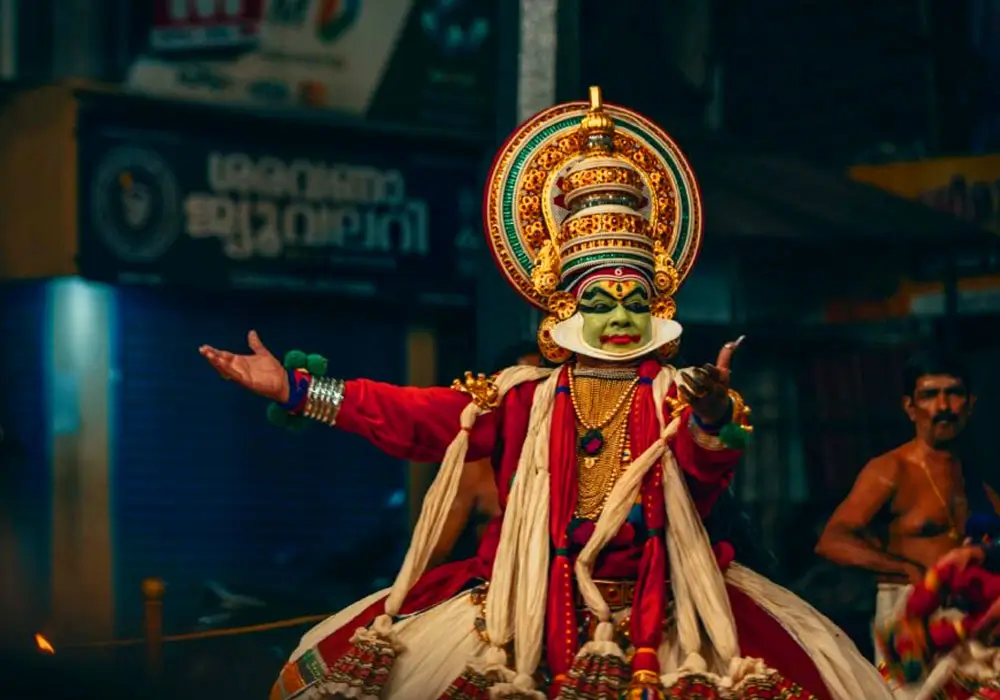
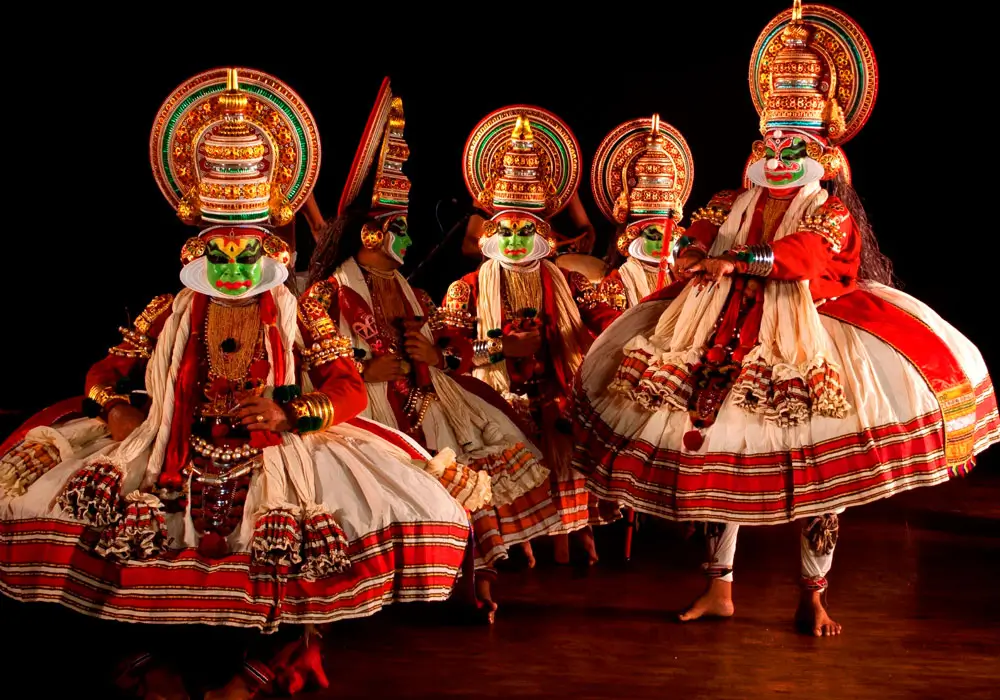
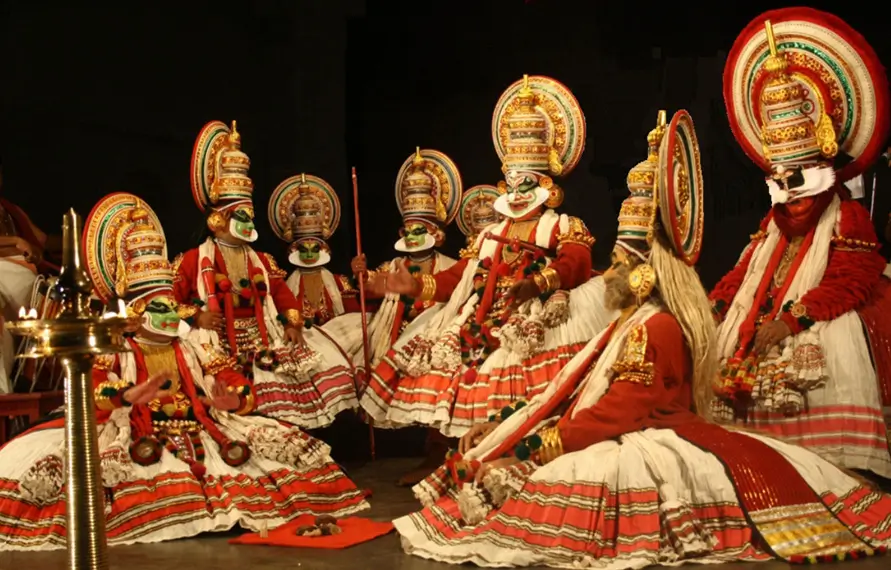
Kathakali is the classical dance drama of Kerala, and it is one of the most striking performing arts in the world. Actors in vast, flaring skirts and towering headdresses tell stories from the Ramayana, the Mahabharata and the Puranas without speaking a word. Everything is carried by the hands, the face and above all the eyes, while singers narrate the verses and drummers drive the action forward. The make-up alone takes hours to apply and turns each actor into a character type that a Keralan audience recognises instantly: the noble hero, the arrogant villain, the demon, the sage, the gentle heroine.
Traditionally, Kathakali was performed through the night in temple courtyards and the homes of landowning families, lit by a single large brass oil lamp placed at the front of the stage. Full performances still take place in temples and at festivals across Kerala, and they can run from late evening until dawn. For most travellers, that is a lot of theatre in an unfamiliar language. This is why the small theatres of Fort Kochi stage short performances for visitors every evening, usually around an hour long, often with an introduction that explains the gestures and the story before the play begins.
A Kathakali show in Kochi is also one of the few performances in the world where watching the actors get ready is part of the event. Arrive early and you can sit close as the performers apply their make-up by hand, grinding colours from stone, layering paste on their faces and building up the white frame around the jaw. By the time the drums start, you have seen an ordinary person become a god or a demon in front of you.
It is an easy, rewarding evening that works for all ages, and it pairs naturally with a Fort Kochi heritage walk in the afternoon or a Kalaripayattu martial arts show on another evening.
1. Pickup from your hotel
Your private driver collects you from your hotel in the late afternoon. If you are staying in Fort Kochi itself, the theatre may be only a few minutes away. From hotels on the mainland in Ernakulam or on Willingdon Island, the drive takes longer, so we time the pickup around the traffic.
2. Arrive early for the make-up
Most Fort Kochi theatres open their doors well before the show so visitors can watch the make-up being applied. This usually begins around an hour before the performance. Seats near the make-up area fill up, and arriving early is the single best tip for enjoying the evening.
3. Watching the transformation
The actors sit cross-legged or lie back while they or a make-up artist apply the colours. Natural pigments are ground and mixed with coconut oil, then painted on in layers. For certain characters, a white ridge called the chutti is built up along the jaw from rice paste and lime, shaped and cut so it frames the face. It is slow, careful work, and most theatres allow photography during this stage.
4. The introduction
Before the play, many venues include a short demonstration. A performer or presenter explains the basic hand gestures, called mudras, and shows the nine main facial expressions used to convey emotions such as love, anger, fear, wonder and disgust. This short lesson is what makes the rest of the show understandable to a first-time viewer.
5. The eye exercises
Some shows include a demonstration of the eye movements that make Kathakali famous. Actors move their eyeballs in every direction, flick them from side to side, roll them and hold intense stares, all in time with the drum. Years of training go into this control, and it is surprisingly powerful to watch from a few metres away.
6. The story summary
Before the drama itself, you are usually given a short summary of the episode being performed, either in a printed sheet or spoken from the stage. Read or listen carefully, because once the performance starts, the story is told only through movement and song.
7. The performance
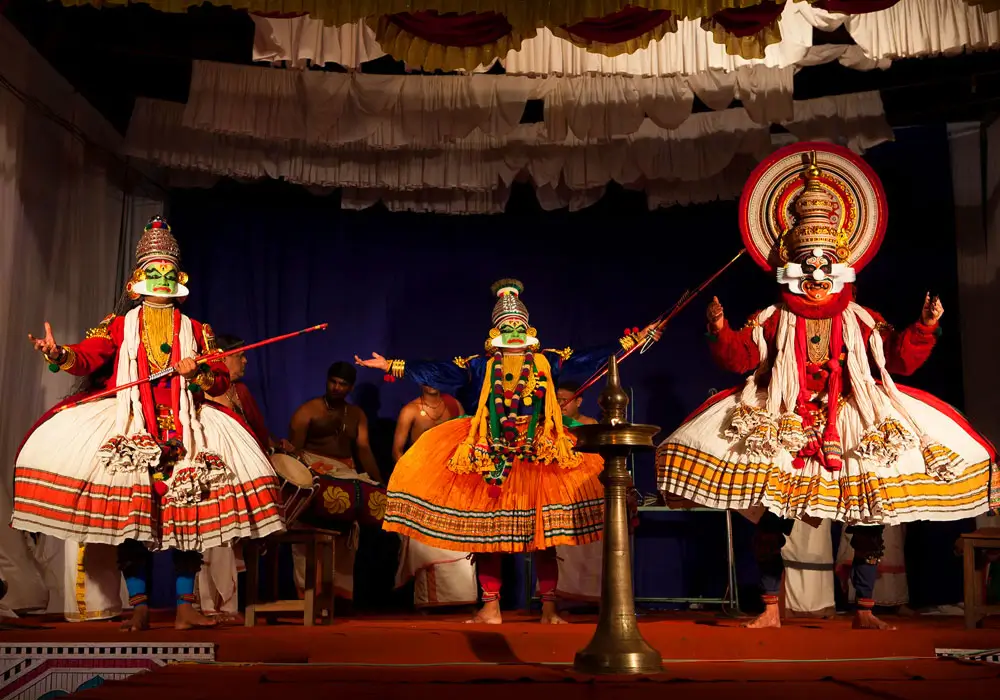
The drummers and singers take their places at the side or back of the stage, the oil lamp is lit, and the first character enters, often half hidden behind a hand-held curtain. Then the play begins: a short episode with heroes, villains, dramatic confrontations and sometimes a battle, played out to the beat of the chenda and the maddalam drums.
8. Photos and questions
After the performance, many theatres allow guests to take photographs with the actors in costume. It is a chance to see the detail of the make-up and headdresses up close, and sometimes to ask the performers a question or two.
9. Dinner and back to your hotel
Fort Kochi has plenty of good restaurants within a short drive or walk of the theatres, many serving Kerala seafood. Your driver takes you on to dinner or back to your hotel.
Kathakali make-up, called vesham, is not decoration. Each colour scheme marks a character type, and a Keralan audience knows who is good, who is evil and who is in between before a single gesture is made.
Pacha (green). The colour of noble, heroic and virtuous characters: kings, gods and heroes such as Rama, Krishna, Arjuna and Nala. The face is painted bright green, with red lips, black-lined eyes and the white chutti framing the jaw.
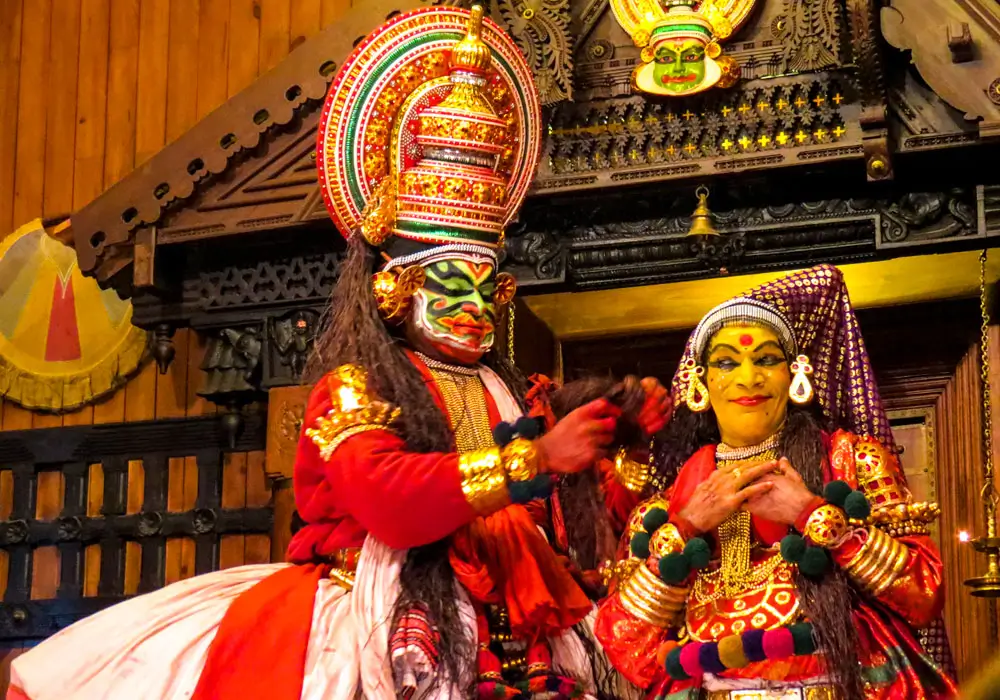
Kathi (knife). Arrogant, ambitious and villainous characters who still have some royal or heroic quality, such as Ravana or Duryodhana. The face is mostly green, but a red, knife-shaped pattern sweeps up on each cheek, and small white knobs are placed on the nose and forehead. These are often the most dramatic roles to watch.
Thadi (beard). Characters with beards come in three colours. Red beard, chuvanna thadi, is for violent, fierce and evil characters. White beard, vella thadi, is often used for the monkey god Hanuman and other divine or virtuous beings. Black beard, karutha thadi, is used for hunters and forest dwellers.
Kari (black). Demonesses and forest-dwelling characters, often shown in black with red markings, representing crude or cunning natures.
Minukku (shining). Women and sages, painted in a soft yellow-orange tone with a gentle sheen. Heroines such as Sita and Damayanti, and holy men, use this subtle make-up.
The costumes complete the effect. The huge, layered skirts, the padded jackets, the long silver nails worn on some fingers, the bells around the ankles and the headdresses decorated with mirrors and gold are all part of the code. The red seeds of a plant are sometimes placed under the eyelids to make the whites of the eyes appear red, which adds to the fierce look on stage.
The mudras. Kathakali has a full language of hand gestures, based on a set of basic hand positions that are combined to make hundreds of words. A gesture can mean “king”, “deer”, “elephant”, “lotus”, “you”, “go” or “in the forest”. In the introduction you will learn a few, and spotting them in the play is satisfying.
The eyes and face. Watch the faces as closely as the hands. The actor’s eyes follow every gesture, and the eyebrows, cheeks and lips all move independently to show emotion. The nine emotions, or navarasa, include love, courage, compassion, wonder, laughter, fear, disgust, anger and peace.
The drums. Two drums drive the drama. The chenda, a cylindrical drum played with curved sticks, gives a loud, sharp sound used for battles, entrances and villains. The maddalam, a barrel-shaped drum played with the hands, gives a deeper, softer beat. Small cymbals and a gong keep time, and singers narrate the verses in a mix of Sanskrit and Malayalam.
The oil lamp. In traditional performances, a large brass lamp called the kalivilakku is placed at the front of the stage. Even in modern theatres with electric lighting, the lamp is usually lit, a reminder of the art’s roots in temple courtyards.
The curtain entrance. Some characters enter from behind a hand-held cloth curtain, the thirasheela, revealing themselves gradually. It is a dramatic moment, especially for a demon or villain.
The battles. Many episodes end with a confrontation. Watch how the actors portray violence through stylised movement, drum beats and expressions, without ever touching each other in a realistic way.
Kathakali draws on India’s great epics and the Puranas, the collections of ancient stories about gods, heroes and demons.
The Ramayana. Stories of Rama, the exiled prince, his wife Sita, his brother Lakshmana and the monkey god Hanuman, and their battle with the demon king Ravana. Episodes such as Ravana’s pride or the meeting of Hanuman and Bhima are popular.
The Mahabharata. The epic of the Pandava brothers and their cousins the Kauravas. Kathakali often stages episodes such as the humiliation of Draupadi and Bhima’s revenge on Dushasana, or the story of Kichaka, the arrogant general who desires Draupadi and meets a violent end.
Other stories. Nalacharitham, the story of King Nala and Princess Damayanti, is one of the best-loved Kathakali plays in Kerala, and Kalyanasougandhikam, the tale of Bhima searching for a fragrant flower for Draupadi, is often performed in shortened form.
In the visitor shows in Fort Kochi, you usually see a single short episode chosen for its drama and clarity. Theatres often rotate stories, so the play you see depends on the evening.
Short visitor shows in Fort Kochi. These are designed for people seeing Kathakali for the first time. You watch the make-up, get an explanation of the gestures and expressions, and then see a single episode, usually lasting around an hour. Seating is comfortable, the evening ends in time for dinner, and the format works well for families and anyone with limited time.
Full-length temple and festival performances. Traditional Kathakali can last all night, often beginning late in the evening and continuing until dawn, with several episodes performed back to back. These take place at temple festivals, cultural centres and special events around Kerala, mainly in the cooler months. They are an extraordinary experience for serious theatre lovers, but dates are not always announced far in advance, and audiences come and go through the night. If you would like to try one, tell us your dates and we will look for a suitable performance near your route.
Our recommendation. For most travellers, a short evening show in Fort Kochi is the right choice. If you are fascinated after that, ask us about a longer performance or a visit to an institution where Kathakali is taught.
The visitor shows in Fort Kochi run through most of the year, so you can usually see a performance on any evening of your stay.
October to March. The most comfortable time to visit Kochi, with drier weather and pleasant evenings. Fort Kochi is busy with travellers and theatres can fill up, so arrive early, especially in December and January.
April and May. Hot and humid, but the theatres are a good evening activity when the heat makes walking less appealing. Some venues are air-conditioned.
June to September. The south-west monsoon brings heavy rain to Kerala. Indoor shows are not affected, and Kathakali is a good rainy-evening plan. Allow extra time for the drive in heavy rain.
Festival season. Temple festivals across Kerala, many of them between November and April, are your best chance of seeing a traditional all-night performance. The Onam festival in August or September is also a lively time for Kerala’s performing arts.
Afternoon walk, evening show. Spend the afternoon on a Fort Kochi heritage walk past the Chinese fishing nets, St Francis Church, the old Dutch and Portuguese buildings and the spice warehouses of Mattancherry, then head to the theatre for the make-up and the show.
Two cultural evenings. Spend one evening at a Kathakali performance and another at a Kalaripayattu martial arts show. The two arts are closely linked: many Kathakali actors trained in Kalaripayattu, which gave them their strength, flexibility and footwork.
Before the backwaters. Kochi is usually the first or last stop on a Kerala tour. A show on your first evening gives you a cultural introduction before you head to an Alleppey houseboat, the tea hills of Munnar or the spice gardens of Thekkady.
With wellness. If you are combining Kerala with Ayurveda, a Kathakali evening adds culture to a restful week. Our Kerala luxury wellness tour and Ayurvedic massage session pages have more ideas.
Two nights in Kochi. Give yourself at least two nights in Fort Kochi so you can see the town at a relaxed pace, with one evening kept free for the show.
Bring and wear - Light, breathable clothing for Kerala’s humidity - A light layer for air-conditioned theatres - Mosquito repellent for the early evening - Phone or camera with the flash turned off - A little cash for tickets or a camera charge - Comfortable shoes if you are walking in Fort Kochi beforehand
Leave behind - Flash photography - Tripods and large bags - A late arrival, which means missing the make-up - Any expectation of spoken dialogue
Tell us your Kochi dates and we will book a Kathakali evening at the right time, with your heritage walk and dinner planned around it.
Call & WhatsApp +91-9828085426 or email info@topindianholidays.net.
See more ideas on our Top Experiences in India page.
Tell us your travel dates and we will check availability and fit this experience into the right day of your itinerary. Reply within 12 hours.
Check Availability› Chat on WhatsApp› Send an Enquiry›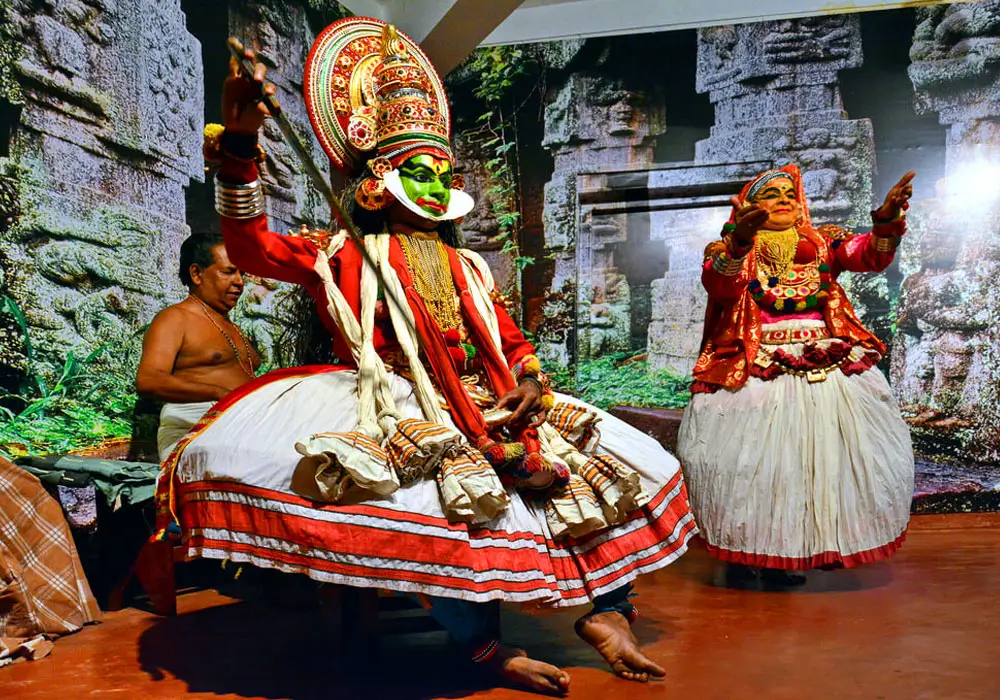



 🌙 21 Nights / 22 Days
Luxury
Chennai - Pondicherry - Thanjavur... Chennai - Pondicherry - Thanjavur - Madurai - Rameswaram - Kanyakumari - Kovalam - Alleppey - Kochi - Munnar - Ooty - Mysore - Bangalore Show More
 🌙 11 Nights / 12 Days
Luxury
Hyderabad - Chennai - Chettinad... Hyderabad - Chennai - Chettinad - Madurai - Kochi - Calicut Show More
 🌙 13 Nights / 14 Days
Bangalore - Coorg - Chikmagalur... Bangalore - Coorg - Chikmagalur - Wayanad - Thekkady - Kumarakom - Madurai Show More
 🌙 10 Nights / 11 Days
Chennai - Mahabalipuram - Pondicherry... Chennai - Mahabalipuram - Pondicherry - Thanjavur - Madurai - Kochi Show More
For most travellers, yes. It is one of India’s great classical art forms, and the chance to watch the make-up up close makes it very accessible. It fits easily into an evening in Fort Kochi after a heritage walk.
Wear light, breathable clothes for Kerala’s warm, humid evenings, with a light layer if the theatre is air-conditioned. There is no formal dress code, but modest, comfortable clothing is best.
Yes, at temple festivals and cultural events, mainly in the cooler months. These can last all night and dates are not always announced far ahead. Tell us your travel dates and we will look for one near your route.
Kathakali is a classical dance drama that tells stories from the epics. Kalaripayattu is Kerala’s traditional martial art. They are linked, as many Kathakali actors trained in Kalaripayattu, and seeing both gives a fuller picture of Kerala’s culture.
Mudras are hand gestures that work like a language, combining basic hand shapes to express words and ideas. Together with facial expressions and eye movements, they tell the whole story without speech.
Kathakali tells stories from the Ramayana, the Mahabharata and the Puranas. Visitor shows usually stage one short, dramatic episode, such as a confrontation between a hero and a villain.
Photography is usually allowed during the make-up session, and many theatres allow photos with the actors afterwards. Rules during the performance vary, and some venues charge for cameras. Never use flash during the play.
Yes. Children usually love the painted faces, the costumes and the drama. The short visitor shows are a good length for younger audiences, though the drums can be loud.
Ticket prices vary by theatre and can change. We quote the current price for your dates and can include it in your tour so everything is arranged in advance.
Yes, especially at the visitor shows. Most include an introduction to the main gestures and expressions and a short summary of the story in English. The acting itself is wordless, so you follow it through movement.
Green, called pacha, is used for noble and heroic characters such as Rama, Krishna and Arjuna. Other colours mark villains, demons, women and sages, so audiences know each character’s nature at a glance.
Yes, and it is one of the highlights. Most Fort Kochi theatres let visitors watch the actors apply their make-up before the show. Arrive early to get a seat close to the make-up area.
Short visitor shows in Fort Kochi usually last around an hour, plus the make-up session before. Traditional temple performances can last all night, from late evening to dawn.
Most visitor shows in Fort Kochi start in the early evening, with the make-up session beginning around an hour before. Timings vary by theatre and season, so we confirm the exact time for your dates.

Whether you're planning your first India trip or returning to explore deeper, get honest, expert advice from someone who knows every corner of this country. No pressure, no cost.