


 info@topindianholidays.net
 +91-8955000999

Hot Air Balloon Ride in Jaipur
Lift off as the sky turns orange and drift over villages, mustard fields and the Aravalli hills while Jaipur is still waking up.
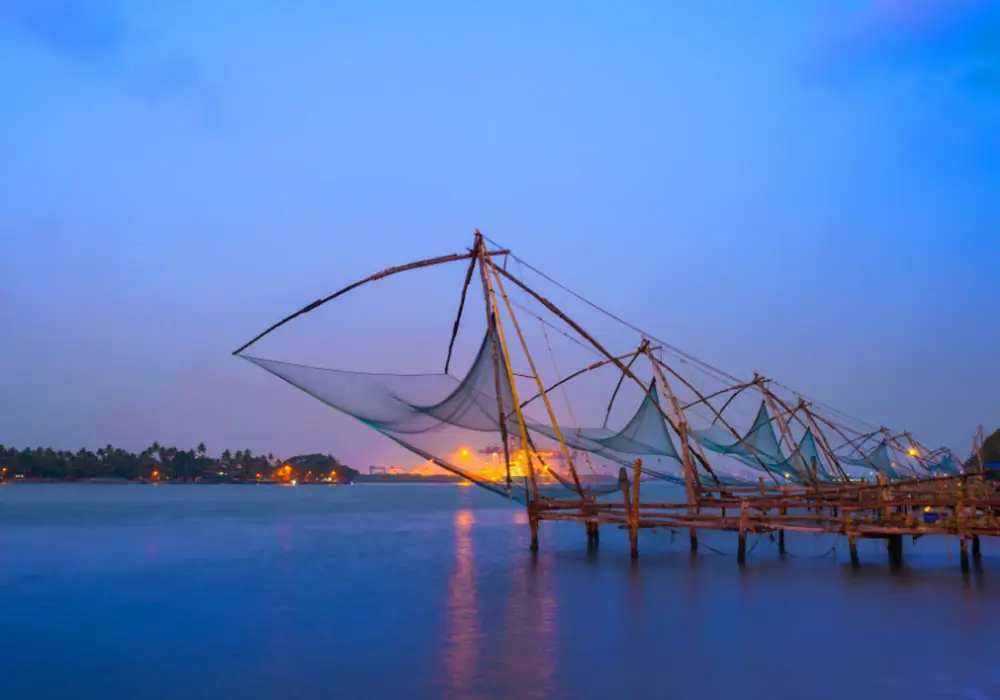
View Experience ›Start at the water’s edge as fishermen haul up the great Chinese nets, then follow the old streets of Fort Kochi and Mattancherry through five centuries of traders, churches, synagogues and spice.
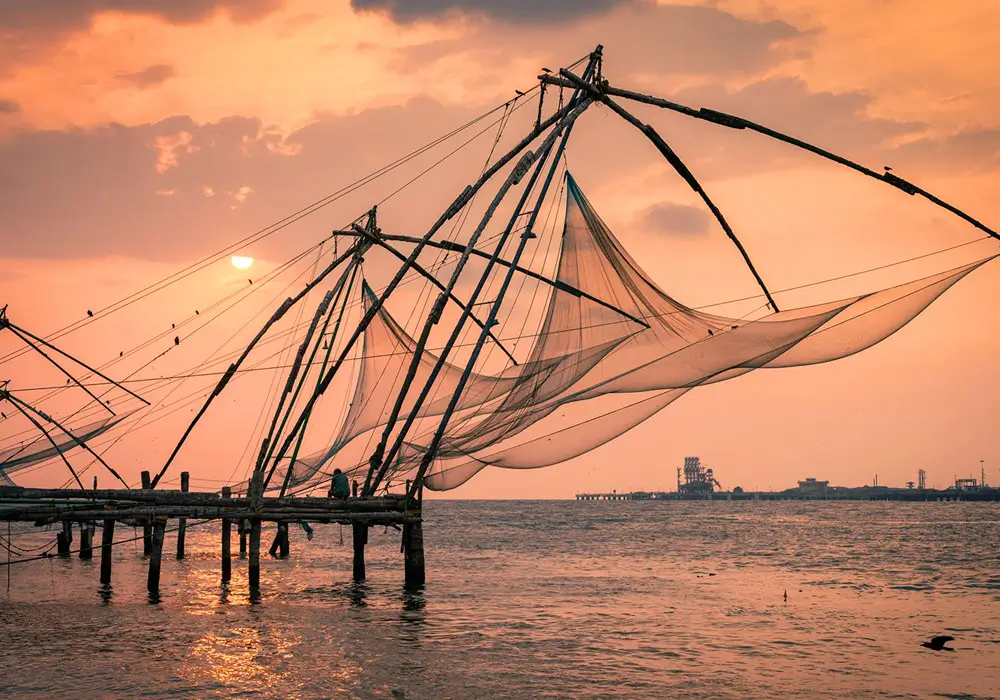
Fort Kochi does not feel like the rest of India, and that is exactly why it rewards a slow walk. On a narrow spit of land where the backwaters meet the Arabian Sea, Portuguese, Dutch and British traders each left their mark in turn, on top of an Arab, Chinese and Jewish trading world that was already centuries old. The result is a small district of tiled roofs, whitewashed churches, shaded squares and quiet lanes where a Dutch mansion, a Hindu temple, a mosque and a Jain shrine can all sit within a short stroll of each other.
The best way to understand it is on foot, with someone who knows which doorway hides a colonial courtyard and which warehouse still smells of ginger. A Fort Kochi walking tour starts by the sea at the Chinese fishing nets, those huge wooden frames that tip forward into the water and rise again dripping with the catch. From there you move inland past St Francis Church, where Vasco da Gama was first buried, the Santa Cruz Basilica, the old Dutch Cemetery and the bungalows of Princess Street, before heading to Mattancherry for the palace, the Paradesi Synagogue in Jew Town and the spice godowns that made this coast famous.
None of it is grand in the way a Rajasthan fort is grand. The pleasure is in the detail: a carved wooden balcony, a faded Dutch inscription, a mural painted across a café wall, a heap of dried ginger spread on a warehouse floor. The pace is easy, the distances short, and there is always a café nearby when the heat builds.
This page explains how the walk works, what you will see, when to go, how to plan around closing days, and how it fits into a wider Kerala tour, alongside evenings like a Kathakali performance or a Kalaripayattu martial arts show.
1. Meeting your guide
Your guide meets you at your hotel in Fort Kochi, or your driver brings you across from Ernakulam if you are staying on the mainland. For a morning walk we aim to start early, while the air is still soft and the fishermen are working. For an afternoon walk we start late enough for the worst of the heat to have passed.
2. The Chinese fishing nets
The first stop is the beachfront near Vasco da Gama Square. Here the row of cantilevered nets lines the shore, each one operated by a small team of men who lower it into the water, wait, and then pull on ropes weighted with large stones to lift it out again. You can stand close and watch the rhythm of the work, and the fishermen will often explain, with gestures as much as words, how the balance of the frame works.
3. Along the waterfront
A short stroll along the promenade takes you past the fish sellers who lay out the morning catch on tables, and the small stalls where, if you wish, a cook will fry your chosen fish for you. Container ships and ferries slide past on the harbour channel, a reminder that Kochi is still a working port.
4. St Francis Church and the colonial quarter
You walk inland to St Francis Church, a modest building with a stepped gable front and a long history. Inside, your guide shows you the spot where Vasco da Gama was buried before his remains were taken back to Portugal. Around the church lie the parade ground, old bungalows and shaded lanes of the colonial quarter.
5. Santa Cruz Basilica and the Dutch Cemetery
A few minutes away is the Santa Cruz Basilica, bright white outside and richly painted within. The walk then loops past the Dutch Cemetery near the beach, one of the oldest European burial grounds in India, with weathered tombs visible through the gate.
6. Princess Street, cafés and street art
Next comes Princess Street and the lanes around it, lined with colonial houses, small galleries, bookshops and cafés. This is the time for a coffee or a fresh lime soda, and for spotting the murals and street art that have spread across Fort Kochi’s walls.
7. Across to Mattancherry
With your driver or by auto rickshaw, you cover the short distance to Mattancherry. Here you visit Mattancherry Palace, with its celebrated murals, and then the Paradesi Synagogue at the end of Synagogue Lane in Jew Town, timed around their opening days and hours.
8. Spice warehouses and Jew Town lanes
The walk ends among the old spice godowns of Mattancherry, where traders still sort and store ginger, pepper and other produce. You leave with a clear picture of why so many nations crossed oceans to reach this small stretch of coast, and your driver takes you back to your hotel.
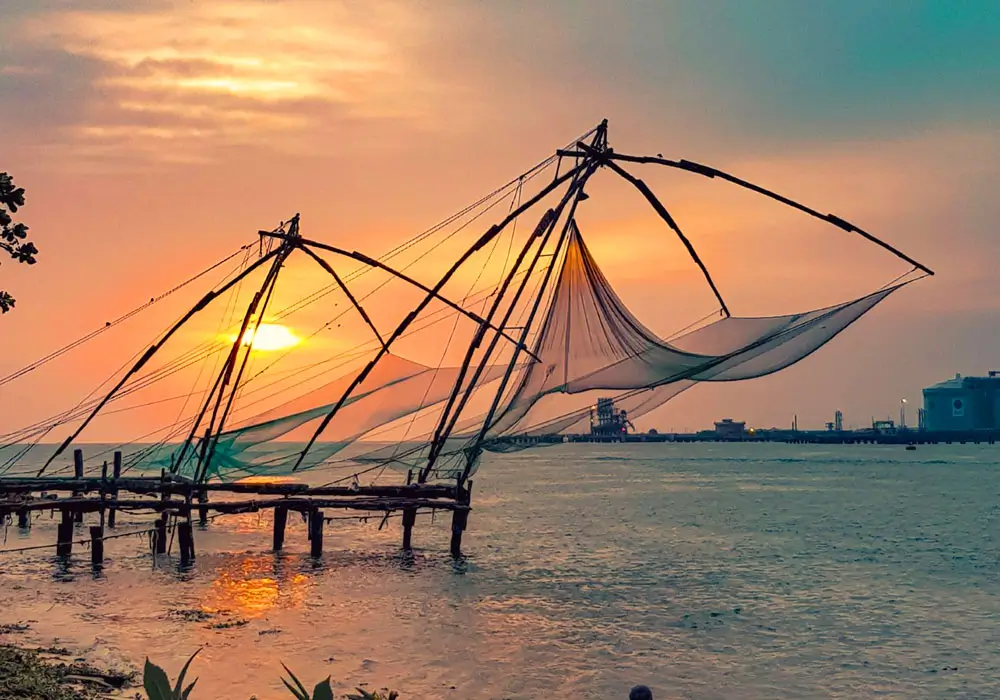
The Chinese fishing nets. Locally called cheena vala, these shore-operated nets are the emblem of Fort Kochi. Each one is a giant lever: a frame of teak and bamboo poles holding a wide net, balanced on a pivot so that a team of men can lower it into the water and raise it again using stone counterweights hung on ropes. The usual story is that they were introduced by traders from China centuries ago, though historians also point to Portuguese settlers who arrived from Macau. Whatever the origin, the nets have become part of the shoreline. The catch from a single dip is often small, and the work is hard, which is worth remembering when you watch.
St Francis Church. Built by the Portuguese in the early sixteenth century, originally of wood and later rebuilt in stone, it is often described as the oldest European church in India. Vasco da Gama, who reached this coast in 1498, died in Kochi in 1524 and was buried here. Some years later his remains were shipped back to Portugal, but his gravestone marker is still shown inside. The church passed from Portuguese to Dutch to British hands, and its plain interior, with hand-pulled cloth fans called punkahs, carries traces of each.
Santa Cruz Basilica. The original Portuguese cathedral on this site was destroyed during the British period, and the present building dates from the early twentieth century. Its soaring white façade hides an interior full of colour: painted ceilings, scenes from the life of Christ and stained glass. It is an active place of worship, so visits are quiet and respectful, and timed around services.
The Dutch Cemetery. Dating from the Dutch period in the eighteenth century, this small walled graveyard holds the tombs of traders, soldiers and officials who died far from home. The gate is often locked, but you can see the gravestones clearly through the bars, and your guide will explain who lies there and how the Dutch came to take Kochi from the Portuguese.
Colonial houses. Fort Kochi’s streets show three styles side by side. Portuguese houses tend to have tiled roofs and verandas; Dutch buildings are broader, with high ceilings and thick walls; British bungalows sit back in gardens behind low walls. Many are now homestays, boutique hotels and cafés, so you can often step inside for a closer look.
Princess Street. One of the earliest streets in the area, it is narrow and lined with old houses with overhanging balconies. Today it is busy with souvenir shops, small hotels and cafés, but the architecture still shows through.
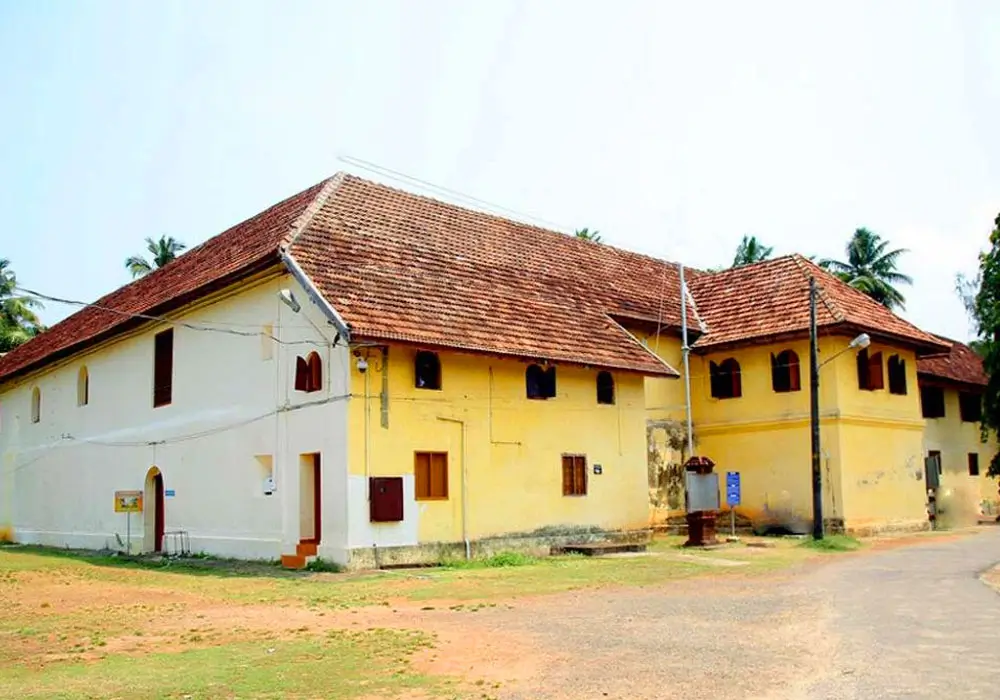
Mattancherry Palace. Often called the Dutch Palace, it was built by the Portuguese in the mid sixteenth century as a gift to the Raja of Kochi and later repaired by the Dutch, which is how it got its nickname. From outside it looks like a plain Kerala building with a tiled roof around a courtyard. Inside are some of the finest Hindu temple murals in Kerala, depicting scenes from the Ramayana and other stories, along with royal portraits, palanquins and costumes. Photography rules inside are strict, so follow the signs.
The Paradesi Synagogue. Built in the sixteenth century, the synagogue served Kochi’s Paradesi, or foreign, Jews whose families had come from Spain, Portugal, the Middle East and elsewhere. The interior is small and beautiful: floor tiles hand-painted in China, each with its own pattern, glass chandeliers, a brass rail and a carved Ark. Very few members of the community remain in Kochi today, and the synagogue is cared for as both a place of worship and a heritage site.
Jew Town and the spice godowns. The street leading to the synagogue is lined with antique shops, textile stores and spice merchants. Behind and around it lie old warehouses where ginger, pepper and turmeric are dried, sorted and packed. If a warehouse door is open, ask your guide whether you can peer in at the piles of produce and the workers sifting them by hand.
Most visitors photograph the nets and move on. They are far more interesting if you stay a while and watch a full cycle.
How a dip works. The men walk the frame forward along its central beam, using their own body weight to tip the net down into the water. It stays submerged for a few minutes. Then, together, they walk back and haul on the ropes so the stone weights pull the net up. As it rises, the frame swings and the net bellies up out of the sea, and someone uses a long-handled scoop to collect whatever fish are trapped in the mesh.
Best times to watch. Early morning and late afternoon are when you are most likely to see the nets working, and the light at both times is lovely for photographs. Activity depends on the tide and the season, so on some days there is more to watch than on others.
Joining in. Fishermen sometimes invite visitors to help pull a rope. If you do, a small tip is the fair thing to offer, as this is their livelihood, not a show. Ask your guide what is appropriate. Never climb on to a frame without being invited, and do not lean on the ropes.
The catch. Nearby stalls sell fish, prawns, crab and squid, much of it brought in by boats rather than the nets. If you want to eat it, small cafés along the waterfront will cook it for you. Your guide can help you agree the price before anything goes into the pan.
Morning walk. This is our usual recommendation. You see the nets working in soft light, the lanes are quiet, the churches are calm, and you finish the outdoor part before the day becomes hot and humid. Mattancherry Palace and the synagogue open mid-morning, so a morning walk flows naturally from the nets and churches in Fort Kochi to the Mattancherry sights later in the morning.
Afternoon walk. This suits guests who arrive in Kochi around midday or who prefer not to start early. You visit Mattancherry first, during the afternoon opening hours, then move to Fort Kochi as the heat eases. You finish at the beach as the sun drops towards the sea and the nets are silhouetted against an orange sky. It is busier at the waterfront at this time, with local families out for the evening.
Two shorter walks. In the hotter months, or with young children or older travellers, splitting the route works well: Fort Kochi and the nets one morning, Mattancherry and Jew Town another time, with a rest in between.
A little planning around closing days makes a big difference here, because two of the most important sights do not open every day.
Paradesi Synagogue. The synagogue is closed on Fridays and Saturdays and on Jewish holidays. On other days it opens in a morning session and an afternoon session, with a break in the middle of the day. Hours can change, so we check them for your date.
Mattancherry Palace. The palace museum is closed on Fridays and on some public holidays. On other days it is open from mid-morning to late afternoon, with a short lunchtime break.
Churches. St Francis Church and Santa Cruz Basilica are active places of worship. They are generally open to visitors outside service times, but Sunday mornings are for worship, and access may be limited during Mass, weddings and funerals.
What this means in practice. If you want both the palace and the synagogue, avoid doing the Mattancherry half of the walk on a Friday or Saturday. Fridays are the day to avoid most of all, as both are shut. If your only free day in Kochi falls on a Friday, we plan the walk around Fort Kochi, the nets, the churches, the waterfront, the street art and the spice lanes, and you can still see the outside of the synagogue and the palace on the way through.
Dress for visits. Shoulders and knees should be covered for the churches, the synagogue and the palace. Shoes come off at the synagogue entrance. Bags and cameras may need to be left outside in some places, so travel light.
Kochi is close to the equator and right on the sea. It is warm and humid all year, even in the so-called cool months, and sightseeing on foot in the middle of the day can be tiring.
Start early or late. This is the single most useful rule. The first hours after sunrise and the hours before sunset are the most pleasant times to be outdoors.
Use the shade. Many lanes in Fort Kochi are lined with old rain trees and shade trees, and your guide will choose routes that make the most of them.
Plan café stops. Fort Kochi is full of small cafés in old houses, many with fans, courtyards and cold drinks. Your guide will build in a pause, and these breaks are part of the pleasure of the walk.
Your driver is close by. Although the route is short, you do not need to walk every stretch. Your driver can move you between Fort Kochi and Mattancherry, and pick you up early if the heat gets too much.
Drink plenty. Carry water, and try a fresh tender coconut from a roadside seller, which is one of the best drinks in Kerala on a hot day.
Fort Kochi has a strong connection with contemporary art. The Kochi-Muziris Biennale, India’s best-known contemporary art festival, is held here roughly every two years, usually across the winter months, using old warehouses, heritage buildings and waterfront spaces as venues. Even between editions, the effect lingers. Murals spread across walls along the lanes, small galleries show local and visiting artists, and several of the old godowns have been turned into exhibition spaces and studios.
If your visit falls during a Biennale season, we can adapt the walk to include some of the main venues, which are spread across Fort Kochi and Mattancherry. Entry rules and ticketing vary by edition, so we check them for your dates. Outside the Biennale, your guide will point out the most interesting murals and galleries on your route.
The cafés are part of the same story. Many occupy restored colonial houses, with high ceilings, old tiled floors and courtyards shaded by trees. They are the obvious place to stop for breakfast after an early start, or for a coffee and cake halfway through the walk. Several double as small bookshops or art spaces.
Fort Kochi and Mattancherry are lived-in neighbourhoods, not open-air museums, and a few simple habits make the walk more comfortable for everyone.
Give Kochi two nights. Many Kerala tours rush Kochi with a single afternoon on arrival. Two nights give you a relaxed walk, an evening performance and a little time to sit in a café or watch the sunset at the nets.
Stay in Fort Kochi. Staying in a heritage hotel or boutique homestay in Fort Kochi puts the nets, churches and cafés on your doorstep and makes an early start easy. Ernakulam on the mainland is busier and more modern, and the drive across adds time each way.
Pair it with an evening performance. After a morning walk, a Kathakali performance in Kochi is the natural evening choice, especially if you arrive early to watch the performers apply their elaborate make-up. Another evening, a Kalaripayattu martial arts show shows a very different side of Kerala’s traditions.
Use Kochi as the gateway. Kochi is where most Kerala tours begin or end, thanks to its international airport. From here the usual route runs inland to the tea hills of Munnar for a tea estate walk and tasting, on to Thekkady for a spice plantation tour, and down to the backwaters for an Alleppey houseboat stay.
Finish with wellness. If you want time to slow down after travelling, a Kerala luxury wellness tour can follow your Kochi stay, with Ayurveda and quiet beach days.
From north India. Flights connect Kochi with Delhi, Mumbai and other cities, so a Kerala extension is easy to add after a Golden Triangle or Rajasthan tour. Kochi’s colonial lanes make a gentle first stop in the south.
October to March. The most comfortable months for walking. Humidity is lower, mornings are pleasant, and skies are often clear for sunset at the nets. December and January are the busiest weeks, particularly around Christmas and New Year, when Fort Kochi’s churches are decorated and the district has a festive feel.
April and May. The hottest and most humid months before the monsoon. The walk is still possible, but keep it to the early morning and plan more café and shade stops.
June to September. The southwest monsoon brings heavy showers, often in bursts with dry spells between. The town is green, quiet and fresh, and prices are lower. Carry an umbrella and wear shoes that cope with wet streets. Fishing activity can change with sea conditions in the monsoon.
Day of the week. Avoid Friday if you want to see inside Mattancherry Palace and the synagogue, and avoid Saturday for the synagogue. Sunday mornings are best kept for Mass if you want to see the churches in use, or for the nets and lanes otherwise.
Bring and wear - Light, breathable clothes that cover shoulders and knees - Comfortable walking shoes that slip off easily for the synagogue - A hat, sunglasses and sunscreen - A refillable water bottle - Small change for tips, tender coconuts and café stops - An umbrella in the monsoon months
Leave behind - Large bags and backpacks, which may not be allowed inside some sights - Revealing clothing, which is unsuitable for the churches and synagogue - Drones, which are not appropriate in the heritage district - Plans for a midday walk in April or May
Tell us your Kochi dates and we will set the walk on the right day of the week, at the right time of day, with the evening performances arranged around it.
Call & WhatsApp +91-9828085426 or email info@topindianholidays.net.
See more ideas on our Top Experiences in India page.
Tell us your travel dates and we will check availability and fit this experience into the right day of your itinerary. Reply within 12 hours.
Check Availability› Chat on WhatsApp› Send an Enquiry›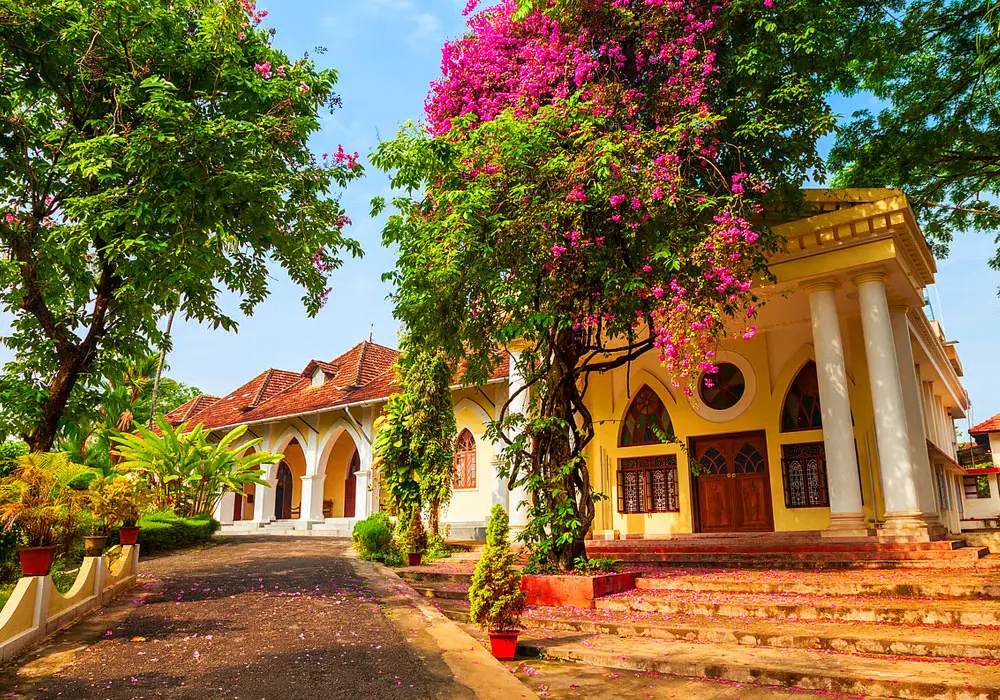



 🌙 12 Night / 13 Days
Luxury
Mumbai - Cochin - Munnar... Mumbai - Cochin - Munnar - Periyar - Kumarakom - Cochin - Goa - Mumbai Show More
 🌙 14 Nights / 15 Days
⭐ Most Popular
Trivandrum - Alleppey - Periyar... Trivandrum - Alleppey - Periyar - Kumarakom - Munnar - Kochi - Kovalam Show More
 🌙 12 Nights / 13 Days
Mumbai - Kovalam - Quilon... Mumbai - Kovalam - Quilon - Thekkady - Munnar - Kochi Show More
 🌙 07 Nights / 08 Days
Cochin - Munnar - Periyar... Cochin - Munnar - Periyar - Houseboat - Kovalam - Trivandrum Show More
A Kathakali performance in the evening is the classic pairing, and a Kalaripayattu show is another good choice. Kochi is also the starting point for Munnar, Thekkady and the Alleppey backwaters.
For this walk, Fort Kochi is better. You are close to the nets, churches and cafés, and an early start is easy. Ernakulam is more modern and busier, and the drive across adds time each way.
Yes. The route is flat and the distances are short. We shorten the walk, add more breaks and use the car between areas for families with young children or guests with limited mobility.
If your visit falls during a Biennale season, usually in the winter months of the years it runs, we can include some of the main venues. Outside the festival, your guide will show you street art and galleries along the route.
It is warm and humid all year. October to March is the most comfortable period, while April and May are hottest. Walking early or late, with café stops and your driver nearby, makes it manageable.
Light, breathable clothes that cover shoulders and knees, as you will visit churches, the synagogue and a palace. Wear comfortable shoes that are easy to remove, plus a hat and sunscreen.
Plan for a relaxed half day. The exact time depends on the season, your pace and how long you spend at the nets, cafés and Mattancherry sights.
You can wander alone, but a guide brings the place to life. They explain the layers of Portuguese, Dutch, British and Jewish history, show you buildings you would walk past, and time the walk around opening hours.
He was buried in St Francis Church after his death in Kochi in 1524, but his remains were later taken back to Portugal. His original burial spot is still marked inside the church.
Mattancherry Palace is closed on Fridays and some public holidays. Because the synagogue is also shut on Fridays, we avoid planning the Mattancherry part of your walk on that day.
No. The synagogue is closed on Fridays, Saturdays and Jewish holidays. On other days it opens in morning and afternoon sessions with a midday break, and we check the current hours for your date.
Sometimes fishermen invite visitors to pull on a rope. If they do, offer a small tip, as this is their work and income. Never climb on a frame unless you are invited.
Early morning and late afternoon are the most likely times. Activity depends on the tide, the weather and the season, so some sessions are busier than others. Your guide will time your visit to give you the best chance.
Early morning is usually best. The air is cooler, the Chinese fishing nets are often working, and you finish before the midday heat. Late afternoon is a good alternative, ending with sunset at the nets.

Whether you're planning your first India trip or returning to explore deeper, get honest, expert advice from someone who knows every corner of this country. No pressure, no cost.