

 info@topindianholidays.net
 +91-8955000999
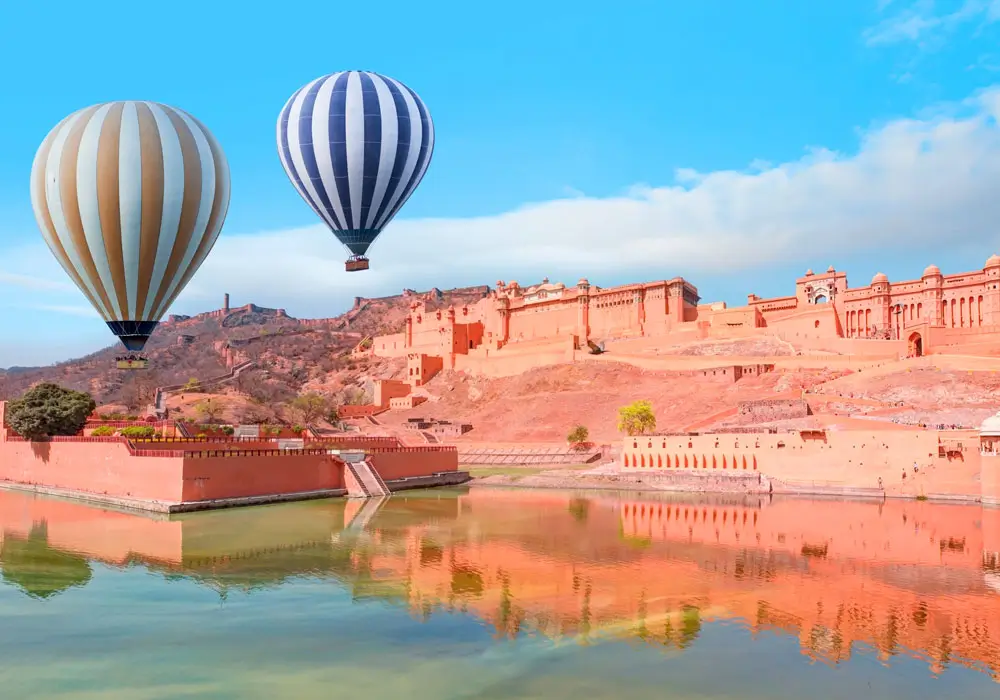
Hot Air Balloon Ride in Jaipur
Lift off as the sky turns orange and drift over villages, mustard fields and the Aravalli hills while Jaipur is still waking up.
View Experience ›Press a hand-carved wooden block onto cotton, watch indigo turn from green to blue in the air, and carry home a scarf you printed yourself.
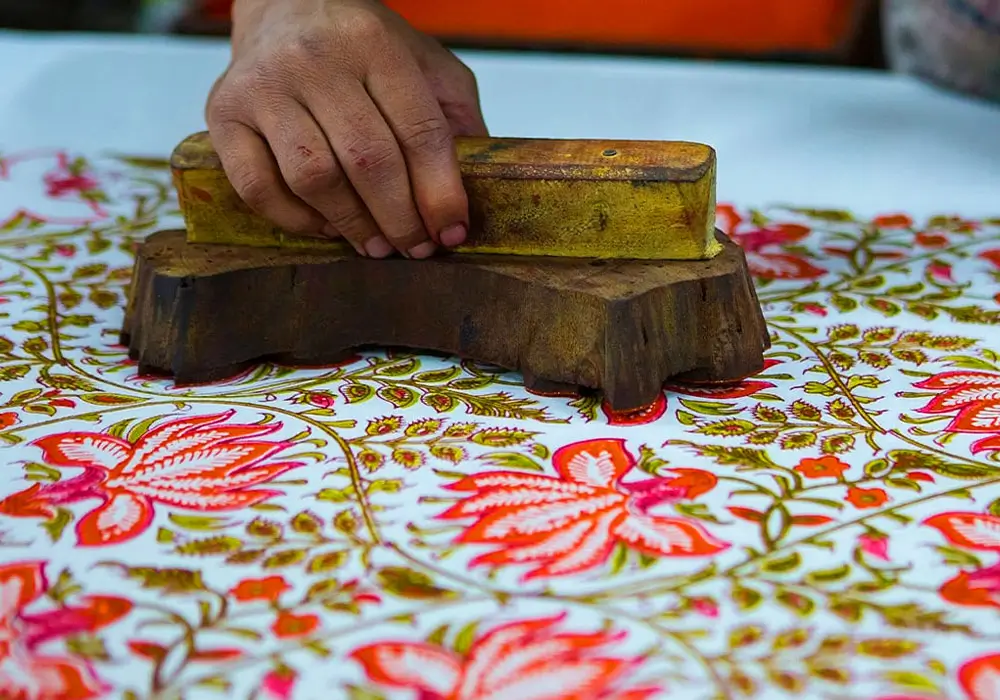
Almost every traveller to Jaipur goes home with something block printed: a bedspread from a shop in the old city, a cotton kurta, a set of napkins with tiny red flowers. Very few see where those prints come from. Two small towns on the edge of the city, Bagru to the west and Sanganer to the south, have been printing cloth by hand for centuries, and the families who do it still work in courtyards, on long padded tables and in open fields where fabric dries in the sun.
A block printing workshop in Jaipur takes you into one of those workshops with a master printer from the Chhipa community, the hereditary printers of Rajasthan. You see the whole chain: the carved wooden blocks, the dye pots, the mud-resist paste, the washing and the drying. Then you take a block in your own hand and print. The first impression is usually a little crooked. By the fifth you start to feel the rhythm, and you understand why a skilled printer can work all day without a ruler and still line every motif up perfectly.
This is a quiet, practical morning rather than a show. You will get dye on your fingers, you will ask a lot of questions, and you will leave with a piece of cloth that means far more than anything bought in a bazaar. If you want to buy more, you can do so directly from the family that made it, at a fair price and without any pressure.
1. Pickup from your hotel
Your private driver collects you from your Jaipur hotel after breakfast. Sanganer sits on the southern edge of the city, close to the airport, and Bagru lies further out along the Ajmer road, through scrub, small farms and roadside dhabas. Your guide uses the drive to explain the background, so you arrive knowing the difference between the two printing towns.
2. Meeting the printing family
You are welcomed into a family workshop. In Bagru this is often a home with a courtyard, dye vats at the back and fabric laid out on the open ground beyond. In Sanganer it may be a larger workshop with long tables under a roof. Tea arrives, and your host explains how printing has passed from father to son, and increasingly from mother to daughter, over many generations.
3. Looking at the blocks
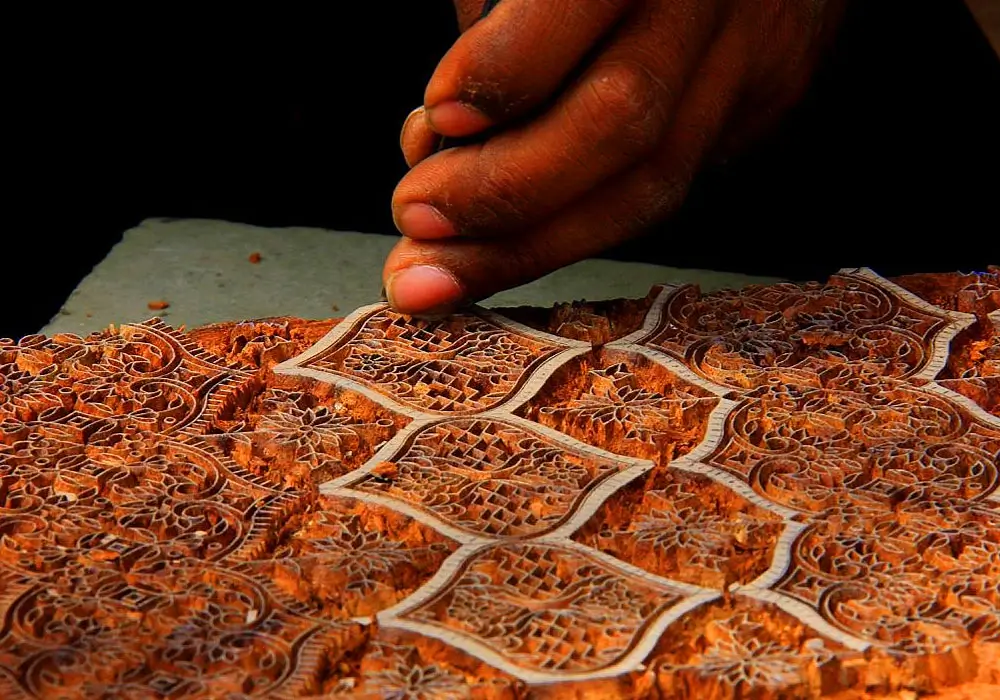
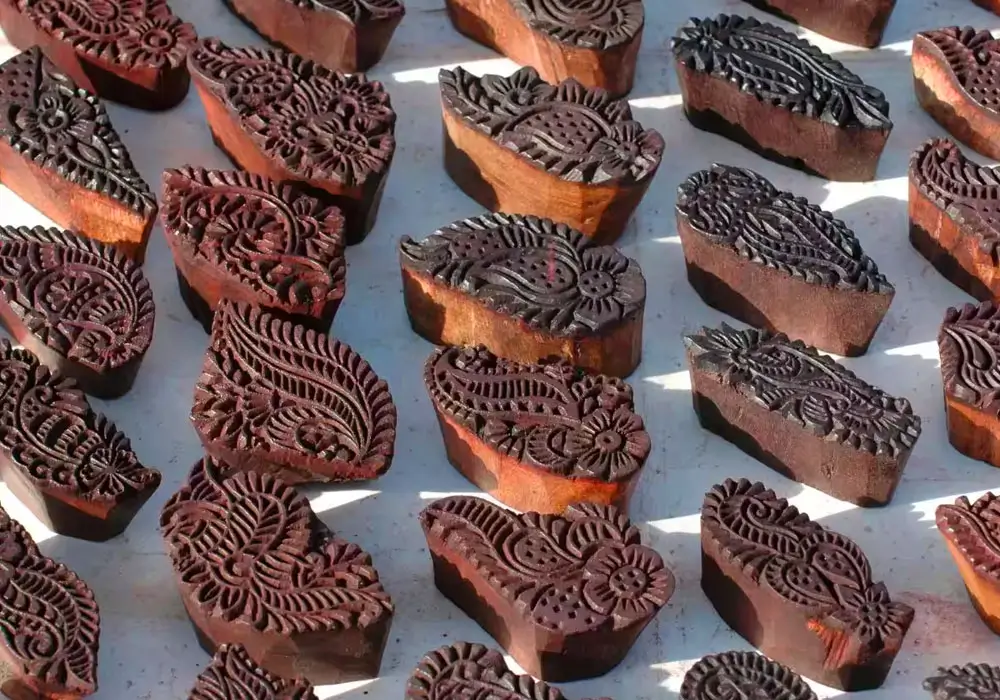
The master printer brings out the blocks: heavy pieces of sheesham wood carved with flowers, leaves, paisleys, birds and geometric borders. You learn that each design needs several blocks, one for the outline and others for each filling colour, and that they must match to a fraction of a millimetre. If a block carver works nearby, you may watch them cut a pattern with tiny chisels and a hand drill.
4. Seeing the dyes prepared
Next come the colours. In a natural dye workshop you see indigo, pomegranate rind, madder root, turmeric and the fermented iron solution used for black. Your host shows how a mordant fixes colour to the cotton and how the same dye can give different shades depending on what it is mixed with. In Bagru, you also see the dabu mud paste being mixed.
5. Watching a master at work
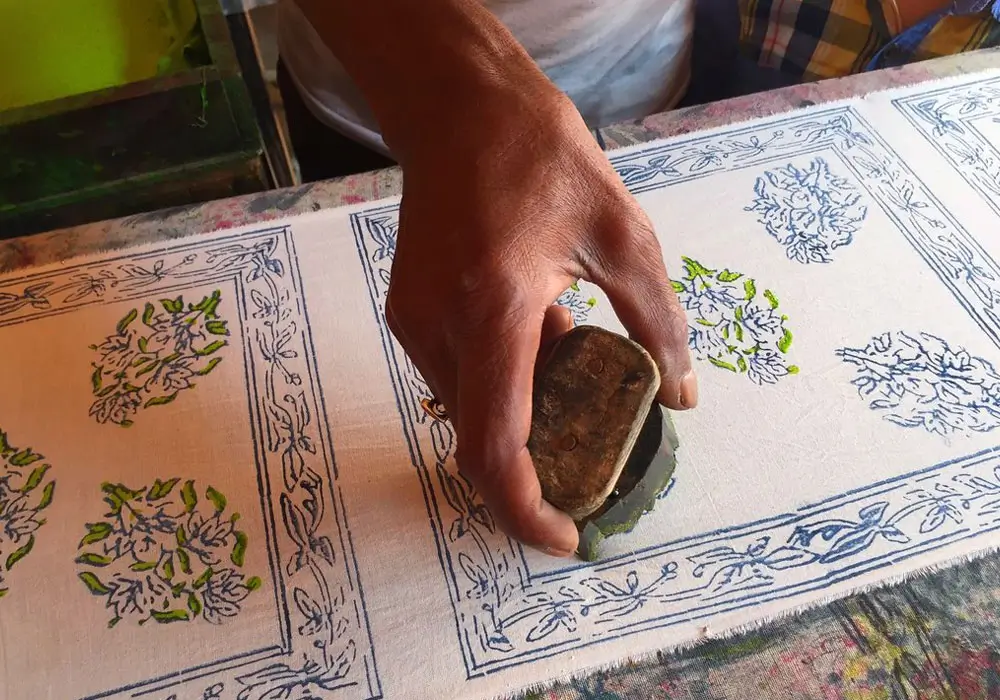
Before you try, you watch. The printer dips the block onto a tray of colour, places it on the cloth, and strikes the back of it firmly with the heel of the hand. Then lifts, dips, places and strikes again, so quickly that a border runs the length of a table in minutes. Ask them to slow down so you can see how they line up each impression using tiny pins or guide marks carved into the block.
6. Printing your own piece
Now it is your turn. You choose a design and a colour, and your host stretches a cotton scarf, stole or tote bag on the padded table for you. They guide your hand for the first few impressions, then let you carry on. You can keep it simple with one block, or build up a pattern with an outline and a filling colour. Children usually love this part.
7. Fixing, washing and drying
Depending on the dyes used and the time available, your piece may be steamed, sun-dried or set aside for the family to finish. You see how printed cloth is washed to remove excess dye and gum, then spread out in the sun. In Bagru, the sight of long lengths of fabric drying in the fields is one of the best moments of the day.
8. Shopping directly, if you wish
Most families have a small room of finished pieces: tablecloths, quilts, scarves, cushion covers and fabric by the metre. You are welcome to look, and welcome not to buy. If you do buy, the money goes straight to the people who made it.
9. Return or carry on
Your driver takes you back to Jaipur, or on to Amber for the Anokhi Museum of Hand Printing if you have added it to the day.
Both towns belong to the same Chhipa tradition, and both still print by hand, but they feel quite different. Your guide can take you to either, and with an early start and the right day of the week, it is possible to see a little of both.
Bagru: earthy colours and mud-resist. Bagru printing is known for darker, warmer grounds: indigo blue, rusty red, mustard, olive and black. The town is famous for dabu, a mud-resist technique in which clay paste is printed onto the cloth before dyeing so those areas stay pale. The patterns are bolder and more rustic, and natural dyes are still widely used. Bagru feels like a village, with open spaces, fields for drying and a slower pace.
Sanganer: fine prints on white. Sanganer is known for delicate, finely detailed motifs, often small flowers and buds scattered across white or pale grounds. The work is precise, with crisp outlines and lighter colours, and it is the style many people think of when they picture classic Jaipur bedding and table linen. Sanganer is larger and busier, with more workshops, and it is also known for handmade paper.
Which to choose? If you want natural dyes, dabu and a rural setting, choose Bagru. If you have less time, want to stay closer to the city, or love fine floral prints, choose Sanganer. Both Sanganeri and Bagru prints are recognised with geographical indication status, which protects the names of these regional crafts.
The Chhipa community. The Chhipa are the hereditary printers and dyers of Rajasthan and Gujarat. The name is linked to the act of stamping or pressing. Families in Bagru and Sanganer have done this work for generations, and much of the knowledge, especially about dye recipes and timings, is still passed on by practice rather than written down.
Carving the blocks. Blocks are carved from seasoned sheesham, a dense hardwood that holds fine detail and resists warping when it gets wet. A carver traces the design onto a smooth face, then cuts away the background with chisels, leaving the pattern standing in relief. Small holes are drilled through some blocks to let air escape so the colour prints evenly. A single set for a complex design can take many days, and an old block is treated with real care. Some families still keep blocks that belonged to their grandfathers.
Dabu mud-resist. Dabu is the signature of Bagru. The paste is made from local black clay mixed with lime, gum and wheat husk, though each family has its own recipe. It is printed onto the fabric with a block, then sprinkled with sawdust so it does not smudge, and left to dry. When the cloth is dipped into indigo or another dye, the mud stops the colour reaching those areas. After washing, the pattern appears pale against the dark ground, often with fine crackle lines where the mud split slightly. Some cloth goes through the process two or three times to build up layers.
Natural dyes. Before chemical dyes arrived, printers used what the land and markets gave them: - Indigo for blues, from pale sky to almost black. Cloth comes out of the vat green and turns blue as it meets the air. - Pomegranate rind for yellows and, combined with iron, for greens and greys. - Madder root for reds, pinks and browns, brought out by an alum mordant. - Iron-based black, traditionally made by fermenting scrap iron with jaggery and water, for crisp black outlines. - Turmeric for bright, cheerful yellows that soften with washing.
Many workshops now use a mix of natural and synthetic dyes, which is a practical choice and not something to be ashamed of. A good host will tell you honestly which is which.
Washing and sun-drying. Printed cloth is washed several times, first to remove gum, mud and loose dye, then to soften and brighten it. It is then laid flat or hung in the sun. Sunlight helps develop some natural colours, so drying is part of the dyeing, not just the last chore. Water is precious in Rajasthan, and many workshops now think carefully about how they use and treat it.
You leave with a piece you printed yourself. The most popular choices are: - A cotton scarf or stole, light enough to pack and useful on the rest of your trip. - A tote bag, sturdy and practical for shopping in the bazaars. - A cushion cover or table runner, if the family has these ready to print.
Your host suggests a block that suits your skill level. A single repeating motif is the easiest and still looks lovely. Two blocks, an outline and a fill, take more care because the second has to sit exactly inside the first. If you are travelling with children, they can usually print a small handkerchief or bag of their own.
Some pieces can be finished and handed to you the same day. Others, especially if they use natural dyes that need time to set, may need to dry overnight. In that case we arrange for your piece to be brought to your hotel, so you do not have to come back for it.
We want this to be a workshop visit, not a shopping trip in disguise. That means a few simple promises: - You are never expected to buy. The workshop is the experience. Looking at the family’s finished pieces is optional. - No commission games. We take you to families because of the quality of their work and the way they welcome guests, not because of what they pay us. - Prices are fair, not inflated. Buying direct usually means a better price than a city showroom, and the money goes to the makers. Gentle bargaining is normal in India, but there is no need to push hard in a family workshop. - Ask about dyes. If a piece is sold as natural dye, it is reasonable to ask which colours are natural. A good printer will be proud to explain. - Shipping. If you buy something heavy, like a quilt or a large tablecloth, ask the family whether they can ship it. Many already send orders abroad.
Hand-printed cloth has small irregularities, a slightly uneven border, a faint overlap where two blocks meet. These are signs of hand work, not faults. Machine prints and screen prints are perfectly even, which is one easy way to tell them apart in the market.
If you want to see the history behind the craft, add a visit to the Anokhi Museum of Hand Printing in Amber, a short drive from Amber Fort. The museum sits in a restored haveli on a quiet lane and gives a clear, beautifully displayed introduction to block printing, from carved blocks and dye samples to historic textiles. There are often live demonstrations by block carvers and printers, and a small shop.
Practical points to plan around: - The museum is closed on Mondays, and on some national and local holidays. - It also closes for its annual maintenance break over the hottest part of the summer, generally from the end of May until mid July. - Opening hours are shorter on Sundays than on other days.
Because of the Monday closure, we plan the day so the museum falls on a Tuesday to Sunday. It pairs very well with a morning at Amber Fort, followed by lunch, then the museum in the afternoon. Doing the museum first and a workshop the next day also works well, because you arrive at the printers already knowing what to look for.
October to March. The best months for a printing workshop. Mornings are pleasant, the sun is strong enough to dry fabric quickly, and working outdoors in Bagru is comfortable.
April to June. Hot, often very hot by midday. Workshops still run, but choose an early start and keep the visit shorter. Remember that the Anokhi Museum closes for part of this period.
July to September. The monsoon. Printing continues under cover, but drying in the open fields depends on breaks in the rain. Natural dye work can be slower when the air is humid. The countryside around Bagru is green and fresh, which has its own appeal.
Day of the week. Family workshops sometimes slow down on festival days and during weddings in the family. We check with the hosts before confirming your date. If you want the museum as well, avoid Mondays.
Give it half a day. A workshop with travel time fills a morning or an afternoon. Adding the Anokhi Museum turns it into a relaxed full day.
Pair it with Amber. Combine an early visit to Amber Fort, perhaps on an Amber Fort sunrise jeep tour, with the museum, then save Bagru or Sanganer for the next morning.
Build a crafts day. Combine block printing with a blue pottery class or a gemstone and jewellery workshop. Two hands-on crafts in one day is plenty; three becomes tiring.
End with food. A cooking class with a local family in the evening makes a warm, sociable contrast to a day of focused work.
On a Golden Triangle tour. With two or three nights in Jaipur, a printing workshop fits neatly alongside the City Palace, Hawa Mahal and Amber. We place it where it suits the rest of your plan.
Bring and wear - Clothes you do not mind getting dye on - Comfortable closed shoes for courtyards and fields - Sun hat and sunscreen for Bagru - Hand wipes or a small towel - Some cash in small notes if you might buy - A light bag for your finished piece
Leave behind - White or delicate clothing - Jewellery that might catch on fabric or dip in dye - Expectations of perfection on your first print - Any feeling that you must buy something
Tell us your Jaipur dates and whether you prefer Bagru, Sanganer or both, and we will arrange a private workshop with a printing family and fit in the Anokhi Museum on a day it is open.
Call & WhatsApp +91-9828085426 or email info@topindianholidays.net.
See more ideas on our Top Experiences in India page.
Tell us your travel dates and we will check availability and fit this experience into the right day of your itinerary. Reply within 12 hours.
Check Availability› Chat on WhatsApp› Send an Enquiry›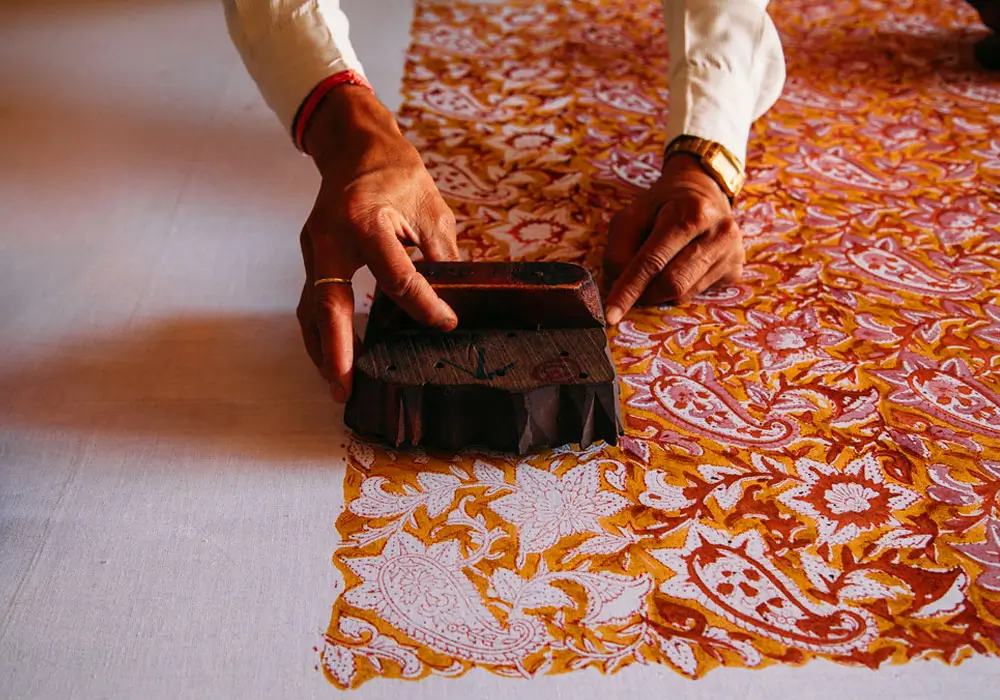
 🌙 12 Nights / 13 Days
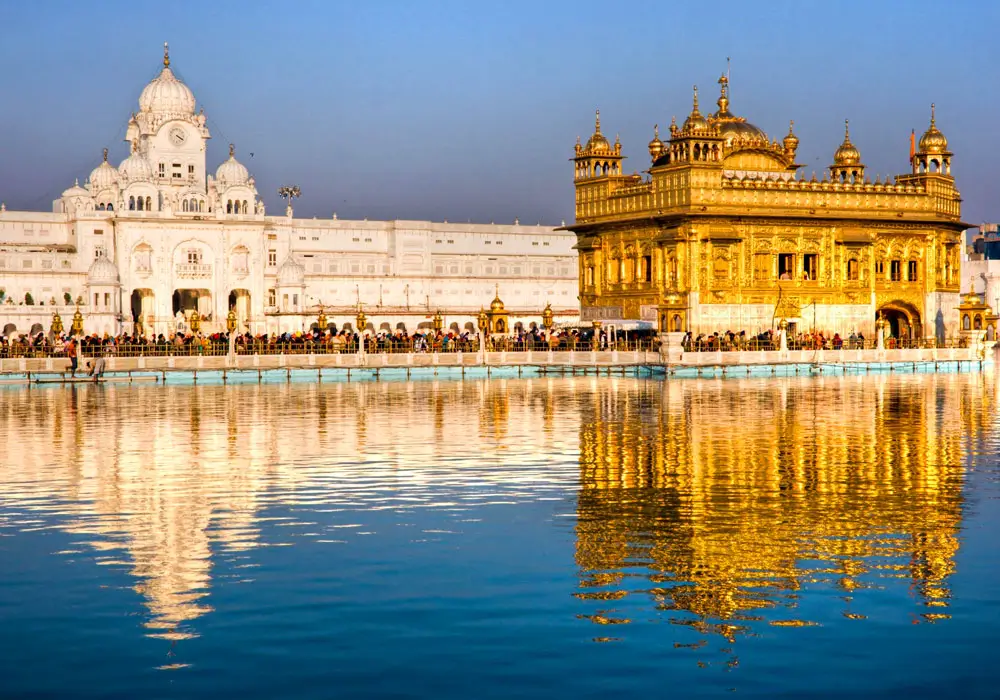
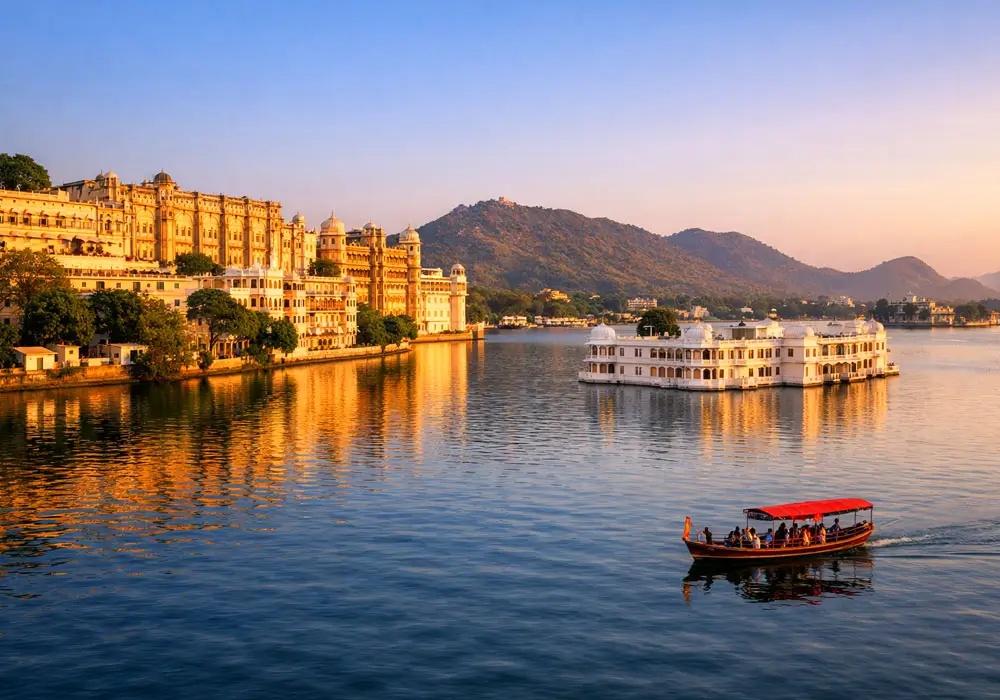
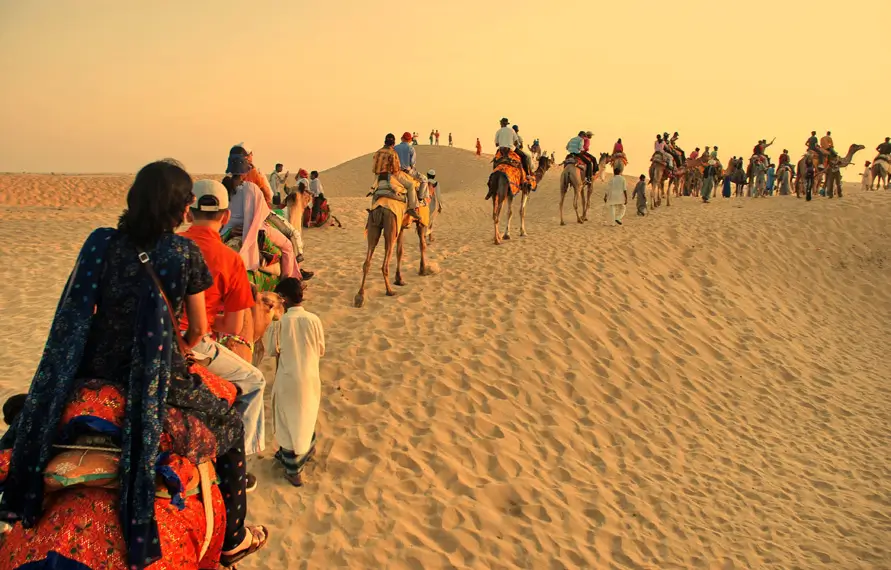
Delhi - Mandawa - Bikaner... Delhi - Mandawa - Bikaner - Nagaur - Osian - Barmer - Jaisalmer - Jodhpur - Ranakpur - Udaipur Show More
 🌙 13 Nights / 14 Days
⭐ Most Popular
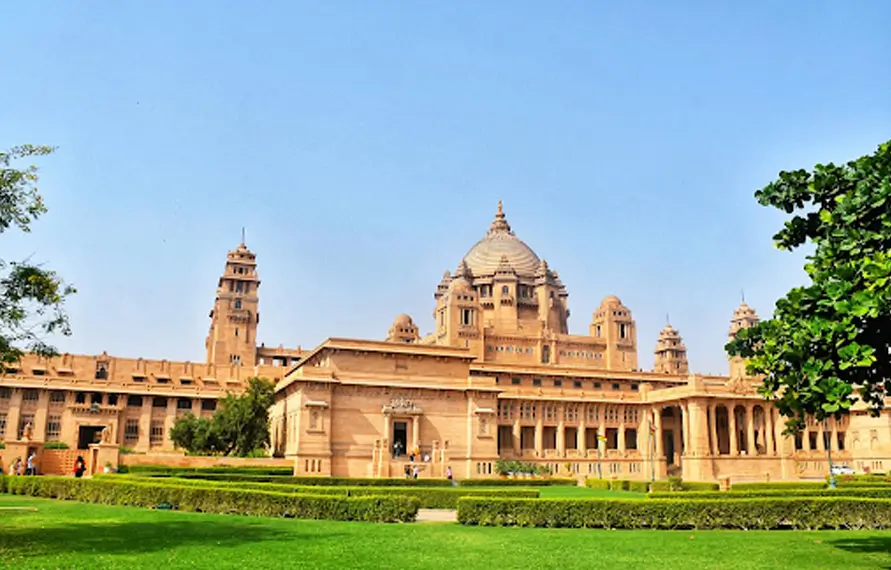
Delhi - Agra - Ranthambhore... Delhi - Agra - Ranthambhore - Jaipur - Jodhpur - Narlai - Udaipur Show More
 🌙 09 Nights / 10 Days
⭐ Most Popular
Jaipur - Raisar - Bikaner... Jaipur - Raisar - Bikaner - Jaisalmer - Jodhpur - Pushkar - Jaipur Show More
 🌙 14 Nights / 15 Days
Delwara - Narlai - Raipur... Delwara - Narlai - Raipur - Jodhpur - Nimaj - Jaipur - Delhi Show More
Yes. With at least two nights in Jaipur, a half-day printing workshop fits easily alongside the main sights. We place it on the day that works best with Amber Fort and the museum.
It is possible with an early start, but it makes for a rushed day. Most guests enjoy one workshop properly, then add the Anokhi Museum or another craft. Tell us your interests and we will suggest the best balance.
Wear comfortable clothes you do not mind marking, because dye can splash and some colours are permanent. Closed shoes are best for courtyards and drying fields, and a hat helps in Bagru’s sun.
Often, yes. Some dyes need time to dry or set, especially natural dyes in humid weather. If your piece is not ready, we arrange for it to be brought to your Jaipur hotel.
Hand prints have small irregularities: slight overlaps where blocks meet, tiny variations in colour, borders that are almost but not perfectly straight. Machine and screen prints are completely even. The back of hand-printed cloth also usually shows the colour less sharply.
No. The workshop is the experience, and buying is entirely optional. If you do want to buy, you pay the family directly at a fair price, without a showroom mark-up.
Very. Children enjoy stamping patterns and usually print a small bag or handkerchief of their own. Tell us their ages and we will let the family know so they can prepare.
Yes, especially if you want the history behind the craft. It is in a restored haveli in Amber, close to Amber Fort, and often has live printing and carving demonstrations. It is closed on Mondays and for a break in the summer, so we plan around that.
Many Bagru workshops still use natural dyes such as indigo, pomegranate rind, madder and an iron-based black. Some use a mix of natural and synthetic dyes. We choose families who are open about which they use, and you can always ask.
Dabu is a mud-resist technique from Bagru. A paste of clay, lime, gum and husk is printed onto the cloth, which is then dyed. The mud stops the dye reaching those areas, leaving a pale pattern on a dark ground, often with fine crackle lines.
It depends on the workshop and how much you want to print. Including the drive from Jaipur, plan for half a day. Adding the Anokhi Museum makes it a comfortable full day.
Yes. Printing your own piece is the heart of the workshop. Most guests print a cotton scarf, stole or tote bag, with the printer guiding them through the first few impressions.
Bagru is known for earthy, darker colours, natural dyes and dabu mud-resist printing. Sanganer is known for finer, more delicate motifs printed on white or pale backgrounds. Both are hand printed with carved wooden blocks by the Chhipa community.
The best places are Bagru and Sanganer, two traditional printing towns on the edge of Jaipur. Sanganer is around 40 minutes from the centre and Bagru around an hour, depending on traffic. We arrange a private workshop with a family of master printers in either.
Whether you're planning your first India trip or returning to explore deeper, get honest, expert advice from someone who knows every corner of this country. No pressure, no cost.