


 info@topindianholidays.net
 +91-8955000999

Hot Air Balloon Ride in Jaipur
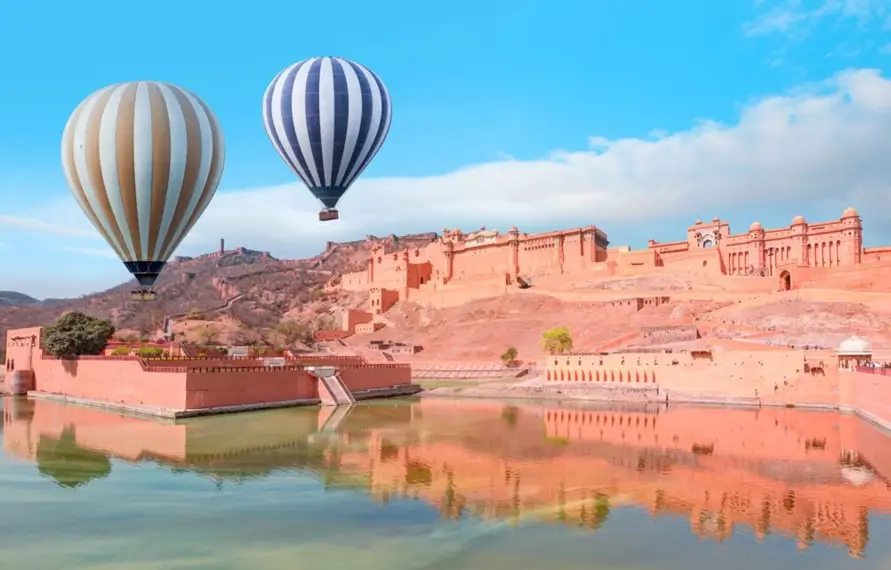
Lift off as the sky turns orange and drift over villages, mustard fields and the Aravalli hills while Jaipur is still waking up.
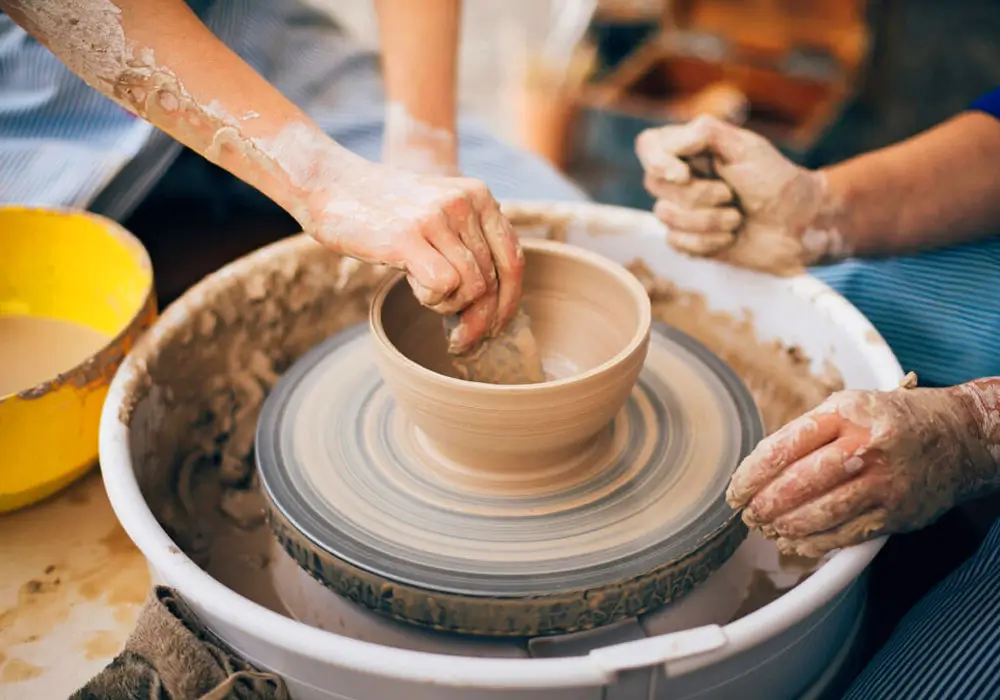
View Experience ›Sit at a workshop bench with a Jaipur potter, shape a piece from quartz paste and paint it in the cobalt blue and copper green that made this craft famous.
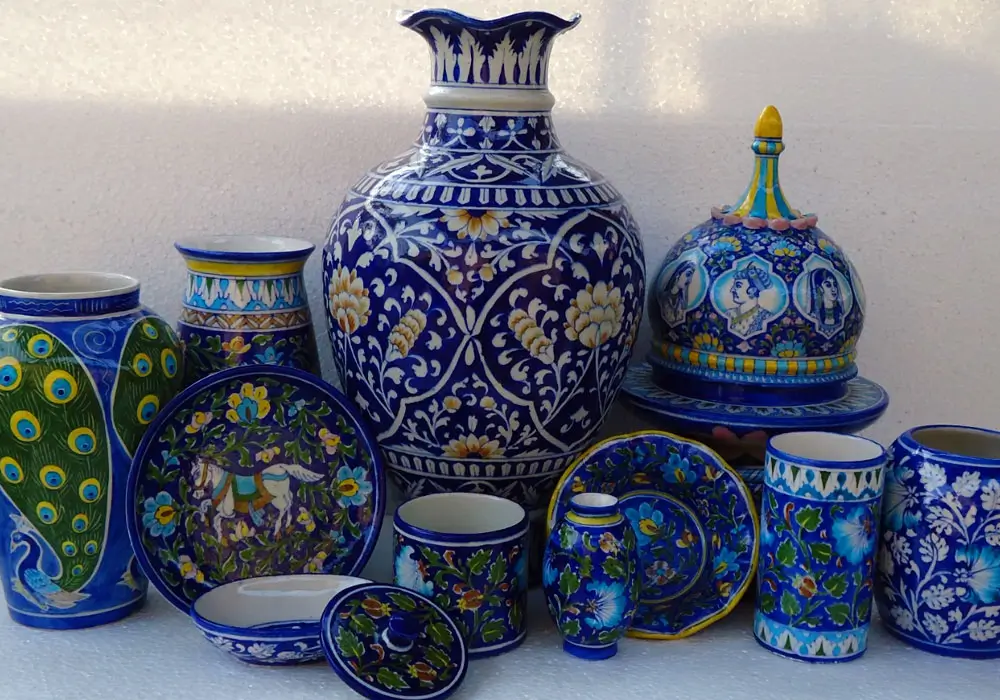
Walk through any shop in Jaipur’s old city and sooner or later you will see it: plates, vases, door knobs and tiles in a deep cobalt blue on a white ground, painted with flowers, birds and twisting vines. Blue pottery is one of the crafts most closely tied to Jaipur, and one of the most unusual in India, because it is not really pottery in the usual sense at all. There is no clay on the wheel. Instead, the body is made from a paste of ground quartz, powdered glass, Multani mitti (Fuller’s earth), borax and natural gum, pressed into moulds and shaped by hand.
That difference is what gives blue pottery its glassy shine and its delicate, almost porcelain feel. It is also what makes it difficult. The paste has very little plasticity, so it cannot be thrown on a wheel like clay, and it cracks easily if handled carelessly. Only a few families and workshops in and around Jaipur still make it in the traditional way, and watching them work explains why the finished pieces cost what they do.
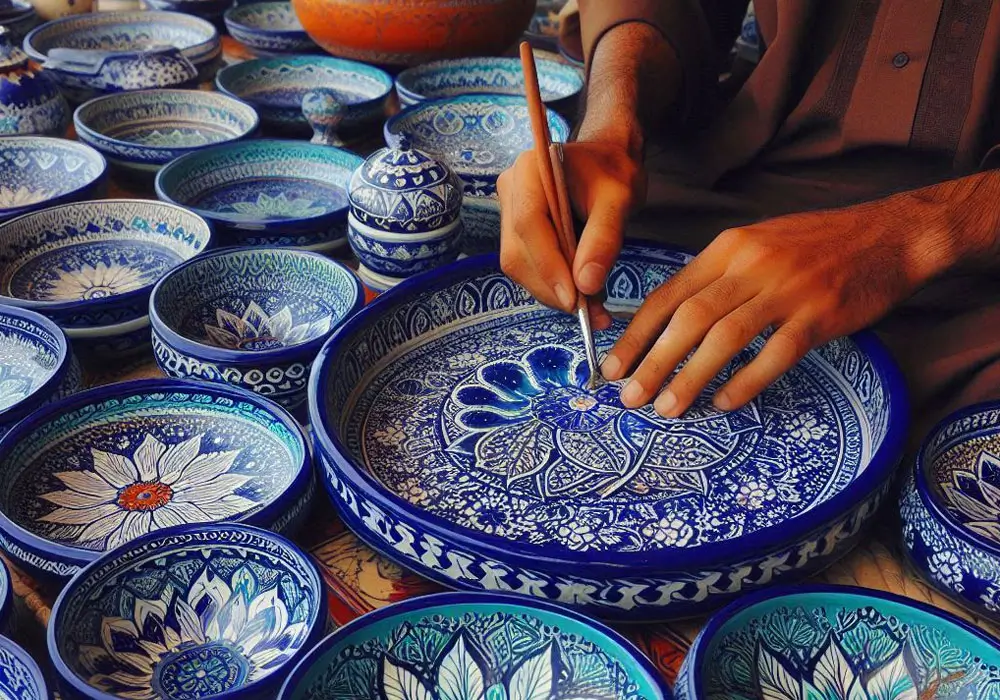
A blue pottery class in Jaipur lets you sit at the bench beside one of these artisans. You learn how the dough is mixed, try shaping a small piece, then spend most of your time on the part guests enjoy most: painting your own tile, coaster or small plate with cobalt and copper oxides, using fine squirrel-hair or goat-hair brushes. It is calm, absorbing work, suitable for complete beginners, and it gives you a souvenir that genuinely came from your own hand.
We arrange the class privately with working artisans, so your time and your purchase go straight to the people who keep this craft alive.
1. Pickup from your hotel
Your private driver brings you from your hotel to the workshop. City workshops are a short drive from most hotels. If you choose Kot Jewar village, the drive takes you out into the countryside beyond the city.
2. Meeting the artisan
You are welcomed into the workshop, often a family home with a work area in the courtyard or on the ground floor. Your guide introduces the artisan and translates throughout. Expect a cup of chai while you look at finished pieces and pieces at every stage of making, laid out on shelves and drying racks.
3. The raw materials
The artisan shows you the ingredients: white quartz powder, crushed glass, Fuller’s earth, borax and a gum that binds it all together. You see how they are mixed with water into a stiff dough, then rolled into a flat sheet like pastry. Ask questions here. The proportions are often family knowledge passed down for generations.
4. Shaping a piece
The dough sheet is pressed into a plaster or clay mould, and the inside is packed with a filler of ash or sawdust to hold the shape while it dries. You try this yourself on a small piece. Bowls and vases are made in halves and joined, and the artisan shows you how the joins are smoothed so they never show once painted.
5. Smoothing and the white coat
Once a piece has dried, it is rubbed smooth with sandpaper and dipped in a fine white slip made from quartz and glass. This white base is what the colours will be painted on. Because shaping and drying take days, you usually paint on a piece that the artisan has already prepared to this stage.
6. Painting your design
This is the heart of the class. The artisan sketches a traditional motif or helps you plan your own, then shows you how to load the brush and draw a smooth line. The cobalt oxide looks grey or dull blue when wet, so it takes a little faith: the deep blue only appears after firing. You may add green from copper oxide, or other colours such as yellow or brown, depending on the workshop.
7. Glazing
Once the paint is dry, the piece is dipped in a clear glaze. The artisan usually does this step for you, as it needs a steady hand and the right thickness.
8. Into the kiln
Blue pottery is fired at a relatively low temperature in a traditional kiln, and the firing and cooling cycle takes time. Kilns are fired when they are full, not for a single piece. You will see the kiln and hear how it works, but your own piece will not be ready that day.
9. Collecting your piece
Depending on your schedule, your finished piece can be collected later in your stay or sent on to you. We sort out the arrangement with the workshop before your class so you know what to expect.
No clay on the wheel. Most pottery in the world is clay shaped on a wheel. Jaipur blue pottery is a quartz-based ceramic, pressed into moulds by hand. That is why you will not see a potter’s wheel in most workshops.
Low firing. The pieces are fired at a lower temperature than most stoneware, which keeps the colours bright and the surface glassy. It also means the finished pieces are more fragile than ordinary crockery.
Natural colours. The classic palette comes from metal oxides: cobalt for blue and copper for green. Some workshops also use other mineral colours for yellow, brown or white highlights.
Hand painting. Every piece is painted freehand. Look closely and you will see small differences between two plates of the same design. That is a sign of real handwork, not a fault.
Light and slightly translucent. Pick up a good piece and it feels lighter than you expect. Hold a thin bowl to the light and you may see the glow through the walls.
Patience at every stage. From mixing the dough to taking a finished piece out of the kiln, a single item passes through many hands and many days. Drying alone can take a long time in the cooler months, and a piece that cracks at any point has to be started again. When you watch the artisan rubbing down a dried bowl with sandpaper, or carefully lifting a glazed plate onto a kiln shelf, you start to understand why skilled makers are proud of their work and why so few young people take it up.
Colours ground by hand. In many workshops the oxides are still ground on a stone with a little water and gum until they are fine enough to flow from the brush. A badly ground colour leaves specks and streaks after firing, so this unglamorous step matters more than it looks. Ask to try it for a minute or two.
The technique behind blue pottery has its roots in Persia and Central Asia, where glazed tiles in blue and turquoise covered mosques, tombs and palaces. The craft travelled into India with the Mughals and their artisans, and you can see its relatives in the tilework of monuments across north India.
In Jaipur, the craft is generally said to have found royal support in the nineteenth century under the rulers of the city, who encouraged artisans and brought the work into the city’s palaces and buildings. Over the following decades, though, demand fell away, and by the middle of the twentieth century very few people were still making it.
Its revival is widely credited to the artist Kripal Singh Shekhawat, who worked to bring the craft back from around the 1960s, with support from patrons of Jaipur’s arts at the time. He trained artisans, experimented with new designs and colours, and helped blue pottery become the recognisable Jaipur craft it is today. Some families in and around Jaipur also kept their own traditions going through those years, and different workshops tell the story in slightly different ways. Your artisan will often share their own family’s version, which is part of the pleasure.
City workshops. Most classes take place in small workshops within Jaipur. They are close to your hotel, easy to fit around sightseeing, and you can often see a wide range of finished pieces. A city workshop suits a half day, or a morning before an afternoon at the City Palace.
Kot Jewar village. Kot Jewar, outside Jaipur, is known as a village of blue pottery makers, where the craft is part of daily life for a number of families. A visit here adds a rural drive and a sense of how the craft lives in a village setting. It takes longer, so it works best when you have a free day or are combining it with other countryside experiences.
Both give you the same core class: seeing the materials, shaping and painting your own piece. We suggest the one that fits your time and interests.
Language and the guide. Most artisans speak Hindi and the local dialect, with some English. Your guide stays with you throughout to translate, explain the steps and help the conversation along, so you can ask about the artisan’s family, training and the future of the craft as well as the technique.
Beginners usually paint a flat piece, as it is the easiest surface to work on and the most likely to come out well.
Traditional motifs include flowering vines, lotus and other flowers, birds such as peacocks, and geometric borders borrowed from Mughal design. You are free to paint your own design too, from your initials to your family pet. Many guests do a traditional border with something personal in the middle.
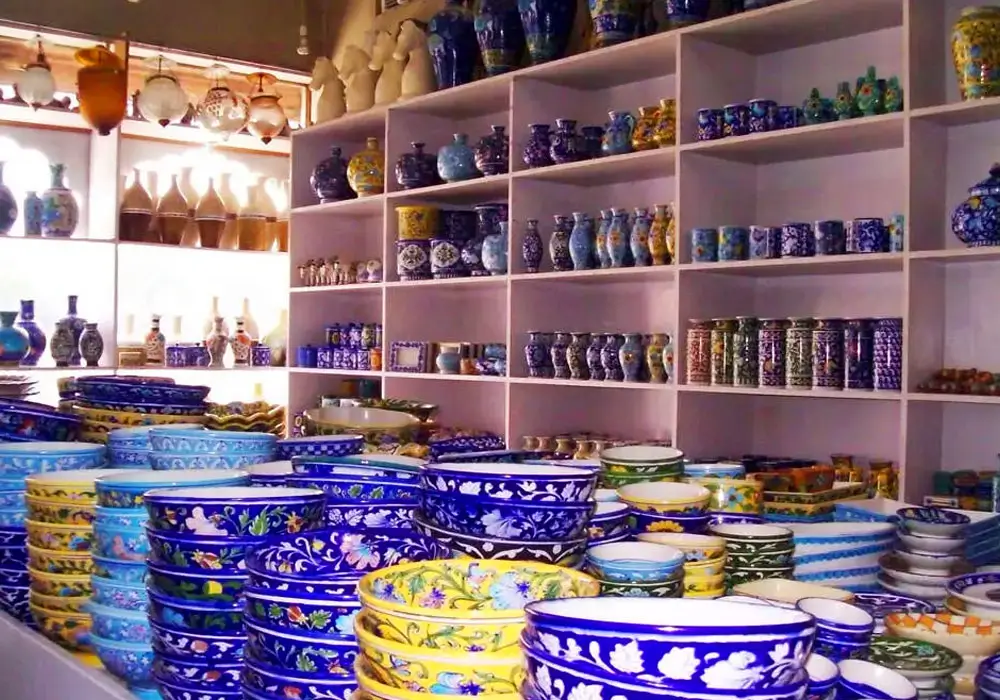
Buy from the workshop if you can. After the class you may want to buy a few pieces. Buying directly from the people who made them means more of your money stays with the artisan. There is no pressure to buy anything on our visit.
Check what you are buying. Some cheaper pieces sold as blue pottery are machine-made or printed ceramics. Real pieces are hand-painted and slightly irregular, feel light for their size and have a smooth glassy glaze.
Use it with care. Blue pottery is better as decoration than daily crockery. Tiles, vases, door knobs and drawer pulls are popular because they travel well and suit everyday use. Ask the artisan whether a piece is suitable for food.
Packing tips for fragile pieces. - Ask the workshop to wrap each piece separately in bubble wrap or thick paper. - Pack plates on their edge rather than flat, with something soft between them. - Fill hollow pieces such as bowls and vases with socks or soft clothing. - Carry the most precious pieces in your hand luggage, padded in clothes. - Avoid putting heavy items on top of pottery in your suitcase. - If shipping, ask the workshop about how they pack and send, and about insurance. Arrangements vary, so we help you agree the details before you pay.
Do it early in your Jaipur stay. If you paint your piece on your first or second day, there is a better chance it can be fired and collected before you leave. Otherwise it can be sent on.
Make it a craft day. Combine the class with a block printing workshop in Bagru or Sanganer or a gemstone and jewellery workshop for a day of Jaipur’s best-known crafts.
Mix it with sightseeing. A morning class pairs well with an afternoon at the City Palace and Jantar Mantar, or with a Pink City heritage walk, where you can look for old tilework on the buildings.
Balance it in the evening. After a quiet morning at the bench, a cooking class with a local family or a tuk tuk ride through the Pink City makes a lively contrast.
On a Golden Triangle tour. With two or three nights in Jaipur, a class fits easily into a Delhi, Agra and Jaipur itinerary. If you are heading on to Agra, you may enjoy a marble inlay workshop as a companion craft.
Bring and wear - Clothes you do not mind getting a spot of paint or dust on - A design idea, a photo or a sketch if you want something personal - Glasses if you need them for close work - A phone or camera for the demonstration - Your shipping address if you may want your piece sent on
Leave behind - Your best white shirt - Long loose sleeves that can drag across wet paint - Rings and bracelets that catch on the work - Any rush: painting goes best when you are relaxed
Tell us your Jaipur dates and whether you would like a city workshop or a village visit, and we will arrange a private class with a blue pottery artisan.
Call & WhatsApp +91-9828085426 or email info@topindianholidays.net.
See more ideas on our Top Experiences in India page.
Tell us your travel dates and we will check availability and fit this experience into the right day of your itinerary. Reply within 12 hours.
Check Availability› Chat on WhatsApp› Send an Enquiry›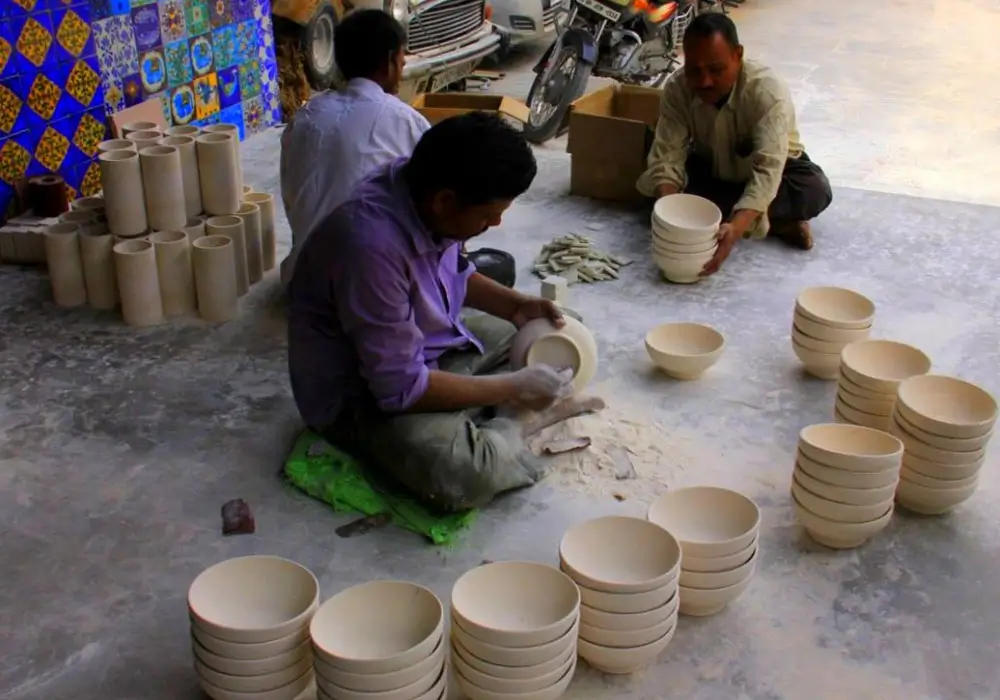

 🌙 01 Day
 🌙 07 Nights/08 Days
Delhi - Agra - Jaipur... Delhi - Agra - Jaipur - Delhi Show More
 🌙 05 Nights/06 Days
Delhi - Agra - Jaipur Delhi - Agra - Jaipur Show More
 🌙 04 Nights / 05 Days
Jaipur - Ajmer - Pushkar... Jaipur - Ajmer - Pushkar - Jaipur Show More
Yes. A half-day class fits easily into a two or three night stay in Jaipur. Book it early in your stay so there is more chance of collecting your fired piece before you leave.
Yes. You can follow a traditional motif or paint something personal, such as initials, a date or a simple picture. Many guests combine a traditional border with a personal centre.
Genuine pieces are hand-painted, slightly irregular and light for their size, with a glassy glaze. Very uniform designs, heavy bodies or printed patterns usually mean machine-made ceramic.
Ask the shop to wrap each piece separately, fill hollow pieces with soft clothes and pack plates on their edge. Carry precious pieces in your hand luggage, well padded, and keep heavy items away from them.
It is mostly made for decoration. Some pieces are suitable for dry foods or occasional use, but it is more fragile than everyday crockery. Ask the artisan about any piece you plan to use at the table.
The revival is widely credited to the artist Kripal Singh Shekhawat, who worked to restore the craft from around the 1960s. Some artisan families also kept the tradition alive, and workshops often tell their own family history alongside his.
Kot Jewar is a village outside Jaipur known for families who make blue pottery. A class there adds a countryside drive and a look at how the craft fits into village life, so allow more time.
There are several small family workshops in the city and in Kot Jewar village outside Jaipur. We choose a working artisan who teaches well and suits your schedule, rather than a large showroom.
Yes. Children who like painting usually love it. Simple bold designs work best, and younger children may need a parent or the artisan to help with the fine brushes.
No. The class is designed for beginners. The artisan shows you each step and helps with brushwork, and most guests are surprised by how well their first piece turns out.
Many workshops can pack and send pieces abroad. Arrangements, costs and timings vary, so we agree the details with the workshop before your class and make sure you know what to expect.
Usually not. Each piece has to be glazed, fired and cooled, and kilns are fired in batches. Your piece can be collected later in your stay if timing allows, or sent on to you.
The price depends on the workshop, the length of the class, your group size and whether you visit Kot Jewar village. We quote the current price for your exact dates, including transfers and your guide.
It is made from a paste of quartz powder, powdered glass, Multani mitti (Fuller’s earth), borax and gum, rather than ordinary clay. The colours come from metal oxides, mainly cobalt for blue and copper for green.
Whether you're planning your first India trip or returning to explore deeper, get honest, expert advice from someone who knows every corner of this country. No pressure, no cost.