


 info@topindianholidays.net
 +91-8955000999

Hot Air Balloon Ride in Jaipur
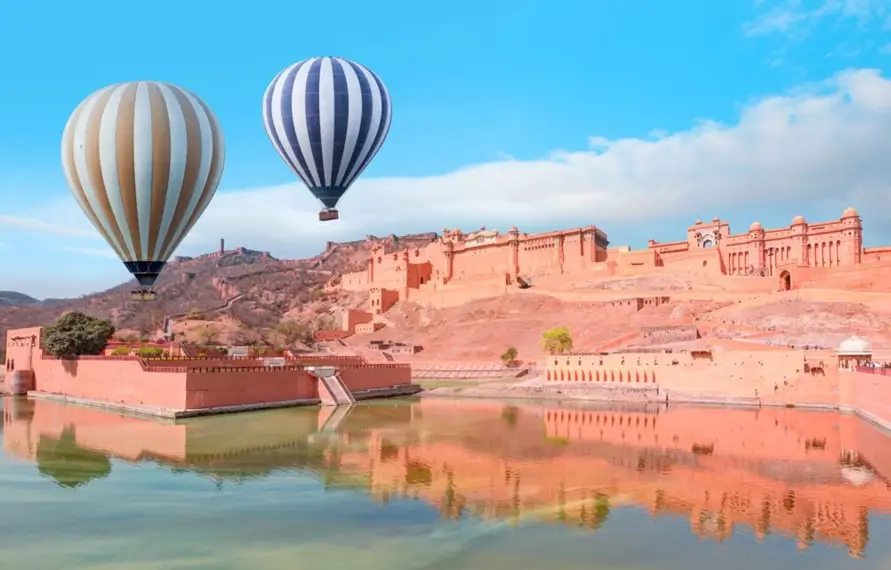
Lift off as the sky turns orange and drift over villages, mustard fields and the Aravalli hills while Jaipur is still waking up.
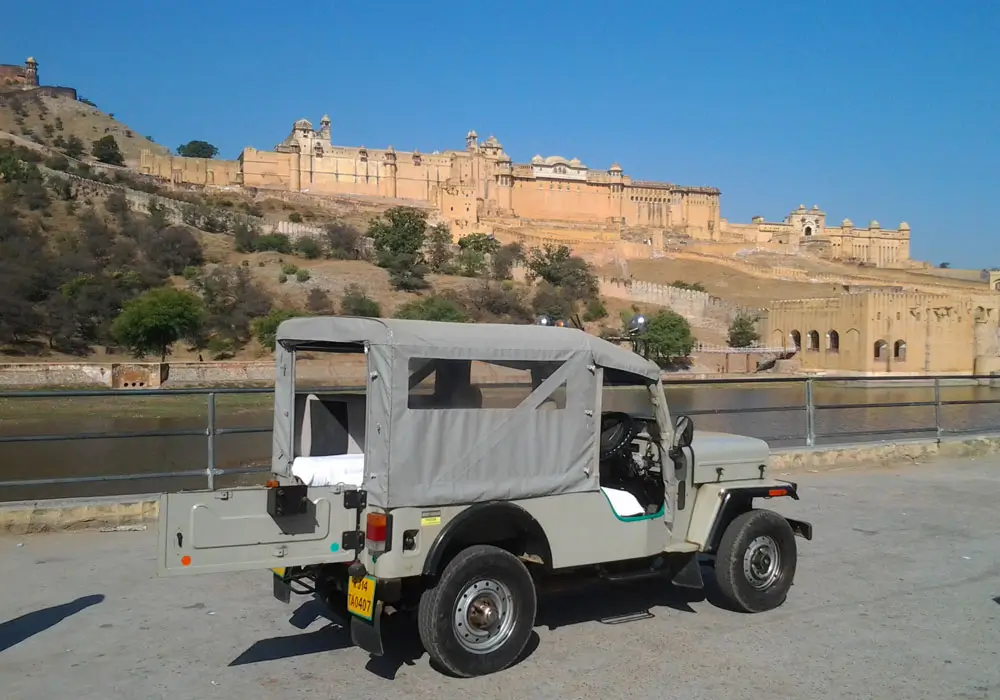
View Experience ›Watch the sun climb over the Aravalli ridge and Maota Lake from a quiet spot in old Amer, then ride a jeep up the hill and be among the first inside the palace when the gates open.
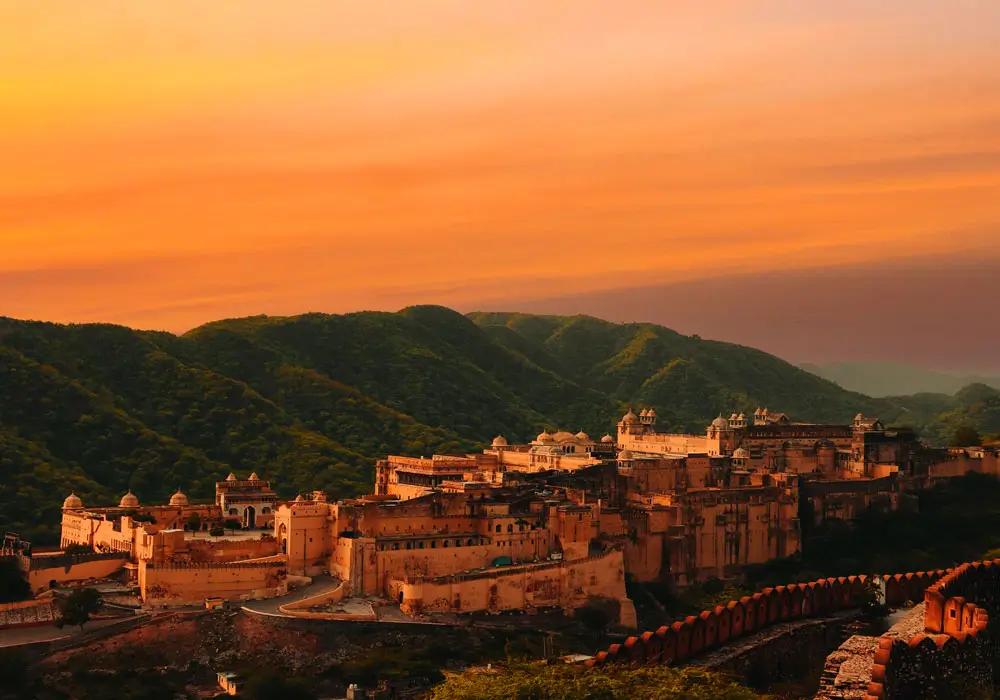
Amber Fort is the place almost every visitor to Jaipur goes, and most of them go at the same time. By mid-morning the car park is full, coaches queue on the Delhi road, and the courtyards around the Sheesh Mahal fill with groups following raised umbrellas. The fort is still impressive at that hour, but it is hard to stand still long enough to notice the detail.
This amber fort sunrise tour is built around a simple idea: arrive before everyone else. We should be honest about one thing first. The palace itself does not open at dawn. Its gates open at 8:00 am, which in winter is roughly an hour after the sun has come up and in summer is well over two hours after. So rather than pretending you will be inside the walls at first light, we use that early window for what it is good for. You drive out to Amer in the dark, watch the sun come up over the ridge, the ramparts and Maota Lake from a quiet viewpoint, take tea in the old town as it wakes, and then ride a jeep up the hill so that you are at the gate, ticket in hand, when it opens.
The reward is the first hour inside. The Diwan-i-Aam is empty enough to hear your own footsteps, the mirror work in the Sheesh Mahal catches low, angled light, and you can walk the zenana corridors without being swept along. By the time the coaches arrive you are heading back down, perhaps to the Panna Meena ka Kund stepwell or up to Jaigarh, and the rest of your Jaipur day is still ahead.
It also matters how you get up the hill. Elephant rides still operate at Amber, but we do not offer or support them. The jeep road is quicker, kinder and frankly more comfortable. If you want to see elephants in Jaipur, we arrange a visit to an ethical elephant sanctuary where the animals are not ridden.
1. An early pickup from your hotel
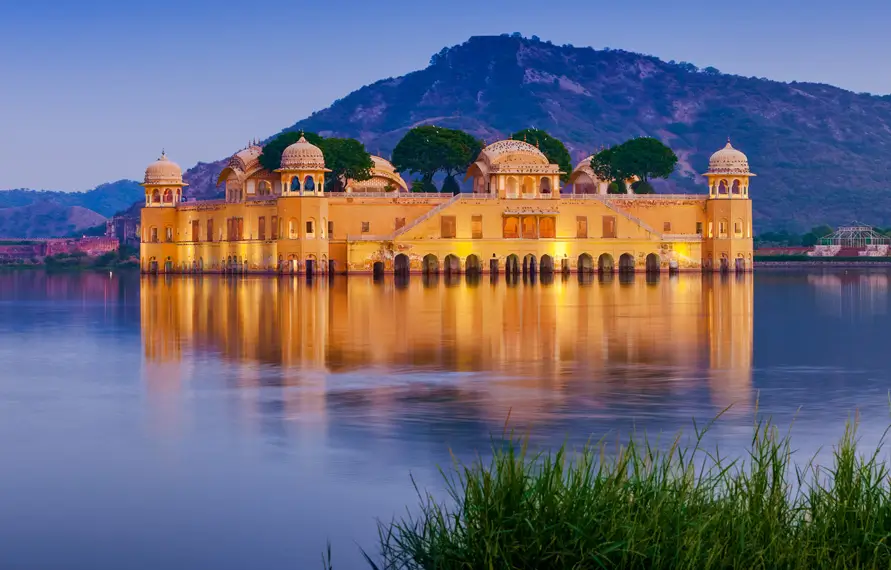
Your private driver collects you from your Jaipur hotel before sunrise. The exact time moves through the year with the sun, and we confirm it the evening before. The roads north out of the city are almost empty at this hour, so the drive along the Amer road past Jal Mahal is quick. In the half-light you will see the water palace sitting low in Man Sagar Lake, with the hills dark behind it.
2. A viewpoint for the sunrise
Before the fort opens, there is no point waiting at its gate. Instead your driver and guide take you to a spot where the fort and lake can be seen together as the sky brightens. Depending on the season and where the sun is rising, this may be the lakeside below the fort walls by the Kesar Kyari garden, a bend on the hill road towards Jaigarh where the whole palace spreads out below, or a rooftop or lane edge in the old town of Amer. Your guide knows which angle works best at your time of year, because the sun rises further south in winter and further north in summer.
3. Watching the light arrive
This is the quiet part of the morning. The ridge goes from grey to pink, the long defensive walls that climb towards Jaigarh pick up colour first, and then the yellow sandstone and white marble of the palace start to glow. If the air is still, the fort is reflected in Maota Lake. Peacocks call from the hillside, temple bells start in the town, and the first chai stalls light their stoves.
4. Chai in old Amer
Once the sun is up, there is usually time for a cup of tea in Amer town, the settlement that was the capital of the Kachhwaha rulers before Jaipur was built. Its lanes hold old temples, havelis and stepwells that most visitors never see because they drive straight to the fort. Your guide explains the history here, while you are still on the ground looking up at the walls, which makes the visit itself far easier to follow.
5. The jeep up the hill
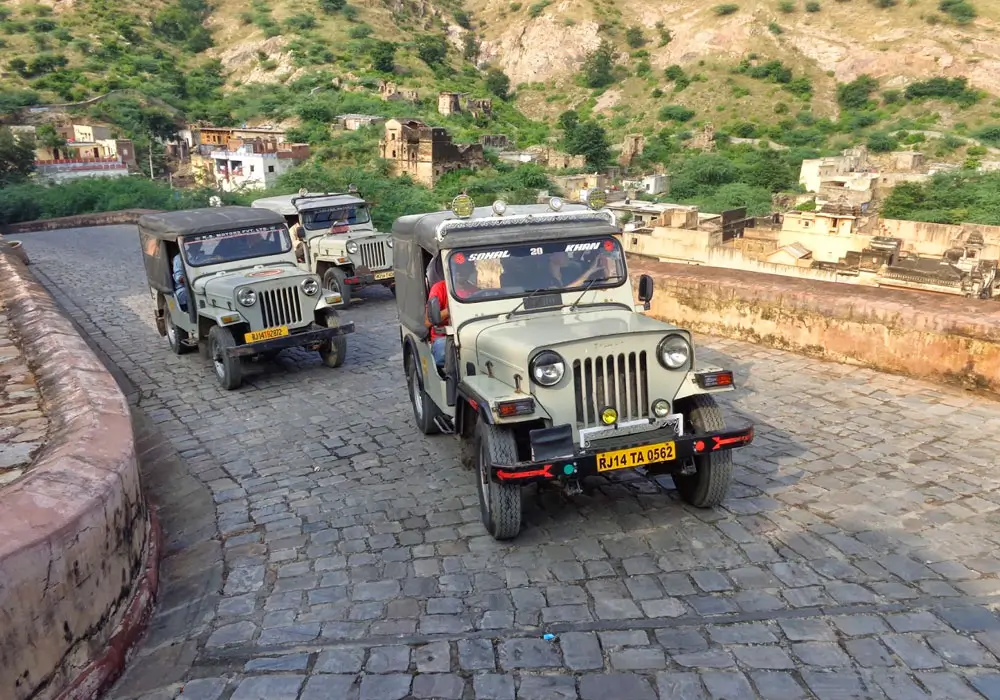
The jeep road climbs the back of the hill and brings you to the fort’s upper levels, close to the great courtyard of Jaleb Chowk. The ride is short, bumpy in places and gives fine views back over the town as you rise. If you would rather walk, the old stone ramp from the lake side climbs up through the gates and takes most fit walkers a steady quarter of an hour or so.
6. In through the gates at opening
Your guide handles the tickets, so you can head straight in when the gates open at 8:00 am. Being early means the first courtyards are close to empty, and you can see the main halls in a sensible order rather than following the crowd.
7. A guided walk through the palace
Over the next couple of hours your guide walks you through the four main courtyards of the palace, from the public hall to the private apartments. The order is roughly the order the rulers intended: the Diwan-i-Aam where the king met his court, through Ganesh Pol into the private garden courtyard with the Sheesh Mahal, and finally back into the oldest part of the palace and the zenana.
8. The stepwell, Jaigarh or both
After the fort, you can drop down to the Panna Meena ka Kund stepwell a short drive away, climb to Jaigarh Fort on the ridge above, or simply return to your hotel for a late breakfast. We plan this around the rest of your day.
The case for this morning is not only about crowds, although that is the main reason. It is also about light, heat and pace.
The light. Amber faces east across Maota Lake. In the first hours of the day the sun falls on the palace front, the gateways and the courtyards at a low angle, which brings out the carving and the colour of the stone. By midday the light is flat and white, and the courtyards bounce glare back at you.
The heat. Even in the cooler months, the stone courtyards warm up quickly once the sun is high. From April onwards the difference between 8:00 am and noon is enormous. Walking the ramparts and climbing the narrow stairs of the zenana is far more pleasant in the morning air.
The pace. With fewer people inside, your guide can stop and explain things properly: why the Ganesh Pol is painted the way it is, how the cooling system in the Sukh Niwas works, where the women of the palace could watch the court without being seen. In a crowd, this kind of explanation is almost impossible.
The rest of the day. Finishing the fort by late morning frees the afternoon. Many guests rest through the hottest hours and go out again later in the day, when the old city is at its best.
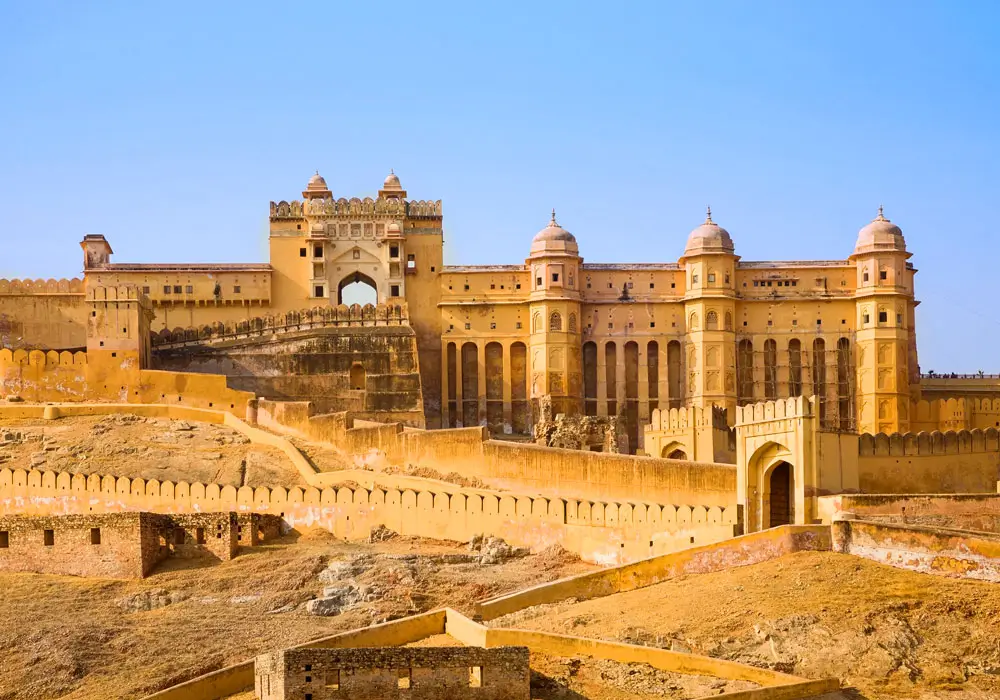
Jaleb Chowk. The first great courtyard, where soldiers once paraded and where the returning army would gather. The Suraj Pol, the Sun Gate, faces east onto it, and the Chand Pol, the Moon Gate, faces west. From here a flight of steps leads up to the palace proper.
The Shila Devi temple. Just off the stairs is the temple of the goddess Shila Devi, the protective deity of the Kachhwaha family. In the morning you may hear the worship being performed. Photography is not allowed inside, and you will be asked to remove your shoes. Your guide will tell you whether entry is possible that day.
Diwan-i-Aam. The hall of public audience, an open pavilion of double columns topped with carved elephant brackets. This is where the ruler heard petitions and met his nobles. Its open sides let you look out over the lake and the town below, and in the early morning it is often the quietest it will be all day.
Ganesh Pol. The gateway into the private quarters is among the most photographed gateways in Rajasthan. Its face is painted with delicate floral and geometric patterns in soft colours, with a small image of the god Ganesh above the arch. Above it are latticed windows from which the women of the palace could look down into the courtyard. Arriving early lets you photograph it without a crowd standing in front.
Sheesh Mahal. The hall of mirrors, part of the Jai Mandir, is what most people come for. Its walls and ceilings are covered with thousands of pieces of convex mirror set into plaster, in floral patterns and arches. The traditional story is that a single candle lit inside would reflect into a sky of stars. You cannot go inside the innermost chamber, but you see it clearly from the doorway, and in low morning light the mirrors flicker as you move.
The garden courtyard. Between the Sheesh Mahal and the Sukh Niwas lies a formal garden in the Mughal style, laid out in neat geometric beds. On one side, the Sukh Niwas was designed to stay cool, with water once channelled through it to carry breezes into the rooms.
The palace of Man Singh I. The oldest part of the complex, built in the late sixteenth century, sits at the back. It is plainer than the later halls but feels more like a fortress. At its centre is a pillared pavilion where the queens could meet.
The zenana. Around that pavilion are the women’s quarters, a set of separate apartments linked by corridors so that the ruler could visit any of them without the others knowing. The latticed screens, narrow stairs and small courtyards say a great deal about how royal women lived. This is one of the best parts of the fort to see early, because the corridors are narrow and quickly become congested.
The views. From the upper terraces you look down on Maota Lake and the Kesar Kyari garden in the middle of it, across to the old town, and up to the long walls of Jaigarh along the ridge. In the morning, before the haze builds, the view is sharpest.
You will probably see elephants on the ramp at Amber, painted and carrying tourists up to the fort. We do not book these rides, and we do not recommend them.
Elephants are not built to carry people on their backs day after day, and the training that makes them obedient enough to do it is often harsh. Animal welfare organisations have raised concerns about the conditions of working elephants for many years. We would rather our guests did not add to the demand.
The jeep is the practical choice in any case. It is faster, it does not involve a queue, and it brings you close to Jaleb Chowk without the slow climb. Walking the ramp is the other good option if you are reasonably fit and want to come through the great gateways on foot as visitors once did.
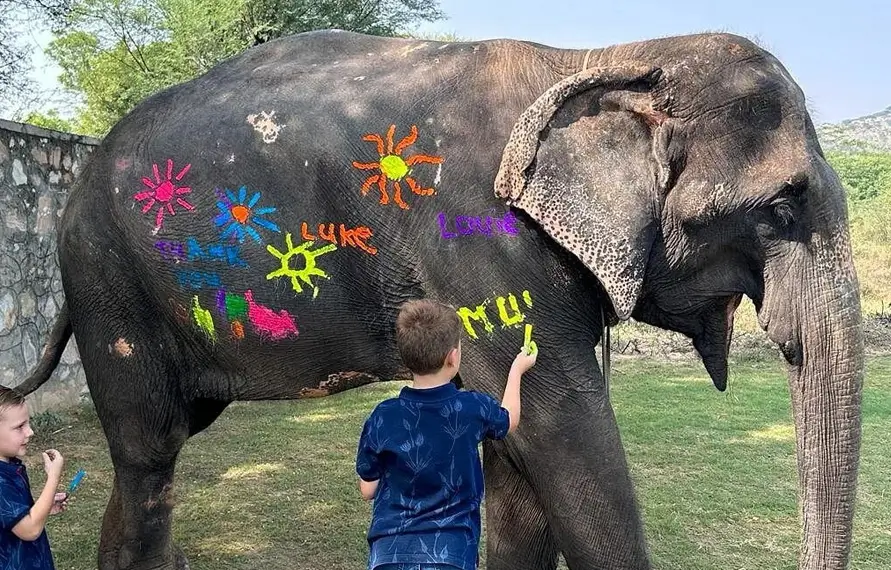
If you would like to spend time with elephants, we arrange a morning at an ethical elephant sanctuary in Jaipur, where the animals are not ridden and you watch them at their own pace.
Panna Meena ka Kund. A few minutes from the fort is one of the most beautiful stepwells in Rajasthan. It is square, with steep zigzag flights of steps on three sides descending to the water, so that from above it looks almost like a woven pattern. It was built to collect rainwater, and local people once came here to bathe, rest in the cool and draw water. It is a small site and quick to visit, and it is at its best in morning light. You may not be allowed to walk down the steps, as access is now restricted to protect the structure and visitors. Please follow the rules on the day.
Old Amer town. Most visitors see Amer only as the road to the fort. The town around it has temples, including the Jagat Shiromani temple with its fine carved stone and marble, small shops and quiet lanes. A slow walk here with your guide shows you the town that served the palace before the court moved to Jaipur in the eighteenth century.
Jaigarh Fort. Jaigarh sits on the ridge above Amber and was its military stronghold. The two forts are connected by a long fortified passage, and historically Jaigarh guarded Amber and held the arsenal and the treasury. Today it is best known for the Jaivana, a huge cannon on wheels said to be among the largest of its kind ever made, and for the views over Amber and the surrounding hills. It is reached by road up the hill, and you need a separate ticket. Jaigarh is a good addition if you enjoy military history or simply want to see Amber from above.
Nahargarh. Further along the same ridge is Nahargarh, which overlooks Jaipur itself. It is usually better saved for a late afternoon or sunset visit on another day, as it faces the city to the south.
The amber fort sunrise tour can run all year, but the experience changes with the season.
October and November. Mornings are fresh, the hills are still green after the monsoon, and the lakes are usually full. This is one of the best times for clear sunrise views and reflections in Maota Lake.
December to February. The coolest and busiest months. Dawn temperatures can be cold enough that you will want a jacket and a scarf at the viewpoint. Fog or haze can soften the sunrise on some mornings, particularly in late December and January. Sunrise is later, so the wait between dawn and opening time is shorter, which makes the timing very comfortable.
March. Pleasant mornings and warming days. A good month for this tour, before the heat builds.
April to June. Hot. Sunrise is very early, which means a long gap before the gates open. We adjust the plan so you are not standing around for hours: a later pickup, a slower town walk and the jeep up in time for opening. An early visit matters most in these months, because the fort becomes very hot by late morning.
July to September. The monsoon. Mornings can be humid or wet, but after rain the hills turn green and the lake fills, which can be beautiful. Clouds may hide the sunrise itself.
Days to avoid. The fort is open every day of the week, but it is very busy on public holidays, long weekends and during Indian festival periods. If your dates fall on one of these, an early start is even more important. Timings occasionally change on special days, and we check the current hours for your date.
Make it your first full morning in Jaipur. Amber gives you the historical background to everything else in the city, so it makes sense to see it early. It also means that if anything delays you, there is room to adjust.
Pair it with the old city later in the day. After a rest in the afternoon, a walk through the bazaars of the Pink City is an easy and complementary second half. Our Pink City heritage trail on foot works well the same day or the next morning.
Combine with the balloon on another morning. If you would like to see the forts from the air, book the hot air balloon over the Pink City on a different morning in the cooler months. You then see Amber from above one day and walk its courtyards the next.
Ride a tuk tuk for the city sights. For the City Palace, Hawa Mahal and Jantar Mantar, our tuk tuk tour of Jaipur is a lively way to cover the old city in the afternoon.
Two nights minimum. With two or more nights in Jaipur, you can do Amber early one day and the old city and markets the next, without rushing either.
On a Golden Triangle tour. Amber is usually the highlight of the Jaipur leg of a Delhi, Agra and Jaipur trip. If you arrive from Agra in the afternoon, we place the sunrise visit on the following morning.
Bring and wear - A warm layer for the dawn viewpoint from November to February - Comfortable, flat walking shoes with good grip - Clothing that covers shoulders and knees, as there is a temple inside the fort - Sunglasses and a hat for later in the morning - Water, especially from March onwards - Some small notes for tea and tips
Leave behind - Drones - Heels or slippery sandals - A large backpack, as it is awkward on narrow stairs - Any wish for an elephant ride
Tell us your Jaipur dates and we will time the pickup to the sunrise, arrange the jeep and guide, and have you at the gate for opening.
Call & WhatsApp +91-9828085426 or email info@topindianholidays.net.
See more ideas on our Top Experiences in India page.
Tell us your travel dates and we will check availability and fit this experience into the right day of your itinerary. Reply within 12 hours.
Check Availability› Chat on WhatsApp› Send an Enquiry›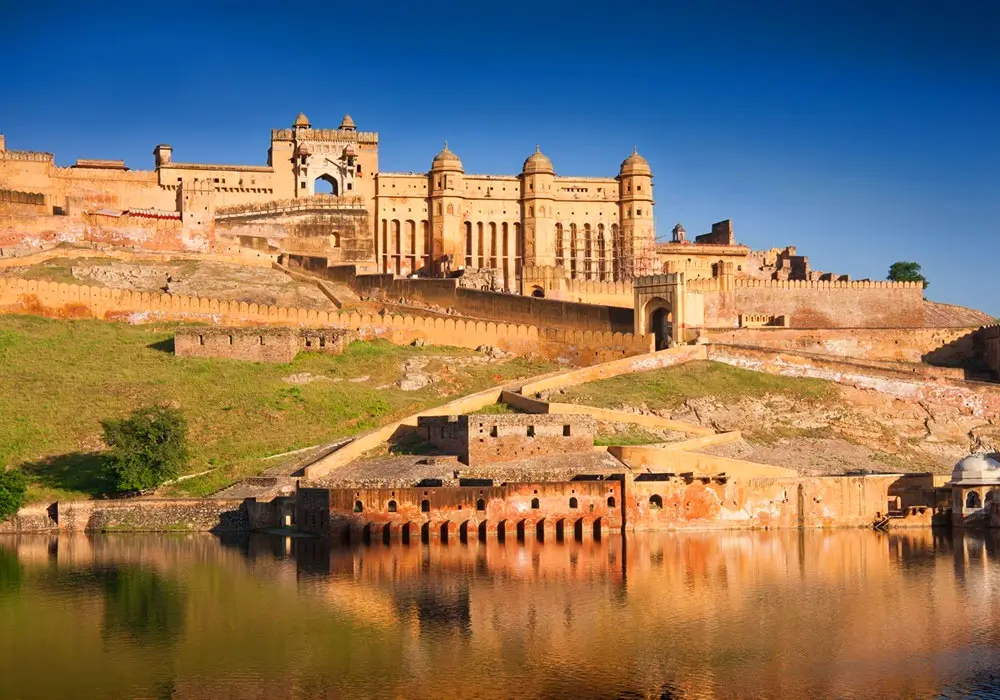



 🌙 01 Day
⭐ Most Popular
 🌙 07 Nights/08 Days
Delhi - Agra - Jaipur... Delhi - Agra - Jaipur - Delhi Show More
 🌙 06 Nights/07 Days
Delhi - Agra - Jaipur Delhi - Agra - Jaipur Show More
 🌙 05 Nights/06 Days
Delhi - Agra - Jaipur Delhi - Agra - Jaipur Show More
Yes. It fits easily into a Delhi, Agra and Jaipur itinerary. With two nights in Jaipur, we place it on your first full morning there and keep the old city for the afternoon or the next day.
Yes, December and the Christmas and New Year weeks are among the busiest times of the year. That is when arriving at opening time makes the biggest difference.
Comfortable flat shoes, light clothing that covers shoulders and knees, and a warm layer in winter for the dawn viewpoint. A hat and sunglasses help later in the morning.
Many older guests visit comfortably, especially early in the day when it is cool. There are ramps, uneven stone floors and steep stairs, so tell us about any mobility concerns and we will plan the gentlest route.
It is a beautiful stepwell close to Amber Fort, with zigzag steps on three sides leading down to the water. It takes only a short visit and photographs well in morning light. Access to the steps themselves may be restricted.
Yes. Jaigarh sits on the ridge above Amber, and the two are linked by fortified walls and a passage. Jaigarh needs its own ticket and is usually reached by road. It is a good addition if you want views over Amber and to see the Jaivana cannon.
Yes, you can see the Sheesh Mahal from the doorway and walk through the surrounding courtyard and halls. The innermost mirrored chamber is roped off to protect it. Early morning is the best time, before it gets crowded.
Ticket prices for foreign visitors are set by the state government and change from time to time. A composite ticket for several Jaipur monuments is also available. We quote the current price for your dates.
Allow a couple of hours inside for a good guided visit of the main courtyards, the Sheesh Mahal and the zenana. With the sunrise viewpoint before and the stepwell after, plan to give up the whole morning.
We advise against it and do not book it. Carrying tourists is hard on elephants and the training involved can be cruel. The jeep is quicker and more comfortable, and if you want to see elephants we can arrange an ethical sanctuary visit instead.
Most visitors use the jeeps that run up the hill from Amer town, or walk up the stone ramp from the lake. We arrange the jeep as part of your morning. We do not offer elephant rides.
Straight after opening at 8:00 am. The light is softer, the courtyards are cooler, and there are far fewer people than later in the morning, when the coach groups arrive.
No, because the fort opens after sunrise. Our amber fort sunrise tour takes you to a viewpoint near the lake, the hill road or the old town to watch the sun come up over the fort, then gets you to the gate in time for opening.
Amber Fort opens at 8:00 am and is open every day of the week. Timings can occasionally change on festival days or special occasions, so we check the hours for your date before confirming the plan.

Whether you're planning your first India trip or returning to explore deeper, get honest, expert advice from someone who knows every corner of this country. No pressure, no cost.