


 info@topindianholidays.net
 +91-8955000999

Hot Air Balloon Ride in Jaipur
Lift off as the sky turns orange and drift over villages, mustard fields and the Aravalli hills while Jaipur is still waking up.
View Experience ›Step into the workshops behind Johari Bazaar, watch rough stones become polished gems at a spinning wheel, and try a little cutting and setting yourself.
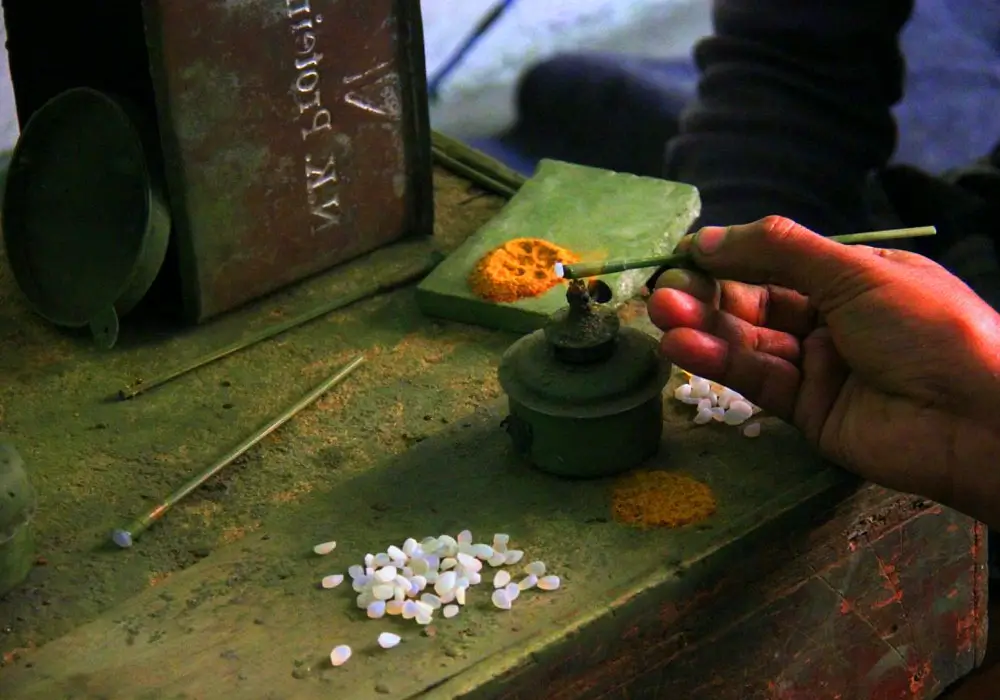
Jaipur is one of the most important centres in the world for cutting and polishing coloured gemstones. Rough emeralds, garnets, rubies, sapphires, tourmalines, amethysts and many other stones arrive here from mines across India and around the world, and leave as polished gems set in jewellery or sold loose to dealers. Much of that work does not happen in grand showrooms. It happens in narrow rooms up steep staircases in the old city, where cutters sit cross-legged at small wheels, holding stones on sticks and checking each facet against the light.
A Jaipur gem workshop visit takes you into that world. You walk through the bazaars where the trade has lived for centuries, then sit with craftsmen as they sort rough stones by colour and clarity, grind them into shape, cut facets and bring up the final polish. In a jewellery workshop next door, you see stones being set into gold and silver, and the older Rajasthani traditions of kundan, where gems are set in fine gold foil, and meenakari, where colourful enamel is fired onto metal.
Then you try it yourself. Under the eye of a craftsman you hold a stone against the polishing wheel, feel how little pressure it needs and see the surface change. You may help set a simple stone into a basic mount, using the same small tools that have been used here for generations. It is quiet, detailed, fascinating work.
This page also includes an honest section on gem scams. Jaipur’s gem trade is real and skilled, but it has also attracted some well-known tricks aimed at travellers. We would rather you enjoy the craft with your eyes open than fall into one of them.
1. Pickup and the old city
Your private driver collects you from your hotel and drops you near the old city, where your guide meets you. The walled city was planned in the eighteenth century with separate bazaars for different trades, and the jewellers and gem dealers have been here since its early days.
2. Walking Johari Bazaar
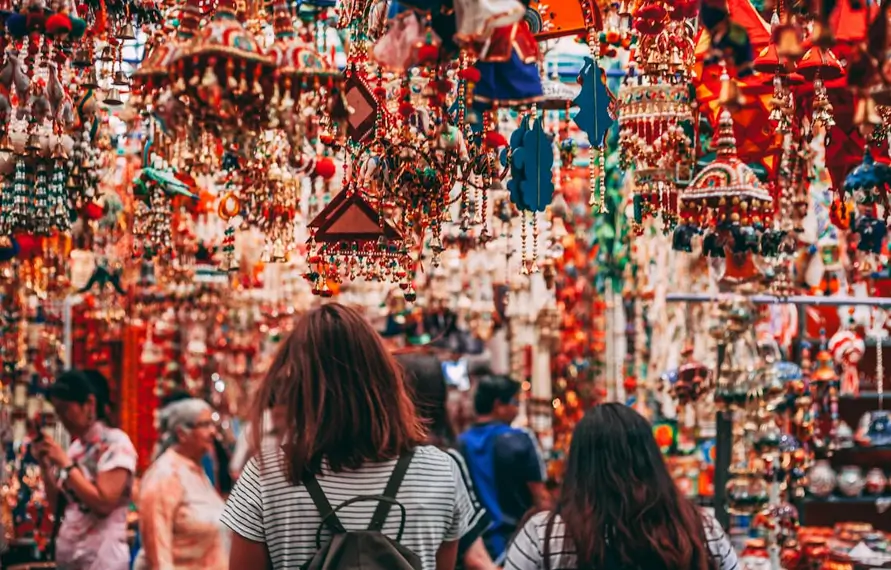
You begin on Johari Bazaar, the main jewellers’ market, lined with pink-painted arcades and shopfronts glittering with gold and silver. Your guide explains how the trade is organised: wholesale dealers, cutters, setters, polishers and retailers, often working within a few streets of each other.
3. Into Gopalji ka Rasta and the side lanes
From the main road you turn into the side lanes, including Gopalji ka Rasta, one of the lanes well known for the gem trade. Here dealers sit on white mattresses in small offices, examining parcels of stones with tweezers and loupes. It is a glimpse of a working trade, so you watch quietly and your guide explains what is happening.
4. Sorting the rough
In the cutting workshop, you see rough stones first: dull, irregular pieces that look nothing like jewellery. The craftsman shows how stones are sorted by colour, size and clarity, and how cracks and inclusions are spotted by holding them up to light. Deciding how to cut a stone to keep as much weight and colour as possible is where real skill begins.
5. Shaping and cutting
The stone is ground into a rough shape on a wheel, then fixed with wax or shellac to the end of a small stick, called a dop. The cutter holds the dop at precise angles against a spinning lap to cut each facet. Many Jaipur cutters still use hand-operated or simple motorised wheels and judge angles by eye and long practice.
6. Polishing
Polishing uses finer powders on a separate lap to bring the facets to a mirror finish. This is where you take a turn. With the craftsman guiding your hand, you hold a stone to the wheel and watch the surface clear. It takes patience and a light touch, and you quickly understand why a good cutter is so valued.
7. The jewellery workshop
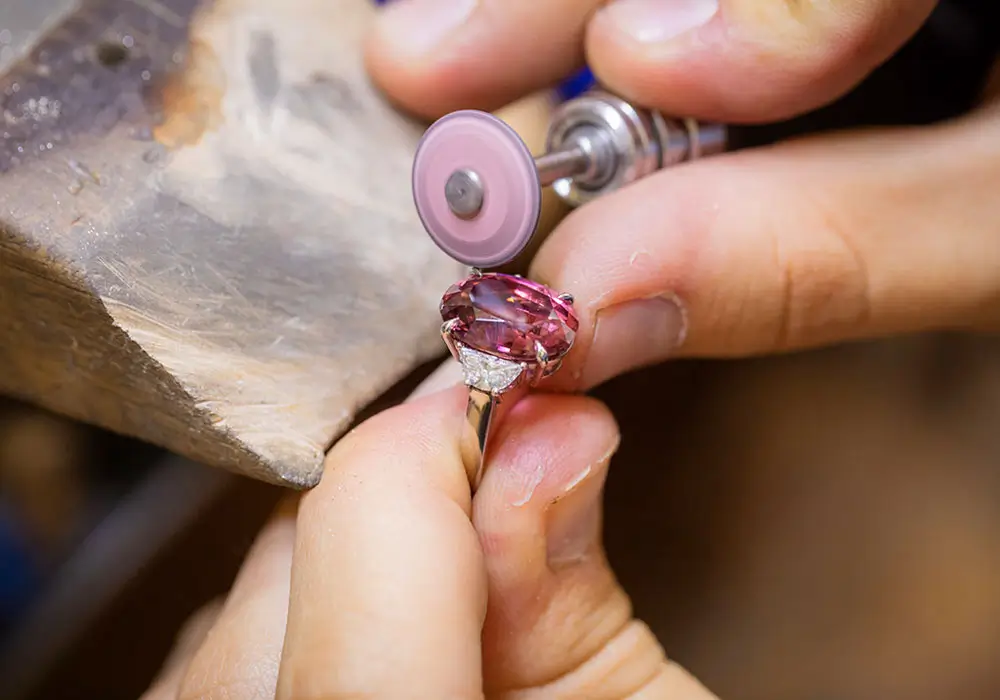
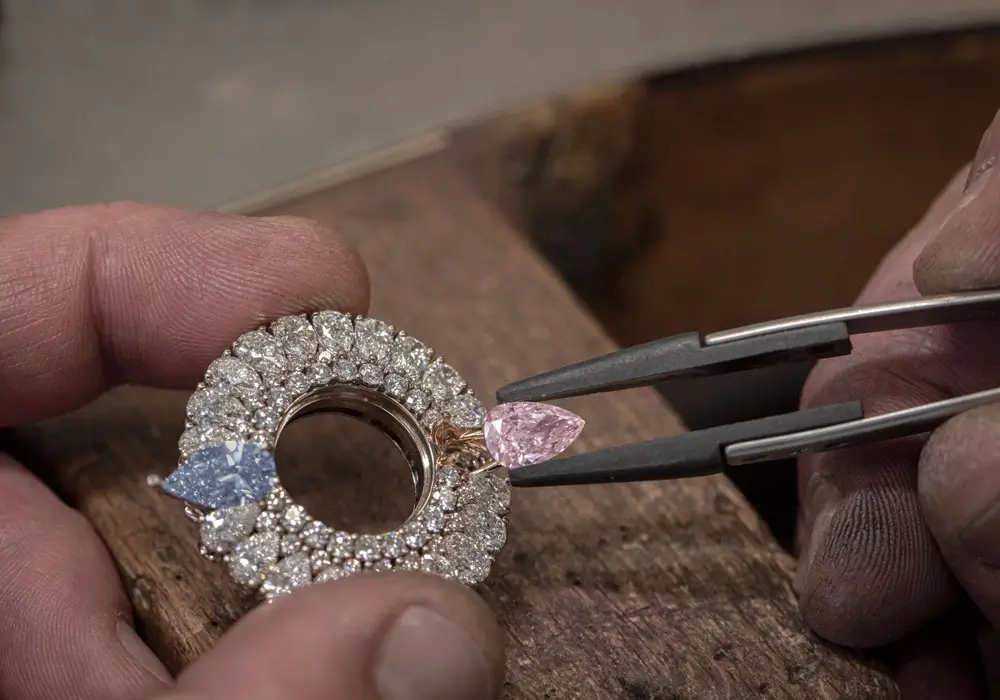
Next you visit a setter’s bench. You see how metal is shaped into a mount, how prongs or bezels are lifted and pressed around a stone, and how pieces are finished and polished. Where available, you also see kundan setting and meenakari enamel work.
8. Trying a simple setting
You may try the basics of setting: placing a stone in a simple mount and gently pressing the metal around it with a pusher tool. Most guests are happy just to try a few movements, and the craftsman finishes the work properly.
9. Chai and questions
You end with chai and time to ask anything you like about stones, treatments, prices in general and how to buy safely. Then your driver takes you back to your hotel, or on to your next stop in the old city.
Emeralds. Jaipur is especially well known for cutting emeralds, and you may see them in many sizes and qualities, from cloudy cabochons to clean faceted stones.
Garnets. Deep red garnets have long been cut in Jaipur and are common in workshops.
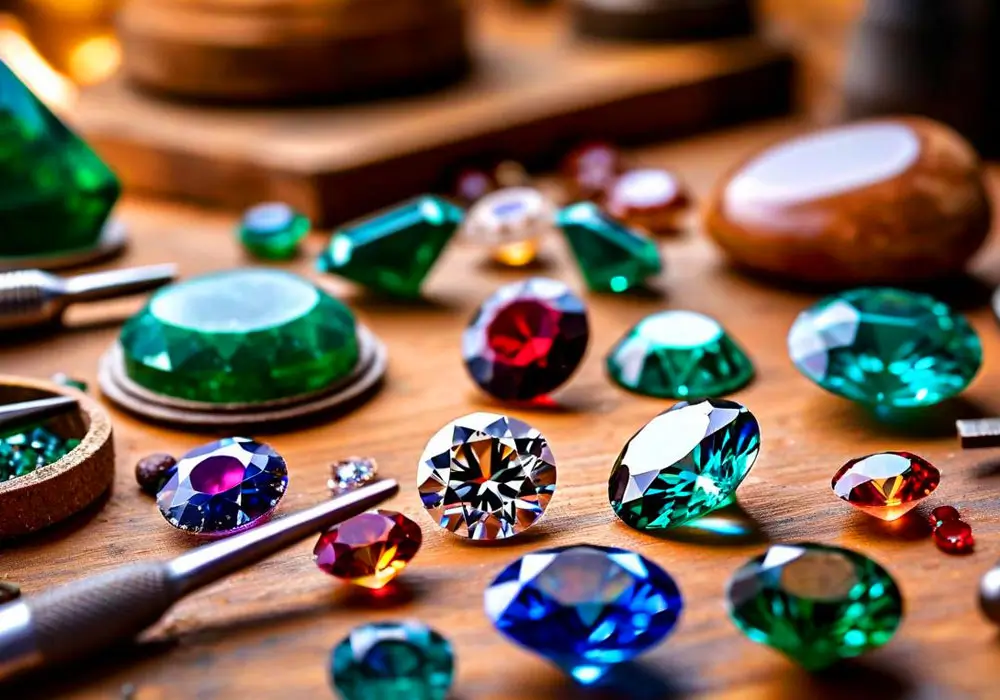
Other coloured stones. Rubies, sapphires, tourmalines, amethyst, citrine, aquamarine, tanzanite and many semi-precious stones pass through the city’s workshops. What you see depends on what is being cut that day.
Cabochons and beads. Not every stone is faceted. You will often see smooth domed cabochons, carved stones and drilled beads, which are a big part of Jaipur’s trade.
Tools of the trade. Small wheels and laps, wooden dops, loupes, tweezers, little brass scales and parcels of folded paper holding stones. Many tools are simple, and the skill lies in the hands.
Natural, treated and synthetic stones. One of the most useful things you can learn in a workshop is how much a stone’s story affects its value. Many natural gems are treated, for example heated to improve colour or oiled to hide small cracks, and this is normal in the trade as long as it is disclosed. Synthetic stones, grown in a laboratory, can look almost identical to natural ones to an untrained eye. Imitations such as coloured glass are cheaper again. Ask the craftsman to show you examples side by side if they have them. Seeing the differences under a loupe, and hearing how professionals tell them apart, will make you a far more confident shopper anywhere in the world.
Weighing and grading. Stones are weighed in carats on small precise scales, and dealers grade them by colour, clarity, cut and size. You may see a dealer spread a parcel of similar stones on white paper and pick through them one by one, setting the best aside. It looks slow, but this is where much of the value in the trade is decided.
Kundan. Kundan is a traditional Indian way of setting stones in which highly refined gold foil is pressed around each gem, rather than using prongs. It was favoured at the royal courts of Rajasthan and the Mughal empire, and it is still popular for wedding jewellery. Kundan pieces often use flat, uncut or lightly cut stones, so the colour of the gem matters more than its sparkle.
Meenakari. Meenakari is the art of enamelling, where coloured glass powders are fused onto metal in a series of firings. Jaipur is closely associated with this craft. The reverse of a kundan necklace is often covered in meenakari, so a piece looks beautiful from both sides. Look for reds, greens and whites in fine floral patterns.
Polki. You may also hear the word polki, used for jewellery set with uncut diamonds in a traditional style. It is related to kundan and widely sold in Johari Bazaar.
Seeing these traditions in a workshop helps you understand the jewellery you will see in the City Palace museum and in shop windows across Rajasthan.
Jaipur’s gem trade is real, skilled and important. But for many years the city has also been known for scams aimed at foreign travellers, and we would be doing you a disservice if we did not explain them plainly.
The resale scam. This is the best-known one. A friendly stranger, perhaps someone who strikes up a conversation at a café, a rickshaw driver, a “student” practising English or even a fellow traveller, tells you about a business opportunity. You buy gems in Jaipur and carry them home, where a contact will buy them from you at a large profit, and you simply collect the difference. It can come with convincing stories, letters from “past customers” and a lot of charm. The stones are usually worth far less than you paid, and the buyer at home never appears.
Our advice is simple: - Never buy gems to resell abroad. There is no legitimate deal in which a stranger needs a tourist to carry stones for them. - Ignore strangers offering business deals, however friendly or persuasive. Politely say no and walk away. - Do not let anyone take your credit card details on the promise of a later refund or delivery. - Be cautious of “government” or “export” showrooms you are taken to by someone you have just met. - Do not be rushed. High pressure, special one-day prices and stories that “only you” can help are warning signs.
Buying safely if you choose to buy. - Buy only what you would be happy to own and wear, at a price you would pay for its beauty alone. - For any stone of real value, ask for a certificate from a recognised, independent gem testing laboratory, and make sure the certificate matches the stone in front of you. - Ask whether the stone has been treated, as heating, oiling and other treatments are common and affect value. - Get a proper written invoice that describes the stone, its weight and any treatments. - If you are unsure, take time. A genuine seller will not mind you thinking about it overnight.
No pressure on our visit. Our gem workshop visit is about the craft. You are not expected to buy anything, and your guide will not push you towards any purchase. If you do want to shop, we are happy to give you honest general advice, but the decision is always yours.
Time of day. Workshops are busiest during the working day, roughly late morning to late afternoon. Bazaars open later than many travellers expect, and early mornings in the old city are quiet. A late morning start usually works well.
Days of the week. Many workshops and markets in Jaipur close or slow down on one day a week, and festival days can change routines. We check the days for your dates so you see the workshops at work.
Season. The visit takes place indoors and in shaded lanes, so it works in any season. From October to March, walking the bazaars is most comfortable. In the summer heat, we keep the outdoor walking short.
Festivals. Around Diwali and the wedding season, jewellery shops are especially busy and lively. It is a great time to see the bazaars, though workshops may be focused on orders.
Make it part of an old city day. A morning in the workshops pairs well with the City Palace, Jantar Mantar and Hawa Mahal, all close by. A Pink City heritage walk covers the bazaars in more depth.
Build a Jaipur craft day. Combine gems with blue pottery making or a block printing workshop in Bagru or Sanganer to see Jaipur’s three best-known crafts.
Add an evening contrast. After a detailed morning, a tuk tuk ride through the Pink City or a Jaipur night food walk is a lively way to see the same streets after dark.
On a Golden Triangle tour. A gem workshop visit fits easily into two or three nights in Jaipur. If you enjoy fine craftsmanship, the marble inlay workshop in Agra makes a good companion, as inlay also uses cut semi-precious stones.
Bring and wear - Comfortable shoes for walking busy bazaars and climbing stairs - Light clothing that covers shoulders and knees - Reading glasses if you use them for close work - A small bag you can keep close in crowds - Water and a hat for the walk between workshops - A note of what you want to learn or see, such as emeralds or kundan
Avoid - Accepting business proposals from strangers - Agreeing to carry gems abroad for anyone - Handing over your card details for later delivery or refunds - Being rushed into any purchase - Going to showrooms suggested by people you have just met
Tell us your Jaipur dates and what interests you most, whether cutting, setting or traditional jewellery, and we will arrange a private gem workshop visit.
Call & WhatsApp +91-9828085426 or email info@topindianholidays.net.
See more ideas on our Top Experiences in India page.
Tell us your travel dates and we will check availability and fit this experience into the right day of your itinerary. Reply within 12 hours.
Check Availability› Chat on WhatsApp› Send an Enquiry›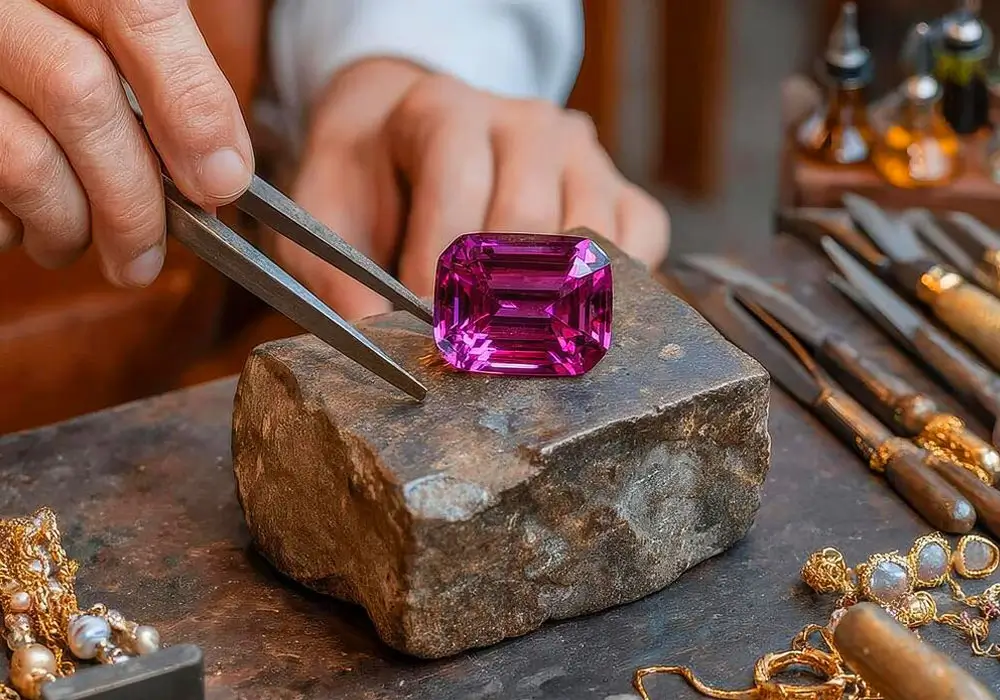



 🌙 01 Day
 🌙 07 Nights/08 Days
Delhi - Agra - Jaipur... Delhi - Agra - Jaipur - Delhi Show More
 🌙 02 Nights / 03 Days
 🌙 02 Nights / 03 Days
⭐ Most Popular
Yes. A half-day visit fits easily into two or three nights in Jaipur, often combined with the City Palace and Hawa Mahal in the old city. Tell us your dates and we will plan it.
Workshops and markets usually keep a weekly closing day, and festivals can change routines. We check the days for your dates so you visit when the craftsmen are working.
Many are, and Jaipur has a genuine and skilled trade. But imitation, synthetic and treated stones are also sold. That is why a certificate from a recognised independent lab matters for anything valuable.
Many jewellers can make or adapt pieces, though it takes time. If you are interested, tell us early in your trip. Always agree the stone, metal, price and delivery in writing before paying.
Older children who are patient and careful usually enjoy it, especially polishing at the wheel. Workshops have small parts and spinning tools, so close supervision is needed, and younger children may find it slow.
Kundan is a way of setting stones in fine gold foil, while meenakari is coloured enamel fused onto metal. They are often combined, with kundan on the front of a piece and meenakari on the back.
Jaipur is especially known for emeralds and garnets, and also cuts rubies, sapphires, tourmalines, amethyst and many semi-precious stones. What you see depends on what the workshops are working on that day.
Johari Bazaar is the main jewellers’ market in Jaipur’s old city, lined with jewellery shops selling gold, silver, kundan, polki and gemstone pieces. The side lanes around it, such as Gopalji ka Rasta, are home to gem dealers and workshops.
Buy only what you would be happy to own at that price, ask about treatments, get a detailed invoice, and for valuable stones ask for a certificate from a recognised, independent testing lab. Avoid pressure and strangers’ recommendations.
The best-known scam involves a friendly stranger offering a business deal: buy gems in Jaipur and sell them at a big profit to a contact at home. The stones are overpriced and the buyer never appears. Never buy gems to resell abroad.
No. The visit is about the craft, and there is no pressure to buy. If you choose to shop, your guide can give honest general advice, but the decision is entirely yours.
The price depends on your group size, the length of the visit and what you combine it with. We quote the current price for your exact dates, including your car, guide and the workshop session.
You watch each stage of cutting and polishing, then try polishing a stone at the wheel with a craftsman. In a jewellery workshop you see setting, and you may try placing a stone in a simple mount.
Yes. Jaipur is a major centre for cutting coloured gemstones, and our visit takes you into working workshops in the old city to see stones sorted, shaped, cut and polished.

Whether you're planning your first India trip or returning to explore deeper, get honest, expert advice from someone who knows every corner of this country. No pressure, no cost.