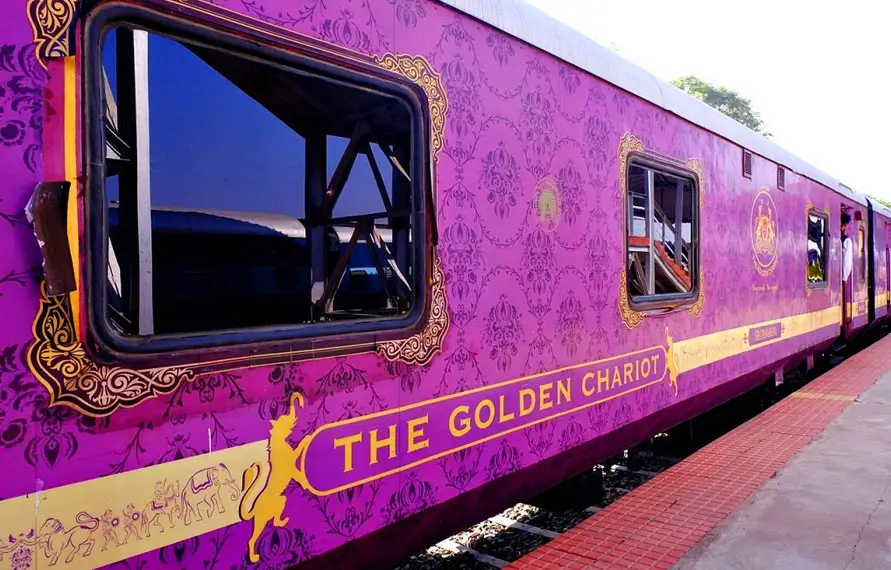
05 Nights / 06 Days Fully Guided Tours Private Car
Bengaluru - Mahabalipuram - Thanjavur - Chettinad - Kochi - Alleppey - Bengaluru
Three states, three languages and three very different coastlines lie within a single week on the Golden Chariot Jewels of South Tour. The train leaves Bengaluru on the Deccan plateau, reaches the shore temples of Tamil Nadu on the Bay of Bengal by the second morning, and ends up among the lagoons and spice ports of Kerala on the Arabian Sea before turning home. It is a sweep across the southern tip of India that would take two weeks of hard driving by road, compressed into five comfortable nights.
The route is built around temples, trade and water. In Mysuru you see a royal palace still used by its family; at Mahabalipuram, rock-cut shrines carved by the Pallava kings face the waves; at Thanjavur, the great Chola temple has stood for more than a thousand years. Then the mood shifts. The merchant towns of Chettinad hide grand family mansions behind plain walls, Fort Kochi carries layers of Portuguese, Dutch and British history, and the backwaters near Alleppey offer a slow day on a houseboat. For travelers who want the cultural depth of South India by luxury train, this is the richest of the three Golden Chariot routes.
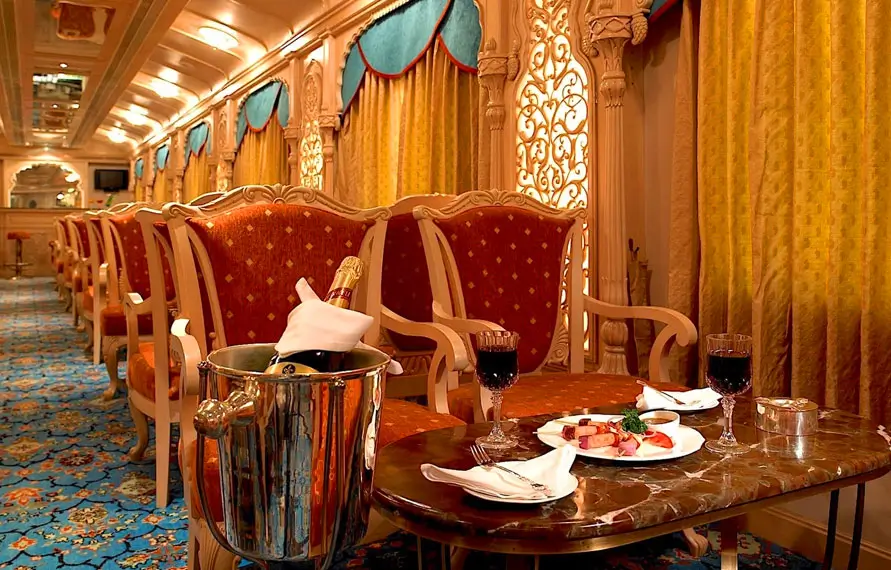
The Golden Chariot is operated by IRCTC and is named after the stone chariot at the Vittala Temple in Hampi. Its 2026-27 refurbishment brought new interiors, smart TVs, Wi-Fi, CCTV and the Arogya spa, where therapists offer Ayurvedic massages. The train has 40 cabins for up to 80 guests, including one adapted for guests with limited mobility, as well as the Ruchi and Nalpaka restaurants and a lounge bar. Top Indian Holidays, a family-run Jaipur agency recognized by the Government of India and unconnected to IRCTC, files your reservation request, arranges cars in Bengaluru and books any hotel nights you want around the rail week.
The Golden Chariot Jewels of South journey begins at Yeshwanthpur station, where check-in opens at about 08:30. Our car collects you from your Bengaluru hotel with time to spare, since the morning rush across the city can be slow. A traditional welcome waits on the platform, the crew takes your bags to the cabin, and you can relax in the lounge with a coffee while the last guests arrive. Pack a light scarf or shawl in your day bag; you will need covered shoulders at several temples later in the week.
The train departs at about 09:45 and runs south-west toward Mysuru, a journey of a few hours past coconut farms, rice paddies and the occasional silk-reeling village around Ramanagara. The guest relations manager gives a short briefing on the route, including how meals are timed, what to wear at each site and which excursions are optional. Lunch is served in Ruchi or Nalpaka as the plateau slips by. You reach Mysuru in the early afternoon and step off with your guide for the first visit of the trip.
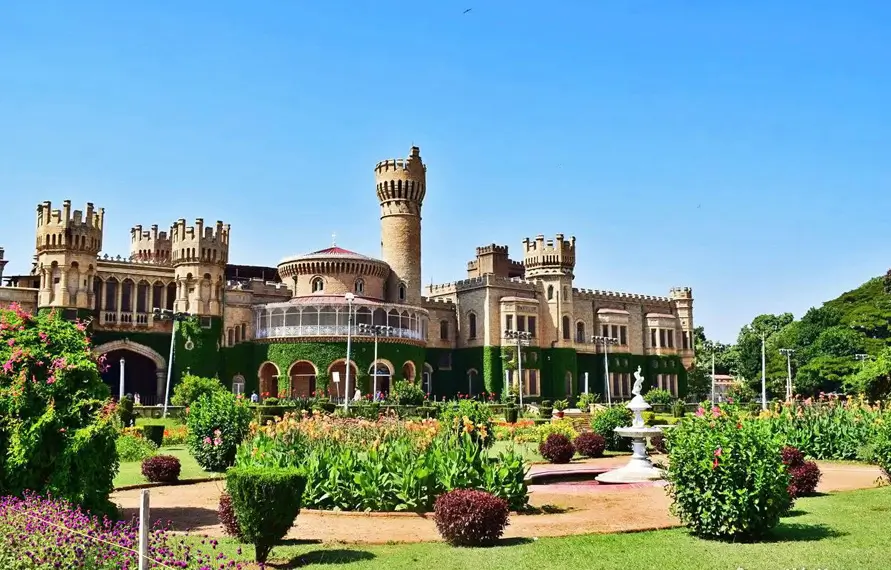
Mysuru Palace is the grandest royal residence in South India, rebuilt at the end of the nineteenth century after fire destroyed the older wooden palace. Its domes and towers combine Hindu, Mughal and Gothic ideas, and inside you walk through a marriage hall lit by stained glass, halls of gilded pillars and doors of carved silver and teak. Your guide explains the Dasara festival, when the palace is lit by nearly a hundred thousand bulbs. Back on the train, dinner is served as it begins the long overnight run east into Tamil Nadu toward Chengalpattu.
You wake at Chengalpattu, south of Chennai, with breakfast on board. The optional morning excursion goes to Kanchipuram, one of the seven sacred cities of Hinduism, which once had more than a thousand temples. The Kailasanatha Temple, built in sandstone by the Pallava kings in the eighth century, is the oldest structure in the city and has a quiet, intimate feel. The town is also the home of Kanchipuram silk, woven with heavy gold borders, and a visit to a weaving house shows how a single wedding piece can take weeks on the loom.
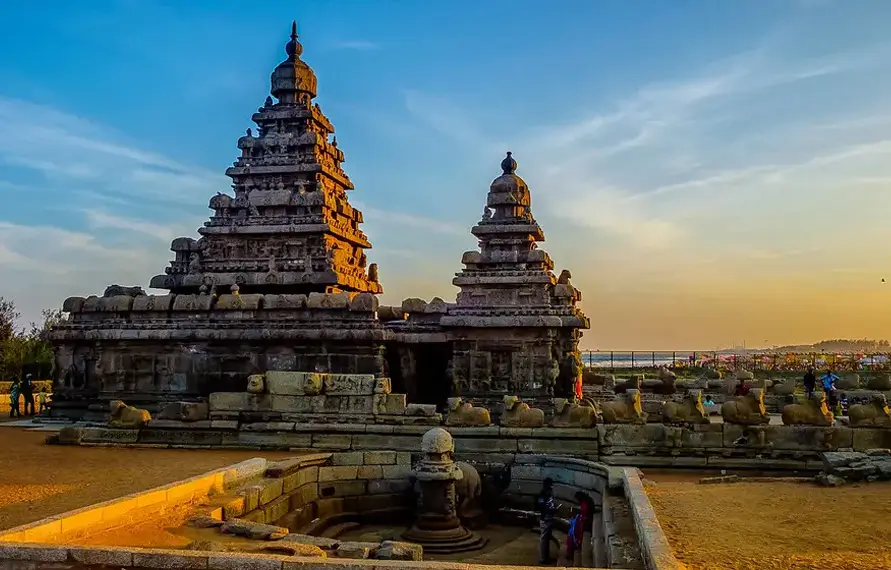
Lunch is served on the train, and in the afternoon you drive to Mahabalipuram on the coast, the main port of the Pallavas between the seventh and eighth centuries. The monuments here form a UNESCO World Heritage Site. The Shore Temple stands right above the beach, its towers softened by centuries of salt wind. Inland, the Five Rathas are complete temples cut from single outcrops of granite, each in a different style, and a life-size stone elephant stands beside them. Wear sandals you can remove easily, as the sand gets hot.
The most remarkable work at Mahabalipuram is Arjuna's Penance, a relief carved across two huge boulders, crowded with gods, sages, hunters, monkeys and a herd of elephants walking toward a central cleft that represents the descent of the river Ganga. Nearby, a giant round boulder balanced on a slope, known locally as Krishna's Butter Ball, never fails to draw a smile. In the evening you dine at a beachfront hotel with the sound of the Bay of Bengal behind you before returning to the train, which heads south toward Thanjavur.
Breakfast is served as the train reaches Thanjavur, the capital of the Chola dynasty, and at about 09:00 you leave for the Brihadeeswarar Temple. It was completed early in the eleventh century by King Rajaraja Chola, and its main tower rises to about 66 meters, crowned by a capstone carved from a single block of granite. The temple is listed by UNESCO among the Great Living Chola Temples. A huge monolithic bull faces the shrine, and the cloister walls are lined with painted panels and rows of stone emblems of Shiva.
Visit in the morning if you can: by noon the granite courtyard becomes very hot underfoot, and since shoes are left at the gate, socks or an early start make all the difference. Your guide points out the Chola-era inscriptions running around the base, which record donations of land, gold and dancers to the temple. Thanjavur is also known for its painted panels with gold leaf and for bronze casting, and a short stop at a local workshop is often possible. Lunch is served once you are back on board, as the train continues south to Karaikudi.
The afternoon takes you into Chettinad, a cluster of villages built by a community of wealthy bankers and traders who did business across Burma, Malaysia and Sri Lanka in the nineteenth and early twentieth centuries. At Athangudi you watch craftsmen make the region's famous handmade floor tiles, pouring colored cement into patterned molds on a sheet of glass. You then enter one of the great family mansions, with Burma teak pillars, Italian marble, Belgian mirrors and courtyards open to the sky. The train departs in the evening on the long journey west to Kochi.
You wake on the Kerala coast in Kochi, the old harbor that drew traders from Arabia, China and Europe for centuries in search of pepper, cardamom and ginger. After breakfast on board you visit Mattancherry Palace, also called the Dutch Palace, a modest Kerala-style building that hides some of the finest mural paintings in India. Scenes from the Ramayana cover the walls of the royal bedchamber in deep reds, ochres and greens. A short walk away, the lanes of Jew Town lead to the Paradesi Synagogue, though it is closed on Fridays, Saturdays and Jewish holidays.
Later in the morning a performance of Kerala's classical dance drama, held in a small theater, introduces you to its painted faces, huge skirts and expressive hand gestures; arriving early lets you watch the actors apply their elaborate makeup. Kochi is humid all year, with daytime temperatures of around 30 to 32 degrees Celsius, so loose cotton clothes and a hat are ideal. Lunch is served back on the Golden Chariot, and the early afternoon is a good time for a rest or a treatment in the Arogya spa.
The optional late afternoon excursion goes to Fort Kochi's seafront, where the Chinese fishing nets, huge cantilevered frames of teak and bamboo, are lowered into the water by teams of fishermen using stone counterweights. Nearby stands St. Francis Church, the oldest European church in India, where the Portuguese navigator Vasco da Gama was first buried before his remains were taken back to Portugal. The streets around it are lined with old Dutch and Portuguese houses, many now cafes and art galleries. Dinner is served on board, and the train moves a short distance south toward Chertala.
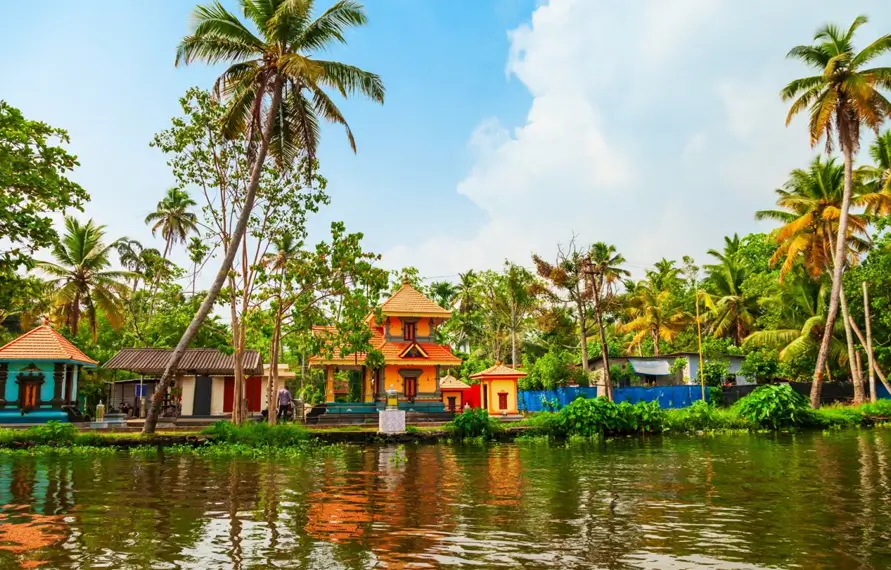
Today is the slowest and perhaps the most restful day of the journey. From Chertala, a short drive brings you to the waterways near Alleppey, where a network of lagoons, rivers and canals runs parallel to the coast for many miles. You step aboard a traditional houseboat, a long curved vessel built from jackfruit wood and roofed with woven palm thatch, now fitted with a shaded deck and comfortable seating. The crew casts off, and the noise of the road is replaced by the soft splash of water against the hull.
For several hours you glide past rice paddies that lie below the level of the water, protected by narrow earth banks, and past villages where life still faces the canal. Women wash clothes on stone steps, children paddle to school in small boats, ducks are herded along the shallows and men climb coconut palms to tap them. Kingfishers, egrets, cormorants and darters are common. Lunch is cooked on board by the crew and usually includes fish fried in Kerala spices, vegetables simmered in spiced coconut sauce and red rice.
Bring sunglasses, sunscreen and insect repellent for the evening, and expect a short tropical shower in the wetter months, which usually passes quickly. In the late afternoon the houseboat returns to the jetty, and you drive back to the train for a farewell dinner. This final evening is a good moment to exchange contact details with fellow guests and thank the crew. If the evening is clear, the stars over the paddy fields are bright away from city lights. Overnight the Golden Chariot begins its long return across the hills of Kerala and Tamil Nadu toward Bengaluru.
Breakfast on your last morning comes with a view of the changing landscape as the train climbs back onto the Deccan plateau, where the green of Kerala gives way to the drier fields of Karnataka. Use the time to settle any spa or bar charges, collect your passport and pack at a leisurely pace, since there is no rush to leave the cabin until arrival. The crew will help with any bags you would like carried to the door, and the chefs are usually happy to share a recipe or two from the week's menus if you ask.
The train completes the Golden Chariot Jewels of South loop at Yeshwanthpur station, Bengaluru, where our driver meets you on the platform and takes you to your hotel or to Kempegowda International Airport, which is about 60 to 90 minutes away by road. Because this return run is long, arrival times can shift; we advise booking onward flights for the evening and can reserve a day room at an airport hotel if you have a late international departure. Domestic flights from Bengaluru to Goa, Kochi or Chennai leave throughout the day if you are continuing within India.
Many guests choose to return to Kerala rather than fly straight home. Top Indian Holidays can arrange a few nights in the tea hills of Munnar and the spice gardens and lake of Thekkady, or a stay in Pondicherry with its French quarter. We look after flights, private cars with drivers, English-speaking guides on sightseeing days and well-chosen hotels, so the end of your train journey is simply the start of the next chapter. Tell us your interests, whether wildlife, beaches or temples, and we will suggest the best fit.
Fill out this form with all the required information. Within 12 hours, we will provide you with a tailor-made itinerary at the best price.
Read the reviews of our esteemed client's, go through the experiences they had with Top Indian Holidays.

Whether you're planning your first India trip or returning to explore deeper — get honest, expert advice from someone who knows every corner of this country. No pressure, no cost.



 info@topindianholidays.net
 +91-8955000999