11 Nights / 12 Days Fully Guided Tours Private Car
Bengaluru - Yeshwanthpur - Bandipur - Mysuru - Halebidu - Hampi - Goa - Bengaluru - Coorg - Nagarhole - Kabini - Bengaluru
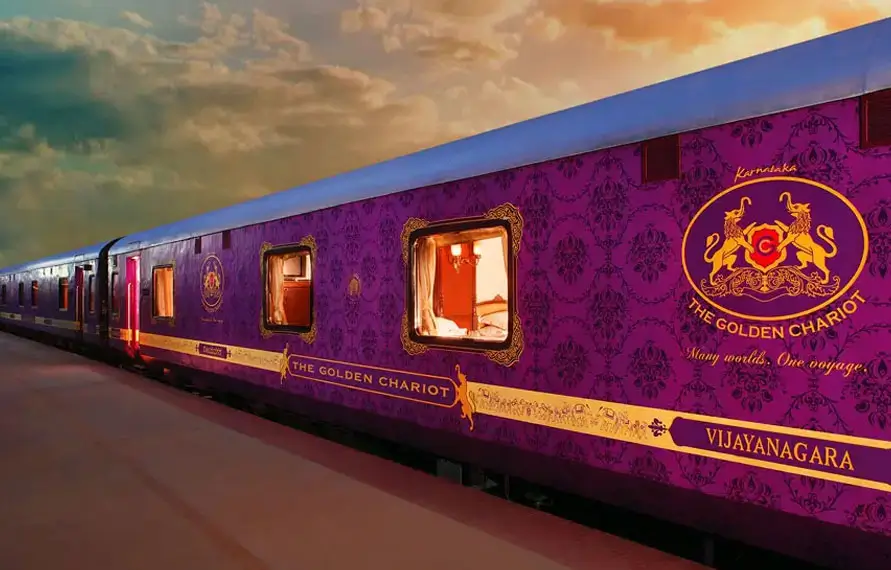
Every morning on the Kabini River, a little after 06:30, a forest department boat slips away from the bank while herds of elephants are still drinking on the far shore. That quiet scene closes a trip that has already covered more of Karnataka than most visitors see in a lifetime. The Golden Chariot Pride of Karnataka with Coorg & Kabini begins with five nights on the state's luxury train, looping from Bengaluru through Bandipur, Mysuru, Halebidu, Chikkamagaluru, Hampi and Goa, and then adds four nights in two of South India's most rewarding country retreats.
This is a single-state holiday, and that is its strength. Instead of flying across India, you drive short distances between places that share a story: the Mysuru kings who once hunted in these forests, the planters who brought coffee to the hills, and the rivers that feed the Kaveri. After the variety of the train week, Coorg offers misty hills, coffee estates and a slower rhythm, while Kabini gives you several game drives and boat safaris in a tiger and elephant landscape that many naturalists count among the finest in Asia. The whole trip suits couples, families with older children and keen photographers alike.
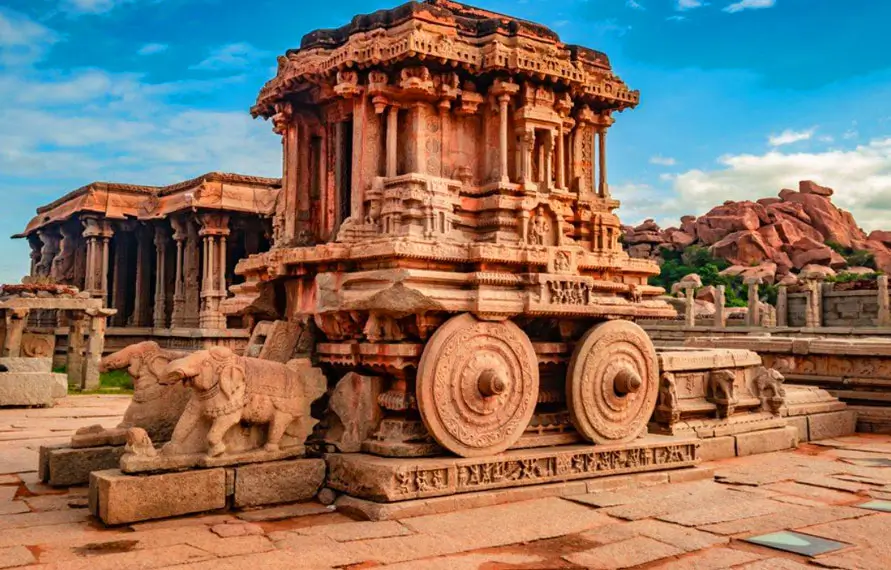
The Golden Chariot, operated by IRCTC and named after Hampi's stone chariot, returns for the 2026-27 season after a makeover that brought new furnishings, in-cabin smart televisions, onboard internet and the Arogya wellness car with its Ayurvedic treatments. Its forty cabins sleep a maximum of eighty travelers, and one is fitted out for guests with reduced mobility, and serves meals in the Ruchi and Nalpaka restaurants. Top Indian Holidays, a Ministry of Tourism approved company that has run tailor-made tours from its Jaipur base since the late nineties, submits your train reservation, chooses your estate and jungle lodges, and provides a private car with an experienced driver for every road journey after the rail portion.
Day or night, a member of our Bengaluru team is posted at the Kempegowda International Airport exit to greet you and lead you out to a cool, chauffeured car bound for the city. The journey takes 60 to 90 minutes, longer in the evening rush. Your room is waiting at a luxury hotel in central Bengaluru, and our team hands you a pack with train documents, lodge confirmations and a direct number for help at any time. If you land at night, a light meal from room service and an early sleep are the best start.
Bengaluru is the state capital and one of India's major technology centers, but older layers survive between the glass office towers. If you arrive early, a short afternoon outing with our driver can take in the Bangalore Palace, a turreted granite residence built for the Mysuru royal family in a style inspired by English castles, or the summer palace of Tipu Sultan, a modest teak building with painted arches near the old fort walls. Both visits take an hour or so and are easy on tired legs after a long flight.
The city's mild plateau climate makes an evening walk pleasant for much of the year, with temperatures often in the low twenties Celsius after dark. Many guests prefer dinner in the hotel, which usually offers both Indian and international menus. Before bed, pack a small day bag for the first day on the train with a hat, sunscreen, insect repellent and a light jacket, as you will be on safari in the afternoon. Our driver will collect you at about 07:15 for the morning transfer to the station.
Registration for the Golden Chariot Pride of Karnataka opens at Yeshwanthpur station at about 08:30. A traditional welcome with music and garlands greets each guest, and a steward leads you to your cabin, where your suitcases are already placed. Take a few minutes to settle in: the cabin has a private bathroom, a television, a wardrobe and wide windows. The lounge serves coffee while the last guests board, and the friendly crew is happy to answer questions about the week. Hand over any medicines that need refrigeration to your steward.
Departure comes at roughly 09:45, heading south-west, and once the train is moving the crew gathers everyone in the lounge over tea and snacks for a talk about the journey, the timings of the excursions and the dress code for temples. The landscape outside changes slowly from city to market gardens, coconut groves and red earth fields. After lunch in Ruchi or Nalpaka, the train pulls up around 13:30 at Nanjangud, a pilgrimage town on the banks of the Kabini. From there coaches drive about 50 kilometers to the forest for the afternoon.
Your safari in Bandipur National Park sets out around 16:30 and lasts until roughly 18:30, when animals become active again after the heat of the day. The park is part of the Nilgiri Biosphere Reserve, which links forests across three southern states. Elephants are seen often, as are spotted deer, large brown deer, Indian bison, wild boar and peacocks. With luck you may spot a tiger, leopard or a pack of wild dogs, though nothing is guaranteed. You will return to Bandipur's neighboring forest at Kabini later in the trip. Back on board at about 20:15, dinner is served as the train heads to Mysuru.
After breakfast on board, a coach takes you from Mysuru station to the gates of Mysuru Palace, the home of the Wodeyar dynasty, who ruled this region for centuries. The present palace was completed in the early twentieth century after an earlier wooden building was destroyed by fire. Inside, you walk through halls of gilded columns, carved doors inlaid with silver and ivory, and a wedding pavilion lit by an octagonal ceiling of colored glass. Shoes are removed at the entrance, and photography is not permitted inside the building.
Outside the palace, your guide points out the temples within its walls and the view of Chamundi Hill, where a famous temple and a giant stone bull overlook the city. A brief stop at a government emporium gives you a chance to look at Mysuru's specialties: fine silk, sandalwood carvings, incense and rosewood inlay. Labels are fixed and quality is reliable, which makes shopping relaxed. Lunch is back in the dining car, followed by a peaceful early afternoon with time for a rest or a spa appointment.
An optional afternoon trip leads to Srirangapatna, the island capital of Tipu Sultan in the Kaveri River, around 15 kilometers north of Mysuru. Here you see the walls of the old fort, the summer palace of Daria Daulat Bagh, whose walls are covered in murals of battle scenes and court life, and the white domed tomb of Tipu and his father. The river views at sunset are lovely. Guests are aboard again by around 20:00, and dinner is served as the train runs north through the night toward Banavar.
The day begins early, with breakfast followed by a drive from Banavar station to Halebidu, reaching the temple at about 08:00. This was the capital of the Hoysala dynasty in the twelfth and thirteenth centuries, and its twin temple is one of the finest examples of Hoysala art. Carved from soft soapstone, its outer walls are covered with friezes so detailed that you can count the beads on a dancer's necklace. The site is part of a UNESCO World Heritage listing, together with the temples of Belur and Somanathapura.
Your guide explains how to read the friezes from the base upward: elephants for strength, lions for courage, horses for speed, then scrolls of foliage and scenes from the epics. Larger panels show gods in various forms, many of them signed by the sculptors who made them. The morning light is gentle on the gray stone and ideal for photographs. By 11:00 everyone is back in the carriages, and the midday meal arrives while the train rolls west through greener hills toward the coffee country of Chikkamagaluru.
In the afternoon you visit a coffee estate near Chikkamagaluru, the district where coffee was first grown in India, according to local tradition from seeds brought from Yemen by a pilgrim. Your hosts take you along paths shaded by tall trees, with pepper vines and orange trees growing among the coffee. They explain the difference between Arabica and Robusta, how the cherries are picked and dried, and how the beans are roasted. A tasting of freshly brewed coffee ends the visit after which the coaches bring you back for dinner on board and the night run to Hospet.
Breakfast is served as the train reaches Hospet, and a short drive brings you to Hampi, once the capital of the Vijayanagara empire and now a UNESCO World Heritage Site. The setting is unlike anywhere else in India: a landscape of giant granite boulders, banana plantations and rice fields along the Tungabhadra River, with temples, palaces and gateways scattered across it. Travelers from Portugal and Persia who visited in the sixteenth century described a city of great wealth, with markets selling pearls and horses. Simply follow your guide, who knows the shady routes.
Your guide begins at Hemakuta Hill, with its early stone shrines, and then visits the Virupaksha Temple, which is still in worship today. In the royal area, you see the Queen's Bath with its arched corridors around a deep pool, the large stone platform where kings watched festivals, and the domed Elephant Stables. The small Hazara Rama Temple is covered with friezes of soldiers, horses and dancers. There is a lunch break during the day, and a hat and water bottle are essential in the midday sun.
Late in the afternoon you return to the train with dusty shoes and full memory cards. The Golden Chariot leaves Hospet in the evening and heads west toward the Arabian Sea. The overnight route passes through the forested hills that separate the Deccan plateau from the coast, though you will see little of them in the dark. A shower, a drink at the lounge bar and dinner make a pleasant end to a day on your feet. If your legs are tired, the spa's foot and leg massage is a popular choice on this evening.
The train arrives at Karmali station, and after breakfast you drive to Old Goa, from which Portugal once governed all its Indian territories. In its heyday it was one of the busiest ports in Asia, and its churches and convents are now protected as a UNESCO World Heritage Site. You visit the Basilica of Bom Jesus, where the remains of Saint Francis Xavier rest in a silver casket, and the massive white Se Cathedral nearby. Cover shoulders and knees, as these are active places of worship. The morning is humid, so light linen clothes work well.
After the churches, you stop at a restored Portuguese-era house now used as a shop and cafe, a good place to see colonial architecture with tiled floors and wide verandas, and to buy cashew nuts, Goan spices or hand-painted tiles. Lunch is served on the train as it moves south to Madgaon. The afternoon is free, and many guests take an Ayurvedic massage or sit by the window watching rice fields, coconut palms and white churches pass by in the soft coastal light. Goa feels relaxed and unhurried compared with the rest of the week.
Come evening, coaches take you to a beach hotel in South Goa for the gala dinner, a spread of Goan seafood, coconut-based stews and sweets. The atmosphere is festive, and it is often the night when guests from different countries come together around the table. Guests return to the train at about 21:45, and the Golden Chariot leaves at about 22:30 for the long overnight journey back across Karnataka to Bengaluru. This is your final night on board, so take a last look at the lounge and thank the crew who have served you all week.
Your last breakfast in the dining car is served as the train runs across the plateau toward Bengaluru. Say goodbye to the crew and fellow guests as you reach Yeshwanthpur station, where our driver meets you on the platform. Arrival times on this long leg can vary, so we keep the rest of the day flexible. Your bags are loaded into a private air-conditioned car, and you set off south-west toward the hills of Coorg, officially called Kodagu. Water, snacks and wet towels are kept in the car for the drive, and your driver speaks English well enough to point out sights along the way.
The drive is around 260 kilometers and usually takes five and a half to six hours, with a lunch stop on the way at a reliable highway restaurant or a hotel in Mysuru. After Mysuru the road passes through Kushalnagar and the Tibetan settlement at Bylakuppe, then climbs into green hills covered with coffee, pepper and tall forest trees. The air becomes cooler and more fragrant as you gain height, and the traffic of the plains fades away. The district is known for its martial clans, its rivers and its long tradition of military service.
You arrive at your Coorg estate resort in the late afternoon or early evening. Many luxury properties here sit within working coffee plantations, with private villas, infinity pools and views over the valleys. Evenings in the hills can be cool, especially in December and January, so keep a sweater handy. Dinner at the resort often features local Kodava recipes, a cuisine known for its pork dishes, rice dumplings and bamboo shoot stews, alongside international options. Ask the kitchen for a taste of the local pork dish flavored with a dark vinegar made from a forest fruit.
Mornings in Coorg are cool and often misty. After breakfast, a guided walk through the coffee estate shows you how coffee grows under a canopy of tall native trees. The guide explains the yearly cycle, from the white blossoms that appear after the first spring showers to the harvest in winter, and points out pepper vines, cardamom and orange trees growing on the same land. Birdlife is rich here, with hornbills, barbets and flycatchers often seen. Wear closed shoes, as the paths can be damp.
Later in the morning, drive to the Namdroling Monastery at Bylakuppe, one of the largest Tibetan Buddhist teaching centers outside Tibet, home to thousands of monks. Its Golden Temple has three giant gilded statues of the Buddha and his companions, and the walls are painted with bright murals. If you visit in the afternoon, you may hear the monks chanting. Nearby shops sell Tibetan handicrafts, incense and prayer flags, and a small cafe serves steamed Tibetan dumplings and butter tea. Visitors are welcome in the prayer halls, but dress modestly and walk clockwise around the shrines, as the monks do.
On the way back, stop at the Dubare Elephant Camp, on an island in the Kaveri River reached by a short boat ride. The camp is run by the forest department and is home to elephants that once worked in timber camps. Visitors who arrive in the morning can watch the elephants being bathed in the river by their keepers, and there are guided talks about their care. Return to the resort for a quiet evening, perhaps with a drink on the veranda overlooking the valleys.
After breakfast you drive from Coorg to Kabini, about 120 kilometers and three to three and a half hours. The route passes through the edge of Nagarhole National Park, where elephants, deer and gray monkeys can often be seen from the road. Because the forest road is closed to traffic at night to protect wildlife, we always time this drive for the morning. Your driver will stop at a safe spot if you see an elephant herd crossing, but stays in the car, as forest rules forbid getting out inside the park.
You arrive at your lodge on the banks of the Kabini River by lunchtime. The lodges here are set in forest or on the river, with spacious cottages, viewing decks and naturalist teams who know the animals well. Kabini became famous for the large gatherings of elephants that come to the reservoir shores in the dry season, between March and June, when hundreds can be seen grazing on the fresh grass. Check-in is followed by lunch and some free time before your first safari. Choose muted clothing in khaki, olive or brown, which is less visible to animals than white or bright colors.
In the afternoon you set out on the first jeep safari in Nagarhole National Park, run by the Karnataka Forest Department. Evening drives typically run from about 15:00 to 18:00. Kabini is known for elephants, Indian bison, large brown deer, spotted deer, wild dogs and leopards, and for the rare black panther, a leopard with a dark coat, that has made the area famous among wildlife photographers. Sightings are never guaranteed. After the drive, the lodge naturalist often gives a short talk or film over drinks before dinner, explaining the day's sightings and what to look for in the morning.
The day begins before dawn with a hot drink and a cookie at the lodge, then a boat safari on the Kabini backwaters, run by the Karnataka Forest Department from about 06:30 to 09:30. The low boat moves quietly along the water's edge, and you may see elephants bathing, crocodiles basking on the banks, otters, Indian bison and large flocks of waterbirds, including cormorants, darters and kingfishers. The light at sunrise over the water is beautiful. In the hottest months the boat safari may be suspended if water levels fall.
You return to the lodge for breakfast and a free morning. You can relax by the pool, book a massage, or walk around the grounds with a naturalist to identify birds and butterflies. Kabini is home to more than 250 species of birds, so binoculars are worth bringing. Lunch is served at the lodge, often on a terrace above the river, and there is time for an afternoon rest before the next safari. Afternoons in the dry season can be hot, so shade and a cool drink are welcome.
In the late afternoon you head out on a final jeep safari in Nagarhole, in search of tigers, leopards and the herds of elephants that come down to the water in the evening. The best light for photography is in the last hour before sunset, when the forest glows golden. Back at the lodge, a farewell dinner is served, sometimes by a bonfire under the stars. It is the last night of the wildlife chapter, and a good time to swap photos with your guide.
After an early breakfast, you have the option of one more boat or jeep safari if your lodge can arrange a morning slot, or simply a relaxed walk by the river. Then you drive back to Bengaluru, about 210 kilometers and five hours by road, passing through Mysuru on the way. Your driver can arrange a lunch stop at a good restaurant in Mysuru, which is roughly halfway, or near Srirangapatna. The road is mostly good four-lane highway after Mysuru, with clean rest stops for coffee and a break. Sit back and enjoy the passing villages, sugarcane fields and roadside markets selling coconuts and fruit.
You reach your Bengaluru hotel in the afternoon. If you have energy, the evening is a good time to visit Lalbagh, the city's botanical garden, laid out in the eighteenth century by Hyder Ali and later extended by the British, with a glasshouse modeled on London's Crystal Palace and huge old trees, some brought from overseas by the gardeners of the time. Shoppers might prefer Commercial Street or the silk showrooms of central Bengaluru. Cubbon Park is another option, a shady green lung where the red Gothic-style law courts and the pillared public library stand among the lawns.
For your last evening in India, our team can suggest a restaurant serving South Indian cuisine, or you might prefer a quiet dinner at your hotel after a long drive. Repack carefully, with coffee and spices bought along the way in your checked luggage. If you have an early flight tomorrow, we can arrange a packed breakfast and an early transfer. Our team stays in touch throughout the evening if you need anything, and we confirm the next day's timing with you before dinner, including the pickup hour.
Enjoy a relaxed breakfast at the hotel, and if your flight is later, use the morning for a last stroll or some souvenir shopping. Check-out is usually at noon, and we can arrange a late check-out or day room if your flight leaves in the evening. Bengaluru has direct international flights to many cities in the Gulf, Europe and South-East Asia, as well as good domestic connections. If you have time, try a last South Indian breakfast of crisp rice pancakes with coconut relish before you leave the hotel.
Our driver will take you to Kempegowda International Airport, about 60 to 90 minutes from the city center depending on traffic. For international flights, we recommend arriving at least three hours before departure. The airport is modern and well run, with good restaurants and shops if you need any last gifts. Our team checks that you are safely on your way and is available until you board your flight. Keep a little cash in Indian currency for tips and porter services at the terminal, since cards are not always accepted.
Top Indian Holidays hopes this trip has shown you the many faces of Karnataka, from royal palaces and ancient temples to coffee hills and tiger forests. If you wish to stay longer, we can add a few nights on the beaches of Goa or Kerala, a stay in the tea hills of Munnar, or a visit to the temple towns of Tamil Nadu. Every extension comes with private cars, English-speaking guides on sightseeing days and handpicked hotels, so the next chapter is as easy as the first.
Fill out this form with all the required information. Within 12 hours, we will provide you with a tailor-made itinerary at the best price.
Read the reviews of our esteemed client's, go through the experiences they had with Top Indian Holidays.
Whether you're planning your first India trip or returning to explore deeper — get honest, expert advice from someone who knows every corner of this country. No pressure, no cost.



 info@topindianholidays.net
 +91-8955000999