


 info@topindianholidays.net
 +91-8955000999
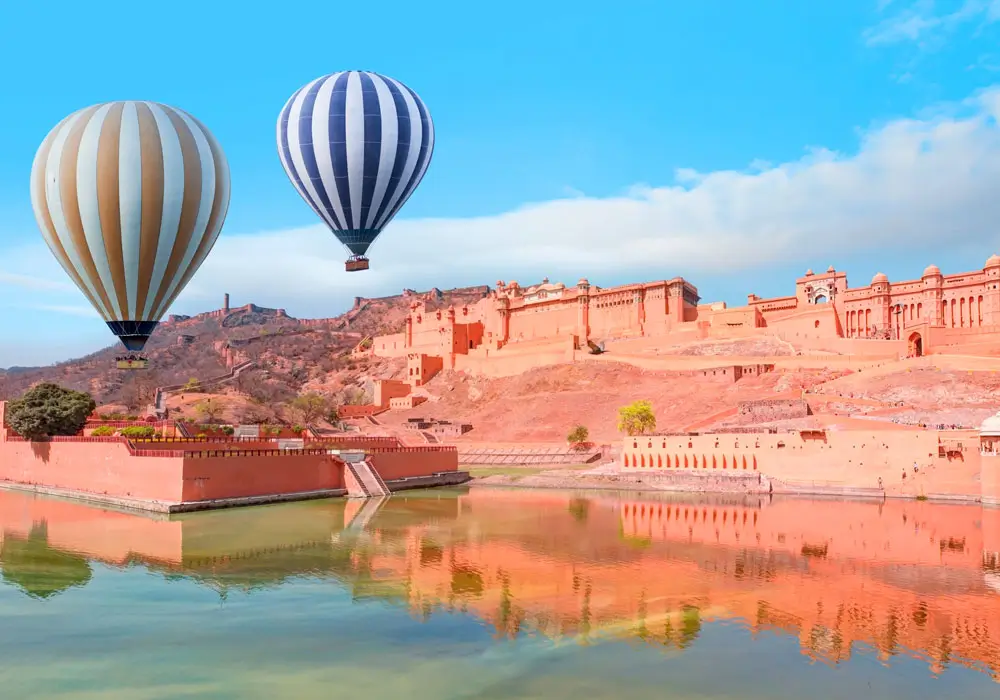
Hot Air Balloon Ride in Jaipur
Lift off as the sky turns orange and drift over villages, mustard fields and the Aravalli hills while Jaipur is still waking up.
View Experience ›Walk out of McLeod Ganj, Rishikesh or Manali with a local guide and spend a day on mountain paths, from a forest stream to a ridge facing the snows of the Dhauladhar.
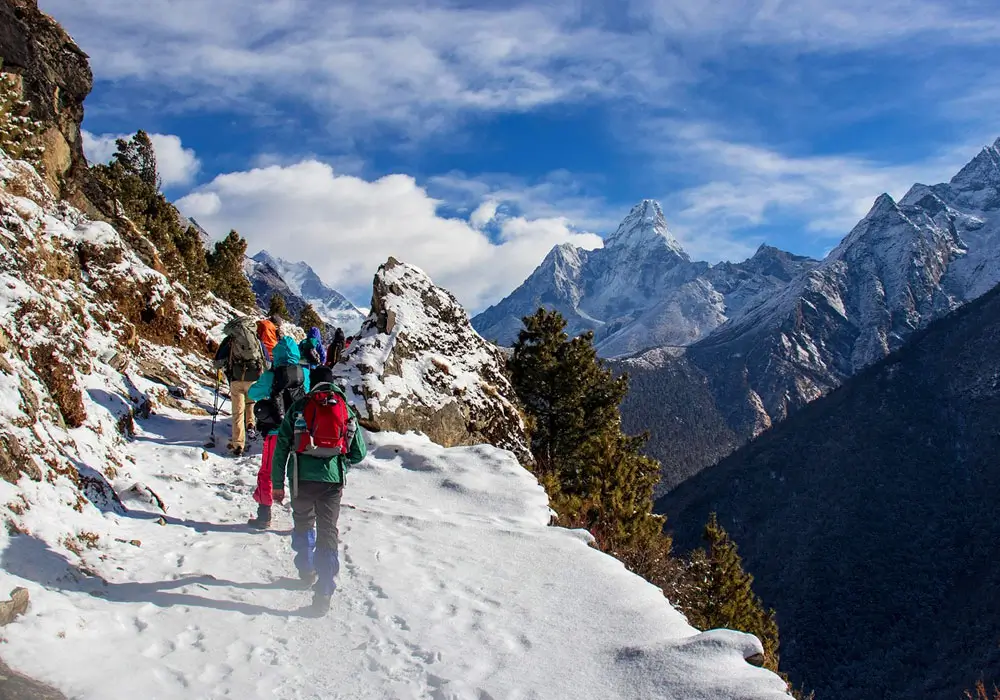
Most private tours of India are lived at the speed of a car. You see the Himalaya through a windscreen on the way up to the hills, then from a hotel balcony, then through the windscreen again on the way down. A day on foot changes that. A Himalayan day hike puts you on the same paths that shepherds, villagers and pilgrims have used for generations, and it lets you feel the mountains rather than simply look at them: the cool air under the deodars, the sound of a stream you cannot yet see, the moment a ridge opens and the snow peaks are suddenly close.
You do not need to be a mountaineer, and you do not need to sleep in a tent. The hikes on this page all start and finish at your hotel or a short drive from it. Some are gentle half-day walks to a waterfall and a village café. Others, like the climb to Triund above McLeod Ganj, are a proper day in the hills that asks for decent fitness and good shoes. Our job is to match the walk to you, not to push you up the hardest trail in town.
There are three bases where a day hike fits most naturally into a tour of northern India. Dharamshala and McLeod Ganj give you the Dhauladhar range, Tibetan village life and the classic ridge walk to Triund. Rishikesh sits where the Ganga leaves the foothills, and its hikes are lower, greener walks through forest to waterfalls. Manali, further into the Kullu valley, offers walks between old wooden villages, apple orchards and a high waterfall above Vashisht.
Whichever base you choose, the day is private, guided by someone who knows the trail and the weather, and planned around how you actually like to walk.
1. A conversation before you travel
The most useful part of the planning happens before you reach the hills. We ask how often you walk at home, whether you are comfortable on steep, uneven ground, how you feel about height and exposure, and whether anyone in the group has knee, heart or breathing concerns. From that we suggest one or two routes, and a backup in case the weather turns.
2. Meeting your guide
Your guide meets you at the hotel the evening before or first thing in the morning. They look at your shoes, your bag and your layers, and they tell you honestly whether the route still makes sense given the forecast. Local guides in these towns walk these paths constantly, and they know which sections become slippery after rain and where the views open up.
3. An early start
Mountain weather tends to be clearest in the morning, and cloud often builds over the peaks later in the day. For a full-day hike, especially Triund, we start early so that you reach the high point while the views are still sharp and come down without hurrying. Your driver drops you at the trailhead if the path does not begin at the hotel door.
4. The walk up
Your guide sets a pace you can keep talking at. Uphill sections are taken slowly with short, regular pauses rather than long collapses on a rock. Along the way they point out the things you would walk past alone: a shepherd’s shelter, a shrine tied with prayer flags, a medicinal plant, a bird calling from the oaks, the far-off line of the Kangra valley or the Ganga below.
5. Tea, food and the high point
On popular trails there are simple tea stalls and small dhabas selling chai, Maggi noodles, omelettes and soft drinks. Your guide knows which are reliable. On quieter walks we pack a lunch from your hotel. At the top of the walk you have time to sit, eat, take photographs and simply look, which is the reason you came.
6. The way down
Descents are where most slips and sore knees happen, so the guide slows the group down rather than speeding up. Trekking poles help a great deal here. If cloud or rain moves in, the guide makes the decision to turn back early, and we ask you to trust that call.
7. Back to your hotel
Your driver meets you at the trailhead, or you walk the last stretch into town. Most guests are back in the afternoon with time for a hot shower, a massage, or a slow evening in a café overlooking the valley.
From McLeod Ganj: Triund ridge. This is the best-known day hike in the Dharamshala area, and for good reason. The path climbs from the Dharamkot side of McLeod Ganj through oak and rhododendron forest to an open grassy ridge at around 2,850 metres. From the top, the Dhauladhar range rises directly in front of you, close enough to make out gullies and snowfields, while behind you the Kangra valley stretches away towards the plains. It is a steady, sustained climb on a rocky path with a steeper final section, and it is a full day out. It suits travellers who walk regularly and are comfortable climbing for several hours. It is not a stroll.
From McLeod Ganj: Gallu Devi. The small Gallu Devi temple sits on the Triund trail above Dharamkot, and it makes an excellent turning point for travellers who want a taste of the ridge path without the full climb. You walk through forest, get open views over the valley, stop for tea near the temple and come back down. As a half-day walk it suits most reasonably fit people.
From McLeod Ganj: Bhagsu waterfall and the Shiva café. A gentler walk leads from McLeod Ganj to the village of Bhagsunag, past the old Bhagsunag temple and its bathing tanks, and then up a stone path to Bhagsu waterfall. The falls are at their fullest after the monsoon. Above them, a scramble up the rocks leads to the Shiva café, a long-standing hangout painted in bright colours where you can sit with a chai and look back down the gorge. It is busy in peak season and on Indian holiday weekends, so an early start helps.
From McLeod Ganj: Dharamkot village. Dharamkot sits on a hillside above McLeod Ganj, a quieter world of small guesthouses, meditation centres, terraced plots and cafés with views across the valley. A walk up through the village and back down via Bhagsu makes an easy, varied half day, and it is a good way to see how the hill communities around McLeod Ganj live alongside the Tibetan settlement below.
From Rishikesh: forest walks to waterfalls. The hills above Rishikesh are lower and covered with sal and mixed forest rather than pine and oak. The best-known walk leads up to Neer Garh waterfall, a series of cascades and pools in a forest gorge a short drive from the Laxman Jhula area. A stepped path climbs alongside the water to the upper falls, and the walk can be combined with time in the villages above or with a slow return along the Ganga. Other forest paths lead to smaller streams and viewpoints over the river valley, and your guide picks the right one for the season. These are shorter and less demanding than the Dharamshala ridge walks, and they are at their best when the falls are full.
From Manali: Jogini Falls and Vashisht. Vashisht is an old village just above Manali, known for its hot springs and its temple to the sage Vashisht. From the village, a path climbs through orchards and pine to Jogini Falls, a tall waterfall dropping down a cliff into the valley, with a small shrine near its base. The walk combines village life, forest and a striking finish, and it makes a good half day for most people.
From Manali: Old Manali and the villages. Old Manali, above the busy new town, still has traditional houses built of stone and timber, the Manu temple and lanes that lead out into apple orchards. Combined with a visit to the Hadimba temple in its cedar forest, this is a cultural walk as much as a hike, ideal on arrival before you try anything steeper.
We never quote exact walking times for these routes because they depend so much on your pace, the weather and how long you choose to linger. Your guide gives you a realistic idea on the day.
Honesty matters here, because the wrong hike can spoil a holiday. We think about the walks in three loose levels.
Gentle. Bhagsu waterfall, Dharamkot, Old Manali and the shorter forest walks near Rishikesh. You need to be comfortable walking uphill on uneven paths and steps for a few hours with breaks. Most active travellers of any age manage these well.
Moderate. Gallu Devi, Jogini Falls and the longer Rishikesh waterfall walks. These involve a steadier climb and some rough or wet sections. If you walk regularly at home, enjoy a hilly countryside walk and have no knee problems, you will be fine.
Demanding. The full climb to Triund. Expect a long, continuous ascent on a rocky path and an equally long descent. You should be a confident hill walker who can keep going for most of a day. If you are not sure, start with Gallu Devi and decide on the day whether to carry on.
A note on altitude. McLeod Ganj sits at around 2,000 metres and Manali at a similar height, while Rishikesh is far lower. At these heights most people feel nothing more than a little extra breathlessness on climbs, especially on the first day. We still suggest you spend a night in the hills before a big hike, drink plenty of water and walk slowly. Anyone with heart or lung conditions should check with their doctor before travel.
March to June. Spring brings rhododendrons in flower on the Dharamshala trails in the earlier part of the season, and long, warm days. May and June are popular with Indian holidaymakers escaping the heat of the plains, so the paths and tea stalls are busier. Afternoon storms can roll in over the Dhauladhar.
July to mid-September: the monsoon. The hills are green and the waterfalls are spectacular, but this is the riskiest time to hike. Heavy rain makes paths slippery, swells streams and can cause landslides that block the roads to trailheads or towns. The Kangra valley around Dharamshala is one of the wettest parts of Himachal Pradesh. We plan monsoon walks carefully, keep them short, choose routes away from loose slopes, and cancel without hesitation when the rain is heavy. Rishikesh walks also change in monsoon, as the river rises and some forest paths become unsafe.
Late September to November. For most travellers this is the finest time. The air is washed clean after the rains, the views of the snow peaks are often at their clearest, and the days are mild. Nights turn cold by November.
December to February: winter. Snow falls on the high ridges, and in many winters Triund itself is under snow. The views can be stunning, but the upper path becomes icy and genuinely dangerous without proper footwear and experience. In winter we usually suggest lower walks such as Bhagsu, Dharamkot or Gallu Devi depending on conditions, and only go higher when the guide judges it safe. In Manali, heavy snow can close paths and roads altogether, while Rishikesh stays mild and its forest walks are pleasant through the cold months.
Mountain weather changes quickly in every season. A bright morning can become a cold, wet afternoon, which is one more reason to start early and carry a layer.
Some travellers ask whether they really need a guide on a well-trodden trail. On a busy spring morning you will certainly see other walkers. But a good local guide does far more than point the way.
They read the weather. Guides live in these towns and watch these ridges every day. They know what a particular cloud building over the Dhauladhar usually means, and when to turn back.
They know the path. Trails split, side paths lead to grazing grounds, and after rain or a landslide the usual route may change. A guide keeps you on the right line and away from loose ground.
They handle the practical side. Forest department rules, trekking fees, permitted routes and seasonal restrictions change from time to time in Himachal Pradesh. Your guide knows the current situation, and we check before your hike.
They explain what you see. Gaddi shepherds moving flocks, Tibetan prayer flags, village shrines, the plants and birds of the forest. Without a guide these are scenery. With one, they become stories.
They look after you. If someone twists an ankle or feels unwell, the guide knows how to get help and how to get you down.
The paths above McLeod Ganj, Rishikesh and Manali are under real pressure from rubbish, especially plastic bottles and food wrappers left near tea stalls and viewpoints. We ask every guest to walk with care.
Give the hills at least two nights. A single night in McLeod Ganj or Manali leaves no margin for weather. With two or three nights you can walk on the clearest morning and spend the other day more gently.
Arrive before you climb. If you come up from Delhi, take your first day in the hills slowly with a walk around town before a bigger hike.
Dharamshala pairs well with culture. Spend one morning at a Tibetan monastery and the next on the trail. Our Tibetan monastery morning page explains how that visit works. If you are heading to Bir afterwards, add paragliding at Bir Billing, a few hours’ drive away.
Rishikesh pairs well with the river. Combine a forest walk with yoga and meditation by the Ganga or a morning of white water rafting. For a longer programme, see our yoga and meditation tour.
Manali pairs well with village life. A walk to Jogini Falls fits naturally with time in Old Manali and the Hadimba temple, and it is a good warm-up if you plan to drive on towards Lahaul or Ladakh in summer.
Getting there. Dharamshala is reached by a short flight to Kangra airport from Delhi or by road. Rishikesh is the easiest of the three, a drive from Delhi or a short hop from Dehradun airport. Manali is a long road journey or a flight to Kullu followed by a drive. We work out the most comfortable route as part of your wider plan.
Bring and wear - Walking shoes or boots with good grip, already worn in - Breathable layers, plus a warm fleece or jacket - A light waterproof, in every season - Sun hat, sunglasses and sunscreen - Refillable water bottle and a few snacks - Small daypack - Trekking poles if you use them, especially for the descent - Any personal medication
Leave behind - New shoes, sandals or fashion trainers with smooth soles - Heavy bags and unnecessary valuables - Single-use plastic bottles where you can avoid them - Speakers or loud music - Drones, unless we have checked the rules with you
Tell us which hill town is on your route and how you like to walk, and we will choose the right trail and the best morning for it.
Call & WhatsApp +91-9828085426 or email info@topindianholidays.net.
See more ideas on our Top Experiences in India page.
Tell us your travel dates and we will check availability and fit this experience into the right day of your itinerary. Reply within 12 hours.
Check Availability› Chat on WhatsApp› Send an Enquiry› 
 🌙 08 Nights / 09 Days
⭐ Most Popular
Delhi - Chandigarh - Manali... Delhi - Chandigarh - Manali - Dharamshala - Amritsar Show More
 🌙 12 Nights / 13 Days
Delhi - Agra - Delhi... Delhi - Agra - Delhi - Leh - Nubra Valley - Pangong Lake - Leh - Delhi Show More
 🌙 14 Nights / 15 Days
Delhi - Amritsar - Dharamshala... Delhi - Amritsar - Dharamshala - Mcleodganj - Manali - Shimla - Rishikesh - Jim Corbett - Delhi Show More
 🌙 08 Nights / 09 Days
⭐ Most Popular
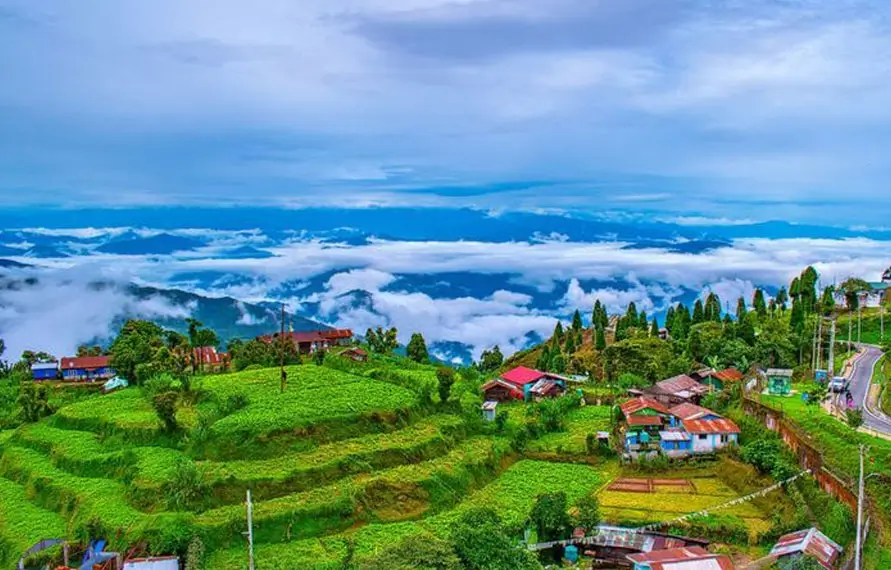
Bagdogra - Gangtok - Pelling... Bagdogra - Gangtok - Pelling - Darjeeling Show More
Yes. Dharamshala, Rishikesh and Manali all fit into a wider North India itinerary. Tell us your route and dates and we will place the hike on the best day, with a backup if the weather turns.
Your guide may shorten the route, choose a lower walk or postpone. This is why we suggest at least two nights in the hills. Safety always comes before reaching a viewpoint.
Popular trails such as Triund and Bhagsu have simple tea stalls selling chai and snacks. On quieter walks we arrange a packed lunch. Always carry your own refillable bottle and some snacks in case a stall is closed.
Many children enjoy the gentler walks, such as Bhagsu waterfall, Dharamkot or Old Manali. The long climb to Triund suits only older children who already walk well. Tell us ages and experience and we will suggest the right route.
It starts in Vashisht village, known for its hot springs and temple, and climbs through orchards and pine forest to a tall waterfall on a cliff. It is a moderate half day for most people, with some rough and wet sections near the falls.
Yes. The forest above Rishikesh has walks to waterfalls such as Neer Garh, with cascades and pools along a stepped path, plus quieter trails with views over the Ganga. They are lower and gentler than the Dharamshala walks and pair well with yoga or rafting.
Walking shoes or boots with good grip and ankle comfort, already worn in before your trip. Paths are rocky and can be wet or muddy. Sandals and smooth-soled trainers are not suitable for Triund or Jogini Falls.
At the heights of these day hikes, most people only notice some extra breathlessness on climbs. Spend a night in the hills first, walk slowly and drink plenty of water. If you have heart or lung conditions, check with your doctor before travelling.
We strongly recommend one. A local guide knows the right path, reads the weather, understands current forest rules and can help if anyone is hurt. They also make the day far more interesting by explaining what you pass.
Monsoon walks can be beautiful, but heavy rain makes paths slippery and brings a risk of landslides on roads and slopes. We keep monsoon hikes short, choose safer routes and cancel when the rain is heavy. If walking matters a lot to you, autumn or spring is a better time to visit.
Sometimes, but often not to the top. Snow and ice usually cover the upper ridge in winter, which makes the path slippery and risky. We usually suggest lower walks then, and go higher only if your guide judges conditions safe.
Plan for a full day. The actual time depends on your pace, how long you rest at the top and the weather, so we do not promise a fixed number of hours. Your guide gives you a realistic idea once they have seen you walk.
It is a steady, sustained climb on a rocky path with a steeper final stretch, followed by a long descent. Regular hill walkers manage it well. If you rarely walk uphill for long, start with Gallu Devi and decide on the day whether to go on.
For most travellers it is a walk from McLeod Ganj, either up to Gallu Devi or, if you are fit, all the way to Triund ridge. You get forest, villages and close views of the Dhauladhar in a single day. If you prefer something easier, the Bhagsu waterfall walk is a good start.
Whether you're planning your first India trip or returning to explore deeper, get honest, expert advice from someone who knows every corner of this country. No pressure, no cost.