


 info@topindianholidays.net
 +91-8955000999

Hot Air Balloon Ride in Jaipur
Lift off as the sky turns orange and drift over villages, mustard fields and the Aravalli hills while Jaipur is still waking up.
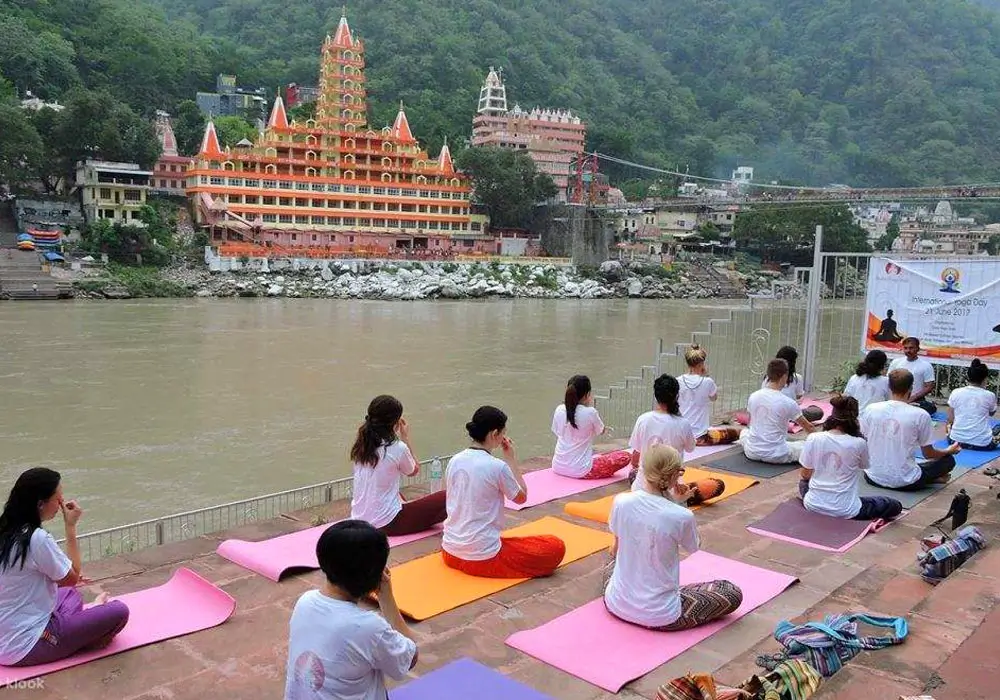
View Experience ›Roll out a mat beside the river as the light reaches the hills, learn to breathe slowly with a qualified teacher, and end the day with lamps and chanting at the evening aarti.
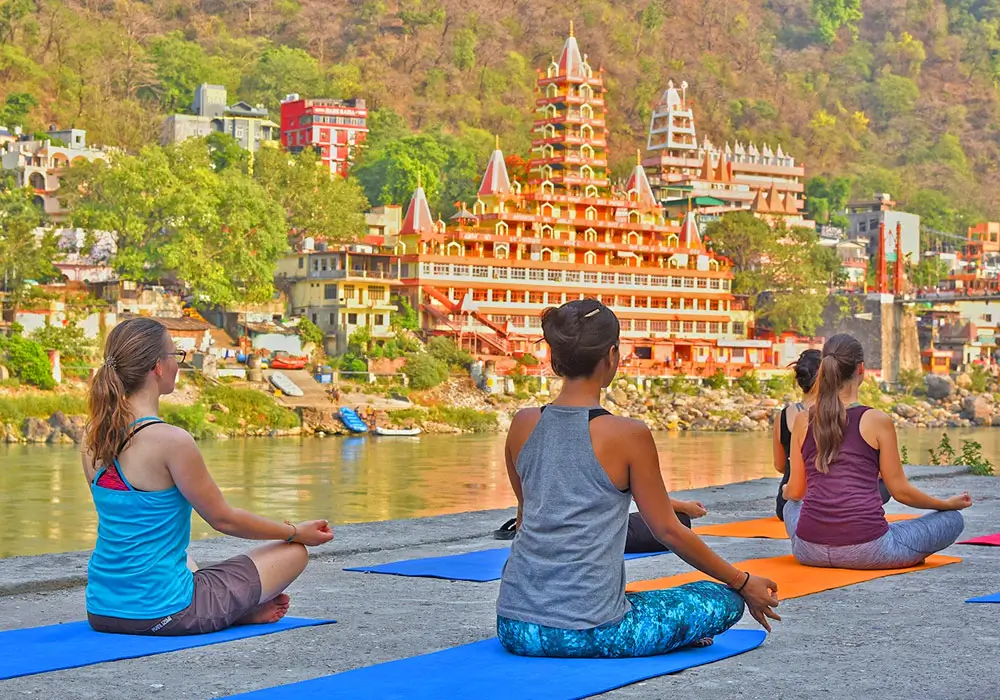
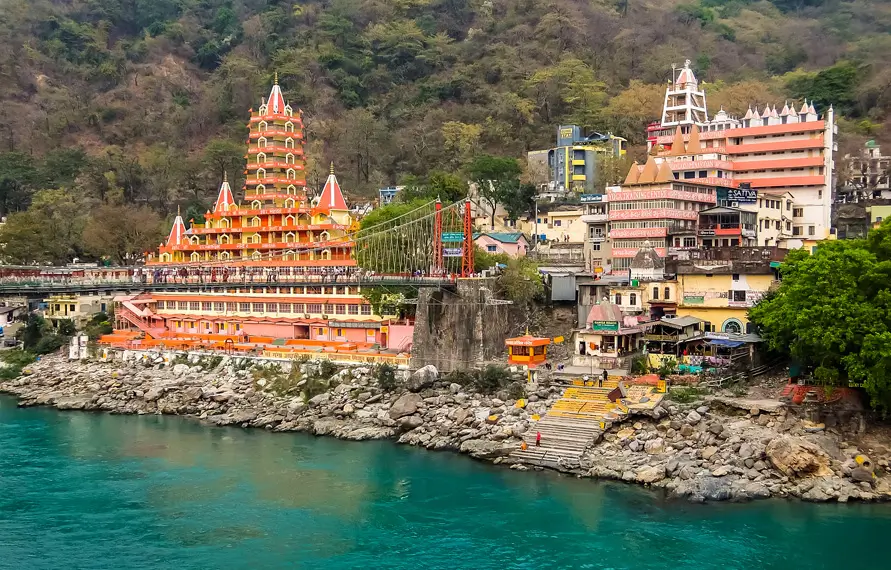
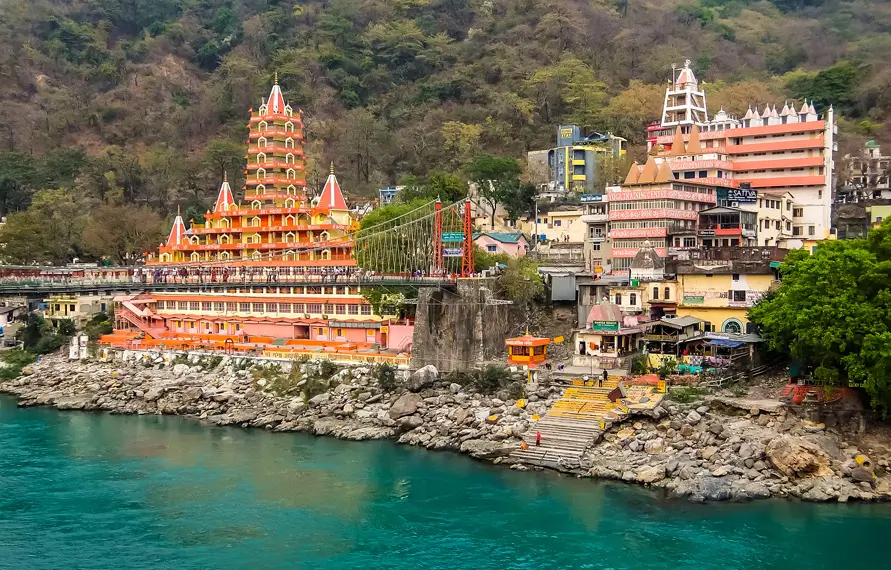
Rishikesh sits where the Ganga leaves the Himalayan foothills and runs out onto the plains. The river here is fast, cold and a startling green-blue, and the town has grown up along both banks in a long, narrow strip of ashrams, temples, guesthouses, chai shops and bookshops selling everything from the Bhagavad Gita to anatomy guides for yoga teachers. People have come here to study and meditate for centuries, and today it is one of the few places in the world where almost everyone you pass on the street at 6 am is on the way to a practice of some kind.
That makes it the natural setting for a short yoga retreat in Rishikesh, even if you have never done a sun salutation in your life. This page describes a single experience or a short stay of a few days: private or small-group sessions with a qualified teacher, held by the river or on a quiet terrace, covering gentle Hatha postures, breathing (pranayama) and simple meditation. Add the evening Ganga aarti, a walk across the Ram Jhula footbridge and a visit to the old Beatles Ashram in the forest, and you have a calm, grounded pause in the middle of a busy India tour.
If you want something deeper, we also run a full 17-night yoga and meditation tour built around daily practice, with time in Rishikesh and other spiritual centres. The two are different things. The tour is a journey with yoga at its heart. This experience is a taste of Rishikesh that fits inside a wider holiday, for travellers who want two or three mornings on the mat rather than two weeks.
Whether you choose a short yoga retreat in Rishikesh or the longer tour, the aim is the same: to give you a real introduction to yoga as it is taught in India, slower and more focused on breath than many classes at home, and to let you see the town that has drawn seekers, musicians and ordinary curious travellers for generations.
1. Arriving in Rishikesh
Most guests drive from Delhi, a journey of around six hours depending on traffic, or fly to Dehradun’s Jolly Grant airport, which is around 45 minutes from town. Another option is the morning train from Delhi to Haridwar, followed by a short drive. Your private driver brings you to your hotel, and we usually keep the arrival afternoon free so you can settle in, walk to the river and see the evening aarti before your first session.
2. Meeting your teacher
Before the first class, your teacher spends a few minutes asking about you: any injuries, back or knee trouble, blood pressure, pregnancy, how much yoga you have done and what you hope to get out of it. Be honest here. A good teacher adapts everything to your body, and a beginner with a stiff back gets a very different session from someone who practises every day at home.
3. The early morning session
Practice usually begins soon after first light, when the air is cool and the town is quiet. Sessions take place on a riverside terrace, a hotel deck or a quiet hall, depending on the season and where you stay. You start sitting still, with a few minutes of settling the breath, before moving into postures.
4. Hatha basics
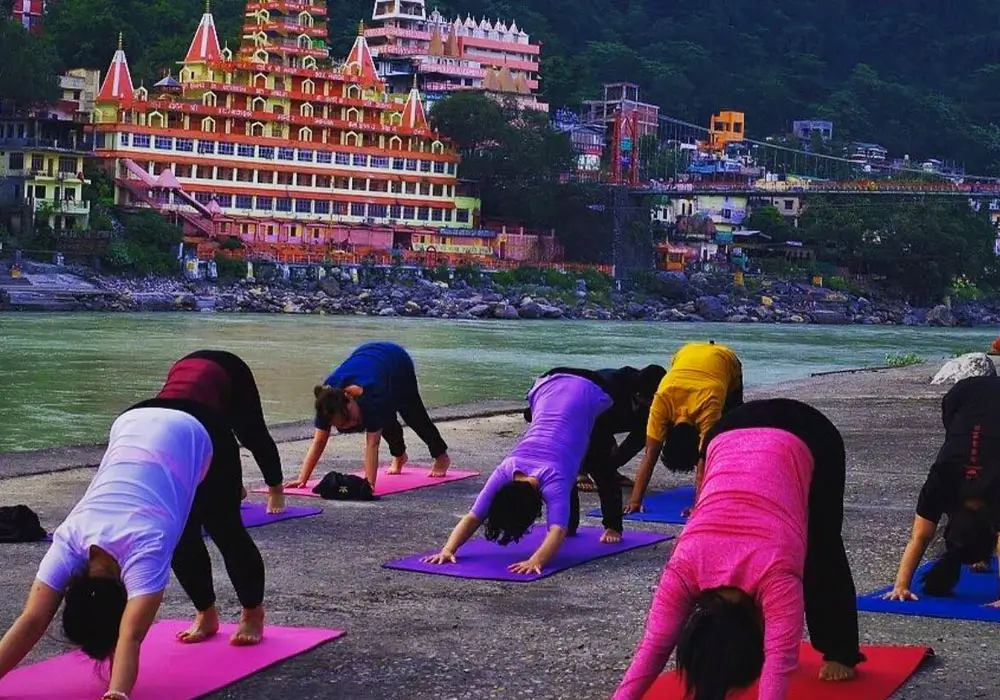
The postures are taught slowly, one at a time, with time to understand what each one does. Expect standing poses, gentle twists, forward bends and a few simple balances, all held with steady breathing rather than rushed through. The teacher adjusts with words first, and asks before offering any hands-on correction. If you prefer not to be touched, just say so.
5. Pranayama
After the postures comes breathing practice. You may learn alternate nostril breathing, slow belly breathing and a cooling or calming technique, each explained in plain language. Many guests find this the most useful part of the whole stay, because it is something you can take home and do anywhere, on a plane, in a meeting, or before sleep.
6. Meditation
The session closes with a period of guided meditation, sitting on a cushion or a chair if the floor is uncomfortable. It is kept simple: following the breath, a short mantra, or listening to the sound of the river. Nobody expects you to empty your mind. The point is to notice where it goes and come back.
7. Breakfast and a free day
After practice you return for breakfast, and the rest of the day is yours. We suggest an easy mix of walking, temple visits, café time by the river and perhaps a second, shorter session in the late afternoon if you are staying for several days.
8. Evening Ganga aarti
Around sunset, walk to the riverside for the aarti, the lamp ceremony offered to the Ganga each evening. At Parmarth Niketan the ceremony is led by young students of the ashram with chanting, music and fire, and anyone may sit and watch. Triveni Ghat, further downstream, holds its own aarti with a more local, bustling feel.
9. Moving on
On your last morning you can fit in a final session before your driver takes you on to Delhi, Haridwar, Dehradun or the hills. Many guests leave with a short routine written down by their teacher to keep practising at home.
Rishikesh has been a place of retreat for sadhus and teachers for a very long time, and the town was home to some of the figures who shaped how yoga is taught around the world today. Many ashrams here have run daily classes and courses for decades, and the town hosts an annual International Yoga Festival, usually in March, which draws teachers and students from many countries.
What makes it different from a studio at home is the setting and the rhythm. The town is a pilgrimage centre for Hindus, so the day is shaped by temple bells, morning bathing at the ghats and the evening aarti. By local rules and custom, alcohol and meat are not sold in the town centre, and almost every restaurant is vegetarian. The result is a place that feels naturally calm once you step away from the busiest lanes, which is exactly the frame of mind yoga aims for.
There is also the river. Sitting beside the Ganga at dawn, with mist lifting off the water and the forested hills of the foothills behind, it is easy to understand why so many generations chose this spot to sit still.
Yes, and beginners are often the guests who get the most from it. Here is what to expect if you have never practised before.
No flexibility needed. Yoga in this tradition is about steady breath and attention, not about how far you can bend. Your teacher will offer simpler versions of every posture and use blocks, straps, cushions or a chair where helpful.
Slow pace. A first session with a private teacher moves gently. You will not be asked to stand on your head or hold painful positions.
Clear explanations. Teachers explain the purpose of each posture and breathing exercise in English, so you understand why you are doing it rather than simply copying.
Health conditions. If you have high blood pressure, heart problems, recent surgery, back or joint issues, or are pregnant, tell us when you book and tell your teacher on the first morning. Some breathing techniques and inversions are not suitable for everyone, and a good teacher will leave them out.
Older travellers. Many guests in their sixties and seventies enjoy these sessions. Chair-based practice is possible if sitting on the floor is difficult.
For experienced practitioners, the same teacher can go deeper: longer holds, more advanced pranayama, discussion of philosophy, or a focus on a particular area such as hips or the spine.
Private sessions. Just you, or you and your travelling companions, with a qualified teacher. This is our usual recommendation. The session is shaped entirely around you, timing is flexible, and it suits couples, families, beginners who feel self-conscious in a class, and anyone with an injury or health condition.
Small-group classes. Some guests enjoy joining a class at an established ashram or yoga centre, practising alongside travellers and students from around the world. The atmosphere is pleasant and sociable, but the teacher has less time for each person and the style is fixed. Drop-in classes are best for those with some experience.
A mix of both. On a stay of three or four days, a private session on the first morning followed by a group class later gives you the confidence of individual teaching and the feel of practising in a Rishikesh hall.
We do not claim certifications we cannot check, and we will not invent credentials for anyone. What we promise is a qualified teacher, chosen for clear English, patience with beginners and a calm, careful way of teaching. If you have a particular style in mind, such as a gentler restorative practice or a more dynamic flow, tell us in advance.
Ram Jhula. The long suspension footbridge across the Ganga links the two sides of the town. Walking across is part of daily life here: pilgrims, scooters, cows and monkeys share the bridge, and the views up and down the river are some of the best in town. Hold on to sunglasses and snacks, as the monkeys are quick.
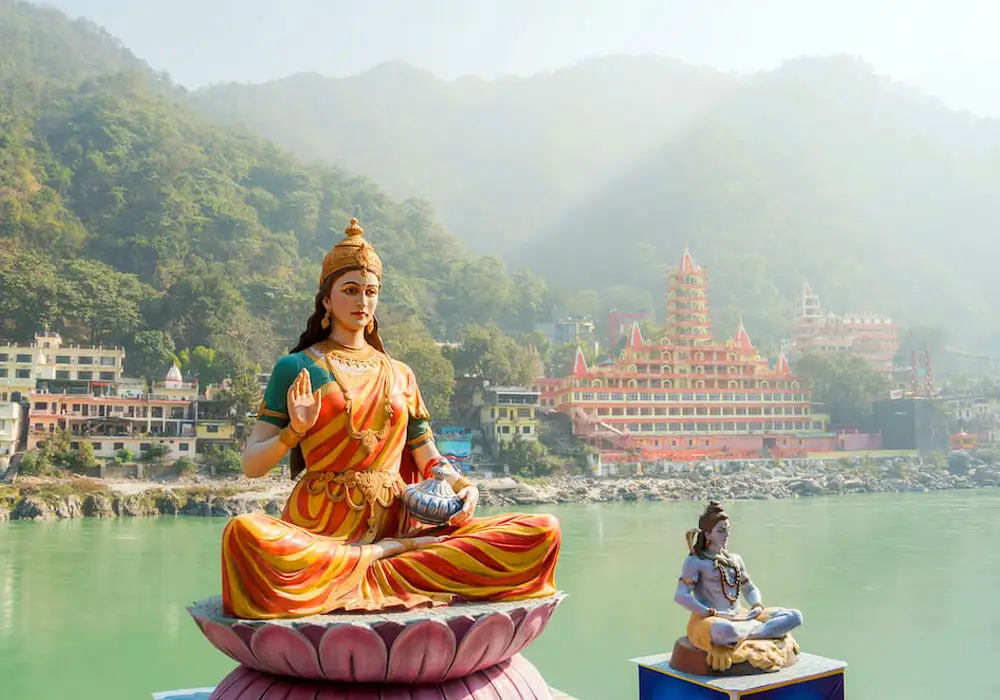
Parmarth Niketan. One of the largest ashrams in Rishikesh, on the east bank near Ram Jhula. Its riverside ghat is where the evening aarti takes place, with a large statue of Shiva standing in the river. Arrive a little early to find a place to sit on the steps.
Triveni Ghat. On the main town side, this is where pilgrims bathe and where a busy, colourful aarti is held in the evening. It feels more local and less arranged for visitors than Parmarth Niketan.
The Beatles Ashram (Chaurasi Kutia). In 1968 the Beatles spent time here studying Transcendental Meditation, and wrote many songs during their stay. The ashram was later abandoned and taken over by the forest, and it now lies within the Rajaji Tiger Reserve, managed by the Uttarakhand Forest Department, which reopened it to visitors. You wander among crumbling meditation huts, egg-shaped stone cells and walls covered in murals and graffiti, with forest all around. It is open to visitors during the day for an entry fee; timings and fees are set by the forest department and can change, so we check before your visit.
Lakshman Jhula area. The older bridge upstream has been closed to foot traffic for safety, but the surrounding area, with its tall temples, cafés and shops, is still worth a wander.
The ghats at dawn. Even if you skip a session one morning, walk down to the river early. Pilgrims bathe, priests perform small rituals, and the water steams in the cool air.
The aarti is an offering of light to the river. At Parmarth Niketan the ceremony begins with chanting by the ashram’s young students in their saffron or yellow clothes, followed by devotional songs and the waving of large brass lamps filled with flame. Visitors sit on the ghat steps, and at the end some people float small leaf boats filled with flowers and a candle on the water.
What to do. Sit, listen and join in the clapping or singing if you feel like it. There is no obligation to take part in any ritual.
Dress. Cover shoulders and knees. Shoes are removed in parts of the ghat; follow what others do.
Photos. Photography of the ceremony from your seat is generally fine, but avoid flash, do not stand in front of people who are praying, and ask before photographing individuals close up.
Offerings. If you are offered a small donation basket or a flower boat, it is fine to accept or politely decline. Donations go to the ashram.
If you are also visiting Varanasi, the evening Ganga aarti and sunrise boat there is grander and more theatrical. Rishikesh’s aarti is smaller, closer and more intimate, and many guests enjoy seeing both.
October to November. One of the best times. The monsoon has passed, the river is clear and settling, the hills are green and the mornings are fresh and comfortable for practice outdoors.
December to February. Winter. Days are pleasant and sunny, but early mornings and evenings are genuinely cold, especially by the river. Sessions may move indoors or start a little later. Bring warm layers and expect a crisp, quiet town with fewer visitors.
March to April. Warming up, with long bright days. March is often when the International Yoga Festival takes place, so the town is lively and accommodation books up early.
May to June. Hot, particularly in the middle of the day. Early morning practice is still pleasant, but sightseeing is best kept to dawn and evening.
July to September. The monsoon. The river runs high, fast and brown with silt, and the ghats can be partly closed for safety. Heavy rain sometimes causes landslides on the hill roads further north, though Rishikesh itself stays accessible most of the time. Yoga still happens indoors, and some travellers love the green, washed landscape, but it is not the time for riverside sessions.
Rishikesh has everything from simple ashram rooms to riverside boutique hotels and full wellness resorts in the hills above town. For this experience we generally suggest a comfortable hotel near the river, with a quiet terrace or deck for practice, so that sessions begin a short walk from your room and you can stroll to the aarti in the evening.
If you would like to stay in an ashram, we can talk you through what that involves: early wake-up times, set meal times, simple rooms, and rules about silence, dress and behaviour. It suits some travellers very well and others not at all, so it is worth deciding with your eyes open.
For a more luxurious wellness focus, a resort with a spa and Ayurveda treatments in the hills makes a fine base, though you will drive down into town for the aarti and sightseeing.
Give it at least two nights. One night only allows a single morning session and a rushed aarti. Two or three nights let you settle, practise on consecutive mornings and actually feel the difference.
After the Golden Triangle. Rishikesh works well after Delhi, Agra and Jaipur, as a calm counterweight to the busy cities. From Delhi you can drive up the day after arrival back from Jaipur or Agra.
Combine with Haridwar. Haridwar is a short drive away, and its evening aarti at Har Ki Pauri is one of the largest in India. A Haridwar evening and a Rishikesh morning make a neat pairing.
On to the hills. From Rishikesh, roads lead up to Mussoorie, the Garhwal Himalaya and the pilgrimage valleys, so it can be the first stop on a mountain journey.
Add something active. If you are staying several days, a Himalayan day hike or, in season, a half day of white water rafting on the Ganga adds energy between the calmer mornings.
Want more wellness? Pair your Rishikesh stay with an Ayurveda massage and wellness session, or, if a longer treatment holiday appeals, look at our Kerala luxury wellness tour. For a full journey with daily practice, see the yoga and meditation tour.
Bring and wear - Loose, comfortable clothes you can move and stretch in - A light shawl or warm layer for winter mornings and meditation - Modest clothing that covers shoulders and knees for the aarti and temples - Slip-on shoes or sandals, as you will remove them often - A refillable water bottle - A small notebook to write down your home routine - Your own mat, if you prefer it, although mats are provided
Leave behind - Tight, revealing or see-through clothing for town walks - Alcohol and meat, which are not part of town life here - Expectations of being flexible on day one - Plastic bags and disposable bottles where you can avoid them
Tell us your dates, your experience level and how many mornings you would like on the mat, and we will build a Rishikesh stay around the right teacher, hotel and evening aarti.
Call & WhatsApp +91-9828085426 or email info@topindianholidays.net.
See more ideas on our Top Experiences in India page.
Tell us your travel dates and we will check availability and fit this experience into the right day of your itinerary. Reply within 12 hours.
Check Availability› Chat on WhatsApp› Send an Enquiry›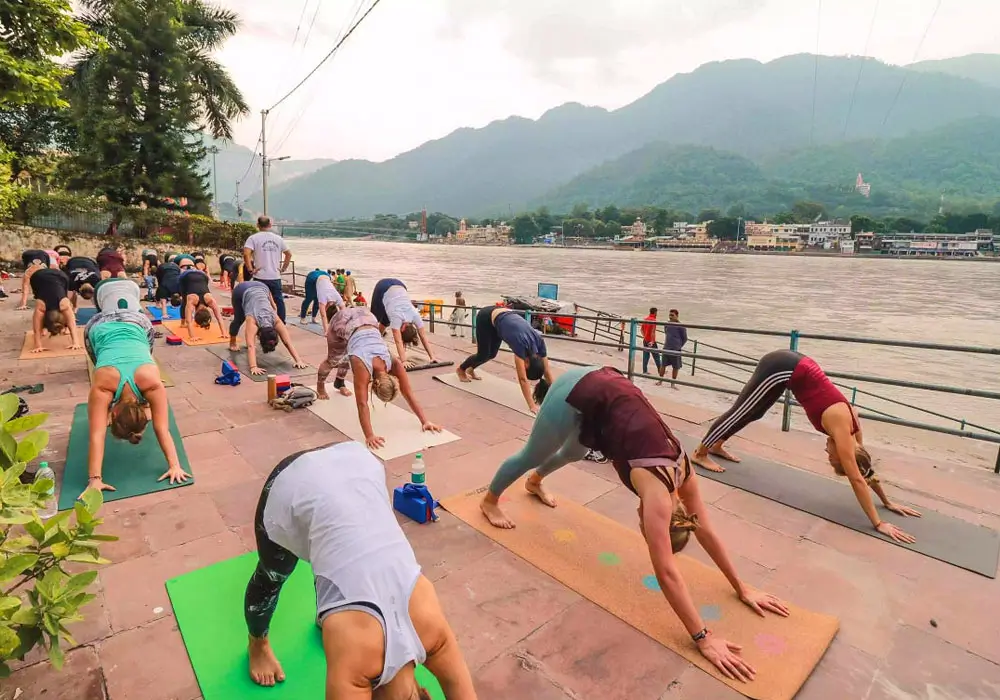



 🌙 10 Nights / 11 Days
Bangalore - Mysore - Coorg... Bangalore - Mysore - Coorg - Kerala Show More
 🌙 14 Nights/15 Days
Delhi - Rishikesh - Jaipur... Delhi - Rishikesh - Jaipur - Pushkar - Udaipur - Jodhpur - Jaisalmer - Delhi Show More
 🌙 09 Nights / 10 Days
Delhi - Agra - Jaipur... Delhi - Agra - Jaipur - Rishikesh - Delhi Show More
 🌙 08 Nights / 09 Days
⭐ Most Popular
Delhi - Agra - Jaipur... Delhi - Agra - Jaipur - Rishikesh - Delhi Show More
Yes. Rishikesh fits well after Delhi, Agra and Jaipur as a calm finale, or before them as a gentle start. Allow two or three nights there and we will plan the sessions, aarti and transfers around your route.
By road it is around six hours, depending on traffic, in your private car. You can also fly to Dehradun and drive around 45 minutes, or take a morning train to Haridwar and drive the rest of the way.
The river is fast and very cold even when it looks calm. Only dip at proper ghats where chains are fixed for holding, stay close to the steps and never swim. In the monsoon, avoid going into the water at all.
Yes, if you are happy with early starts, simple rooms, fixed meal times and house rules on silence and dress. Many travellers prefer a comfortable riverside hotel with a private teacher. We explain both options before you decide.
Two or three nights is a good minimum for this experience. It gives you several morning sessions, at least one aarti, a walk across Ram Jhula and time for the Beatles Ashram. Longer stays let you build a real routine.
October to April is best. October, November, March and April are comfortable for riverside practice. December to February is sunny but cold in the mornings. The monsoon, from July to September, brings a high river and indoor sessions.
Alcohol and meat are not sold in the town centre, and almost all restaurants are vegetarian. Some hotels and resorts outside the town limits may serve alcohol. Most guests find the vegetarian food excellent and the dry town suits the yoga stay well.
Yes. Chaurasi Kutia lies within the Rajaji Tiger Reserve and is managed by the forest department, which opened it to visitors. It is open during the day for an entry fee. Timings and fees can change, so we check them before your visit.
Parmarth Niketan has a well-organised ceremony led by ashram students, with music and chanting, and it is easy for visitors to follow. Triveni Ghat feels more local and busier. If you have two evenings, see both.
The aarti takes place around sunset, so the time shifts through the year, earlier in winter and later in summer. Arrive a little before it begins to find a seat on the ghat steps. We confirm the timing for your dates..
Usually gentle Hatha postures combined with pranayama breathing and guided meditation. Experienced guests can ask for a stronger practice, a restorative session or a focus on meditation. We pass your preferences to the teacher in advance.
We work with qualified teachers chosen for clear teaching, good English and patience with beginners. We do not quote certifications we have not checked ourselves. If a specific qualification matters to you, tell us and we will ask on your behalf before booking.
This page covers a single session or a short stay of a few days, slotted into a wider India holiday. The full yoga and meditation tour is a longer journey built entirely around daily practice. Choose this if you want a taste of yoga in Rishikesh, and the tour if yoga is the main reason for your trip.
Yes. Private sessions are designed around your level, and a first class moves slowly with simple postures, breathing and short meditation. You do not need to be flexible or fit. Tell your teacher about any injuries or health issues before you begin.

Whether you're planning your first India trip or returning to explore deeper, get honest, expert advice from someone who knows every corner of this country. No pressure, no cost.