


 info@topindianholidays.net
 +91-8955000999
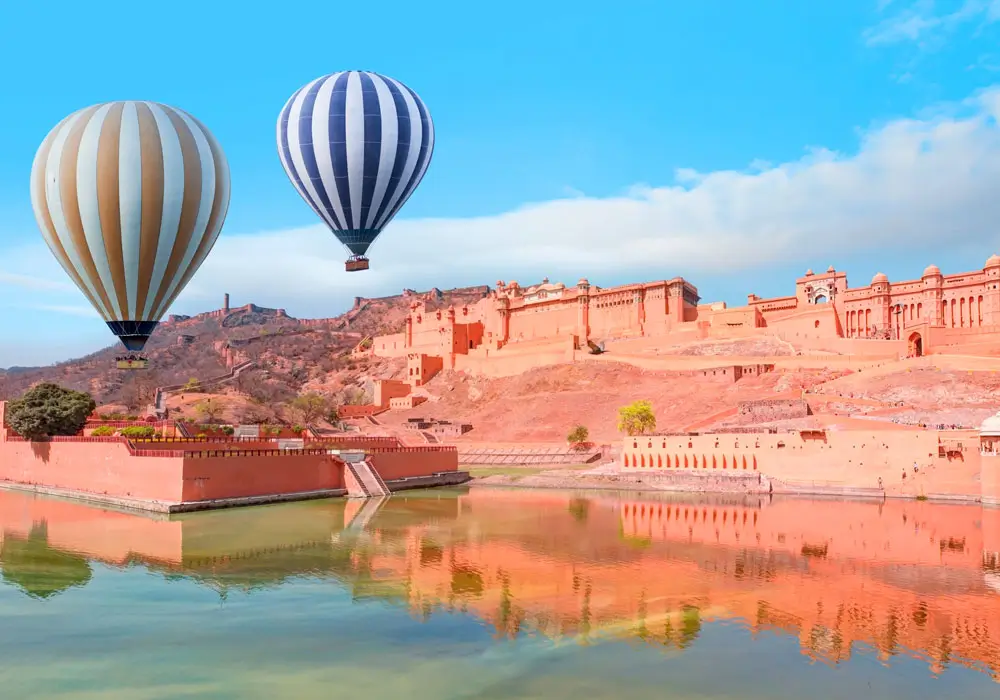
Hot Air Balloon Ride in Jaipur
Lift off as the sky turns orange and drift over villages, mustard fields and the Aravalli hills while Jaipur is still waking up.
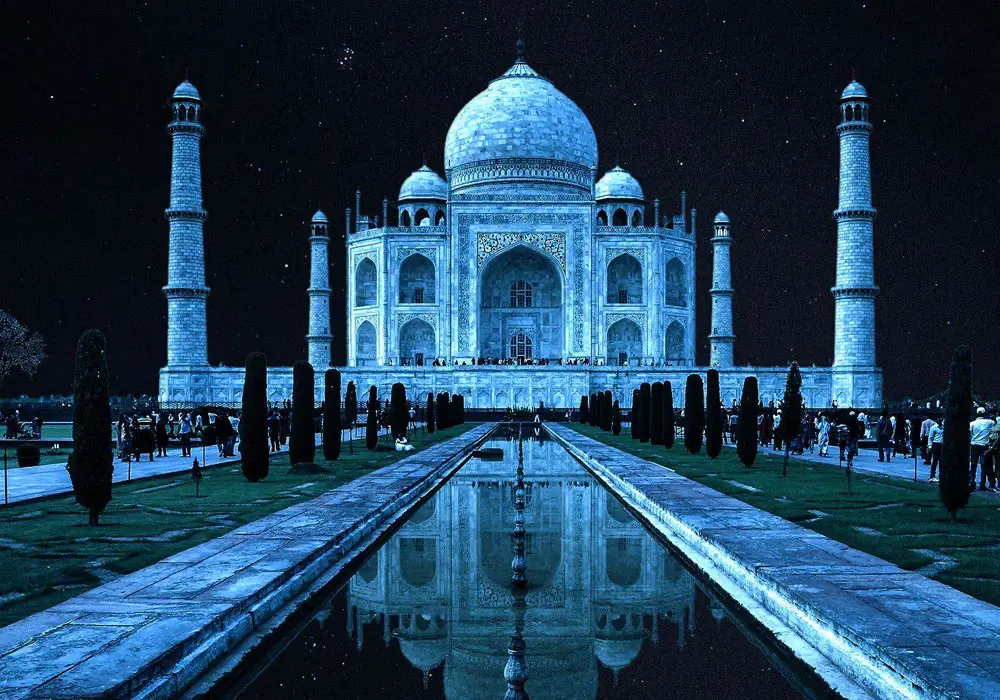
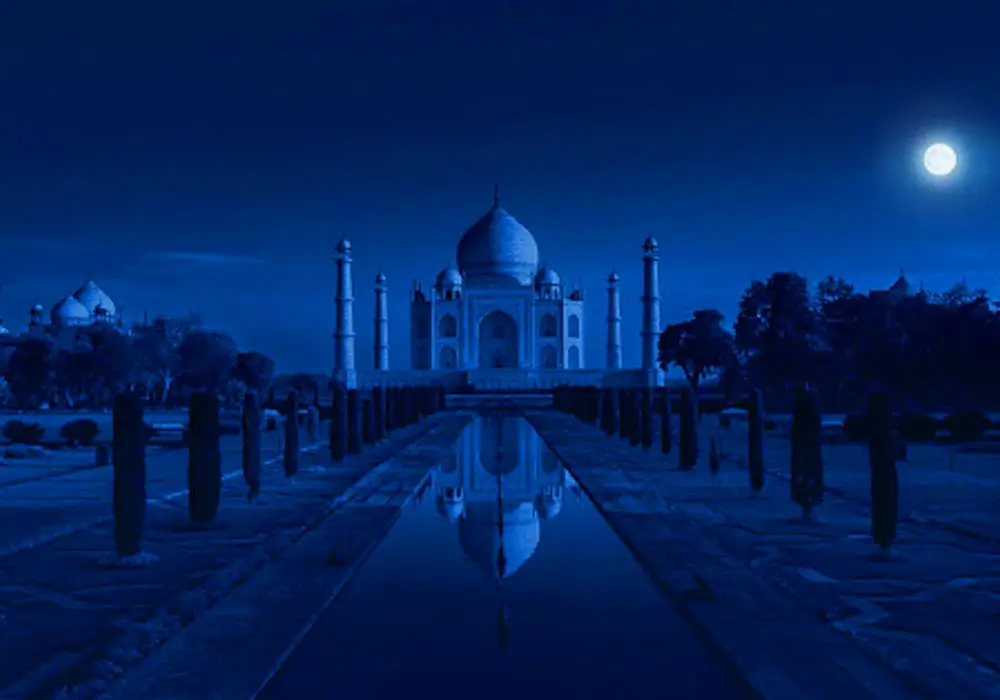
View Experience ›Stand at the far end of the gardens after dark and watch the white dome glow softly under the full moon, in a small group with the crowds long gone.
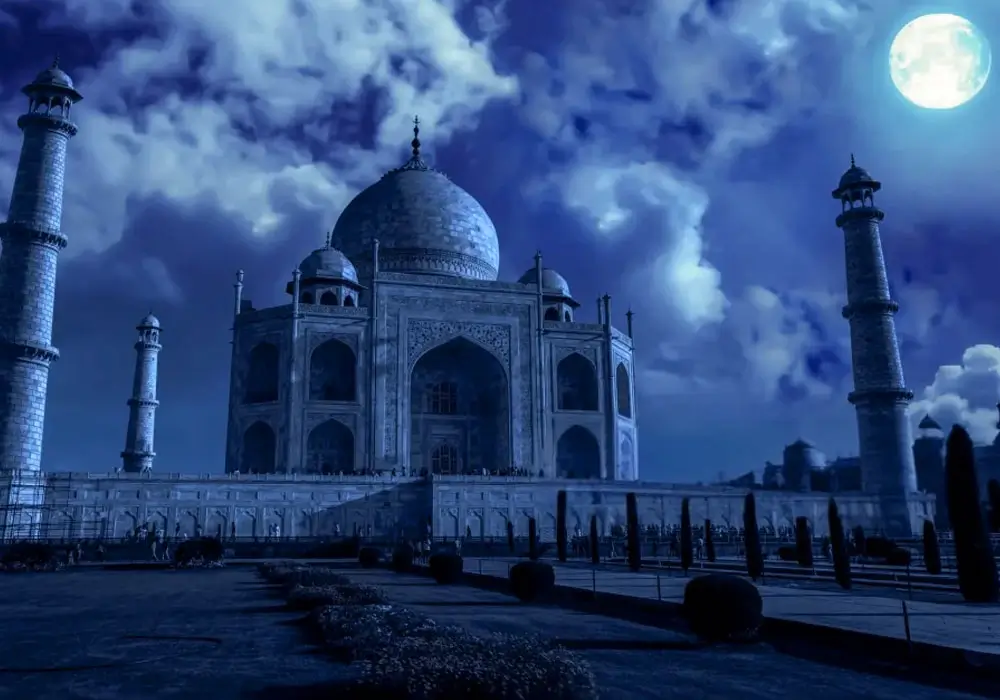
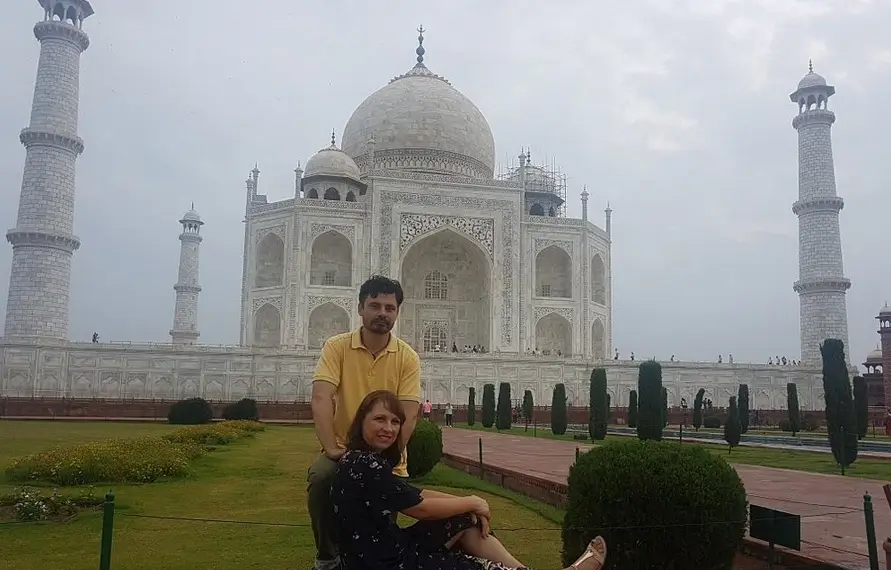
There is a story told in Agra that the Taj Mahal was designed to be seen by moonlight, and whatever the truth of it, the building does something strange after dark. The white marble, which by day can look almost too bright, turns soft and pale, sometimes silver, sometimes faintly blue. The garden falls into shadow, the minarets fade into the night, and the dome seems to float above the river terrace with nothing holding it up.
For a few nights each month, the Archaeological Survey of India opens the Taj Mahal for night viewing. Taj Mahal full moon night viewing is allowed on the night of the full moon and the two nights before and after it, in small timed batches through the evening. It is one of the most sought-after experiences in Agra, and the number of tickets is limited.
We want to be honest about it from the start. A night visit is not a walk through the gardens to the tomb. You view the monument from a platform near the main gateway, at a distance, for a set time. You do not go inside, you do not walk to the marble terrace, and there are no lights on the building, only the moon. If the sky is clear, it is a quiet, beautiful and slightly unreal sight. If clouds roll in, you may see little more than a pale outline.
That is why we treat the night view as a complement to a daytime or sunrise visit, not a replacement. Seen together, the Taj at night and the Taj at dawn tell you two very different things about the same building.
1. Checking the dates
Night viewing runs on five nights around each full moon, but never on a Friday, when the Taj Mahal is closed to visitors, and not during the month of Ramzan. Those exclusions can remove one or more nights from the window in any month. When you send us your travel dates, we check whether any night viewing falls during your Agra stay.
2. Booking tickets in advance
Tickets are sold through the Archaeological Survey of India’s official ticketing system, and each night is divided into a small number of batches of limited size. Seats are not sold at the gate, and popular nights can sell out. We advise on the current booking method and timing for your dates. Every visitor must give their own details, so we need the names and passport details of everyone in your group.
3. An early dinner
Most guests have an early dinner in Agra before the visit, either at their hotel or at a restaurant nearby. Keep it light and unhurried, because you need to arrive at the reporting point well before your slot.
4. Reporting at Shilpgram
Night viewing visitors report to Shilpgram, near the Eastern Gate of the Taj Mahal, about half an hour before the time on their ticket. Your driver drops you as close as permitted. Bring your printed or digital ticket and the same identity document you booked with.
5. Security checks
Security is strict. Your ticket and ID are checked, and there is a full security screening, similar to an airport. Bags are not allowed, and many everyday items, including food, tripods and electronic gadgets beyond a phone or camera, are refused. Plan to carry almost nothing.
6. Transfer to the gate
From Shilpgram, visitors are taken in the batch to the monument entrance by the authorities’ transport. Staff keep the group together, so stay close and follow instructions.
7. On the viewing platform
Your batch is led through the great red sandstone gateway onto the platform at the garden end. From here you look along the length of the gardens and the long water channel to the tomb at the far end. You have a fixed period, around half an hour, to stand, watch and take photographs. You cannot walk down into the gardens or towards the mausoleum.
8. Back to your hotel
When your time ends, staff lead the batch out and back to Shilpgram, where your driver is waiting. Most hotels in Agra are a short drive away, so you can be in bed soon after.
The Mughal emperor Shah Jahan built the Taj Mahal in the seventeenth century as a tomb for his wife Mumtaz Mahal, who died in childbirth. Thousands of craftsmen worked on it for many years, using white marble brought from Makrana in Rajasthan and semi-precious stones set into the surface in delicate floral patterns.
The building was planned as an image of paradise, with the four-part garden representing the gardens of heaven described in Islamic tradition and the tomb raised at the far end, beside the river. Moonlight suits that idea. With the details lost in shadow, the building becomes pure shape: the onion dome, the four smaller domed kiosks, the slender minarets leaning very slightly outwards, all perfectly balanced.
Across the Yamuna lies Mehtab Bagh, the Moonlight Garden, laid out by the Mughals on the far bank so that the Taj could be admired from across the water. A popular legend says Shah Jahan planned a second tomb in black marble on that side, though historians generally treat this as a story rather than fact. Your guide can tell you more about the history the next morning at sunrise, when you see the inlay and calligraphy up close.
A distant, moonlit view. The tomb sits at the far end of the Charbagh garden, so from the platform it appears at roughly the size you see in the classic photographs taken from the gateway. It does not fill your field of view as it does when you stand on the marble plinth by day.
No artificial lighting on the building. The monument itself is not floodlit for night viewing. What you see is moonlight on marble, which is why a clear sky matters so much.
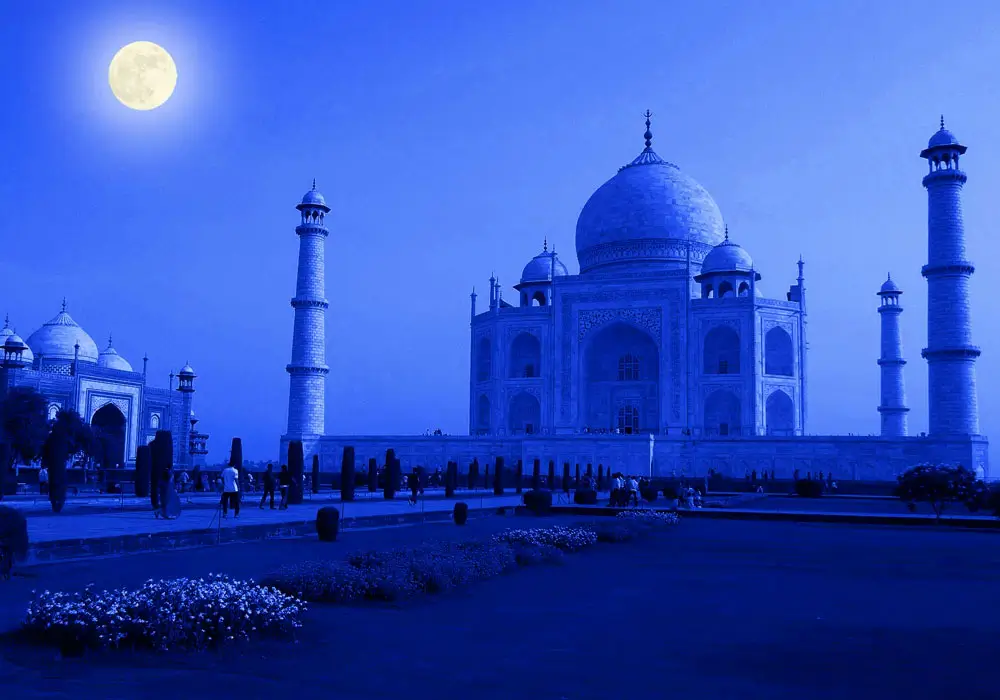
Soft colour. On a bright night the marble looks pale grey to silver, with the dome and minarets standing out against a dark sky. Some guests see a faint blue or cream tint as the moon rises higher.
Reflections in the water channel. If the channel is full and the air is still, the moon and the tomb may reflect in the water. It does not happen every night, but when it does, it is the shot everyone wants.
Quiet. Compared with the daytime crowds, the platform is calm. Batches are small, staff keep voices low, and you can hear crickets and the occasional train in the distance.
The gateway itself. Look back at the inscriptions and arches of the great gate as you pass through. In the dark they feel monumental in a way they rarely do in daylight.
Many travellers arrive with an image of wandering alone among moonlit fountains. We would rather you knew the reality now than felt let down in Agra.
You stay on the platform. There is no access to the gardens, the tomb or the mosque and guest house on either side.
Time is limited. Each batch has a fixed viewing period, and staff move you on when it ends.
Clouds and haze can spoil it. In winter, smog and fog can blur the view. In the monsoon, cloud can hide the moon completely. Tickets are bought in advance, so there is always an element of luck.
Photographs are hard. At night and at a distance, phone cameras struggle. Expect atmospheric, grainy pictures rather than crisp postcard images.
If all that still sounds appealing, and for many guests it does, the night viewing is a calm, memorable evening. If you would rather be close to the marble, touch the inlay work and walk the gardens, choose the Taj Mahal at first light instead, and add the night view if your dates allow.
Night viewing. A short, distant, moonlit view from the platform, in a small batch, on a handful of nights each month. It is atmospheric and quiet, but you do not enter the gardens, and the experience depends heavily on the sky.
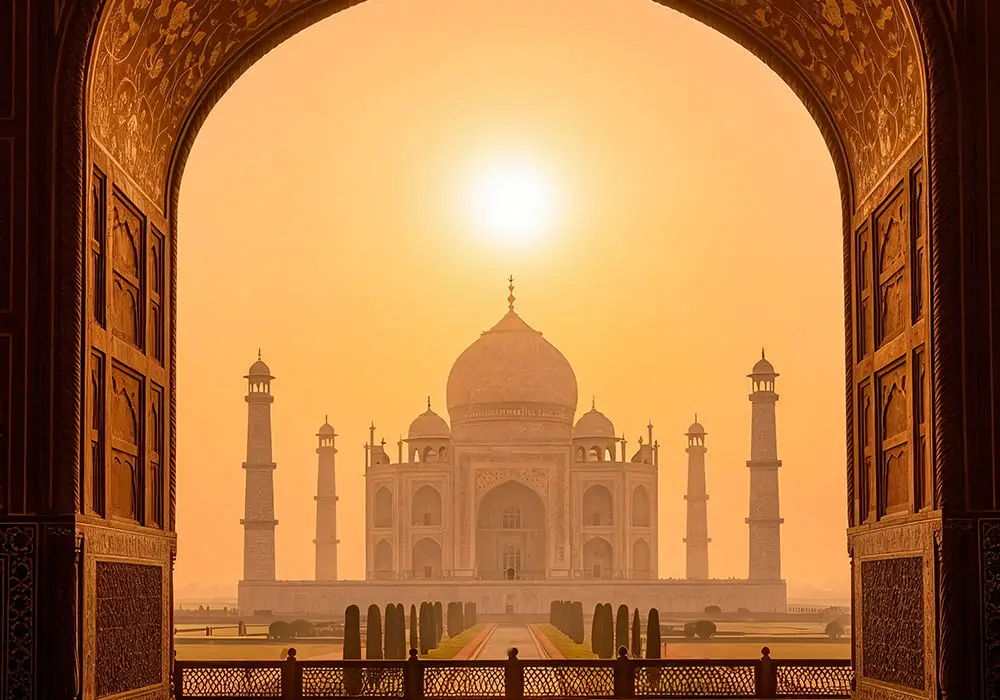
Sunrise visit. You enter the complex as it opens, walk through the gardens, stand on the marble plinth, see the inlay and calligraphy up close, and visit the mausoleum interior. The light changes from grey to pink to gold. Crowds build later in the morning, but the early hour gives you the best of the day.
Our advice. If you have only one chance, choose sunrise. If your dates fall in the full moon window and you have two nights in Agra, do both: the night view the evening before and the sunrise the following morning. Seeing the Taj Mahal twice, in two very different lights, is a rare privilege.
Coming from Delhi? A night viewing means staying overnight in Agra. If you prefer a single long day trip, our Taj Mahal sunrise tour from Delhi by car is the simpler option.
The night viewing window follows the lunar calendar, so the dates move every month. Here is how the seasons affect the view.
October and November. Often the best months. The monsoon has cleared, nights are pleasant and the sky is frequently clear, though smoke and haze can build in November.
December and January. Nights are cold, and fog and smog are common, sometimes thick enough to hide the monument completely. Clear winter nights can be beautiful, but the risk of a poor view is higher.
February and March. Usually good, with cool nights and clearer air. Ramzan may fall in or near these months in some years, closing night viewing for the whole month.
April to June. Warm to very hot evenings, but often dry and clear. The heat at night is manageable, and these months can give good moonlit views.
July to September. The monsoon. Cloud cover and rain make a clear full moon less likely, although a break in the clouds can produce a striking sky.
Fridays and Ramzan. Check both carefully. A full moon falling close to a Friday leaves fewer nights in the window, and the dates of Ramzan change each year.
For a night visit, location matters more than usual. A hotel in the Taj Ganj area or along Fatehabad Road keeps the drive to Shilpgram short, which means less waiting around before your slot and a quick return afterwards. Some hotels in this area have rooms or rooftop terraces with a view towards the Taj Mahal, which lets you see the dome against the evening sky from your own balcony.
If you are doing the night view and the sunrise visit back to back, staying close also gives you a little more sleep before the early start. Tell us whether you value a Taj view, a quiet garden setting or a heritage character most, and we will suggest hotels to match your budget.
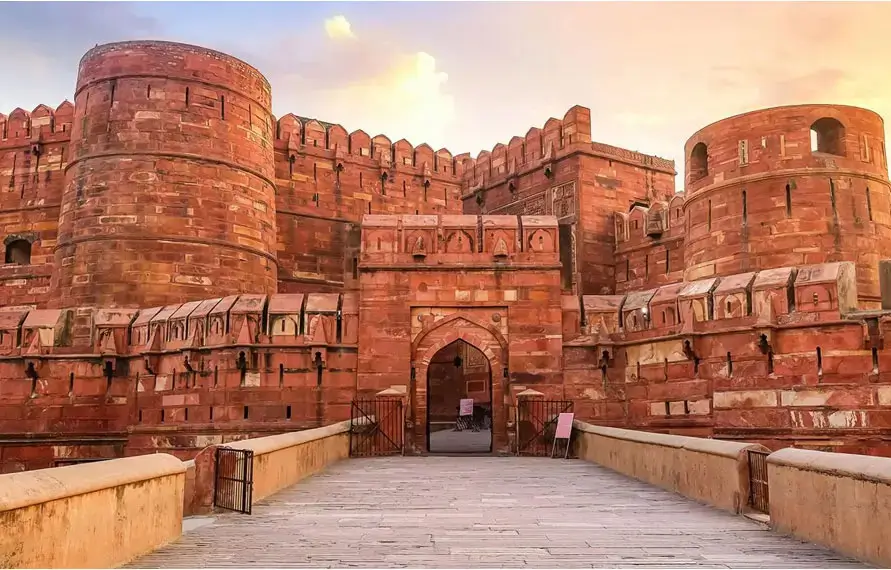
Two nights in Agra. This is the ideal arrangement. Arrive in the afternoon, rest, have an early dinner, see the Taj at night, and then visit at sunrise the next morning. The rest of that day can go to Agra Fort, Itmad-ud-Daulah, sometimes called the Baby Taj, and the Mehtab Bagh gardens across the river.
One night in Agra. Possible if your night falls in the window: night viewing on arrival evening, sunrise visit the next morning, then onward to Jaipur via Fatehpur Sikri. It makes a long but rewarding pair of days.
On a Golden Triangle tour. We look at the lunar calendar when building your route and, where we can, shift the Agra nights to fall within the night viewing window.
Pair it with Mehtab Bagh at sunset. The gardens across the Yamuna face the back of the Taj Mahal. Watching sunset from there, then returning for the night view, makes a fine evening.
Other Agra ideas. Spend an afternoon with craftsmen at a marble inlay workshop, whose work descends from the techniques used on the Taj itself, or visit the sloth bear rescue centre near the city.
Bring and wear - Your ticket, printed or on your phone - Your passport, matching the ticket booking - A warm jacket from November to February - Comfortable shoes for standing and walking - Phone or small camera, fully charged - Any essential medicines in a pocket
Leave behind - Bags, backpacks and handbags - Tripods, selfie sticks and drones - Food, drink and tobacco - Large lenses and camera accessories - Expectations of walking up to the tomb
Send us your travel dates and we will check whether the Taj Mahal night viewing window falls during your Agra stay, then plan your tickets, dinner, sunrise visit and transfers around it.
Call & WhatsApp +91-9828085426 or email info@topindianholidays.net.
See more ideas on our Top Experiences in India page.
Tell us your travel dates and we will check availability and fit this experience into the right day of your itinerary. Reply within 12 hours.
Check Availability› Chat on WhatsApp› Send an Enquiry›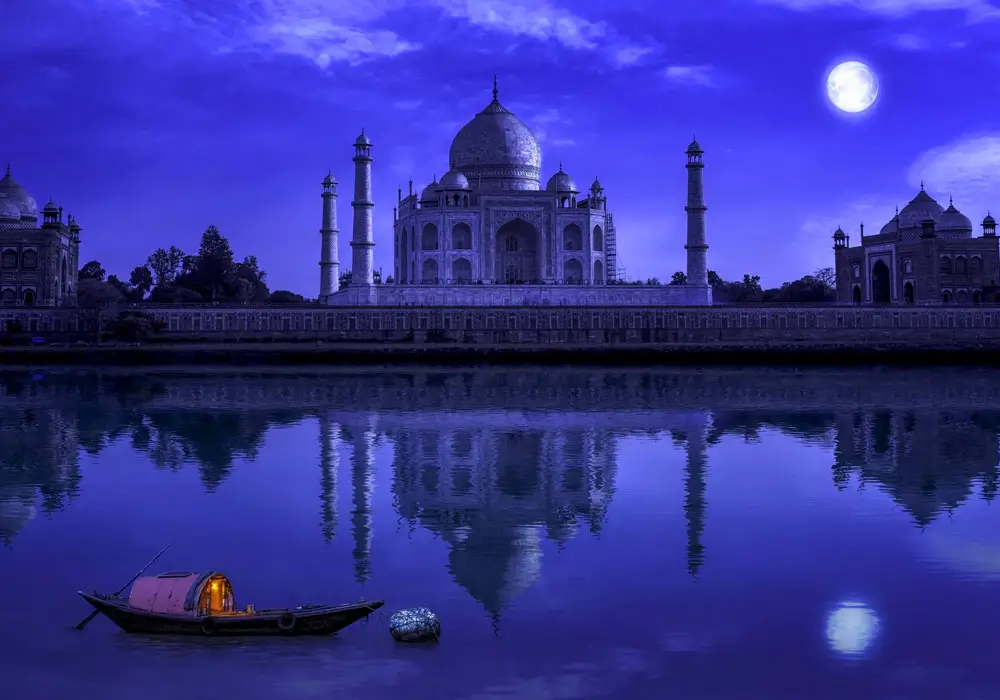

 🌙 06 Nights / 07 Days
 🌙 06 Nights / 07 Days
Luxury
Delhi - Jaipur - Ranthambhore... Delhi - Jaipur - Ranthambhore - Agra - Delhi Show More
 🌙 13 Nights / 14 Days
Luxury
Mumbai - Udaipur - Ajabgarh... Mumbai - Udaipur - Ajabgarh - Jaipur - Agra - Delhi Show More
 🌙 01 Day
⭐ Most Popular
Yes, if your dates fall in the full moon window. We check the lunar calendar when planning your route and, where possible, place your Agra nights within the window, with a sunrise visit the next morning.
Yes, and it is our favourite way to see the Taj Mahal. Stay in Agra, see the monument by moonlight in the evening, then return at sunrise the next morning for a guided visit through the gardens and up to the tomb.
No. The Taj Mahal is closed to visitors every Friday, and that includes night viewing. If a Friday falls inside the full moon window, that night is simply skipped.
Bring your passport, matching the details used for the booking. Security checks your ticket and ID at Shilpgram before you are allowed through.
Bags are not permitted, so carry only your ticket, ID, phone or a small camera, and essential medicines. Tripods, drones, food and many gadgets are refused at security. Rules can change, and we check them before your visit.
Cloud, fog or haze can soften or hide the view, and tickets are not refunded for weather. October, November and the spring months usually give the best chance of a clear sky. Winter fog and monsoon clouds are the main risks.
For many travellers, yes, as long as they know it is a distant, moonlit view for a short time. It is quiet and atmospheric. If you can only visit once, choose sunrise, and add the night view if your dates allow.
No, the monument is not floodlit for night viewing. You see it by moonlight alone, which is why a clear sky makes such a difference. On a bright full moon night the marble glows softly against the dark.
Each batch has a fixed viewing period of around half an hour on the platform. Including reporting, security and the transfer, plan for a longer evening outing.
No. Night viewing takes place only from the platform near the main gateway. You cannot walk into the gardens, onto the marble terrace or inside the tomb. For a close-up visit, go at sunrise or during the day.
The viewing runs in the evening and late night, split into timed batches. Your ticket shows your batch time, and you report to Shilpgram near the Eastern Gate around 30 minutes before it.
Prices are set by the Archaeological Survey of India and differ for foreign and Indian visitors and for children. Rates can change, so we quote the current price for your dates when we plan your Agra stay.
Tickets are sold in advance through the Archaeological Survey of India’s official ticketing system, and they are not sold at the gate. Each visitor needs to give their own details. We advise on the current booking method and handle the arrangements as part of your tour.
Night viewing is allowed on the full moon night and the two nights before and after it, giving up to five nights each month. It does not take place on Fridays, when the Taj Mahal is closed, or during the month of Ramzan. Send us your dates and we will check the window for your stay.

Whether you're planning your first India trip or returning to explore deeper, get honest, expert advice from someone who knows every corner of this country. No pressure, no cost.