


 info@topindianholidays.net
 +91-8955000999

Hot Air Balloon Ride in Jaipur
Lift off as the sky turns orange and drift over villages, mustard fields and the Aravalli hills while Jaipur is still waking up.
View Experience ›Swap the back seat of a car for the saddle of a Royal Enfield and ride out past Aravalli ridges, mustard fields and painted havelis, with a ride leader in front and a support vehicle behind.
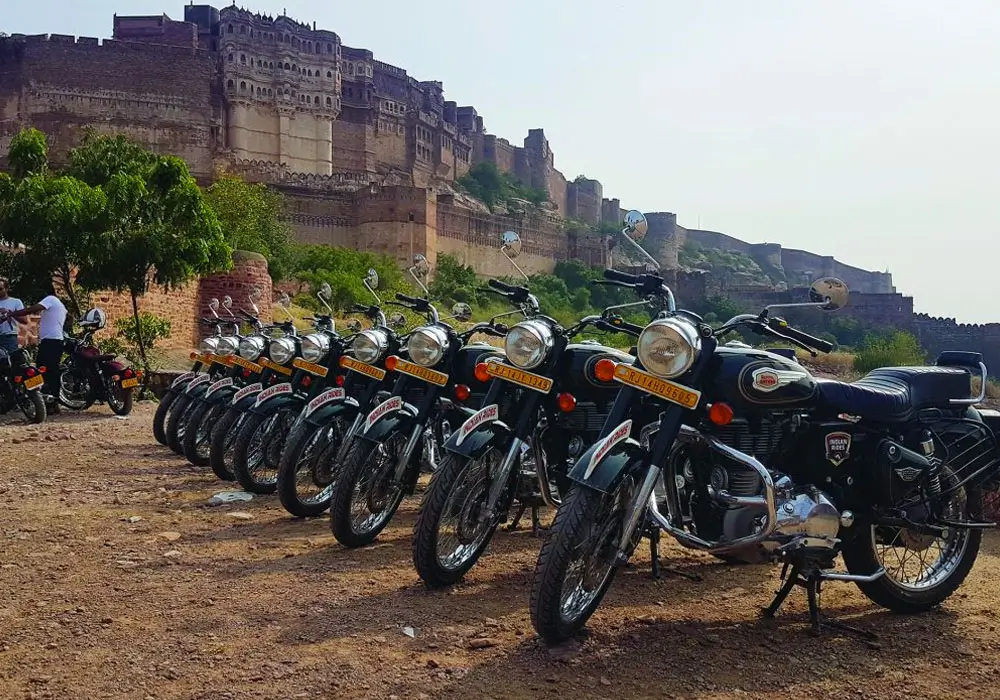
Rajasthan looks different at forty kilometres an hour with the wind on your face. From a car, the countryside slides past behind glass. On a motorcycle you smell woodsmoke from a roadside tea stall, feel the temperature drop as the road climbs into the Aravalli hills, and hear the thump of a single-cylinder engine echo off the walls of a village lane. You stop where you like, and when you do, people come over to look at the bike and ask where you are from.
The Royal Enfield is part of that conversation. It has been on Indian roads for generations, and the shape of a Bullet or a Classic is instantly familiar to every chai seller and farmer you pass. Riding one through Rajasthan feels less like a foreign adventure tour and more like joining a long local tradition of travelling by motorcycle. Our Royal Enfield tour in Rajasthan is built around that feeling, while taking the hard parts off your hands: the route planning, the luggage, the breakdowns and the paperwork.
You can keep it short or make it the heart of your trip. A half-day ride around the hills and villages outside Jaipur gives you a taste in a single morning. A multi-day route links Jaipur with the painted towns of Shekhawati, or loops through the hill country around Udaipur, with nights in heritage hotels and a support vehicle carrying your bags from one to the next.
This page explains honestly how a guided ride works, what you need to bring, especially the licence question that catches many visitors out, and what Indian roads are really like, so you can decide whether it suits you.
1. Telling us about your riding
Before anything is booked, we ask about your experience. How long you have held a full motorcycle licence, what you ride at home, whether you have ridden in traffic that drives on the left, and whether anyone in your group would prefer to ride pillion. This shapes the route, the daily distances and the bike we suggest. Be honest here: a confident rider on quiet roads at home may still find the first hour in Indian traffic demanding.
2. Documents checked in advance
We ask you to send copies of your home motorcycle licence, your International Driving Permit and your travel insurance before you arrive. Sorting this out early avoids disappointment on the morning of the ride, because a ride leader will not hand over a motorcycle without the right papers.
3. Meeting the bike and the team
On the first morning your driver takes you to the starting point, or the team comes to your hotel. You meet the ride leader, who will ride ahead of the group all day, and the support crew. The mechanic walks you round your motorcycle: the gear pattern, the brakes, the choke on older models, the kill switch, the fuel tap and how the bike feels at walking pace.
4. The safety briefing
The ride leader explains hand signals, how the group rides in a staggered line, how far apart to stay, what to do if you lose sight of the rider ahead, and how overtaking works on a two-lane road. You also hear the simple rules that matter most here: ride on the left, expect the unexpected round every bend, never ride after dark, and stop if you feel tired.
5. A gentle first stretch
The first kilometres are deliberately easy. The leader picks a quieter road out of the city so you can get used to the clutch, the brakes and the weight of the bike before meeting heavier traffic. Most riders relax noticeably after the first tea stop.
6. Riding the day’s route
The day is broken into short riding sections with regular stops: chai at a dhaba, a village well, a hilltop temple, a fort, a photo of the bikes lined up against a painted wall. The support vehicle follows behind with water, spare parts, luggage and space for anyone who wants a rest from riding.
7. Lunch and the heat of the day
Lunch is usually at a roadside dhaba or a heritage hotel, depending on the route. In the warmer weeks of October and March, the ride leader may plan a longer midday break and ride more in the morning and late afternoon.
8. Arriving before dark
Each day is planned to finish well before sunset. Night riding in rural India is genuinely dangerous, with unlit vehicles, animals on the road and potholes that are invisible after dusk, so this rule is never bent. On a multi-day tour your luggage is already at the hotel when you arrive.
9. Handing back the bike
At the end of a half-day ride, your driver collects you at the finishing point and returns you to your hotel. On a multi-day route, the team takes the bikes back from the final hotel, and your private car continues the rest of your tour.
Royal Enfield Classic. The bike most people picture: rounded tank, chrome details, a comfortable upright riding position and that famous slow thump. It suits relaxed riding on village roads and state highways, and it is the most popular choice for first-time visitors.
Royal Enfield Bullet. The model with the longest history in India and a shape that has barely changed in decades. It feels simple and traditional, and many riders choose it for that reason alone. It is happiest at moderate speeds.
Royal Enfield Himalayan. An adventure-style motorcycle with longer suspension travel and a taller seat, built for broken surfaces and gravel. It makes sense on rougher rural tracks and hill roads, and it suits taller riders and those used to adventure bikes at home.
Exact models and engine sizes depend on what is available for your dates. Tell us your height and what you ride at home, and we will suggest the best fit. If you have a strong preference, mention it early.
This is the part to read carefully. To ride a motorcycle in India as a visitor, you need a valid full motorcycle licence from your home country, plus an International Driving Permit that covers motorcycles. A car-only licence is not enough, and an IDP that only covers cars is not enough either. Check that the motorcycle category is stamped on your IDP when you apply for it at home. Carry both documents with you on every riding day, along with your passport.
Rules and enforcement can change, and the requirements for an IDP vary depending on your home country, so we confirm the current position for your nationality when you enquire. If you do not have the right licence, the pillion option below still lets you share the ride.
Travel insurance. Many travel insurance policies exclude motorcycling, or cover it only if you hold a full licence, wear a helmet and ride below a certain engine size. Read your policy, and if in doubt, call your insurer and ask specifically about riding a motorcycle as the rider, or travelling as a pillion passenger, in India. We ask to see proof of suitable cover before the ride.
Helmets. Helmets are compulsory for riders and pillion passengers. Good-quality helmets are provided, but many riders prefer to bring their own from home for fit and comfort.
Damage and deposits. The bikes are maintained by the team and checked before every ride. As with any vehicle hire, there are terms for damage, which we explain clearly before you confirm.
Riding on the left. India drives on the left, like the UK and Australia. For riders from the USA or Europe, the first roundabout and the first right turn need concentration. The ride leader ahead of you helps, as you simply follow their line.
Cows, goats and camels. Animals use the road as much as vehicles do. Cows often lie down on warm tarmac in the middle of a highway and do not move. Goats cross in a hurry, and camel carts move slowly in the left lane. Slow down and give them space.
Trucks and buses. Heavy vehicles dominate the highways and overtake when they think the gap is big enough. Horns are used to say “I am here” rather than in anger. The ride leader keeps the group on quieter roads wherever possible and explains how to let faster traffic pass.
Potholes and speed breakers. Village roads can change from smooth tarmac to broken surface without warning. Unmarked speed breakers appear near schools, temples and villages. This is one reason group speeds stay moderate.
Wrong-way traffic. On divided highways, it is common to meet a tractor or motorcycle coming the wrong way along the edge of the road. Stay alert, especially near villages.
Dust and heat. In the dry season, a passing truck can leave you in a cloud of dust, so sunglasses or a visor are essential. Midday sun is strong even in winter.
None of this is meant to put you off. Thousands of people ride these roads every day. But a guided ride in Rajasthan is very different from riding at home, and the right mindset is calm, patient and alert rather than fast.
Half day in the hills around Jaipur. The Aravalli hills wrap around Jaipur’s north and east. A morning ride heads out on quieter roads past Amber and into country lanes with small villages, temples on hilltops, stone walls and fields of wheat or mustard in winter. It is the easiest way to try riding in India without committing a whole holiday to it.
Jaipur to Shekhawati. The Shekhawati region, north-west of Jaipur, is known for its painted havelis: merchants’ mansions covered in murals of gods, trains, horses and British officers. Towns such as Mandawa, Nawalgarh and Fatehpur are spread across open, flat country with long, straight roads. The drive from Jaipur is around three to four hours by car, so on a motorcycle it is best treated as a full riding day, with an overnight stay in a restored haveli.
Loops through rural Rajasthan. Longer routes can link Jaipur with Pushkar, the countryside around Ajmer, and fort towns in between. These are planned around comfortable daily distances and good hotels rather than ticking off kilometres.
Udaipur hill roads. Around Udaipur the Aravalli range becomes greener and steeper, with lakes, winding roads and tribal villages. Rides can head towards Kumbhalgarh, whose great walls run across the hills, or to quieter lakes and temples outside the city. The bends and climbs make this a more engaging ride, best suited to riders with some experience.
We plan the route after hearing about your riding and the rest of your itinerary. The half-day Jaipur ride is the usual starting point for most guests, and many are happy with exactly that.
Not everyone in a group has to ride. A partner or friend without a motorcycle licence can travel as a pillion passenger behind the ride leader or behind an experienced member of the group, with a helmet and a proper seat. Pillion riders should be comfortable sitting for long stretches and holding on over bumps.
The support vehicle is the other option. Some guests ride in the morning and sit in the car after lunch, or join the group for the scenic sections only. This flexibility is one of the main reasons to choose a supported tour rather than renting a bike on your own.
The cooler months, roughly October to March, are the riding season in Rajasthan.
October and November. The monsoon has passed, the countryside is still green, and the days are warm. Early mornings are pleasant, and midday can still be hot, so rides start early.
December to February. The most comfortable riding weather of the year. Days are sunny and mild, mustard is in flower across the plains, and the light is clear. Early mornings are cold on a motorcycle, so a warm layer under your jacket is important. Fog can settle over the plains on some mornings in late December and January, in which case the start is delayed until visibility improves.
March. The fields are being harvested and temperatures are rising. Early March is still good, especially in the hills around Udaipur.
From April to June, Rajasthan is very hot, and riding in the heat is not much fun. During the monsoon, roughly July to September, roads can be slippery, flooded or damaged, so we do not recommend riding then.
Ride early in your Jaipur stay. A half-day ride on your first full morning leaves the afternoon free for the City Palace and the old bazaars, and gives you a flexible second day in case of fog.
Two nights minimum in Jaipur. One night does not leave room for the ride and the main sights.
Let the car carry the long legs. If you are travelling from Delhi or Agra, arrive in Jaipur by car and start riding from there. The highways between the big cities are busy and not the enjoyable part of riding in India.
Combine with your private driver. On a multi-day ride, your own driver can follow the route or meet you at the end, so the rest of your tour continues seamlessly.
Balance the effort. After a ride, something gentle works well: a cooking class with a local family in the evening, or a tuk tuk ride through the Pink City the next day.
Bring and wear - Your home motorcycle licence and International Driving Permit - Proof of travel insurance that covers motorcycling - Riding jacket with armour, gloves and sturdy boots or ankle-high shoes - Your own helmet if you prefer a familiar fit - Sunglasses or a clear visor against dust - A warm layer for December and January mornings - Sunscreen and a refillable water bottle - A neck buff or scarf you can tuck in, against dust
Leave behind - Shorts, sandals and flip-flops, even on hot days - Loose scarves or clothing that could catch in the wheels - Valuables you do not need on the day - Any plan to ride after a drink with lunch - Big backpacks, as luggage goes in the support vehicle
Tell us about your riding experience, your travel dates and who in your group wants to ride, and we will suggest the right route and bike.
Call & WhatsApp +91-9828085426 or email info@topindianholidays.net.
See more ideas on our Top Experiences in India page.
Tell us your travel dates and we will check availability and fit this experience into the right day of your itinerary. Reply within 12 hours.
Check Availability› Chat on WhatsApp› Send an Enquiry› 


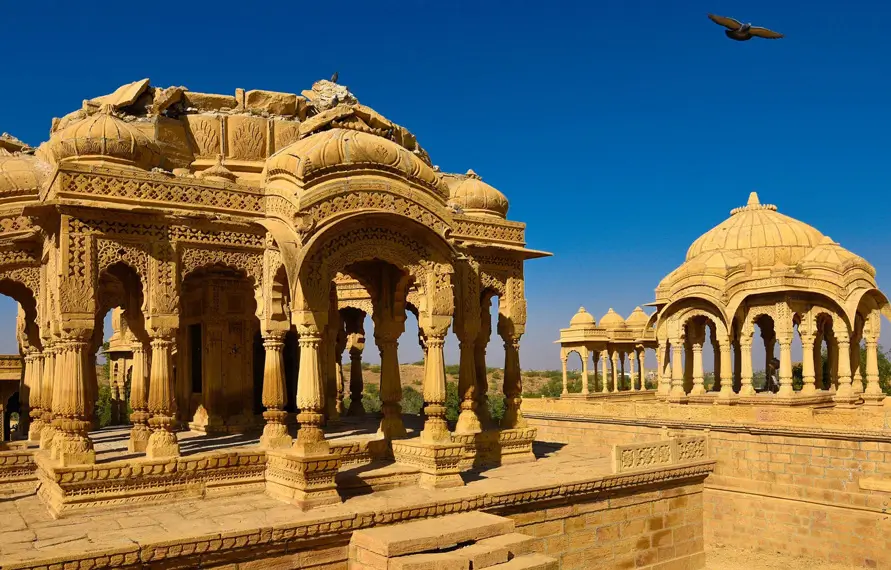 🌙 15 Nights / 16 Days
Luxury
Delhi - Agra - Ranthambhore... Delhi - Agra - Ranthambhore - Jaipur - Jaisalmer - Jodhpur - Ranakpur - Udaipur Show More
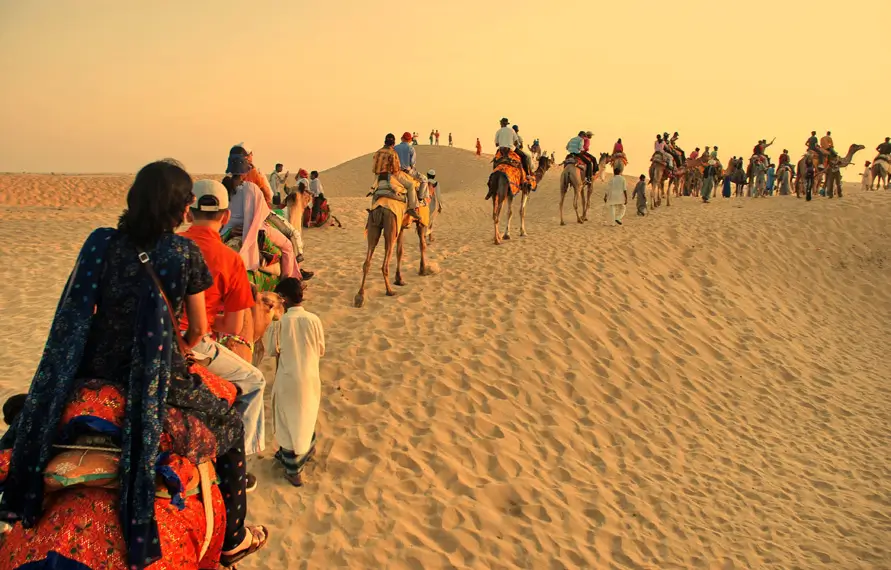 🌙 12 Nights / 13 Days
Delhi - Mandawa - Bikaner... Delhi - Mandawa - Bikaner - Nagaur - Osian - Barmer - Jaisalmer - Jodhpur - Ranakpur - Udaipur Show More
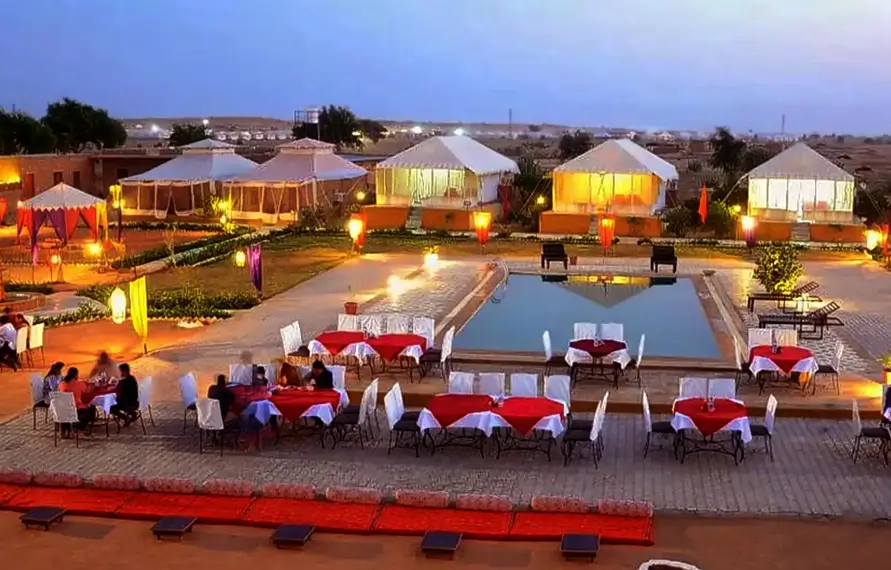 🌙 07 Nights / 08 Days
Luxury
Jodhpur - Rohet - Jaisalmer... Jodhpur - Rohet - Jaisalmer - Osian Show More
 🌙 14 Nights / 15 Days
Delwara - Narlai - Raipur... Delwara - Narlai - Raipur - Jodhpur - Nimaj - Jaipur - Delhi Show More
Yes. The hills around Udaipur offer winding roads, lakes and villages, with routes towards places such as Kumbhalgarh. They are more engaging than the flat plains, so they suit riders with some experience.
A mechanic travels with the support vehicle on guided rides, carrying common spare parts and tools. Most small problems are fixed at the roadside. If a bike cannot continue, a replacement or the support vehicle keeps you moving.
Yes. A partner without a motorcycle licence can ride pillion with a helmet, or travel in the support vehicle for part or all of the day. Pillion passengers should be comfortable sitting for long stretches.
Yes. A half-day ride through the Aravalli hills and villages around Jaipur is the most popular option. It gives a real taste of riding in Rajasthan and leaves the rest of the day for sightseeing.
The cooler months, roughly October to March. December to February is the most comfortable, though early mornings are cold and fog sometimes delays the start. Summer is too hot and the monsoon makes roads slippery.
Not always. Many policies exclude motorcycling or apply conditions such as holding a full licence, wearing a helmet or staying under an engine size limit. Check your policy carefully or call your insurer before you travel.
Helmets are provided for riders and pillion passengers, as they are compulsory. Many riders bring their own helmet, gloves and jacket from home for comfort and protection, and we recommend this if you can.
The Classic suits relaxed riding on tarmac and is the most popular choice. The Bullet is the traditional model with a timeless shape. The Himalayan is better on rougher tracks and suits taller riders. We suggest the best fit once we know your height and experience.
India drives on the left. Riders from the UK and Australia feel at home quickly, while riders from the USA and Europe need some concentration at first. Following the ride leader’s line makes it much easier.
Not as a rider. Rajasthan’s roads are not a place to learn. You can join as a pillion passenger or travel in the support vehicle and enjoy the same route and stops.
Indian roads need more care than roads at home, with animals, trucks and potholes to watch for. A guided ride reduces the risk a great deal: the leader picks quieter roads, keeps speeds moderate, never rides after dark and has a support vehicle and mechanic close by. You still need to be a confident rider.
It depends on the length of the ride, the route, the bike, the number of riders and the hotels on a multi-day tour. We quote the current price for your exact plan. Send us your dates, group size and riding experience on WhatsApp.
Yes. Your home licence alone is not enough, and the IDP must include the motorcycle category, not just cars. Apply for it in your home country before you travel, as it cannot be arranged in India.
Yes, if you hold a full motorcycle licence from your home country and an International Driving Permit that covers motorcycles. Carry both, with your passport, whenever you ride. We confirm the current requirements for your nationality before booking.

Whether you're planning your first India trip or returning to explore deeper, get honest, expert advice from someone who knows every corner of this country. No pressure, no cost.