


 info@topindianholidays.net
 +91-8955000999

Hot Air Balloon Ride in Jaipur
Lift off as the sky turns orange and drift over villages, mustard fields and the Aravalli hills while Jaipur is still waking up.
View Experience ›Step into a family home in the golden city, roll bajra rotis by the stove, learn why desert cooking uses so little water and so few vegetables, and sit down to a vegetarian Rajasthani dinner.
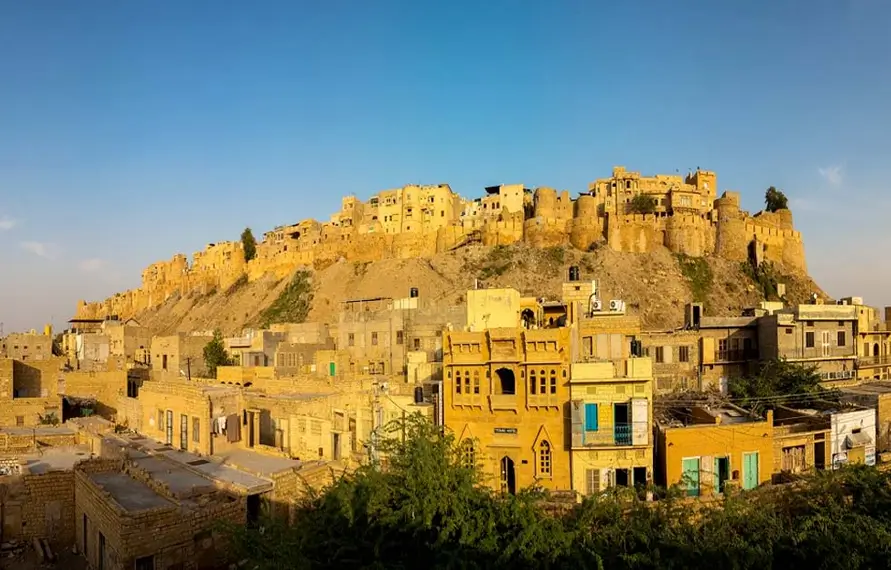
Jaisalmer is a city built of yellow sandstone at the edge of the Thar Desert, and its heart is a fort that people still live in. Inside the walls of Jaisalmer Fort, families cook, wash, pray and raise children in houses that have stood for generations, along lanes too narrow for cars. Below the fort, the old town spreads out in carved havelis and quiet courtyards. Most visitors see all of this from the outside, on the way between a fort viewpoint and a camel safari. A dinner with a local family in Jaisalmer lets you see it from the inside, at the kitchen stove.
The evening is simple. Your guide brings you to a family home inside the fort or in the old town. You are welcomed in, offered a glass of water or tea, and invited into the kitchen to watch and help as the evening meal comes together. You might pat out a bajra roti and watch it puff on a hot iron tawa, stir a pot of kadhi, or learn how dried desert beans and berries become ker sangri, the dish that best explains how people here learnt to cook with what the desert gives them.
Then everyone sits down to eat. Conversation moves easily between cooking and daily life: how water reaches a house on a hilltop fort, why vegetables are scarce and dried foods precious, what changed when tourism came to the city, and what the children want to do when they grow up. It is not a performance and not a restaurant. It is a family sharing its table with guests, and the warmth of that is what most people remember.
This page explains how the evening works, what you will cook and eat, how to be a good guest in a private home, and how the dinner fits around a desert camping and camel trek or an evening with Rajasthani folk musicians.
1. Pickup in the late afternoon
Your driver collects you from your hotel and your guide meets you near the fort gate or at the edge of the old town. If the home is inside the fort, you walk the last part, as only small vehicles and motorbikes can use the lanes. This is a good time to see the fort’s walls turn gold in the low sun.
2. Arriving at the family home
Your guide introduces you to the family. You remove your shoes at the door, as is the custom, and are usually invited to sit in the main room or on the roof. Tea or water is offered first. This is the moment to say hello to everyone, including the grandparents, who are often the people most worth listening to.
3. Into the kitchen
The cooking usually happens in a small kitchen or courtyard area, sometimes at floor level, sometimes at a counter. The person who cooks, often a mother or grandmother, shows you the ingredients: millet flour, gram flour, dried beans, yoghurt, ghee and spices. Your guide translates questions both ways.
4. Rolling and cooking rotis
Bajra roti is the great hands-on moment. Millet dough has no gluten, so it cannot be rolled like wheat. It is patted out between the palms, with water and a light touch, and laid on a hot tawa. Your first attempt will probably crack or tear, which usually makes everyone laugh. With guidance, the second is better.
5. Watching the dishes come together
While the rotis cook, the other dishes are prepared: ker sangri soaked and spiced, gram flour dumplings simmered for gatte, yoghurt whisked for kadhi, lentils tempered with ghee and cumin. You can help stir, add spices or simply watch and ask questions.
6. Sitting down to dinner
The meal is served on a thali or steel plates, sometimes on the floor on a mat, sometimes at a low table. Food is eaten with the right hand, tearing a piece of roti to scoop up each dish, though cutlery is always available if you prefer. Hosts will keep offering more, and part of the fun is learning how to decline politely.
7. Conversation and a sweet
After the meal comes something sweet and, often, more tea. This is when the best conversations happen: about family, festivals, the desert and the changes the city has seen. Children may show you their schoolbooks or ask about your country.
8. Saying goodbye
Your guide helps you thank the family in the local way, and walks you back to your car. If you are staying inside the fort or near it, the walk home through the quiet, lamplit lanes is a fine end to the evening.
The menu changes with the family, the season and what is in the house, but these are the dishes most often found on a Jaisalmer home table. All of it is vegetarian.
Ker sangri. The defining dish of the Thar. Ker are small wild berries from a thorny desert shrub, and sangri are long thin beans from the khejri tree, one of the few trees that thrive in the desert. Both are picked when available and dried in the sun, so they keep for months. Soaked and cooked with oil, dried red chilli, spices and sometimes yoghurt or dried mango powder, they become a tangy, slightly sour dish with a texture unlike any other vegetable.
Bajra roti. A flatbread made from pearl millet, the grain that grows best in this dry land. It is thicker and more filling than wheat chapati, with a nutty flavour, and is often served with a spoonful of ghee or a lump of white butter. In winter, families eat it almost every day.
Dal. Lentils of one kind or another appear at nearly every meal. Panchmel dal, made with five different lentils, is a Rajasthani favourite. It is cooked until soft, then finished with a tempering of ghee, cumin, garlic and chilli.
Kadhi. A yoghurt and gram flour curry, gently spiced and cooked slowly so it does not curdle. In Rajasthan it is often thinner and tangier than in other parts of India, and sometimes includes small gram flour fritters called pakodi.
Gatte ki sabzi. Gram flour dough is shaped into logs, boiled, sliced and then simmered in a spiced yoghurt gravy. It is a clever desert dish: a filling, protein-rich “vegetable” made without any fresh vegetables at all.
Sweets. Depending on the family and the season, dinner may end with churma, a crumbled wheat or millet sweet with ghee and jaggery, a simple halwa, or a piece of a local sweet bought from a shop in the old town.
Spice level. Rajasthani food can be hot. Tell your guide before you arrive, and the family can keep the chilli gentle and add more for those who want it.
Dietary needs. Because the meal is vegetarian, it suits many diets. If you are vegan, avoid gluten or have an allergy, tell us when you book. Ghee and yoghurt are central to this cooking, so vegan dinners need some planning, and bajra roti is naturally gluten free while some other dishes are not.
The food on your plate is shaped by the landscape outside, and the dinner is a good time to understand that link.
A living fort. Jaisalmer Fort is one of the very few forts in the world where a large community still lives inside the walls. Families have occupied these houses for generations, alongside temples, shops and small guesthouses. Daily life here means narrow lanes, stone stairs and houses that stay cool through thick walls.
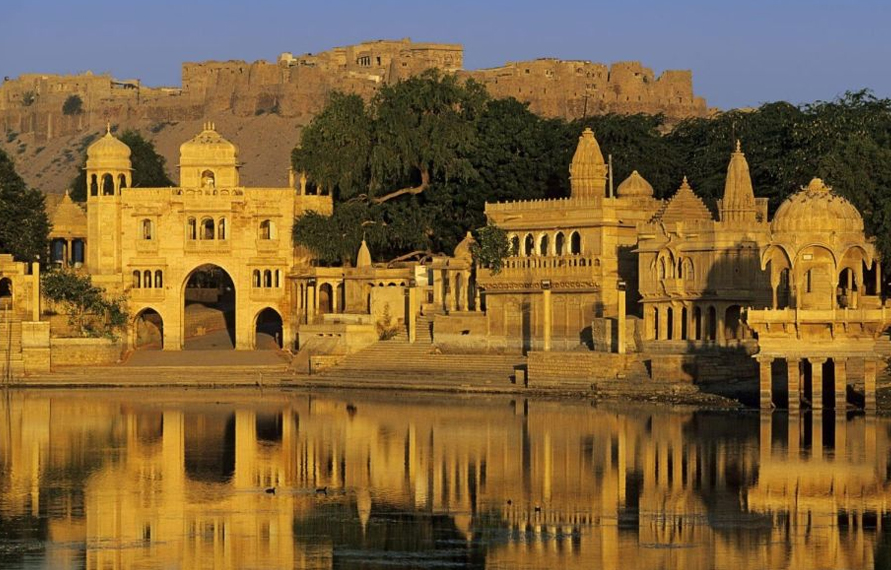
Water was always precious. Jaisalmer sits in one of the driest parts of India, with very little rain in most years. For centuries the city depended on rainwater stored in tanks and wells, and on Gadisar Lake, a man-made reservoir below the fort that once supplied the town’s water. Today piped water has changed life greatly, but older family members remember carrying water and using every drop carefully. Ask them about it, and you will hear how dishes were washed with sand and how cooking water was reused.
Cooking with few vegetables. Fresh vegetables were hard to grow and hard to bring across the desert, so families developed ways of cooking that rely on grains, pulses, dairy and dried wild produce. Gram flour became a vegetable in its own right. Berries and beans were dried in summer to last the year. Yoghurt and buttermilk came from the family’s animals. Even now, when markets are well stocked, these dishes remain the heart of home cooking because people love them.
Pressures on the old town. The fort’s popularity has brought both income and strain. More water use and drainage problems have worried conservationists, and many families have moved out over the years. Visiting respectfully, spending money with local households and businesses, and choosing your accommodation carefully all help.
Festivals and family life. If you visit near a festival, the family may tell you how it is celebrated at home, with special sweets, prayers and visits from relatives. Diwali and Holi are the big ones, and in winter the Desert Festival brings music and colour to the city.
This is a real home, and a small amount of care goes a long way. Your guide will help, but these points are worth knowing before you arrive.
We want this evening to be fair to the families who open their homes. The family is paid directly for hosting, which helps with household costs and children’s schooling, and the money stays in the old town. We work with families who want to host, not those who feel obliged, and we keep group sizes small so that the evening remains a visit rather than a stream of tourists.
We do not name families on our website, partly to protect their privacy and partly because who hosts you depends on dates and availability. Your guide will introduce you properly when you arrive.
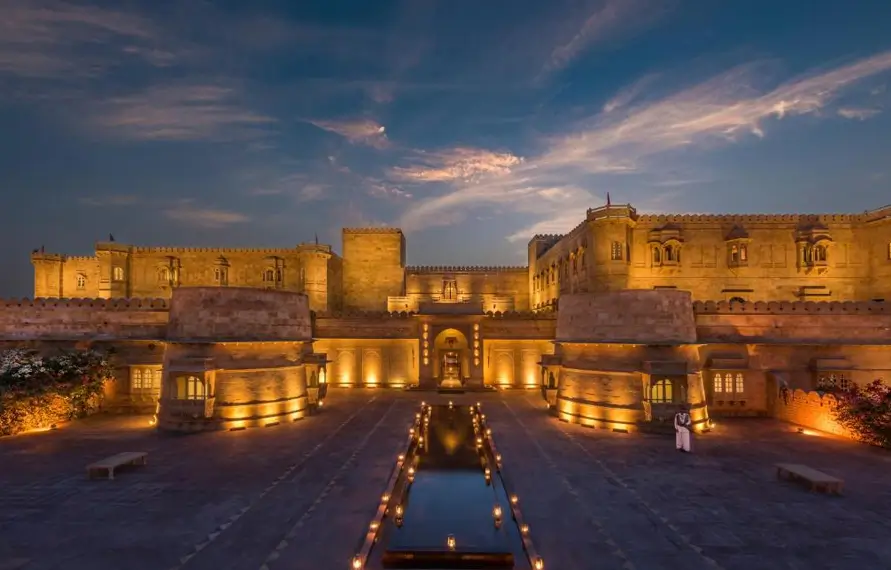
Inside Jaisalmer Fort. A home inside the walls gives you the full experience of the living fort: the walk through the gates and up the ramps, the narrow lanes, rooftop views across the city and, on a clear evening, the desert beyond. Houses are often older and smaller, with steep stairs. It suits guests who are comfortable climbing and want the most atmospheric setting.
In the old town below the fort. Homes around the havelis and lanes below the fort are often easier to reach by car, with fewer steps. Some have rooftops with views up to the fort walls, lit up at night. This is a good choice for families with young children or guests with limited mobility.
Either way, the food, the welcome and the conversation are the same. Tell us your preference and any mobility needs, and we will suggest the right home for your dates.
Give Jaisalmer two nights or more. Jaisalmer is a long drive from Jodhpur and further still from Jaipur, so it deserves time. Two nights let you see the fort and havelis, have dinner with a family, and spend a night in the desert.
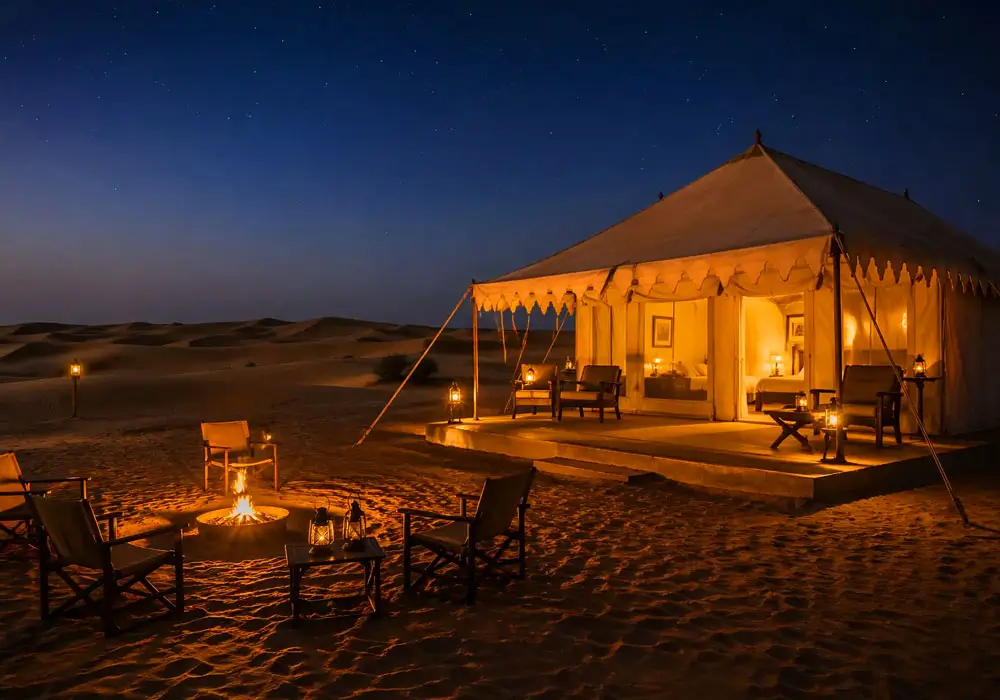
Pair it with the desert. The classic Jaisalmer plan is one night in the city and one in the dunes. Spend the first evening at the family dinner, then head out the next afternoon for a desert camping tour with a camel trek in the Thar. The home dinner gives you context for the desert life you see from the camel.
Add folk music. Jaisalmer is the home of some of Rajasthan’s great hereditary musician communities. An evening with Rajasthani folk musicians makes a perfect partner to the family dinner, on a different night.
Day plan. A good day before the dinner is the fort and its Jain temples in the morning, the carved havelis of the old town before lunch, a rest in the heat of the afternoon, and Gadisar Lake towards sunset, before heading to your hosts.
Cook again elsewhere. If you enjoy this, you may also like a cooking class with a local family in Jaipur, where the food is quite different from the desert table.
Within a Rajasthan tour. Jaisalmer usually sits between Jodhpur and Bikaner or Jodhpur and Jaipur on a western Rajasthan loop. We place the dinner on your first or second evening so you are not tired from a long drive.
October to March. The best months to visit Jaisalmer. Days are warm and sunny, evenings are cool, and dinner on a rooftop is pleasant. December and January nights can be cold, so bring a warm layer. February is the season of the Desert Festival, when the city is at its busiest.
April to June. Very hot, with daytime temperatures often above 40°C. Dinner still works well, as it is in the evening, but sightseeing needs to be early in the morning, and rooftop dining may move indoors.
July to September. The monsoon brings little rain to Jaisalmer, but the air is humid and still. Fewer visitors come, and the city is quieter.
Festivals and family events. Around Diwali or family occasions such as weddings, a family may not be able to host, or may host with extra celebration. We confirm availability for your dates.
Bring and wear - Modest, loose clothes that cover shoulders and knees - Shoes that slip off easily at the door - A warm layer for winter evenings - A small gift for the family or children, if you wish - Questions about food and desert life - A torch or phone light for the walk through dark lanes
Leave behind - Alcohol - Short shorts and sleeveless tops - A rigid schedule, as family evenings rarely run to the minute - Large bags and bulky camera gear in a small home
Tell us your Jaisalmer dates, your diet and whether you prefer the fort or the old town, and we will arrange the evening with a welcoming family.
Call & WhatsApp +91-9828085426 or email info@topindianholidays.net.
See more ideas on our Top Experiences in India page.
Tell us your travel dates and we will check availability and fit this experience into the right day of your itinerary. Reply within 12 hours.
Check Availability› Chat on WhatsApp› Send an Enquiry›



 🌙 07 Nights / 08 Days
⭐ Most Popular
Delhi - Agra - Jaipur... Delhi - Agra - Jaipur - Jaisalmer Show More
 🌙 03 Nights / 04 Days
Luxury
 🌙 03 Nights / 04 Days
 🌙 04 Nights / 05 Days
Yes, and it is our favourite pairing. Spend one evening at the family dinner in the city and the next night at a desert camp with a camel trek in the Thar.
It is not expected, but a small gift from your home country, sweets or something for the children is a kind gesture. Please do not bring alcohol.
Ask first, through your guide. Many families are happy to be photographed, but some members, particularly older women, may prefer not. Respect their choice.
Modest, loose clothing that covers shoulders and knees, and shoes that slip off easily. In winter, bring a warm layer for the evening.
Yes. Children usually enjoy making rotis and meeting the family’s own children. Let us know their ages and any food preferences.
Often, with notice. Ghee and yoghurt are central to the cooking, so vegan meals need planning. Bajra roti is naturally gluten free. Tell us your needs when you book.
The family is paid directly for hosting, and the money stays in the old town. We keep groups small and only work with families who want to welcome guests.
We do not publish family names, to respect their privacy, and the host depends on your dates. Your guide introduces you properly on arrival.
Yes. Families still live inside the fort, and we can often arrange a home there. Access involves walking through lanes and climbing stairs, so homes in the old town are easier for guests with limited mobility.
Some may speak a little English, especially the younger generation. Your guide stays with you to translate, so conversation flows easily.
You can do as much or as little as you like. Most guests try making bajra roti on the tawa and help stir dishes, while others prefer to watch and ask questions.
It is a classic Thar Desert dish made with dried ker berries and sangri beans from the khejri tree. Both are dried to keep for months, then cooked with spices into a tangy, slightly sour vegetable dish.
Yes, the dinner is vegetarian, which is traditional for many Jaisalmer households. Expect dishes like ker sangri, bajra roti, dal, kadhi and gatte, finished with a simple sweet.
Yes. We arrange private evenings with families in Jaisalmer Fort or the old town, where you help in the kitchen and then share a vegetarian dinner. Your guide introduces you and translates.

Whether you're planning your first India trip or returning to explore deeper, get honest, expert advice from someone who knows every corner of this country. No pressure, no cost.