


 info@topindianholidays.net
 +91-8955000999
Hot Air Balloon Ride in Jaipur
Lift off as the sky turns orange and drift over villages, mustard fields and the Aravalli hills while Jaipur is still waking up.
View Experience ›Sit beside a working artist in the lake city, grind your own colours and paint a small elephant, horse or lotus with a brush finer than an eyelash.
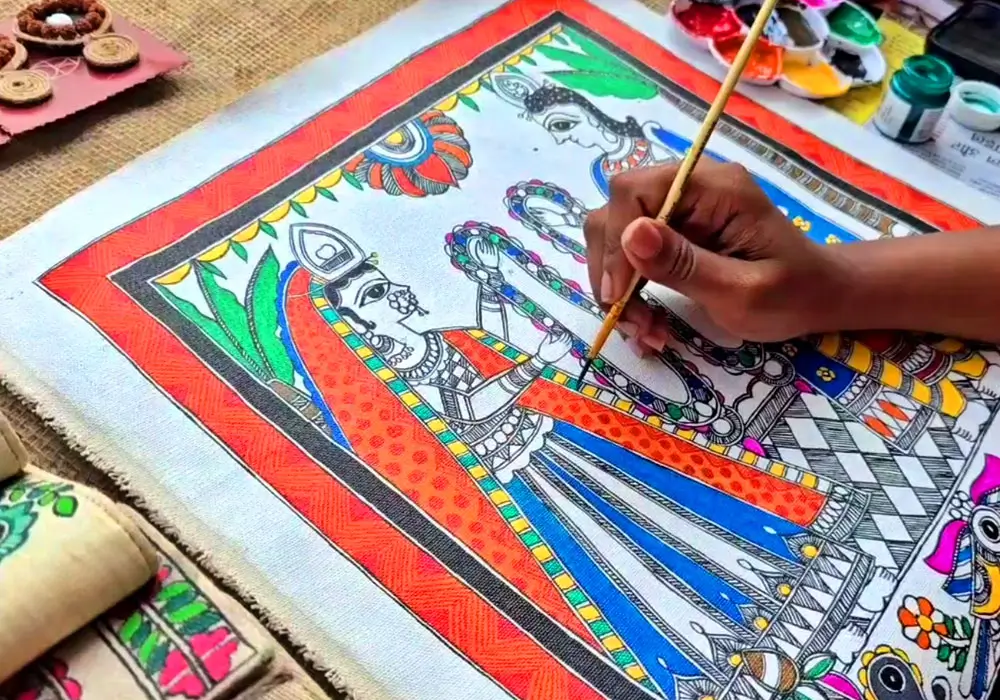
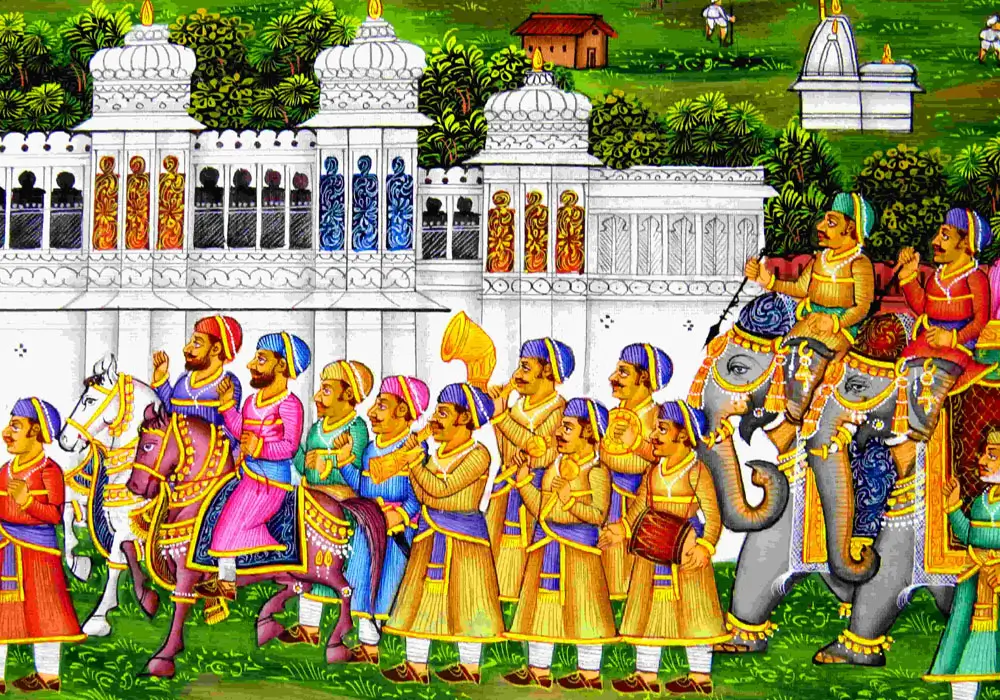
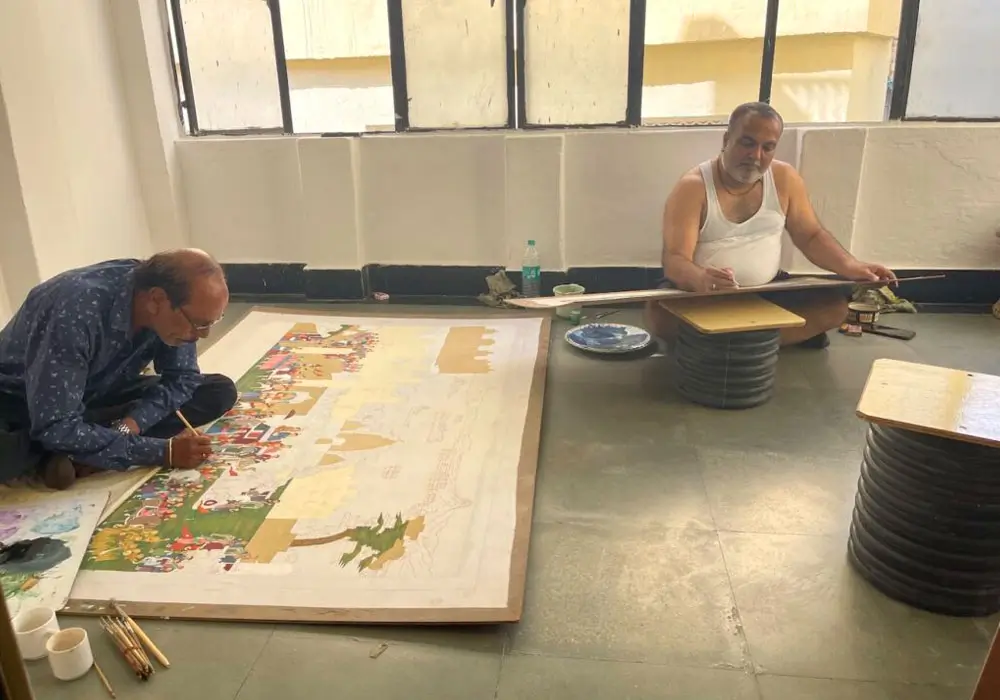
Walk the lanes below the City Palace in Udaipur and you will pass dozens of small shops with paintings propped in the doorway: elephants in procession, a maharana on horseback, Krishna playing the flute under a kadamba tree, all in jewel colours and outlined in gold. Most visitors glance, perhaps buy one, and move on without knowing how the work is made or why it costs what it does. A miniature painting class in Udaipur changes that. You sit at a low desk beside an artist, watch the brush move, and then try it yourself.
Udaipur is the old capital of Mewar, and the painting tradition that grew up at its court is one of the great schools of Rajasthani miniature art. Mewar painters worked for the ruling family for centuries, recording processions, hunts, festivals and religious stories in pages small enough to hold in your hands. The craft never quite died out. It moved from the palace workshops into family studios in the old city, and today artists still use the same basic method: a smooth prepared surface, a careful underdrawing, mineral and vegetable colours built up in thin layers, and brushes made with a few hairs.
You do not need any drawing skill to enjoy the lesson. The artist chooses a motif that suits a beginner, sketches with you, and shows you how to mix and lay colour so that it dries flat and bright. Most guests finish with a small painting they are genuinely pleased with, and a much clearer eye for what separates real hand-painted work from the printed copies sold in every bazaar.
It works well on an Udaipur afternoon after the City Palace, when the heat or the crowds make a quiet seat indoors appealing, and it gives a slow, personal counterpoint to the boat rides and palace visits that fill most days in the city.
1. Pickup and a short walk into the old city
Your driver brings you to the edge of the old city, and your guide walks you the last part through the lanes near Jagdish Temple and the City Palace. Cars cannot easily reach many of the studios, so this short stroll is part of the experience. You pass shops, temples and courtyards that will look different to you by the end of the afternoon.
2. Meeting the artist and seeing the studio
The studio is usually a small room with low desks, jars of pigment, stacks of paper and finished work on the walls. The artist shows you a few pieces at different stages: a bare pencil sketch, a half-coloured page and a finished painting. Seeing all three side by side explains the process faster than any talk could.
3. Brushes and colours explained
Before you touch a brush, the artist shows you the tools. Traditional brushes were made from a few hairs of squirrel tail set in a quill, and some painters still use them for the finest work, though many now use fine synthetic brushes too. Then come the pigments: stones and earths ground to powder, plant-based colours and the gum that binds them. You may grind a little colour yourself on a stone slab with water, which shows why each shade is precious.
4. Choosing your motif
You pick a small subject from the artist’s sample sheets. Elephants, horses, peacocks, a lotus, a fish, a tree with birds or a simple face in profile all work well for a first attempt. The artist will steer you to something you can realistically finish in the time, which is better than an ambitious scene left half done.
5. The underdrawing
Miniature painting starts with a light sketch. The artist draws a guide line or helps you trace the outline, then you go over it with a fine brush in a pale colour. This is where you first feel how little pressure the brush needs. Press too hard and the line thickens; hold it lightly and it glides.
6. Laying the colour
You fill each area with colour in thin coats, letting one layer dry before adding the next. The artist mixes the shades for you or with you and shows how to keep the paint smooth and even. Elephants are often grey or white, horses can be white, black or dappled, and backgrounds may be a flat green, red or yellow, as in many Mewar pages.
7. Fine detail and outline
The last stage is the one that brings the painting to life: the dark outline, the eye, the jewellery on the elephant, the pattern on a saddle cloth. Here the artist usually takes the brush for a moment to show you, then hands it back. If gold is part of the design, the artist may demonstrate how gold is applied and burnished, which is skilled work that most beginners watch rather than attempt.
8. Tea, questions and a look at finished work
Tea is normally offered during or after the session. This is a good time to ask how long a full painting takes, how artists learn, and what the different styles on the walls are. Your painting is wrapped so you can carry it safely.
9. Back to your hotel or on to the lake
Your guide walks you back out of the lanes, and your driver takes you to your hotel or to the jetty if you have an evening boat ride planned.
Rajasthan has several painting schools, each tied to an old court: Mewar, Bundi, Kota, Kishangarh, Marwar around Jodhpur, and Jaipur. To a first-time visitor they can look alike, but after an hour with an artist you start to see the differences.
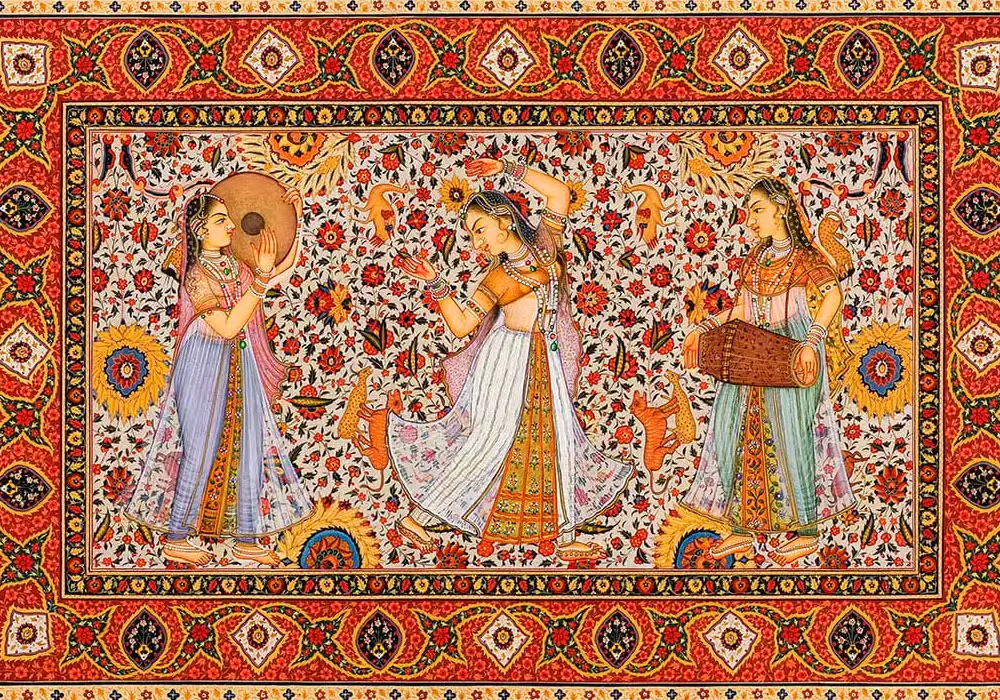
Strong, flat colour. Mewar painting is known for bold reds, yellows, greens and blues laid in flat areas, often with a single plain background. The effect is bright and graphic rather than soft or shaded.
Stories told in one frame. Many older Mewar pages show several moments of a story in one painting. The same figure may appear more than once, moving through a landscape or a palace from one scene to the next.
Court life and ceremony. Court painters recorded what their patrons did: durbars, processions, festivals such as Holi and Gangaur, hunts in the hills and visits to the lake palaces. These paintings are a kind of visual diary of the Mewar court.
Krishna and devotion. Religious subjects run through the whole tradition, especially Krishna stories and illustrated sets of poems and musical modes. Nathdwara, around an hour north of Udaipur, has its own related devotional style of painting known as pichwai, large cloth hangings made for the temple there.
Animals painted with affection. Elephants and horses appear constantly, decorated with tassels, bells and painted saddle cloths. Artists today still love these subjects, which is why they make such good first motifs.
Your artist will show you examples and explain the style they work in. Some studios paint in a strict traditional manner; others mix styles or make modern pieces using old techniques. Both are honest as long as the work is hand-painted.
The surface. Traditional miniatures were painted on handmade paper, often layered and burnished smooth with a stone so the brush runs freely. Many artists today use good quality handmade paper, and some also paint on silk or cotton. You will also see paintings on thin slices of camel bone, a material that was once used as a substitute for ivory; bone pieces are a later development rather than an old court tradition, and the artist can explain how they are prepared.
Mineral colours. Some of the most prized colours come from the earth: ochres and red earths, malachite for green, and lapis lazuli for the deep blue on special works, though lapis is expensive and many artists now use other blues for everyday pieces. Each mineral is ground fine, washed and mixed with gum.
Plant and other colours. Indigo is the classic plant blue. Other colours historically came from plants, lac and various natural sources. Today some artists use only natural colours while others combine natural and modern pigments. Ask your artist what they use; a good one will tell you plainly.
Gold and silver. Gold leaf or gold paint is used for jewellery, borders, crowns and architecture. It is often burnished with a smooth stone or agate after it dries so that it shines.
Brushes. The finest traditional brush has only a few hairs. Artists traditionally used squirrel hair because it holds a sharp point. You will try a fine brush yourself and immediately see why the old saying is that the work lives at the tip.
Most visitors want to buy a painting in Udaipur, and the old city is full of them. Here is the honest picture, so you can buy with confidence.
Prints are everywhere. Many low-priced “miniatures” are printed reproductions, sometimes with a few touches of hand-applied gold or paint on top. They are fine as souvenirs if they are sold as prints. The problem is only when they are sold as original hand-painted work.
Check with a magnifier or your phone camera. Zoom in. Printed images often show a dot pattern or a slightly blurred edge to the lines. Hand-painted work has crisp brush strokes, small variations in line and visible layers of colour, and the gold often sits slightly raised on the surface.
Look at the back and the edges. A painting on handmade paper usually has an irregular edge and visible texture. Mass-produced work is often on smooth, uniform paper.
Fine detail takes time, and time costs money. A painting full of tiny faces, patterned textiles and gold work may take an artist many days or weeks. If something with that level of detail is very cheap, it is probably not fully hand-painted.
Ask to see work in progress. A genuine studio will happily show you unfinished pieces, the colours and the brushes. That is one reason we bring you to a working studio rather than a shop.
You are under no obligation to buy. The lesson is the experience. If you love a painting at the studio, you can buy it. If you would rather think about it, or not buy at all, that is completely fine, and we tell our artists so in advance.
Ask about packing. Paintings on paper travel well flat between card. Ask the seller to pack the work firmly, keep it in your hand luggage if possible, and keep any receipt.
A painting lesson means much more if you have also seen some of the historic work. The City Palace in Udaipur houses a museum with galleries that include paintings from the Mewar court, alongside rooms of glass and mirror work, armour and royal objects. Galleries and displays change from time to time, so your guide will point out what is on view during your visit.
We usually suggest seeing the City Palace first, either the same morning or the day before your lesson. You will then recognise the processions, the hunting scenes and the flat bright backgrounds when the artist shows you their own work, and you will understand what they are trying to keep alive.
Elsewhere in India, major museums in Delhi, Jaipur and Mumbai also hold Rajasthani miniatures. If painting catches your interest, your guide can suggest which ones fit your route.
Couples and honeymooners. A quiet, shared activity in a city that is often called romantic. Some couples paint matching motifs to frame at home.
Families. Children who enjoy drawing usually love it, and the artist can choose a very simple subject for younger ones. Patience varies with age, so tell us your children’s ages and we will suggest the right length and motif.
Solo travellers. A one-to-one session with an artist is a rare chance for real conversation about art, family and life in the old city.
Artists and keen amateurs. If you already paint, tell us. We can ask for an artist who is happy to go deeper into techniques, pigments and brushwork, and you may want a longer session or a second visit.
Travellers with limited mobility. The work is seated and calm. The only challenge is reaching the studio, which may involve stairs or a short walk on uneven lanes. Tell us in advance and we will choose a suitable studio.
The lesson is indoors, so it works in any season.
October to March. The main touring season in Udaipur. Days are pleasant, the lakes are usually full after the monsoon, and the old city is lively. The lesson fits neatly between sightseeing and an evening on the water.
April to June. Udaipur gets hot. A painting session in a shaded studio in the afternoon is a sensible way to avoid the strongest midday heat.
July to September. Monsoon season. The hills turn green and the lakes fill. Rain showers do not affect the lesson, though walking through wet lanes is slower.
Time of day. Morning sessions suit those who want the rest of the day for sightseeing. Afternoon sessions suit those who visit the City Palace early and want something quieter before a sunset boat ride.
Give Udaipur at least two full days. With two days you can see the City Palace, take a boat on Lake Pichola, enjoy a painting lesson and still have time to wander.
Pair it with the palace. Visit the City Palace in the morning, have lunch, then walk to the studio in the afternoon. Everything is close together in the old city.
End with the lake. A Lake Pichola sunset boat ride after the lesson makes a lovely end to the day, and you will look at the palace walls with fresh eyes.
Taste the city too. An evening Udaipur food walk or a Rajasthani folk dance evening balances an afternoon of quiet concentration.
Build a craft theme. If you enjoy making things, link this lesson with block printing in Jaipur or blue pottery making earlier in your trip. Many Rajasthan tours visit Jaipur first and Udaipur later, so the crafts follow a natural order.
Bring and wear - Comfortable clothes you do not mind getting a little paint on - Reading glasses if you use them, as the work is very fine - Shoes that slip off easily, as some studios ask you to remove them - A phone or camera to photograph the stages of your painting - A flat folder or book to carry your painting home safely
Leave behind - Expectations of perfection: first attempts are meant to be charming, not flawless - Large bags, as studios are small - Any worry about having to buy: the lesson stands on its own
Tell us your Udaipur dates and we will set your painting lesson on the afternoon that fits best around the City Palace and the lake.
Call & WhatsApp +91-9828085426 or email info@topindianholidays.net.
See more ideas on our Top Experiences in India page.
Tell us your travel dates and we will check availability and fit this experience into the right day of your itinerary. Reply within 12 hours.
Check Availability› Chat on WhatsApp› Send an Enquiry›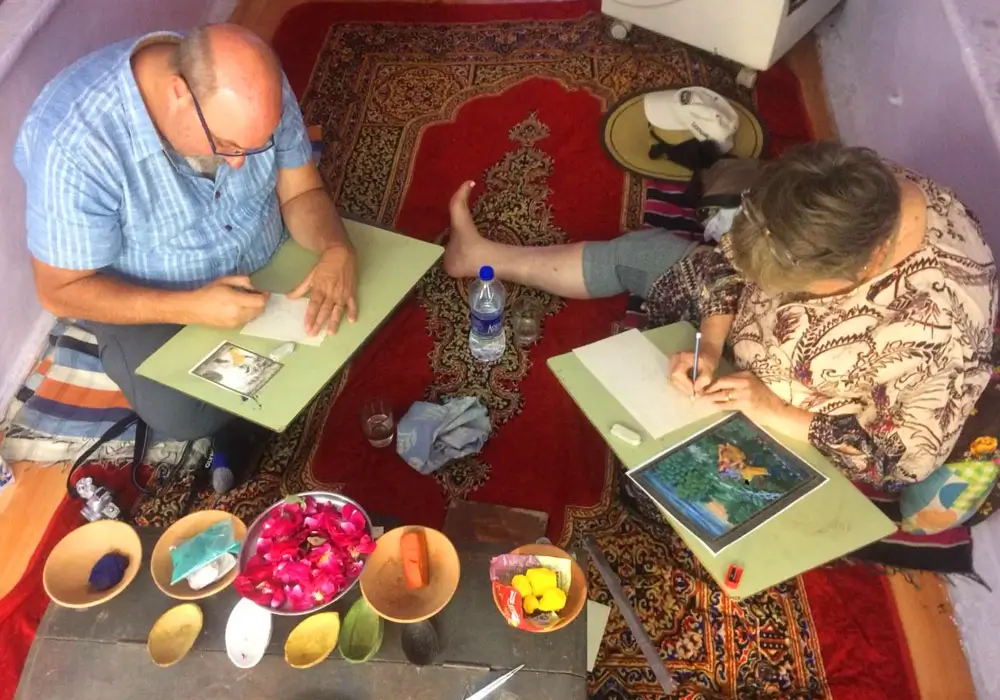

 🌙 08 Nights / 09 Days
⭐ Most Popular
Delhi - Agra - Jaipur... Delhi - Agra - Jaipur - Udaipur Show More
 🌙 08 Nights / 09 Days
Luxury
Delhi → Agra → Jaipur... Delhi → Agra → Jaipur → Udaipur Show More
 🌙 02 Nights / 03 Days
 🌙 01 Night / 02 Days
⭐ Most Popular
Yes. The work is seated and relaxed. The only challenge is reaching the studio, which may involve stairs or narrow lanes, so tell us about any mobility needs and we will choose a suitable place.
Yes, and it is a lovely pairing. Paint in the afternoon in the old city, then walk or drive to the jetty for a sunset boat ride on the lake.
Yes. Ask for it to be packed flat between card and carry it in your hand luggage. A flat folder or a large book in your bag also protects it well.
Some artists paint on thin, polished slices of camel bone, a later practice that developed partly as a substitute for ivory. Traditional court miniatures were mainly painted on paper, and many artists also work on silk.
Yes. The City Palace museum includes Mewar court paintings among its displays, though galleries change from time to time. We suggest visiting before your lesson so you recognise the style.
Zoom in with your phone camera. Prints often show a dot pattern and soft edges, while hand-painted work has crisp brush strokes and layered colour. Very detailed work sold very cheaply is usually not fully hand-painted.
No. We choose working studios and make it clear in advance that the lesson is the experience. You can buy if you love something, but there is no obligation.
Yes, children who enjoy drawing usually love it. The artist can choose a very simple motif for younger children. Tell us their ages so we can suggest a suitable length.
Traditionally, yes. Squirrel hair holds a very sharp point, which is why it was used for the finest lines. Many artists now also use fine synthetic brushes, and your artist will show you both if available.
Many artists still use mineral and plant colours, especially for finer work, while others mix natural and modern pigments. Ask your artist what they use. A good studio will explain honestly.
It is the painting tradition of the old Mewar court based in Udaipur. It is known for bold flat colours, court scenes, processions, Krishna stories and decorated animals such as elephants and horses, painted in fine detail on a small scale.
Time varies with the motif you choose and how much detail you want to add. Plan to give up a good part of a morning or afternoon, including the walk into the old city.
Not at all. The artist chooses a simple motif, helps with the outline and guides every step. Most beginners are surprised by how good their finished piece looks.
The price depends on the length of the session, the size of your group and the artist. We quote the current price for your dates and include the transfers within your tour. Send us your dates and group size on WhatsApp.
Whether you're planning your first India trip or returning to explore deeper, get honest, expert advice from someone who knows every corner of this country. No pressure, no cost.