📅 Last Updated On: 30 Oct 2026
⏱ 7 Min Read
Jawai Leopard Safari from Jodhpur: Distance, Day Trip & Best Camps
N
Nand Singh Rathore
Travel & Tourism Expert specializing in India
Jodhpur to Jawai Safari: Route, Travel Time & Wildlife Experience
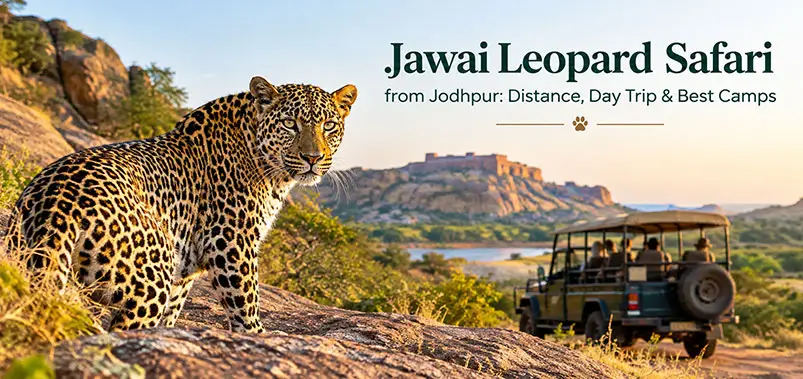
The first leopard most visitors see at Jawai is not in a forest at all. It is lying on a smooth granite boulder above a village, tail hanging over the edge, while a shepherd in a white tunic and red turban walks his goats along the track below. Nobody panics. A temple bell rings somewhere on the hillside, the cat lifts its head, and then it goes back to watching the sunset. That single scene explains why Jawai, in the Pali district of southern Rajasthan, has become one of the most talked-about wildlife stops in India.
For travellers based in Jodhpur, Jawai sits a comfortable drive to the south, close enough for a long day out and far better as an overnight stay. It also lies conveniently between Jodhpur and Udaipur, so it slots neatly into a classic Rajasthan route alongside the marble Jain temple at Ranakpur and the great walls of Kumbhalgarh. This guide covers the real distances and driving times, how a Jawai leopard safari day trip from Jodhpur actually unfolds hour by hour, what private jeep safaris cost, when sightings are most likely, and which camps are worth the money, from the ultra-luxury SUJAN Jawai to comfortable mid-range lodges. You will also find practical advice on clothing, photography, private car fares and the etiquette that keeps this rare relationship between people and predators intact.
Where Jawai Is and Why Its Leopards Are Different
Jawai is not a national park or a tiger reserve with a gate and a ticket counter. It is a stretch of rural countryside of roughly 60 square kilometres around the villages of Bera, Jawai Bandh, Varawal, Kothar and Sena in the Sumerpur area of Pali district. The landscape is unlike anywhere else in Rajasthan. Huge domes and ridges of ancient granite rise straight out of farmland and scrub, their surfaces honeycombed with caves, crevices and overhangs. Those caves are the secret. They give leopards cool shelter in summer, safe dens for cubs and high vantage points over the surrounding fields, which is why the area supports one of the densest populations of wild leopards in Rajasthan, commonly estimated at between 50 and 60 animals.
What makes Jawai special is not just the number of cats but the way they live. There is no fence between the leopards and the people. Small hamlets sit at the foot of the hills, wheat and mustard fields run right up to the rocks, and several hilltops carry small shrines with whitewashed steps. Leopards regularly rest on those steps or on the rocks beside them, and the sight of a spotted cat lounging near a temple flag at dusk has become the defining image of the region.
The people at the heart of this story are the Rabari, a traditional shepherd community who have grazed goats, sheep, cattle and camels across western India for centuries. Rabari men are easy to recognise by their white clothing and bright red or saffron turbans, while the women often wear black with heavy silver jewellery. Many Rabari families regard the leopard as connected to the local mother goddess and see it as a guardian of the hills rather than a pest. When a leopard takes a goat, which does happen, the loss is often accepted as an offering, and the state forest department also pays compensation for livestock killed by wild animals. That tolerance is the reason the cats have survived here without the conflict seen in many other parts of India.
Leopards at Jawai have also learned that humans are mostly harmless. Attacks on people are extremely rare, and the cats tend to keep a respectful distance by day, coming down to the villages at night to hunt stray dogs, livestock and wild prey such as hares, peafowl and nilgai, the large antelope also called blue bull. This mutual patience is what lets visitors watch leopards in open country for long periods, sometimes for an hour or more as a mother and cubs play on a rock face.The Rajasthan government has recognised the value of this landscape by notifying the Jawai Leopard Conservation Reserve, and the area now has a growing number of lodges and jeep operators. Even so, it still feels agricultural rather than touristy. You will pass farmers on tractors, women carrying water, camels resting under trees and children waving from school gates, all within a short distance of the rocks where the leopards sleep. Other wildlife adds depth to a visit: striped hyenas, jungle cats, Indian foxes, desert foxes, grey langurs, nilgai, sloth bears on the more remote ridges, and a superb range of birds. But the leopard remains the reason people make the journey, and Jawai offers some of the most reliable and photogenic leopard viewing anywhere in the country.
Plan Your Jawai Leopard Safari
Discover the wilderness of Jawai with a personalised safari experience, comfortable stays and expert local guidance.
Jawai Dam, Mugger Crocodiles and Winter Birdlife
The name Jawai comes from the Jawai River and the great dam that holds it back. Jawai Dam, often called Jawai Bandh, was built by Maharaja Umaid Singh of Jodhpur, the same ruler who commissioned the Umaid Bhawan Palace, and it remains the largest dam in western Rajasthan. Its reservoir supplies drinking water to Jodhpur, Pali and many villages in between, which gives travellers from Jodhpur a neat personal link to the place. On a clear winter morning the water lies flat and silver below the granite hills, and it becomes the second great attraction after the leopards.
The reservoir is home to a healthy population of mugger crocodiles at Jawai Dam. The mugger, also called the marsh crocodile, is a broad-snouted freshwater species that can grow to well over three metres, and at Jawai it is easy to see. On sunny days, especially between November and February, crocodiles haul out onto the sandy banks and rocky islands to warm up, often lying with their jaws open to regulate body temperature. Most lodges include a short drive or walk to the shoreline as part of an afternoon excursion, and some arrange boat outings when water levels and permissions allow. Keep well back from the water's edge, never let children wander towards the bank, and follow your naturalist's instructions, because muggers are wild predators and can move surprisingly fast over short distances.
For birdwatchers, Jawai is a rewarding bonus. More than 100 bird species have been recorded around the dam and the surrounding farmland and hills. In winter the reservoir draws migrants from Central Asia and beyond, including bar-headed geese, ruddy shelducks, northern pintails, greater flamingos when water levels suit them, great white pelicans, painted storks and large flocks of common cranes and demoiselle cranes in the fields. Raptors are a highlight too: look for Bonelli's eagles over the cliffs, Egyptian vultures, black-winged kites hovering above the crops and the occasional peregrine falcon on a granite ledge. Around the lodges you will see Indian robins, red-vented bulbuls, white-throated kingfishers and grey francolins, while the scrubby hillsides hold the striking Indian eagle-owl, which sometimes shares rocky outcrops with the leopards.
The best time for birding is the first two hours after sunrise, when the light is soft and birds are most active. Many camps combine a short birding stop at the dam with the morning leopard drive, and a few offer separate guided Jawai Dam birdwatching walks. Bring binoculars of at least 8x magnification; a pair of 8x42 or 10x42 glasses is ideal for both birds and distant cats.
A visit to the reservoir also gives you a sense of scale. Behind the dam, the hills roll away towards the Aravalli range, and on clear days the long line of ridges leading to Kumbhalgarh and Ranakpur is visible on the horizon. Some lodges drive guests to the top of Kala Pahad, the black hill, for a sweeping view over the water and the boulder fields, a good place for tea at sunset if you are not out on a leopard drive.
For travellers on a short visit, the dam is a practical filler between safaris. Leopards rest through the middle of the day, so the hours after lunch are perfect for a relaxed look at the crocodiles and birds, a walk through a Rabari hamlet with a local guide, or simply a nap before the evening drive. It turns a narrow leopard hunt into a rounded countryside visit, and it gives non-photographers in a group something to enjoy beyond waiting for a cat.
Distance From Jodhpur and Udaipur, and the Road Route
The most common question is simple: how far is Jawai from Jodhpur? By road, the Jodhpur to Jawai distance is roughly 150 to 170 kilometres depending on which village your camp is in, with Bera and Varawal at the farther end. Driving time is usually around three to three and a half hours in a private car, allowing for town traffic in Jodhpur and Pali and one short tea stop. From Jodhpur airport, the larger lodges quote about 153 to 170 kilometres, and you should allow close to three and a half hours to the gate of a camp near Bera.
The standard route leaves Jodhpur heading south-east on the highway towards Pali, a well-surfaced four-lane road of about 72 kilometres that takes an hour or a little more. From Pali, the road continues south through farmland and small market towns towards Sumerpur. Just short of Sumerpur, or through the town itself, your driver turns east onto the local road that leads to Jawai Bandh, Bera and the granite hills. The last 20 to 30 kilometres are on narrower rural roads, generally in good condition but shared with tractors, camel carts and livestock, so progress slows. Sat-nav apps sometimes suggest shortcuts through villages; experienced drivers usually stick to the main route because it is quicker in practice.
Along the way there are reliable stops for a break. Pali has several clean highway restaurants and fuel stations with acceptable washrooms, and many drivers prefer the hotel restaurants on the bypass rather than town-centre places. Beyond Pali the options thin out, so take water and snacks with you if travelling early in the morning.
From Udaipur, Jawai is roughly 130 to 150 kilometres, or about three hours by car. There are two main approaches. The first heads north-west through Gogunda and then over the hills via Ranakpur and Sadri, a scenic road that lets you visit the Ranakpur Jain temple on the way. The second follows the national highway south-west towards Pindwara and then turns north through Sirohi district to Sumerpur and Jawai, a slightly longer but faster road. Either way, Jawai is a natural halfway point on a Jodhpur to Udaipur road trip via Jawai, and many travellers break that drive here for one or two nights instead of doing the journey in a single push.
Other useful distances: Ranakpur is about 41 to 50 kilometres from Jawai Bandh, roughly an hour's drive. Kumbhalgarh Fort is about 90 kilometres, around two hours over winding hill roads. Mount Abu is about 110 to 120 kilometres to the south, a little over two and a half hours. Jaipur is roughly 395 to 420 kilometres, a full day's drive of seven to eight hours, which is why guests on a Golden Triangle extension usually fly or take a train to Jodhpur or Udaipur and continue by road.
For rail travellers, Jawai Bandh railway station on the Ahmedabad to Delhi line is only around 12 to 18 kilometres from most camps, and Falna station, about 35 kilometres away, has more express trains stopping. Most lodges will collect guests from either station for a fee. The nearest airports are Udaipur and Jodhpur, both with daily flights from Delhi and Mumbai. For international visitors short on time, flying into Jodhpur, driving to Jawai, then continuing to Udaipur for the flight home is the smoothest Jodhpur to Jawai private car route, and it avoids doubling back along the same highway.
Doing Jawai as a Day Trip From Jodhpur
A same-day return from Jodhpur is possible, and plenty of travellers with tight schedules do it. It is worth being honest about what it involves, though: around seven hours of driving for an evening safari of two and a half to three hours. Done well, it can still be a memorable day, and a good driver and a pre-booked jeep make all the difference. Here is how a realistic Jawai day trip from Jodhpur usually runs.
The day starts with a late-morning departure. Leave your Jodhpur hotel at around half past ten after a relaxed breakfast, which avoids the morning school and office traffic around the city. The run to Pali takes just over an hour, and a short tea stop on the Pali bypass breaks the journey neatly. By early afternoon, around half past one, you reach the Jawai area. The most comfortable way to manage this is to book lunch at one of the lodges, many of which accept non-resident guests for a meal and safari when they have space. A buffet or set lunch at a mid-range camp costs around ₹1,200 to ₹1,800 per person, while lunch at the luxury properties is generally reserved for staying guests.
After lunch there is usually time for a brief rest and a short drive to Jawai Dam to see the crocodiles and birds, at around three o'clock. This is also when your jeep operator will brief you on the afternoon. The evening safari typically departs between half past three and half past four, depending on the season, since sunset comes earlier in December and January than in March. For the next two and a half to three hours your driver and tracker work the granite outcrops, checking caves and ledges where cats were seen the previous evening, scanning with binoculars and talking with shepherds who often know exactly where a leopard spent the day. The best sightings tend to come in the last hour of light, when leopards wake, stretch and start moving down the rocks.
The drive ends at or shortly after dusk, around seven o'clock in winter. After a cup of tea at the lodge, you start back towards Jodhpur at about half past seven. With little traffic at night the return run is steady, and you should be back at your hotel by around eleven. Night driving on the rural stretch near Jawai calls for an experienced driver familiar with the road, because livestock and unlit tractors are common, so this is not a trip to do in a self-drive car.
A morning-safari day trip is technically possible but much harder. Morning drives begin before sunrise, which means leaving Jodhpur at about two in the morning. Few travellers enjoy that, and you arrive tired for the most important part of the day.
The better choice, if your schedule allows, is a one-night Jawai leopard safari stay. Arrive in time for lunch, do the evening drive, sleep at a camp, take the morning drive at dawn, then continue to Udaipur or return to Jodhpur after breakfast. Two drives roughly double your chance of a good sighting, you see the hills in both evening and morning light, and the driving is broken into comfortable stretches. Two nights with three or four drives is better still for photographers or anyone who wants to watch behaviour rather than simply tick off a leopard.
If you do choose the day trip, book the jeep in advance, carry warm layers for the drive back, and pack snacks and water. Treat the day as a taste of Jawai rather than the full story, and many guests find themselves returning for a proper stay on their next visit.
Safari Timings, Private Jeep Costs and Sighting Chances
Because Jawai is not a formal national park, safaris here do not follow the strict zone system and fixed gate times of Ranthambore or the parks of central India. Drives are run by individual lodges and licensed local operators in open four-wheel-drive vehicles, usually modified Maruti Gypsy or Mahindra jeeps, each with a driver and a tracker who knows the hills intimately.
There are two main Jawai leopard safari timings. The morning drive usually starts around 5:45 to 6:30, depending on sunrise, and lasts until about 9:00 or 9:30. The evening drive generally runs from about 4:00 or 4:30 until around 7:00, finishing at or just after dusk. In winter both slots shift a little later in the morning and earlier in the evening, and in March and April the morning start moves earlier to beat the heat. Some lodges also offer longer half-day drives covering more distant outcrops. Sunrise and sunset are the key windows, because leopards are most active in the cool hours, climbing to rocky perches to warm up in the morning and moving down towards the villages in the evening.
On cost, it pays to budget at the upper end. A private jeep safari in Jawai booked through a mid-range lodge or reputable local operator typically costs ₹5,000 to ₹7,500 per jeep per drive for up to four to six guests, including a driver, tracker, bottled water and sometimes a flask of tea or coffee served on the rocks. Some well-known guides with more experience and better vehicles charge ₹8,000 to ₹10,000 per drive. Shared seats in a jeep are sometimes sold at around ₹1,500 to ₹2,500 per person, but most international travellers prefer a private vehicle so they can stay longer at a sighting and avoid crowding. At the top-end camps, including SUJAN Jawai and Bera Safari Lodge, twice-daily drives are included in the room rate along with meals, which is part of what justifies the higher tariff. Tips for the driver and tracker are customary and appreciated; ₹500 to ₹1,000 per drive per jeep is a fair amount when the effort has been good.
Sighting chances at Jawai are among the best in India for leopards. With a resident population of 50 to 60 cats and open, rocky terrain where they are easy to spot against pale granite, the odds are strong. Experienced lodges in the October to March season commonly report that the large majority of guests who take two or three drives see at least one leopard, and many see several, including mothers with cubs. On a single drive, the chance is still good but less certain. Nothing is guaranteed in the wild, and any operator promising a sure sighting should be treated with caution.
Distance is the other factor to keep in mind. Many sightings are at 80 to 200 metres, with the leopard on a ledge or boulder above the jeep. Close encounters at 20 or 30 metres do happen, especially near the village temples in the evening, but you should expect to use binoculars or a long lens for much of the viewing. This is why a good Jawai leopard sighting often involves patience: the tracker positions the jeep with a clear view of a known den, engine off, and everyone waits quietly as the light fades.
When booking, ask whether the price is per jeep or per person, how long the drive lasts, whether hot drinks are included, and whether the operator follows a no-baiting policy. Ethical operators never use live animals to lure leopards, never chase cats with vehicles and never use spotlights to blind them at night. A slightly higher fee for a responsible, experienced team is money well spent.
Best Season, What to Wear and Responsible Photography
The best time for a Jawai leopard safari is from October to March, with November to February offering the most pleasant weather and the strongest wildlife activity. Days are sunny and mild at 22 to 28°C, while early mornings in December and January can drop to 5 to 8°C, and occasionally close to freezing. Leopards spend longer basking on the rocks in winter sun, which makes them easier to find. October and early April are good shoulder months, with fewer guests and warmer temperatures. From late April to June the heat climbs past 40°C and safaris are shorter, while the monsoon from July to September turns the hills green but brings rain, humidity and reduced activity. Several luxury camps, including SUJAN Jawai, close during the hottest and wettest months and usually reopen in early autumn, so always check dates before booking.
Clothing matters more than people expect, because you sit in an open jeep at dawn. In winter, dress in layers: a thermal base layer, a long-sleeved shirt, a fleece or light down jacket, and a windproof outer layer, plus a warm hat, a scarf and light gloves. As the sun rises you can peel layers off. Choose neutral, natural colours such as khaki, olive, brown and stone; avoid white, which reflects light and stands out, and avoid very bright reds and blues. Closed shoes with good grip are essential, since some lodges include short walks on granite slabs. Add a wide-brimmed hat, sunglasses, high-factor sunscreen and lip balm for midday. A light scarf or buff helps against dust on the rural tracks. In warmer months, breathable cotton or linen in earth tones works best.
Jawai is a photographer's favourite because of its clean backgrounds and warm evening light on the rocks, but it rewards preparation. For Jawai leopard photography, a telephoto lens is the single most important tool. A 100–400mm or 150–600mm zoom on a full-frame or crop-sensor body covers most situations, and serious photographers often bring a 500mm or 600mm prime as well. Pack a second body with a 24–70mm or 24–105mm lens for landscape shots showing a leopard as a small figure on a vast granite dome, which often makes the most memorable image of the trip. A bean bag resting on the jeep frame is far more practical than a tripod in a vehicle. Light falls quickly in the evening, so be ready to push ISO to 3,200 or 6,400 on modern cameras and keep shutter speeds above 1/500 second for moving cats. Shoot in RAW, carry spare batteries and memory cards, and use a dust cover or cloth on the dusty tracks.
Responsible behaviour is part of the experience here, because the coexistence that makes Jawai possible is fragile. Never use flash on wildlife. Never ask the driver to go off-track onto farmland or rocks, to chase a moving leopard or to drive between a mother and cubs. Keep voices low, do not stand up suddenly in the jeep and never get out of the vehicle near a sighting. Drones are not permitted without official clearance and disturb both animals and villagers. Do not play animal calls through your phone to provoke a reaction.Respect towards the Rabari and other villagers matters equally. Ask before photographing people, especially women, and accept a polite refusal. Walk around livestock rather than through herds, keep away from village temples during prayers and do not climb onto shrine steps to get closer to a cat. Use lodges that employ local staff and trackers, buy crafts directly from village artisans where offered, and keep plastic waste with you until you reach a bin. These small choices help ensure that the people of Jawai continue to see the leopard, and the visitors who come to watch it, as a benefit rather than a burden.
Book Your Jawai Wildlife Experience
Get in touch with our travel experts to plan your Jodhpur to Jawai trip, explore leopard safari options and find the best camps for your stay.
Luxury and Mid-Range Camps in Jawai With Rates
Accommodation at Jawai ranges from one of India's most exclusive safari camps to simple family-run lodges, and the right choice depends on your budget and how much time you will spend on drives. Prices below are quoted on the higher side for a double room per night in peak season, so expect lower rates in shoulder months.
At the top is SUJAN Jawai, created by the conservationist couple Jaisal and Anjali Singh, whose family also runs SUJAN Sher Bagh near Ranthambore and SUJAN The Serai near Jaisalmer. The camp sits in a private setting among the granite hills near Bera, with ten individually designed luxury tents, including a family tented suite and a royal tented suite made from two tents linked by a canopy. Interiors combine leather, brass and dark wood with sweeping views of the rocks, and the main lounge, dining area and pool are designed to frame the landscape. The camp is known for its expert naturalists, its strong conservation work with local communities and its relaxed, refined service. Rates are all-inclusive, covering meals, house drinks, twice-daily leopard drives with a naturalist, high tea, laundry and Wi-Fi. Expect to pay from around £1,550 to £1,800 per night for two in a luxury tent in peak season, roughly US$2,000 to US$2,300, with the royal suite considerably more. The camp generally operates from early autumn to mid-spring and closes in the hottest months. For travellers looking for the finest luxury leopard safari camp in Rajasthan, this is it.
Bera Safari Lodge is a long-established, intimate lodge run by a local family with deep roots in the area and a strong reputation among wildlife photographers. Rooms are spacious and comfortable, and packages usually include meals and two drives a day. Budget around ₹25,000 to ₹28,000 per night for a double, all-inclusive.
Castle Bera is a small heritage property that originally served as a hunting lodge, set in the village of Bera itself, with rooms full of character and its own team of trackers. Rates run from about ₹14,000 to ₹22,000 per night, with safari-and-meal packages available.
Varawal Leopard Camp offers comfortable tents and cottages with a camp atmosphere close to the leopard hills, at about ₹13,000 to ₹15,000 per night, while Leopard's Lair Resort near Bera charges around ₹12,000 to ₹14,000 for well-appointed cottages and runs its own morning and evening drives. For a resort-style stay with a larger pool and spa, Aaramgaah Resort Jawai is another popular choice, typically priced in the ₹15,000 to ₹20,000 bracket in peak season.
Our sister property, Jawai Nature Stay, sits on the Jawai to Sumerpur road at Angor village, on the edge of the leopard reserve, about three and a half hours from Jodhpur and three hours from Udaipur. It offers a mix of standard tents, tents raised on stilted platforms for a lookout view, luxury rooms and family rooms, all with air-conditioning, attached bathrooms and hot water, plus a swimming pool and outdoor dining serving Rajasthani home-style food. Private and shared 4x4 leopard safaris with local trackers run at sunrise and sunset, and the team also arranges crocodile and bird outings to Jawai Dam, walks with Rabari shepherds, cycling and nature trails. It is a strong mid-range option for families and small groups who want comfort and a genuine local feel without the price of the top-tier camps; current tariffs are available directly from the property.
Whichever camp you choose, book early for the Christmas and New Year weeks and for February, when demand peaks. Two nights is the ideal stay for most travellers, giving three or four drives and enough time to enjoy the dam, the villages and the camp itself.
Combining Jawai With Ranakpur, Kumbhalgarh and Udaipur, With Private Car Fares
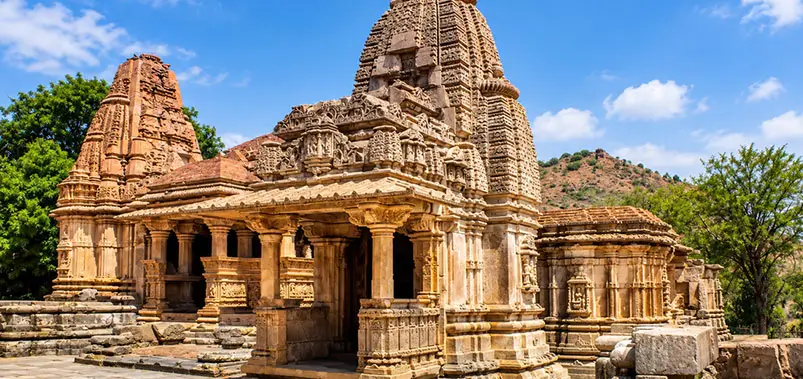
Jawai's location makes it easy to build into a wider Rajasthan journey, and three nearby highlights deserve a place in any itinerary. The first is the Ranakpur Jain temple, about an hour away. Carved from white marble and supported by more than 1,400 individually carved pillars, no two exactly alike, it is one of the finest pieces of temple architecture in India. Non-Jain visitors are admitted from around noon to 5:00 pm, after morning prayers. Entry is free for Indian visitors and about ₹200 for foreign visitors, with an additional camera fee. Shoes and all leather items, including belts and wallets, must be left outside, shoulders and knees must be covered, and wraps are lent to those who need them. Allow an hour and a half, and consider lunch at one of the nearby resorts on the Ranakpur road.
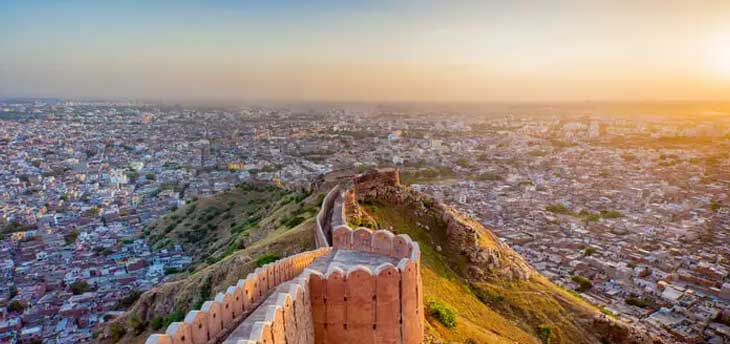
The second is Kumbhalgarh Fort, about two hours from Jawai over the Aravalli hills. Its fortified wall runs for around 36 kilometres along the ridges, making it one of the longest continuous walls in the world, and the views from the palace at the summit stretch across Rajasthan towards Marwar. Entry costs about ₹40 to ₹50 for Indian visitors and up to around ₹600 for foreign visitors, and an evening sound and light show tells the fort's history. Ranakpur and Kumbhalgarh are only about 50 kilometres apart, so they pair neatly in a single day.
The third is Udaipur, the lake city, roughly three hours from Jawai. A well-paced route for a leisurely trip runs Jodhpur to Jawai for two nights, then Jawai to Udaipur via Ranakpur, with an optional night at Kumbhalgarh before reaching the lakes. Travellers coming from Delhi often add this loop after the Golden Triangle, flying from Jaipur or Agra to Jodhpur and finishing with a flight home from Udaipur. A Golden Triangle tour with SUJAN Jawai is a particularly popular luxury combination, linking the Taj Mahal and Jaipur's palaces with a few days of leopard watching in total comfort.
Private car fares vary with vehicle type and distance, so it helps to budget at the higher end. For a Jodhpur to Jawai taxi on a one-way drop of about 160 to 170 kilometres, expect around ₹5,500 to ₹6,500 in a sedan such as a Toyota Etios, ₹7,500 to ₹8,500 in a Toyota Innova Crysta and ₹11,000 to ₹13,000 in a Toyota Fortuner. A same-day return trip from Jodhpur, covering about 340 to 360 kilometres with the driver waiting through the safari, typically costs ₹7,500 to ₹8,500 by sedan, ₹10,000 to ₹11,500 by Innova Crysta and ₹14,000 to ₹16,000 by Fortuner. A one-way transfer from Jodhpur to Udaipur via Jawai and Ranakpur, spread over two or three days, runs to around ₹14,000 to ₹16,000 by sedan and ₹19,000 to ₹22,000 by Innova Crysta, with driver allowances for overnight stays usually included. A chauffeur-driven Mercedes-Benz for the same route costs considerably more, often ₹40,000 to ₹55,000. Fares normally cover fuel, tolls, state taxes and parking, but confirm whether the driver's night charge is included, and remember that the safari jeep is a separate cost, since private cars cannot enter the safari tracks.
A few safety points round off the practical side. Travel between towns by daylight where possible, use an experienced driver familiar with the rural roads around Bera, and keep a printed copy of your camp's phone number in case of patchy mobile coverage near the hills. Carry any regular medication, as the nearest large pharmacies are in Sumerpur and Falna. Top Indian Holidays can arrange a private chauffeur-driven car from Jodhpur for a Jawai day trip, an overnight stay or a longer route on to Ranakpur, Kumbhalgarh and Udaipur.
Related Guides


 info@topindianholidays.net
 +91-8955000999