


 info@topindianholidays.net
 +91-8955000999
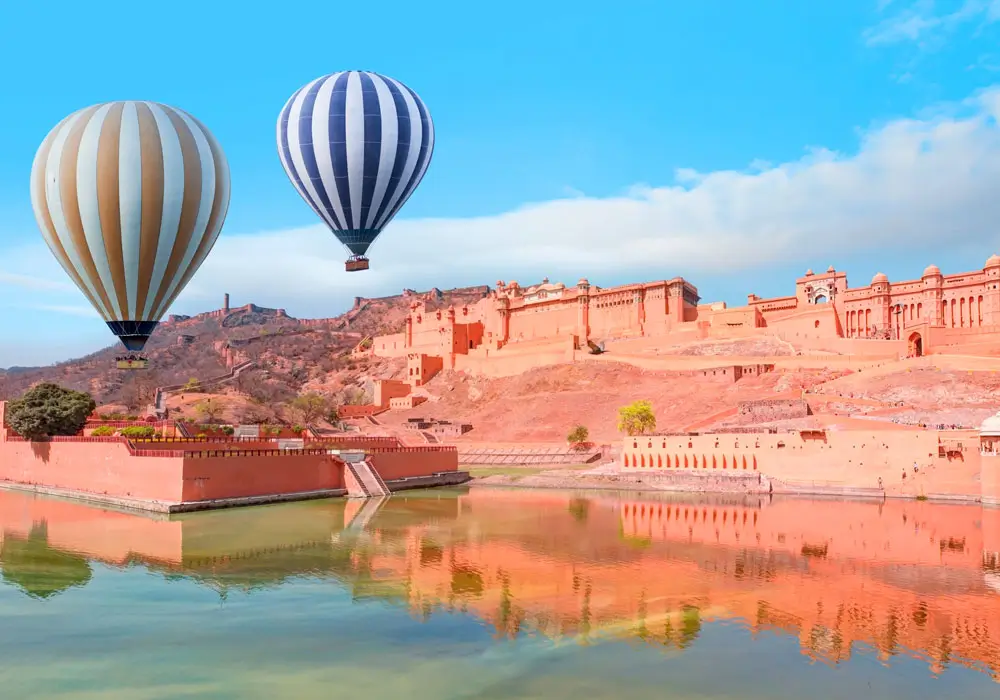
Hot Air Balloon Ride in Jaipur
Lift off as the sky turns orange and drift over villages, mustard fields and the Aravalli hills while Jaipur is still waking up.
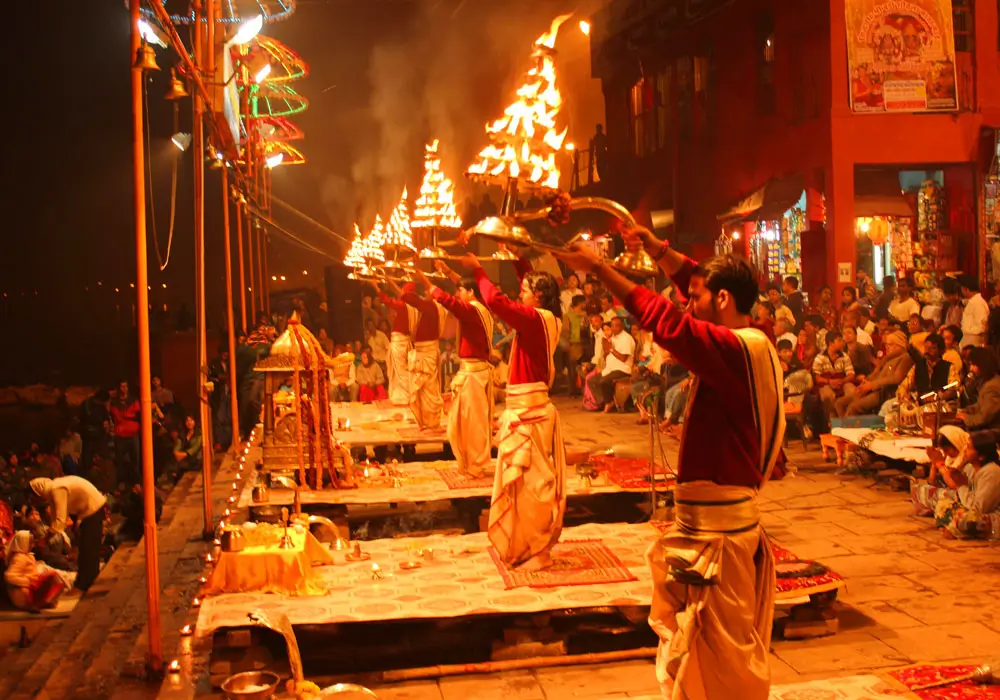
View Experience ›Watch priests raise blazing brass lamps to the river at Dashashwamedh Ghat, then return before sunrise to drift past pilgrims bathing in the first light.
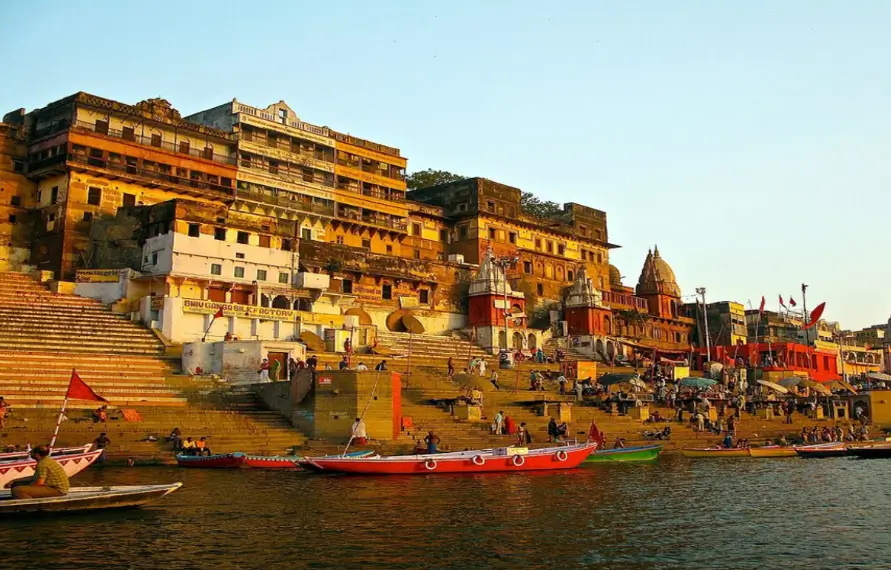
Varanasi is one of the oldest living cities in the world, and almost everything in it faces the river. A long curve of stone steps, the ghats, runs down to the Ganga along the western bank, lined with temples, palaces, ashrams and old houses. Every day, from before dawn to well after dark, people come down those steps to bathe, pray, wash, cremate their dead and simply watch the water. The best way to understand it is from the river itself.
This experience gives you Varanasi twice, at the two moments when it is most itself. In the evening, you watch the Ganga Aarti at Dashashwamedh Ghat, a ceremony of fire, sound and chanting performed by young priests in matching robes, with crowds packed on the steps and boats crowded together on the water. The next morning, before the sun rises over the flat far bank, you board a private boat and glide past the ghats as the city wakes up.
A Varanasi Ganga Aarti boat ride is not a performance put on for visitors. The aarti is a daily act of worship, and the morning ghats are full of people doing what they do every day. Your guide helps you watch with understanding, explains what you are seeing, and makes sure you know where photography is and is not welcome.
1. Late afternoon walk to the river
Your guide meets you at your hotel in the late afternoon. Cars cannot reach the ghats through the old city, so you are dropped as close as traffic allows, then walk the last stretch through busy lanes or along the river. Your guide leads the way and keeps an eye on your bags in the crowds.
2. Boarding your boat before the aarti
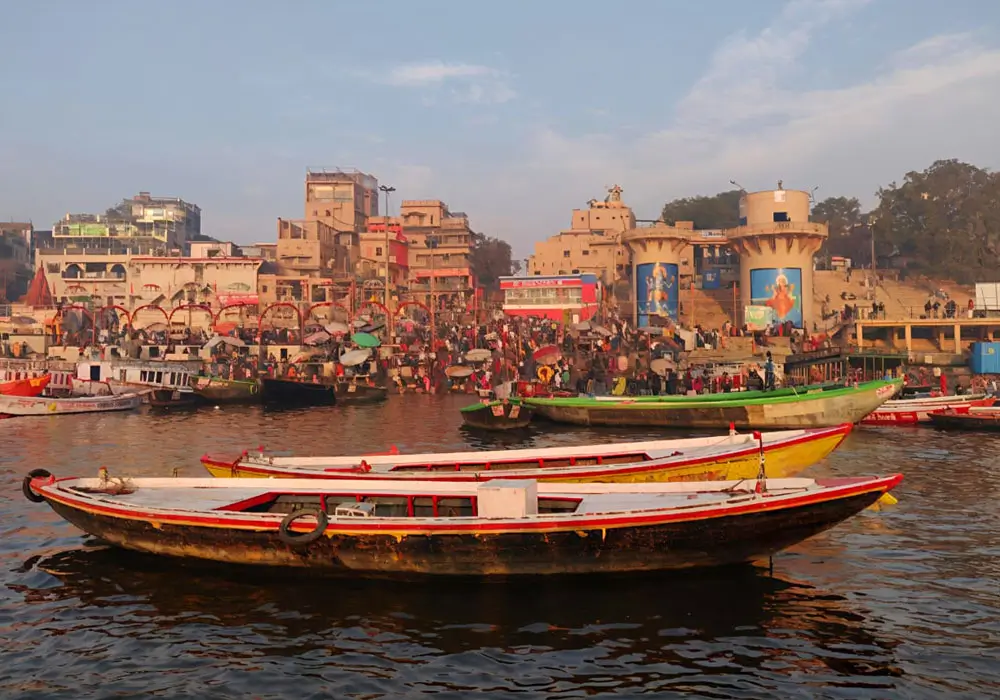
Rather than squeezing onto the steps, you board a boat that has been arranged for you. As dusk falls, the boatman positions it facing Dashashwamedh Ghat, among dozens of other boats, so you have a clear view of the platforms where the priests will stand.
3. Floating a diya
Before the ceremony starts, you can buy a small leaf bowl holding marigold petals and a little oil lamp, called a diya. Light it, make a wish or say a quiet prayer, and set it gently on the water. Your guide explains its meaning.
4. The evening Ganga Aarti
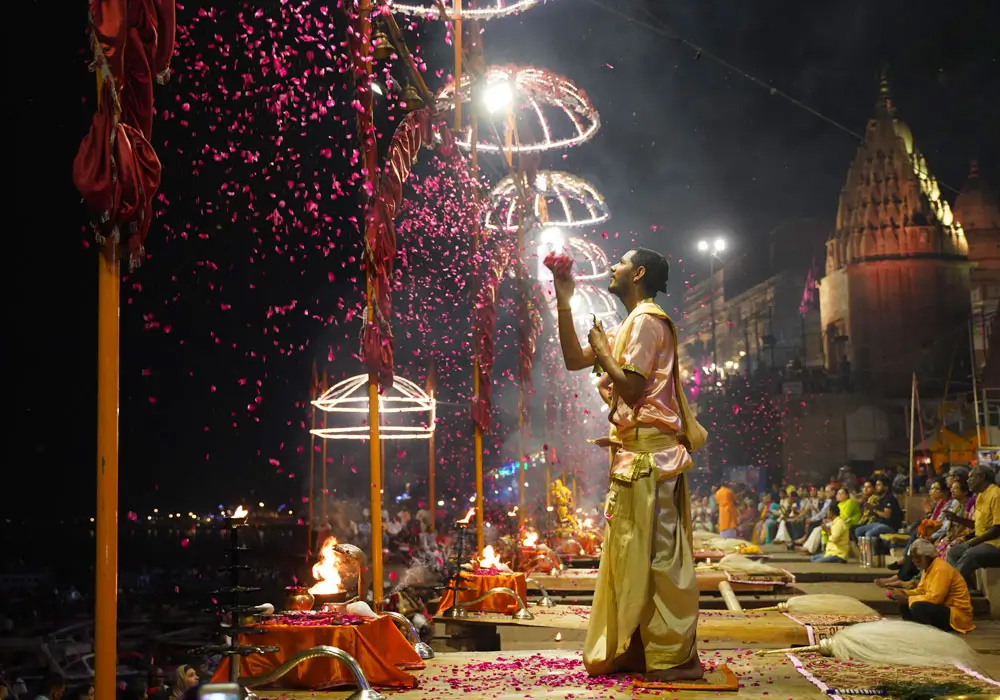
As darkness settles, conch shells sound and the ceremony begins. The priests wave incense, then lift large, many-tiered brass lamps, swinging them in slow circles towards the river while bells ring and devotional songs play over loudspeakers. The fire, smoke and chanting create a powerful scene, both on the steps and on the water.
5. Return to your hotel
After the aarti, the crowds disperse slowly. Your guide walks you back to your car and you return to your hotel for dinner. Get an early night, because the morning starts before dawn.
6. Pre-dawn pickup
Your guide meets you before sunrise, and you walk down to the river in the cool, blue half-light. The lanes are quiet, except for tea stalls lighting their stoves and pilgrims making their way down to bathe.
7. The sunrise boat
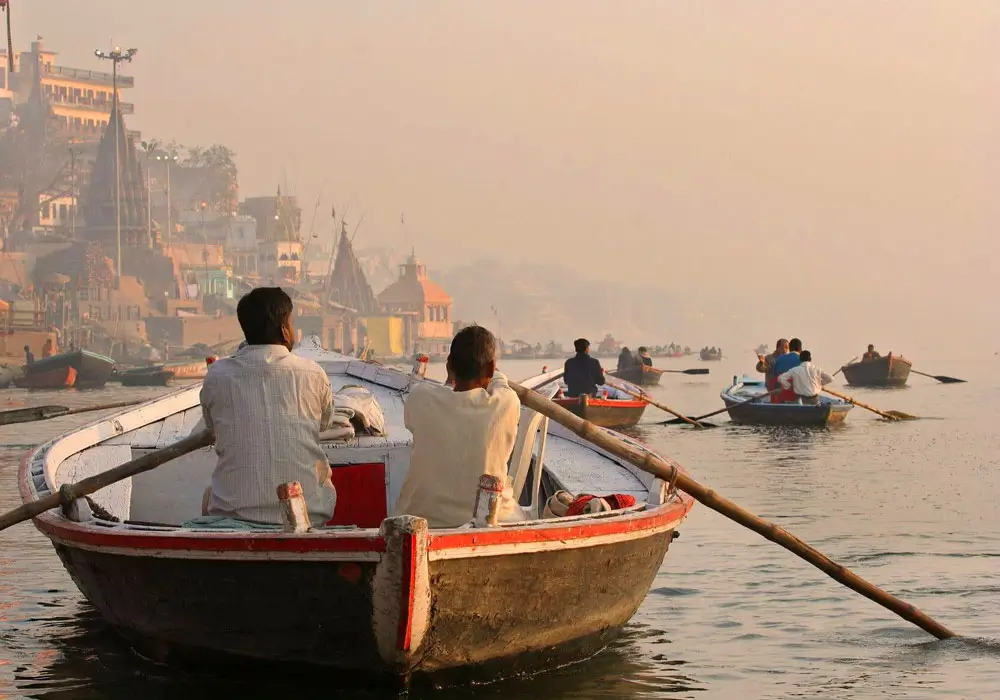
You board a private boat, usually near Assi or Dashashwamedh Ghat, and travel along the ghats as the sun comes up over the far bank. Your guide points out each ghat, its temple and its story.
8. Passing Manikarnika and Panchganga
Further north, you pass Manikarnika, the main cremation ghat, where fires burn day and night. Your boatman keeps a respectful distance and your camera stays down. Beyond it, you reach Panchganga Ghat before turning back.
9. Stepping ashore
You leave the boat at a ghat of your choice. Many guests then walk up into the old city for tea and a lassi, or continue straight into a guided walk through the lanes.
Dashashwamedh Ghat. The busiest and most famous ghat in Varanasi, close to the Kashi Vishwanath temple area. Its name is linked to a legend of Lord Brahma performing a great sacrifice here. In the evening, it becomes the main stage for the aarti.
The priests and their platforms. A row of young priests, usually in saffron or matching robes, each stand on their own wooden platform facing the river. They move in perfect unison through a sequence of rituals, using incense, fly-whisks made of yak hair, peacock feathers and the large brass lamps.
Fire, sound and smoke. The tall, tiered lamps blaze with flames and send up curls of smoke. Conch shells are blown, bells clang, and hundreds of voices join the singing.
The crowds. Pilgrims from every corner of India fill the steps, joined by travellers from abroad. Many have travelled long distances to be here, and for them this is a deeply important act of worship.
The boats. From the water, you see the ceremony from the front, with lamps reflected in the river and the boats rocking gently around you. It is crowded on the water too, with boats tied up side by side, so expect to be close to others.
On the steps or on the boat? Watching from the steps puts you inside the crowd, close to the priests and the devotion, but you need to arrive early to find a spot and it can be very packed. Watching from a boat gives you a clearer, front-facing view, more space and a quieter mood. Many guests choose the boat for the aarti and walk along the ghats another time.
Bathing pilgrims. At dawn, the steps fill with people taking a holy dip in the Ganga. Men in simple cloths and women in saris wade in, cup water in their hands and offer it to the rising sun.
Morning prayers and yoga. You see people meditating on the steps, doing yoga on the platforms above the water, and sadhus with ash-covered skin sitting quietly by small shrines.
Assi Ghat morning aarti. At the southern end of the ghats, Assi Ghat holds its own morning aarti, often with music and singing, as part of a programme known as Subah-e-Banaras. If you start your boat here, you may see part of it from the water or the steps before you set off.
Laundry and daily life. Further along, dhobis (washermen) slap clothes against stone slabs and lay them out to dry on the steps. You see boys swimming, men shaving, wrestlers exercising and buffalo cooling off in the shallows.
Palaces and temples. Old riverfront palaces built by maharajas from across India rise above the ghats, along with temples of every size. Chet Singh Ghat, Darbhanga Ghat and the leaning temple near Scindia Ghat are among the most striking.
Manikarnika Ghat. The most sacred cremation ghat in Varanasi, where Hindus believe cremation brings release from the cycle of rebirth. Pyres burn throughout the day and night. From the boat, you see stacks of wood, smoke and families gathered by the water. It is a profound sight, and it is a place of grief.
Panchganga Ghat. Believed to be where five rivers meet, it is quieter and older in feeling, with the Alamgir mosque standing above the steps.
Manikarnika, and the smaller Harishchandra Ghat further south, are working cremation grounds. For the families there, it is one of the most important and painful days of their lives.
Private rowing boat. The traditional choice. A boatman rows you slowly along the ghats, close to the steps, in near silence. It is ideal for the sunrise boat, when the peace of the river is half the point. The pace means you cover a shorter stretch, but you see it in more detail.
Motorboat. Faster and able to cover the whole length of the ghats, from Assi to Panchganga and back, in less time. It is useful if you have a tight schedule, and for the evening aarti, when you mainly need a good position. The engine is noisier, though, and it changes the mood of the morning.
Our suggestion. Choose a rowing boat for sunrise if your time allows, and either type for the aarti. Larger boats are available for families and groups. All boats should have life jackets; ask for one if you do not see it, and wear it if you are not a confident swimmer.
October to March. The best time for both outings. The water level has dropped after the monsoon, all the ghats are open, and mornings are pleasantly cool. December and January dawns can be cold and misty, which makes for atmospheric photographs but sometimes hides the sunrise. Bring a warm layer for the boat.
April to June. Hot, but the early morning boat is still enjoyable before the heat builds. Evenings at the aarti are warm and crowded.
July to September. The monsoon. When the Ganga rises, the lower steps disappear under water, and in high floods district authorities can suspend boat services altogether for safety. In those conditions, the evening aarti at Dashashwamedh has been moved higher up, sometimes onto rooftops or upper terraces, because the usual platforms are submerged. If you travel in the monsoon, we check the situation close to your dates and plan around it, perhaps watching the aarti from the steps or a terrace instead of a boat.
Festivals. Dev Deepavali, held around the full moon of the Hindu month of Kartik, usually in November, sees the ghats lit with thousands of lamps. It is extremely busy, boats are booked well ahead and prices rise, so tell us early if your dates may coincide.
Stay at least two nights. The aarti is in the evening and the boat is at sunrise, so you need at least one night between them. Two nights gives you a full day for the city as well.
Arrive in time for the evening. If you fly or take the train into Varanasi, aim to arrive by early afternoon so you can see the aarti on your first evening, then take the boat the next morning.
Follow the boat with a walk. Step ashore and go straight into a walk through the lanes and ghats of old Varanasi, when the old city is waking up and the light is still soft.
Add a puja. For a more personal ritual, a temple puja with a priest lets you take part in a ceremony rather than watch one.
Visit Sarnath. A short drive from the city, Sarnath is where the Buddha gave his first sermon. It makes a quiet afternoon after a morning on the river.
Combine with other crafts and countryside. The silk weavers of Varanasi and a village tour near Varanasi both show a side of the city that most visitors miss.
Bring and wear - Modest clothes covering shoulders and knees - Comfortable, grippy shoes that are easy to slip off - A warm layer for winter boats and early mornings - A scarf to cover your head if needed - Small change for diyas and tea - A camera or phone with a wrist strap
Leave behind - Valuables and large bags in the crowds - Shorts and sleeveless tops - Drones - Any intention to photograph the cremations - Expectations of a quiet aarti; it is lively and crowded
Tell us when you plan to be in Varanasi, and we will arrange your aarti boat and sunrise boat on the best evening and morning, with a guide who knows the river well.
Call & WhatsApp +91-9828085426 or email info@topindianholidays.net.
See more ideas on our Top Experiences in India page.
Tell us your travel dates and we will check availability and fit this experience into the right day of your itinerary. Reply within 12 hours.
Check Availability› Chat on WhatsApp› Send an Enquiry›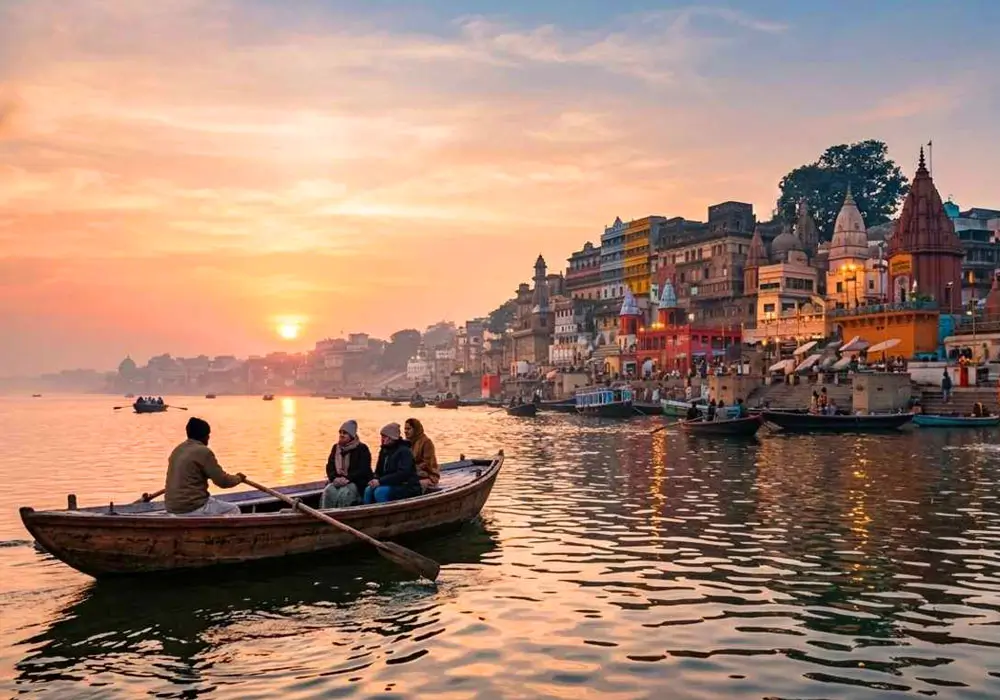
 🌙 14 Nights / 15 Days
⭐ Most Popular
Delhi - Udaipur - Narlai... Delhi - Udaipur - Narlai - Jodhpur - Pushkar - Jaipur - Agra - Varanasi - Delhi Show More
 🌙 07 Nights / 08 Days
Udaipur - Jodhpur - Delhi... Udaipur - Jodhpur - Delhi - Varanasi Show More
 🌙 11 Nights / 12 Days
Delhi - Dharamshala - Amritsar... Delhi - Dharamshala - Amritsar - Haridwar - Rishikesh - Varanasi - Delhi Show More
 🌙 06 Nights / 07 Days
⭐ Most Popular
Lucknow - Ayodhya - Prayagraj... Lucknow - Ayodhya - Prayagraj - Chitrakoot - Prayagraj - Varanasi Show More
Yes, and it works very well. Step off the sunrise boat and go straight into a guided walk through the lanes and ghats of the old city while it is still cool and quiet.
Dev Deepavali is a festival held around the full moon of Kartik, usually in November, when the ghats are lit with thousands of lamps. It is spectacular but extremely crowded, and boats must be booked well ahead.
Yes. Families are welcome, and children usually enjoy the boat and the lamps. They should wear life jackets and stay seated. The cremation ghats may be upsetting for young children, so talk to them beforehand.
Wear modest clothes covering your shoulders and knees, comfortable shoes that grip on wet steps, and bring a warm layer for winter mornings on the water. A scarf is useful if you visit temples.
At least two nights. That gives you the evening aarti, a sunrise boat the next morning and time for a walk through the old city. A third night lets you add Sarnath or a village visit.
A diya is a small oil lamp, often set in a leaf bowl with marigold petals. You can buy one near the ghats, light it and float it on the river as a prayer or wish. It is a gentle way to take part.
Often, but not always. When the Ganga floods, boats can be suspended and the aarti may be moved to higher ground. We check conditions close to your dates and adjust the plan if needed.
Boats are generally safe in normal conditions, and authorities suspend services when the river is dangerously high. Ask for a life jacket, wear it if you are not a confident swimmer, and stay seated while the boat is moving.
A rowing boat is quieter and slower, perfect for the peace of the sunrise. A motorboat covers more of the ghats in less time and suits tight schedules. Both work for the evening aarti.
No. Photographing cremations, bodies or grieving families is not acceptable and can cause real offence. Your boat will keep a respectful distance, and your camera should stay down as you pass.
Board your boat before sunrise, so you are on the water as the sun comes up over the far bank. October to March gives the most comfortable mornings, though December and January can be misty.
The best-known evening aarti takes place at Dashashwamedh Ghat, near the Kashi Vishwanath temple area. A morning aarti is also held at Assi Ghat at the southern end of the ghats.
The evening aarti begins around sunset, so the time changes through the year, earlier in winter and later in summer. Arrive well before it starts to secure a good position. We confirm the timing for your dates.
From a boat, you get a clear, front-facing view with more space. From the steps, you are inside the crowd and closer to the priests, but it can be very packed. Many guests choose the boat for the aarti and walk the ghats on another day.
Whether you're planning your first India trip or returning to explore deeper, get honest, expert advice from someone who knows every corner of this country. No pressure, no cost.