


 info@topindianholidays.net
 +91-8955000999

Hot Air Balloon Ride in Jaipur
Lift off as the sky turns orange and drift over villages, mustard fields and the Aravalli hills while Jaipur is still waking up.
View Experience ›Ride a cycle rickshaw into the oldest bazaars of Delhi, then walk the lanes with a local guide, tasting fried parathas, tangy chaat, hot jalebi and slow-cooked kebabs.
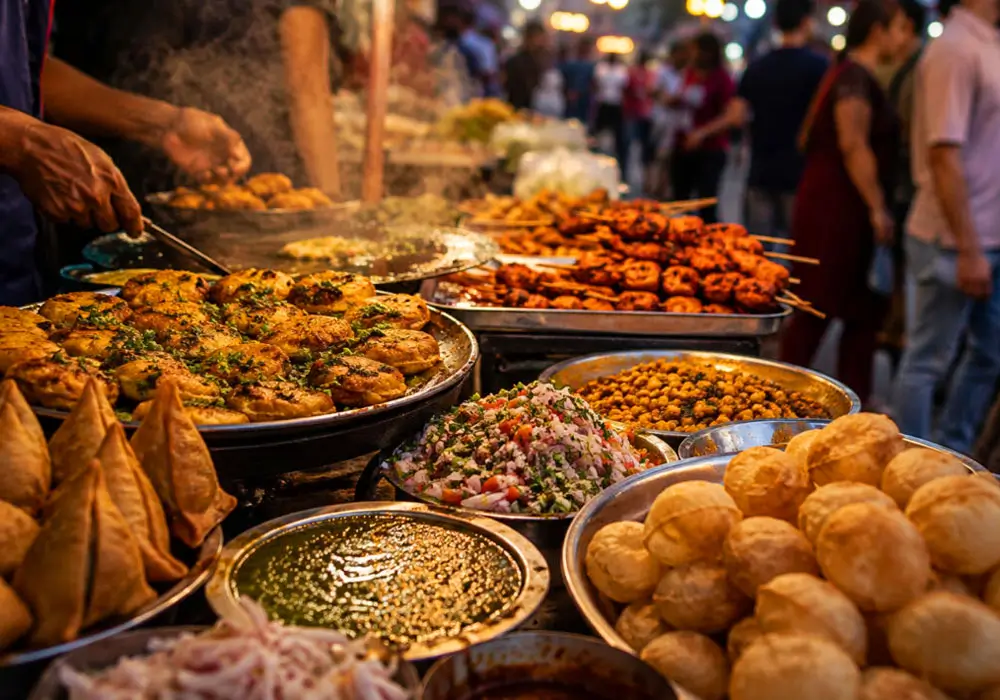
New Delhi has wide avenues, embassies and gardens. Old Delhi has none of that, and it is all the better for it. The walled city built by Shah Jahan in the 17th century, Shahjahanabad, still runs on its old rhythm: wholesale markets that specialise in a single trade per lane, havelis with carved doorways, mosques, temples and gurdwaras within a few minutes’ walk of each other, and some of the most famous food in India. Families here have been frying the same snack or simmering the same stew for generations, and people cross the whole city to eat it.
An Old Delhi food tour is the most enjoyable way to understand this part of the capital. Food is the reason locals come here, so following it takes you through the real life of the bazaars rather than past a list of monuments. You taste your way from the sweet shops of Chandni Chowk to the parathas of a narrow lane, the spice stalls of Khari Baoli and the kebab grills around Jama Masjid, with your guide explaining what you are eating, who eats it and why it matters.
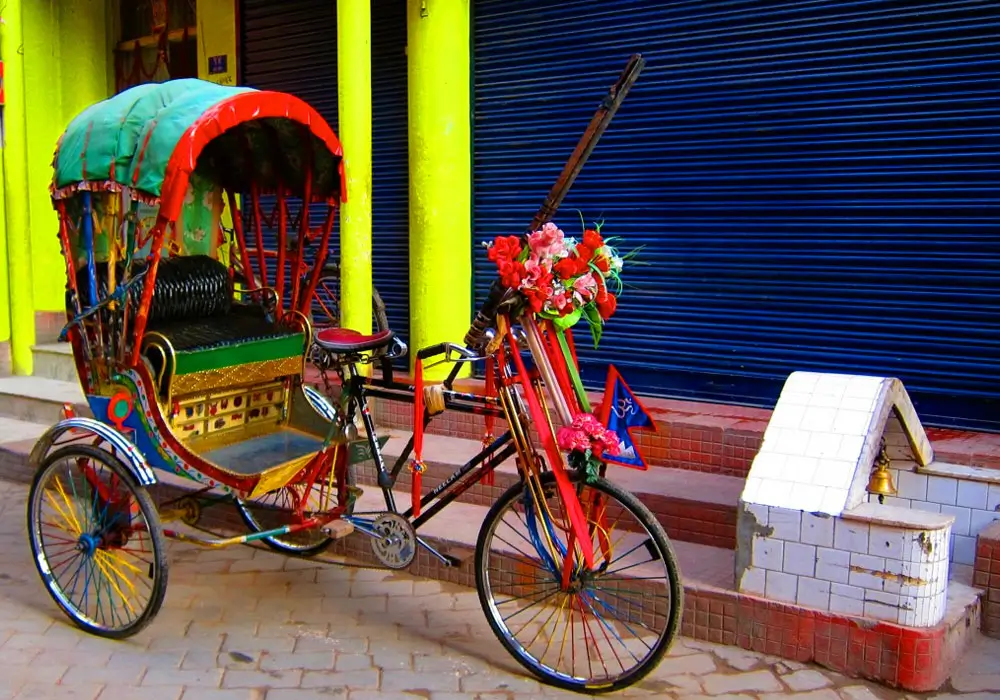
The cycle rickshaw is part of the fun. The lanes are too narrow and crowded for cars, and a rickshaw puts you at the level of the street, slowly enough to see everything. You ride the busier stretches and walk the rest. This page explains how the trail works, what you will eat, how we keep it safe for your stomach, when to go and how to fit it into a Delhi stay.
It is also a lesson in how Delhi’s communities live side by side. Jain sweet makers, Punjabi families who arrived after Partition, Muslim kebab cooks whose families have worked near the mosque for generations and Marwari spice traders all share the same few square kilometres. Every dish you taste on the trail carries a little of that history, and your guide brings it to life between bites.
1. Pickup and the drive to Old Delhi
Your private driver collects you from your hotel and drives to the edge of the old city, often near the Red Fort or the Metro station at Chandni Chowk. Traffic in Delhi is unpredictable, so we build in time. Your guide meets you where the car stops.
2. A short briefing
Before the first bite, your guide asks about allergies, spice tolerance, vegetarian or vegan preferences and anything you would rather avoid. This shapes the route. It also covers simple tips: keep bags in front of you, hold on in the rickshaw and follow the guide’s lead on what to eat and what to skip.
3. Into the bazaar by cycle rickshaw
You climb into a cycle rickshaw, two passengers per seat, and set off into Chandni Chowk. The main street was once a grand avenue with a canal down the middle; today it is a mix of sweet shops, sari stores, temples and hawkers. The rickshaw rider weaves through the crowd while your guide points out the Digambar Jain temple, Gurudwara Sis Ganj Sahib and the old Town Hall.
4. The first stop: something sweet and something fried
Old Delhi breakfasts and snacks lean towards the fried and the sweet. An early stop is often for jalebi, spirals of batter fried in ghee and soaked in syrup, eaten hot from the pan, or for a plate of kachori or bedmi puri with spiced potato.
5. Paranthe Wali Gali
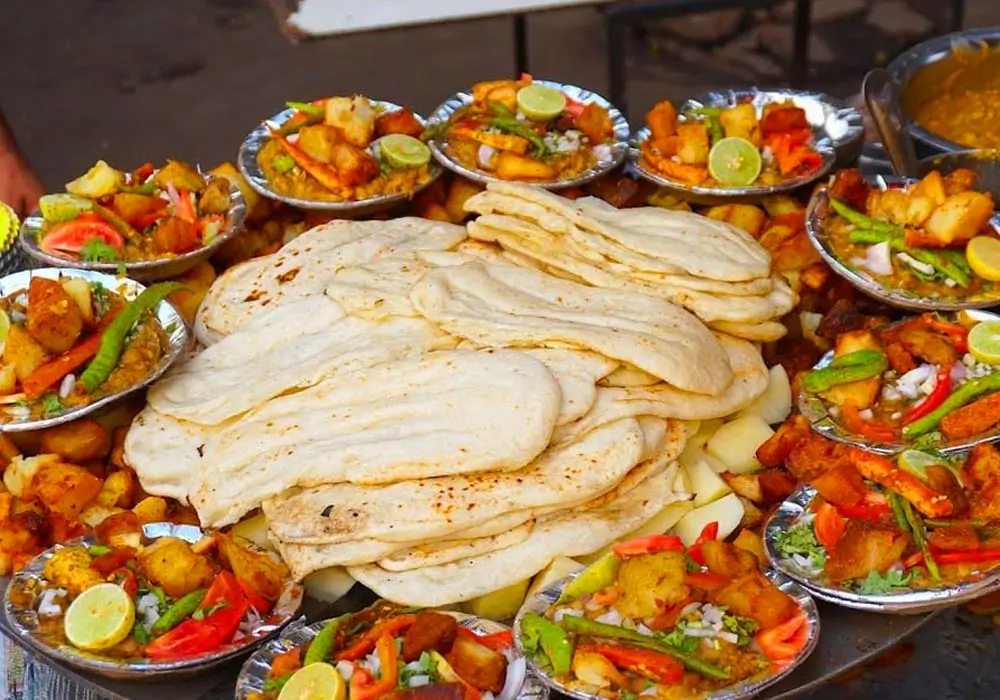
Next you walk into a narrow lane named after its parathas. Here flatbreads are stuffed with fillings such as potato, paneer, cauliflower, radish or even sweeter options, then deep-fried in a heavy iron pan and served with chutneys, pickle and a vegetable curry. It is entirely vegetarian, as the lane grew up to feed the area’s traditional communities.
6. Chaat in the lanes
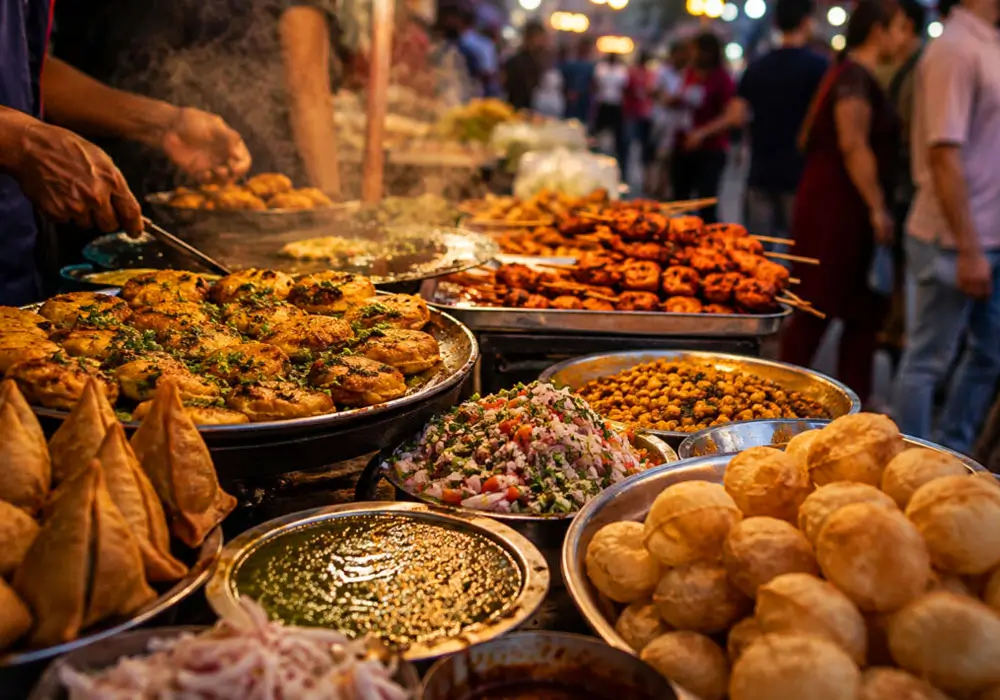
Chaat is the great street snack of north India: crisp, sweet, sour, spicy and cool all at once. Your guide chooses a busy chaat stall for dishes such as aloo tikki, papdi chaat or dahi bhalla, explaining the balance of tamarind chutney, mint, yoghurt and spice.
7. Khari Baoli spice market
A short ride brings you to Khari Baoli, one of the largest wholesale spice markets in Asia. Sacks of red chillies, turmeric, cardamom, dried fruit and nuts line the road, and porters carry enormous loads on their heads. The air is full of chilli; expect to sneeze. If access is open, your guide may take you up to a rooftop for a view across the old city.
8. Around Jama Masjid
The last part of the trail heads to the area around Jama Masjid, the great Friday mosque built by Shah Jahan. The lanes facing its gates are famous for Mughlai food: kebabs on charcoal grills, rich nihari stewed overnight, korma and freshly baked breads. If you are vegetarian, your guide offers alternatives here, such as kulfi or rabri.
9. Something cool to finish
The trail ends with a cooling sweet: kulfi, the dense Indian ice cream, often flavoured with cardamom, saffron or pistachio, or a thick lassi served in a clay cup. Your driver then meets you at the nearest road and takes you back to your hotel.
The exact menu depends on the time of day, the season and what you like, but these are the dishes that define Old Delhi.
Parathas. Stuffed flatbreads fried in ghee. The classic fillings are potato, paneer and cauliflower; the lane also serves unusual ones that your guide will happily explain. They come with sweet tamarind chutney, a vegetable dish and pickle.
Chaat. A family of snacks built from fried dough, potatoes, chickpeas, yoghurt and chutneys. Aloo tikki is a crisp potato patty; papdi chaat layers crunchy wafers with yoghurt and chutneys; dahi bhalla is soft lentil dumplings in yoghurt.
Jalebi. Bright orange spirals of fermented batter, fried and dipped in syrup. Eat them hot. Some shops serve them with rabri, a thickened milk dessert.
Kachori and puri. Fried breads, either stuffed with spiced lentils or served alongside a potato curry. A favourite morning dish across north India.
Kebabs. Around Jama Masjid, skewers of minced or chunked meat are grilled over charcoal. Seekh kebabs, shami kebabs and tikka are all common.
Nihari. A rich, slow-cooked stew, traditionally made overnight and eaten in the morning with bread. It is a Delhi speciality and very much worth trying if you eat meat.
Kulfi. Frozen milk dessert, denser and richer than ice cream, cut from a mould or served on a stick.
Lassi. Sweet or salted yoghurt drink, thick enough to need a spoon at some shops.
Chai. Spiced milky tea, boiled with ginger and cardamom, served in a small clay cup or glass. A good pause between stops.
Daulat ki chaat, in winter. A seasonal Old Delhi curiosity: milk whipped into a light, airy foam, traditionally set overnight in the cool winter air and topped with saffron, sugar and pistachio. It melts the moment it touches your tongue. You will only find it during the colder months, usually in the mornings, so ask your guide if your visit falls between November and February.
Paan, if you are curious. A betel leaf folded around sweet fillings, chewed as a digestive after a meal. Your guide will explain the sweet varieties, without tobacco.
Street food in Old Delhi is famous, and it is also the first thing visitors worry about. We take that worry seriously, and we would rather be honest than promise you will never have an upset stomach.
We choose busy stalls. High turnover means fresh food. Our guides take you to places where locals queue, the oil is hot, and food does not sit around.
Freshly cooked and hot. We focus on dishes fried or cooked in front of you, served straight from the pan. Hot food is the safest street food.
Careful with raw items. Chaat includes some uncooked elements, such as chutneys and yoghurt. Your guide will suggest whether to try it based on how you feel and how your stomach has coped so far.
Bottled water only. We provide sealed bottled water. Avoid ice from street stalls and drinks made with tap water.
Small portions. You share plates, which means you taste many things without overeating any one. You can always say no, and your guide will not be offended.
Pace yourself. If you have just arrived in India, a lighter trail later in your stay may suit you better. Tell us, and we will plan it that way.
Hand hygiene. Bring hand sanitiser and use it before every stop. Most dishes are eaten with fingers or a small spoon.
Old Delhi is one of the easiest places in the world to eat vegetarian. Paranthe Wali Gali is entirely vegetarian, as are most of the sweet shops and chaat stalls around Chandni Chowk. Your guide can build the whole trail around vegetarian dishes.
Vegan. Possible, but harder, because ghee, yoghurt and milk are central to the cooking. Tell us in advance, and your guide will choose dishes fried in oil and skip the dairy.
Gluten-free. Many dishes are made with wheat, but there are options: some chaat, kebabs, rice dishes and certain sweets. Let us know and we will plan the stops.
Allergies. Nuts, dairy and wheat are common ingredients. Your guide asks about allergies at the start and checks with each vendor, but small stalls cannot guarantee there is no cross-contact. If your allergy is severe, tell us before booking.
Spice. Old Delhi food can be fiery. Ask for less chilli where possible, and use lassi or yoghurt to cool your mouth.
Old Delhi is a living neighbourhood where people work, pray and shop. Being respectful makes the experience better for you and for them.
Jama Masjid dress code. If you visit the mosque, cover your legs and arms. Women should cover their heads. Robes are available to borrow at the gates if your clothes are not suitable. Remove your shoes before entering the courtyard.
Prayer times. Visitors are not allowed in during prayer times, and Friday midday prayers bring large crowds. Your guide plans the route so you are not there at those times.
Photography. Many shopkeepers are happy to be photographed, especially cooks at their pans. Always ask first, particularly with women and people praying.
Bargaining. In the spice market and shops, bargaining is normal. At food stalls, prices are fixed and low, so there is no need.
Pickpockets. Crowded bazaars attract pickpockets. Keep valuables in a front pocket or a cross-body bag, and leave expensive jewellery at the hotel.
Morning trail. Old Delhi in the morning is about breakfast: nihari, kachori, jalebi and hot chai. The lanes are less crowded early, shops are opening, and the light in the narrow streets is soft. In summer, mornings are much more comfortable than afternoons.
Evening trail. In the late afternoon and evening, the bazaars are at their busiest and most atmospheric, lit by bare bulbs and filled with shoppers. Kebabs come off the grills around Jama Masjid and the sweet shops are full. It is noisier and more crowded, but many travellers love the energy.
Weekly closures. Many wholesale markets in Old Delhi close one day a week, often Sunday, which makes some lanes very quiet. We plan the day so the markets you want to see are open.
Seasons. October to March is the most comfortable time, with mild days and cool evenings. In summer, from April to June, choose an early morning trail. In the monsoon, from July to September, the lanes can be wet and muddy; shoes with good grip are essential.
Festivals. During Ramadan, the lanes around Jama Masjid come alive after sunset as people break the fast, a memorable time to visit for those who eat meat. Around Diwali, the sweet shops are at their busiest.
First or last day in Delhi. The trail fits well at the start of a tour, as an introduction to Indian food, or at the end, when your stomach has adjusted. If you have only one full day in Delhi, combine it with the Red Fort in the morning and a lighter dinner.
Combine with sightseeing. The Red Fort is next to Chandni Chowk. Raj Ghat, the memorial to Mahatma Gandhi, is a short drive away. Your guide can include a short visit to Gurudwara Sis Ganj Sahib or the Jama Masjid itself.
Before or after the Golden Triangle. Many guests begin in Delhi, take the Taj Mahal sunrise tour and then go on to Jaipur. The food trail is a natural first-evening activity.
Pace. Leave a gap of a few hours between the trail and your next big meal. You will not be hungry.
A Delhi city walk. The Delhi city walk guided by former street children gives another perspective on the capital and supports young people who have grown up on its streets.
Jaipur’s food scene. If you enjoy this, try the Jaipur night food walk when you reach Rajasthan, or learn to cook the dishes yourself at a cooking class in Jaipur.
Amritsar. Punjabi food is a close cousin of Old Delhi’s. A trip to the Golden Temple and Wagah border adds the langar and Amritsari kulchas.
Bring and wear - Comfortable closed shoes with good grip - Loose clothes covering shoulders and knees - A scarf for women visiting Jama Masjid - Hand sanitiser and tissues - A small cross-body bag worn at the front - Small cash notes for tips or purchases
Leave behind - Expensive jewellery and watches - Large backpacks - A full stomach: come hungry - White or delicate clothes you do not want stained
Tell us your Delhi dates, your dietary needs and whether you prefer a morning or evening trail, and we will plan the route and timing.
Call & WhatsApp +91-9828085426 or email info@topindianholidays.net.
See more ideas on our Top Experiences in India page.
Tell us your travel dates and we will check availability and fit this experience into the right day of your itinerary. Reply within 12 hours.
Check Availability› Chat on WhatsApp› Send an Enquiry›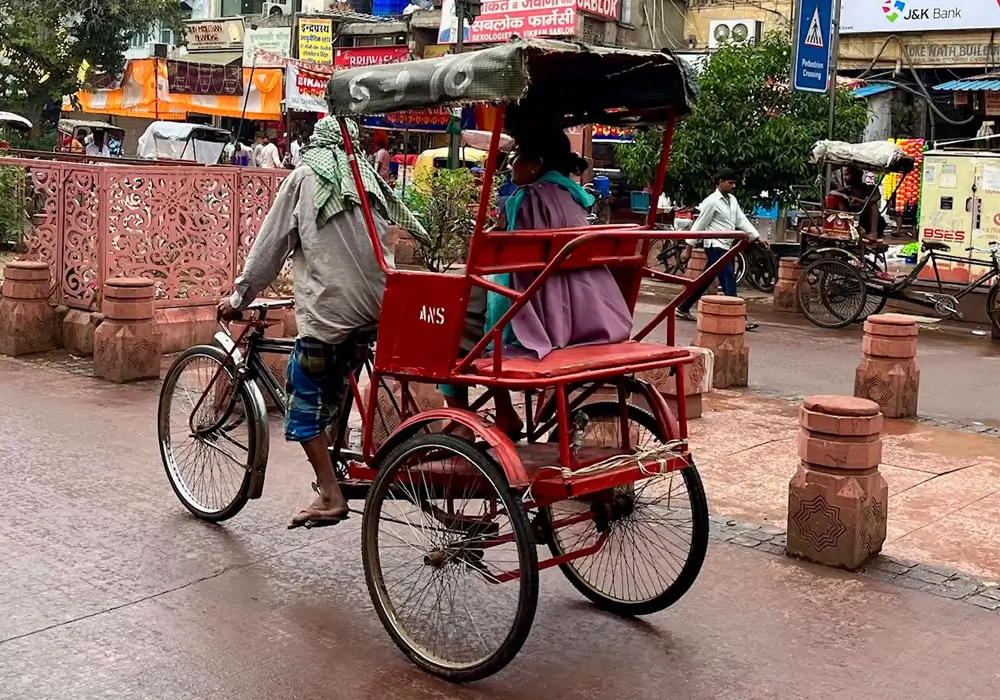



 🌙 04 Nights / 05 Days
 🌙 08 Nights / 09 Days
⭐ Most Popular
Delhi - Agra - Shimla... Delhi - Agra - Shimla - Manali - Delhi Show More
 🌙 07 Nights / 08 Days
Delhi - Agra - Varanasi... Delhi - Agra - Varanasi - Bodhgaya - Delhi Show More
 🌙 01 Days
⭐ Most Popular
Delhi - Agra - Delhi Delhi - Agra - Delhi Show More
Yes. Most guests do it on their first or last evening in Delhi. We fit it around your arrival, the Red Fort and your drive to Agra.
Yes, with a guide and some common sense. Watch for pickpockets in crowded lanes, keep your bag in front of you and leave valuables at the hotel.
Yes. It is one of the highlights. The market is busy and full of chilli in the air, so expect to sneeze, and keep your belongings close.
Yes, for children who enjoy trying new things. The crowds and spices can be a lot for small children, so we adjust the route and pace for families.
Yes, outside prayer times. Cover your arms and legs, women should cover their heads, and remove your shoes. Robes are available at the gates.
Loose clothes covering shoulders and knees, closed shoes with good grip and a scarf if you plan to visit Jama Masjid. Avoid delicate fabrics, as the lanes are dusty.
No. You ride a cycle rickshaw on the busier stretches and walk through the lanes that are too narrow for one. Wear comfortable shoes.
It is a narrow lane off Chandni Chowk famous for stuffed parathas fried in ghee and served with chutneys and curry. It is entirely vegetarian.
Mornings are calmer and cooler, with breakfast dishes such as nihari and kachori. Evenings are livelier, with kebabs and busy bazaars. Both are good; it depends on your energy and the season.
Yes, with notice. Ghee, yoghurt and milk are common, so your guide will choose dishes fried in oil and skip dairy-based sweets.
Yes. Old Delhi is one of the best places in India for vegetarian food. Paranthe Wali Gali and most of the sweet and chaat stalls are vegetarian, and your guide can plan the whole trail around them.
Typical tastings include stuffed parathas, chaat, jalebi, kachori, kebabs, nihari, kulfi, lassi and chai. The exact mix depends on the time of day and your preferences.
The price depends on your group size, the length of the trail and whether you add a driver and sightseeing. We quote the current price for your dates.
Nobody can guarantee a perfect stomach, but you can reduce the risk a great deal. We choose busy, high-turnover stalls, focus on hot food cooked in front of you, provide bottled water and keep portions small.

Whether you're planning your first India trip or returning to explore deeper, get honest, expert advice from someone who knows every corner of this country. No pressure, no cost.