


 info@topindianholidays.net
 +91-8955000999

Hot Air Balloon Ride in Jaipur
Lift off as the sky turns orange and drift over villages, mustard fields and the Aravalli hills while Jaipur is still waking up.
View Experience ›Walk the lanes around New Delhi railway station and Paharganj with a young guide who once lived on these streets, and hear how a children’s charity helped change the course of a life.
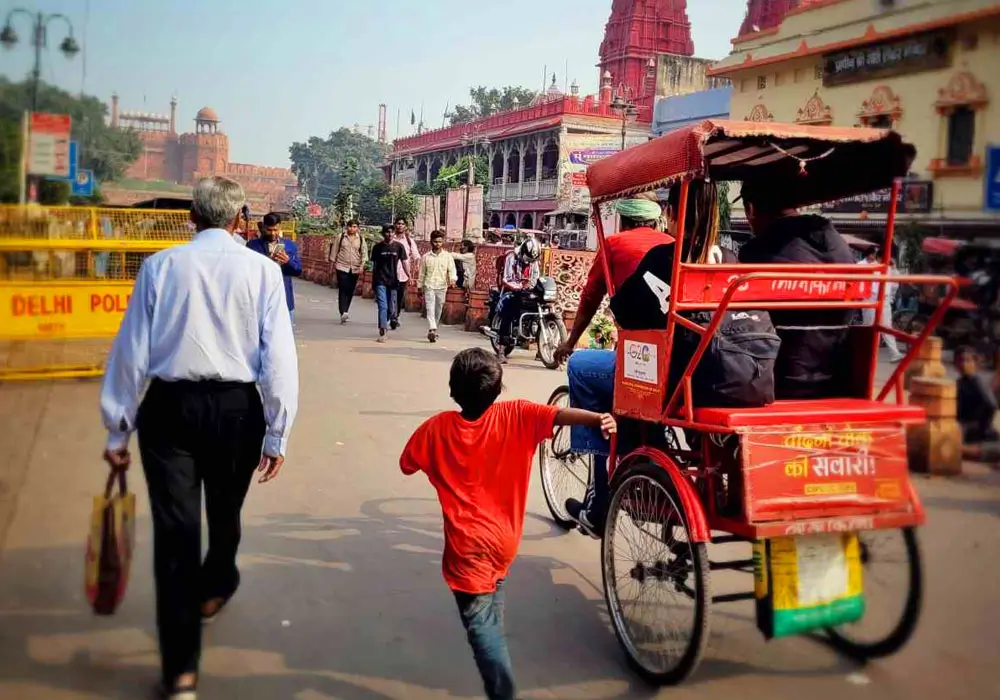
Every day, trains pull into New Delhi railway station from every corner of India. Among the millions of passengers each year are children who arrive alone: some have run away from violence or hunger at home, some are lost, some have simply been told the city will be better. Many end up living on the platforms and in the lanes around the station, sorting rubbish, selling water, sleeping under bridges. For decades, children’s charities in Delhi have worked to reach these boys and girls, offering shelter, food, schooling, health care and, where it is safe, a way back to their families.
This walk is led by young adults who were once among those children and were supported by such a charity. Today they are trained as guides. They take you through the streets they know best, around the station and through the crowded bazaar of Paharganj, and they tell you their own story, in their own words, as much as they choose to share. You also visit one of the charity’s contact points or shelters, where children are first welcomed in. The money from the walk goes to support the charity’s work.
We include a street children walk in Delhi on our tours because it is one of the most honest introductions to the city we know. It is not a monument, and it is not a show. It is a conversation with someone who has lived a very different Delhi from the one most visitors see, and who has turned that experience into work that helps the children who come after.
It is also, at its heart, a story of resilience. Guests often expect the walk to be sad. Most come away talking about how funny, sharp and proud their guide was.
We take this question seriously, and so should you. A walk through a poor neighbourhood can easily turn into staring at people’s lives for entertainment. This experience is built to avoid that, and here is how.
The guides choose to be there. They are young adults, not children, trained and paid by the charity’s programme. Guiding gives them income, confidence and spoken English, and it is a job they have taken on.
They tell their own story. Nobody else speaks for them. Your guide decides how much to share, and some parts of their past they may prefer to keep private. That is their right.
Children are not on display. You do not photograph children, you do not visit children’s living spaces as an attraction, and you do not interact with children at the shelter unless the staff invite it. Their privacy and safety come first.
The money goes to the work. Proceeds support the charity’s programmes for street and working children. If you want to give more, you donate through the charity, not to individuals on the street.
It changes what you understand. You leave knowing more about why children end up on the streets, what helps them, and what does not. That understanding is the point of the walk.
If you are not comfortable with these principles, this is not the right experience for you, and that is fine. We would rather you skip it than treat it as a sightseeing stop.
1. Meeting point near the station
Your driver drops you at the agreed meeting point near New Delhi railway station or in Paharganj, where your guide is waiting. The area is busy and traffic is heavy, so we plan the drop-off carefully and your driver collects you from a convenient spot at the end.
2. Introductions
The walk begins with a few minutes standing somewhere a little quieter, where your guide introduces themselves and explains how the morning will work. This is a good time to mention anything you would like to know, and to ask about photography rules for the day.
3. The railway station
You walk towards the station, usually looking at it from outside and from the surrounding footbridges and approaches rather than going onto the platforms. Your guide explains why so many children arrive here, where they used to sleep, how older boys controlled the best spots, and how charity outreach workers and railway staff look out for new arrivals. Hearing it from someone who once slept nearby is very different from reading about it.
4. Through the lanes
From the station you head into the lanes, past tea stalls, tiny workshops, cheap hotels and stalls selling fruit, clothes and phone covers. Your guide points out the places that meant something to them: a corner where they earned money collecting plastic bottles, a dhaba where a cook gave them leftover food, a spot where police checks happened. The street becomes a map of someone’s life.
5. Paharganj Main Bazaar
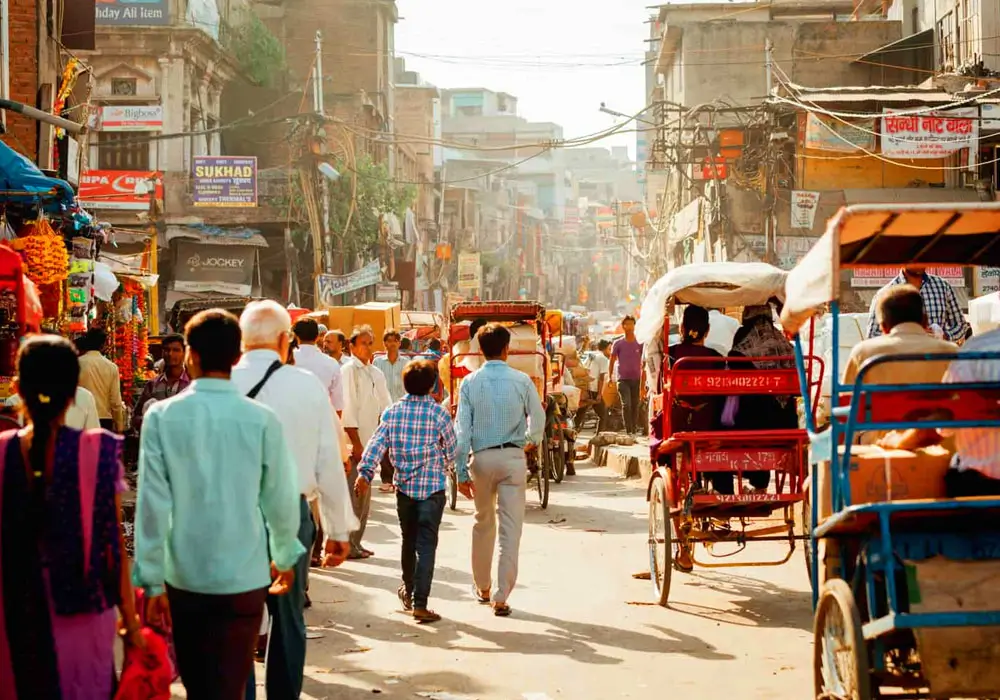
Paharganj’s Main Bazaar is a long, noisy street of guesthouses, travel agents, textile shops and street food, long popular with budget travellers. It is lively and very Delhi. Your guide talks about how the area works, who lives and works here, and how children survive in its economy.
6. Personal story
At some point during the walk, often at a quiet stop, your guide shares their own story more fully: where they came from, how they ended up at the station, how the charity found them and what has happened since. Listen without rushing. Questions are welcome, but let them set the boundaries.
7. The charity’s contact point or shelter
The walk usually ends at one of the charity’s centres, where a staff member explains how children are welcomed, what support is offered and how the work is funded. Children may be present. Follow staff guidance closely: no photographs, no hugs or picking up children, and keep your voice and behaviour calm.
8. Questions and donations
Before you leave there is time for questions. If you want to donate, the staff will explain how, and you will be given a receipt. Then your driver meets you nearby for the next part of your day.
Be ready for one of the most crowded parts of Delhi. The roads around New Delhi railway station are packed with taxis, auto-rickshaws, cycle rickshaws, porters in red shirts carrying suitcases on their heads, and travellers dragging luggage in every direction. Horns are constant. Pavements are narrow or missing.
Paharganj is a maze of narrow lanes leading off the Main Bazaar, with electric wires looping overhead, small temples tucked into walls, cows wandering past and shop fronts open to the street. It is not dangerous in the daytime, but it is intense, and some lanes can be dusty, wet or uneven underfoot.
You will see poverty: people sleeping on pavements, children working, rubbish in the gutters. You will also see the ordinary life of a working neighbourhood: shopkeepers opening up, families buying vegetables, men reading newspapers over chai. Your guide helps you see both.
If you find crowds or noise very stressful, tell us in advance. A shorter route or a quieter starting point can sometimes be arranged.
Photography. Do not photograph children at any point during the walk, on the street or at the shelter. Ask your guide before taking any photo of people or places. Photos of the street scene, signs and buildings are usually fine, but adults working or resting are people, not scenery, so ask first or leave the camera down.
No money or sweets to children. It feels kind, but giving cash, sweets or gifts directly to children on the street can keep them on the street and put them at risk from older youths or adults who take the money. If you want to help, donate through the charity, which can turn that money into food, schooling and safety.
Do not bring gifts to the shelter. Unplanned gifts can cause jealousy and disrupt routines. If you would like to give clothes, books or supplies, ask us before your trip and we will check with the charity what is needed.
Ask questions with care. Your guide is used to questions, but some subjects are painful. Rather than asking “what was the worst thing that happened?”, ask what helped, what they enjoy now, or what they would like visitors to understand.
Dress modestly. Cover shoulders and knees. Loose, light clothes are best for both comfort and respect in a crowded, traditional area.
Keep your group together. In busy lanes, walk close behind your guide and stop when they stop.
Thank your guide. A tip for your guide at the end is appreciated if you wish, given directly to them as an adult professional, separate from any charity donation.
Mornings are best. The walk runs in the morning, when the lanes are busy but not yet at their most chaotic, the light is softer and the heat is lower. It also leaves your afternoon free for sightseeing.
October to March. The most comfortable time. Days are mild, though December and January mornings can be foggy and cold, so bring a warm layer.
April to June. Hot. Walking is still possible in the early morning, but bring water and a hat, and expect the heat to build quickly after mid-morning.
July to September. The monsoon. Lanes can flood after heavy rain and the walk may be shortened or rescheduled. Bring waterproof shoes and an umbrella.
Festivals and holidays. Around big festivals the station is even busier with travellers going home. The walk usually still runs, but expect extra crowds.
Your first or second morning in Delhi. It works very well early in your trip, because it gives you a frame for everything else you see in India: the contrasts, the crowds, the generosity of strangers.
Pair it with Old Delhi. Paharganj is not far from Old Delhi. After the walk, continue to the Jama Masjid, Chandni Chowk and the Red Fort, or join our Old Delhi street food trail by rickshaw later in the day.
Leave space afterwards. Many guests want time to talk about what they heard. A quiet lunch, a visit to Humayun’s Tomb or the gardens at Lodhi Road make a gentle contrast.
Families. Teenagers often find this walk eye-opening. For younger children, think carefully about whether they will be comfortable with the crowds and the subject. Tell us their ages and we will advise.
Other community experiences. If this walk speaks to you, you might also value the Dharavi community walk in Mumbai, a morning at a village school in Rajasthan, or a visit to a women artisans collective. Each is run with the same principles of respect and benefit to the community.
It helps to understand a little of the work before you go, so the stories you hear make sense.
Outreach at the station. Charity workers and volunteers walk the platforms and surrounding streets, looking out for children who have just arrived alone. The first hours matter most, because a child who is reached quickly is less likely to be drawn into drugs, exploitation or crime.
Contact points and shelters. A contact point is a safe, simple place near the station where a child can wash, eat, rest, see a counsellor and talk to someone they trust. From there, children may move to a longer-term shelter or residential home.
Finding families. Where it is safe and the child wishes it, staff try to trace families and help children return home. This can take patience, as some children come from far-off states and remember only a village name.
School, health and skills. For children who stay, the work turns to schooling, medical care, and later vocational training or further study. Some go on to jobs in hospitality, media, photography, driving or office work, and some, like your guide, come back to share what they have learned.
None of this is quick or simple, and your guide may speak frankly about what did and did not work for them.
A different idea of Delhi. Most visitors see Delhi through monuments and hotel windows. This walk shows you how the city works for those at its margins, and how they navigate it.
Respect for the guides. People who have survived the streets often have a quick wit, a sharp eye and a deep knowledge of the city. Many guests say their guide was one of the most impressive people they met in India.
A better sense of how to help. You learn why handing out money on the street rarely helps, what support actually works, and how charities link children with families, schools and training.
Questions to keep thinking about. Why do children leave home? What keeps them on the streets? What changes a life? There are no neat answers, and your guide will not pretend there are.
Bring and wear - Comfortable closed shoes for uneven, sometimes wet lanes - Light, modest clothes covering shoulders and knees - A warm layer for December and January mornings - Water and a hat in the warmer months - A small cross-body bag kept in front of you - An open mind and some good questions
Leave behind - Sweets, pens or cash to hand out to children - A large camera and the urge to photograph everyone - Expensive jewellery and watches - Any idea that this is a sightseeing stop
Tell us your Delhi dates and we will check the charity’s walk schedule, book your guide and plan the rest of the day around a morning that many guests remember as a turning point in their trip.
Call & WhatsApp +91-9828085426 or email info@topindianholidays.net.
See more ideas on our Top Experiences in India page.
Tell us your travel dates and we will check availability and fit this experience into the right day of your itinerary. Reply within 12 hours.
Check Availability› Chat on WhatsApp› Send an Enquiry›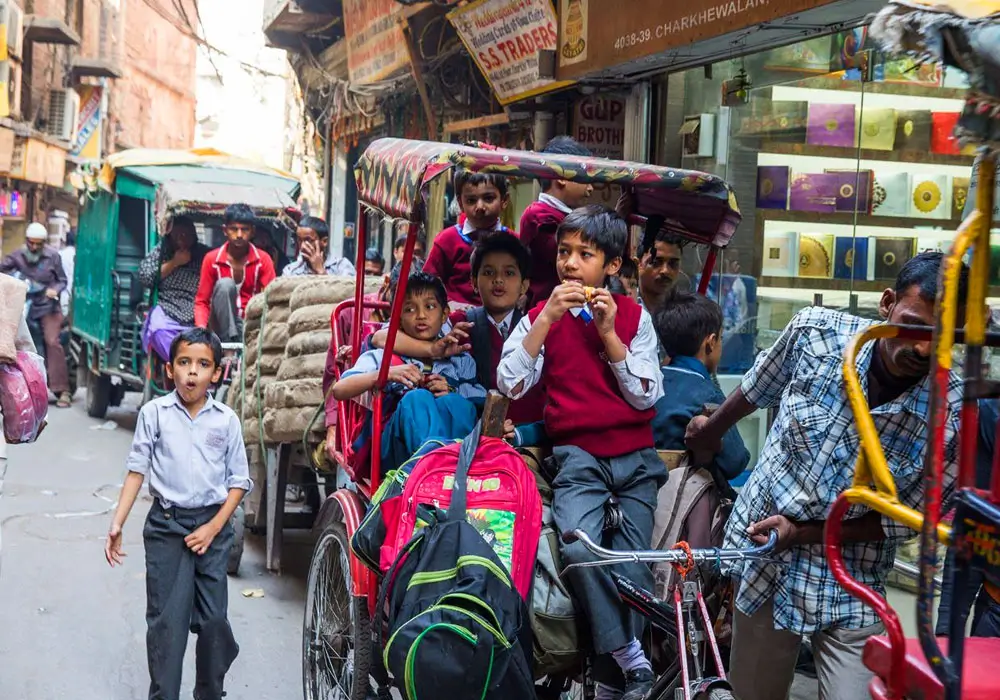



 🌙 06 Nights / 07 Days
 🌙 08 Nights / 09 Days
⭐ Most Popular
Delhi - Agra - Shimla... Delhi - Agra - Shimla - Manali - Delhi Show More
 🌙 01 Day
Delhi - Agra - Delhi Delhi - Agra - Delhi Show More
 🌙 01 Day
Delhi - Fatehpur Sikri -... Delhi - Fatehpur Sikri - Delhi Show More
Yes. It fits well on your first or second morning in Delhi, before you continue to Agra and Jaipur. We usually pair it with Old Delhi or a quieter afternoon, and arrange your driver for drop-off and pickup.
Light, modest clothes that cover shoulders and knees, and comfortable closed shoes. Bring a warm layer for winter mornings and an umbrella in the monsoon. A small bag worn in front is safest in the crowds.
A tip is appreciated if you enjoyed the walk, given directly to your guide as a professional. Keep it separate from any donation to the charity, which should go through the charity’s own process.
The distances are short to moderate, but the streets are crowded, uneven and sometimes wet. You need to be comfortable on your feet in busy traffic for most of a morning. It is not ideal for wheelchairs or anyone with limited mobility.
Teenagers usually find it meaningful and handle the subject well. For younger children, consider whether they will be comfortable with the crowds, noise and stories of hardship. Tell us their ages and we will advise honestly.
The walk runs in the morning, when the lanes are busy but manageable and the heat is lower. Exact start times depend on the charity’s schedule, so we confirm the time for your date when we book.
In the daytime and with a guide who knows it well, yes. It is very crowded and noisy, so keep valuables out of sight, walk close to your guide and watch for traffic. Pickpocketing is the main thing to guard against, as in any busy station area.
Yes. Staff at the centre explain how to give, and you receive a receipt. If you would like to bring supplies such as books or clothes, ask us before your trip so we can check what the charity actually needs.
No. Giving directly can keep children on the streets and expose them to older youths or adults who take what they receive. If you would like to help, donate through the charity, which uses the money for food, shelter, schooling and health care.
Do not photograph children at any time, and ask your guide before photographing anyone else. Street scenes, buildings and signs are usually fine. At the charity’s centre, photography is not allowed unless staff say otherwise.
The walk is run by a long-established Delhi charity working with street and working children. We explain the details when you book and can answer questions about how the programme works and where the money goes.
They are young adults who arrived in Delhi as children and lived on the streets or at the station before a children’s charity helped them. The charity trains them as guides, and guiding gives them income and experience. Each guide decides how much of their story to share.
It is designed not to be. The guides are adults who choose to do this work, they tell their own story on their own terms, children are never photographed or put on display, and the money goes to the charity. You visit to listen and understand, not to look at people.
It is a guided walk around New Delhi railway station and Paharganj, led by a young adult who once lived on these streets and was supported by a children’s charity. They share their story and show you the area through their eyes. The walk ends at one of the charity’s centres, and the fee supports its work.

Whether you're planning your first India trip or returning to explore deeper, get honest, expert advice from someone who knows every corner of this country. No pressure, no cost.