


 info@topindianholidays.net
 +91-8955000999
Hot Air Balloon Ride in Jaipur
Lift off as the sky turns orange and drift over villages, mustard fields and the Aravalli hills while Jaipur is still waking up.
View Experience ›Leave the noise of Colaba behind on a morning ferry and climb to a hillside temple cut straight into the rock some fourteen centuries ago.
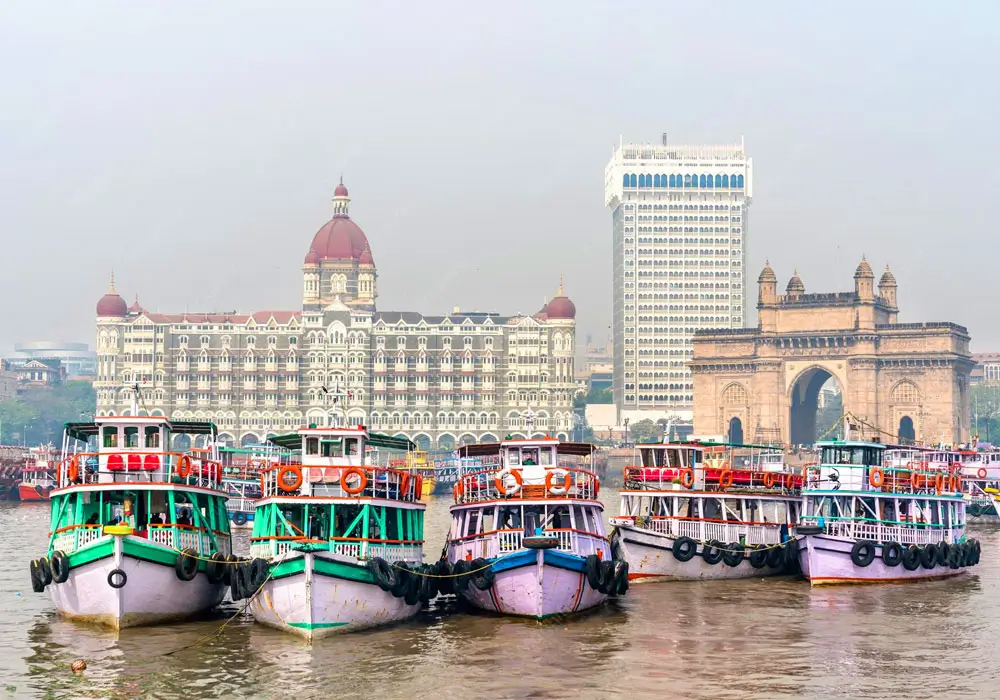
Mumbai is a city that rarely slows down, which is exactly why the trip to Elephanta works so well. Within a few minutes of leaving the Gateway of India, the skyline of Colaba shrinks behind you, the hooting of taxis fades, and the harbour opens up: container ships at anchor, fishing boats with coloured flags, gulls following the wake. An hour later you step onto a small wooded island where the main sound is birdsong and the occasional shout of a vendor selling cold coconut water.
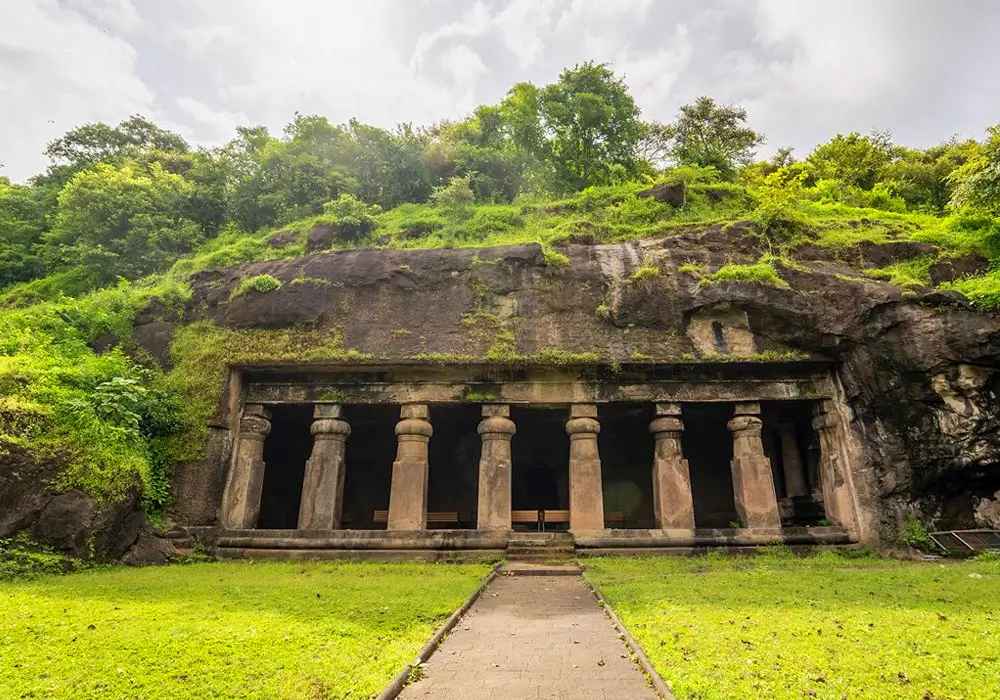
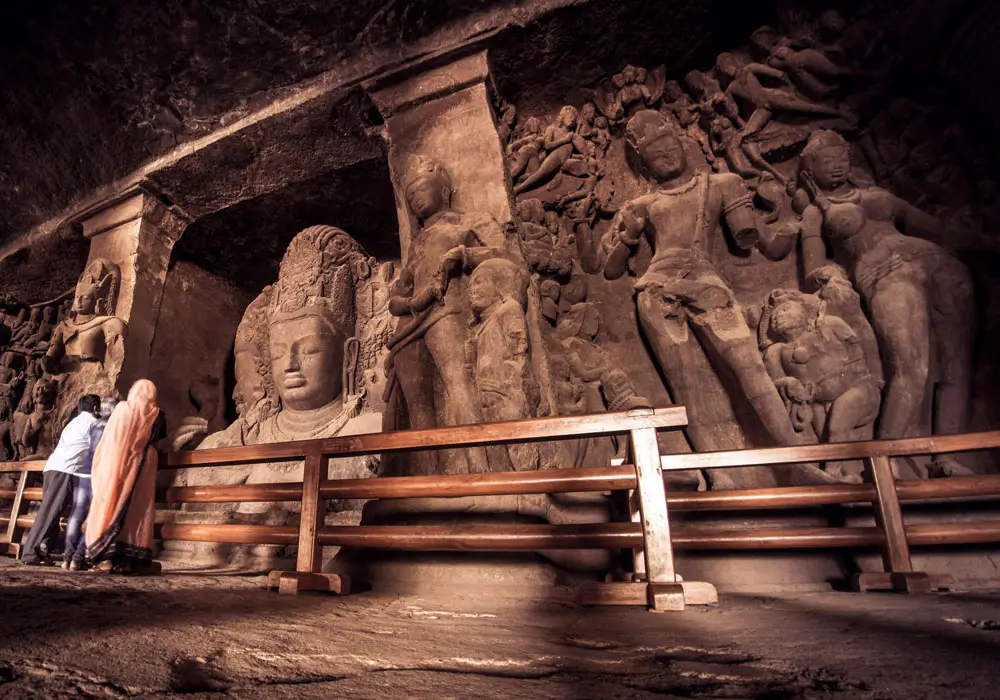
At the top of the island’s hill is the reason people have been making this crossing for centuries. The Elephanta Caves are a group of rock-cut temples, most of them dedicated to Shiva, carved out of solid basalt around the sixth century. The largest, known simply as Cave 1 or the Great Cave, is a pillared hall the size of a small cathedral, and on its back wall sits one of the most admired sculptures in Indian art: the three-headed Shiva often called the Trimurti, and more accurately described as Sadashiva. The caves are a UNESCO World Heritage Site, and even travellers who think they are not “temple people” tend to go quiet in front of that face.
An Elephanta caves tour is not complicated, but it does reward a little planning. The ferry timings, the climb up the hill, the Monday closure, the heat and the monsoon all shape the day. With a private guide, the carvings stop being a row of damaged figures and start telling stories: Shiva’s wedding to Parvati, the river Ganga descending from his hair, the demon king Ravana trying to shake Mount Kailash. This page explains how the morning works, what you will see, and how to fit the island into a Mumbai stay alongside Colaba, Kala Ghoda and the city’s neighbourhoods.
1. Pickup from your Mumbai hotel
Your private driver collects you from your hotel and brings you to the Gateway of India in Colaba. If you are staying in South Mumbai this is a short drive; from the suburbs near the airport, or from Bandra or Juhu, allow much longer, as Mumbai traffic builds quickly after the early morning. We set the pickup time around your hotel’s location so that you reach the jetty for one of the earlier ferries.
2. Meeting your guide at the Gateway
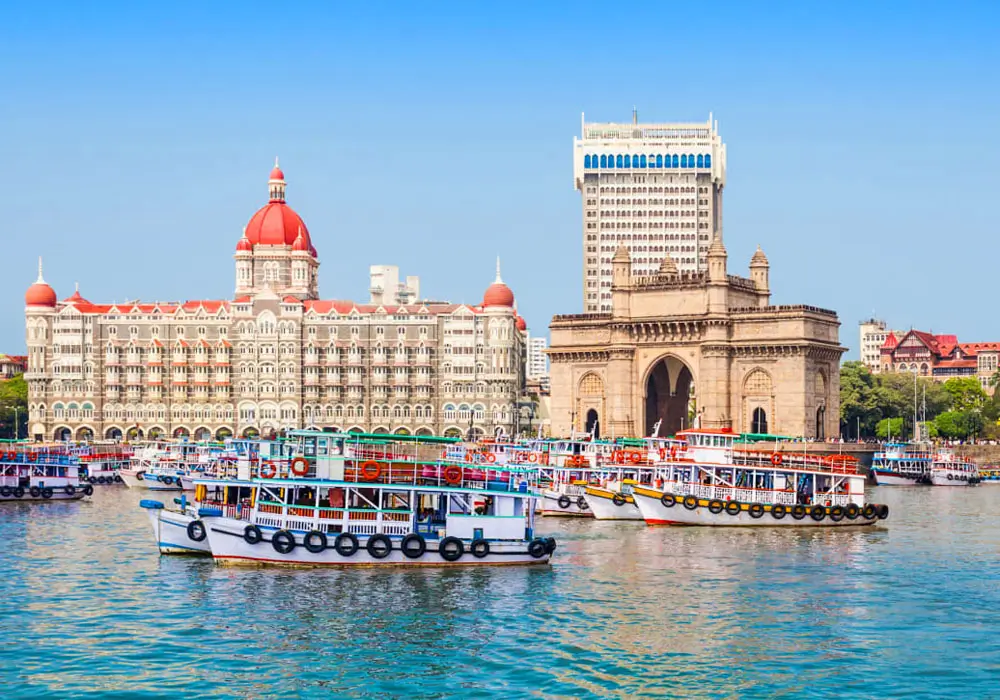
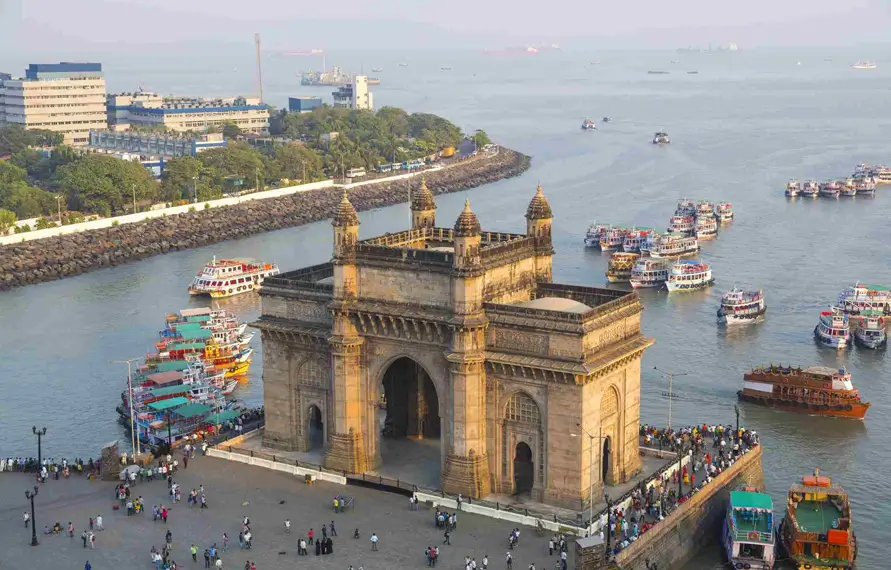
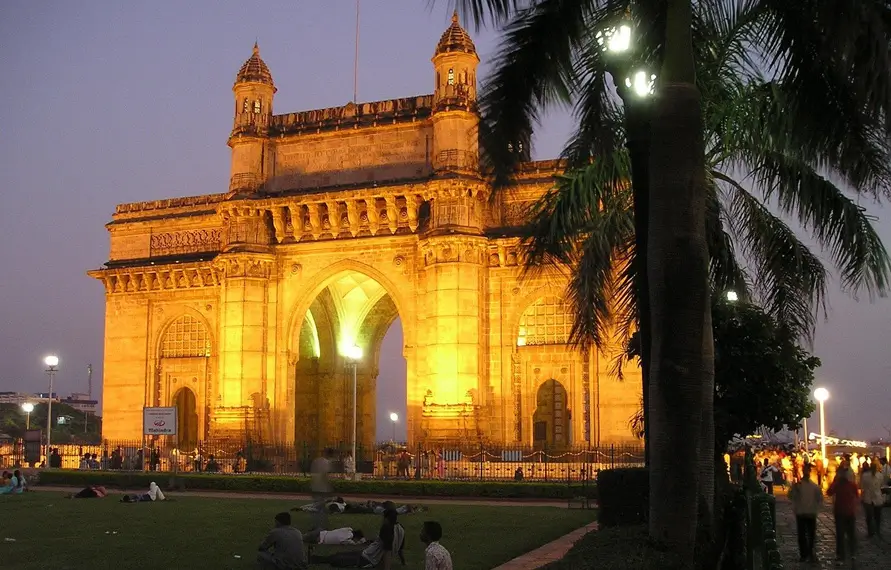
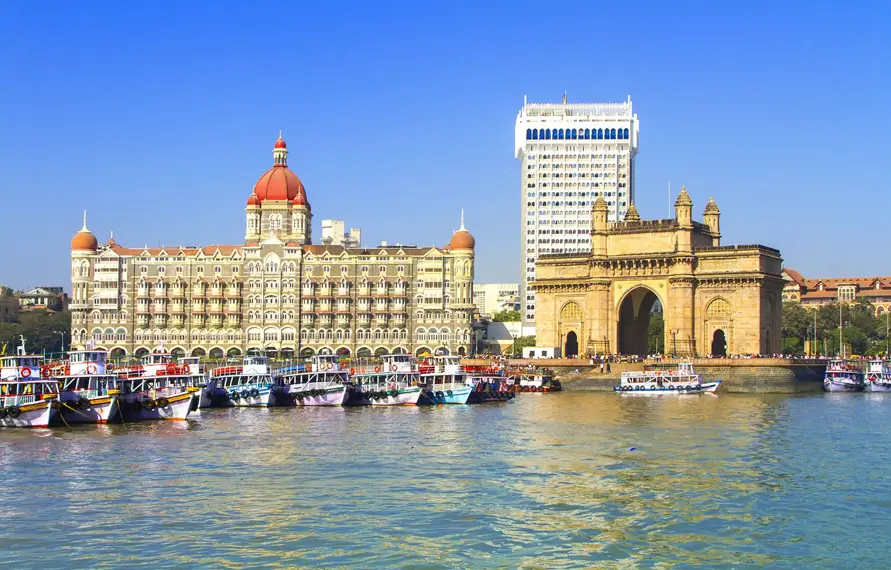
Your guide meets you near the Gateway itself, the great yellow basalt arch built to mark a royal visit in the early twentieth century. While you wait for the boat, it is worth ten minutes here: the Taj Mahal Palace hotel across the road, the promenade along the sea wall and the bustle of families taking photos. Your guide sorts the ferry tickets, so you do not need to queue at the counter yourself.
3. The ferry crossing
Ferries leave from the jetties beside the Gateway at regular intervals through the morning. The crossing takes around an hour each way, a little more or less depending on the tide and the boat. These are simple wooden or steel launches with a lower deck and an upper deck. The upper deck costs slightly more and gives you the better view and breeze, and we usually book it. Life jackets are required on harbour boats, and the crew hands them out on board. On the way out you pass the naval dockyard, anchored cargo ships and, in the distance, the oil installations off the coast, before the green hump of the island appears.
4. Arriving at the island jetty
The boat ties up at a long concrete jetty on the island’s north side. From here to the start of the steps is a short distance. A small toy train runs along part of the jetty for a nominal fare, which is handy in the heat or for anyone who would rather not walk, though it is easy to cover on foot too. There is a small entry fee for the island itself, collected near the jetty, separate from the monument ticket.
5. The climb to the caves
The caves sit on a hillside, and the path up to them is a long flight of stone steps, roughly 120 of them, lined on both sides with stalls selling souvenirs, cold drinks, snacks, beads and small stone carvings. The steps are broad and shallow in most places, and you can stop as often as you like in the shade. For travellers who cannot manage the climb, palanquin chairs carried by porters have traditionally been available at the base; ask us in advance if you think you may need one and we will advise on what is currently running.
6. The Great Cave with your guide
At the top you buy the monument ticket (your guide handles this) and walk into Cave 1. Your guide takes you round the hall panel by panel, explaining the stories and the details that are easy to miss. Expect to spend the longest part of your visit here. The light inside is soft and changes through the day, and your eyes take a minute to adjust when you come in from the bright sun.
7. The smaller caves and the hilltop
Beyond the Great Cave are several smaller caves, some unfinished, some with shrines and fragments of carving. There is also a separate group of Buddhist remains on the eastern hill, including old stupa mounds, and a short walk to a viewpoint where colonial-era cannons still point out over the harbour. How much of this you see depends on your energy and the heat. Your guide will suggest the best order.
8. Ferry back to Colaba
You walk back down the steps, perhaps stopping for a fresh lime soda or coconut water, and take a ferry back to the Gateway. Return boats run until late afternoon, but we prefer to be back on the mainland by early afternoon so that there is time for lunch and an easy walk in Colaba or Kala Ghoda.
9. Back to your hotel or onward
Your driver meets you at the Gateway. From here you can head back to your hotel to rest, carry on to lunch, or continue with an afternoon of Mumbai sightseeing.
Cave 1 is a square pillared hall cut into the rock, with entrances on three sides and a small shrine set into the hall. What makes it remarkable is that nothing here was built. Every pillar, beam and figure was carved downward and inward out of a single mass of stone, which means the sculptors could not correct a mistake. Look up at the ceiling and you will see that the “beams” are simply the rock left in place.
The Sadashiva (Trimurti) panel. On the south wall, facing the main entrance, is the sculpture most people come to see. It is a huge carved bust of Shiva with three faces, each several metres tall. The central face is calm and inward-looking, eyes half closed. The face on your left (Shiva’s right) is fierce, with a moustache and snakes in its hair, often read as Aghora or Bhairava, the destructive aspect. The face on your right is gentle and feminine, holding a lotus, usually read as Uma or Vamadeva. For many years it was described as a Hindu “trinity” of Brahma, Vishnu and Shiva, which is how the name Trimurti came about, but historians now agree that all three faces are Shiva himself. Your guide will explain both readings. Stand back from it, then step close: the scale and the stillness are hard to forget.
Ardhanarishvara. To one side of the Sadashiva is a tall figure that is half male and half female, Shiva joined with Parvati in a single body. The right side is broad-shouldered, the left side has a rounded hip and a breast. Around them, gods and celestial beings float in the clouds, carved in shallow relief. It is one of the clearest expressions in Indian art of the idea that masculine and feminine are two parts of one whole.
Gangadhara. On the other side, Shiva stands with Parvati as the goddess Ganga descends from the heavens into his matted hair. The legend says he caught the river in his locks to soften its fall to earth. Look at the top of the panel for a small three-headed figure representing the river.
Shiva’s wedding (Kalyanasundara). Near the western entrance, Parvati stands shyly beside Shiva as her father gives her away, with Brahma acting as priest. It is a surprisingly tender scene, with a bride’s lowered head and a groom’s light touch.
Ravana shaking Mount Kailash. Here the many-armed demon king tries to lift the mountain where Shiva and Parvati sit. Shiva calmly presses down with a toe and pins him. Parvati clings to her husband in alarm. It is a dramatic piece and your guide will point out the damaged figure of Ravana at the bottom.
Nataraja and Andhakasura. Two more panels show Shiva as the cosmic dancer and Shiva in his terrifying form spearing the demon Andhaka. These are among the most damaged carvings, but the energy is still clear.
The linga shrine. In the western part of the hall is a square shrine with four doorways, each guarded by huge doorkeeper figures. Inside is a plain stone linga, the abstract symbol of Shiva. This is the part of the cave that still functions as a sacred space for some visitors, so step quietly.
Many travellers are surprised to find that the figures are missing arms, legs and faces. The damage came over many centuries. Water seeping through the rock, the island’s monsoon climate and long periods of neglect all played a part. When the Portuguese controlled the island in the sixteenth century, the caves were also used for target practice and the carvings were defaced. The island’s name comes from the Portuguese too: they found a large stone elephant near the landing place and called it Elephanta. That elephant was later moved to the mainland, and today it stands in the gardens of the Dr Bhau Daji Lad Museum in Byculla, which makes a good extra stop if you are interested.
The local name for the island is Gharapuri, roughly “the city of caves”. Small villages still exist on the island, and the people who run the stalls, cafés and porter services mostly live there. Restoration and conservation work has steadied the caves, and the result is a site that is honestly worn but deeply moving. A good guide fills in what is missing, describing what a broken hand would have held or what a lost face would have shown.
Ferry with a private guide. This is the option we recommend and the one this page describes. You travel on the regular public ferry, which is simple but perfectly fine, and your guide comes with you for the whole morning. The guide handles tickets and timing and brings the carvings to life.
Ferry without a guide. It is possible to visit on your own, and some travellers do. The difficulty is that the panels have very little signage, and without someone to explain the stories, many people walk through the hall in twenty minutes and leave wondering what they saw. Licensed local guides do wait at the caves, but quality varies. Booking your own guide in advance means you know who you are getting.
Upper deck or lower deck. The upper deck gives open views and more air, especially welcome on a warm day. The lower deck is shaded and enclosed. Either works; we generally book the upper deck.
Short visit or a longer morning. If you only want the Great Cave and the Sadashiva panel, a brisk visit is possible. If you enjoy history or photography, allow time for the smaller caves, the Buddhist remains and the cannon viewpoint. Your guide will adjust the pace to suit you.
Day of the week. The caves are closed on Mondays, and the ferries are scheduled around that. Plan your Elephanta day for any day from Tuesday to Sunday. Weekends and public holidays are busier with Mumbai families, so a weekday is calmer if your schedule allows.
Time of day. The first ferries leave in the morning, and we aim for one of the early boats. You reach the caves before the heat builds and before the bigger crowds arrive, and you return in time for a late lunch. Afternoon visits are possible, but the climb is harder in the midday sun and you have less time on the island before the last return boats.
October to February. The most comfortable season. The monsoon is over, the sea is generally calm, the island is still green, and the temperatures are warm but manageable. December and January are the most pleasant months for walking.
March to May. It becomes hot and humid, especially on the climb. Visits are still fine if you start early, carry water and take the steps slowly.
June to September, the monsoon. Mumbai’s monsoon is heavy. The harbour can be rough, and ferry services are often reduced or suspended on days of strong wind and high waves, sometimes for long spells. The island is lush and beautiful in the rain, but you cannot count on reaching it. If your Mumbai stay falls in the monsoon, we keep Elephanta flexible and have a city alternative ready.
The Great Cave is a protected monument, but parts of it remain a place of worship. Some visitors offer flowers at the linga shrine, especially around the festival of Mahashivratri, when the island sees larger numbers of pilgrims. Keep your voice low near the shrine, and do not climb on the plinths or touch the carvings, however tempting it is to put a hand on a stone figure.
There is no strict dress code, but modest clothing is sensible and also practical for the climb and the sun. Shoulders covered and knees covered is a good rule for any temple site in India. You do not usually need to remove your shoes in the main hall, but follow any signs and your guide’s advice around the shrine.
The island has a resident population of monkeys, mostly bonnet and rhesus macaques, and they are bold. They will snatch food, bottles and anything that rustles. Keep snacks inside a closed bag, do not eat while walking up the steps, and never feed them. Feeding makes them more aggressive with the next visitor and is bad for the animals. Give them space, avoid eye contact and staring, and walk on calmly if one comes close. Your guide is used to them and will help.
The stalls on the steps are mostly run by island families. Bargaining is normal and expected, but keep it good-humoured. Buying a coconut water or a small souvenir is a simple way to put money directly into the island’s economy.
Give it a morning, not a whole day. Elephanta fits comfortably into a morning and early afternoon. That leaves the late afternoon and evening free for something else in South Mumbai.
Avoid Mondays. When we plan a Mumbai stay, we put Elephanta on a Tuesday to Sunday and use Monday for other sightseeing.
Stay in South Mumbai if you can. Hotels in Colaba, Nariman Point or near the Fort area make the morning much easier. From the airport area or the northern suburbs, the drive to the Gateway alone can take a long time.
Two nights or more in Mumbai. With two full days you can do Elephanta one morning and the city’s neighbourhoods on the other, without rushing either.
In the monsoon, keep a backup. If the ferries are suspended, we switch to a city day and try Elephanta again if a later day allows.
Arriving from Rajasthan or the south. Mumbai is a natural gateway to and from Goa, Kerala, Udaipur and Aurangabad for the Ajanta and Ellora caves. If you are heading to Ajanta and Ellora as well, Elephanta makes a good introduction to rock-cut architecture before you see the larger sites.
Colaba. Back at the Gateway, you are already in Colaba. The Colaba Causeway is a long market street of clothes, jewellery and bric-a-brac, and the lanes behind it have old cafés, Irani bakeries and art deco buildings. An easy hour of strolling here after the ferry is the natural way to end the morning.
Kala Ghoda. A short drive or a pleasant walk north is Kala Ghoda, Mumbai’s arts district. Within a few streets you find the Chhatrapati Shivaji Maharaj Vastu Sangrahalaya (the city’s main museum, with good sculpture galleries that link nicely with Elephanta), the Jehangir Art Gallery, small private galleries, design shops and some of the city’s better restaurants. The Victorian Gothic buildings of the Fort area, the High Court and the university are close by, and the great railway terminus of Chhatrapati Shivaji Maharaj Terminus is a few minutes further on.
A Dharavi community walk. For a very different side of Mumbai, a Dharavi community walk on another day shows the recycling units, pottery quarter, leather workshops and small industries of one of the city’s most enterprising neighbourhoods. It is led respectfully, with no photography of residents without permission, and works best on a different day from Elephanta so that neither is rushed.
Marine Drive at sunset. After a rest at your hotel, an evening walk along Marine Drive, when the curve of streetlights comes on, is a classic Mumbai ending.
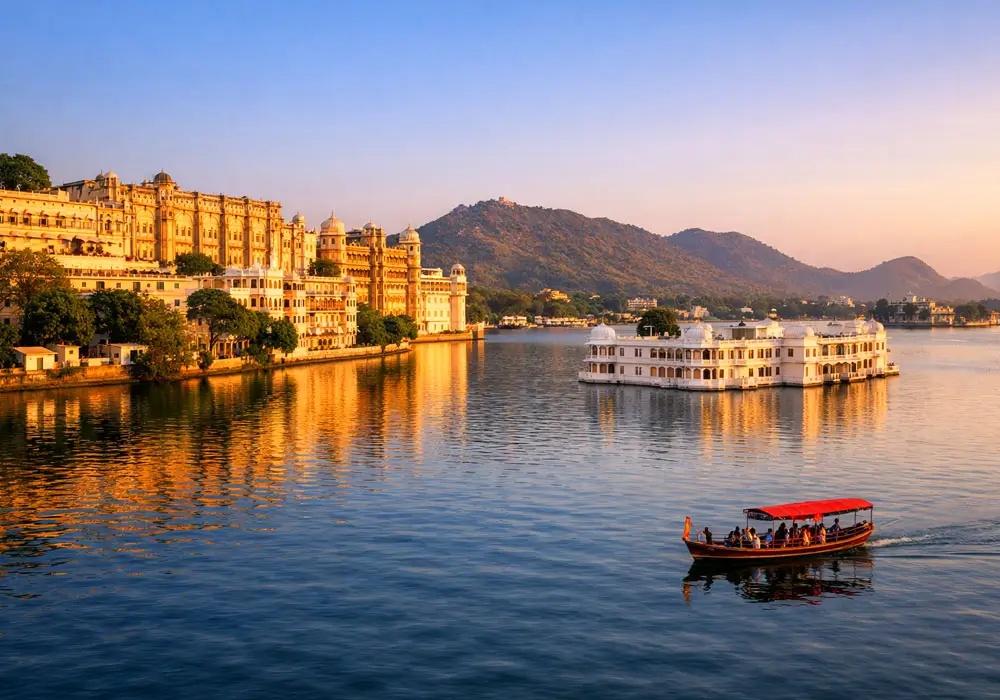
Elsewhere in India. If Mumbai is one stop on a longer journey, you might pair it with the forts and lakes of Rajasthan. A Lake Pichola sunset boat ride in Udaipur is a lovely contrast to the open harbour, and a Jaipur heritage walk gives the same kind of guided storytelling in the Pink City.
Bring and wear - Comfortable shoes with grip for stone steps - Light clothing that covers shoulders and knees - A hat, sunglasses and sunscreen - A refillable water bottle - A small zipped bag that monkeys cannot open - Some cash in small notes for snacks, porters and souvenirs - Your passport or a copy, in case ID is asked for at the ticket counter
Leave behind - Open bags of snacks or fruit that attract monkeys - Heavy luggage, as there is nowhere to store it on the island - Drones, which are not allowed at protected monuments - Flip-flops for the climb - Any plan to visit on a Monday
Tell us your Mumbai dates and hotel and we will place the Elephanta morning on the right day, with a private guide, ferry tickets and a driver waiting at the Gateway when you return.
Call & WhatsApp +91-9828085426 or email info@topindianholidays.net.
See more ideas on our Top Experiences in India page.
Tell us your travel dates and we will check availability and fit this experience into the right day of your itinerary. Reply within 12 hours.
Check Availability› Chat on WhatsApp› Send an Enquiry›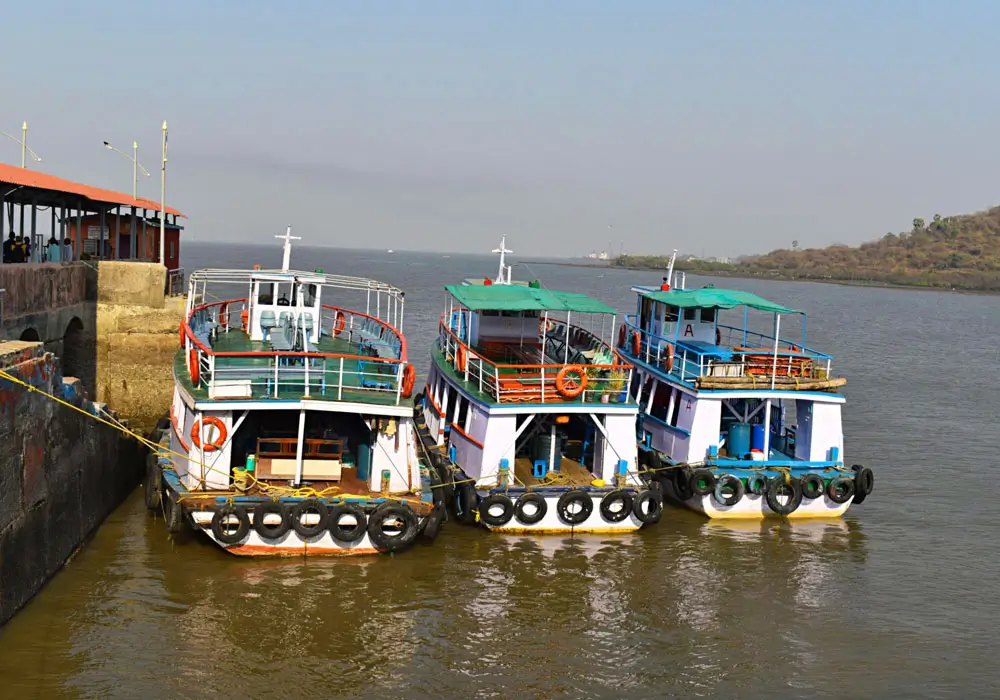
 🌙 06 Nights / 07 Days
 🌙 10 Nights / 11 Days
Delhi - Agra - Jaipur... Delhi - Agra - Jaipur - Mumbai - Goa Show More
 🌙 06 Nights/07 Days
Mumbai - Delhi - Agra... Mumbai - Delhi - Agra - Jaipur - Mumbai Show More
 🌙 10 Nights / 11 Days
Delhi - Agra - Jaipur... Delhi - Agra - Jaipur - Mumbai - Goa Show More
The cost depends on your group size, hotel location and the services you choose, such as the guide and car. Ferry and monument fees are set separately and can change. Send us your dates and we will quote the current price for your tour.
Yes. After the ferry back to the Gateway, Colaba and Kala Ghoda are right on your doorstep for lunch, museums and galleries. We suggest keeping a Dharavi community walk for a different day so that neither feels rushed.
Light, breathable clothes that cover shoulders and knees, comfortable shoes with grip, and a hat. Bring sunscreen and water, as the climb can be hot even in winter.
Most older travellers and children manage it well at a relaxed pace. The main challenge is the climb in the heat. If anyone has serious mobility problems, tell us beforehand and we will give an honest view of what is possible.
They are bold rather than dangerous, and they will grab food, drinks and loose bags. Keep snacks out of sight, do not feed them, and walk calmly past. Your guide is used to them and will keep you right.
You can visit without one, but there is little signage and many visitors leave without understanding what they saw. A private guide explains each panel, the stories of Shiva and Parvati, and the history of the damage. It makes a very big difference here.
Sometimes, but it is unreliable. From around June to September, rough seas can reduce or suspend the ferries, sometimes for days at a time. If your trip falls in the monsoon, we keep Elephanta flexible and plan a city alternative.
The ferries are simple public launches that make the crossing many times a day. Life jackets are provided and must be worn on harbour boats. In rough monsoon weather, services are reduced or stopped, and we will never push you onto a boat in poor conditions.
It is the great three-faced bust of Shiva on the south wall of the main cave, often called the Trimurti and more accurately known as Sadashiva. The three faces show Shiva’s fierce, calm and gentle aspects. It is one of the most celebrated sculptures in Indian art.
There are roughly 120 stone steps from the base to the caves, with stalls and shady spots along the way. Most people manage them at a gentle pace with a few stops. A toy train covers part of the walk along the jetty.
Allow a morning and early afternoon. The ferry takes around an hour each way, and most visitors spend a couple of hours on the island including the climb and the guided visit. Add travel time from your hotel to the Gateway.
Ferries start in the morning and run at regular intervals until early afternoon, with return boats running into the late afternoon. Exact times can change, so we confirm them for your date. We aim for one of the earlier ferries to beat the heat and crowds.
No. The caves are closed on Mondays, and ferry services are scheduled around that. Plan your visit for any day from Tuesday to Sunday.
Ferries leave from the jetties beside the Gateway of India in Colaba and take around an hour to reach Elephanta Island. From the island jetty you walk or take the small toy train to the base of the steps, then climb up to the caves. On our tour, your driver brings you to the Gateway and your guide takes care of the ferry tickets.
Whether you're planning your first India trip or returning to explore deeper, get honest, expert advice from someone who knows every corner of this country. No pressure, no cost.