


 info@topindianholidays.net
 +91-8955000999

Hot Air Balloon Ride in Jaipur
Lift off as the sky turns orange and drift over villages, mustard fields and the Aravalli hills while Jaipur is still waking up.
View Experience ›Glide along a quiet raised causeway at first light with a rickshaw-puller who knows every bird by call, past storks on their nests, pelicans on the water and eagles in the dead trees.
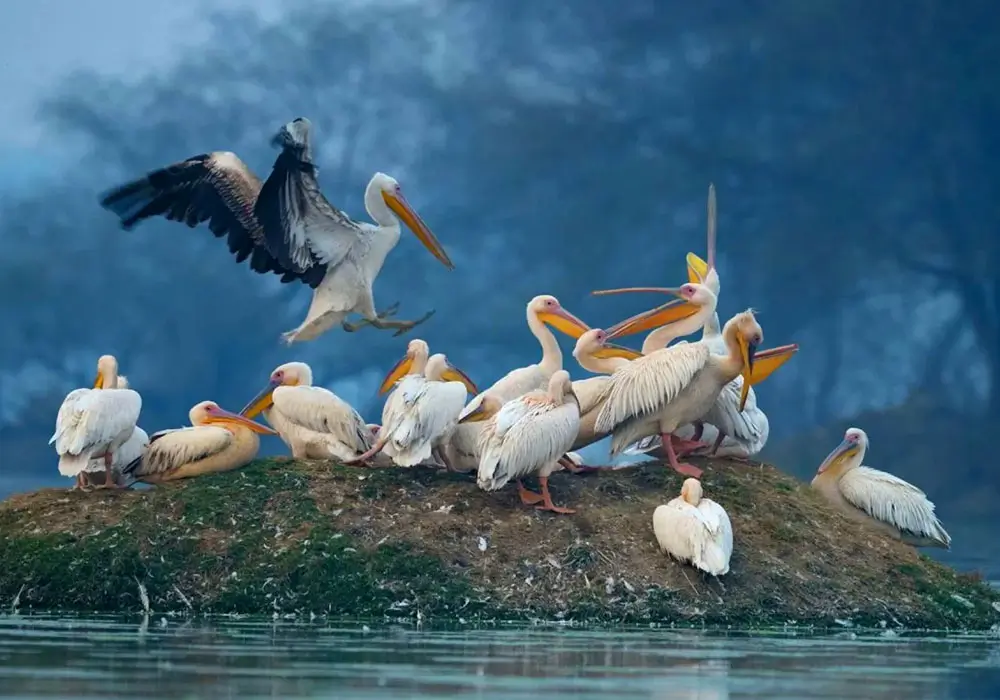
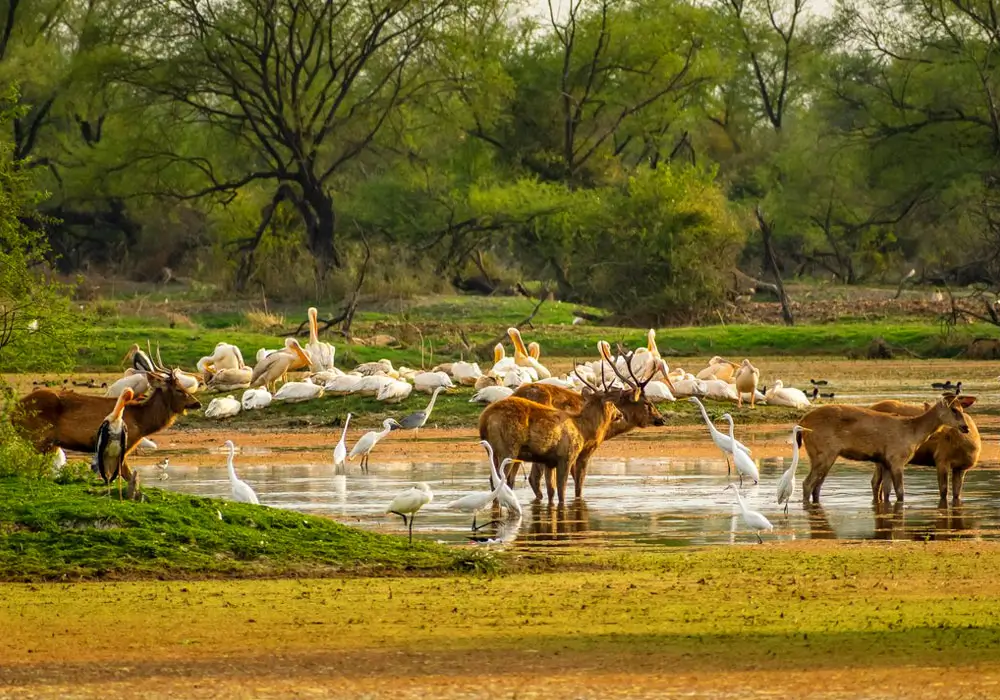
Most travellers on the road between Agra and Jaipur drive straight past Bharatpur without a second look. A few kilometres from the highway, behind a modest park gate, lies one of the finest bird reserves in Asia. Keoladeo National Park is a mosaic of shallow marshes, grassland and low woodland where, in a good winter, you can watch hundreds of birds of dozens of species in a single morning without ever leaving a narrow tarmac track. Ducks and geese from Central Asia and Siberia float on the open water, pelicans fish in line, storks crowd the acacia trees, and eagles sit hunched on dead branches waiting for the sun to warm the air.
The wetland is not entirely natural, and its history is part of the appeal. In the nineteenth century the rulers of Bharatpur developed a natural depression into a shooting reserve, building small dams and channels to flood it each year and attract waterfowl for grand duck shoots. Viceroys and visiting dignitaries came to shoot here, and the bags recorded on stone tablets near the old shooting butts are hard to read today. Over the twentieth century the shoots ended, the area became a bird sanctuary and then a national park, and in 1985 it was inscribed as a UNESCO World Heritage Site. The same water management that once served the guns now keeps one of India’s most important wetlands alive.
What makes a Bharatpur bird sanctuary tour special is how easy and intimate it is. There are no jeeps roaring through the park. Motor vehicles are kept out beyond the first stretch, so you explore by cycle rickshaw, by bicycle or on foot, in near silence. You do not need to be a serious birder to love it. Even guests who could not tell a heron from an egret on the first morning leave able to point out a darter drying its wings, a kingfisher on a post and a pair of sarus cranes, the tallest flying birds in the world, standing in the reeds.
This page explains how the morning works, what you can see in each season, how to choose between rickshaw, bicycle and walking, and how to fit Bharatpur neatly into a Golden Triangle route.
1. An early start
The park opens around sunrise, and the first two or three hours are the best of the day. Your driver collects you from your Bharatpur hotel, most of which are a few minutes from the gate, while it is still cool. In winter the air is sharp and the marshes often carry a low mist that lifts as the sun rises.
2. At the gate
Entry tickets are bought at the park gate, with separate rates for foreign visitors and charges for cameras. Here you meet your rickshaw-puller or bird guide, and you can hire a bicycle if you prefer to ride yourself. We arrange your guide in advance so you are not negotiating at the gate.
3. Along the main causeway
The main route through the park is a raised road running between marshes, with smaller tracks branching off. Motor traffic stops after the first stretch near the entrance, and from there the only sounds are birds, the creak of the rickshaw and the occasional bicycle bell. Your guide stops wherever there is something to see, and you can ask to stop as often as you like.
4. Learning to look
A good guide does more than point. They tell you what to look for in each bird: the shape of a bill, the way it holds its neck in flight, where in the marsh it likes to feed. Many rickshaw-pullers carry a field guide and a spotting scope, and they can find an owl roosting in a tangle of branches that you would walk past a hundred times.
5. The heronries and the open water
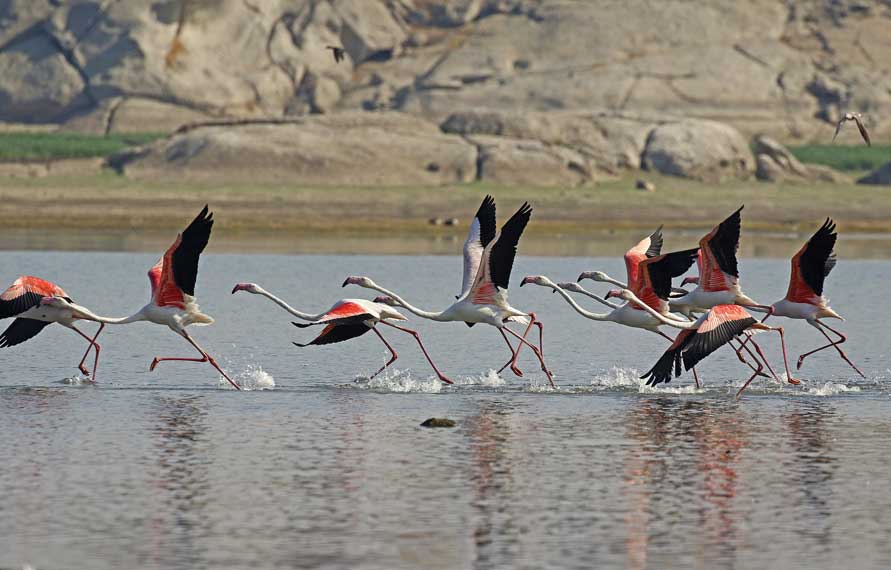
Further in, the trees beside the marshes are crowded with nesting or roosting storks, herons, egrets, cormorants and darters, depending on the season. Out on the water you may see rafts of ducks and geese, pelicans and, if you are lucky, a flock of flamingos. Raptors patrol overhead looking for an easy meal.
6. The temple and the woodland
Near the middle of the park stands the small Keoladeo temple, dedicated to Shiva, which gives the park its name. The woodland around it is good for owls, woodpeckers and smaller birds, and the area is known for rock pythons basking in the sun at the mouths of burrows on winter mornings. Your guide knows where to look.
7. Back for breakfast or onward
By mid-morning the light hardens and bird activity slows. You return to the gate, where your driver is waiting, and head back to your hotel for a late breakfast, or straight onto the road towards Jaipur or Agra.
Keoladeo has recorded hundreds of bird species over the years, from tiny warblers to huge vultures. You will not see them all, but a winter morning here can easily produce more species than a week of birding elsewhere.
Winter migrants. From around October and especially November to February, ducks and geese arrive from northern Asia: bar-headed geese, greylag geese, northern pintails, shovelers, gadwalls, common teals and many more. They gather on the open water, and in good years the marshes are thick with them.
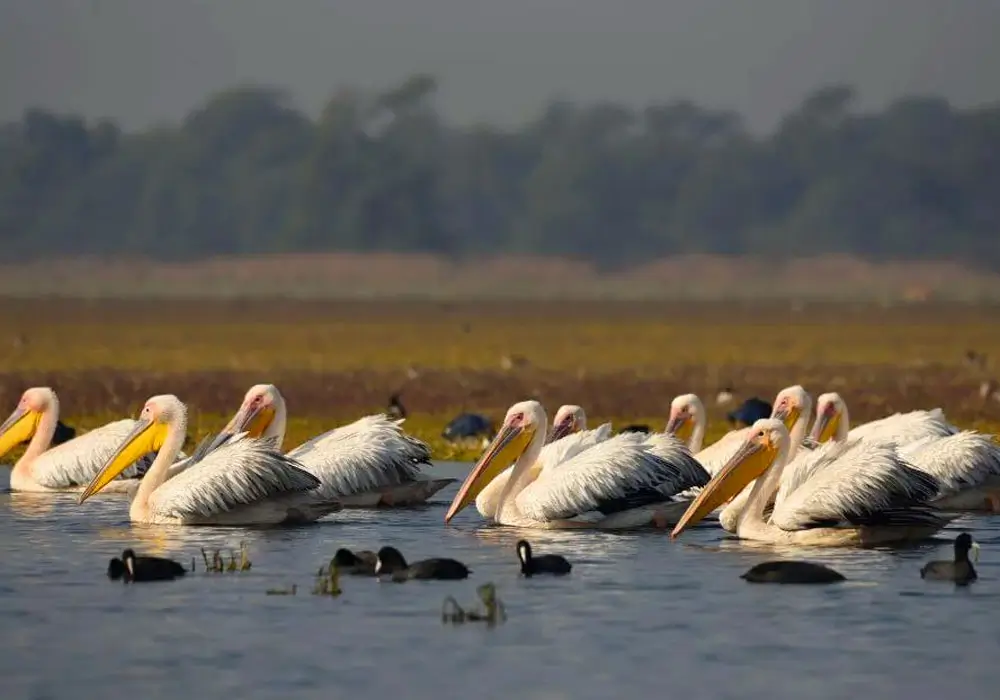
Pelicans. Great white pelicans and Dalmatian pelicans visit in winter, and spot-billed pelicans can also be seen. Watching a group of pelicans fishing together, herding fish into the shallows, is one of the highlights of the park.
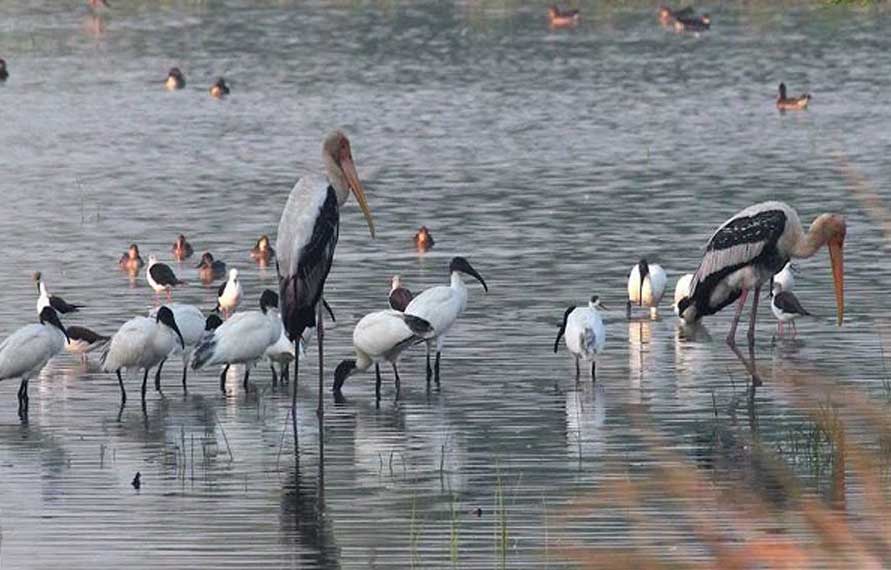
Painted storks and the heronries. After the monsoon the trees fill with nesting colonies. Painted storks, with their yellow bills and pink-tinged wings, build untidy nests in the acacia trees and raise their chicks from late monsoon into the winter months. Open-billed storks, black-headed ibises, spoonbills, egrets, herons, cormorants and darters nest alongside them. The noise and movement of a busy heronry is extraordinary.
Sarus cranes. These tall grey cranes with bright red heads live in the park all year and are often seen in pairs. They are famous for their courtship dance, with leaping, wing-spreading and loud trumpeting calls. Sarus cranes pair for life and are a symbol of devotion in Indian tradition.
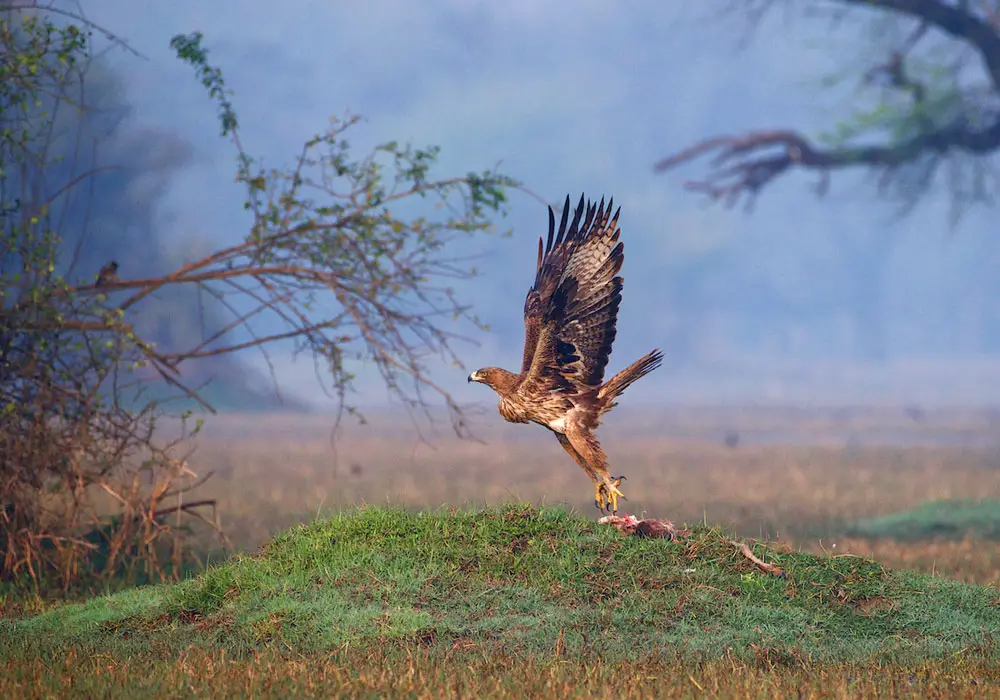
Eagles and other raptors. Winter brings greater spotted eagles, steppe eagles, imperial eagles and others, often perched on bare trees above the water. Marsh harriers quarter low over the reeds, and ospreys may hover and dive. Resident raptors include black-shouldered kites and shikras.
Owls and nightjars. The woodland hides dusky eagle owls, spotted owlets and other owls, and your guide may show you a roosting nightjar so well camouflaged that it looks like a piece of bark.
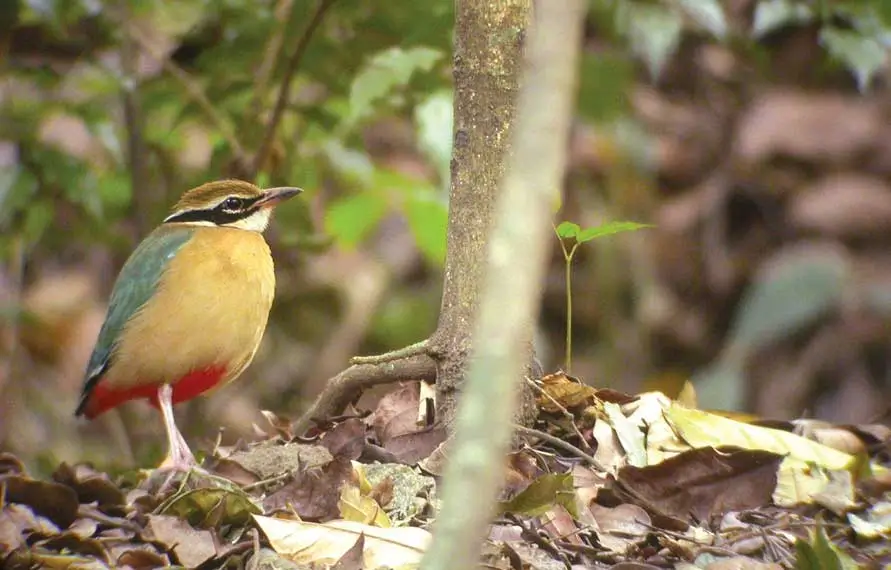
Kingfishers and smaller birds. Common, pied and white-throated kingfishers are easy to see. Bee-eaters, rollers, hoopoes, robins, warblers and bulbuls keep the drier areas busy.
Mammals and reptiles. Look out for nilgai, the large blue-grey antelope, along with spotted deer, sambar, jackals, mongooses and wild boar. Golden jackals sometimes trot along the causeway in the early morning. Turtles bask on logs, and pythons sun themselves in winter.
The Siberian crane story. For decades Keoladeo was the famous wintering ground of a small flock of Siberian cranes. They stopped arriving in the early 2000s, and they are no longer seen here. Guides still talk about them, and it is a sobering reminder of how fragile migratory routes are.
Cycle rickshaw. This is the classic way to see Keoladeo and the one we recommend for most guests. The rickshaw-pullers here are local men who have spent years in the park, and those authorised to work inside it have been trained to help visitors spot and identify birds. Many are excellent naturalists in their own right. You sit back, binoculars in hand, while your puller cycles slowly along the causeway and stops wherever there is something worth seeing. It is relaxed, quiet and supports local livelihoods directly. Rickshaws are limited to the main tracks.
Bicycle. Bicycles can be hired near the gate, and riding gives you the freedom to explore at your own pace and go along some of the smaller tracks. The park is flat, so it suits anyone comfortable on a bike. Combining a bicycle with a hired bird guide who cycles with you gives you independence and expertise together.
On foot. Walking is the best way to get close to small birds and to hear the park properly. Serious birders often walk the side tracks and the woodland, where rickshaws cannot go. Distances inside the park are long, so many guests take a rickshaw in and then walk sections with their guide.
Electric vehicles. In some seasons small battery vehicles have operated on the main road for visitors who cannot cycle or walk. Availability changes, so tell us if mobility is a concern and we will check what is running.
November to February: the peak. This is the main season for winter migrants. Ducks, geese, pelicans and eagles are present in good numbers, the weather is cool and dry, and the light is soft for photography. December and January mornings can be cold and foggy, so a warm jacket is essential at dawn.
August to October: the nesting season. After the monsoon rains fill the wetlands, the heronries come to life. Painted storks and other waterbirds nest in large colonies, and the park is green and lush. The first migrants start arriving towards the end of this period. It can be hot and humid in the middle of the day.
March. Many migrants begin to leave, but resident birds are still active, and the park is quieter with fewer visitors. Early March can still be rewarding.
April to July. The hot, dry months. Water levels drop, the marshes shrink and bird numbers fall. Some resident species are still easy to see, but most travellers find it too hot to enjoy.
Water depends on the monsoon. Keoladeo has no natural river feeding it. The marshes are filled by the monsoon rains and by water released into the park through canals from reservoirs and other sources. In a poor monsoon year, the wetlands can be much drier and bird numbers lower. We follow the season closely and will tell you honestly what to expect for your dates.
Time of day. The first hours after the park opens give the most activity and the best light. Late afternoon is the second-best time, especially for birds returning to roost.
You do not need any experience to enjoy Keoladeo. A few simple tips help.
Keoladeo is a protected wildlife reserve. Your visit should leave no trace on the birds.
On the Agra to Jaipur drive. Bharatpur sits on the road between Agra and Jaipur, around an hour’s drive from Agra and around four hours from Jaipur. That makes it a natural overnight stop on a Golden Triangle route. Leave Agra after lunch, stop at Fatehpur Sikri on the way, and arrive in Bharatpur for the night. Visit the park at dawn and continue to Jaipur afterwards.
Combine with Fatehpur Sikri. The abandoned Mughal city of Fatehpur Sikri lies between Agra and Bharatpur, just off the route. Its red-sandstone palaces, mosque and great gateway are well worth a couple of hours. Fatehpur Sikri in the afternoon and Keoladeo at dawn is one of the best combinations on the Golden Triangle.
Start in Agra. Before leaving Agra, see the Taj Mahal at dawn with our Taj Mahal sunrise experience, and consider a visit to the Agra bear rescue facility for another ethical wildlife encounter.
Add a stepwell on the way to Jaipur. The great stepwell at Abhaneri sits close to the Jaipur road. Our page on stepwells and desert water heritage explains why it is worth the short detour.
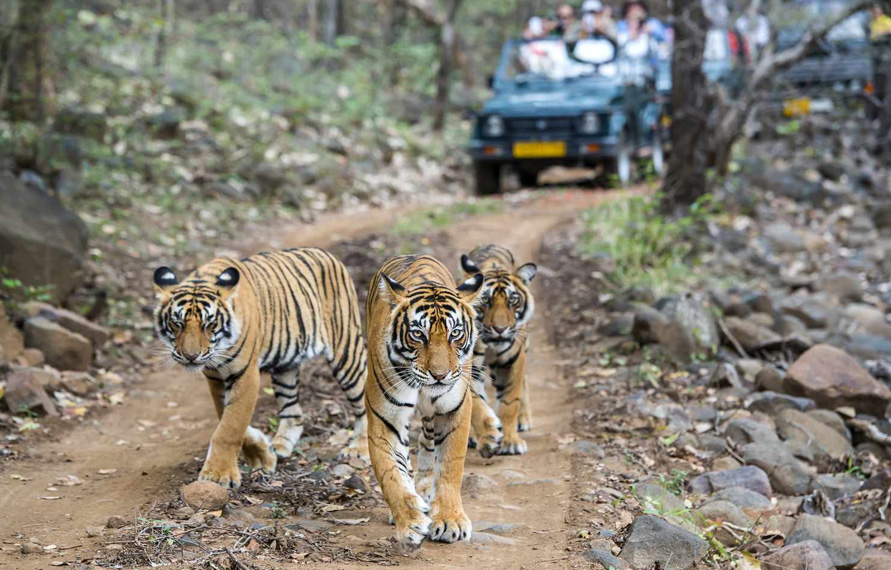
Continue to tigers. Bharatpur also works well before a Ranthambore tiger safari, making a wildlife-focused week in Rajasthan.
Arrive in Jaipur. Once in Jaipur, slow down with a cooking class with a local family or a tuk tuk ride through the Pink City.
Bring and wear - Binoculars, one pair per person if possible - Warm layers, a hat and gloves for December and January dawns - Clothes in muted greens, browns and greys - Comfortable closed shoes - Sun cream, sunglasses and water - A camera with a telephoto lens - Insect repellent after the monsoon
Leave behind - Bright, noisy clothing - Any food for the birds - Bird call playback apps - Drones - Large bags that will not fit in a rickshaw
Tell us your Golden Triangle dates and we will place a night in Bharatpur on the Agra to Jaipur drive, with a dawn visit to Keoladeo.
Call & WhatsApp +91-9828085426 or email info@topindianholidays.net.
See more ideas on our Top Experiences in India page.
Tell us your travel dates and we will check availability and fit this experience into the right day of your itinerary. Reply within 12 hours.
Check Availability› Chat on WhatsApp› Send an Enquiry›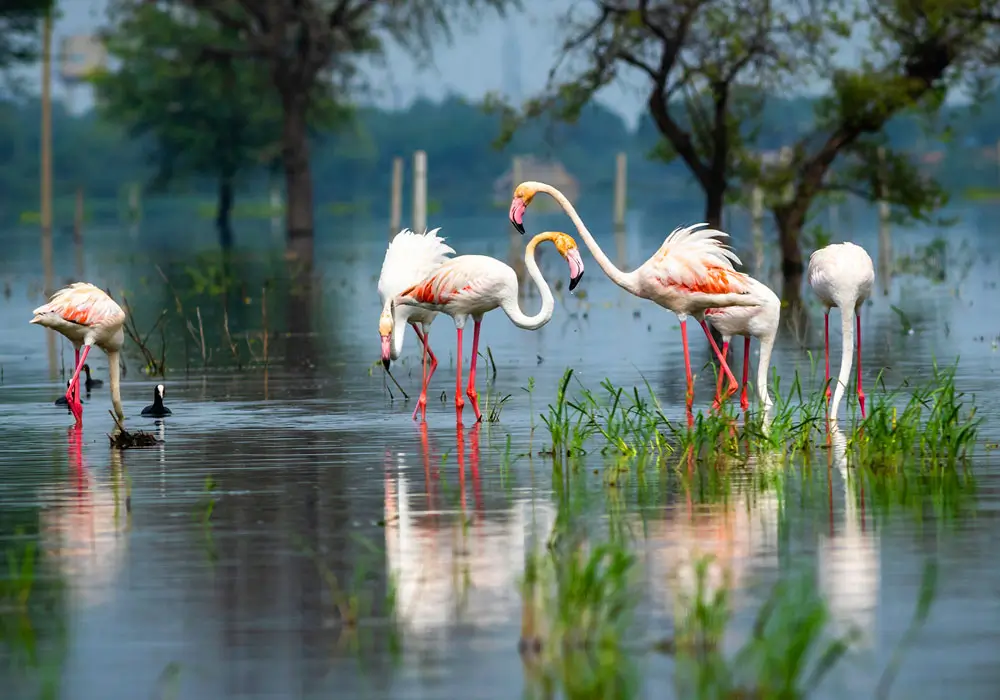



 🌙 09 Nights / 10 Days
⭐ Most Popular
Ranthambore - Bharatpur - Chambal... Ranthambore - Bharatpur - Chambal Sanctuary - Agra - New Delhi Show More
 🌙 07 Nights / 08 Days
Thattekkad Bird Sanctuary - Periyar... Thattekkad Bird Sanctuary - Periyar - Munnar - Chinnar - Ooty - Mudumalai - Cochin Show More
 🌙 09 Nights / 10 Days
⭐ Most Popular
Delhi - Sariska - Ranthambore... Delhi - Sariska - Ranthambore - Jaipur - Bharatpur - Fatehpur Sikri - Agra - Delhi Show More
 🌙 05 Nights / 06 Days
⭐ Most Popular
Jaipur - Ranthambore -Jaipur Jaipur - Ranthambore -Jaipur Show More
Yes. We add one night in Bharatpur between Agra and Jaipur, with Fatehpur Sikri on the way and a dawn visit to Keoladeo the next morning. It adds only a little extra driving to the usual route.
Very good. The park is flat and quiet, the birds are big and easy to see, and the rickshaw-pullers enjoy showing first-timers what to look for. Children love counting species from the rickshaw.
Yes, and it is one of the best combinations on the Golden Triangle. Visit Fatehpur Sikri in the afternoon on the way from Agra, stay the night in Bharatpur, and visit the park at dawn before continuing to Jaipur.
Yes, they make a huge difference. Bring a pair for each person if possible. Many guides also carry a spotting scope that you can look through.
Keoladeo depends on the monsoon and water supplied into the park through canals. In a poor monsoon year the marshes can be drier and bird numbers lower. We check the conditions for your dates and tell you honestly what to expect.
Painted storks nest in large colonies from the late monsoon, around August, into the winter months. The heronries are at their busiest after the rains fill the wetlands.
Sadly, no. Keoladeo was once a famous wintering ground for Siberian cranes, but they stopped arriving in the early 2000s. Sarus cranes, which live in the park all year, are easy to see instead.
The first few hours after sunrise are the most rewarding for most visitors. Keen birders may spend a full day or return in the afternoon. One night in Bharatpur is enough for most travellers.
The total depends on park entry fees, your guide or rickshaw, your hotel and transport. We quote the current price for your dates. Send us a WhatsApp message with your travel dates and group size.
Many are excellent. Those authorised to work in the park have been trained to help visitors spot and identify birds, and many have spent years learning the park. We arrange an experienced puller or bird guide in advance.
By cycle rickshaw, by bicycle or on foot. Motor vehicles stop after the first stretch near the gate, so the park stays quiet. A cycle rickshaw with a trained puller is the most relaxed way to see the birds.
Yes. Keoladeo National Park, sometimes called Keoladeo Ghana, is the official name. Many people still call it Bharatpur Bird Sanctuary, its earlier name. It is a UNESCO World Heritage Site.
Bharatpur is around an hour’s drive from Agra on the road towards Jaipur. Jaipur is around four hours away, so Bharatpur makes an easy overnight stop between the two cities.
November to February is the best time for winter migrants such as ducks, geese, pelicans and eagles. August to October is the nesting season for painted storks and other waterbirds. April to July is hot, dry and the quietest for birds.

Whether you're planning your first India trip or returning to explore deeper, get honest, expert advice from someone who knows every corner of this country. No pressure, no cost.