📅 Last Updated On: 29 May 2026
⏱ 10 Min Read
Leh Ladakh Tour Package for Foreign Tourists - Complete Guide 2026
T
Top Indian Holidays
Ministry of Tourism Approved Tour Operator, Jaipur, Rajasthan
Leh Ladakh tour package foreign tourists
There is a moment that every first-time visitor to Ladakh describes in almost exactly the same way.
You step off the plane at Kushok Bakula Rimpochhe Airport in Leh. The air is thin and sharp and impossibly clear. The mountains around you are enormous - bare, ochre, ancient. The sky is a shade of blue you have never seen before. And you think: nothing I read prepared me for this.
Leh Ladakh is one of the world's truly extraordinary places - a high-altitude Himalayan desert in northern India where Buddhist monasteries perch on clifftops, turquoise lakes reflect snow-capped peaks, and roads cut through passes so high that clouds form below you. For international tourists, it combines the visual drama of Tibet with the infrastructure of India and the access of a well-developed tourism destination.
This complete guide is written specifically for foreign visitors planning a Ladakh tour in 2026 - covering everything from the permits only foreigners need, to altitude sickness management, the best season, the top destinations, sample itineraries, and what a private Ladakh tour package actually includes.
Why Ladakh Is India's Best-Kept Secret for Foreign Tourists
Most international visitors to India follow the Golden Triangle circuit - Delhi, Agra, Jaipur - and return home without ever hearing that a 90-minute flight from Delhi takes you to one of the most dramatic landscapes on earth.
Ladakh in numbers:
- Average altitude of Leh: 3,500 metres (11,500 feet)
- Khardung La pass: 5,359 metres - one of the world's highest motorable roads
- Pangong Tso Lake: 4,350 metres altitude, 134 km long, spanning India and China
- Annual rainfall in Leh: Less than 100mm - a true high-altitude desert
- Distance from Delhi: 90 minutes by flight
- Best season for foreign tourists: June to September
Ladakh sits in a rain-shadow zone behind the Great Himalayan Range, which means it receives virtually no monsoon rain. While the rest of India is wet and hot in July and August, Ladakh has clear blue skies, cool days of 15–25°C, and dry roads. This makes it India's finest summer destination - and the ideal complement to a Golden Triangle tour for travellers visiting in the months when most of India is difficult.
Planning Your First Leh Ladakh Tour from Abroad?
Leh Ladakh is one of India’s most breathtaking destinations — but high altitude travel requires proper planning. Our private Ladakh tours for foreign tourists include acclimatization support, experienced local drivers, comfortable stays, permits assistance, and flexible itineraries for a safe Himalayan journey.
Is Ladakh Safe and Accessible for Foreign Tourists?
Yes - with proper preparation.
Security situation: Ladakh is administered as a Union Territory of India and is under Indian military oversight. The popular tourist circuits - Leh, Nubra Valley, Pangong Lake, Tso Moriri - are fully civilian areas with no security concerns for international visitors. The India-China and India-Pakistan borders are far from tourist zones, and military checkpoints at sensitive areas are routine and well-managed.
Post-Operation Sindoor note: Following the India-Pakistan tensions of May 2025, some border-adjacent areas of Ladakh came under heightened scrutiny. All major tourist destinations - Leh, Nubra Valley, Pangong Tso, Tso Moriri, and the main highway routes - continued operating normally and remain fully accessible to international tourists in 2026. Your tour operator will have the most current information about any restricted zones.
Accessibility: Leh is connected by daily flights from Delhi (90 minutes), Mumbai, and several other Indian cities. The Manali-Leh Highway opens from approximately mid-May and remains open until late October. The Srinagar-Leh Highway is generally open from April to November.
The Most Important Thing to Know - Altitude
This section is not optional reading. Altitude is the single greatest practical challenge of any Ladakh tour, and it catches unprepared visitors off guard every season.
Leh sits at 3,500 metres (11,500 feet). The oxygen level at this altitude is approximately 40% lower than at sea level. When you arrive - whether by flight or road - your body needs time to adjust. This process is called acclimatisation, and it cannot be rushed.
Acute Mountain Sickness (AMS) - What It Is
AMS is the body's reaction to reduced oxygen at high altitude. It is extremely common in Ladakh - at altitudes above 3,000 metres, up to 75% of visitors experience at least mild symptoms. AMS does not discriminate by age, fitness level, or prior mountain experience. Fit young athletes get AMS. Elderly travellers sometimes feel nothing at all. There is no way to predict in advance who will be affected.
Mild AMS symptoms (appear 6–24 hours after arrival):
- Headache (the most common symptom)
- Fatigue and weakness
- Loss of appetite, nausea
- Dizziness or light-headedness
- Disturbed sleep
Severe AMS can progress to HAPE (High Altitude Pulmonary Oedema - fluid in lungs) or HACE (High Altitude Cerebral Oedema - fluid on brain). These are medical emergencies requiring immediate descent and treatment. Symptoms include confusion, inability to walk straight, extreme breathlessness at rest, and persistent vomiting.
The Acclimatisation Rule - Non-Negotiable
The Leh District Administration's official advisory states: all tourists arriving in Leh must undergo at least 48 hours of acclimatisation before travelling to high-altitude areas like Nubra Valley, Pangong Lake, or Khardung La.
Every reliable Ladakh tour operator - including Top Indian Holidays - builds this into the itinerary as a fixed requirement, not an option.
What acclimatisation days look like in practice:
Day 1 (Arrival in Leh): Complete rest. Do not walk uphill, do not carry heavy bags, do not exert yourself in any way. Eat a light meal. Drink 3–4 litres of water. Sleep as much as you can. You will feel the altitude - most people feel a mild headache and slight breathlessness. This is normal.
Day 2 (Gentle acclimatisation): A slow walk to Shanti Stupa (a short uphill, 15–20 minutes) in the morning. Return to the hotel. Visit Leh Market in the afternoon at a gentle pace. Rest in the evening. No rushing.
This two-day rest is what separates visitors who enjoy Ladakh from those who spend it in bed with severe altitude sickness.
Diamox (Acetazolamide)
The Leh District Administration officially recommends Diamox (Acetazolamide) 250mg twice daily - starting two days before arrival and continuing for two days after reaching Leh. This prescription medication helps the body acclimatise faster by stimulating faster breathing. Consult your doctor before travel - it has contraindications (sulfa drug allergy, kidney issues) and minor side effects (increased urination, tingling in fingers). It is not a cure for AMS but significantly reduces the risk and severity.
Practical rule: If symptoms become severe - confusion, inability to stand, extreme breathlessness at rest - descend immediately. This is the only reliable treatment for serious AMS.
Permits for Foreign Tourists - Everything You Need to Know
This is the most frequently misunderstood part of Ladakh planning for international visitors.
The basic principle: A standard Indian eVisa is sufficient to enter India and visit Leh town. No additional permit is needed just to be in Leh city, visit local monasteries, or travel the main Srinagar-Leh and Manali-Leh highways.
However, most of what makes Ladakh extraordinary - Pangong Lake, Nubra Valley, Tso Moriri, Tso Kar, Dah-Hanu - requires a Protected Area Permit (PAP) for foreign nationals.
Protected Area Permit (PAP) - Key Facts for Foreigners
Areas requiring PAP for foreign nationals:
- Nubra Valley (via Khardung La)
- Pangong Tso Lake (via Chang La)
- Tso Moriri and Tso Kar lakes
- Dah-Hanu villages
- Turtuk village (near Pakistan border)
- Hanle (access conditions vary - check with your operator)
Permit fee: Approximately ₹600 per person per zone (2026 rates - confirm current fees with your operator)
How to get it: The PAP is obtained at the Deputy Commissioner's office in Leh, or more conveniently, through your registered tour operator or travel agent in Leh. If you are on a private tour, your operator handles this entirely - passport copies are collected on arrival and permits are typically ready the following morning.
Validity: Up to 15 days for foreign tourists (multiple zones can be covered on one permit application)
Practical tip from experienced operators: Apply for all zones at once, even if your itinerary is not yet finalised. The fee is minimal and having permits for extra areas gives you flexibility to adjust the route spontaneously. Carry multiple photocopies - military checkpoints collect one copy each.
Who cannot visit Ladakh: Citizens of China and Pakistan require approval from the Ministry of External Affairs in New Delhi - a process that can take a month or more. All other nationalities can obtain permits routinely through a Leh-based operator.
NEW 2026 requirement: India's mandatory e-Arrival Card (effective 1 April 2026) must be completed online at indianvisaonline.gov.in/earrival within 72 hours of your flight to India. This applies to all foreign nationals entering India, including those flying to Leh. Your operator will remind you, but do not overlook it - airlines are currently denying boarding to passengers without the QR code.
Best Time to Visit Ladakh for Foreign Tourists
|
Month
|
Weather
|
Road Access
|
Crowds
|
Verdict
|
| May |
10–20°C, roads opening |
Manali highway may not be fully open |
Low |
Good, some uncertainty |
| June |
15–25°C, clear |
Both highways open |
Building |
Excellent |
| July |
20–28°C, clear, warm |
Fully open |
Peak |
Outstanding |
| August |
18–26°C, clear |
Fully open |
High |
Outstanding |
| September |
12–22°C, clear |
Fully open |
Dropping |
Excellent, best photography |
| October |
5–15°C, cold nights |
Closing from mid-October |
Low |
Possible but cold |
The bottom line: June to September is the window for foreign tourists. July and August are peak season - all passes are open, all camps and hotels are operating, and the Hemis Festival (July) adds cultural depth. September is considered the finest month by photographers - clearer post-monsoon skies, golden light, autumn colours beginning in the valleys, and noticeably fewer tourists than July-August.
Top Ladakh Destinations - What to See and Why
1. Leh Town and Local Circuit
Altitude: 3,500m | Time needed: 2 days minimum (including acclimatisation)
Leh itself rewards slow exploration. The Leh Palace - a nine-storey royal residence modelled on the Potala in Lhasa - towers over the old city. Shanti Stupa glows white on a hill above town and offers the finest panoramic view of Leh and the surrounding peaks. Leh Market is a genuine mix of local Ladakhi goods, Tibetan crafts, and tourist shopping. The Hall of Fame museum (maintained by the Indian Army) provides historical context for Ladakh's strategic importance.
Monasteries near Leh:
- Thiksey Monastery (19 km from Leh) - one of Ladakh's most impressive monastery complexes, with a 15-metre Maitreya Buddha statue. Visit at 6am for the morning prayer ceremony - monks chanting in the pre-dawn cold with mountain views behind them is genuinely moving.
- Hemis Monastery (45 km from Leh) - Ladakh's largest and wealthiest monastery. The annual Hemis Festival (July 2026) features two days of sacred mask dances, thangka displays, and monastery revelries. For foreign tourists interested in Tibetan Buddhist culture, this is one of India's finest cultural experiences.
- Alchi Monastery (70 km from Leh, on the Srinagar highway) - one of Ladakh's oldest monasteries, remarkable for its 11th-century Kashmiri-influenced murals. Unlike the more dramatic hilltop monasteries, Alchi sits in a village and has an intimate, ancient quality.
2. Nubra Valley - The Cold Desert
Altitude: 3,048m (Diskit) | Distance from Leh: 120 km via Khardung La | Time needed: 2 nights
The drive to Nubra Valley crosses Khardung La - at 5,359 metres, one of the world's highest motorable passes. The road is genuinely extraordinary: snow at the summit even in July, then a long descent into a valley of sand dunes, poplars, and the double-humped Bactrian camel (used on the ancient Silk Route and now offering tourist rides).
Diskit Monastery overlooks the confluence of the Shyok and Nubra rivers and houses a 32-metre Maitreya Buddha statue that watches over the valley. Turtuk - India's northernmost accessible village, transferred from Pakistan to India in 1971 - is a fascinating Balti cultural experience and one of Ladakh's most compelling offbeat destinations. The village has changed very little and the warmth of its residents towards visitors is exceptional.
3. Pangong Tso - The Lake That Changes Colour
Altitude: 4,350m | Distance from Leh: 160 km via Chang La | Time needed: Overnight stay strongly recommended
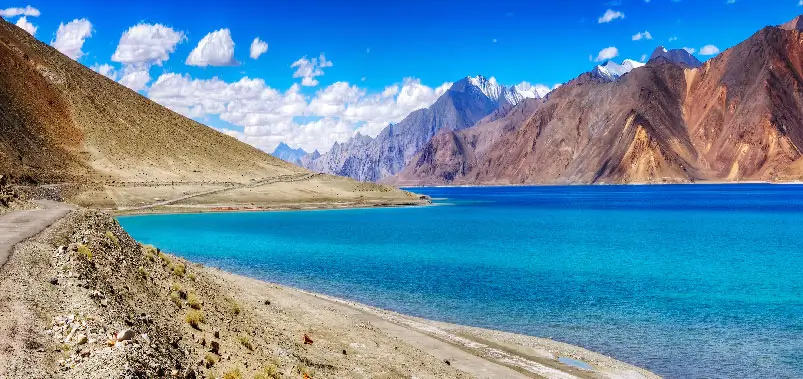
Pangong Tso is the image most associated with Ladakh internationally - a long, narrow lake at high altitude, whose waters shift through shades of blue, turquoise, and green depending on the light, angle, and time of day. The lake extends 134 km across the India-China border (only the Indian-controlled western portion is accessible to tourists).
The drive over Chang La (5,360 metres) is dramatic in its own right. Arrive at the lake in late afternoon when the light turns the water deep blue. Stay overnight at one of the lakeside camps - waking to the lake in dawn light, with mountains reflected in near-still water, is one of India's genuine travel experiences.
Photography note: The light at Pangong at 6–7am and 5–6pm is extraordinary. The colours shift constantly. Allow an unhurried afternoon and morning at the lake.
4. Tso Moriri - The Quieter Alternative
Altitude: 4,522m | Distance from Leh: 220 km | Time needed: 2 nights
Tso Moriri is Pangong's less-visited cousin - higher, more remote, and arguably more beautiful. The lake sits in a wide valley surrounded by 6,000-metre peaks, with almost no tourist infrastructure beyond a few basic camps. The Korzok Monastery on the lake's northern shore is one of the highest altitude monasteries in the world.
Wildlife enthusiasts come for the Tibetan wild ass (kiang), bar-headed geese, and the possibility - with luck - of snow leopard sightings in the surrounding hills. For travellers who find Pangong too crowded, Tso Moriri offers genuine solitude.
5. Zanskar Valley - For the Adventurous
Season: June to September | Access: via Kargil or Manali (road)
Zanskar is Ladakh's most remote region - a deep valley cut off from the rest of India for most of the year. In summer, the Zanskar River offers some of India's finest white-water rafting (Grade III–IV). The Phugtal Monastery - carved directly into a cliff face above the river - is one of the most dramatic religious sites in Asia and requires a 1–2 day trek to reach.
Zanskar is for travellers who want Ladakh without any crowds and with genuine adventure. It requires extra days and comfort flexibility.
Experience the Himalayas Without the Stress
From Pangong Lake and Nubra Valley to Khardung La and ancient monasteries, we create customized Leh Ladakh experiences for international travelers with private transport, premium camps, expert guides, and carefully paced itineraries.
Sample Ladakh Tour Packages for Foreign Tourists
7 Nights / 8 Days - Classic Ladakh Private Tour
Best for: First-time Ladakh visitors, couples, families with older children.
Day 1 - Arrive Leh (3,500m): Complete rest. Hotel check-in. Light walk to Leh Market in the evening. Do not exert yourself.
Day 2 - Leh Acclimatisation: Morning walk to Shanti Stupa (gentle 20-minute uphill). Leh Palace and old city. Afternoon rest. Hemis/Thiksey Monastery visit (these are at lower altitude than Leh - actually helpful for acclimatisation).
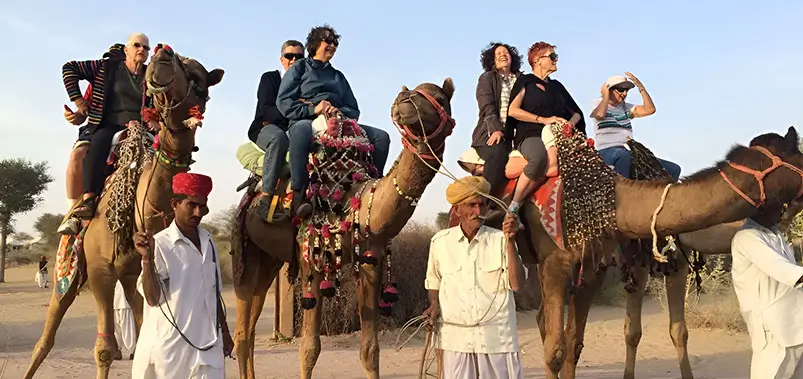
Day 3 - Nubra Valley (3,048m) via Khardung La (5,359m): Drive over Khardung La. Reach Diskit. Diskit Monastery. Camel safari on Bactrian camels at Hunder sand dunes. Overnight Diskit/Hunder.
Day 4 - Turtuk Village and return Nubra: Morning drive to Turtuk (India's last village). Village walk, interaction with Balti community. Return to Hunder for overnight.
Day 5 - Pangong Tso (4,350m) via Shyok Valley: Drive to Pangong Lake via Shyok River valley route (beautiful, less-used). Arrive afternoon. Lake exploration, sunset photography. Overnight lakeside camp.
Day 6 - Pangong morning and return Leh: Sunrise at the lake. Drive back to Leh via Chang La (5,360m). Evening Leh Market.
Day 7 - Leh local and monastery circuit: Hemis Monastery (if not visited Day 2). Afternoon optional Zanskar River rafting (Grade I–II near Leh). Evening free in Leh.
Day 8 - Depart Leh: Morning flight to Delhi.
10 Nights / 11 Days - Extended Ladakh with Tso Moriri
Adds Days 4–5 in Tso Moriri circuit after Pangong - highly recommended for photographers, wildlife enthusiasts, and travellers seeking a complete Ladakh experience. Includes Korzok Monastery, Tso Kar salt lake, and the southern Ladakh route.
What a Private Ladakh Tour Package Includes
A well-designed private Ladakh tour package for foreign tourists should include:
Logistics:
- Airport transfers in Leh (private car, driver always present)
- Private 4WD vehicle (Toyota Innova or Fortuner recommended - Ladakh roads require sturdy SUVs) with experienced Ladakhi driver
- English-speaking guide throughout the tour
- All permit applications - PAP for all relevant zones arranged in Leh on Day 1
Accommodation:
- Leh: Quality guesthouse or hotel with warm water and heating
- Nubra: Comfortable camp or guesthouse
- Pangong: Lakeside luxury camp (Swiss tents with attached bathrooms recommended)
- Tso Moriri (if included): Basic comfortable camp
Meals: Breakfast and dinner at accommodation. Lunch at local restaurants en route.
Health support: Driver carries basic first aid and oxygen cylinder. Operator provides emergency contact and nearest hospital information.
Not included (paid separately): Monastery entry fees, camel safari, river rafting, personal shopping, Hemis Festival tickets.
Complete Packing List for Ladakh
Clothing:
- Thermal base layers (top and bottom) - essential for night temperatures at Pangong (can drop to 5°C even in July)
- Fleece mid-layer and a down jacket or heavy windproof layer
- Waterproof outer shell - occasional light rain in Leh even in rain-shadow; essential for passes
- Lightweight daytime layers - days at lower altitudes can be warm (25°C)
- Sun hat - UV radiation at high altitude is intense
- Gloves and warm hat - for Khardung La and Chang La, even in summer
Footwear:
- Sturdy walking shoes with ankle support (not sandals for monastery visits or pass walks)
- One pair of warm socks per day minimum
Health kit (non-negotiable):
- Diamox (Acetazolamide) - discuss dosage with your doctor before travel
- Paracetamol for headache management
- Ibuprofen (anti-inflammatory - helps with AMS headache)
- Oral Rehydration Salts - drink one sachet daily
- Lip balm with SPF - altitude dryness cracks lips severely
- Heavy-duty sunscreen, SPF 50+ - UV at 4,000+ metres is extreme; sunburn in 20 minutes
- Sunglasses with UV protection - mandatory at high altitude
Electronics:
- Power bank (camera batteries drain faster in cold)
- Universal adapter (Type D/M sockets in India)
- Offline maps downloaded (Google Maps works offline; cell signal disappears outside Leh)
- BSNL or Airtel postpaid SIM for best coverage in Leh (foreign SIMs typically do not work in Ladakh)
Cash: ATMs exist only in Leh Market. Carry enough cash (Indian Rupees) for the entire trip before leaving Leh - Nubra, Pangong, and Tso Moriri have no ATMs.
Plan Your Leh Ladakh Private Tour
Top Indian Holidays designs private Ladakh tours for international visitors as part of India-wide itineraries that combine the Golden Triangle (Delhi, Agra, Jaipur) with a Ladakh extension - one of the most extraordinary travel contrasts available anywhere in the world.
We are Ministry of Tourism, Government of India approved, based in Jaipur since 1999, with 27+ years of experience and 14,000+ international guests from 40+ countries. Every Ladakh tour we design includes:
- Acclimatisation-safe itinerary built from the ground up
- Private SUV with Ladakh-experienced driver throughout
- English-speaking guide for monastery and cultural visits
- All PAP permit applications handled in Leh
- Lakeside luxury camp at Pangong with attached bathroom
- 24/7 emergency support - driver has oxygen cylinder at all times
- e-Arrival Card reminder before your India departure
Tell us your travel dates, group, and what matters most - we respond within 12 hours with a personalised Ladakh tour proposal and no-obligation quote.
Call / WhatsApp: +91-9828085426
Email: info@topindianholidays.net
Website: www.topindianholidays.com
Related Guides


 info@topindianholidays.net
 +91-8955000999