📅 Last Updated On: 27 May 2026
⏱ 10 Min Read
India Monsoon Tour Packages 2026 - The Secret Season Foreign Tourists Miss
T
Top Indian Holidays
Ministry of Tourism Approved Tour Operator, Jaipur, Rajasthan
India Monsoon Tour Packages 2026 - The Secret Season Foreign Tourists Miss
Every year, tens of thousands of international visitors cancel India trips planned for July and August - convinced by generic travel advice that the monsoon makes the country impassable.
They are wrong. And they are missing something genuinely extraordinary.
The India monsoon season - running from June to September, with July and August as peak rainfall months - is one of the world's great underappreciated travel experiences. The landscapes transform. The crowds disappear. The prices drop by half. The festivals come alive. And India reveals a version of itself that the winter tourist never sees: lush, dramatic, alive with rain and colour.
This guide is for foreign visitors who are ready to travel smarter - who want more India for less money, fewer crowds at iconic monuments, and experiences that no amount of peak-season booking can replicate.
Here is what the monsoon actually looks like, where to go, what to expect, and how to design your ideal India monsoon tour package for 2026.
The First Truth - Indian Monsoon Is Not What You Think
Most foreign visitors imagine the Indian monsoon as a continuous wall of rain that makes travel impossible for three months. This is not accurate, and it is the misconception that costs thousands of travellers a genuinely exceptional experience.
The reality of the Indian monsoon is more nuanced and far more manageable:
It rains in bursts, not continuously. Even in Kerala - India's wettest region - the monsoon typically means 2–4 hours of heavy rain per day, often in the afternoon and evening. Mornings are frequently clear. The intervals between rain are sunny and vivid. A good waterproof layer and flexible timing handles the rest.
Different regions experience completely different monsoon intensities. While Kerala and Goa receive heavy rain (1,500–3,000mm over four months), Rajasthan receives moderate showers, Delhi gets periodic relief rains, and Ladakh - India's Himalayan high-altitude destination - receives almost no monsoon rain at all due to its position in a rain-shadow zone.
The monsoon transforms India into its most beautiful version. Waterfalls appear on hillsides that were dry in April. Rivers run full. The Western Ghats turn a supernatural shade of green. The Aravalli hills behind Jaipur and Udaipur - brown all winter - become lush and forested. The Taj Mahal's gardens are at their most vivid. Every landscape in India looks fundamentally different in the monsoon - not worse, different. Often, spectacularly better.
The crowds are gone. Winter peak season packs India's monuments with thousands of daily visitors. In July, those same sites have a fraction of the footfall. Amber Fort, which processes 10,000 visitors on a December Saturday, might receive 1,500 on a July weekday. The Taj Mahal - photographed by hundreds simultaneously in November - can be experienced in near-solitude at 6am in August.
The prices are dramatically lower. Hotel tariffs drop 25–50% across India in the monsoon season. Premium hotels slash rates, offer complimentary extensions, and add extras they charge for in winter. A travel industry report confirmed hotel tariff drops of approximately 20–40% for monsoon favourites, with Kerala and Rajasthan seeing the sharpest reductions. India's most famous luxury properties - Taj Lake Palace, Oberoi Amarvilas, Rambagh Palace - are accessible to visitors who could not afford them in winter.
Why Foreign Tourists Miss Monsoon India Every Year
The reason is simple: most India travel content is written for the peak tourist season. Blogs, travel magazines, and tour operator websites almost universally recommend October to March and discourage summer and monsoon travel. This creates a self-reinforcing cycle - fewer foreign tourists visit in monsoon, so fewer testimonials exist, so the misconception persists.
The tourists who do visit monsoon India often become its most passionate advocates. They come back.
What they discover is that the India monsoon experience is fundamentally different from the winter experience - not inferior, but distinct. It is slower, more atmospheric, more authentic, and more affordable. It is India at its most sensory: the smell of petrichor after the first rains, the sound of rain on terracotta rooftops, the sight of monsoon mist rolling through Munnar's tea estates at dawn.
For travellers whose holiday windows fall in July and August - the majority of Western families and professionals - the monsoon is not an obstacle to visiting India. It is the reason to visit India during those months.
Discover India’s Most Beautiful Hidden Season
While most tourists avoid India during monsoon, experienced travelers know it’s one of the country’s most scenic and peaceful seasons. Think misty tea plantations, dramatic waterfalls, palace hotels with fewer crowds, lush Rajasthan landscapes, and luxury stays at better prices.
India's Top Monsoon Destinations for Foreign Tourists 2026
1. Kerala - The Jewel of Monsoon India
Best months: June–September | Temperature: 22–30°C
Kerala in the monsoon is genuinely one of Asia's great travel experiences - and one of the best-kept secrets in international tourism. While summer tourists crowd the beaches of Goa and Rajasthan's forts, Kerala's backwaters, hill stations, and Ayurveda resorts are running at half capacity, half the price, and twice the beauty.
Why Kerala monsoon is exceptional:
The backwaters of Alleppey (Alappuzha) take on a completely different character in the rains. The rice paddies flood, the water hyacinths bloom, kingfishers dart through the rain. A houseboat cruise on the Vembanad Lake in July, with rain pattering on the roof and mist hanging over the water, is deeply peaceful and genuinely romantic.
Munnar - Kerala's most beautiful hill station at 1,600 metres altitude - is at its most spectacular in June–August. The tea estates turn from pale green to deep emerald. Waterfalls cascade down every hillside. The Eravikulam National Park (home to the endangered Nilgiri Tahr) opens in the late monsoon, and the entire landscape gleams.
Kerala Ayurveda in monsoon is the single most compelling reason to visit. Traditional Ayurveda practitioners identify July and August - the Malayalam month of Karkidakam - as the optimal time for Panchakarma treatments and full-body detoxification. Monsoon humidity opens skin pores 4x wider than normal, allowing oils and herbs to penetrate more deeply. Every serious Ayurveda resort in Kerala - Somatheeram, CGH Earth, Kalari Kovilakom, Thrika - sees its most effective treatments during this period. Prices for 7–14 day Ayurveda retreats are 30–40% lower than winter rates.
Wayanad Wildlife Sanctuary and Periyar Tiger Reserve in Thekkady are both lush and wildlife-active in the monsoon. Elephant herds are more mobile, the forest canopy is thick and green, and boat safaris on Periyar Lake offer extraordinary wildlife viewing in a dramatically transformed landscape.
Onam Festival - Kerala's most important harvest festival - falls in August (usually late August to early September). The snake boat races at Alappuzha are one of India's most spectacular sporting events: carved wooden boats with 100+ rowers racing through flooded backwaters, watched by thousands of cheering spectators. For foreign visitors, Onam is a genuinely authentic cultural festival, not a tourist performance.
Best monsoon Kerala experiences: 5–7 day Ayurveda retreat at a quality resort, Alleppey houseboat overnight, Munnar tea estate tour and waterfall visit, Thekkady wildlife safari, Onam snake boat races (August).
2. Ladakh - No Monsoon, Perfect Summer
Best months: June–September | Temperature: 15–28°C in Leh
Ladakh is India's most dramatic exception to the monsoon narrative - and its best-kept summer secret for foreign tourists. Located in a rain-shadow zone north of the Great Himalayan Range, Ladakh receives almost zero monsoon rainfall. While the rest of India is wet, Ladakh has clear blue skies, warm days, and dry roads.
July and August are Ladakh's peak season - and with excellent reason. The Manali-Leh Highway and Srinagar-Leh Highway are both open. Pangong Tso Lake, Nubra Valley, Tso Moriri, and the highest motorable roads in the world are all accessible. The landscape - dramatic, moonlike, ancient - is at its most accessible and most beautiful.
The Hemis Festival (July 2026) - Ladakh's most important Buddhist celebration - draws international visitors and photographers for its mask dances, colourful thangkas, and monastery ceremonies. This is one of India's most atmospheric cultural events.
For foreign visitors who want to combine India's cultural heritage with high-altitude Himalayan wilderness, Ladakh in July–August is the perfect monsoon India destination - completely rain-free, pleasantly cool, culturally rich, and visually extraordinary.
3. Rajasthan Monsoon - Udaipur, Jaipur, and the Desert in the Rain
Best months: July–September | Temperature: Udaipur 23–29°C | Jaipur 31–33°C
Most foreign tourists are surprised to learn that Rajasthan in the monsoon is not only possible but genuinely beautiful. The desert state receives moderate monsoon rain - not the heavy downpours of the coastal regions - and the transformation it causes is remarkable.
Udaipur in the monsoon is widely regarded as India's most romantic city in the rainy season. Lake Pichola fills completely, the Taj Lake Palace rises from the water like a mirage, and the Aravalli hills behind the city turn deep green. Sajjangarh - the Monsoon Palace - earns its name as rain-bearing clouds drift through the valley below. Hotels at Lake Pichola are significantly cheaper in July–August, and the city is far less crowded than its winter peak.
Jaipur in the monsoon offers something most tourists never see: the pink sandstone of Amber Fort glistening after overnight rain, the Jal Mahal palace framed by lush Aravalli hills, and the Old City bazaars without the December crowds.
Bundi - a lesser-known Rajasthan gem - is at its most photogenic in the monsoon. The ancient stepwells fill with water, the forests around Bundi Palace turn green, and the town's blue-washed walls are at their most vivid.
4. Meghalaya - Where Monsoon Is the Attraction
Best months: June–September | Temperature: 18–25°C
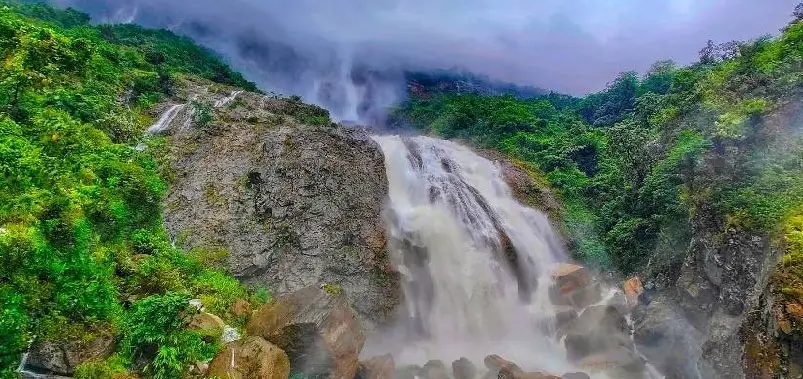
Meghalaya translates literally as "abode of clouds" - and it earns that name entirely in the monsoon. Cherrapunjee and Mawsynram, both in Meghalaya, hold records for the world's highest annual rainfall. In the monsoon, this extraordinary rainfall creates something visually stunning: waterfalls that do not exist in winter suddenly thunder down every hillside.
The living root bridges of Nongriat - trees whose roots have been trained over generations to form natural bridges across rivers - are most dramatic in the monsoon when the rivers below them run full and fast. The Nohkalikai Falls (India's tallest plunge waterfall at 340 metres) are at their most powerful between July and September. Dawki - where the Umngot River is so crystal-clear you can see 20 metres to the bottom - is most accessible in the early monsoon before rainfall clouds the water.
Meghalaya in monsoon is not a destination for the faint-hearted - it requires waterproof gear, flexible timing, and a sense of adventure. But for travellers who want an India experience that is genuinely off the beaten path, dramatic, and memorable, it delivers something no other region can.
5. Valley of Flowers - India's Greatest Natural Spectacle
Open: June 1 – October 31, 2026 | Peak bloom: Late July–August | Temperature: 15–20°C
The Valley of Flowers in Uttarakhand is a UNESCO World Heritage Site that exists, practically speaking, only in the monsoon. It opens on 1 June and reaches its peak bloom from late July to mid-August - when more than 500 species of wildflowers carpet a 87 square kilometre high-altitude Himalayan meadow at 3,658 metres.
Blue poppies, Brahmakamal (the sacred lotus of the Himalayas), cobra lilies, primulas, anemones - the valley is carpeted in a floral display of extraordinary density and variety. Botanists and photographers from around the world specifically plan India trips in July–August to witness this. For the non-specialist traveller, it remains one of India's most strikingly beautiful natural experiences.
The trek from Govindghat to Ghangaria (13 km) and then into the valley is moderate in difficulty - not a technical climb, but a sustained uphill walk at altitude. Allow 2 days: one day for the valley itself and Hemkund Sahib (a sacred Sikh lake-shrine), and a second as buffer. Rainfall is frequent - mornings are clearest.
6. Coorg and the Western Ghats - Coffee, Waterfalls, and Wildlife
Best months: June–September | Temperature: 18–26°C
Coorg (Kodagu district, Karnataka) - India's coffee capital and the so-called "Scotland of India" - is extraordinary in the monsoon. The coffee and spice estates turn a saturated deep green. Abbey Falls and Iruppu Falls thunder at their annual peak. The Brahmagiri hills are wrapped in mist. Wildlife in Nagarhole National Park and Bandipur National Park (both within 2 hours) concentrates around water sources, making for excellent wildlife viewing despite the rain.
The Kabini River near Mysuru, flowing between Nagarhole and Kabini forests, is a particularly productive monsoon wildlife destination. Elephant herds frequently cross the river, and the tall grass along the banks draws tigers to open ground - better visibility in some ways than the dry-season forest.
India Monsoon Tour Packages - What Foreign Visitors Are Choosing in 2026
Based on bookings and enquiries from international guests, the most popular India monsoon tour packages for 2026 combine two or more of the following elements:
Kerala Ayurveda + Backwaters + Munnar (10–14 days) The classic monsoon Kerala circuit: arrive Kochi, 5–7 days at a quality Ayurveda resort in Kovalam or Varkala, 2 days Alleppey houseboat, 2 days Munnar hill station. This itinerary is specifically designed around the Karkidakam Ayurveda season and delivers the most effective wellness results in the monsoon window.
Ladakh Adventure + Hemis Festival (10–12 days) Fly Delhi to Leh, 2 days acclimatisation and Leh sightseeing, Nubra Valley via Khardung La, Pangong Tso Lake overnight, Hemis Festival monastery attendance (July), Zanskar River rafting, return Leh to Delhi. Completely rain-free, culturally rich, visually extraordinary.
Rajasthan Monsoon Heritage (8–10 days) Delhi, Jaipur (Amber Fort in monsoon light), Ranthambore buffer zone wildlife safari, Bundi heritage walk, Udaipur (Lake Pichola boat ride, Sajjangarh Monsoon Palace, City Palace). Temperatures 28–33°C - warm but manageable, 25–35% cheaper than winter rates.
Meghalaya + Assam Northeast Circuit (10–12 days) Guwahati, Kaziranga National Park (one-horned rhino safari - buffer zones open in monsoon), Shillong, Cherrapunjee (world's wettest place), Mawlynnong (Asia's cleanest village), living root bridges of Nongriat. A genuinely offbeat India monsoon itinerary with almost no foreign tourist competition.
Valley of Flowers + Rishikesh (8–10 days) Delhi, Rishikesh (1–2 days yoga and Ganga Aarti), drive to Govindghat, Valley of Flowers trek (2 days), Hemkund Sahib, Badrinath. Pure Himalayan nature at its most spectacular combined with spiritual experience.
What You Gain - The Six Monsoon Advantages
1. Prices Drop 25–50%
This is the most direct advantage and the one most easily quantified. Hotel tariffs across India in the monsoon season are confirmed at 20–50% below peak season rates. Luxury properties that cost ₹30,000–50,000 per night in December often run ₹15,000–25,000 in July. Himachal Pradesh Tourism (state-run hotels) officially offers 20–40% monsoon discounts. Tour operators including Top Indian Holidays offer their most competitive private tour rates in the monsoon window.
For a family of four planning a 10-day India trip, the monsoon saving on accommodation alone can amount to ₹80,000–1,50,000 - enough to upgrade from mid-range to heritage palace properties.
2. Monuments Are Yours
Winter peak season at India's major monuments means navigating thousands of other tourists. In monsoon, those numbers collapse. The Taj Mahal, Amber Fort, City Palace Udaipur, and Kochi's Fort area are all significantly less crowded. You photograph Rajasthan's forts without crowds in the frame. You experience the Taj Mahal's garden in near-solitude. The experience is qualitatively different - calmer, more contemplative, more personal.
3. Photography Changes Completely
Monsoon light is a photographer's revelation. Overcast skies eliminate harsh shadows. Post-rain clarity makes colours saturate. The Taj Mahal against a moody pre-storm sky is a completely different image from the same monument in winter sunshine. Amber Fort with rain-washed sandstone walls against green Aravalli hills is spectacular. Kerala's backwaters in monsoon mist, Meghalaya's waterfalls at full power, Munnar's tea estates wrapped in cloud - these are images unavailable in October–March.
4. Festivals That Winter Tourists Miss
Onam (Kerala, August–September) - the great harvest festival with snake boat races. Hemis Festival (Ladakh, July) - the most important Buddhist festival in the Himalayas. Teej (Jaipur, July–August) - the monsoon festival celebrating the arrival of rains, with colourful processions and traditional swings. Rath Yatra (Puri, Odisha, June–July) - one of India's largest chariot festivals, drawing hundreds of thousands of devotees. Ganesh Chaturthi (Maharashtra, August) - Mumbai's 10-day festival with spectacular public installations.
These are genuine local festivals - not tourist performances - and they are among India's most culturally authentic experiences.
5. Ayurveda at Its Most Effective
Traditional Ayurveda practitioners specifically recommend the monsoon season (Karkidakam, July–August) for intensive treatments. The combination of moderate temperatures, high humidity, and dust-free air is considered optimal for detoxification and rejuvenation therapies. Skin pores open wider, allowing oils and herbs to penetrate more effectively than in any other season. Every quality Ayurveda resort in Kerala confirms this - their monsoon retreat bookings are increasingly sought by international wellness travellers who have discovered the secret.
6. Authentic India Without the Tourist Layer
India in peak season is partly a curated experience - heritage hotels at maximum occupancy, guides managing multiple groups, markets catering primarily to tourist expectations. Monsoon India is closer to everyday India. Heritage hotels have space for genuine personal service. Guides have time for depth and conversation. Markets serve local customers as much as tourists. The interactions are more real, the pace is slower, and the country reveals itself more honestly.
Practical Monsoon Travel Tips for Foreign Visitors
Pack for rain, not just heat:
- Lightweight, quick-dry clothing that manages both warmth and rain
- Packable waterproof rain jacket or poncho (not an umbrella - too cumbersome)
- Waterproof sandals or shoes with grip - wet stone floors are slippery
- Waterproof cover or dry bag for your camera, passport, and electronics
- Insect repellent (DEET 30%+) - mosquitoes are significantly more active in monsoon
Health precautions:
- Discuss malaria prophylaxis with your doctor before travel to Kerala, Goa, and northeastern India - monsoon is peak malaria season in these regions
- Dengue fever is also elevated in monsoon - use repellent diligently
- Carry Oral Rehydration Salts, stomach medication, and a basic antibiotic (with prescription)
- Water hygiene is critical - drink only sealed bottled water
Transport planning:
- Avoid mountain road travel without checking landslide and road status in advance - Himachal Pradesh, Uttarakhand, and northeast India roads can close temporarily after heavy rain
- Allow buffer days in your itinerary for weather-related delays
- Domestic flights are highly reliable and often the best option for Ladakh, Kerala, and northeast India connections
- In cities, Uber and Ola operate normally in rain
Timing your day:
- Mornings are generally clearer - schedule outdoor sightseeing early
- Afternoon rain is common in many monsoon destinations - plan indoor activities (museums, Ayurveda sessions, cooking classes) for 2pm–5pm
- Evenings often clear again - temples, markets, and waterfront areas are beautiful at dusk after rain
What to carry daily: Sealed water bottle, electrolyte sachets, sunscreen (sun appears between showers and burns quickly), rain cover for daypack, compact torch for power-cut evenings in smaller towns.
Want a Comfortable & Safe India Monsoon Tour?
Our private India monsoon tours are carefully designed for international travelers with flexible itineraries, experienced drivers, premium hotels, real-time weather planning, and handpicked destinations that are actually enjoyable during the rainy season.
Sample Monsoon Itinerary - 12-Day India Monsoon Package
Days 1–2: Delhi Arrive, acclimatise. Humayun's Tomb and Red Fort early morning (7am–10am). National Museum in the afternoon. Old Delhi Chandni Chowk evening food walk. Overnight Delhi.
Day 3: Delhi → Leh (fly) Morning flight to Leh (Ladakh). Rest day - acclimatisation is essential at 3,500m altitude. Leh Palace and Shanti Stupa evening stroll. Overnight Leh.
Days 4–7: Ladakh Day 4: Nubra Valley via Khardung La - Diskit Monastery, Bactrian camel safari.
Day 5: Turtuk village (India's northernmost accessible village).
Day 6: Pangong Tso Lake - overnight at lakeside camp.
Day 7: Return Leh, Hemis Monastery, Thiksey Monastery. Overnight Leh.
Day 8: Leh → Kochi (fly via Delhi) Morning flight to Delhi, connecting flight to Kochi. Check in to Kerala Ayurveda resort. First treatment consultation.
Days 9–11: Kerala Ayurveda + Backwaters Days 9–10: Ayurveda retreat - daily treatments, yoga, Kerala cuisine. Day 11: Alleppey houseboat - overnight on the backwaters.
Day 12: Kochi → Home Morning Fort Kochi walk - Chinese fishing nets, Paradesi Synagogue, Dutch Palace. Afternoon departure.
This itinerary combines: Rain-free Ladakh (peak monsoon but no rain), cultural and adventure experiences, and Kerala wellness - three completely different India experiences in one journey.
Plan Your India Monsoon Tour 2026
Top Indian Holidays designs private India tours year-round - including during the monsoon season for international visitors who know that this is India's best-value, least-crowded, most atmospheric travel window.
We are Ministry of Tourism, Government of India approved, based in Jaipur since 1999, and have guided over 14,000 guests from 40+ countries. Our monsoon packages are fully private - your own car, guide, and itinerary - designed specifically around the season's rhythms and the rain's patterns.
Every monsoon tour includes:
- Monsoon-ready itinerary with weather-flexible alternatives built in
- Private air-conditioned car and verified English-speaking driver-guide
- Pre-selected hotels with strong monsoon credentials - excellent drainage, dry rooms, covered outdoor areas
- Pre-booked Ayurveda retreat consultations (for Kerala packages)
- Ladakh permit arrangement for Nubra Valley and Pangong Lake
- 24/7 on-ground support throughout your journey
Tell us your travel dates, group, and interests - we will respond with a personalised monsoon India itinerary and no-obligation quote within 12 hours.
Call / WhatsApp: +91-9828085426
Email: info@topindianholidays.net
Website: www.topindianholidays.com
Related Guides



 info@topindianholidays.net
 +91-8955000999