📅 Last Updated On: 26 May 2026
⏱ 10 Min Read
Rajasthan in Summer - Is It Possible? An Honest Guide for International Tourists
T
Top Indian Holidays
Ministry of Tourism Approved Tour Operator, Jaipur, Rajasthan
The Truth About Rajasthan in Summer - No Sugarcoating
Let us start with the facts that most travel blogs bury in a footnote.
Rajasthan in May and June is genuinely hot. Jaipur reaches 44–46°C. Jodhpur touches 44°C. Jaisalmer and Barmer regularly record 48–50°C - some of the highest temperatures anywhere in India. The IMD has confirmed above-normal heatwave conditions across Rajasthan for April through June 2026. The dry desert air means heat is sharp and penetrating, not sticky - sweat evaporates fast, which feels deceptively comfortable but accelerates dangerous dehydration.
Outdoor sightseeing between 11am and 4pm in May-June Rajasthan is not just uncomfortable. For elderly travellers, children, or anyone with cardiovascular conditions, it carries genuine health risk. We will not pretend otherwise.
So why are we writing a guide encouraging summer visits?
Because millions of international tourists - UK families on school holidays, American professionals with July leave, European retirees who simply prefer summer - can only travel to India in May through August. For these travellers, the choice is not between summer Rajasthan and winter Rajasthan. It is between summer Rajasthan done intelligently and missing Rajasthan altogether.
When you know where to go, when to move, and what to skip, summer Rajasthan delivers something genuinely unexpected: quieter monuments, dramatic skies, heritage hotels with extraordinary pools, lower prices, and - in the monsoon months of July and August - a romantically transformed landscape that most tourists never see.
Planning Rajasthan in Summer? Let Experts Design It Comfortably
Rajasthan in summer is possible - if you travel smart. Our private luxury tours are carefully designed with early morning sightseeing, premium heritage hotels, air-conditioned transport, and relaxed itineraries for international travelers.
Month-by-Month: What to Expect
May - Hot, But Not Impossible
Temperature: Jaipur 40–46°C | Udaipur 38–43°C | Jodhpur 40–45°C | Jaisalmer 44–50°C | Mount Abu 28–35°C
May is the most challenging month. Jaisalmer in May is genuinely dangerous for outdoor exploration - do not plan a desert safari or dune walk in peak afternoon. No experienced guide would take you.
However, Jaipur and Udaipur in May with early-morning sightseeing and well-chosen luxury accommodation are entirely achievable and reward determined travellers with empty forts, extraordinary light, and off-season prices.
Mount Abu (1,220 metres altitude) is Rajasthan's only hill station and reaches only 28–35°C in May - a genuine Rajasthan summer escape.
Ranthambore National Park - May is actually one of the best months for tiger sightings. As water sources dry up, tigers and other wildlife concentrate around waterholes, making them far more visible than in the lush winter months. Safaris run in the early morning and late afternoon, avoiding peak heat. Ranthambore closes in July for monsoon.
June - Transition Month
Temperature (first half): Similar to May - 40–44°C across major cities Temperature (second half): Monsoon arrives late June in most of Rajasthan, dropping temperatures to 32–38°C as humidity rises
June is a split month. Early June is brutal. Late June, when the monsoon finally breaks over Rajasthan (usually arriving in Jaipur around 25–30 June), brings dramatic cloud formations, the first rains, and temperatures that drop 6–10 degrees overnight.
The transition from pre-monsoon heat to early monsoon is one of Rajasthan's most dramatic weather moments - locals celebrate the first rain with genuine joy after weeks of searing heat. If you arrive in Rajasthan in late June, you may witness this shift: the sky darkens, dust rises, lightning crosses the horizon, and then the rain breaks. The air cools immediately. Every surface shines.
Ranthambore closes its core zones in late June-July as monsoon arrives. Book your safari for early June if this is a priority.
July and August - The Monsoon Surprise
Temperature: Jaipur 31–33°C | Udaipur 23–29°C | Jodhpur 30–34°C | Jaisalmer 30–34°C | Mount Abu 20–26°C
This is where the honest guide differs most sharply from the lazy travel advice.
July and August monsoon Rajasthan is genuinely beautiful - and almost no international tourist sees it.
Temperatures drop to manageable levels. The Aravalli hills - parched brown for six months - turn deep green. Lakes fill. Waterfalls appear on hillsides that were bone-dry in April. The palaces, forts, and lake-cities of Rajasthan take on a misty, romantic quality entirely different from their winter version. Peacocks dance in the rain on roadsides and fort battlements. The sky cycles between dramatic storm clouds, blue breaks, and extraordinary golden light.
Udaipur in July-August is widely considered one of India's most beautiful monsoon experiences. Lake Pichola fills to its banks. The Taj Lake Palace - floating in the centre of the lake - is accessible only by boat and reflects perfectly in the rain-swelled water. Sajjangarh (Monsoon Palace) earns its name in this season.
Hotels are 30–40% cheaper than winter peak rates. Monuments are half as crowded. The light - that magical combination of post-rain clarity and monsoon clouds - is extraordinary for photography.
City-by-City Honest Assessment
Jaipur - The Pink City
Summer verdict: Possible with strategy | Monsoon verdict: Very good
Jaipur's Amber Fort opens at 7.00am - and this is the key to a successful summer visit. In the first two hours after sunrise, the sandstone fort is cool, the light is golden, the courtyards are quiet, and the famous Sheesh Mahal (Mirror Palace) glitters without the crowds. By 10am, it becomes hot. By noon, it is unpleasant.
The formula for summer Jaipur: 6am–10am active, 10am–4pm rest, 4pm–8pm active again.
What to see in the morning window: Amber Fort (2 hours), City Palace exterior and Hawa Mahal (1 hour), Jantar Mantar (45 minutes). What to do in the afternoon: Your heritage hotel pool, a long Rajasthani lunch, rest. What to do at dusk: Jaipur's Old City bazaars - Johari Bazaar for jewellery, Bapu Bazaar for textiles - which come alive in the evening. The Amber Fort Light and Sound Show (7.30pm English, 8pm Hindi) is excellent and runs through summer.
In July-August monsoon: Jaipur's pink sandstone turns a deeper rose in the rain. The Jal Mahal palace - floating in Man Sagar Lake - is framed by green Aravalli hills. Amber Fort with rain-washed walls and cloud-covered peaks behind it is one of Rajasthan's most dramatic sights.
Best Jaipur summer hotels: ITC Rajputana, Fairmont, Jai Mahal Palace, Oberoi Rajvilas, Samode Haveli. All have excellent pools - essential for summer visits.
Udaipur - The City of Lakes
Summer verdict: Good with care | Monsoon verdict: Outstanding
Of all Rajasthan's major cities, Udaipur handles summer best. The surrounding Aravalli hills and the presence of multiple lakes create a microclimate that is noticeably cooler than Jaipur or Jodhpur - typically 3–5°C lower. May temperatures of 38–43°C are still hot, but the evening lake breeze makes rooftop dinners and boat rides genuinely pleasant.
In July and August monsoon, Udaipur is simply magnificent. Lake Pichola fills completely. The City Palace and Pichola's islands (Jagmandir, Jagniwas/Taj Lake Palace) reflect in the lake's swollen surface. The Monsoon Palace at Sajjangarh, perched on the highest Aravalli peak above the city, is literally named for this season - arrive at dusk and watch the monsoon clouds roll through the valley below you. It is one of India's great travel experiences.
The heritage havelis of Udaipur - both as accommodation and sightseeing - are particularly atmospheric in the monsoon. Rain on a haveli courtyard, with the sound of water on stone and the scent of wet earth, is a sensory experience that no photograph fully captures.
Best Udaipur summer/monsoon hotels: Taj Lake Palace (island hotel - accessible by boat), Oberoi Udaivilas, Fateh Garh, Raas Devigarh (nearby), RAAS Jodhpur. These properties define the "midday rest" strategy - they are destinations in themselves.
Jodhpur - The Blue City
Summer verdict: Challenging but doable | Monsoon verdict: Good
Jodhpur in May-June is genuinely demanding. The Mehrangarh Fort - one of India's greatest - sits atop a 150-metre rock and is extraordinary to explore. But the walls absorb and radiate heat in summer. Our recommendation: Mehrangarh opens at 9am. Be there at opening. Spend the first 90 minutes. Leave by 10.30am. Return at 5pm when the fort turns golden in the evening light.
The Jodhpur Heritage Museum and the narrow lanes of the Blue City (Brahmpuri neighbourhood) are best explored in the evening - as the sun drops, the blue-washed houses take on extraordinary hues and the rooftop cafes fill with the breeze off the desert.
In monsoon July-August, Jodhpur's surrounding landscape greens noticeably. Temperatures drop to 30–34°C. The fort in monsoon light - dark stone against a cloud-heavy sky - is dramatic and photogenic.
Jaisalmer - The Desert City
Summer verdict: Avoid May-June | Monsoon verdict: Surprisingly good
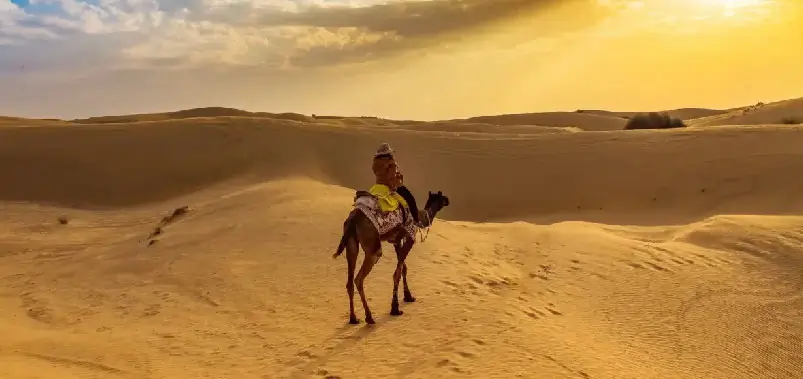
We will be completely honest: Jaisalmer in May and June is not recommended for most tourists. Temperatures of 44–50°C make outdoor exploration genuinely dangerous. The golden sandstone city and Sam Sand Dunes are spectacular in winter - save them for October to February.
However, Jaisalmer in July and August is a different matter. Monsoon temperatures drop to 30–35°C - still warm, but entirely manageable. The sand dunes receive short, intense rain showers and the desert blooms briefly with scrub grass and wildflowers. The golden Sonar Quila (Living Fort) in monsoon light is extraordinary. The old havelis within the fort walls - Patwon ki Haveli, Salim Singh ki Haveli - are best explored in this season when tourist numbers are low and the light is soft and dramatic.
Mount Abu - Rajasthan's Summer Escape
Summer verdict: Excellent | Monsoon verdict: Beautiful
At 1,220 metres altitude, Mount Abu is the one Rajasthan destination that works brilliantly in summer. It was the summer capital of the Rajput rulers and the British colonial administration for precisely this reason - while Jaipur and Jodhpur baked below, Mount Abu remained comfortable.
In May-June, temperatures hover at 28–35°C - significantly lower than anywhere else in Rajasthan. In July-August monsoon, Mount Abu transforms into a misty, green hill station at 20–26°C. Forest trails are lush, Nakki Lake is full and scenic, and the famous Dilwara Jain Temples - some of India's finest examples of marble carving - can be explored in comfort.
Mount Abu is most rewarding as a 2-day addition to a Udaipur itinerary (3.5 hours by road). Together, Udaipur and Mount Abu create an excellent summer Rajasthan combination.
Ranthambore - Tigers in Summer
Safari season: October to June | Closed: July to September (core zones)
Here is the fact most tourists do not know: May and early June are the best months to see tigers at Ranthambore. As the forest dries and water sources reduce, tigers and all wildlife concentrate at the remaining waterholes. Tigers are far more frequently spotted in May-June than in the crowded winter tourist season, when dense vegetation provides cover.
Safaris run at 6am–9am and 4pm–7pm - entirely avoiding peak heat. The drive from Jaipur (180 km, approximately 3.5 hours) is best done early morning to arrive for the afternoon safari. Core zones close in late June/July for monsoon. Buffer zones (Gates 6–10) remain open through monsoon for those determined to visit.
For a summer Rajasthan itinerary, combining Jaipur + Ranthambore (4–5 days, May/June) is one of our most recommended combinations for foreign tourists.
The Four Rules of Summer Rajasthan Travel
These four principles determine whether your summer Rajasthan experience is genuinely enjoyable or genuinely difficult.
Rule 1: Own the Early Morning
The hours from 6am to 10am are everything. In this window, temperatures are 8–12°C lower than peak afternoon, monuments are quiet, and the light is extraordinary. Amber Fort at 7am, the Taj Mahal at 6am, Mehrangarh at 9am - these are different experiences from the same monuments at noon.
Structure every day around this window. Whatever you want to see in Rajasthan, see it in the first three hours of daylight. This is not a sacrifice - early morning Rajasthan, with its golden light and near-silent monuments, is actually the best version of Rajasthan at any time of year.
Rule 2: Choose Your Hotel Like a Priority, Not an Afterthought
In summer, your hotel is not just where you sleep. It is your climate-controlled refuge for 6 hours of every day. The difference between a good summer Rajasthan experience and a bad one is often the quality of the midday environment.
Rajasthan's heritage palace hotels - the converted maharaja residences, havelis, and fort properties - typically have thick stone walls that stay naturally cool, large shaded courtyards, excellent pools, and wonderful restaurants. In summer, they also offer their best rates of the year (often 30–40% below peak season).
This is the one time when we actively encourage upgrading your accommodation. A heritage hotel in Jaipur that costs ₹20,000/night in December costs ₹12,000–14,000 in July. The hotel itself becomes a significant part of your experience.
Rule 3: Know What to Skip Entirely
Some Rajasthan experiences simply do not translate to summer:
- Jaisalmer desert safari and dune camping in May-June - genuinely dangerous at 48°C. Wait for winter or visit in late July-August when temperatures drop.
- Long outdoor walks in Jodhpur Old City at midday - save the old city exploration for early morning or evening.
- Pushkar - the sacred lake town is spectacular in winter but has no good shade and limited air-conditioned accommodation. Best avoided in peak summer.
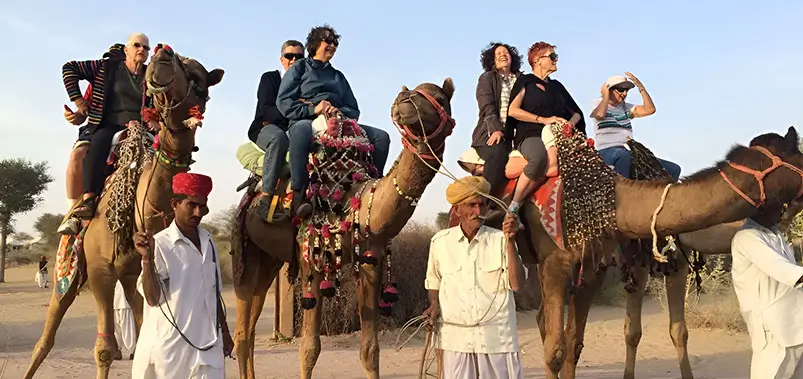
- Outdoor camel rides in desert areas - morning only, maximum 30 minutes.
Rule 4: Plan a Private Car, Not Public Transport
In summer Rajasthan, a private air-conditioned car with a knowledgeable driver is the single most important upgrade you can make. Your car becomes your moving cool zone between monuments. Your driver knows which sites are accessible in which conditions, monitors real-time weather, and can suggest alternatives if plans need to change.
The difference between a tourist who hires a private car with an experienced driver and one who takes auto-rickshaws in summer Rajasthan is enormous. One is a comfortable, managed, impressive journey. The other is a genuinely difficult experience.
Still Unsure About Rajasthan in May, June or July?
Speak with our India travel specialists and get honest advice about the best cities, weather conditions, luxury hotels, and realistic summer itineraries for Rajasthan.
Rajasthan Summer - What You Gain
We have been honest about the challenges. We should also be honest about the genuine rewards.
The monuments are yours. Amber Fort in December has 10,000 visitors a day. In July, it has perhaps 1,500. You stand in the Sheesh Mahal with almost nobody else. You sit in the courtyards without navigating tour groups. You photograph the crenellated walls without managing a crowd of selfie sticks. Jaipur's Old City bazaars in the evening are genuinely relaxed rather than jostled.
The prices are dramatically lower. Hotels, tour operator rates, and even flights are significantly cheaper in the off-season. A summer Rajasthan trip often costs 25–35% less than the same itinerary in November.
The landscape transforms. Rajasthan's desert gets only 350–650mm of rain per year - all in July-August. That rain, when it comes, releases something extraordinary: desert plants bloom, frogs emerge, peacocks call, and the landscape turns from brown to green within days. It is a side of Rajasthan that most tourists never see.
The hospitality is more personal. With fewer guests at heritage properties, staff attention is focused and genuine. A heritage hotel with 40 rooms occupied in December has 12 rooms occupied in July. That difference is felt in every interaction.
Suggested Summer Rajasthan Itineraries
5 Days - Jaipur + Ranthambore (May/June - Tiger Season)
- Day 1: Arrive Jaipur. Check in, rest. Evening - Jaipur Old City bazaars, rooftop dinner.
- Day 2: 7am - Amber Fort. 9.30am - City Palace and Hawa Mahal exterior. 11am–4pm - Hotel (pool, lunch, rest). 5pm - Jantar Mantar. 7.30pm - Amber Fort Light and Sound Show.
- Day 3: Early departure for Ranthambore (3.5 hours). Afternoon tiger safari (4pm–7pm). Overnight Sawai Madhopur.
- Day 4: Morning tiger safari (6am–9am). Return to Jaipur or continue to Agra/Delhi.
- Day 5: Departure.
Best for: Couples, solo travellers, wildlife enthusiasts. May–early June (before park closure).
7 Days - Udaipur + Mount Abu + Jaipur (July/August - Monsoon Magic)
- Day 1–3: Udaipur. Day 1: Arrive, evening boat ride on Lake Pichola (lakes are full). Day 2: 8am - City Palace. 10am–4pm - Hotel/spa rest. 5pm - Monsoon Palace (Sajjangarh). Day 3: Jagdish Temple, Udaipur bazaars, sunset from a rooftop haveli.
- Day 4–5: Mount Abu. Day 4: Drive (3.5 hours). Nakki Lake evening. Day 5: Dilwara Jain Temples (noon–5pm, only open afternoons for tourists), forest walk, Sunset Point.
- Day 6–7: Jaipur. Day 6: Drive or fly to Jaipur. 7am next day - Amber Fort in monsoon morning light (walls shining after overnight rain, hills green behind the fort). Evening - Jaipur bazaars.
Best for: Couples, photographers, nature lovers, heritage enthusiasts. July–August.
Practical Tips - Summer Rajasthan
Water: Carry a good insulated water bottle and drink at minimum 3–4 litres daily. Heat-related illness accelerates with dehydration. Electrolyte sachets (available at all Indian pharmacies as Electral) are strongly recommended.
Clothing: Loose, light-coloured, full-length cotton. Full sleeves and trousers protect from sun better than shorts while keeping you cooler. A wide-brimmed hat is non-negotiable outdoors.
Footwear: Comfortable, closed walking shoes. In monsoon, waterproof sandals or shoes are practical. Stone fort floors can be slippery when wet.
Sunscreen: SPF 50+, reapplied every 2 hours. Rajasthan's desert sun is intense and high-altitude UV from clear skies is stronger than most Europeans are accustomed to.
Timing monuments: Always research opening times before visiting. Amber Fort opens at 7am (8am in monsoon). Mehrangarh opens at 9am. Plan to arrive at opening and leave within 90 minutes to 2 hours in summer.
Dust storms: Rajasthan's pre-monsoon season (April-June) produces spectacular dust storms (locally called aandhi). These are short (30–60 minutes) but intense. Stay indoors, protect eyes, and wait them out. They pass quickly and are followed by cooler air.
Health essentials to carry: Oral Rehydration Salts, Loperamide (anti-diarrhoeal), Paracetamol, personal prescription medications. Carry more than you think you need - pharmacy access in smaller towns can be limited.
Plan Your Rajasthan Visit - Any Season
Top Indian Holidays is a Jaipur-based, Ministry of Tourism approved private tour operator with over 27 years of experience designing Rajasthan journeys for international visitors. We know every monument's opening time, every hotel's summer strengths, and exactly how to structure a summer itinerary that delivers an excellent experience - because we live here and do this every day of the year.
Every tour we design is fully private - your own vehicle, your own guide, your own pace. No group tours, no fixed departures, no strangers in your car.
If you are planning Rajasthan in summer, get in touch. Tell us your dates, your group, and what matters most to you. We will respond with a personalised itinerary and honest advice about exactly what is possible - within 12 hours, no obligation.
Call / WhatsApp: +91-9828085426
Email: info@topindianholidays.net
Website: www.topindianholidays.com
Related Guides



 info@topindianholidays.net
 +91-8955000999