📅 Last Updated On: 26 May 2026
⏱ 10 Min Read
Golden Triangle Tour India in Summer 2026 - Can You Do It? Tips, Timing & What to Expect
T
Top Indian Holidays
Ministry of Tourism Approved Tour Operator, Jaipur, Rajasthan
What Is the Golden Triangle and Why Do People Ask About Summer?
The Golden Triangle is India's most famous travel circuit - connecting three historically extraordinary cities in a rough triangular route across North India:
- Delhi - India's capital, 3,000+ years of history, Mughal and colonial landmarks
- Agra - Home of the Taj Mahal, one of the Seven Wonders of the World
- Jaipur - The Pink City of Rajasthan, UNESCO forts, royal palaces, and bazaars
The three cities lie within approximately 250 km of each other, making the circuit manageable in 5–7 days as a minimum, or 10–14 days for a relaxed, extended experience.
The Golden Triangle is India's most popular tour for international visitors - over 60% of all foreign tourists to India include at least two of these three cities in their trip. It is the circuit that most closely captures India's most iconic visual identity: the white marble of the Taj Mahal, the amber sandstone of Amber Fort, the Mughal boulevards of Old Delhi.
The reason summer generates so many questions is straightforward. October to March - India's comfortable tourist season - coincides almost exactly with school terms and working calendars across the UK, US, Europe, and Australia. For a very large proportion of foreign visitors, summer is simply the only window they have.
Need Honest Advice About India Summer Travel?
We help foreign travelers plan comfortable India trips during May, June, July, and August with realistic timing, smart hotel selection, and customized itineraries across Delhi, Agra, Jaipur, Rajasthan, Kerala, and the Himalayas.
Summer Temperatures - City by City, Month by Month
Here is the real temperature data for each Golden Triangle city across the summer months. No rounding down, no minimising.
|
City
|
May
|
June
|
July
|
August
|
| Delhi |
40–46°C |
38–44°C |
32–36°C |
30–35°C |
| Agra |
40–45°C |
38–44°C |
30–35°C |
28–34°C |
| Jaipur |
40–46°C |
38–42°C |
31–33°C |
30–33°C |
Key insight from this table: The most challenging months are May and early June - peak pre-monsoon heat. By late June and July, the monsoon arrives across North India, temperatures drop by 8–12°C, and conditions become significantly more manageable.
August is warm and humid but rarely extreme - typically 30–35°C in Delhi and Agra, 30–33°C in Jaipur. For a British or German traveller accustomed to summers of 25–30°C, August in the Golden Triangle is hot but manageable with good planning.
The One Principle That Determines Everything
Before we go city by city, understand this single principle - it governs every successful summer Golden Triangle tour:
The entire sightseeing day must happen in two windows: 6am–10am and 4pm–7pm.
The midday hours (10am–4pm) in summer are for your hotel - the pool, the restaurant, the room, the spa. This is not a sacrifice. India's magnificent heritage hotels are designed around exactly this rhythm. Lunch on a shaded terrace of a Rajputana palace while the city bakes outside is a genuinely pleasurable experience, not a compromise.
Tourists who violate this principle - who try to see Amber Fort at noon or walk through Old Delhi at 2pm in June - have uncomfortable experiences. Tourists who embrace it have extraordinary ones.
Every successful summer Golden Triangle visitor we have ever guided operates on this schedule.
Delhi in Summer - What to Do and When
Temperature: May–June: 40–46°C | July–August: 30–36°C
Delhi in summer is genuinely challenging in the pre-monsoon months - but the city is large, well-organised, and has an excellent air-conditioned metro system that takes the pain out of getting between sites.
What works in summer Delhi:
Humayun's Tomb (7am–9am): One of Delhi's most beautiful monuments - the precursor to the Taj Mahal in design - is best seen at early morning. The gardens are green, the light is extraordinary, and the crowds are thin. Plan 90 minutes here.
Qutub Minar (8am–10am): The 13th-century iron pillar and the soaring minaret are impressive early. Leave before the heat peaks.
Red Fort (7am–9.30am): The great Mughal fort opens at 7am. The vast courtyard is impressive in morning light. Avoid midday - the red sandstone absorbs and radiates heat ferociously.
Old Delhi food walk (6.30am–9am): Chandni Chowk's narrow lanes are most atmospheric in the very early morning, when vendors set up, chai is brewing, and the crowd is local rather than tourist. An expert guide makes this experience ten times richer.
Delhi in monsoon (July-August): The city turns green, temperatures drop, and the Great Himalayan views occasionally clear after rain. The Lotus Temple, Akshardham, and the many air-conditioned museums (National Museum, National Gallery of Modern Art) make excellent midday options. Delhi's excellent metro - Delhi has Asia's largest metro network - makes navigating between sites comfortable even in rain.
Midday in summer Delhi: Your hotel pool, or explore Delhi's exceptional food scene in air-conditioned restaurants. Delhi has some of India's finest dining - from rooftop Mughal cuisine in Old Delhi to contemporary fine dining in Connaught Place.
Best summer Delhi hotels: The Leela Ambience, ITC Maurya, Taj Mahal Hotel New Delhi, The Oberoi New Delhi, Andaz Delhi. All have exceptional pools and restaurants - critical for the midday rest period.
Agra in Summer - The Taj Mahal Question
Temperature: May–June: 40–45°C | July–August: 28–35°C
Agra generates the most summer anxiety among foreign tourists - specifically about the Taj Mahal. Let us address this directly.
Can You Visit the Taj Mahal in Summer?
Yes. Absolutely. Provided you follow one rule: arrive within 30 minutes of opening.
The Taj Mahal opens at 6:00am (exact time varies slightly by season - check the current schedule, but 6am is the reliable baseline). Your target is to be at the East Gate by 5:45am, tickets in hand, ready for entry at opening.
In those first 90 minutes after sunrise:
- The white marble glows rose-gold in the early light - a colour effect that lasts only 20–30 minutes and is truly extraordinary
- The temperature is 8–12°C lower than it will be at noon
- The crowd is a fraction of what arrives mid-morning
- The Reflecting Pool shows a near-perfect mirror of the monument
- Professional photographers and serious travellers call this the best light of the entire year - even better than winter, when fog sometimes obscures the view
One seasoned traveller we guided in July told us: "I was at Machu Picchu at sunrise. This was better."
The marble floor: A practical note for summer - the white marble surface absorbs heat rapidly. By 10am, the marble barefoot entry at the main mausoleum (where shoes must be removed) becomes painful. Go early and this is not an issue. Socks are a good idea regardless.
Mehtab Bagh - the best Taj photograph: This garden across the Yamuna River from the Taj Mahal offers the finest long-distance photograph of the Taj - monument reflected in the river, full symmetry, no crowds. Visit at 5:00pm–6:30pm when the light is golden. Requires a separate ticket (₹200–300 for foreign tourists). We always include this in our Golden Triangle tours.
The Taj Mahal in Monsoon (July–August)
July and August offer something unexpected: the Taj Mahal against dramatic monsoon skies is genuinely spectacular. Dark clouds behind white marble, brief showers making the marble surface gleam, lush green gardens after weeks of rain. Several photographers we know specifically visit in July for this effect.
Tourist numbers drop sharply in monsoon. On a weekday morning in July, you may have nearly the entire complex to yourself for the first hour. This is rare during the October–March rush when tens of thousands visit daily.
Other Agra Sights in Summer
Agra Fort (7am–9.30am): The massive Mughal fort - also by the Yamuna - is best in early morning. The red sandstone is cooler, the views of the Taj from the fort's upper terraces are extraordinary. 2 hours is sufficient.
Itmad-ud-Daulah - the "Baby Taj" (7am–9.30am): Often skipped by rushed itineraries but architecturally significant - this small, exquisite white marble mausoleum is the design prototype for the Taj. Far fewer visitors and much more intimate. Worth visiting if you have an early morning hour to spare.
Fatehpur Sikri (en route to Jaipur, 8am–10am): The abandoned Mughal capital 40km west of Agra is a remarkable red sandstone ghost city. Visit it on the drive to Jaipur - early morning arrival is ideal. The scale and the quality of the architecture reward the slight detour.
Best summer Agra hotels: Oberoi Amarvilas (faces the Taj Mahal directly - breakfast with a Taj view is extraordinary), Taj Hotel and Convention Centre, ITC Mughal. For a summer stay, the Oberoi Amarvilas in particular is worth the investment - every room faces the Taj, and the pool and gardens make the midday hours genuinely luxurious.
Jaipur in Summer - The Pink City
Temperature: May–June: 40–46°C | July–August: 31–33°C
Jaipur - Top Indian Holidays' home city - is where we can speak with the most direct personal experience. Here is what we know about summer in the Pink City from operating tours 365 days a year.
Amber Fort - The Crown Jewel of Jaipur
Opens at 7:00am. Be there at opening.
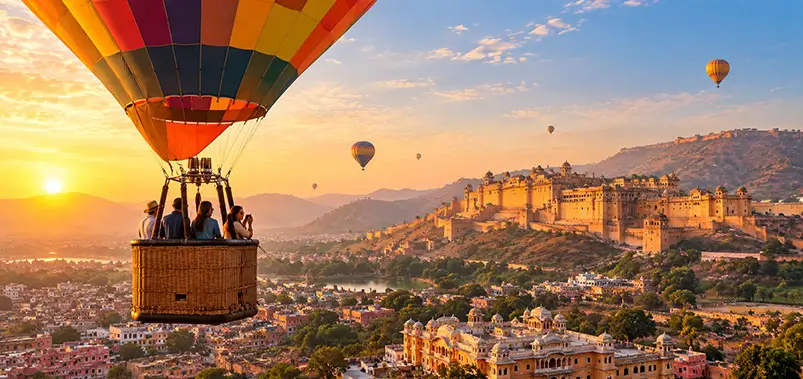
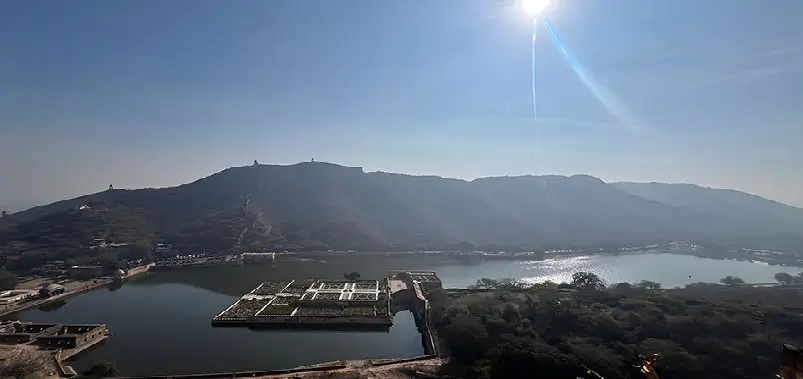
Amber Fort (Amer Fort) - a UNESCO World Heritage Site perched on a ridge above Maota Lake - is most magnificent in early morning. The sandstone ramparts in the first light, the lake reflecting the fort walls, and the near-empty courtyards of the Sheesh Mahal (Mirror Palace) are among India's great travel experiences.
By 10am the fort is hot. By noon it is very hot. By 2pm it is the kind of hot that makes you reconsider your life choices.
Go at 7am. Leave by 10am. Return for the Light and Sound Show at 7.30pm (English) if you wish.
The Sheesh Mahal - the Hall of Mirrors - actually benefits from summer: in the early morning, the thousands of mirror tiles are lit by the warm slanting light and glitter with unusual intensity. This is not a sight to rush.
City Palace, Hawa Mahal, Jantar Mantar
City Palace opens at 9.30am. The museum interior is largely shaded and can be visited until 11am comfortably even in summer. The courtyard (Mubarak Mahal) is best in morning light.
Hawa Mahal - the famous five-storey pink sandstone facade - faces east and is best photographed in the morning when it is front-lit. By afternoon it is in shadow. 20–30 minutes is sufficient for the exterior and interior visit.
Jantar Mantar - the 18th-century astronomical observatory - is an outdoor site and best visited early morning. The giant sundials and instruments cast dramatic shadows that also make excellent photographs.
Schedule these three together: 9.30am–11.30am. Then retreat to your hotel for the afternoon.
Jaipur's Evening Rhythm
Jaipur genuinely comes alive in the evening in summer. The bazaars of the Old City - Johari Bazaar for jewellery and gemstones, Bapu Bazaar for textiles and block-print fabrics, Tripolia Bazaar for lac bangles - fill with local shoppers from 5pm and stay busy until 9pm. Evening is the best time for Jaipur market exploration at any time of year, but in summer it is the only time.
Nahargarh Fort (above the city) offers extraordinary sunset views over Jaipur - arrive at 5.30pm and stay for the golden hour. The fort has a rooftop restaurant with the best view in the city.
Jaipur in Monsoon (July–August)
Jaipur in monsoon is genuinely beautiful and largely overlooked by international tourists. Temperatures of 31–33°C are warm but manageable. The Aravalli hills behind Amber Fort turn green. The Jal Mahal palace - floating in the centre of Man Sagar Lake - is framed by lush green hills in monsoon and looks entirely different from its winter incarnation. The pink sandstone of Old Jaipur glistens after rain with a deeper, richer colour.
Best summer Jaipur hotels: Oberoi Rajvilas, Taj Rambagh Palace, Jai Mahal Palace, Fairmont Jaipur, Samode Haveli. For summer visits, prioritise hotels with large pools and strong air conditioning. These properties also tend to have their best pricing in summer - often 30–40% below peak season rates.
Golden Triangle in Monsoon - The Hidden Advantage
The monsoon Golden Triangle (July–August) deserves its own section, because most travel content ignores it entirely.
July and August are the months when Western families and professionals are most likely to travel. They are also the months when the Golden Triangle is at its least crowded, least expensive, and - visually - most dramatic.
Here is what you gain in monsoon:
Near-empty monuments. The Taj Mahal, Amber Fort, and Red Fort see a fraction of their winter visitor numbers in July–August. The difference between navigating Amber Fort's courtyards with 200 other tourists versus 2,000 is not subtle.
25–40% lower hotel rates. The finest hotels in Delhi, Agra, and Jaipur drop their rates significantly in the off-season. The Oberoi Amarvilas - arguably the finest hotel experience in all of India, with the Taj Mahal visible from every window - has genuine summer promotions.
Dramatic photography. Dark monsoon clouds behind white Mughal marble is a specific visual aesthetic that no winter photograph replicates. The Taj against a moody pre-storm sky, Amber Fort with rain-washed walls against green hills, Old Delhi's lanes with monsoon puddles reflecting neon signs - these are distinct, powerful images.
More personal service. Heritage hotels with 100 rooms at 30% occupancy provide a fundamentally different level of attention than the same hotels at 90% occupancy. Your summer experience at a top property will be more attentive and personal than the same property in November.
No fog at the Taj. December and January - peak tourist months - frequently bring thick morning fog to Agra that completely obscures the Taj Mahal for hours. Visiting travellers who planned sunrise for the defining image of their trip sometimes wait until 10am for the fog to clear. This does not happen in summer.
Sample Summer Golden Triangle Itineraries
6 Days - Classic Summer Golden Triangle
Day 1 - Delhi: Arrive afternoon. Check in, rest. Evening dinner at a rooftop Old Delhi restaurant - the cooling air and the city spread below make this a beautiful summer evening experience.
Day 2 - Delhi:
- 6.30am - Humayun's Tomb.
- 8.30am - Qutub Minar.
- 10am–4pm - Hotel (pool, lunch, rest).
- 4.30pm - Chandni Chowk market walk with guide.
- 7pm - Old Delhi street food dinner.
Day 3 - Delhi → Agra:
- 5am departure by private car.
- 7am - Arrive Agra. Straight to Taj Mahal East Gate.
- 7am–9am - Taj Mahal sunrise visit.
- 9.30am–11am - Agra Fort.
- 11am–4pm - Hotel Agra (pool, lunch, rest).
- 5pm - Mehtab Bagh sunset view of Taj Mahal. Overnight Agra.
Day 4 - Agra → Jaipur:
- 8am departure. Stop at Fatehpur Sikri (8.30am–10am). Continue to Jaipur.
- Arrive 1pm. Check in, rest.
- 5pm - Nahargarh Fort sunset.
- 7pm - Johari Bazaar evening market. Overnight Jaipur.
Day 5 - Jaipur:
- 7am - Amber Fort (arrive at opening).
- 9.30am - Hawa Mahal exterior and interior.
- 10am - City Palace Museum.
- 11.30am–4pm - Hotel (pool, lunch, Rajasthani cooking class or spa).
- 4.30pm - Jal Mahal photo stop.
- 5pm - Old City bazaars.
- 7.30pm - Amber Fort Light and Sound Show. Overnight Jaipur.
Day 6 - Return Delhi: Morning at leisure. Drive Delhi (4.5 hours). Drop at airport or hotel.
Can You Really Do the Golden Triangle Tour in Summer?
Yes - with the right planning. Our private Golden Triangle tours are designed specially for summer travel with air-conditioned cars, sunrise Taj Mahal visits, luxury hotels with pools, and slower-paced sightseeing for international travelers.
8 Days - Extended Summer Golden Triangle with Ranthambore Tiger Safari
- Days 1–2: Delhi as above.
- Days 3–4: Agra as above, with extra half-day for Baby Taj and Itimad-ud-Daulah.
- Days 5–6: Ranthambore National Park - tiger safari (June is one of the best months for sightings as water sources dry up; park closes July–September for monsoon). Note: If travelling July–August, skip Ranthambore and spend extra time in Jaipur or add Udaipur.
- Days 7–8: Jaipur - full city circuit plus extended bazaar and cooking class experience.
City-by-City Summer Survival Kit
What to Carry Every Day
- Insulated water bottle, minimum 1 litre - refill at hotels, not from street vendors. Drink at minimum 3–4 litres daily.
- Electrolyte sachets - available at Indian pharmacies as Electral. One sachet dissolved in water every morning prevents dehydration far more effectively than water alone.
- SPF 50+ sunscreen - reapply every 2 hours. India's sun at this latitude is more intense than most European travellers are accustomed to.
- Wide-brimmed hat or UV-blocking cap - non-negotiable outdoors.
- Light-coloured, full-length cotton - loose trousers and long sleeves protect better from sun than shorts while staying cooler than expected. Fast-drying fabrics are practical for monsoon.
- Packable rain jacket or poncho - for July–August monsoon downpours.
- Socks for marble floors - the Taj Mahal's interior requires shoe removal. Socks prevent burns on hot marble after 9am and make the barefoot marble experience considerably more comfortable.
Timing Summary - At a Glance
| Monument |
Summer Opening |
Ideal Arrival |
Leave By |
| Taj Mahal |
6:00am |
5:45am (gate) |
9:30am |
| Amber Fort |
7:00am |
7:00am |
10:00am |
| Agra Fort |
6:00am |
7:00am |
10:00am |
| Humayun's Tomb |
6:00am |
7:00am |
9:30am |
| Qutub Minar |
7:00am |
8:00am |
10:00am |
| City Palace Jaipur |
9:30am |
9:30am |
11:30am |
| Hawa Mahal |
9:00am |
9:00am |
10:00am |
Afternoon visits (all cities): Mehtab Bagh Agra (5–6.30pm), Nahargarh Fort Jaipur (5–7pm), Old City bazaars Jaipur (5–9pm), Chandni Chowk Delhi (5–8pm).
Why Private Tour Beats Group Tour in Summer
This point is worth making clearly. The Golden Triangle in summer is genuinely easier, safer, and more enjoyable on a private tour than on any form of group travel.
Here is why:
Timing flexibility. On a group tour, everyone gets to the Taj Mahal together - often at 9am when the heat is building and crowds are peaking. On a private tour, you arrive at 6am because that is what your specific itinerary dictates.
Air-conditioned car between sites. Your private vehicle is your cool zone. You step out for sightseeing and step back into a cool environment. On a group bus, you wait for 20 others to board before the AC gets going.
Adaptive planning. If it is an unusually hot day, your driver and guide know which sites can be shortened and which hotel or restaurant offers the best midday refuge. They adapt. A group itinerary cannot.
No queue strategy. Your guide knows which gates have shorter queues, which ticket desks open earliest, and how to move through a monument efficiently. In summer, efficiency directly translates to less time in heat.
24/7 support. If you feel unwell, if the weather turns unusually severe, if you need to rest an extra day - your private operator handles it. A group tour does not.
Book Your Summer Golden Triangle Tour
Top Indian Holidays has been designing private Golden Triangle tours for international visitors since 1999 - including through every summer season for 27 years. We are based in Jaipur, Ministry of Tourism approved, and have guided over 14,000 guests from 40+ countries across this circuit.
Every summer tour we design includes:
- Pre-timed itinerary with specific early-morning monument arrivals built in
- Private air-conditioned car and verified English-speaking driver-guide throughout
- Carefully selected heritage hotels with excellent pools and restaurants
- Pre-booked Taj Mahal tickets (online booking - no queue)
- 24/7 on-ground support for the entire journey
- Honest, no-pressure guidance on what is and is not realistic in summer conditions
Tell us your dates, your group size, and your interests. We will send you a personalised itinerary and no-obligation quote within 12 hours.
Call / WhatsApp: +91-9828085426
Email: info@topindianholidays.net
Website: www.topindianholidays.com
Related Guides



 info@topindianholidays.net
 +91-8955000999