📅 Last Updated On: 22 Jan 2026
⏱ 10 Min Read
Tribal Culture and Indigenous Communities of North East India
A
Admin
Founder -India Travel Expert
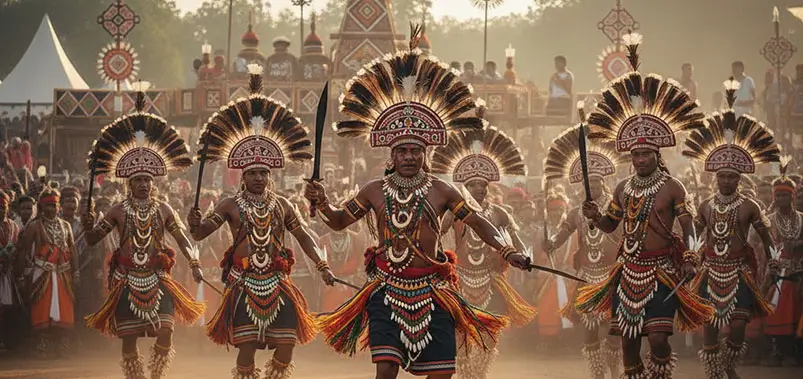
Tribal Culture and Indigenous Communities of North East India: Traditions, Lifestyles and Living Heritage
North East India is one of the most culturally diverse regions in the country. The region is home to a large number of indigenous communities whose traditions, belief systems, and social structures have evolved over centuries in close connection with nature. Unlike regions shaped heavily by imperial history or urban expansion, the cultural identity of North East India remains deeply rooted in tribal life, community values, and ancestral knowledge.
The tribal culture of North East India is not preserved in museums or limited to ceremonial displays. It exists as a living system that continues to guide daily life, social relationships, agricultural practices, and spiritual beliefs. Each community carries a distinct identity expressed through language, dress, architecture, festivals, and oral traditions.
Travelers who seek cultural depth often find North East India to be one of the most enriching regions to understand human diversity in its most organic form.
Understanding Indigenous Identity in North East India
Indigenous communities in North East India identify strongly with land, ancestry, and collective belonging. Identity is often linked to clan systems, village affiliations, and oral history rather than written records. These identities are not static; they have adapted over time while maintaining core values and traditions.
Community life emphasizes cooperation, shared responsibility, and respect for elders. Decisions related to land use, social conduct, and cultural practices are often taken collectively. This structure creates a strong sense of belonging and continuity across generations.
The indigenous identity of the region reflects resilience and adaptability, shaped by geography, climate, and historical isolation.
Diversity of Tribal Communities Across the Region
North East India is not defined by a single tribal culture. Instead, it is a mosaic of communities, each with unique customs and worldviews. Tribal diversity exists not only between states but also within districts and villages.
Languages spoken across the region belong to different linguistic families, contributing to cultural richness. Traditional attire varies in material, color, and symbolism, often reflecting social status, marital identity, or regional heritage. Musical forms, dance styles, and storytelling traditions further highlight the diversity of expression.
This cultural variety makes the region particularly significant for travelers interested in anthropological and cultural exploration.
Experience Tribal Culture and Heritage of North East India
Dive into rich tribal traditions, indigenous lifestyles, and vibrant community festivals with our specially curated cultural tours and homestay experiences.
Social Structures and Community Life
Tribal societies in North East India are typically organized around village-based systems. Villages function as social units where governance, cultural practices, and conflict resolution occur through traditional councils or community assemblies.
Social structures often emphasize equality, shared labor, and collective welfare. Roles within the community are clearly defined, with elders guiding decision-making and younger members participating in communal activities. Gender roles vary across communities, with some groups practicing matrilineal systems while others follow patriarchal traditions.
These social arrangements foster cohesion and ensure the transmission of cultural values across generations.
Traditional Lifestyles and Daily Practices
Daily life in indigenous communities reflects a balance between tradition and adaptation. Activities such as farming, fishing, weaving, and craftsmanship form the backbone of livelihoods. These practices are closely tied to seasonal cycles and environmental conditions.
Homes are constructed using locally available materials such as bamboo, wood, and stone, designed to suit climate and terrain. Settlement layouts often reflect communal living, with shared spaces for gatherings and ceremonies.
Traditional lifestyles emphasize sustainability, self-reliance, and minimal environmental impact, aligning closely with eco-conscious living principles.
Spiritual Beliefs and Ritual Practices
Spirituality plays an integral role in the tribal culture of North East India. Belief systems often revolve around nature, ancestral spirits, and cosmic balance. Mountains, rivers, forests, and celestial bodies are frequently regarded as sacred.
Rituals mark important life events such as birth, marriage, harvest, and death. These ceremonies reinforce community bonds and provide continuity between generations. Oral traditions, myths, and folklore serve as vehicles for spiritual knowledge and moral values.
Spiritual practices are deeply personal yet communal, creating a shared cultural framework that guides behavior and social norms.
Festivals as Cultural Expression
Festivals in tribal communities serve as expressions of gratitude, renewal, and identity. They often coincide with agricultural cycles, seasonal transitions, or historical events. Music, dance, costumes, and communal feasts are central elements of these celebrations.
Festivals are not staged performances but participatory events where the entire community contributes. Visitors who witness these celebrations gain insight into cultural rhythms and collective joy that define tribal life.
Such occasions reflect the vibrancy and continuity of indigenous traditions.
Art, Craft, and Material Culture
Artistic expression holds a prominent place in indigenous societies. Weaving, pottery, metalwork, wood carving, and body art represent both aesthetic and functional creativity. Designs often carry symbolic meanings related to ancestry, spirituality, or natural elements.
Handcrafted objects are produced using traditional techniques passed down through generations. These crafts are not merely decorative but integrated into daily use, ceremonies, and social exchanges.
Material culture provides tangible evidence of cultural identity and regional uniqueness.
Connect with North East India’s Tribal Heritage
Dive deep into the traditions and lifestyles of indigenous communities. Let our travel experts help design an immersive cultural journey.
Oral Traditions and Storytelling
Oral storytelling remains a powerful medium for preserving history, knowledge, and values. Folktales, legends, and songs transmit lessons about courage, harmony, and respect for nature. Elders play a vital role in maintaining these narratives.
Oral traditions ensure cultural continuity in communities where written records were historically limited. Storytelling sessions often occur during gatherings, reinforcing social bonds and shared memory.
These narratives offer insight into how communities interpret their past and envision their future.
Relationship with Nature and Land
The relationship between indigenous communities and their environment is deeply symbiotic. Land is not viewed merely as property but as a living entity with spiritual and cultural significance. Farming practices, hunting traditions, and resource management reflect an understanding of ecological balance.
Many communities follow customary laws that regulate land use and conservation. These systems have contributed to the preservation of forests, water sources, and biodiversity.
This worldview aligns closely with modern concepts of sustainability and environmental stewardship.
Influence of Modernization and Change
While traditional practices remain strong, indigenous communities are not isolated from change. Education, infrastructure development, and external influences have introduced new opportunities and challenges. Communities navigate modernization by adapting selectively rather than abandoning core values.
Cultural resilience is evident in how traditions are preserved alongside evolving lifestyles. Youth participation in cultural activities ensures continuity while allowing space for innovation.
Understanding this balance is essential for appreciating the dynamic nature of tribal cultures.
Cultural Sensitivity and Ethical Engagement
Engaging with tribal communities requires sensitivity and respect. Cultural practices, rituals, and spaces may hold deep significance and should be approached thoughtfully. Photography, interactions, and participation should always be guided by consent and awareness.
Ethical engagement supports cultural dignity and fosters positive relationships between visitors and host communities. Responsible cultural tourism values learning over observation and respect over curiosity.
Role of Cultural Tourism in Preservation
Cultural tourism can contribute positively to the preservation of tribal heritage when managed responsibly. Community-led initiatives allow indigenous groups to share their culture on their own terms while benefiting economically.
Such approaches help safeguard traditions, support education, and strengthen community pride. Visitors gain authentic experiences while contributing to cultural sustainability.
Importance of Indigenous Knowledge Systems
Indigenous knowledge encompasses agriculture, medicine, architecture, and environmental management. This knowledge is deeply contextual, developed through generations of observation and experience.
Preserving indigenous knowledge systems is essential not only for cultural continuity but also for broader understanding of sustainable living. These systems offer valuable lessons in resilience and adaptation.
Cultural Landscapes and Identity
Cultural landscapes in North East India reflect the integration of people, tradition, and environment. Villages, fields, forests, and sacred sites form interconnected cultural spaces.
These landscapes tell stories of migration, settlement, and survival. Understanding them enhances appreciation of how culture and geography shape one another.
Learning Through Cultural Immersion
Travelers who engage deeply with tribal communities often describe their experiences as transformative. Cultural immersion encourages reflection, empathy, and expanded perspectives.
By observing daily routines, participating in community life, and listening to local voices, visitors gain insights that extend beyond surface-level understanding.



 info@topindianholidays.net
 +91-8955000999