


 info@topindianholidays.net
 +91-8955000999
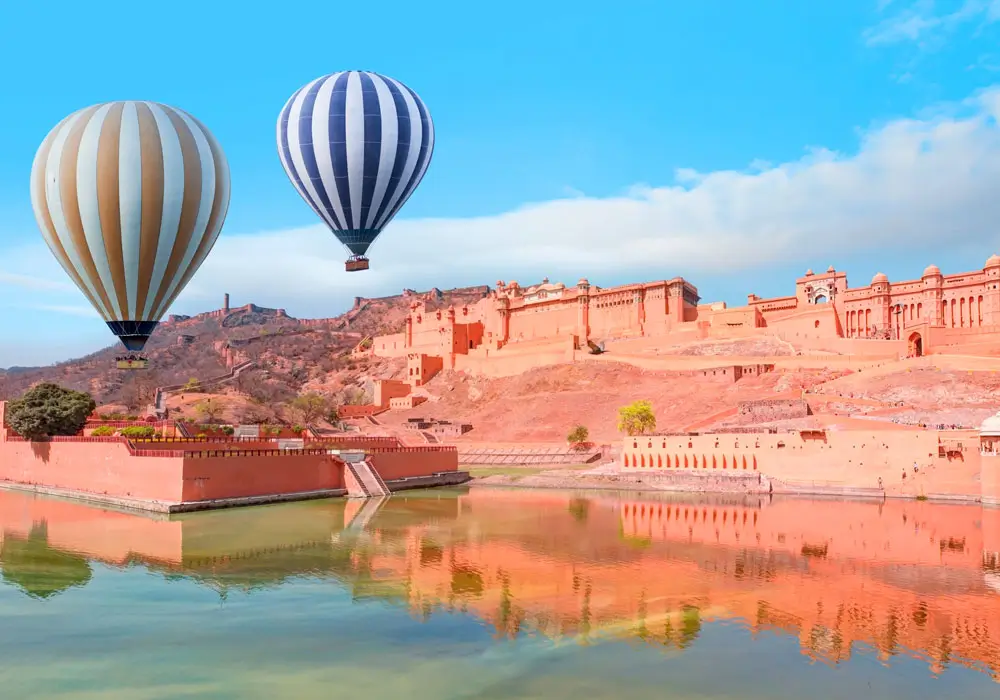
Hot Air Balloon Ride in Jaipur
Lift off as the sky turns orange and drift over villages, mustard fields and the Aravalli hills while Jaipur is still waking up.
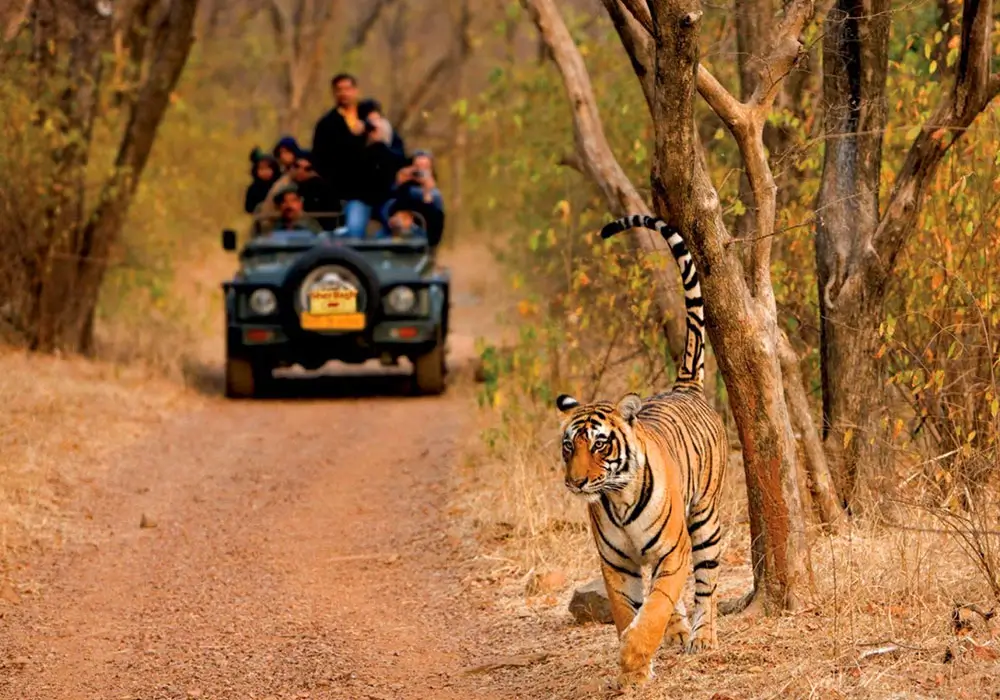
View Experience ›Head into the dry forest at first light in an open vehicle, read the alarm calls of deer and monkeys, and search for tigers below an old hilltop fort.
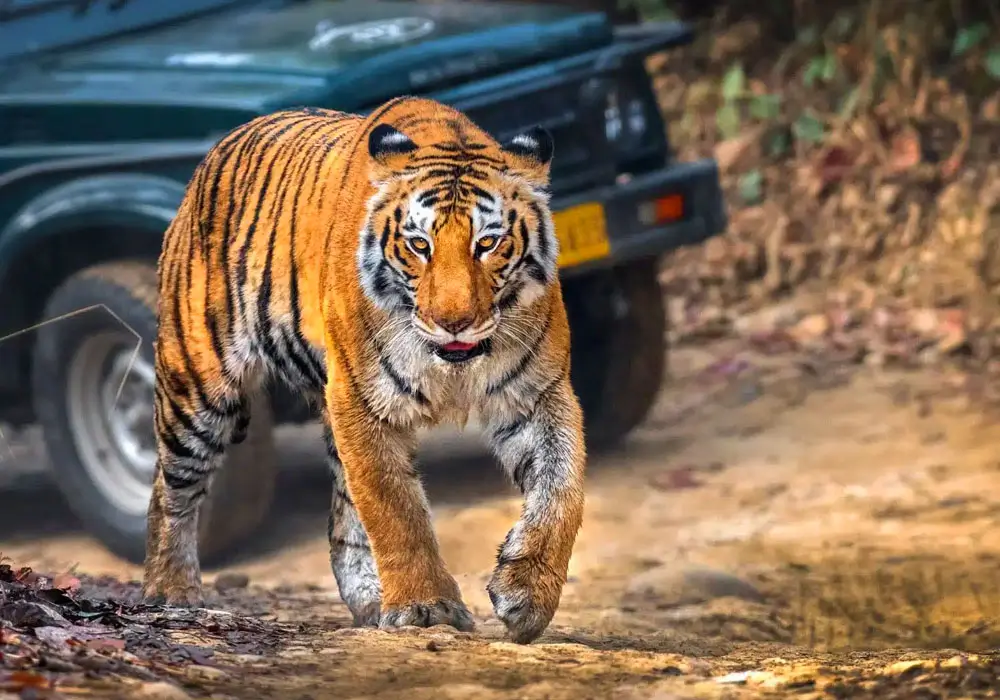
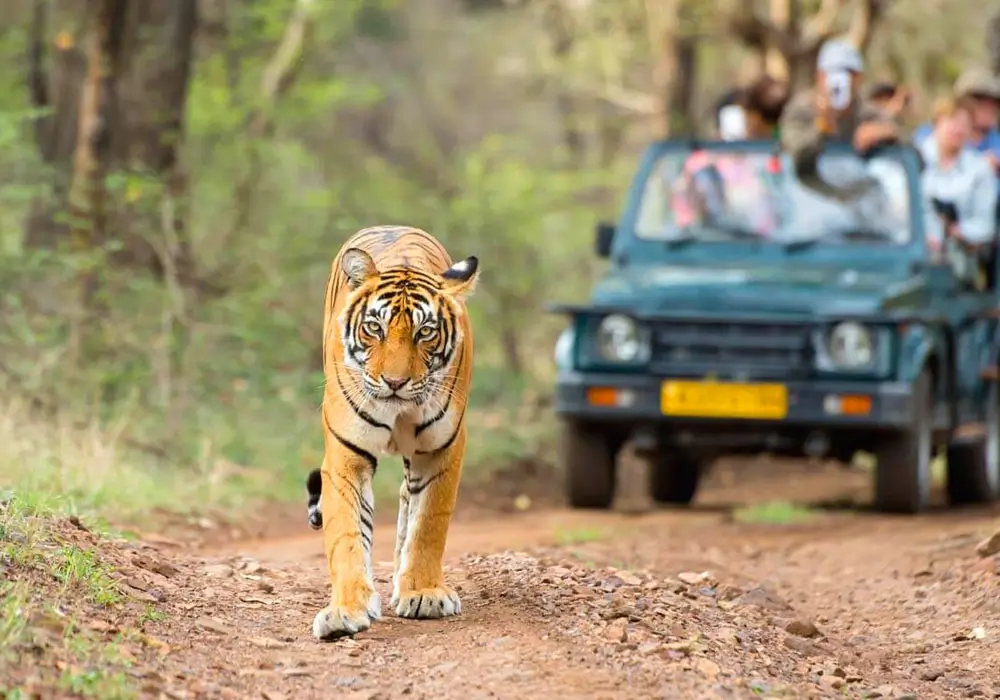
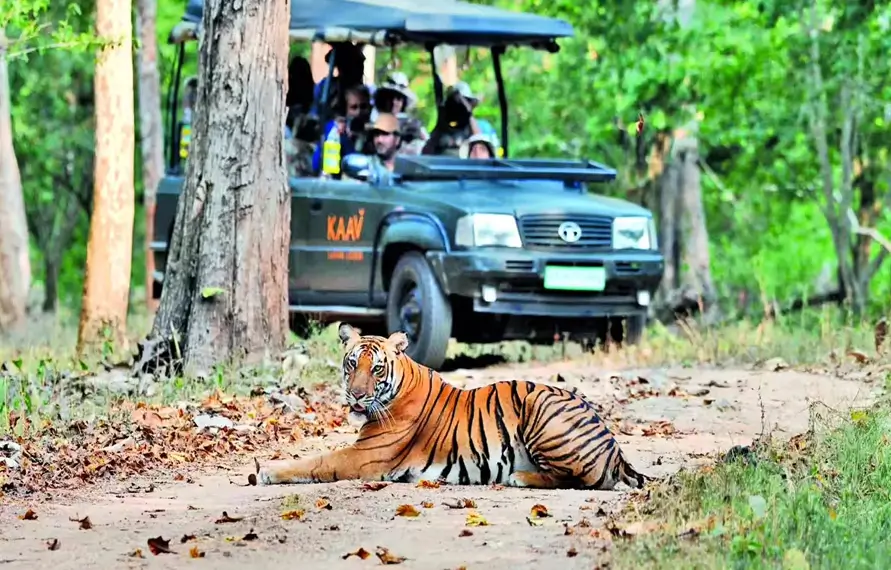
There is a moment on almost every drive in Ranthambore when the vehicle goes silent. The engine is cut, the guide raises a hand, and somewhere in the trees a sambar deer gives a sharp, honking bark. A langur on a branch above starts to cough. Your naturalist turns slowly in the seat, listening, because these are the sounds the forest makes when a tiger is moving. Nobody speaks. That moment, more than any photograph, is what a Ranthambore tiger safari is really about.
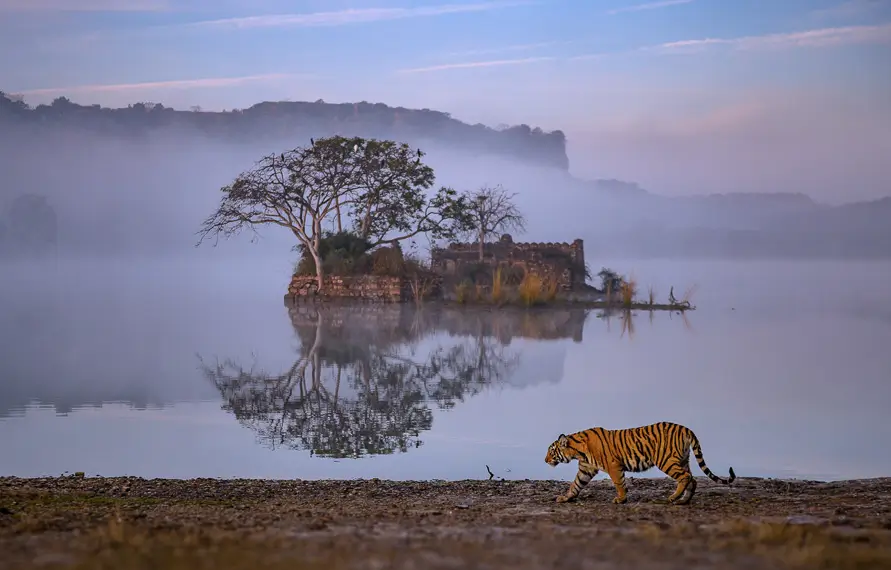
Ranthambore sits in eastern Rajasthan where the Aravalli hills meet the Vindhya plateau. The landscape is unlike the green, dense jungles many visitors imagine. It is dry deciduous forest, mostly dhok trees, with open grassland, rocky ridges, banyan trees with hanging roots, and a string of lakes in the middle. Scattered through it are the remains of a long human history: crumbling chhatris, gateways, old hunting lodges and, above everything, the walls of Ranthambore Fort on its plateau. Tigers here walk past ruins and drink at lakes in full view, which is why this park has long been loved by wildlife photographers.
This page is about the safari itself: how the drives work, choosing between an open jeep and a canter, how the zones and permits operate, when to go, and how to behave in a tiger’s home. If you only have one day and want to see Ranthambore as a trip from Jaipur, look at our same-day Jaipur to Ranthambore tour. That is a long but practical outing with a single drive. The experience on this page is built around staying near the park for two nights or more, so you can go into the forest several times, at different hours and in different zones, which is what gives you a real chance of finding a tiger.
We will be honest from the start. Tigers are wild animals and nobody can promise a sighting, on any drive, in any zone. What we can promise is a well-planned safari with good timing, a sensible mix of drives and an experienced naturalist who knows how to read the forest.
1. Permits booked in advance
Every safari seat in Ranthambore is sold through the Rajasthan forest department booking system. We book it for you as soon as your dates are fixed, using each guest’s full name, nationality and passport number exactly as printed. Seats for popular months and zones go quickly, so the earlier we have your details, the better the choice of drives.
2. Your zone and vehicle are allotted
The park is divided into numbered zones, and each permit is for one zone, one time slot and one type of vehicle. The zone is set at booking, not chosen on the day, and your vehicle must stay inside its allotted zone for the whole drive. This system spreads traffic through the park and stops too many vehicles gathering in one place.
3. Pickup from your lodge
Your safari vehicle collects you from your hotel in Sawai Madhopur before the gates open in the morning, or after lunch for the afternoon drive. Most lodges sit along the road towards the park, so the drive to the entry gate is short. Carry the passport you used for booking, because officials check identity at the gate.
4. Entering the forest
Most zones are reached through the main gate, with the road climbing through a narrow valley past old stone walls. Other zones have their own entries on the outer edge of the park. Your driver and naturalist present the permit, the forest staff check it, and then the vehicle moves into the forest on marked tracks.
5. Tracking, not just driving
A good naturalist does not simply drive the tracks hoping for luck. They stop to look for fresh pugmarks in the dust, check whether a tiger has crossed the track overnight, listen for alarm calls, and watch the behaviour of deer at the lakes. Drivers share news with each other through the morning, so the plan changes as information comes in. Expect long, quiet waits as well as moments of sudden movement.
6. A break at the halfway point
On longer drives there may be a short stop at a permitted point inside the zone, where you can stretch your legs only where the rules allow. Otherwise you stay seated in the vehicle for the whole drive.
7. Exiting on time
Safaris have fixed entry and exit times that change through the season with sunrise and sunset. Vehicles must leave the park by the closing time, even if a tiger has just appeared. That rule protects the animals and is strictly enforced.
8. Back to the lodge
After a morning drive you return for a late breakfast and a rest through the heat of the day. After an afternoon drive you are back around dusk for a shower, a drink and dinner, often with the naturalist sharing what they saw in other zones.
Gypsy (open jeep). A small, open-topped four-wheel-drive vehicle that seats up to six guests plus the driver and naturalist. It is quieter, more agile on narrow tracks and easier to position for photographs. Couples and families usually prefer it, and booking all six seats gives you a private vehicle with your own pace and your own questions. Gypsy seats are limited and go first, so this is the option to book early.
Canter (open bus). A larger open vehicle, rather like a small truck with rows of seats, carrying a bigger group of guests. It sits higher, which can help with views over long grass, and it is the more affordable way to go into the forest. The trade-off is less flexibility: more people, more chatter, slower turns and less control over where the vehicle stops. Canters are mostly used on wider tracks in certain zones.
Our view. If you are coming specifically for tigers or photography, a gypsy is worth it, ideally booked as a private vehicle. If your main wish is to experience the forest once, a canter still gives you a real safari and an honest chance of a sighting. Many guests mix the two: one canter for the atmosphere and a couple of gypsy drives for the serious tracking.
Ranthambore’s zones are numbered, and you will hear guides talk about them constantly. The lower-numbered zones lie in the heart of the park, around the lakes and the fort, and are often called the core zones. The higher-numbered zones run through the outer forest, sometimes called the buffer or peripheral zones.
The core zones. These cover the classic Ranthambore scenery: Padam Talao with the red-sandstone Jogi Mahal on its bank, Rajbagh Talao with its ruined palace standing at the water’s edge, and Malik Talao, smaller and good for birds. Tigers in these areas are used to vehicles, and the open lake shores offer clear views. Because of this, they are the most requested zones.
The outer zones. These are wilder and hillier, with fewer vehicles. Several tigers have territories here, along with leopards in rockier areas. Sightings can be very good, and on some days better than in the core, because territories shift and tigers move. The outer zones are also the ones that may open in some form during the monsoon, depending on rainfall and forest department decisions.
Why zones matter less than people think. Tigers do not read maps. A zone that produced sightings every day last month may go quiet this month after a young male moves on or a tigress hides new cubs. We book the best zones available for your dates, but the real advantage comes from doing several drives in different zones rather than chasing one famous area.
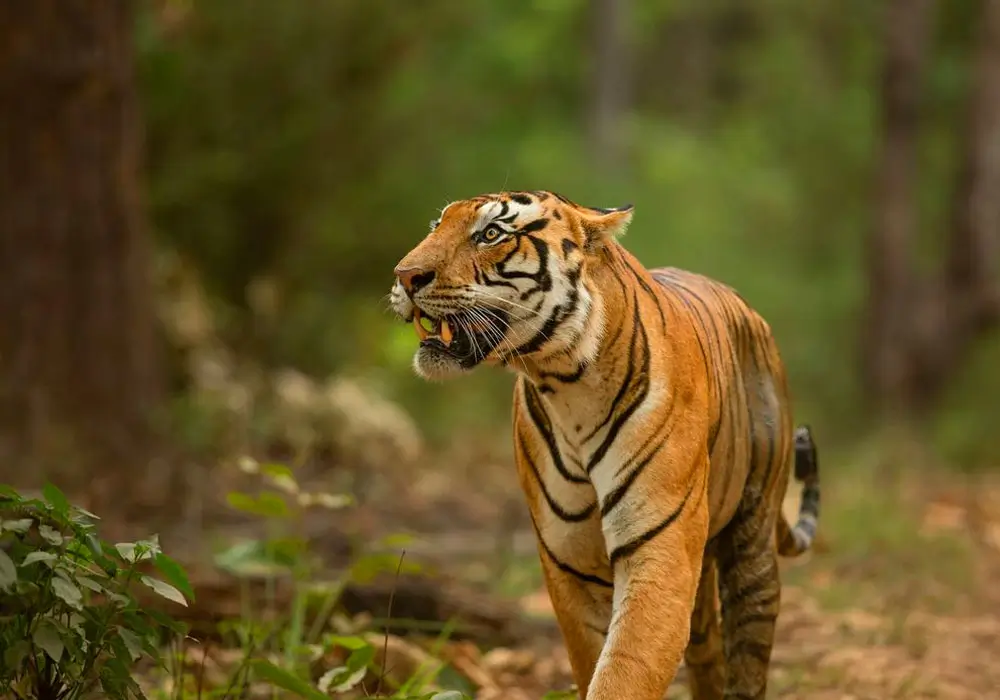
Tigers. The reason everyone comes. Ranthambore’s tigers are known for being active in daylight and for using open areas, so when you do find one it may be walking a forest track, lying in shallow water to cool off, or resting in the shade of a ruin. Each tiger is known individually to guides and forest staff, and your naturalist will tell you who you are looking at and how they fit into the family tree of the park.
Leopards. Present, but shy and mostly found in the rocky, hilly edges where they keep away from tigers. A leopard on a cliff ledge is a rare and special bonus.
Deer and antelope. Sambar, India’s largest deer, wade into the lakes to feed on water plants. Chital, the spotted deer, move in herds through the grassland. Nilgai, the large blue-grey antelope, and the smaller chinkara gazelle appear in more open country. Their behaviour is your best tiger detector.
Sloth bears, jackals and more. Sloth bears sometimes show themselves in the cooler hours. Golden jackals, wild boar, striped hyenas on rare occasions, and the jungle cat all live here.
Mugger crocodiles. The lakes hold marsh crocodiles, often seen basking on the banks of Padam Talao and Rajbagh or lying still in the shallows. Keep watching the water’s edge.
Birds. Ranthambore is excellent for birdwatching. Look for the crested serpent eagle, Indian paradise flycatcher in season, painted storks, spoonbills, darters, kingfishers, peafowl displaying in the open, and the bright orange-headed Indian pitta. In winter, migratory ducks and waders join the resident birds on the lakes.
Langurs and the forest itself. Grey langurs are everywhere, and their warning coughs often tell you where a big cat is. Take time, too, to notice the banyan near the main gate, the old stone gateways and the way the light changes on the ridges.
A safari is a visit to a protected wild area, not a show. We work only with drivers and naturalists who follow the park rules, and we ask every guest to do the same.
These rules exist because Ranthambore’s tigers live close to people. Respectful tourism has helped protect them, and careless behaviour could undo that.
The core zones of Ranthambore are open from 1 October to 30 June each year and close for the monsoon from July to September, when tracks wash out and animals breed. Some outer zones may stay open for safaris during the rains, depending on rainfall and forest department guidelines. Safari timings change month by month with sunrise and sunset, and the park can close on particular days, so we confirm the current times and any closures for your dates.
October and November. The forest is green after the rains, the lakes are full and the air is pleasant. Grass is still tall in places, so sightings can be harder, but the scenery is lovely.
December to February. Peak season for travellers. Mornings are cold in an open vehicle, sometimes very cold, and afternoons are mild and clear. Tigers often lie out in the sun. Winter birds are on the lakes. Book well ahead.
March and April. The forest dries out, leaves fall and visibility improves. Animals gather near water, and many guides consider this the start of the best sighting season. Days are warm to hot.
May and June. Very hot, often well above 40°C in the afternoon. Tigers stay near water and are frequently seen, but the heat is hard work for travellers. If you come now, choose morning drives and plan to rest in the middle of the day.
Morning or afternoon? Both work. Morning drives start cool and quiet, with the light at its best for photography. Afternoon drives often find tigers coming to water as the heat fades. A mix of the two gives you the best overall chance.
One drive. A real taste of the forest and an honest chance of a tiger, but a single drive is a gamble. This is the model of a day trip from Jaipur.
Two nights, three or four drives. Our recommendation for most travellers. Arrive by lunch on day one for an afternoon drive, do morning and afternoon drives on day two, and a final morning drive before leaving. You cover different zones, times and light, and you get to know the rhythm of the forest.
Three nights or more. For keen photographers and wildlife lovers. With five or six drives you can return to an area where a tiger has been active, take time with birds and smaller animals, and have days with a break between drives.
Getting there. Ranthambore is near the town of Sawai Madhopur, which is on the main railway line between Delhi and Mumbai. By road, it is around three to four hours from Jaipur, and longer from Agra or Delhi. Many travellers arrive by train from Jaipur or Agra and continue by car.
On a Golden Triangle tour. Ranthambore fits naturally between Agra and Jaipur, or as a loop from Jaipur. Adding two nights here turns a city-and-monument trip into something with real wildlife.
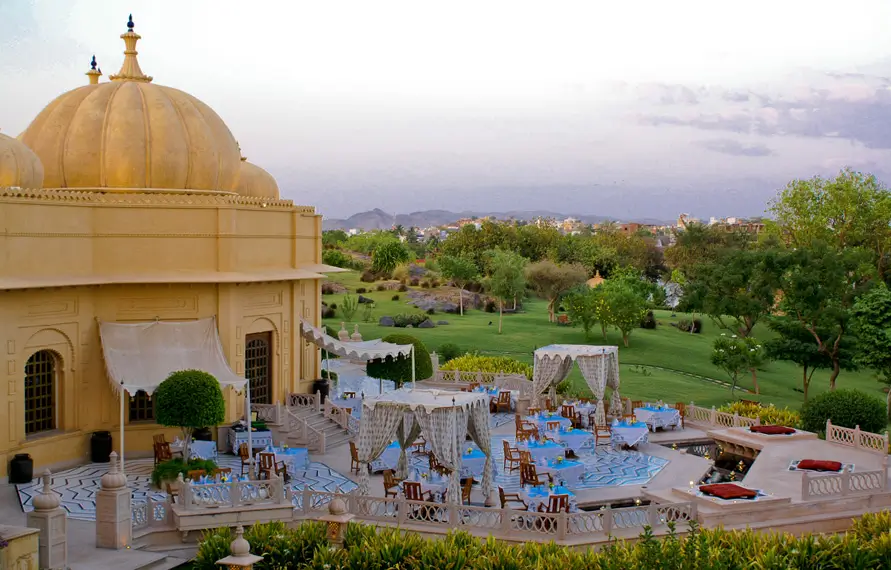
Where to stay. Lodges along the Ranthambore road range from simple to very luxurious, many with gardens, pools and in-house naturalists. We match the lodge to your style and budget.
Ranthambore Fort. Do not miss the fort itself. It stands on a plateau inside the park and is one of the Hill Forts of Rajasthan listed by UNESCO. A walk through its gates, ruined palaces and water tanks, with views over the forest below, makes a good contrast to the safari drives. Many pilgrims also climb to the Ganesh temple inside the fort, especially on Wednesdays and festival days.
Pair it with. Before or after Ranthambore, spend time in Jaipur. A tuk tuk ride through the Pink City or a cooking class with a local family suits the slower pace after early safari mornings. For another ethical animal experience, see our elephant sanctuary visit near Jaipur. If you enjoy big cats, combine Ranthambore with a leopard safari in Jawai, where leopards live among granite hills and villages.
Bring and wear - Passport used for the booking - Warm jacket, hat and gloves for winter mornings - Neutral colours such as khaki, olive, brown or grey - Scarf or buff against dust - Sunglasses, sunscreen and a cap - Binoculars and a camera with a zoom lens - Refillable water bottle
Leave behind - Bright colours and white clothing - Perfume and strong scents - Plastic bags and single-use packaging - Drones and tripods - Snacks to share with animals
Tell us your dates and how many drives you would like, and we will book your permits, lodge and transfers early for the best zones.
Call & WhatsApp +91-9828085426 or email info@topindianholidays.net.
See more ideas on our Top Experiences in India page.
Tell us your travel dates and we will check availability and fit this experience into the right day of your itinerary. Reply within 12 hours.
Check Availability› Chat on WhatsApp› Send an Enquiry›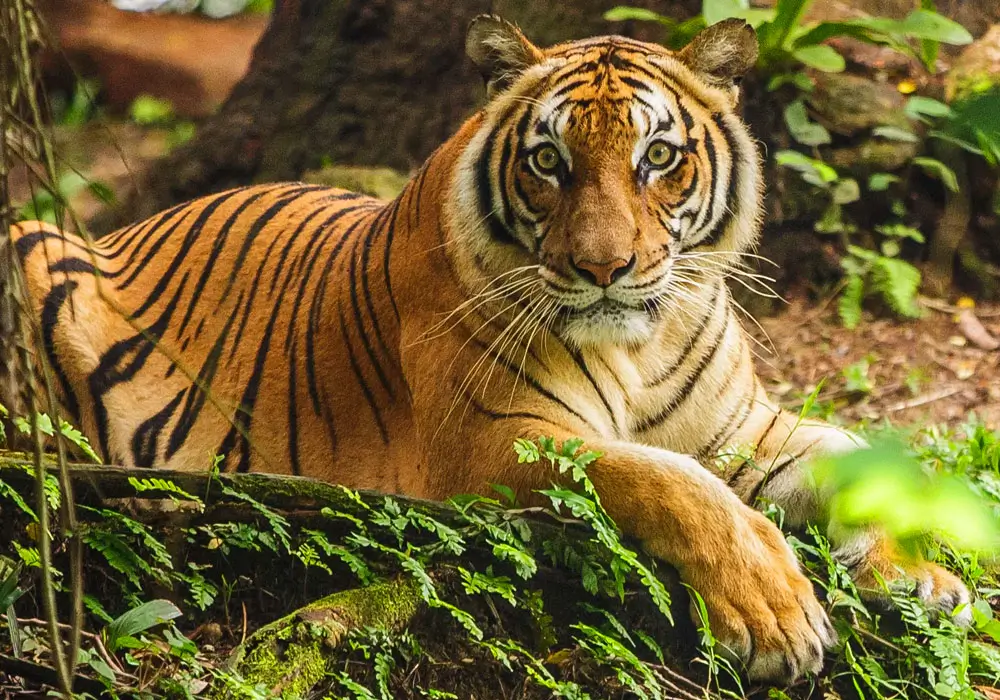


 🌙 08 Nights / 09 Days
Delhi - Agra - Jaipur... Delhi - Agra - Jaipur - Delhi - Ranthambore - Delhi Show More
 🌙 10 Nights / 11 Days
Delhi - Jaipur - Ranthambore... Delhi - Jaipur - Ranthambore - Agra - Delhi Show More
 🌙 06 Nights / 07 Days
Luxury
Delhi - Jaipur - Ranthambhore... Delhi - Jaipur - Ranthambhore - Agra - Delhi Show More
 🌙 07 Nights / 08 Days
⭐ Most Popular
Delhi - Jaipur - Ranthambore... Delhi - Jaipur - Ranthambore - Agra Show More
By road it is around three to four hours from Jaipur, or you can take a train to Sawai Madhopur, the town beside the park. We arrange the transfer and your lodge, and time your arrival for an afternoon drive.
Leopards occasionally, sloth bears, sambar, chital, nilgai, langurs, mugger crocodiles in the lakes and a great variety of birds. The ruins, lakes and Ranthambore Fort make the park memorable even on a quiet day.
Neutral colours, closed shoes and layers. Winter mornings in an open vehicle are cold, so bring a warm jacket, hat and gloves. In spring and summer, a cap, sunglasses, sunscreen and a dust scarf help.
Yes, children can join. Drives are long, bumpy and need quiet patience, so they suit children who can sit still for several hours. A private gypsy gives families more flexibility.
Yes, when you follow the rules. You stay seated in an open vehicle with an experienced driver and naturalist, and the vehicle keeps a respectful distance from animals. Problems happen only when people stand, shout or leave vehicles, which is not allowed.
The day trip is a single safari in one long day from Jaipur. This experience is the safari itself, planned as several drives with nights near the park. If you only have one day, the same-day Jaipur to Ranthambore tour is the practical option.
Both have strengths. Mornings are cool, quiet and give the best light. Afternoons often find tigers moving to water as the day cools. A mix of both is ideal.
We suggest three or four drives over two nights for most travellers. Keen photographers often stay three nights or more. One drive gives you a taste, but the odds are much better with several.
The core zones close from July to September. Some outer zones may open during the rains depending on rainfall and forest department guidelines. We check what is operating for your dates.
From March to June the forest is drier and tigers gather near water, so sightings are often good, although it is hot. December to February is cooler and very pleasant, while October and November are green and scenic. Any time between October and June can work.
Zones are allotted when the permit is booked, based on availability. We request the best zones open for your dates. Once booked, the zone is fixed and your vehicle must stay inside it for the whole drive.
A gypsy is a small open jeep seating up to six guests, more flexible and quieter. A canter is a larger open vehicle carrying a bigger group, higher off the ground and more affordable. For tigers and photography, a gypsy is usually the better choice.
Seats are sold through the Rajasthan forest department booking system, with each guest’s name, nationality and passport number. We book on your behalf once your dates are fixed. Book early for the winter months and holidays, because gypsy seats sell out first.
No one can guarantee it. Tigers are wild and move freely across large areas. Ranthambore is one of the better parks in India for daytime sightings, and planning several drives in different zones gives you a much stronger chance than a single safari.

Whether you're planning your first India trip or returning to explore deeper, get honest, expert advice from someone who knows every corner of this country. No pressure, no cost.