Fully Guided Tours Private Car
Mumbai - Aurangabad - Pench National Park - Ramtek - Tadoba Tiger Reserve - Ajanta - Nashik - Mumbai
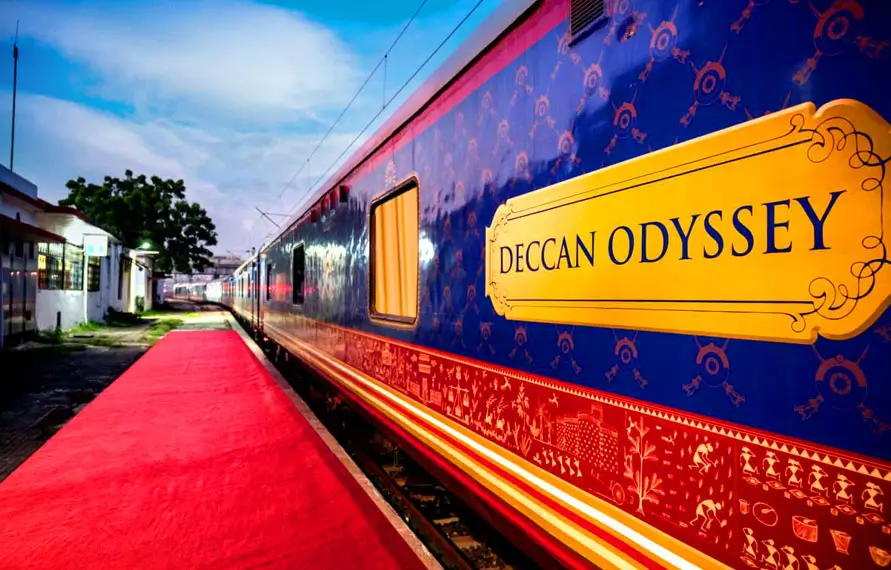
Central India holds some of the densest tiger populations in the world, and very few rail journeys go anywhere near them. The Deccan Odyssey Maharashtra Wild Trail Tour is the exception: a seven-night round trip from Mumbai that pairs game drives in two famous forests, Pench and Tadoba, with the rock-cut art of Ellora and Ajanta and the old Mughal city of Aurangabad. Saturday is departure day, and the train comes back to Mumbai the following Saturday morning, having traveled almost the full width of Maharashtra and back.
This is the itinerary for travelers who want wildlife without giving up comfort. Instead of long road transfers between lodges, you sleep in the same cabin every night while the train moves you to the forest edge. In Pench, the teak and bamboo country often linked with Kipling's The Jungle Book, you go out on safari in the morning and again in the afternoon. In Tadoba, Maharashtra's oldest national park, the day starts before dawn with a game drive in one of the most reliable reserves in India for tiger sightings. The 2026-27 departures are 16 January, 27 March and 1 May, which fall in the dry months when animals gather near water.
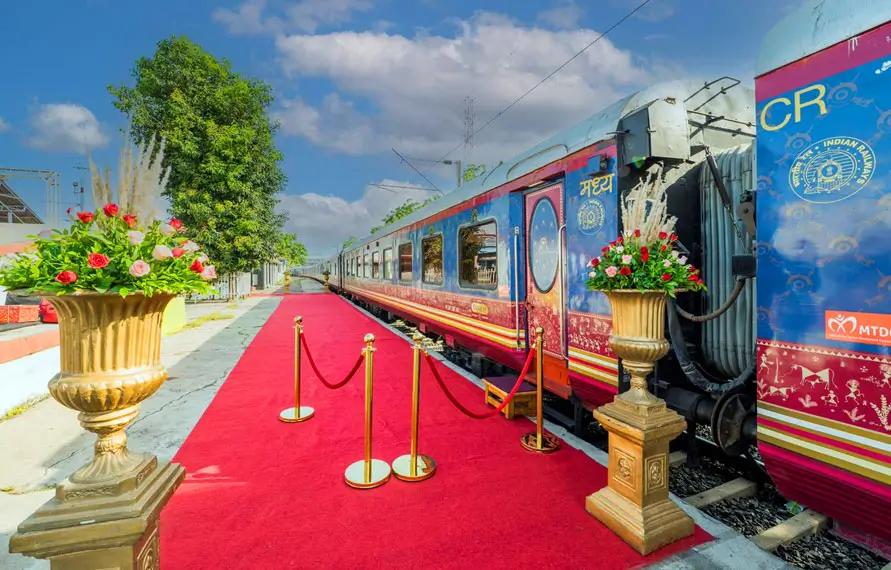
The Deccan Odyssey is operated by Maharashtra Tourism with Indian Railways, and its limited passenger list is spread between Deluxe Cabins and the larger Presidential Suites, each with an en suite bathroom; shared spaces include restaurant carriages, a bar, a compact fitness room and an Ayurvedic treatment car. Top Indian Holidays, an independent Jaipur company with tourism ministry approval, has been designing private India trips for more than twenty-five years. We arrange your booking, your Mumbai hotel nights and station transfers, and we can add more forest nights to the trip for keen wildlife photographers.
The Maharashtra Wild Trail begins at Chhatrapati Shivaji Maharaj Terminus in south Mumbai, where guests gather at about 15:30 for registration and a traditional welcome. Our driver collects you from your hotel well ahead of time, since afternoon traffic in the city is unpredictable. The station's carved facade, pointed arches and great central dome are worth a few minutes of your attention before you go in. Your luggage is handled by porters and delivered to your cabin while you check in with the guest relations team over a welcome drink.
Packing for this trip is a little different from other luxury train journeys. Neutral colors such as khaki, olive and brown are best for the safari days, as bright whites and reds stand out in the forest. Bring a warm fleece and gloves for the January departure, when open jeeps are cold at dawn, and a wide-brimmed hat, sunscreen and a light scarf against dust for March and May, when afternoons are hot. Binoculars and a camera with a zoom lens make a real difference, and spare batteries are wise.
The train leaves Mumbai in the evening and climbs into the Sahyadri range before turning east across the Deccan. Dinner is served in the restaurant car, and the head chef usually introduces the week's menu, which balances regional dishes from Maharashtra with familiar continental options. After dinner, the bar lounge is a good place to meet your fellow travelers. On this itinerary they tend to be a mix of first-time visitors and seasoned wildlife enthusiasts comparing notes on previous safaris in Africa or South America.
The train reaches Aurangabad, officially renamed Chhatrapati Sambhajinagar, in the morning. After a relaxed breakfast you have time to rest on board or book a spa treatment before an early lunch. In the afternoon a coach takes you out to the Ellora Caves, where thirty-four temples and monasteries were cut into a basalt ridge over several centuries. On this visit it pays to spend time in the quieter caves at either end of the site: the Buddhist halls with their ribbed ceilings, and the Jain caves with fine carvings of seated teachers and lotus ceilings.
Of course you also see the Kailasa temple, the largest single rock-cut structure in the world, carved from the top downward out of the living cliff. Look for the frieze of elephants that seems to hold the whole temple on their backs, and for the panel of the demon king Ravana shaking Mount Kailash while Shiva calmly steadies it with one toe. The site is open daily except Tuesday, and late afternoon brings warmer light and thinner crowds than the morning rush of day visitors.
On the way back you stop at Daulatabad Fort, a fortress on a cone-shaped hill that was briefly made the capital of the Delhi Sultanate in the fourteenth century. Its defenses include a moat, spiked gates and a pitch-dark spiral tunnel designed to confuse attackers. The tall Chand Minar tower near the entrance is visible from far away. The full climb to the summit is steep and best left to the energetic, but the lower levels give a fine sense of the place. You return to the train for cocktails and dinner.
A full day in Aurangabad shows a side of the city that most visitors rush past on their way to the caves. After breakfast your guide takes you to Bibi Ka Maqbara, a white mausoleum built in the late seventeenth century by a son of the emperor Aurangzeb for his mother. It is often called the Taj of the Deccan, and while it is smaller and simpler than its famous model in Agra, it sits in a calm walled garden with long water channels and is seldom crowded in the morning.
Nearby is the Panchakki, an ingenious water mill from the Mughal period that used water carried by underground channel from the hills to turn a grinding stone, alongside the shrine of a Sufi saint. Above the city, the lesser-known Aurangabad Caves hold Buddhist sculpture from roughly the sixth and seventh centuries, including some beautifully carved female figures. Depending on time and the energy of the group, the guide will include one or both of these stops, and they make a peaceful contrast to the scale of Ellora the day before.
The afternoon visit is to a Himroo weaving workshop. Himroo is a textile of cotton and silk woven with raised patterns, a craft that came to Aurangabad centuries ago and is now kept alive by a few family workshops. Watching the hand looms clatter is fascinating, and shawls and cushion covers make light gifts. Back on board, the train sets off on its long run north-east toward Ramtek, near Nagpur. The evening is free for the spa, a film in your cabin or dinner with new friends.
You arrive at Ramtek early, and after a quick breakfast you transfer by road to Pench National Park. Pench straddles the border of Maharashtra and Madhya Pradesh and takes its name from the river that winds through it. The forest here is a mix of teak, bamboo and open grassland, with the river and its reservoir drawing animals in the dry months. Your jeep holds a small group with a local naturalist and driver, and the first drive of the day starts close to sunrise, when the forest is coolest and most active.
Tigers live in Pench, but the park is just as rewarding for its other wildlife. Leopards are seen fairly often, and the reserve is known for packs of wild dogs, which hunt cooperatively and are thrilling to watch. Sloth bears, Indian bison, the world's largest wild cattle, spotted deer and large brown deer are all present. Bird life is excellent, with more than two hundred and fifty species recorded, from crested serpent eagles to bright green bee-eaters. Keep voices low and let the naturalist decide when to wait and when to move.
Between drives you rest and eat lunch, and in the afternoon you head out again, as the heat eases and animals return to the water. Sightings can never be promised, but two drives in a single day give you a genuinely good chance. After the second safari you drive back to Ramtek station and board the train for dinner. Pench is a dusty place in the dry season, so this is the evening to enjoy a long shower in your cabin before the train sets off south toward Chandrapur.
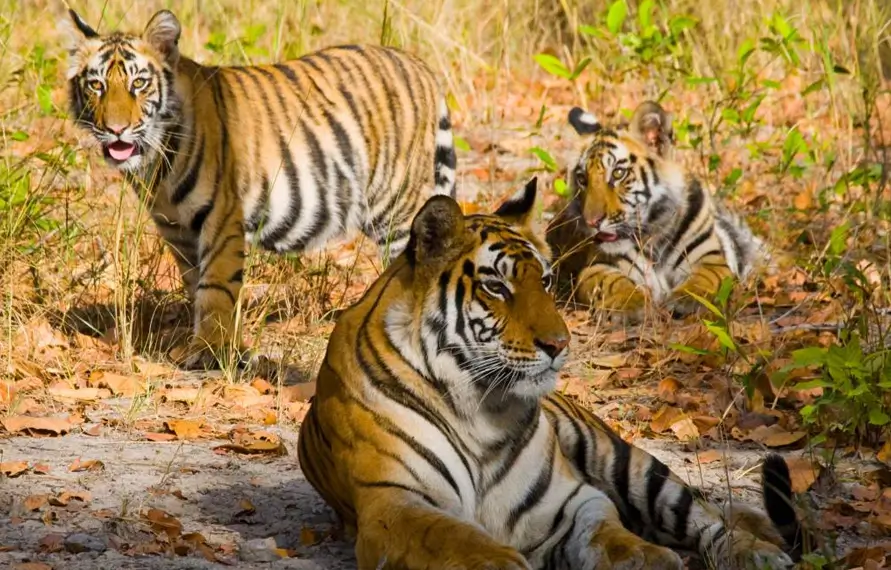
The wake-up call is very early today, and it is worth every lost minute of sleep. At Chandrapur you leave the train in the dark and drive to the Tadoba Andhari Tiger Reserve, the oldest and largest national park in Maharashtra. Tadoba is named after a local forest deity and the Andhari River, and its dry teak forest, bamboo thickets and lakes support one of the highest tiger densities in central India. Many experienced guides consider it the best place in the state, and often in the country, to see a wild tiger.
The morning drive follows a set route assigned by the forest department, and your naturalist listens for the alarm calls of deer and monkeys that warn of a predator nearby. Tadoba Lake and the waterholes around it are the focus of attention in the dry months, as tigers come down to drink and cool off. Mugger crocodiles bask on the banks, and the reserve is also home to leopards, sloth bears, wild dogs and Indian bison. Each vehicle stays on the tracks, and silence is expected inside the core zone.
After the drive you are taken to a forest lodge for breakfast and lunch, with a talk by a naturalist on tiger conservation and the challenges of protecting big cats in a crowded country. These conversations are often a highlight, as the speakers share stories of individual tigers and how the forest has changed. You return to the train in the afternoon to rest. In the evening the bartender serves cocktails as the train begins its overnight journey west toward Jalgaon, with dinner on board.
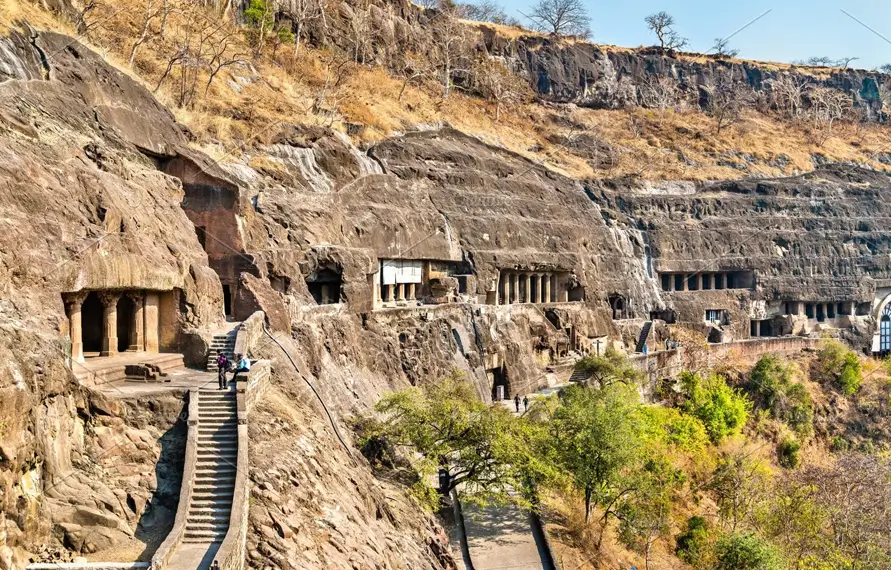
Breakfast is served at Jalgaon, and then you drive about one hour and forty-five minutes to the Ajanta Caves. After two days in the forest, this is a complete change of pace. The caves line the inside of a sweeping horseshoe-shaped gorge, and the setting itself is quietly dramatic, with the Waghora River running far below. Today you approach Ajanta as a gallery: guides here focus on the paintings, which are among the oldest surviving examples of Indian mural art and have influenced painters across Asia.
The finest murals are in Caves 1, 2, 16 and 17. Look for the scenes from the Jataka tales, stories of the Buddha's earlier lives in which he appears as a prince, an elephant or a monkey king. The colors were made from local minerals, and even after fifteen centuries, the reds, ochres and lapis blues remain clear in places. Flash photography is forbidden, light is kept dim and visitor numbers in some caves are controlled, so be patient and let your eyes adjust. Ajanta is closed on Mondays.
Expect a fair number of steps along the gorge path. Porters who carry visitors in seated litters are available at the site for anyone who finds the walk hard, and your guide can arrange this in advance. You return to Jalgaon for lunch on board. The afternoon is free as the train crosses farming country dotted with cotton and banana fields. Carom boards come out in the lounge, the spa takes bookings and the train runs west through the evening toward Nashik, with dinner served on board and an early night recommended.
The last full day brings you to Nashik, a city with two identities. In the morning your guide takes you down to the Godavari riverbank, where pilgrims gather at stone bathing steps near Ram Kund, a sacred pool linked to the epic Ramayana. The guide explains the meaning of the rituals you see, from offerings of flowers and milk to the rites families perform for departed relatives. The river market here sells everything from brass vessels to fresh vegetables, and it gives a lively, unfiltered look at daily life in a holy city.
From the river you drive out to one of the vineyards that have made Nashik the capital of Indian wine. Grapes have been grown here for generations, but quality winemaking only took off in the last few decades, and the best estates now produce crisp whites and good sparkling wines. A walk through the vines is followed by a tasting and lunch, often served on a terrace looking over the rows of grapes toward the hills. Guests on the March departure may arrive during the grape harvest.
The train leaves Nashik in the afternoon for the short run back toward Mumbai. This is the evening of the farewell dinner, and the restaurant team usually goes to some trouble over it. It is also the time to settle any bar or spa bills with the guest relations desk and pack your bags, since arrival is early the next morning. Exchange contacts with the friends you made on safari and compare your best photographs over a final drink. More than one tiger has been identified by its stripe pattern in the lounge on this last night.
Breakfast is served as the train comes down through the Sahyadri hills and into the outskirts of the city, and the Deccan Odyssey pulls into Chhatrapati Shivaji Maharaj Terminus in the morning. Your cabin attendant helps with luggage, and our driver is waiting on the platform. If you have a hotel booked, we take you straight there for an early check-in where possible. If you are flying out, we drive you to the international airport, which takes 45 to 75 minutes depending on the time of day.
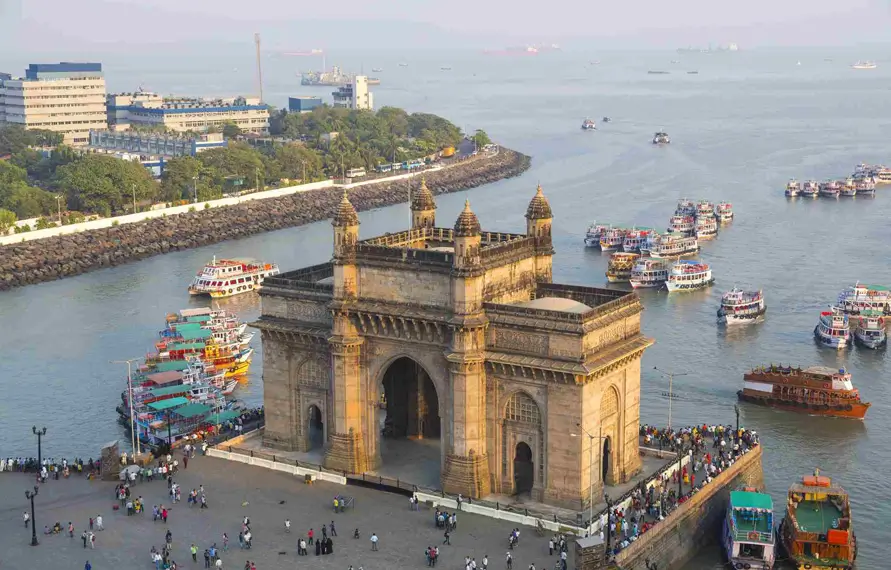
A spare day in Mumbai is easy to fill. The Gateway of India, the Taj Mahal Palace hotel and the Victorian buildings of the Fort district are all within a short drive of the station. The Chhatrapati Shivaji Maharaj Vastu Sangrahalaya, the city's main museum, has excellent galleries of sculpture and miniature painting, and the Kala Ghoda area is full of cafes and small galleries. We recommend a guide for half a day if you would like to see the city properly, and an evening stroll along Marine Drive at sunset.
Wildlife lovers often want more after this week. Top Indian Holidays can arrange extra nights at a lodge in Tadoba or Pench, a trip to Kanha or Bandhavgarh in Madhya Pradesh, or a few days on the Konkan coast to rest before flying home. We handle the flights, private cars, naturalists and safari permits, which in the busy months need booking well in advance. Our team is available around the clock until you leave India, and we follow up afterward to hear how your trip went.
Fill out this form with all the required information. Within 12 hours, we will provide you with a tailor-made itinerary at the best price.
Read the reviews of our esteemed client's, go through the experiences they had with Top Indian Holidays.
Whether you're planning your first India trip or returning to explore deeper — get honest, expert advice from someone who knows every corner of this country. No pressure, no cost.


 info@topindianholidays.net
 +91-8955000999