📅 Last Updated On: 05 Feb 2026
⏱ 10 Min Read
Cultural and Tribal Tour Packages Across North East India
A
Admin
Founder -India Travel Expert
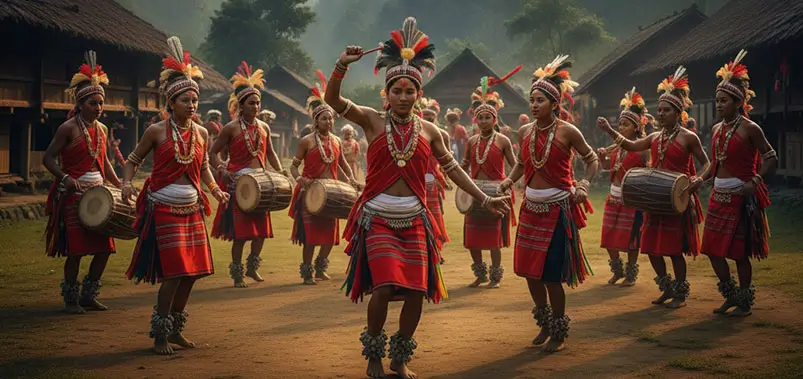
North East India represents one of the most culturally diverse and socially distinct regions of the country. Home to a wide range of indigenous communities, the region preserves traditions, languages, belief systems, and social structures that continue to guide everyday life. Travel here offers the opportunity to witness culture as a living system rather than a preserved artifact. Carefully designed cultural and tribal tour packages across North East India allow travelers to engage with this diversity respectfully and meaningfully.
Unlike destinations where cultural experiences are often staged or condensed into performances, cultural life in North East India unfolds naturally within villages, markets, homes, and community spaces. Traditions are practiced for continuity rather than display. Tribal tour packages designed for this region emphasize patience, observation, and cultural sensitivity rather than structured sightseeing.
Understanding Cultural Diversity in North East India
Cultural diversity in North East India is shaped by geography, history, and long-standing community structures. Mountains, forests, and river systems have influenced settlement patterns and social organization, allowing distinct cultures to develop independently.
Each region reflects a unique combination of language, attire, architecture, and customs. Cultural identity is often linked to clan systems, village affiliations, and oral history rather than written documentation. This diversity creates a mosaic of traditions that coexist within a relatively compact geographic area.
Cultural and tribal tour packages across North East India are designed to introduce travelers to this diversity without attempting to homogenize experiences.
Indigenous Communities and Identity
Indigenous communities form the cultural backbone of North East India. Their identities are closely tied to land, ancestry, and collective memory. Community values emphasize cooperation, respect for elders, and continuity of tradition.
Explore the Living Cultures of North East India
Discover authentic tribal villages, ancient traditions, and indigenous heritage with our custom North East India cultural and tribal tour packages designed by local experts.
WhatsApp Now Contact Us
Social structures vary across regions. Some communities follow matrilineal systems, while others organize society through patriarchal or clan-based governance. Decision-making often occurs at the community level, reinforcing shared responsibility.
Tribal tour packages provide opportunities to observe these systems respectfully, offering insight into alternative social models shaped by environment and tradition.
Village Life as the Center of Cultural Experience
Village life represents the most authentic expression of culture in North East India. Villages function as social units where traditions are practiced daily rather than reserved for special occasions.
Homes are constructed using locally available materials, reflecting adaptation to climate and terrain. Shared spaces such as courtyards, community halls, and open fields serve as centers for social interaction.
Cultural tour packages that include village stays or extended village visits allow travelers to observe routines, celebrations, and communal activities organically.
Traditional Architecture and Settlement Patterns
Architecture in North East India reflects environmental awareness and cultural values. Houses are designed to withstand rainfall, humidity, and temperature variations. Elevated structures, sloped roofs, and natural ventilation are common features.
Settlement layouts emphasize community cohesion. Villages are often organized around shared spaces that facilitate communication and collective activities. Architectural design supports social interaction rather than individual isolation.
Understanding architecture adds depth to cultural exploration, revealing how lifestyle and environment shape living spaces.
Language, Oral Traditions, and Storytelling
Language diversity is a defining feature of North East India. Numerous languages and dialects are spoken across the region, many of which rely heavily on oral transmission.
Storytelling, songs, and folklore play a central role in preserving history and values. Elders pass knowledge to younger generations through narratives that reflect moral lessons, ancestral memory, and environmental awareness.
Cultural tour packages emphasize listening and observation, allowing travelers to appreciate oral traditions without disrupting their natural context.
Festivals and Community Celebrations
Festivals across North East India are deeply rooted in agricultural cycles, spiritual beliefs, and historical events. These celebrations bring entire communities together through rituals, music, dance, and shared meals.
Festivals are not performances arranged for visitors but communal expressions of identity and gratitude. Observing festivals requires cultural sensitivity and respect for local customs.
Tribal tour packages that align with festival periods offer valuable insight into community cohesion and cultural continuity.
Rituals, Belief Systems, and Spiritual Life
Spiritual beliefs in North East India often reflect close relationships with nature and ancestors. Mountains, forests, rivers, and celestial bodies are frequently regarded as sacred elements.
Rituals mark life events such as birth, marriage, harvest, and death. These ceremonies reinforce social bonds and maintain balance between human life and natural forces.
Cultural tour packages allow travelers to observe spiritual practices respectfully, gaining understanding without intrusion.
Traditional Clothing and Material Culture
Traditional attire across North East India varies widely in style, material, and symbolism. Clothing often reflects community identity, social status, and ceremonial significance.
Handwoven fabrics, natural dyes, and intricate patterns demonstrate craftsmanship passed down through generations. Accessories and ornaments hold cultural meaning rather than decorative purpose alone.
Material culture provides tangible insight into identity, values, and history.
Art, Craft, and Indigenous Skills
Indigenous art and craft traditions include weaving, wood carving, metalwork, pottery, and basketry. These skills are integrated into daily life rather than separated as commercial art forms.
Craft production often serves functional needs while expressing aesthetic values. Observing artisans at work reveals patience, precision, and cultural knowledge embedded in craft traditions.
Cultural tour packages support appreciation of craftsmanship without encouraging commercialization that disrupts tradition.
Agriculture and Cultural Landscapes
Agriculture shapes cultural landscapes across North East India. Farming practices are adapted to terrain and climate, including terraced cultivation and seasonal cropping.
Fields, forests, and water sources form interconnected cultural spaces. Agricultural cycles influence festivals, rituals, and daily routines.
Understanding agricultural landscapes adds context to cultural experiences and highlights sustainable practices.
Cultural Sensitivity and Ethical Engagement
Engaging with indigenous cultures requires sensitivity and humility. Photography, interaction, and participation should be guided by consent and respect.
Cultural tour packages emphasize ethical engagement, encouraging travelers to observe rather than intervene. Respectful behavior fosters trust and positive exchange.
Ethical engagement ensures that cultural tourism benefits communities rather than exploiting them.
Experience Authentic Tribal Life in North East India
Travel beyond tourist trails and connect with indigenous communities, tribal festivals, and age-old traditions through our expertly curated North East India cultural tours.
Chat on WhatsApp Get Custom Itinerary
Daily Social Life and Community Interaction
Daily social life across North East India is centered on community interaction rather than individual routines. Villages operate as collective units where cooperation shapes work, celebrations, and decision-making. Social bonds are reinforced through shared labor, communal meals, and regular gatherings.
Travelers who spend time in these settings observe how social responsibility replaces individualism. Elders guide community values, while younger members learn through participation rather than instruction. Cultural tour packages that allow extended exposure help travelers understand how community cohesion sustains tradition.
This social fabric gives cultural travel depth beyond surface observation.
Food Traditions and Cultural Identity
Food holds deep cultural meaning across indigenous communities. Ingredients are sourced locally, prepared seasonally, and shared communally. Meals are often simple yet nourishing, reflecting harmony with environment rather than abundance.
Food preparation methods carry generational knowledge. Smoking, fermentation, and slow cooking preserve flavors and nutrients. Eating together reinforces social bonds and cultural continuity.
Cultural and tribal tour packages encourage respectful participation in local food practices, enhancing understanding through shared experience.
Music, Dance, and Performative Traditions
Music and dance play an important role in cultural expression, storytelling, and ritual practice. These art forms are often tied to agricultural cycles, spiritual beliefs, and historical narratives.
In many communities, music and dance are participatory rather than performative. Community members engage collectively during celebrations rather than presenting shows for visitors. Instruments, rhythms, and movements reflect regional identity and environmental influence.
Observing these traditions offers insight into emotional expression and cultural memory.
Gender Roles and Social Balance
Gender roles within indigenous communities vary widely across North East India. Some societies follow matrilineal systems where lineage and property pass through women, while others practice patriarchal or balanced structures.
These roles influence inheritance, household organization, and social responsibility. Understanding gender dynamics provides deeper insight into community values and social balance.
Cultural tour packages emphasize observation rather than judgment, allowing travelers to appreciate diversity in social organization.
Education, Knowledge Transmission, and Change
Traditional knowledge is transmitted through participation, storytelling, and observation rather than formal schooling alone. Elders play a central role in educating younger generations about customs, environment, and social responsibility.
At the same time, modern education introduces new ideas and opportunities. Communities navigate change by adapting selectively while preserving core values.
Cultural travel reveals this balance between continuity and transformation.
Youth, Identity, and Cultural Continuity
Younger generations play a crucial role in sustaining cultural identity. Participation in rituals, festivals, and community work reinforces belonging and responsibility.
Youth engagement ensures that traditions evolve rather than disappear. Cultural tour packages that highlight intergenerational interaction reveal how identity adapts while remaining rooted.
This dynamic perspective challenges static views of tradition.
Markets as Cultural Meeting Points
Local markets serve as economic and social hubs. They reflect agricultural cycles, regional cuisine, and craft traditions. Markets also provide spaces for conversation, news exchange, and social bonding.
Visiting markets allows travelers to observe cultural interaction in its most natural form. Transactions are often accompanied by conversation, humor, and shared understanding.
Markets offer insight into everyday cultural life beyond ceremonial settings.
Clothing, Symbols, and Identity Markers
Traditional clothing and ornaments function as identity markers. Patterns, colors, and materials convey information about community, status, and occasion.
Clothing is often handmade using local fibers and techniques. Wearing traditional attire during festivals reinforces cultural pride and continuity.
Understanding symbolism adds depth to visual observation and cultural appreciation.
Cultural Landscapes and Sacred Spaces
Cultural landscapes include sacred groves, ancestral sites, and ritual spaces integrated into natural environments. These spaces are protected through belief systems rather than formal boundaries.
Sacred spaces reflect respect for nature and ancestors. Visiting such areas requires sensitivity and awareness.
Cultural tour packages emphasize respectful distance and observation, preserving sanctity.
Role of Nature in Cultural Worldview
Nature is central to indigenous worldview. Forests, rivers, mountains, and seasons are viewed as living entities rather than resources alone.
This perspective influences rituals, agriculture, and social values. Cultural travel reveals how environmental respect shapes daily life and long-term sustainability.
Understanding this worldview enriches cultural engagement.
Ethical Cultural Tourism Practices
Ethical cultural tourism prioritizes dignity, consent, and mutual respect. Travelers are encouraged to listen, observe, and learn rather than document or intervene.
Cultural and tribal tour packages emphasize ethical guidelines that protect community integrity. Responsible behavior ensures positive impact and long-term trust.
Ethical travel benefits both visitors and host communities.
Emotional Connection Through Cultural Immersion
Extended cultural immersion fosters emotional connection. Travelers develop familiarity with routines, faces, and rhythms, creating meaningful memories.
This connection transforms perception and understanding. Cultural travel becomes reflective rather than consumptive.
Cultural and tribal tour packages across North East India prioritize this emotional depth.
Long-Term Value of Cultural and Tribal Travel
Cultural and tribal travel offers lasting value through insight, empathy, and respect. Travelers return with expanded perspectives rather than souvenirs alone.
This value supports sustainable tourism that honors living heritage.
Cultural journeys contribute to preservation through awareness.
Why Cultural and Tribal Tour Packages Matter
These tour packages matter because they protect authenticity. They allow culture to exist on its own terms rather than being reshaped for tourism.
By emphasizing patience, respect, and learning, cultural and tribal tour packages create meaningful exchange.
Travel becomes a bridge rather than a spectacle.



 info@topindianholidays.net
 +91-8955000999