


 info@topindianholidays.net
 +91-8955000999

Hot Air Balloon Ride in Jaipur
Lift off as the sky turns orange and drift over villages, mustard fields and the Aravalli hills while Jaipur is still waking up.
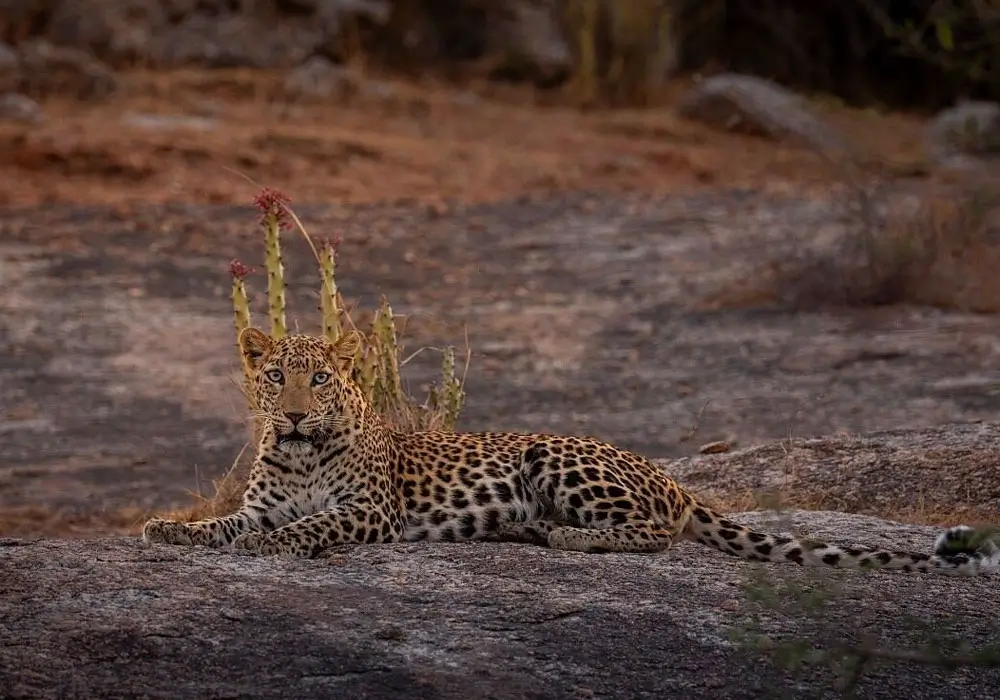
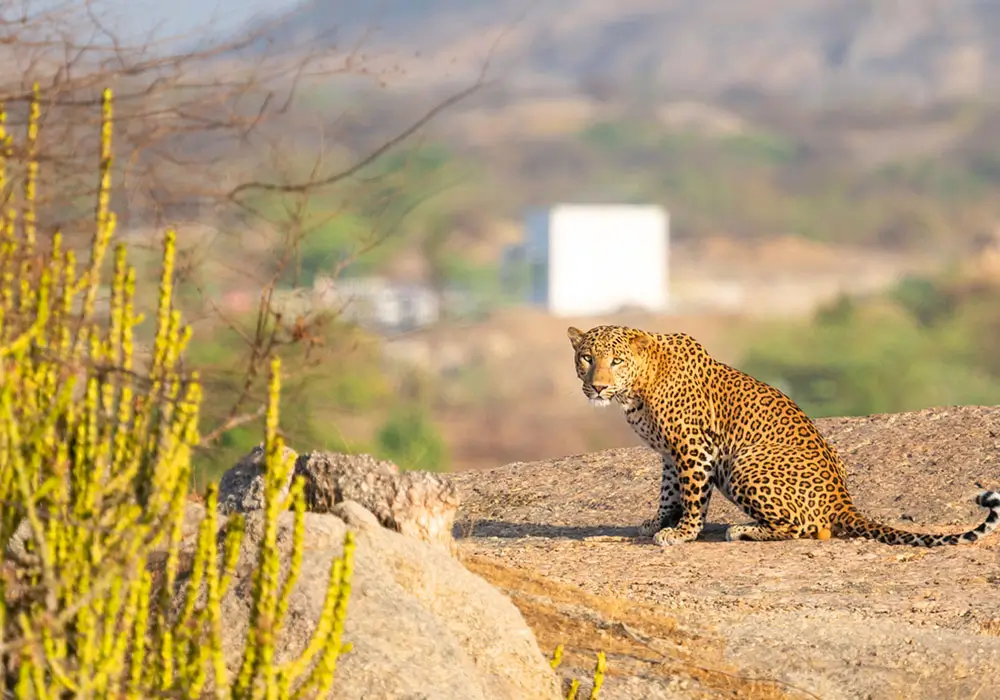
View Experience ›Watch for a leopard stretched out on a boulder at dawn, above fields, shepherds and a temple, in a corner of Rajasthan where people and wild cats share the land.
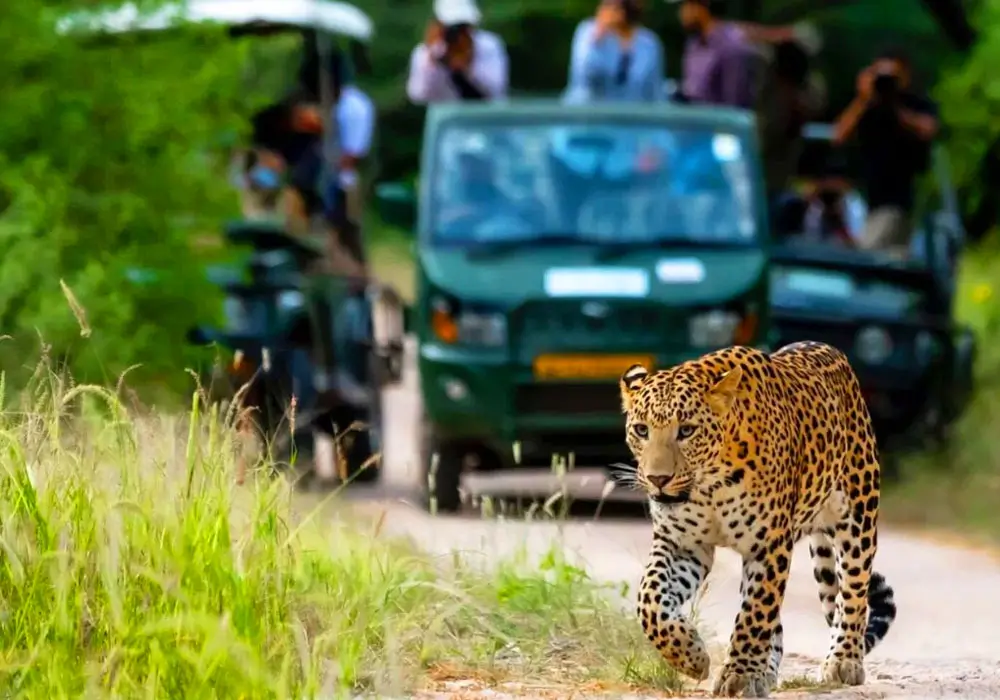
Jawai does not look like a wildlife reserve, and that is exactly what makes it special. There are no park gates, no fences and no zones. Instead there is a scattered landscape of granite hills rising out of farmland in the Pali district of southern Rajasthan, huge rounded boulders piled on top of each other, with caves and ledges in their sides. Between the hills lie mustard and wheat fields, small villages, a few dusty roads and, at the centre, the wide waters of the Jawai Bandh reservoir. Leopards live in the caves of these hills, sometimes only a short walk from a village temple or a shepherd’s hut.
A Jawai leopard safari is less about driving through a forest and more about watching rock. You set out in an open jeep at first light with a local tracker who has grown up here. You stop below a hill, switch off the engine and scan the boulders with binoculars. The colour of a leopard’s coat blends almost perfectly with the granite, so a sighting often begins with a tracker quietly saying “there” and pointing at what looks like a patch of shadow until it lifts its head.
What stays with many guests is not only the leopards but the people living alongside them. Rabari herders in red turbans walk their goats and sheep across the same hills, and many temples sit on hilltops where leopards rest nearby. Local families have lived with these cats for generations with a remarkable degree of tolerance. Visiting Jawai is a chance to see a different model of coexistence from the protected national parks elsewhere in India.
We will be clear about two things. Jawai is not a national park, so the experience depends on private lodges and local guides who follow good practice. And leopards are wild: sightings are never guaranteed. Planning two nights or more, with several drives, gives you the fairest chance.
1. Arrive and settle in
Guests stay in Jawai itself, at a lodge or camp among the hills. We plan your arrival for around lunchtime so that you can rest before the first drive in the late afternoon. Most lodges arrange their own safaris with experienced drivers and trackers, and we choose properties that follow ethical practice.
2. Early start or late afternoon
Leopards are most active at dawn and dusk, so drives run in the early morning and again from late afternoon until dusk. In the middle of the day the cats rest deep in the rock, and you rest at the lodge.
3. Meeting your tracker
Your tracker knows the hills, the individual leopards that use them, and the local herders and villagers who often share news of recent movement. They will explain which hills to try first and why, depending on what has been seen in the past few days.
4. Driving between the hills
The open jeep follows farm tracks and village roads between the granite outcrops. Unlike in a national park, you will pass fields, wells, cattle and people going about their day. This is part of the experience, and a reminder that you are a guest in someone else’s home.
5. Stopping and scanning
Most of the safari is spent parked at a respectful distance below a hill, watching the boulders, caves and ledges. Leopards often sit at the mouth of a cave or on a high rock to warm up in the early sun, or come out to the top of a boulder as evening falls. Patience is everything.
6. Watching a sighting
When a leopard appears, the vehicle stays where it is. You watch through binoculars or a long lens while the cat goes about its business: grooming, resting, watching the fields, sometimes moving down the rock or calling to cubs. A good tracker never drives closer to get a better view.
7. Sundowner or breakfast break
Many lodges add a stop for tea at sunrise or a drink at sunset at a scenic point, often near the reservoir or on a quiet hill. It is a chance to stretch your legs and take in the landscape.
8. Back to the lodge
After the morning drive, breakfast and a rest. After the evening drive, dinner and an early night, ready for the next dawn.
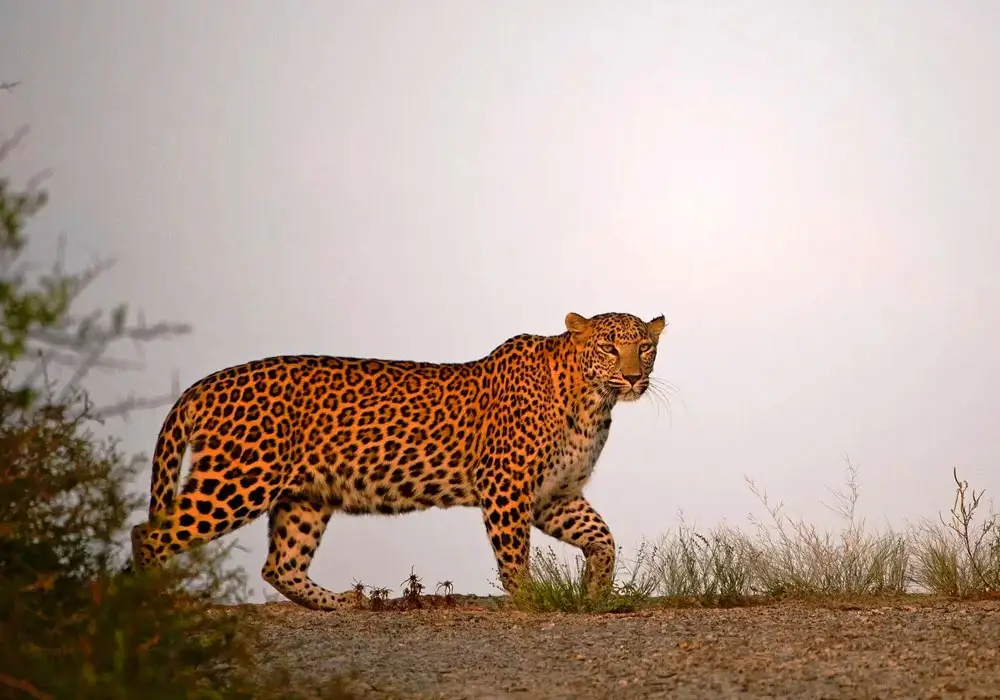
Leopards. The main reason to come. Jawai’s leopards are known for using open rocks rather than dense forest, which means that when they are visible, you often see the whole animal, sometimes with cubs, against the granite. Some hills are used by a family over many seasons, and your tracker will know their stories.
The granite landscape. The hills are ancient, smoothed by wind and weather into great domes, towers and stacked boulders. At sunrise and sunset they glow gold and pink. Even on a morning with no leopard, the landscape is worth the drive.
Rabari herders. The Rabari are a pastoral community, and men in bright red turbans with long white clothes and women in dark, embroidered dress are a familiar sight on the hills, moving their flocks to grazing. Their relationship with the leopards is one of the most interesting parts of Jawai.
Hilltop temples. Small temples sit on many hills, some reached by long flights of steps. Leopards are sometimes seen near them, a striking sight that says a great deal about local tolerance.
Jawai Bandh and its crocodiles. The Jawai Bandh is a large reservoir built on the Jawai river, and it supports mugger crocodiles, which you can often see basking on the banks or lying in the shallows.
Birds. In winter the reservoir draws migratory birds. Look for bar-headed geese, flamingos at times, demoiselle cranes in the fields, painted storks, ruddy shelducks, cormorants and many waders. Resident birds of prey hunt over the hills.
Other wildlife. Striped hyenas, jungle cats, Indian foxes, nilgai and jackals live here too, though most are shy. Your tracker will point out tracks and signs as well as animals.
The reason Jawai matters goes beyond photography. Across much of India, leopards and people come into conflict as towns and farms expand into wild land. In Jawai, leopards have shared the hills with villages and herders for generations, with a level of tolerance that surprises most visitors.
Part of the explanation lies in local belief and custom. The hills are sacred to many families, temples sit on the rocks, and there is a long tradition of accepting the leopard as part of the land. Herders may occasionally lose a goat, yet you rarely hear of revenge killings here.
Tourism brings both good and bad. Done well, it gives local people work as trackers, drivers, cooks and lodge staff, and it gives the leopards value in the eyes of the community. Done badly, with too many jeeps crowding a hill or vehicles chasing animals, it could spoil the fragile balance. This is why we choose lodges and guides carefully, and why we ask guests to follow simple rules.
Between the morning and evening drives there are long, slow hours, and these are part of the pleasure of staying in Jawai rather than passing through.
Late breakfast and rest. After an early start, most guests return to the lodge for breakfast on a terrace facing the hills, then sleep, read or swim through the hottest part of the day. Many lodges are designed around views of the boulders, and it is not unusual to spot a leopard from the lodge itself with binoculars.
A walk through a village. With a local guide, a short visit to a nearby village shows how farming families and herders live: wells and fields, cattle being milked, women grinding spices or carrying water, children on their way home from school. Go in small numbers, ask before taking photographs and let your guide lead conversations. Buying local craft or produce directly, where it is offered, is a simple way to see that your visit benefits the community.
Meeting herders on the hills. With permission and through your guide, you may sit briefly with a Rabari herder as the flock grazes, hear how they think about the leopards and see the long staff and simple kit they carry across the hills. This is never a performance. It happens only when it is welcome, and we prefer a quiet chat to a photo session.
Sunset at the reservoir. The banks of the Jawai Bandh are beautiful in the last hour of light, with water birds coming in, fishermen working and the granite hills reflected in the water. Some lodges add a short walk or a drive along the shore.
Stargazing. Jawai is far from city lights. On clear winter nights the sky above the hills is full of stars, and some lodges set up telescopes or simply a fire under the open sky after dinner.
Accommodation in Jawai ranges from simple guesthouses to very high-end tented camps and lodges. The lodge matters more here than in most places, because in Jawai the lodge usually runs the safari as well.
What we look for. Lodges with experienced, local trackers; small numbers of vehicles out at once; clear rules against baiting, chasing and spotlighting; and genuine links with the surrounding villages through jobs and local supplies.
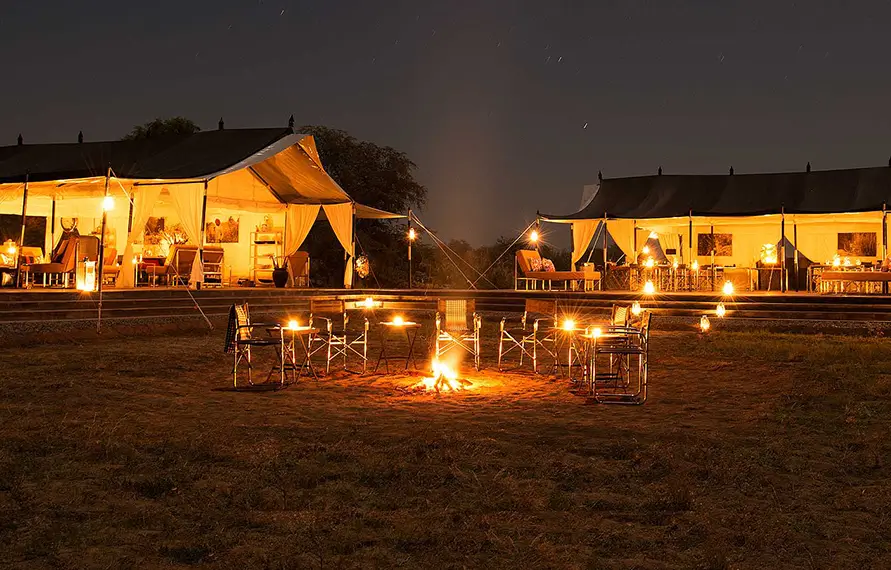
Tented camp or lodge? Luxury tented camps put you close to the sounds of the night, with canvas walls, private decks and open views of the hills. Stone-built lodges and boutique properties offer thicker walls, cooler rooms in the hot months and a slightly more conventional hotel feel. Both work well, and we will suggest what suits your style and season.
Safaris included or extra. Some properties include their drives in the stay, others charge separately. We explain clearly what your quote covers.
Leopards live in Jawai all year, so sightings are possible in every season. Because Jawai is not a national park, there is no formal closure period, but some lodges close for part of the hottest weeks or the monsoon, so we check for your dates.
October to March. The most popular time. Days are pleasant and mornings and evenings can be cold in an open jeep, especially from December to February. Migratory birds arrive on the reservoir, and the fields are green with crops.
April to June. Very hot in the middle of the day. Water is scarce, and leopards are often seen near shade and water. Drives are concentrated in the coolest hours. Good for those who handle heat well.
July to September. The monsoon turns the hills and fields green and fills the reservoir. The landscape looks fresh and dramatic, with fewer visitors, although rain can interrupt drives.
Where Jawai sits. Jawai lies between Udaipur and Jodhpur, which makes it an easy addition to a Rajasthan route. By road it is around two to three hours from Udaipur and around two and a half to three and a half hours from Jodhpur, depending on traffic and the route. The nearest railway station is Jawai Bandh or nearby Falna. We confirm the timing when we plan your day.
Ranakpur on the way. The great Jain temple at Ranakpur, with its marble halls and hundreds of carved pillars, is on the road between Udaipur and Jawai or Jodhpur. Stopping there on your transfer breaks the journey beautifully. The main temple opens to non-Jain visitors at set hours, usually from around midday, so we time the visit.
Kumbhalgarh Fort. The long walls of Kumbhalgarh can also be combined on the way between Udaipur and Jawai, though doing both Ranakpur and Kumbhalgarh on one transfer day makes it long.
Two nights minimum. One night gives you an evening and a morning drive. Two nights give you four drives, and a much better chance of a good leopard sighting.
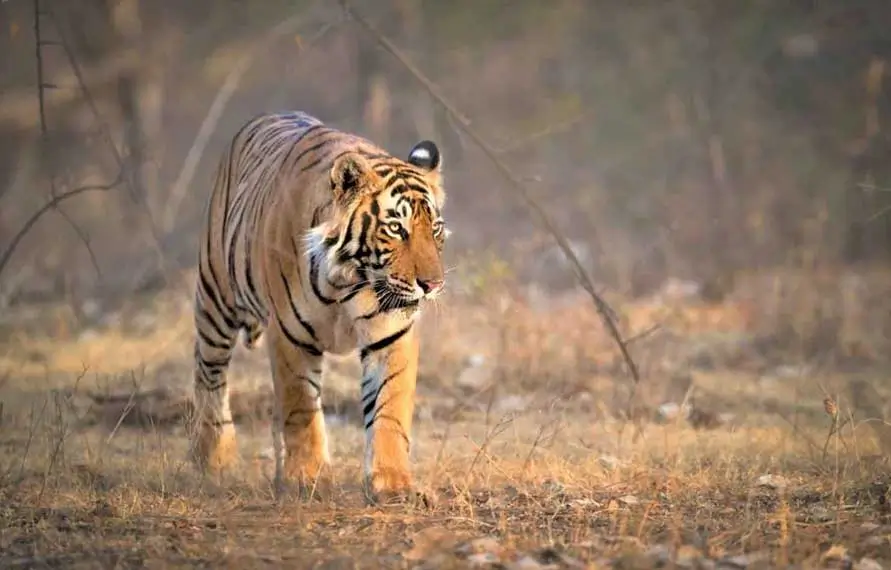
Pair it with. In Udaipur, a sunset boat ride on Lake Pichola makes a gentle contrast with early safari mornings. If big cats are your passion, add a Ranthambore tiger safari to the same trip. Closer to Jaipur, our ethical elephant sanctuary visit or a night in the desert adds a different side of Rajasthan.
Bring and wear - Warm layers, hat and gloves for winter dawns - Neutral, earthy colours - Binoculars and a camera with a zoom lens - Scarf against dust - Sunscreen, sunglasses and a cap - Comfortable closed shoes
Leave behind - Bright or white clothing - Drones and tripods - Spotlights and torches for animal viewing - Strong perfume - Expectations of a guaranteed sighting
Tell us your Rajasthan route and we will fit two nights in Jawai between Udaipur and Jodhpur, with the right lodge and drives.
Call & WhatsApp +91-9828085426 or email info@topindianholidays.net.
See more ideas on our Top Experiences in India page.
Tell us your travel dates and we will check availability and fit this experience into the right day of your itinerary. Reply within 12 hours.
Check Availability› Chat on WhatsApp› Send an Enquiry›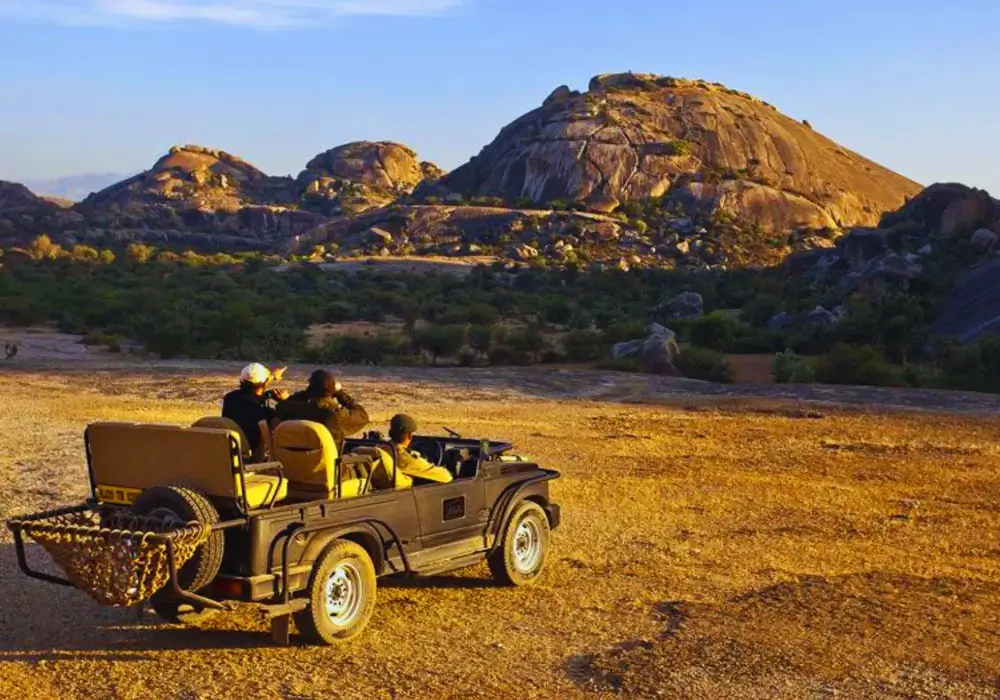



 🌙 14 Nights / 15 Days
Luxury
Bangalore - Kabini - Nagarhole... Bangalore - Kabini - Nagarhole - Bandipur - Periyar - Wayanad - Kochi Show More
 🌙 09 Nights / 10 Days
Luxury
Delhi - Agra - Jaipur... Delhi - Agra - Jaipur - Udaipur - Jawai - Jodhpur Show More
 🌙 10 Nights / 11 Days
Luxury
Delhi - Udaipur - Jaipur... Delhi - Udaipur - Jaipur - ranthambore - Fatehpur Sikri - Agra - Delhi Show More
 🌙 9 Nights / 10 Days
Delhi -Jaipur - Agra -... Delhi -Jaipur - Agra - Mathura - Umaria - Bandhavgarh - Delhi Show More
If you love wildlife or quiet landscapes, yes. It fits naturally between Udaipur and Jodhpur without much extra driving, and two nights here give you a calm break from city sightseeing.
They are different experiences. Ranthambore is a national park for tigers, with zones and permits. Jawai is open countryside where you look for leopards on rocks near villages. If you have time, doing both makes a strong wildlife trip.
Neutral colours, closed shoes and layers. Winter mornings in an open jeep are cold, so bring a warm jacket and hat. In hot months, a cap, sunglasses and sunscreen matter.
Yes, children usually can join, but drives involve long, quiet waits. They suit children who enjoy wildlife and can sit patiently. Tell us their ages when you enquire.
Yes, that is the most natural route. Many travellers drive Udaipur to Jawai, stop at Ranakpur on the way, then continue to Jodhpur after two nights.
Mugger crocodiles in the Jawai Bandh, migratory birds in winter, hyenas, foxes, nilgai and plenty of birds of prey. The granite hills and hilltop temples are memorable in themselves.
Leopards in Jawai generally avoid people, and attacks on humans are very rare. On safari you stay in the vehicle and keep your distance, and lodges follow sensible safety practices.
The Rabari are a pastoral community who herd goats, sheep and cattle across these hills, the men often in red turbans. They have lived alongside leopards for generations. Please ask before taking photographs of them.
It can be, when done well. We work with lodges that do not bait, do not chase leopards, keep vehicles at a distance and respect local people. Ask us about the property we choose and its safari practices.
Two nights is our recommended minimum, giving you four drives. One night gives only an evening and a morning drive, which is a short window for leopards.
October to March is the most comfortable, with pleasant days, cold mornings and migratory birds on the reservoir. Leopards are present all year, and April to June can bring good sightings near water, though it is very hot.
Jawai lies between Udaipur and Jodhpur in southern Rajasthan. By road it is around two to three hours from Udaipur and around two and a half to three and a half hours from Jodhpur. We arrange your private transfer and time it to arrive before the first drive.
No. Jawai is an area of granite hills, villages and farmland around the Jawai Bandh reservoir in Pali district. There are no park gates or zones, and safaris run through local lodges and trackers.
Sightings are never guaranteed, because leopards are wild and shy. Jawai is known for leopards showing themselves on open rocks at dawn and dusk, and several drives over two nights or more give you a good chance.

Whether you're planning your first India trip or returning to explore deeper, get honest, expert advice from someone who knows every corner of this country. No pressure, no cost.