04 Nights / 05 Days Fully Guided Tours Private Car
Mumbai - Aurangabad - Mumbai
India's ancient civilizations expressed human experience - including human love, desire, and the full spectrum of gender and identity - with an openness and an artistic sophistication that continues to astonish the modern world. This 4 Nights / 5 Days Queer Travel Mumbai & Ajanta Ellora Caves Tour combines the extraordinary cosmopolitan energy of Mumbai - India's most LGBTQ+ vibrant city - with a journey into one of the most remarkable artistic achievements of the ancient world - the Ajanta and Ellora Caves of Maharashtra - UNESCO World Heritage Sites that rank among the most extraordinary cultural monuments anywhere on earth.
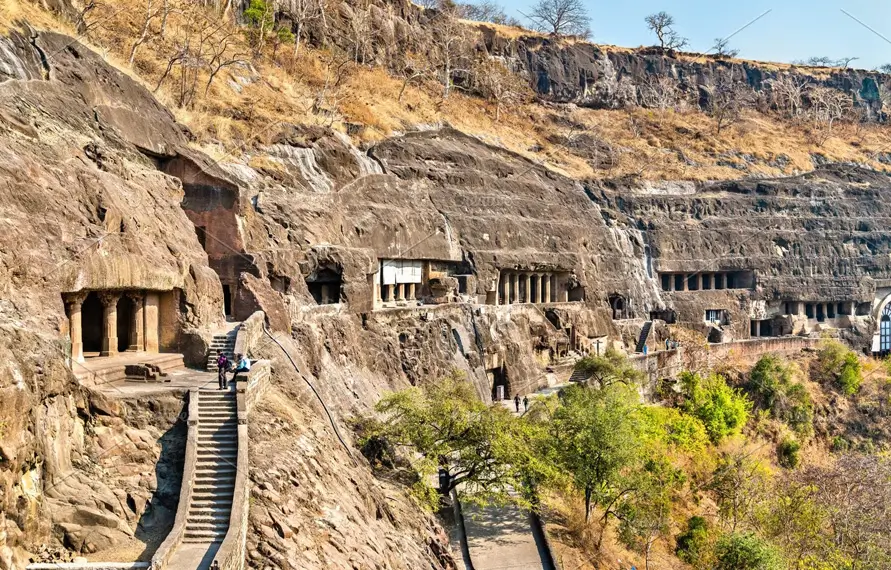
Mumbai needs little introduction for LGBTQ+ travelers - its Pride parades, its Bollywood queer narratives, its Bandra café culture, and its natural urban inclusivity make it the most openly welcoming major city in India. But the Ajanta Caves - 30 rock-cut Buddhist monasteries and temples carved into a horseshoe-shaped gorge in the Sahyadri Hills over a period of nearly 800 years between the 2nd century BC and the 6th century AD - are a revelation of a different kind. Their painted interior walls constitute the finest surviving examples of ancient Indian painting anywhere in the world - a vivid, sensuous, breathtakingly accomplished record of Buddhist court life, spiritual narrative, and the human form depicted with a naturalism and an emotional sophistication that feels astonishingly contemporary. For LGBTQ+ travelers drawn to art, history, and the evidence of ancient cultures that understood beauty and desire with great nuance - Ajanta is profoundly moving.
The Ellora Caves - 34 monasteries and temples representing Buddhism, Hinduism, and Jainism, carved from the same basalt rock face between the 6th and 11th centuries AD - add a further layer of extraordinary artistic achievement. The Kailasa Temple at Ellora - carved entirely from a single basalt outcrop, its scale and complexity making it one of the greatest single architectural achievements in human history - is a monument that consistently leaves visitors genuinely, quietly speechless.
Together, Mumbai and the Ajanta-Ellora caves create a tour of rare depth and variety - urban and ancient, contemporary and timeless, endlessly stimulating for the queer traveler who comes to India not just to see but to genuinely understand.
Welcome to India's Most Vibrant City
Upon arrival at Chhatrapati Shivaji Maharaj International Airport, your representative will be waiting to escort you to your private air-conditioned vehicle. Transfer to your pre-selected LGBTQ+ welcoming hotel in Bandra or Colaba - both excellent bases for Mumbai exploration.
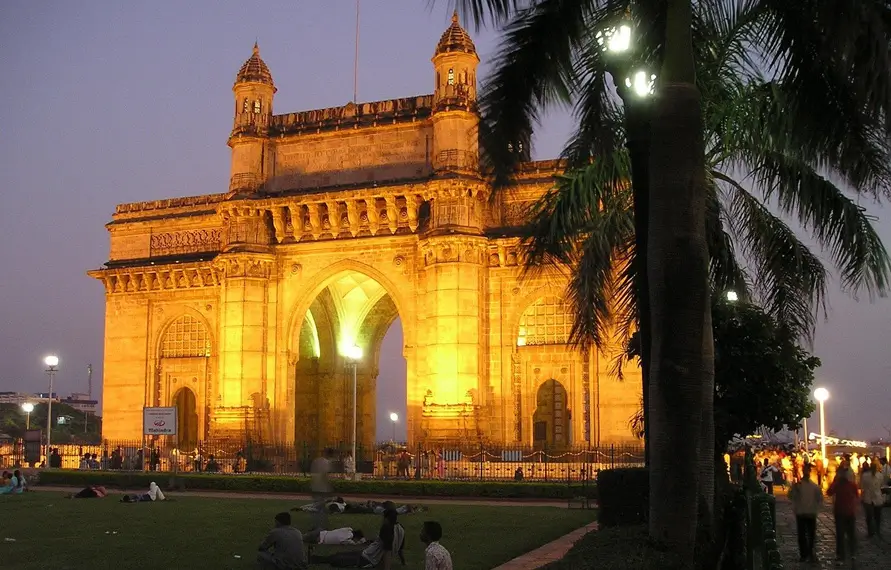
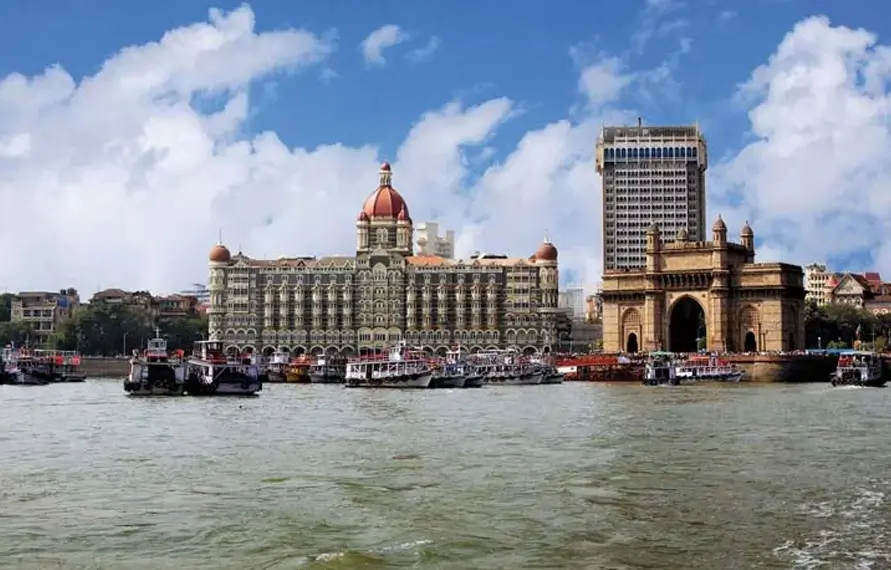
The rest of the day is entirely at your leisure. Mumbai announces itself immediately and completely - its energy, its scale, its noise, and its particular quality of relentless, joyful aliveness making an impression within minutes of stepping outside. If energy permits after your journey, head out for an evening walk along Marine Drive and down to the Gateway of India - the most immediate and most impressive introduction to this extraordinary city that Mumbai offers.
Dinner this evening in Colaba or Bandra - your guide can recommend the right restaurant for your mood and appetite, from fresh seafood to Parsi cuisine to Mumbai's extraordinary street food scene.
Overnight stay in Mumbai.
Bollywood, Bandra & the Many Worlds of Mumbai
After breakfast, your private guide takes you on a full and richly rewarding day through Mumbai - covering the city's most fascinating and most characterful neighborhoods and experiences.
Begin with Dhobi Ghat - the world's largest open-air laundry, its hundreds of washing bays a completely unique Mumbai spectacle - before the morning's main event - a responsible Dharavi community walking tour with a local guide. The insight that Dharavi offers into the extraordinary enterprise, creativity, and community of one of Asia's most remarkable urban environments is one of the most genuinely mind-expanding experiences that Mumbai has to offer any traveler.
The afternoon takes you to Bandra - Mumbai's most cosmopolitan and most openly LGBTQ+ welcoming neighborhood. Walk along Carter Road, explore the café culture of Hill Road, and let your guide introduce you to the spaces that make Bandra what it is for queer travelers. Continue to a Bollywood film city tour or studio visit - an insight into the world's most prolific film industry and its increasingly bold engagement with LGBTQ+ narratives and characters.
End the day at Juhu Beach at sunset - the beach alive with the particular chaotic joy of thousands of Mumbaikars enjoying their city's waterfront at the end of a working day - before dinner in Juhu or Bandra.
Overnight stay in Mumbai.
Ancient Masterpieces in a Hidden Gorge
After breakfast and hotel checkout, your private vehicle departs for Aurangabad - approximately 5 to 6 hours through the landscapes of Maharashtra, or a short 45-minute flight if you prefer to fly. Aurangabad is the gateway city for both Ajanta and Ellora - a city of considerable historical significance in its own right, having served as the capital of the Mughal Emperor Aurangzeb during his long Deccan campaigns.
En route or on arrival, visit the beautiful Bibi Ka Maqbara - the elegant marble mausoleum built in 1660 by Aurangzeb's son Azam Shah in memory of his mother, its design so clearly inspired by the Taj Mahal that it has been called the Mini Taj Mahal of the Deccan. While it does not match the Taj Mahal's perfection of proportion or the luminous quality of its marble, Bibi Ka Maqbara has a quiet, melancholy beauty of its own - and the story of a son building a monument to his mother in imitation of his grandfather's monument to his wife carries its own romantic resonance.
Check into your pre-selected LGBTQ+ welcoming hotel in Aurangabad before setting out in the afternoon for the Ajanta Caves - approximately 100 kilometers from Aurangabad through the beautiful Sahyadri landscape.
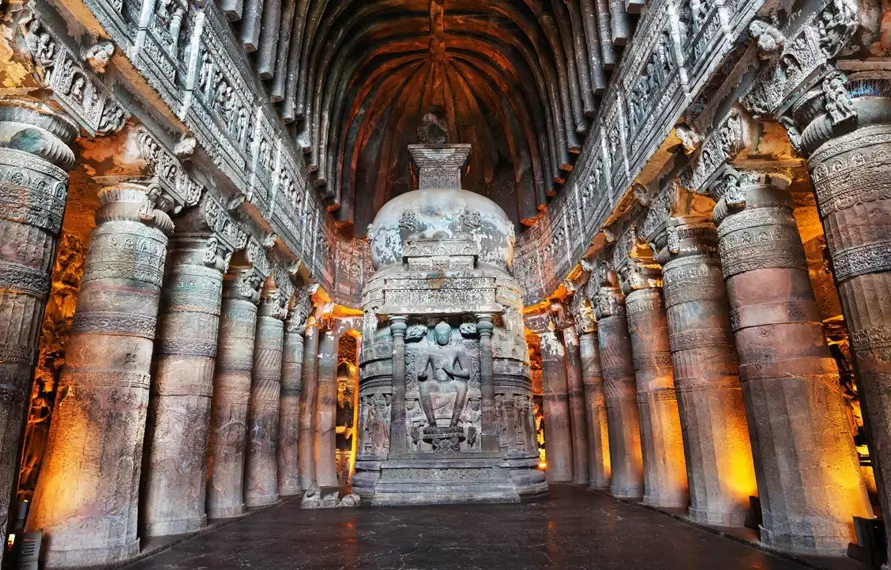
The Ajanta Caves are one of those places that photographs and descriptions simply cannot adequately prepare you for. Thirty rock-cut monasteries and temples carved into the sheer inner wall of a horseshoe-shaped gorge - their painted interior walls constitute the finest surviving examples of ancient Indian painting anywhere in the world. Dating from between the 2nd century BC and the 6th century AD, these paintings depict scenes from the life of the Buddha, Jataka tales of his previous lives, and vivid, sensuous portrayals of royal court life - their naturalism, their emotional sophistication, and their sheer artistic beauty making them among the most extraordinary cultural achievements of the ancient world.
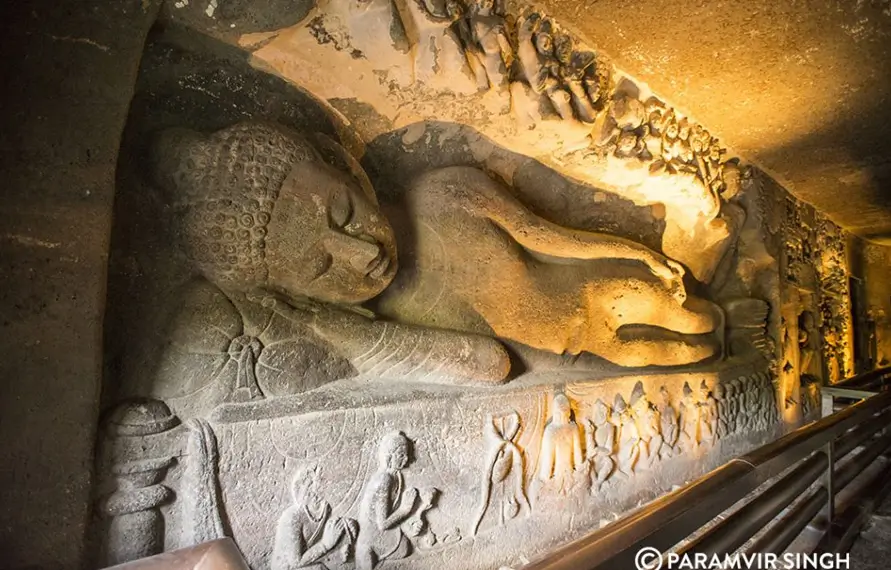
Cave 1 - with its magnificent painted Bodhisattva Padmapani, arguably the most famous single image in Indian painting - and Cave 2 - with its extraordinary painted ceilings and the beautiful Hariti fresco - are the most celebrated. Cave 17 - known as the Cave of Painted Walls - has the most extensive and best-preserved frescoes, its narratives of Jataka tales unfolding across the walls in scenes of extraordinary vividness and detail. Cave 26 - a late-period chaitya hall - houses a magnificent carved reclining Buddha of breathtaking scale and serenity.
For LGBTQ+ travelers drawn to art and ancient civilizations - and to evidence of cultures that depicted the human form and human emotion with intelligence, sophistication, and without shame - an afternoon at Ajanta is a profound and personally significant experience.
Return to Aurangabad for dinner and rest.
Overnight stay in Aurangabad.
The Kailasa Temple - The Greatest Rock-Cut Monument on Earth
After breakfast, your guide takes you on what many travelers describe as the most extraordinary single day of their entire India journey - a full day at the Ellora Caves.
While Ajanta is celebrated for its paintings, Ellora is celebrated for its sculpture and its architecture - and in particular for one monument of such staggering ambition and achievement that it stands in a category entirely its own. The Kailasa Temple (Cave 16) at Ellora was carved entirely from a single basalt outcrop between 757 and 783 AD by order of the Rashtrakuta king Dantidurga - a process that involved removing an estimated 200,000 tonnes of rock from the hillside to reveal the temple within. The result is a free-standing temple complex of extraordinary scale - larger than the Parthenon in Athens - carved from the living rock with a precision, a grandeur, and an artistic achievement that continues to baffle modern engineers and historians. Its exterior walls are covered in magnificent sculptural reliefs - battle scenes, mythological narratives, celestial figures - of the very highest artistic quality.
Standing inside the Kailasa Temple's courtyard - the carved rock walls rising on three sides, the sculpted elephants and lions at your feet, the intricate friezes of gods and goddesses above - is one of those travel experiences that is genuinely overwhelming in the best possible way. A place that makes you feel, very directly and very powerfully, the extraordinary capacity of human beings to create something magnificent.
Beyond the Kailasa Temple, Ellora's 34 caves span three religious traditions - Buddhist caves (Caves 1-12), Hindu caves (Caves 13-29), and Jain caves (Caves 30-34) - representing an extraordinary period of religious coexistence and artistic production spanning five centuries. Cave 10 - the Vishvakarma Cave - is a magnificent two-storey Buddhist chaitya hall whose carved facade and soaring interior represent the finest Buddhist cave architecture at Ellora. The Jain caves at the northern end of the site - particularly Cave 32 (Indra Sabha) - are among the most exquisitely decorated at Ellora, their white marble interiors and delicately carved figures of Jain tirthankaras of extraordinary refinement.
Return to Aurangabad in the late afternoon. If time and energy permit, visit the nearby Daulatabad Fort - the remarkable 12th-century hilltop fort that was briefly the capital of the entire Delhi Sultanate under Muhammad bin Tughluq, its ingenious defensive systems including a moat filled with crocodiles and a pitch-dark labyrinthine passage designed to disorient attackers - one of India's most architecturally fascinating and historically significant medieval fortifications.
Dinner in Aurangabad this evening - the city has a good selection of restaurants offering Mughlai and Maharashtrian cuisine, both excellent and worth exploring.
Overnight stay in Aurangabad.
Farewell from the Caves - Back to the City That Never Stops
After a leisurely breakfast and hotel checkout, your private vehicle returns you to Mumbai - approximately 5 to 6 hours by road, or a short flight if preferred - for your onward international departure.
If your flight schedule permits a few hours in Mumbai before departure, your guide can arrange a final lunch at a favorite restaurant or a last walk through whichever part of the city captured your imagination most completely during your first two days.
At the designated time, your vehicle transfers you to Chhatrapati Shivaji Maharaj International Airport for your onward flight.
You leave India carrying the memory of a journey that covered an extraordinary range of human achievement - from the most cosmopolitan and creatively alive city in South Asia to some of the most extraordinary artistic monuments that ancient civilization has left behind. A journey that reminded you - as India always does, if you pay attention - that human beings have always been capable of creating things of extraordinary beauty, and that they have always done so in celebration of the full complexity and richness of human experience.
Tour ends. Travel proud. Travel curiously. Come back to India - there is always more.
Fill out this form with all the required information. Within 12 hours, we will provide you with a tailor-made itinerary at the best price.
Read the reviews of our esteemed client's, go through the experiences they had with Top Indian Holidays.

Whether you're planning your first India trip or returning to explore deeper — get honest, expert advice from someone who knows every corner of this country. No pressure, no cost.



 info@topindianholidays.net
 +91-8955000999