
 info@topindianholidays.net
 +91-8955000999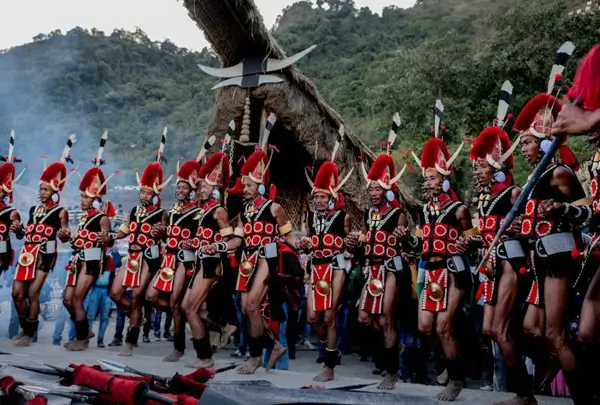
Frequently Asked Questions
Hornbill Festival is Nagaland's annual 10-day celebration of the state's 16 major tribes, held every December at Kisama Heritage Village near Kohima. It is internationally famous because it brings together an extraordinary diversity of tribal cultures — each with distinct traditional dress, music, dance, and food — in one single spectacular location, offering a cultural experience found nowhere else in India or the world.
The Hornbill Festival is held annually from 1 to 10 December at Kisama Heritage Village, approximately 12 km from Kohima, the capital of Nagaland. The dates are consistent every year, making it easy to plan in advance.
All 16 major Naga tribes participate: Angami, Ao, Chakhesang, Chang, Dimasa Kachari, Khiamniungan, Konyak, Kuki, Lotha, Phom, Pochuri, Rengma, Sangtam, Sumi, Yimchunger, and Zeliang. Each has a dedicated heritage hut at Kisama where their culture, food, and crafts are displayed.
Foreign nationals require a Protected Area Permit (PAP) to visit Nagaland. This is straightforward to arrange and Top Indian Holidays manages the entire permit process for international guests as part of the tour package. Indian nationals from outside Nagaland require an Inner Line Permit (ILP).
Fly to Dimapur Airport from Kolkata (1.5 hours), Delhi (2.5 hours with connection), or other major cities. From Dimapur, it is a 2.5-3 hour scenic drive to Kohima through the Naga Hills. Top Indian Holidays arranges all transfers as part of the festival tour package.
Yes, with appropriate preparation. The Kisama venue is reasonably accessible, though some areas involve uneven terrain. December weather is cold (5-15°C) so warm clothing is essential. The festival has no extreme physical requirements and the cultural programme is fascinating for all ages. Top Indian Holidays advises on the most comfortable logistics for different traveller profiles.
The Hornbill Festival is a culinary adventure. Must-try dishes include smoked pork with fermented bamboo shoot, anishi curry, rice beer (zutho), pork ribs with axone, and steamed sticky rice in bamboo. For the brave: the famous Naga ghost chilli (Bhut Jolokia) dishes. Food courts at the festival serve authentic tribal cuisine from all participating tribes.
The Konyak tribe from the Mon district of Nagaland are historically Nagaland's warrior community, known for their distinctive tattooed faces and elaborate brass headgear. The tattooing tradition was historically linked to headhunting practices and is now preserved only among elders. Photographing Konyak elders with permission (and respect) is one of the most powerful portrait photography experiences in all of India. Top Indian Holidays arranges respectful visits to Konyak villages as extensions to Hornbill Festival tours.
Yes — the Hornbill Festival has an extensive marketplace where artisans from all tribes sell authentic handwoven textiles, traditional jewellery, bamboo and cane products, wood carvings, traditional weapons (decorative), and Naga-specific food products. Prices are very reasonable and purchases directly support tribal artisans.
Accommodation ranges from hotels in Kohima (12 km from Kisama) to homestays in local Naga villages that provide an immersive cultural experience. Government tourist camps are also set up near Kisama during the festival period. Top Indian Holidays books accommodation well in advance — a minimum of 3-4 months before December is strongly recommended.
A minimum of 4-5 days allows for: 2 full festival days at Kisama, 1 day exploring Kohima (war cemetery, old town, local food), and 1-2 days for excursions to Konyak villages or the Dzukou Valley. Extended itineraries of 7-10 days allow for deeper exploration of Nagaland's villages and landscapes.
Contact Mr. Nand Singh Rathore: WhatsApp/Call +91-9828085426, Email info@topindianholidays.net, or visit www.topindianholidays.com. We manage all logistics including permits, flights, accommodation, transport, and guided tours — ensuring a seamless and deeply memorable tribal festival experience.