11 Nights / 12 Days Fully Guided Tours Private Car
Delhi - Jaipur - Ranthambore - Udaipur - Jaisalmer - Jodhpur - Bharatpur - Delhi - Varanasi - Delhi
Two very different Indias meet in this itinerary. One is the India of ruling princes, desert forts and painted palaces, seen from the comfort of a vintage-styled royal train. The other is the India of pilgrims, river mist and temple bells, found in a city that was already ancient when the Buddha preached nearby. The Palace on Wheels with Varanasi links them in eleven nights, giving you a full week on the rails through Rajasthan and Agra and then two nights on the banks of the Ganges, before a last evening in Delhi.
The train portion follows the classic seven-night loop of the Palace on Wheels, operated by Rajasthan Tourism with Indian Railways: Jaipur, Ranthambore, Chittorgarh, Udaipur, Jaisalmer, Jodhpur, Bharatpur and the Taj Mahal. On this version of the trip, we have shaped the commentary around people and crafts as much as monuments: the gem cutters of Jaipur, the stone carvers of Jaisalmer, the potters and dyers of the desert towns, and the courts and rituals that once filled the palaces you walk through. It is a week that rewards curiosity about how Rajasthan lived, worked and celebrated.
Then the pace changes. A short flight from Delhi brings you to Varanasi, where you watch the evening fire ceremony from a private boat, return at dawn to see the city wash and pray on its riverfront steps, walk the old lanes with a local guide and visit Sarnath, where Buddhism began. Top Indian Holidays, a Jaipur company that has run private tours for more than twenty-five years with recognition from India's Ministry of Tourism, takes care of your train booking, both flights, your hotels in Delhi and Varanasi, and every private car and guide, so the hand-over from train to river city happens without fuss. The best season is October to March, when Rajasthan is dry and Varanasi mornings are cool and misty.
Long-haul services from Europe and North America tend to reach Delhi around midnight or in the small hours, yet whenever you clear customs, our representative stands beyond the arrivals doors holding a sign with your name. From there, a chauffeured, air-conditioned car covers the 30 to 45 minutes to your luxury hotel in the central or southern part of the city. The team at the hotel will have your room ready, and if you arrive before dawn we can arrange an early check-in so you can sleep properly after the flight.
This first day is deliberately light. The Palace on Wheels with Varanasi journey is long and rich, and starting it rested makes a real difference. If you feel up to it after lunch, a gentle afternoon outing to Humayun's Tomb works well: its red sandstone and marble dome stands in formal gardens that were a model for the Taj Mahal, and late afternoon is cool and pleasant. Alternatively, Lodhi Garden nearby is a lovely place for a stroll among fifteenth-century tombs, where local families walk and play in the evening.
Before dinner, someone from our team calls at your hotel with the paperwork for the trip, confirms when you will be collected tomorrow and answers any questions you have about packing. For the train, a soft bag is easier to store than a large hard suitcase, and you will want layers: a warm jacket for early safaris and desert nights, light cotton for the afternoons, and one smarter outfit for dinners. Keep your passport handy, as it is checked at the station. Dinner is at leisure in the hotel or at a recommended restaurant nearby.
The morning is free, which is a welcome luxury after a long-haul flight and the late arrival of the day before. You might sleep late, swim in the hotel pool or take a short guided visit to the Qutub Minar, the soaring brick victory tower in south Delhi, which is close to Safdarjung station and easily done before lunch. After a relaxed meal, check out of your room and our driver takes you across the city to Delhi Safdarjung station for the 16:00 reporting time, allowing extra time for traffic.
At the platform, uniformed staff greet you with garlands and a cool drink, and your luggage is carried to your cabin. Each carriage on the Palace on Wheels is named after a former princely state of Rajasthan and decorated with motifs from that region, so it is worth a walk through the train to see the differences. Your carriage attendant, who will look after you all week, explains the cabin and asks about tea times and preferences. He is the person to ask for an extra blanket, an early wake-up call or help with laundry.
At 18:30 the whistle sounds and the train moves out of Delhi in the dusk, heading south-west toward Rajasthan. The first evening on board is social and unhurried. Many guests gather in the lounge bar before dinner to meet the people they will share the week with, often a mix of nationalities. Dinner in the restaurant car introduces the train's style of cooking, which blends Rajasthani dishes with continental choices. By the time you fall asleep the rails are already carrying you into Rajasthan, and Jaipur will be outside your window when you wake.
Jaipur was founded in the early eighteenth century as a city of trade laid out on a strict grid, and its rulers invited craftsmen from across India to settle in its streets. That history still shapes the city, so this morning your guide frames the sightseeing around its makers. A first stop at the Albert Hall Museum shows fine examples of local metalwork, carpets and miniature painting. Then a photo stop at the Hawa Mahal, the pink sandstone screen of tiny windows built for the royal women, introduces the old walled city and its color.
At Jantar Mantar, the stone observatory of Maharaja Sawai Jai Singh II, you see craftsmanship of a different kind: astronomical instruments built on a giant scale from masonry and marble, precise enough to track the stars. The neighboring City Palace of Jaipur still houses the former royal family, and its galleries display costumes of fine muslin and brocade, alongside weapons inlaid with gold. The painted doorways of the Peacock Courtyard show the skill of local artists, with each gate devoted to a season and its god.
After lunch the coach climbs to Amber Fort, whose Mirror Palace is the ultimate display of Rajput craftsmanship, with walls inset with countless fragments of glass. Later, the program allows time in the old city markets. Colored gemstones from much of the world pass through the cutting houses of Jaipur, and a visit to a family workshop, where you can watch emeralds and garnets being shaped on spinning wheels, is fascinating even if you buy nothing. Block printing, blue pottery and enamel jewelry are other local arts. The train departs at 20:00 with dinner on board.
At about 04:45 the train halts at Sawai Madhopur, and a gentle knock tells you it is time to dress for the forest. Morning drives in Ranthambore National Park start at about 06:30 in October, February and March, and about 07:00 between November and January, lasting roughly three and a half hours. Dress in muted colors and layers, as winter dawns can drop to 6 to 9 degrees Celsius. Your naturalist and driver have usually spent years in these forests and know the individual tigers by name and territory.
Tiger sightings are never guaranteed, but the park offers much more than its big cats. Look for the crocodile pools near the old hunting pavilions, the large brown deer wading into the lakes to feed on water plants, and the troops of gray monkeys whose sharp warning calls often reveal that a predator is moving nearby. Village women in bright skirts may be walking to the market along the roads outside the park. Back on the train, a late breakfast is followed by a lazy morning as the landscape gives way to the stony uplands of southern Rajasthan.
The train reaches Chittorgarh in mid-afternoon. Chittorgarh Fort, part of the UNESCO-listed Hill Forts of Rajasthan, covers a plateau so large that its walls enclose temples, palaces, water tanks and the remains of whole neighborhoods. Your guide tells the stories of loyalty and sacrifice from its three famous sieges, and of the poet-saint Meera Bai, a princess who gave up court life for devotion to Krishna and whose temple still stands here. At dusk the sound and light show brings these tales to life, before you return for dinner on board.
Udaipur greets you at about 07:00 with soft morning light on the hills and lakes. The first stop is Saheliyon Ki Bari, a garden created for the young women who accompanied a royal bride to the court. With its lotus pools, marble kiosks and fountains still powered by water pressure from the lake above, it gives a glimpse of the leisure of court life in the eighteenth century. Your guide explains how the ladies of the palace would pass hot afternoons here, among flowering trees and splashing water.
Next you visit the City Palace of Udaipur, the seat of the Mewar dynasty, which claims one of the longest unbroken royal lines in the world. Room after room is decorated with colored glass windows, peacock mosaics and painted murals of court festivals, elephant fights and royal hunts. The Crystal Gallery displays cut-crystal furniture, chandeliers and even a crystal bed ordered from Birmingham in the nineteenth century, a reminder of how lavishly the princely courts spent on prestige objects from abroad. Oddly, the crates sat unopened for decades before anyone unpacked them.
A boat ride on Lake Pichola follows, giving close views of the bathing steps where local women wash clothes in the morning and Jag Mandir, the island retreat that once sheltered a fugitive Mughal prince. The city's painters still produce detailed miniature works in the old style, and some guests use the free minutes to visit a painting school near the palace. After lunch on board, the train leaves at 16:00 for the long overnight run across the desert to Jaisalmer, so this is a good evening for the lounge bar.
At about 08:30 the train reaches Jaisalmer, a town built almost entirely from golden sandstone. The first visit is Gadisar Lake, an old reservoir that once supplied water to the whole city, framed by a carved gateway that, according to local tradition, was commissioned by a court dancer. In the cool of morning, pelicans and cormorants rest on the water, and local men sell bread for the catfish. It is a calm and photogenic place to begin a day devoted to stone, and the morning light here is the softest of the day.
Inside the walls of Jaisalmer Fort, a living town where about a quarter of the old city's people still live, your guide leads you through the royal palace and the Jain temples, whose carved pillars and ceilings show the extraordinary skill of the local stone masons. Below the fort, the merchant mansions take that skill even further. Patwon Ki Haveli is a group of five houses built for a trading family, and Nathmal Ji Ki Haveli was carved by two brothers, one on each side, so the two halves are subtly different.
In the late afternoon you head out to the dunes of the Thar Desert, where camels wait to carry you along the sand as the sun sets. Desert families who live in the villages around Jaisalmer have kept camels for generations, and their herders lead the rides. Bring a scarf against the fine sand and a warm layer for after dark. Dinner is held at a five-star hotel in Jaisalmer, often with folk musicians from the desert communities, whose songs have been passed down orally for centuries. The train departs at about 23:00.
The train arrives at Mandore station, just outside Jodhpur, at about 07:00. You drive up to Mehrangarh Fort, whose massive walls rise from a rock outcrop high above the blue houses of the old city. The fort museum is one of the best organized in India, with richly decorated royal cradles, canopied elephant seats and a large collection of turbans and textiles. On some mornings, folk musicians play at the gates and a turban-tying demonstration shows how dozens of styles once revealed a man's community, region and status.
From the fort it is a short drive to Jaswant Thada, the white marble memorial to Maharaja Jaswant Singh II. Its marble sheets are so thin that they glow when light passes through them, and inside hang portraits of the rulers of Jodhpur. The terraced garden and small lake offer a peaceful spot, and the view back to Mehrangarh across the rocky landscape is one of the best in the city. Your guide may also point out the old stepwells and water tanks that once kept Jodhpur alive through long dry seasons.
The final visit is to the Umaid Bhawan Palace museum, inside one of the largest private homes in the world, finished in the twentieth century. The building is shared three ways: descendants of the royal family still live in one wing, a luxury hotel fills another, and the museum section shows clocks, crockery, vintage cars and family photographs. Its Art Deco style feels almost modern after the older forts, and the domed central hall is especially fine. At 16:30 the train pulls out of Jodhpur and heads east through the night toward Bharatpur, serving dinner as it goes.
The train stops at Bharatpur at about 05:00, and after tea and biscuits you are taken to Keoladeo National Park. This wetland was once a duck-shooting reserve of the Maharaja of Bharatpur, and today it is a UNESCO World Heritage Site and one of Asia's great bird habitats. In winter, it hosts thousands of migrants from Central Asia and Siberia. Cycle-cart drivers trained as naturalists pedal you quietly along the embankments, stopping to point out storks, herons, kingfishers and owls roosting in the trees, so bring binoculars.
The train continues to Agra, arriving at about 11:00. The first visit is Agra Fort, the massive red sandstone citadel on the Yamuna River where several generations of Mughal emperors held court. Your guide explains how its halls changed from Akbar's martial red stone to Shah Jahan's refined white marble, and shows you the octagonal tower where Shah Jahan spent his final years. Lunch is served at a hotel in the city, with a little time to rest before the most famous visit of the trip.
In the afternoon you walk through the great red gateway and see the Taj Mahal for the first time. The tomb that Shah Jahan built for his wife Mumtaz Mahal took about twenty years and thousands of artisans to complete. Up close, look for the inlaid semi-precious stones in floral patterns and the lettering that grows larger as it rises so it appears even from below. Note that the Taj shuts every Friday. Back on board, the farewell dinner is served, and at 20:45 the train sets off on the last overnight leg to Delhi.
The train arrives at Delhi Safdarjung at about 02:30, but you remain asleep in your cabin until morning. Breakfast is served on board, and check-out is by 07:30. Our driver meets you on the platform, loads your luggage and drives you to Delhi's domestic terminal for your flight to Varanasi. You are airborne for roughly ninety minutes, and on a clear day you can see the wide plains of the Ganges stretching toward the horizon from the window. Request a seat on the left side for the best views.
Our representative meets you at Varanasi airport, and the drive to your hotel takes about 45 minutes to an hour. Your base can be a heritage hotel right on the river, full of character, or a roomier luxury property in the leafy cantonment district, and we will advise on which suits you. After checking in and having a light lunch, you have time to rest, as the evening is the first major experience in Varanasi. Your guide meets you at the hotel in the late afternoon to brief you on what to expect and how to behave respectfully.
Toward 17:00, you drive as close to the river as traffic allows and then walk the final stretch to a private boat waiting at the water's edge. Around 18:00 in the winter months, as the light fades, the fire ritual starts at Dashashwamedh, the principal riverfront: young priests in matching robes wave large brass lamps in slow, synchronized arcs, while bells ring and conch shells sound. From the boat you have a clear, uncrowded view, and you can float a small leaf boat carrying a candle on the river. Dinner is at your hotel.
An early start, around 05:30, takes you back to the river before dawn for a sunrise boat ride on the Ganges. As the light grows, the riverfront steps come to life: pilgrims bathe and pray, wrestlers exercise at old training grounds, washermen beat cloth on stone slabs and priests sit under bamboo umbrellas. You pass the main cremation ground at Manikarnika, where fires burn day and night, and your guide explains why dying in this city is believed to bring release from the cycle of rebirth. Photography of cremations is not allowed.
After the boat ride you step ashore and walk through the narrow lanes of the old city with your guide. These alleys are barely wide enough for two people, and are crowded with small shrines, sweet shops, flower sellers and wandering cows. You pass close to the area of the Kashi Vishwanath Temple, one of the most sacred in India. Stop for a cup of spiced tea and a sweet yogurt drink served in a clay cup, then return to the hotel for a late breakfast and a rest during the warmest hours.
In the afternoon you drive about 10 kilometers to Sarnath, where the Buddha gave his first sermon after reaching enlightenment. The ruins of ancient monasteries, the great Dhamek Stupa and the Sarnath Museum, which holds the famous lion capital adopted as India's national emblem, make this one of the most important Buddhist sites in the world. Monks from Tibet, Thailand and Sri Lanka often walk around the domed Buddhist monument in prayer. On the way back, a visit to a family silk weaving workshop shows how Varanasi brocades are made on hand looms.
The morning is free for a last look at the river. Some guests choose to return to the riverfront steps on their own for a quiet walk, while others prefer a visit to the Bharat Kala Bhavan museum on the leafy campus of Banaras Hindu University, which holds a fine collection of miniature paintings, textiles and sculpture. Our driver collects you from the hotel around midday for the drive to Varanasi airport, which takes 45 minutes to an hour, and the afternoon flight back to Delhi takes about ninety minutes.
On arrival in Delhi you are met and taken to your hotel, which we usually choose close to the airport or in central Delhi depending on your flight times. The rest of the afternoon is free to rest, pack or do some last shopping. Khan Market and the government-run Central Cottage Industries Emporium are good places for quality textiles, tea and handicrafts, and both use fixed labels, so there is no need to bargain. Our team can arrange a guide or car if you want to see more of New Delhi.
In the evening, a farewell dinner is a good way to round off the trip. Delhi has some of the best restaurants in India, from refined North Indian kitchens famous for slow-cooked lentils and clay oven breads to modern Indian tasting menus that reinterpret regional dishes. Our team will happily recommend and reserve a table for you. It is a chance to look back on two very different weeks: one among the royal forts and palaces of Rajasthan, the other beside the sacred river at the spiritual heart of India.
Your last morning in India is unhurried. Enjoy breakfast at the hotel and, if your flight leaves in the afternoon or evening, ask the front desk about a late check-out, which we can request in advance. Most international flights to Europe and North America depart late at night or in the early hours, so we can also book a day-use room where you can rest and shower before the long flight home. Use the time for a final swim, a massage at the hotel spa or a slow lunch, and keep a little local currency for small tips.
When it is time to leave, our driver picks you up at the hotel for the run out to Indira Gandhi International Airport. Allow about three hours before an international departure, as document checks at the terminal door, airline queues, security checks and queues at immigration can be slow at peak hours. The drive usually takes 30 to 45 minutes from central Delhi, longer during the evening rush. Our representative will help with your luggage to the terminal entrance, which only ticketed passengers may enter, and make sure you have everything you need for your flight.
Our phones at Top Indian Holidays, the independent operator behind every booking on this trip, stay on day and night until you are safely checked in. We hope the Palace on Wheels with Varanasi has given you a strong sense of how much variety India holds, from the grandeur of Rajput forts and Mughal tombs to the timeless rituals on the banks of the Ganges. Many of our guests return for a second trip, perhaps to the tea hills and backwaters of Kerala or the high valleys of the Himalayas, and we will be delighted to arrange it when you are ready.
Fill out this form with all the required information. Within 12 hours, we will provide you with a tailor-made itinerary at the best price.
Read the reviews of our esteemed client's, go through the experiences they had with Top Indian Holidays.

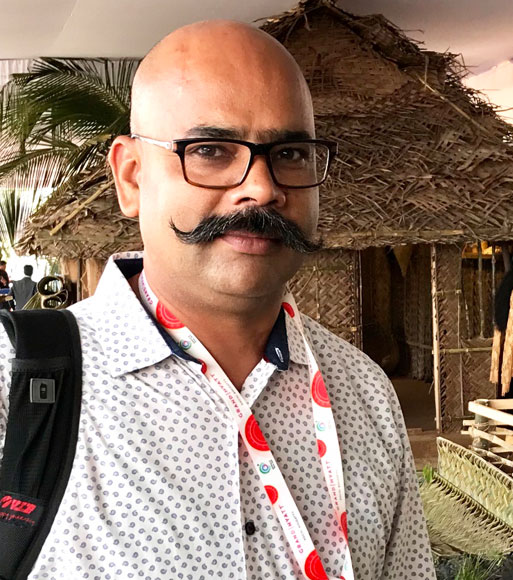
Whether you're planning your first India trip or returning to explore deeper — get honest, expert advice from someone who knows every corner of this country. No pressure, no cost.



 info@topindianholidays.net
 +91-8955000999

