10 Nights / 11 Days Fully Guided Tours Private Car
Delhi - Agra - Ranthambore - Jaipur - Bengaluru - Bandipur - Chikkamagaluru - Hampi - Goa - Bengaluru
Very few travelers ever sleep aboard two of India's luxury trains on the same holiday, because the schedules rarely meet. Two Luxury Trains of India: Maharajas Express & Golden Chariot solves that by pairing the shortest journey on each train, so that in eleven days you ride from the Mughal north to the tropical Deccan with only one flight in between. The first train shows you the Taj Mahal, a tiger forest and the forts of Jaipur. The second carries you through Karnataka's wildlife country, its royal capital, Hoysala temples, coffee hills, the ruins of Hampi and the coast of Goa.
The Maharajas' Express Treasures of India is a three-night loop from Delhi, operated by IRCTC. More than once the World Travel Awards have crowned it the world's top luxury train, and accommodation runs from Deluxe Cabins up to a single Presidential Suite occupying a whole coach, all with private bathrooms, large windows and butler service. The Golden Chariot Pride of Karnataka is a five-night loop from Bengaluru, also run by IRCTC and given a makeover for 2026-27 that added fresh furnishings, smart televisions, wireless internet and the Arogya wellness spa. It carries no more than 80 guests and serves meals in two restaurants, Ruchi and Nalpaka.
Because each train runs on its own calendar, the two departure dates must align: the Treasures of India must finish in Delhi the day before the Pride of Karnataka leaves Bengaluru. Top Indian Holidays, a Jaipur company approved by India's Ministry of Tourism and independent of both train operators, compares the two published calendars, matches a pair of departures that fit, and books the cabins, the Delhi and Bengaluru hotels, the connecting flight and all transfers. If no pair aligns in your preferred month, we suggest the nearest workable combination or add private days to bridge the gap. The trip suits travelers who want the full spectrum of Indian rail luxury without a long, tiring itinerary.
A representative from our team meets you in the arrivals hall of Delhi's Indira Gandhi International Airport and drives you to a luxury hotel, usually 40 minutes to an hour away. This first day is a cushion: if your flight is delayed or your luggage goes astray, there is still time to sort it out before tomorrow's early boarding. It also gives your body a night to adjust to India Standard Time, which is five and a half hours ahead of London and ten and a half ahead of New York in winter.
If you feel energetic in the afternoon, a private car and guide can take you to Qutub Minar, the soaring red sandstone victory tower begun at the end of the twelfth century, which stands among the ruins of the first mosque built in Delhi. Its fluted surface is carved with bands of Arabic calligraphy, and the nearby iron pillar has resisted rust for around sixteen centuries. Late afternoon is a pleasant time to visit, and it lies conveniently near most south Delhi hotels, so the outing takes no more than two or three hours.
Back at the hotel, our representative goes through both train programs with you and hands over the paperwork, including your Maharajas' Express boarding details. Pack a single soft bag or a modest suitcase for the train, since cabin storage is limited, and leave larger cases with the hotel if you will pass through Delhi again on a later trip. Evenings in December and January can drop to 7 or 8 degrees Celsius, so a warm layer for the morning jeep rides and safari is essential. Have an early dinner and a good night's sleep.
Your driver collects you early and brings you to Delhi Safdarjung station, the small terminus used for special departures. The Maharajas' Express Treasures of India begins with a ceremonial welcome: music, a garland and a cold drink on the platform while guest relations staff check passports. Your butler shows you to the cabin and explains the controls, the safe, the bathroom amenities and how to order drinks or tea at any time. The interiors are rich with polished wood, brocade fabrics and paintings of royal Rajasthan.
Rolling south toward Agra, you take lunch in Mayur Mahal or Rang Mahal, the two dining cars, each decorated in a different royal style. At Agra a guide leads you through Agra Fort, the vast sandstone stronghold from which several Mughal emperors governed their empire. Inside, palaces of white marble overlook the Yamuna River, and the octagonal Musamman Burj gives a distant view of the Taj Mahal. The guide explains the court ceremonies held in the Hall of Public Audience, where the emperor heard petitions from a raised marble throne.
You return to the train as evening falls, and there is time to rest before dinner. The bar car, Safari Bar, is a cozy spot for a drink before the meal, and the observation lounge at the end of the train has large windows for watching the lights of passing villages. Tonight's menu blends Mughal dishes, rich with nuts and saffron, with lighter continental choices. The train remains in Agra overnight, so tomorrow can begin with the most famous monument in India before you continue west.
Breakfast is taken early, and then you leave for the Taj Mahal. The monument opens at sunrise and is closed on Fridays, which the train's program respects. Your guide walks you through the main gateway to the classic view across the long water channel, then onto the marble platform for close-up views of the inlay. Each flower is made of tiny pieces of semi-precious stone, some no larger than a grain of rice. Phones and cameras are allowed, but food, tripods and large bags are not, so travel light.
The train leaves Agra around midday and runs west into Rajasthan, with lunch served on board as the landscape turns drier and hillier. By afternoon the train halts at Sawai Madhopur, where open-sided jeeps wait to carry you into the forests of Ranthambore National Park. Afternoon slots run from about 14:00 to 17:30 in the cooler months and slightly later in October and from February onward. The park is known for its tigers, which are often seen near the lakes and old ruins, though sightings can never be promised.
Even without a tiger, the drive is memorable for the ruined fort perched on a ridge above the forest, the lakes where marsh crocodiles bask and the abundance of large brown deer, spotted deer and peacocks. As the sun drops, temperatures fall quickly, so bring a jacket, scarf and gloves for the ride back. You return to the train to freshen up, and dinner is served as it continues north overnight to Jaipur. Ask your butler for a hot drink at bedtime after the cold open vehicle.
Morning finds the train in Rajasthan's capital, Jaipur, and once breakfast is over you head out to Amber Fort, the ancient hilltop seat of the Kachwaha rulers. A jeep grinds up the zigzag road to the eastern Sun Gate, beyond which your guide walks you through courtyards that become more refined as you climb. The Sheesh Mahal, or Mirror Palace, glitters with small mirrors set into plaster, and the Ganesh Pol gateway is painted with delicate floral designs in natural pigments. The hills around are crowned with defensive walls.
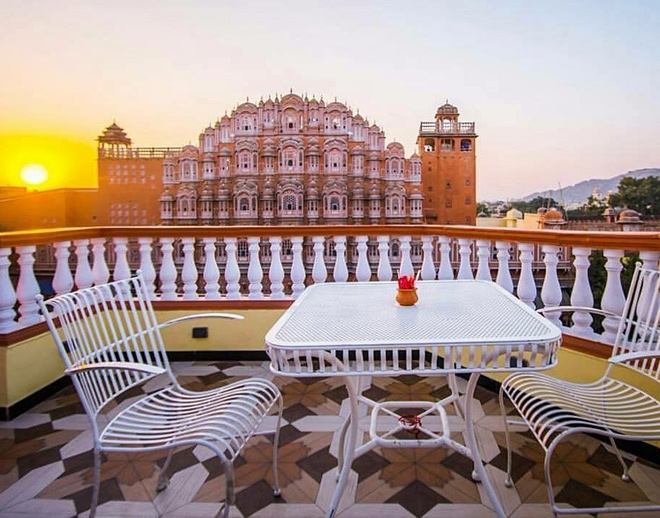
After lunch back on the train, the afternoon is free. Your butler can arrange a car to the city center, where the Hawa Mahal facade, the City Palace and Jantar Mantar stand within walking distance of each other. Shoppers look for block-printed textiles, silver jewelry, hand-knotted carpets and blue pottery, and the gemstone workshops of Jaipur are known worldwide. Our team can also arrange a private guide for the afternoon if you would like more depth on the old city than a short car tour offers.
In the evening the train leaves Jaipur for Delhi, and this is the last night aboard the Maharajas' Express. Dinner is often a celebratory affair, with the chefs preparing Rajasthani specialties alongside the international menu, and the bar staff mixing cocktails with Indian spices and fruits. Take a moment to say thank you to your butler, who will have learned exactly how you take your tea. The journey north is short, and you reach the capital early the next morning, often while still asleep in your cabin.
Breakfast is served on board as the train pulls into Delhi Safdarjung, and you leave the Maharajas' Express in the morning. A waiting driver gathers your bags beside the carriage and takes you to Delhi airport for the southbound flight to Bengaluru. The direct flight takes about two hours and forty minutes, and we choose a midday or early afternoon departure to leave a safe margin after the train. Domestic checked baggage in economy is usually limited to about 15 kilograms, so mention heavier luggage when booking.
Touching down at Kempegowda International Airport in Bengaluru, you are met by our team and taken roughly an hour into the city to a luxury hotel. Bengaluru lies on the Deccan plateau at about 900 meters above sea level, and its mild climate is a welcome change from the cold mornings of the north. The city is the technology capital of India, with modern office parks and a lively restaurant culture, yet it still keeps leafy avenues and the large public parks that earned it the name Garden City.
Use the evening to rest and repack. The Golden Chariot Pride of Karnataka begins early tomorrow, and the program includes safari, temple and beach outings, so bring sandals for temple visits, a hat, sunscreen, mosquito repellent and a light jacket. Most guests have a quiet dinner at the hotel and an early night. If you have the energy for an evening walk, ask the concierge about Cubbon Park or Church Street, both close to the central hotels, and both busy, well lit and safe in the early evening.
The driver brings you to Yeshwantpur station by about 08:30 for registration. The staff of the Golden Chariot welcome you with music and a garland, take your luggage to the cabin and serve high tea while the paperwork is completed. At about 09:45 the train leaves Bengaluru, and a briefing over lunch explains the program for the next five days. After the ornate interiors of the Maharajas' Express, you notice a different style here: carved motifs inspired by the temples of Karnataka and a calmer, more contemporary feel.
At about 13:30 the train reaches Nanjangud, and a coach carries you about 50 kilometers, roughly an hour and a half, to Bandipur National Park. The landscape is quite unlike Ranthambore's dry hills: here the forest is taller and greener, with teak, rosewood and stands of bamboo, and the Nilgiri hills rise blue in the distance. Bandipur forms part of a protected forest belt shared with Tamil Nadu and Kerala, and it holds a remarkable density of wild elephants. In winter the forest floor is dry and golden, which makes animals easier to spot between the trunks.
The evening safari runs from about 16:30 to 18:30. Herds of elephants with young calves are frequently seen near waterholes, along with Indian bison, large brown deer and spotted deer. Leopards, tigers and wild dogs live here too, and your naturalist will watch for tracks and listen for alarm calls. Comparing this forest with the one you saw three days earlier is one of the pleasures of a two-train trip. Back on board by roughly 20:15, you sit down to dinner as the train rolls on to Mysuru, where it stays overnight.
After breakfast on board, you leave the train at Mysuru station for a guided visit to Mysuru Palace, home of the Wadiyar dynasty. Built in the early twentieth century in Indo-Saracenic style, it combines domes, arches and towers with Hindu motifs and Gothic stained glass. Inside, the royal court hall opens onto a vast colonnaded balcony, and the Kalyana Mantapa has a peacock-patterned glass ceiling and a polished tiled floor. Large paintings along the corridors depict the Dasara procession in fine detail, down to the jewelry on each elephant and the uniforms of the palace guards.
Lunch is back on the train. In the afternoon you can choose a coach trip to Srirangapatna, Tipu Sultan's stronghold on an island in the Kaveri, where his painted summer palace and the domed mausoleum he built for his parents can be visited. Alternatively, stay in Mysuru for shopping. The city is known for pure silk, sandalwood, incense, brass lamps and locally grown coffee, and the government outlets offer genuine products with fixed tags, which takes the stress out of buying and avoids any haggling.
The Devaraja Market in the city center is a lively place to see heaps of flowers, fruit and colored powders, and the stalls selling jasmine garlands perfume the whole street as evening approaches. Be back aboard by 20:00 for dinner in Ruchi or Nalpaka, and the Golden Chariot then travels overnight toward Banavar. If you have not tried the Arogya spa yet, this is a good evening for an Ayurvedic massage, since tomorrow involves an early start and two separate excursions in the hills of central Karnataka.
At about 08:00 you leave the train at Banavar and drive to Halebidu, once the capital of the Hoysala kings. The Hoysaleswara Temple, built in the twelfth century, is covered from base to roof with some of the most intricate stone carving in India. Rows of friezes show elephants, lions, horsemen and scenes from the epics, and no two figures are quite the same. The soft soapstone allowed the carvers to cut jewelry and fingernails in astonishing detail. Your guide points out the finest panels on the outer walls.
You return to the train at about 11:00, and lunch is served on board as it climbs into the green hills of Chikkamagaluru, where coffee was first grown in India. In the afternoon you visit a coffee plantation and walk among rows of shrubs shaded by silver oak and jackfruit trees, often with pepper vines climbing the trunks. The planter explains the harvest, which takes place in the winter months, and the processing of the cherries, from pulping and fermenting to drying on wide concrete yards.
The air in these hills is noticeably cooler and fresher than on the plains, and the views across the slopes are lovely in the late afternoon light. A tasting of freshly brewed coffee completes the visit, and packets of estate coffee make good gifts to take home. Back on board, dinner is served as the Golden Chariot sets off north on the long run to Hampi. This is the quietest day of the journey in terms of walking, so it is a good time to enjoy the lounge and the bar.
Breakfast is served as the train approaches Hospet, and a coach takes you to Hampi, the capital of the Vijayanagara Empire at its height in the fifteenth and sixteenth centuries. The site is spread across a dramatic landscape of granite boulders, banana groves and rice fields beside the Tungabhadra River. Your guide begins on Hemakuta Hill, a granite slope dotted with small early temples, with views over the tall gateway tower of the Virupaksha Temple, which is still in daily worship and draws pilgrims from across the south.
The tour continues to the Royal Enclosure with its great stepped platform, once the stage for the king's festival celebrations, and the Queen's Bath, a square pool surrounded by arched balconies. The Elephant Stables, a long building of eleven domed chambers, held the royal elephants. The Hazara Rama Temple, whose walls are carved with processions of horses, dancers and soldiers, is one of the most elegant buildings on the site. Wear a hat and carry water, as the sun is strong even in winter and there is little shade between the monuments.
After a break for lunch you return to the train, which leaves for Goa in the evening. You dine on board while the train winds down from the Deccan plateau toward the coast. The railway line through the forested Western hills crosses deep forest and passes close to the Dudhsagar waterfall, although on this journey much of the descent happens after dark. The contrast with the dusty heat of Hampi is striking, and you wake tomorrow in the warm, tropical air of the Konkan coast.
The Golden Chariot arrives at Karmali station in Goa, close to Old Goa, and after breakfast you head straight for the churches. Old Goa was the capital of Portuguese India for more than two centuries, and its surviving churches, convents and monuments share World Heritage status. Saint Francis Xavier lies in the Basilica of Bom Jesus, while opposite, beyond a broad lawn, rises the Se Cathedral, among Asia's largest churches. Shoulders and knees must be covered inside the churches, and quiet is expected during services.
The morning continues with a visit to an old Portuguese house in the area that now serves as a shop and cafe, where you can see the high ceilings, wooden furniture and blue and white tiles typical of Goan homes. You lunch aboard while the train carries on south to Madgaon. The afternoon is relaxed, with time to rest, read or enjoy a spa treatment, and the warm, humid air of the coast is a reminder of how far you have traveled since the cold mornings of Ranthambore.
After dark, coaches take everyone to a South Goa hotel for the gala dinner, the social high point of the whole trip. The menu often features Goan seafood, from prawns in spiced sauces to fish cooked with sour fruit and coconut, and the setting is usually a terrace or lawn close to the sea. Guests dress up a little for the occasion, and there may be live music. You return to the Golden Chariot at about 21:45, and it departs for Bengaluru at about 22:30.
Breakfast is served on board as the train crosses Karnataka toward Bengaluru, and it arrives at Yeshwantpur station later in the day. Settle any spa or bar bills before arrival, and leave time to thank the cabin crew, chefs and guides who have looked after you for five nights. A driver from our team is there on the platform to deal with the bags. Depending on your flight time, you go straight to Kempegowda International Airport, about 45 minutes to an hour away, or to a hotel for a day room.
Many international flights from Bengaluru leave late in the evening or after midnight, so a few free hours are common. If you would like to use them, we can arrange a short city tour that includes the Lalbagh Botanical Garden and the teak summer palace of Tipu Sultan, or a cooking session with a local family. If you are flying via another Indian city, allow enough connection time for immigration and security at the transfer airport, which can take longer than expected in the winter season.
Top Indian Holidays, the independent Jaipur operator behind this trip, can be reached day or night until you have checked in for the flight home. Over eleven days you have traveled on two very different trains, from the Mughal monuments of Agra and the tiger forest of Ranthambore to the palaces of Jaipur and Mysuru, the temples of Halebidu and Hampi, the coffee hills and the coast of Goa. If you would like to repeat the experience on other routes, the Palace on Wheels or the Golden Chariot Jewels of South would extend the story further.
Fill out this form with all the required information. Within 12 hours, we will provide you with a tailor-made itinerary at the best price.
Read the reviews of our esteemed client's, go through the experiences they had with Top Indian Holidays.

Whether you're planning your first India trip or returning to explore deeper — get honest, expert advice from someone who knows every corner of this country. No pressure, no cost.



 info@topindianholidays.net
 +91-8955000999