11 Nights / 12 Days Fully Guided Tours Private Car
Mumbai - Vadodara - Udaipur - Jodhpur - Agra - Ranthambore - Jaipur - Delhi - Varanasi - Delhi
Mumbai's Victorian railway terminus is where this story starts, and the banks of the Ganges are where it ends. The Deccan Odyssey Indian Sojourn with Varanasi spends one night in Mumbai, then hands you a cabin on a luxury train for seven nights as it climbs north through Gujarat and Rajasthan to the Mughal heartland around Agra and on to Delhi. From the capital, a short flight takes you to Varanasi for two nights beside the holiest river in India, before a last night in Delhi and your flight home.
The Indian Sojourn has a different rhythm from the more familiar Rajasthan routes. Its first full day is spent in Vadodara, a princely city in Gujarat with a palace larger than most European royal homes and a UNESCO-listed ruined city nearby. Udaipur and Jodhpur follow, with a lake cruise and a dinner inside the walls of Mehrangarh Fort, then the Taj Mahal, a Ranthambore safari and a final day in Jaipur. Adding Varanasi afterward gives the journey a spiritual close that no train timetable can quite match, with dawn on the river as its centerpiece.
Run by Maharashtra Tourism together with Indian Railways, the Deccan Odyssey gives every cabin its own bathroom and carries restaurant cars, a bar, a spa and a small fitness room. Indian Sojourn departures from Mumbai in 2026-27 fall on October 3, October 24, November 14, December 19, January 23, February 20 and April 3, with your arrival in Mumbai one day earlier. The train, the Mumbai, Varanasi and Delhi hotels, the internal flights and all private cars and guides are reserved by Top Indian Holidays, a Ministry of Tourism approved company that has operated independently from Jaipur since the late nineties.
Mumbai greets most international travelers at night, so a team member holding a placard with your name stands just beyond the exit of Chhatrapati Shivaji Maharaj International Airport. Your private car takes you to a luxury hotel in South Mumbai, a drive of 45 to 75 minutes depending on the hour, much of it along the sea link bridge that curves across the bay. We ask the hotel to have your room ready on arrival wherever possible, so that you can sleep straight away after a long flight.
After a rest, the afternoon is free. South Mumbai is pleasant to walk in the late afternoon, when the heat eases. The Gateway of India, a basalt arch built to welcome a British king, stands at the water's edge facing the harbor, and the streets behind it are lined with Victorian Gothic and Art Deco buildings that together form a UNESCO World Heritage Site. Our team can arrange a private guide for a gentle two-hour walk if you would like some context on the city's colonial past.
Toward sunset, wander the arc of Marine Drive beside the Arabian Sea; after dark its long string of lamps earns the promenade the name Queen's Necklace. Mumbai's dining scene is among the best in India, from coastal seafood restaurants serving butter-garlic crab to elegant hotel dining rooms, and our team can make a reservation for you. Keep tomorrow morning light, as the Deccan Odyssey check-in is in the afternoon and you will want to arrive rested, with your bags packed and your passport ready in your hand luggage.
Spend the morning at your own pace. If you are curious, the Prince of Wales Museum, officially the Chhatrapati Shivaji Maharaj Vastu Sangrahalaya, is a short drive from most South Mumbai hotels and holds a superb collection of Indian sculpture, miniature paintings and decorative arts. Alternatively, linger over a late breakfast and enjoy the hotel pool. A late check-out can be arranged so that you are not rushed. Our driver collects you in the early afternoon for the short run to the station. The museum opens at about 10:15, so a quick visit is easy.
Reporting time is 15:30 at Chhatrapati Shivaji Maharaj Terminus, one of the most remarkable railway stations in the world. Its domes, turrets, carved animals and stained-glass windows were completed in the late nineteenth century, and the building is a UNESCO World Heritage Site in its own right. Train staff greet you with a traditional welcome and a cool drink, complete the registration and take your bags to the cabin while you are shown on board. Take a moment to look up at the station's central dome before you step onto the train.
Your cabin has its own bathroom, a wardrobe and a wide window, and the attendant explains how everything works, from the air conditioning to the bell for morning tea. The Deccan Odyssey Indian Sojourn pulls out of Mumbai in the late afternoon and runs north along the coast into Gujarat. Watch the city thin out into salt pans, mangroves and fishing villages from the lounge car, then join your fellow guests for dinner. The first evening is usually informal, and a short briefing explains the week's timings.
Breakfast is served as the train reaches Vadodara, and an hour by road takes you to Champaner-Pavagadh Archaeological Park, a World Heritage ruin field that few foreign travelers ever reach. A royal city was built here in the late fifteenth and early sixteenth centuries by the Sultans of Gujarat, then abandoned within a generation. Its forts, palaces, stepped water tanks and military works lie scattered across the plain beneath Pavagadh hill, partly reclaimed by trees and grass. The drive passes cotton fields and small market towns along the way.
Its masterpiece, the Jami Masjid, was finished early in the sixteenth century and has a pair of soaring minarets, finely carved stone windows and a prayer hall supported by more than one hundred and seventy pillars. Its design blends Islamic layout with the carving traditions of Hindu and Jain temple builders, and it influenced mosque architecture across western India. The site is quiet and spacious, so bring a hat and water, as shade is limited. Back on board, lunch is followed by an hour or so to relax.
Later you tour the Maharaja Fateh Singh Museum, whose collection centers on canvases by Raja Ravi Varma, the artist who brought European oil techniques to Indian mythological subjects, along with works by European masters and marble and bronze sculpture. High tea follows at Laxmi Vilas Palace, home of the Gaekwad family since the late nineteenth century, where you see the royal court hall, known as the Durbar Hall, with its Venetian mosaic floor and Belgian stained glass, and the armory. A folk performance and royal-kitchen snacks round off the day before dinner on board.
Breakfast is served as the train climbs into the green Aravalli hills, where small lakes and farms replace the flat plains of Gujarat. By mid-morning you reach Udaipur, founded in the sixteenth century by the Mewar rulers after they left their old fortress of Chittorgarh. Your guide takes you first to the City Palace, a long cream-colored complex of terraces, towers and courtyards rising straight from the lake shore. The views from its upper balconies across the water are the best in the city. Wear comfortable shoes for the many stairs.
Inside the palace, look for the peacock mosaics in the Mor Chowk courtyard, made from thousands of pieces of colored glass, and the Crystal Gallery, a collection of cut-glass furniture and ornaments ordered from England in the nineteenth century and only unpacked many decades later. Next comes a launch ride across Lake Pichola, slipping by the white Lake Palace hotel, the island of Jagmandir and old bathing steps where local families wash clothes and children swim. Bring sunglasses, as the water glare can be strong.
After lunch on the train, an afternoon walk leads up the steep old town lanes, packed with shrines, artist workshops and handicraft stores. The city is famous for its fine miniature painting, and artists will often show you how they grind natural pigments and use fine brushes. Textiles, silver jewelry and wooden puppets are other good buys, though there is no pressure to shop. Dinner is served on the train before it sets off west for Jodhpur, crossing the edge of the Thar Desert during the night.
Breakfast is served on board as the landscape turns dry and sandy, with thorny scrub, camels and stone-walled fields. The morning is at leisure, and there are several options. Some guests visit the villages outside Jodhpur, where weavers make cotton rugs on simple looms, potters shape clay on hand-turned wheels, and members of the Bishnoi community, known for centuries of protecting trees and wildlife, welcome visitors to their homes. Others prefer a spa treatment at a city hotel or a quiet morning on the train.
After lunch on board, the city tour begins at the old clock tower market, where stalls sell spices, textiles, silver and the dried red chilies for which Jodhpur is known. Your guide leads you past old merchant houses with carved facades before climbing to Mehrangarh Fort, which towers on a sheer cliff some 120 meters over the indigo-washed homes below. Inside, the galleries display palanquins, elephant seats, arms, paintings and royal costumes, all in beautifully restored rooms with carved latticework windows. Allow about two hours inside the fort.
The evening is the most memorable of the week for many guests: a barbecue dinner served in a royal courtyard of Mehrangarh. As the light fades, the walls glow honey-gold and the lights of the blue city spread out below. Musicians often play Rajasthani folk songs, and the air in the desert cools quickly after sunset in winter, so bring a shawl or warm jacket. Afterward you return to the train for the long overnight run east toward Agra and the Mughal heartland of India.
Breakfast is served on board before the train reaches Agra, where your guide is waiting for the visit to the Taj Mahal. The tomb stands at the end of a formal garden on the bank of the Yamuna River, and it changes color through the day, from soft pink in the morning to bright white at noon and gold in the late afternoon. Bring only a small bag, as food, tripods and large backpacks are not allowed inside, and remember the monument is closed every Friday.
You lunch at a hotel in town before an afternoon at Itmad-ud-Daulah, the delicate marble tomb on the far bank of the river that is often called the Baby Taj. Built by the empress Nur Jahan for her father, it was the first Mughal tomb to use white marble inlaid with colored stone, and it set the style for the Taj Mahal. You then tour Agra Fort, with its Hall of Public Audience and white marble royal pavilions where the emperors lived and held court.
Agra has a long tradition of marble inlay, known as stone inlay, and the afternoon offers time to watch artisans at work cutting and setting tiny pieces of stone by hand. Tabletops, boxes and coasters make good souvenirs, and reputable workshops can ship larger items abroad safely. If you would rather rest, a hotel spa is an option. Dinner is served on the train as it travels south-west into Rajasthan toward Sawai Madhopur, the gateway to one of India's best-known tiger reserves. The run takes most of the night, so you sleep well.
An early breakfast is served as the train arrives at Sawai Madhopur, and you head straight into Ranthambore National Park for a jungle safari in an open vehicle. Timings depend on the month: in October, February and March the morning drive runs from about 06:30, and from November to January from about 07:00. Winter dawns can be bitterly cold in an open vehicle, sometimes 6 to 9 degrees Celsius, so wear a hat, gloves and a thick fleece that you can remove as the sun rises.
The reserve is known for tigers that are often seen in daylight, especially near the lakes below the ruined walls of Ranthambore Fort. Leopards, sloth bears, large brown deer, spotted deer and marsh crocodiles also live here, along with more than three hundred bird species. Your naturalist listens for alarm calls and studies paw prints on the tracks to choose a route. Tiger sightings can never be guaranteed, but the scenery of ruined arches, banyan trees and water is beautiful in its own right. Binoculars are a real help here.
Lunch is back on board, and the afternoon brings a walking visit to a local village to meet families who farm the land around the park. You see how wheat and mustard are grown, how cattle are cared for and how homes are built and decorated. Afterward, tea and cakes await at the Taj Sawai Madhopur Lodge, built as a shooting retreat for Jaipur's rulers and surrounded by leafy lawns. The train leaves for Jaipur after dinner on a short overnight journey of only a few hours.
Following breakfast on the train, the car takes you up to Amber Fort, perched over Maota Lake roughly 11 kilometers outside Jaipur. The fort's courtyards, halls and gardens were the home of the Kachwaha kings for about two centuries before Jaipur was founded. Its Hall of Mirrors is covered in tiny pieces of glass that glitter in candlelight, and the view across the lake from the ramparts is superb in the clear morning air. Arrive early to avoid the crowds that build up at the main gate by mid-morning.
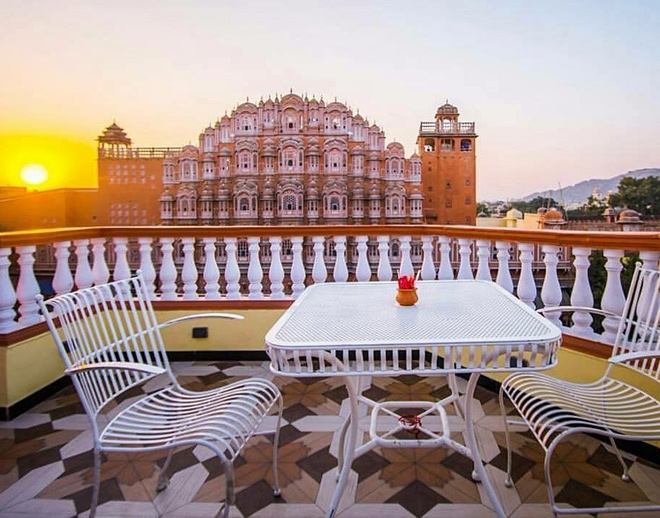
Back in the city, you pause in front of the Hawa Mahal, the delicate pink facade built so royal women could watch street life unseen, and then visit the City Palace, whose museum displays manuscripts, armor, costumes and carpets. The visit ends at Jantar Mantar, an eighteenth-century observatory where giant stone instruments measure time, track stars and predict eclipses. It is one of the most unusual UNESCO World Heritage Sites in India, and your guide brings its geometry to life with simple demonstrations. Allow about an hour there in the warm sun.
Lunch is at a city hotel, and the afternoon is free for a spa treatment at a palace hotel or a shopping trip in the old markets, where gemstones, block-printed textiles, blue pottery and silver jewelry are good buys. This is your last full day on the Deccan Odyssey, and the farewell dinner on board is a chance to thank the crew who have looked after you so well. Pack your main luggage tonight, as the train reaches Delhi early tomorrow morning. Leave out warm clothes for the cool morning arrival.
You eat a final breakfast in the restaurant car while the Deccan Odyssey nears Delhi at dawn. On arrival, a driver beside the carriage loads your bags and heads straight for the domestic terminal of Indira Gandhi International Airport. The flight to Varanasi takes about one hour and twenty minutes. Our team chooses a flight that leaves enough margin for any delay on the train, and we can arrange a hotel day room near the airport if the gap is long. Your luggage is checked through, and the driver stays with you until you have passed the terminal entrance.
On arrival at Lal Bahadur Shastri Airport in Varanasi, your driver and guide meet you for the drive into the city, which takes about 45 to 60 minutes. Your hotel is a riverside or heritage property near the old city, chosen so you can reach the water easily. After checking in, rest for a while, since the evening program begins around sunset. Winter evenings in Varanasi are cool and misty, so a warm layer is wise from November to February. The drive passes farmland, brick kilns and busy roadside markets.
At dusk your guide leads you down to the river for the evening fire ritual, generally starting near 18:00 during the winter months. Young priests dressed alike swing heavy multi-tiered lamps through the air as bells ring, conch shells sound and hymns rise, while crowds of pilgrims gather on the stone steps. Watching from a boat moored on the water gives the best view. Afterward, return to your hotel for dinner, and ask for an early wake-up call for tomorrow's sunrise boat ride. Dinner is relaxed and early.
Wake before sunrise and walk with your guide to the river for a boat ride on the Ganges in Varanasi. As the sky turns from gray to pink, pilgrims bathe and pray at the water's edge, priests chant under bamboo umbrellas, and the palaces, temples and steps along the riverfront glow in the early light. Smoke rises from the cremation grounds, where guides ask guests not to take photographs. Many travelers find this hour on the river the most moving experience of their entire time in India.
After breakfast at your hotel, your guide leads a walk through the old city's narrow lanes, where tiny shrines, sweet shops, tea stalls and wandering cows crowd together. You pass close to the Kashi Vishwanath temple, the most important in the city, and see the busy flower and brass markets. Keep valuables secure and wear shoes you do not mind getting dusty. Later, a silk weaving workshop shows how the famous Varanasi brocades are made on hand looms, one thread at a time. Your guide knows the safest routes.
After lunch, a 10 kilometer drive brings you to Sarnath, the deer park where the newly enlightened Buddha first taught. The peaceful site holds the large brick Dhamek Stupa, the ruins of ancient monasteries and a fine museum displaying the lion capital of the emperor Ashoka, now India's national emblem. Monks from Sri Lanka, Thailand, Tibet and Japan come here on pilgrimage, and their temples are worth a short visit. The evening is free for dinner at your hotel or a quiet walk by the river.
Enjoy a slow breakfast with a last view of the river, then our driver takes you to the airport for the flight back to Delhi. An afternoon flight still leaves room for one last riverside stroll or a visit to the Banaras Hindu University campus, whose spacious grounds include a large modern temple and a small art museum. Varanasi traffic is slow and unpredictable, so we allow extra time for the airport drive. Your guide can also suggest a quiet riverside cafe for tea before you leave the old city.
On arrival in Delhi, your driver meets you and drives you to a luxury hotel in the central part of the city. Depending on your flight timing, there may be time for a gentle afternoon outing: perhaps Humayun's Tomb, the garden mausoleum that inspired the Taj Mahal, or the Crafts Museum near Pragati Maidan, which shows textiles, woodwork and metalwork from across the country. Otherwise, relax at the hotel spa and start sorting your souvenirs for the trip home. Your hotel concierge can also book a massage or a table for dinner on arrival.
For your final evening, our team can reserve a table at one of Delhi's celebrated restaurants, where modern Indian menus make a fine farewell to the country's many regional cuisines. Remember to repack carefully: marble inlay, silk and brass are best wrapped in clothing in the middle of your case. Confirm your flight time with our team, and we will set tomorrow's airport pickup accordingly, allowing for traffic and the long security queues at Delhi's international terminal, especially in the early morning. A good night's rest helps before the long flight.
After breakfast, your driver collects you from the hotel and takes you to Indira Gandhi International Airport for your international flight. Allow at least three hours before departure, as check-in and security can take time. If your flight leaves late in the evening, as many Europe and North America flights do, our team can extend your room or book a day room, giving you a place to rest, shower and change before heading out. Keep your passport and e-Visa printout handy at the terminal. Our team checks your flight status before pickup.
If you have a few hours spare, consider a visit to Qutub Minar, a soaring tower of red sandstone and marble in the south of the city, close to the airport road. Its carved bands of calligraphy and the rust-free iron pillar in the courtyard, made about sixteen centuries ago, make it a fine last stop. Alternatively, Dilli Haat is an open-air crafts market where artisans from different states sell their work directly, which is ideal for last-minute gifts. Both are about 30 to 45 minutes from the airport, so they fit easily into a late departure day.
Top Indian Holidays, as an independent operator, has looked after every part of the Deccan Odyssey Indian Sojourn with Varanasi, from your Mumbai arrival to this final transfer, and our team stays on call until you are safely on your flight. Many guests return to India for a second chapter, perhaps the backwaters of Kerala, the temples of South India or the Himalayan foothills, and we would be delighted to help you shape that trip when the time is right. Simply tell us your preferred travel month, and our team will suggest the best timing and route.
Fill out this form with all the required information. Within 12 hours, we will provide you with a tailor-made itinerary at the best price.
Read the reviews of our esteemed client's, go through the experiences they had with Top Indian Holidays.

Whether you're planning your first India trip or returning to explore deeper — get honest, expert advice from someone who knows every corner of this country. No pressure, no cost.



 info@topindianholidays.net
 +91-8955000999